रोलर चेन क्या होती है?
रोलर चेन की संरचना
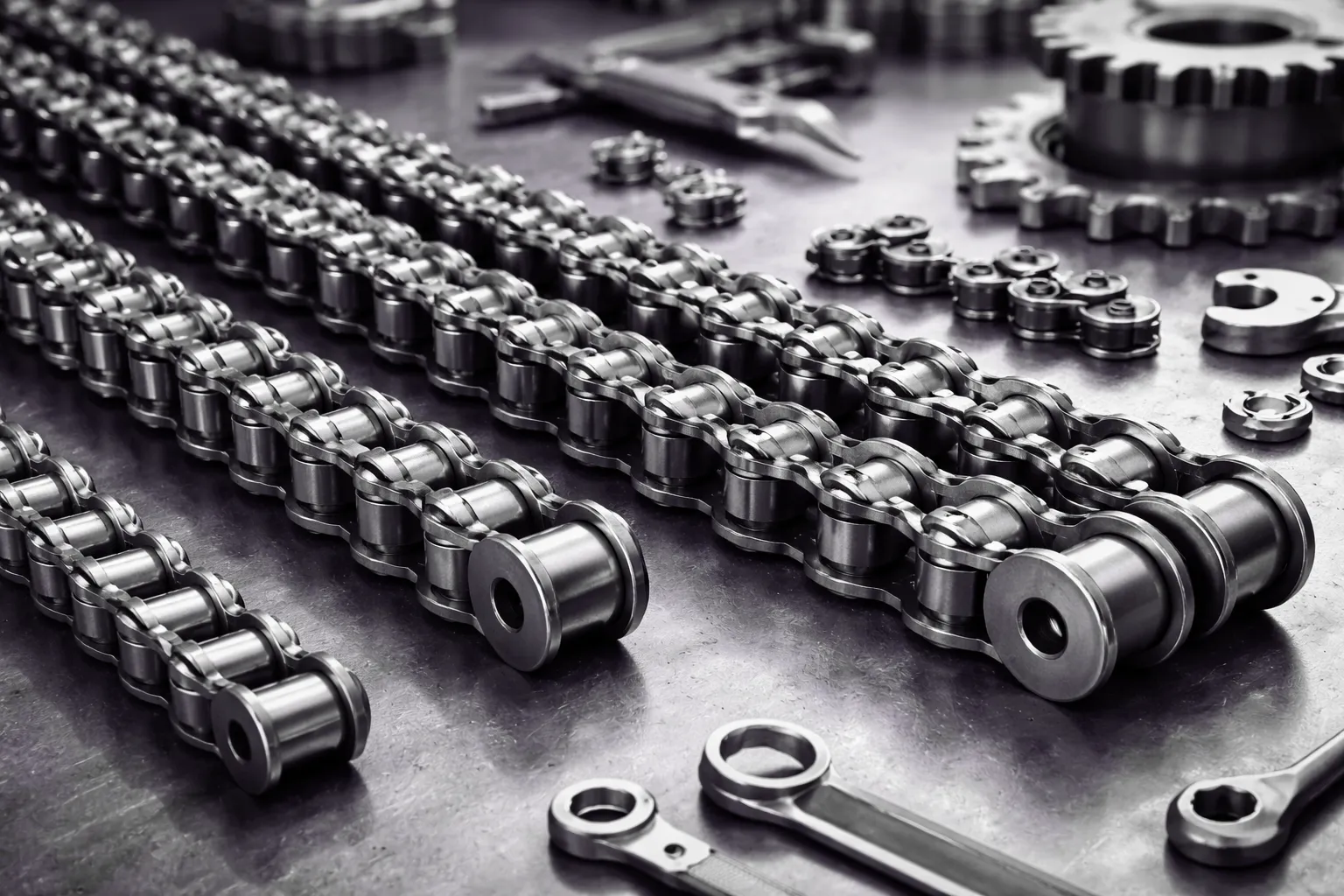
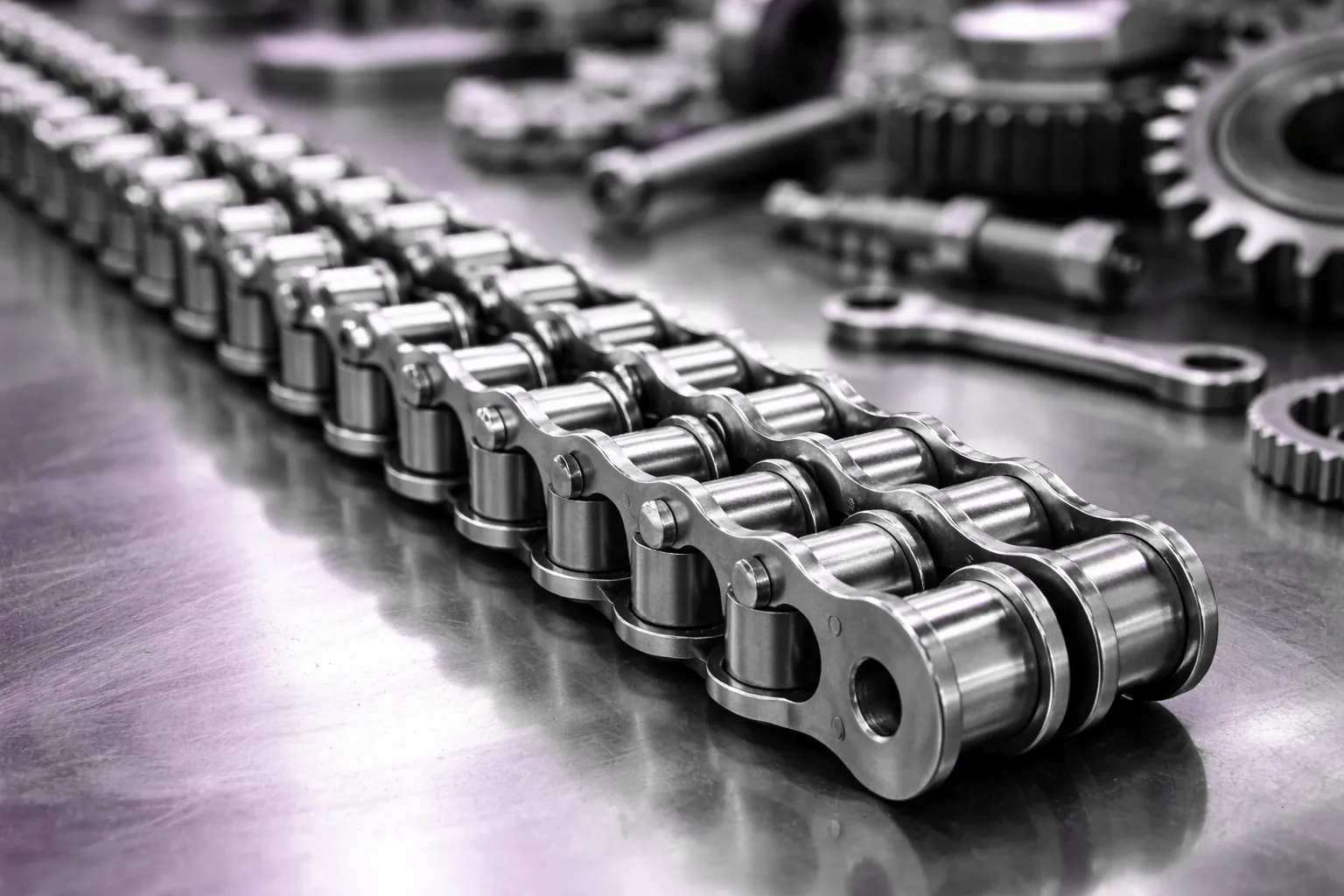
A roller chain is a complex device composed of interconnected parts used to transmit power and motion between mechanical devices. The core components of a roller chain include: inner links, outer links, rollers, and pins. Each component plays a crucial role in ensuring efficient energy transmission, thus determining the overall function and lifespan of the chain.
The inner link typically consists of two side plates and a pin, forming the chain’s skeleton. The outer link has a similar structure but contains rollers that move smoothly along the sprocket. This design minimizes friction, which is essential for maintaining efficient power transmission.
रोलर चेन के प्रकार
Roller chains are not a one-size-fits-all solution; they come in a wide variety of types and specifications, suitable for different applications. The most common type is the roller chain conforming to the American National Standards Institute (ANSI) standards. This type of chain is widely used due to its versatility and compatibility with a wide range of sprockets.
Another important type is the roller chain conforming to European standards, which typically have different dimensions but similar functions. In addition, there are special-purpose chains, such as those made of stainless steel or coated with various corrosion-resistant materials, to meet specific environmental challenges.
The Manufacturing Process
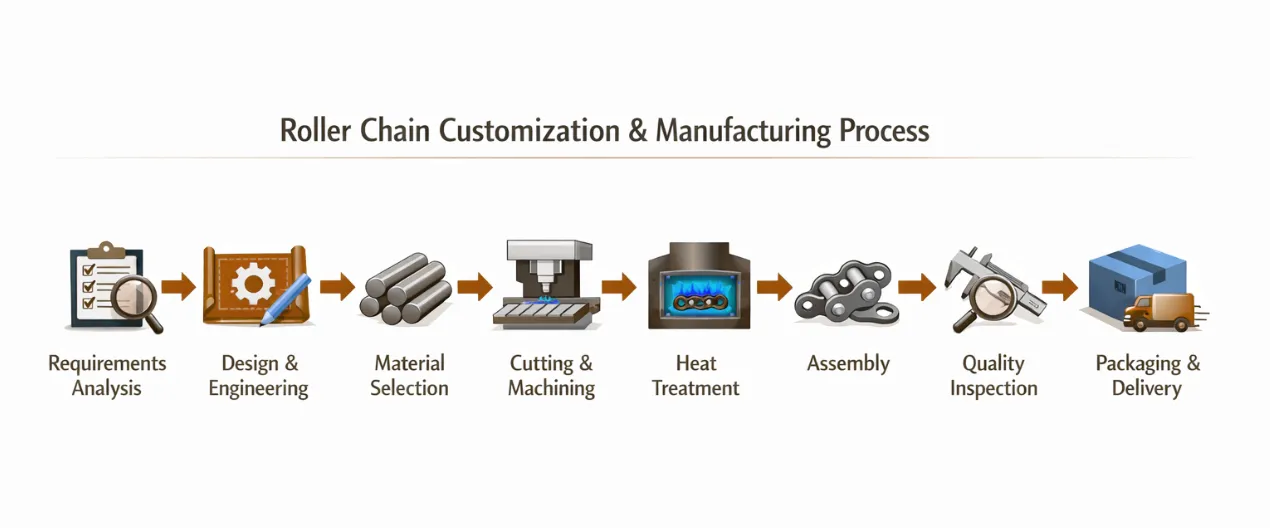
The durability and performance of roller chains are closely related to their manufacturing process. Roller chain manufacturing typically involves several stages: material selection, heat treatment, assembly, and quality control.
Material selection is crucial; most roller chains are made of high-carbon steel, which combines strength and flexibility. Manufacturers often choose alloy steel to enhance wear resistance. After material selection, components undergo heat treatment to increase hardness and tensile strength, thereby enhancing their wear resistance and fatigue resistance.
During assembly, precision is paramount. Each link must be carefully machined to ensure proper installation and functionality. Quality control measures are implemented at every stage, employing advanced testing technologies to ensure the final product meets stringent industry standards.
Factors Affecting Roller Chain Durability
पर्यावरणीय विचार
Roller chains can operate in a wide variety of environments, each presenting unique challenges. Under harsh conditions such as extreme temperatures, high humidity, and corrosive substances, the durability of roller chains is significantly affected.
For example, corrosion becomes a major risk in high humidity or damp environments. Even stainless steel chains, despite their inherent resistance to rust, can suffer pitting and other forms of damage if not properly maintained.
Load and Speed Factors
The load bearing capacity of a roller chain is another vital aspect influencing its lifespan. Chains are designed to handle specific loads; exceeding these limits can lead to premature wear or catastrophic failure. Similarly, the speed at which a chain operates affects its durability. High-speed applications generate additional heat and stress, necessitating the use of chains designed for such conditions.
Lubrication and Maintenance
Lubrication is crucial for extending the service life of roller chains. Proper lubrication reduces friction, minimizes wear, and prevents corrosion. In contaminated environments, regular cleaning and relubrication are essential.
A variety of lubricants are available on the market, from oils to greases, each with its own advantages. The choice of lubricant should be based on specific environmental conditions to ensure optimal performance.
रोलर चेन के सामान्य अनुप्रयोग
औद्योगिक मशीनरी
Roller chains are widely used in a variety of industrial machinery. From conveyor systems to packaging equipment, these chains play a vital role in facilitating motion and automation.
For example, in conveyor systems, roller chains can withstand heavy loads while ensuring smooth material transport. They can operate at high speeds, making them indispensable in efficiency-driven manufacturing processes.
कृषि उपकरण
Agricultural production typically requires robust and durable machinery capable of withstanding harsh environments. Roller chains are widely used in tractors, harvesters, and other agricultural machinery to help transmit power efficiently.
In muddy or dusty environments, the durability of these chains is crucial to ensuring the reliability of agricultural operations. Manufacturers often design chains specifically for agricultural use, endowing them with properties such as greater corrosion resistance and strength.
Automotive and Transportation
In the automotive industry, roller chains are widely used in timing mechanisms and drivetrain systems. Their precision and reliability are crucial for the proper functioning of engine components.
The transportation industry also uses roller chains in various applications, such as escalators and elevators. In these applications, durability is paramount, as wear can lead to malfunctions and safety hazards.
Choosing the Right Roller Chain for Harsh Environments
Understanding Application Requirements
When selecting roller chains for harsh environments, a thorough understanding of the specific application requirements is essential. Factors such as load capacity, operating speed, and environmental conditions must all be considered to make an informed choice.
Partnering with manufacturers specializing in roller chains allows for in-depth understanding of the best products for specific applications. They can provide tailored recommendations based on industry standards and actual performance data.
Material and Coating Choices
When using roller chains in harsh environments, choosing the right materials and construction is crucial. Stainless steel chains are favored for their corrosion resistance, but their strength-to-weight ratio doesn’t always meet the needs of all applications.
Furthermore, coatings can significantly improve the durability of roller chains. Specialized coatings provide an extra layer of protection against environmental stresses, thereby extending the chain’s lifespan under harsh conditions.
Regular Monitoring and Replacement
Regular monitoring of roller chains is crucial for ensuring their lifespan. Adopting a predictive maintenance strategy helps identify wear patterns and potential failures before they lead to major downtime.
Once fatigue or damage is detected, replacement must be made promptly to avoid impacting the integrity of the entire system. Developing routine maintenance plans can improve the overall reliability and performance of equipment using roller chains.
Innovations and Future Trends in Roller Chain Technology
Advanced Materials and Coatings
The future of roller chain technology is promising, with advancements in materials and coating technologies driving this development. Researchers are continuously exploring new alloys and composite materials to enhance their strength and corrosion resistance.
Innovative coatings, such as polymer or ceramic coatings, are emerging, offering superior protection against wear and environmental damage. These advancements will significantly improve the service life and efficiency of roller chains in a wide range of applications.
स्मार्ट प्रौद्योगिकी एकीकरण
Integrating smart technologies into roller chain systems is another exciting development. Sensors can be embedded in the chain system to monitor its performance in real time, providing data on wear patterns, lubrication levels, and overall health.
This data is crucial for predictive maintenance, enabling operators to develop maintenance plans and replacement needs based on this information. The rise of Industry 4.0 is driving these innovations, expanding the boundaries of traditional roller chain applications.
स्थिरता संबंधी विचार
As industries increasingly focus on sustainable development, roller chain manufacturers are actively exploring environmentally friendly production methods and materials. Reducing waste and energy consumption during production is crucial, contributing to achieving global sustainable development goals.
Developing recyclable materials and processes to minimize environmental impact will shape the future landscape of roller chain manufacturing. Manufacturers who adapt to these trends will not only enhance their market competitiveness but also contribute to a more sustainable future.
The Importance of Expertise in Roller Chain Selection
Consulting with Specialists
Partnering with roller chain technology experts offers a significant advantage when selecting products for specific applications. They possess extensive knowledge covering a wide range of topics, from material properties to industry compliance standards.
This collaborative approach leads to better results, ensuring that the chosen roller chain meets application requirements while providing maximum durability and efficiency.
अनुकूलित समाधान
In many cases, off-the-shelf solutions may not meet the needs of a specific application. Roller chains customized to precise specifications can meet specific operational requirements, ensuring effective handling of all factors, including environmental stresses and load conditions.
Partnering with manufacturers that provide customization services can significantly improve product performance and lifespan.
Training and Education
For roller chains, investing in the training and education of maintenance personnel is crucial, as it directly impacts the chain’s lifespan. Understanding how roller chains operate, the importance of lubrication, and signs of wear helps teams maintain equipment more effectively.
By cultivating a knowledge-based culture, businesses can significantly improve operational reliability while minimizing downtime caused by chain failures.
Case Studies of Roller Chain Performance
Case Study 1: Mining Operations
In the mining industry, roller chains need to operate under extreme conditions, enduring the corrosive effects of dust, moisture, and heavy loads. One company adopted a custom-designed roller chain with enhanced corrosion resistance and superior tensile strength, resulting in a significant reduction in maintenance downtime. This customized solution effectively extended the lifespan of the equipment, thereby saving substantial costs.
Case Study 2: Food Processing
A food processing facility faced challenges with standard roller chains due to frequent corrosion and hygiene concerns. By transitioning to chains made from food-grade stainless steel and implementing regular cleaning protocols, they experienced improved performance and compliance with health regulations. The long-term reliability of their systems saw marked improvements, enhancing overall productivity.
Case Study 3: Aerospace Industry
The aerospace industry demands extremely high precision and reliability. One manufacturer, by adopting advanced roller chains using lightweight materials and innovative coatings on its assembly line, has seen significant improvements in operational efficiency. The durability of these chains under extreme temperatures and stringent testing conditions enhances production efficiency without compromising safety.
Final Thoughts on Roller Chain Durability
A deep understanding of the complex characteristics, structure, and applications of roller chains is crucial for optimizing their performance in harsh environments. By recognizing the factors affecting durability and actively embracing innovation, industries can improve operational efficiency and ensure equipment lifespan. Collaborating with experts and leveraging advanced technologies will continue to pave the way for future improvements in roller chain solutions.
Unveiling the Secrets of Roller Chain Durability in Harsh Environments
रोलर चेन का परिचय
Roller chains are indispensable components in drive systems across numerous industries, including manufacturing and agriculture. Their primary function is to transmit power and motion between shafts, making them crucial in mechanical systems. However, their operating environment significantly impacts their performance and lifespan. Understanding the nuances of roller chain durability, especially in harsh environments, helps in finding ways to improve efficiency and reduce maintenance costs.
The Challenge of Harsh Environments
Harsh environments present a unique set of challenges for roller chains. These conditions may include extreme temperatures, corrosive substances, excessive dust, or lubrication deprivation. Such factors can lead to accelerated wear, reduced efficiency, and ultimately, failure of the chain system.
तापमान की चरम सीमाएँ
In environments where temperature fluctuations are common, roller chains face the challenge of material expansion and contraction. For instance, chains operating in freezing temperatures may experience brittle fracture, while those in high-temperature scenarios can suffer from thermal degradation of lubrication.
Corrosive Elements
Exposure to chemicals or moisture can lead to corrosion, significantly impacting the integrity of a roller chain. Chains made from standard steel are susceptible to rust, which can compromise their tensile strength and lead to premature failure. The application of stainless steel or specialized coatings can mitigate these risks.
Contaminants and Debris
Dust and debris can infiltrate a roller chain system, leading to increased friction and wear. In manufacturing environments, for example, the accumulation of particulate matter can lead to catastrophic failure if not properly managed.
Case Study: Industrial Conveyor in a Mining Operation
To illustrate these principles, consider a case study involving a mining operation that utilizes a heavy-duty roller chain conveyor system. This system operates under extreme conditions, including high dust levels, significant mechanical stress, and exposure to various corrosive substances.
Initial Setup and Conditions
Prior to any modifications or upgrades, the mine used a standard roller chain designed for medium-intensity use. This chain operated at ambient temperature but was frequently exposed to water and dust from the surrounding environment. Initial performance specifications indicated a chain lifespan of approximately six months, after which it would require replacement due to severe wear and corrosion.
Analysis of Performance Data
Data collected during the initial operational phase revealed a series of concerning trends. Average wear rates were documented at 0.5 mm per month, with up to 15% loss in tensile strength observed within the first quarter. Additionally, corrosion pitting was noted, leading to reduced chain efficiency and increased energy consumption.
Upgrading to Premium Roller Chains
In response to the deteriorating performance of the roller chain, the management team decided to upgrade to a specialized roller chain designed for harsh environments. This chain featured enhanced materials and coatings, specifically formulated to resist corrosion and wear in extreme conditions.
स्थापना के बाद प्रदर्शन मेट्रिक्स
Following the installation of the upgraded roller chain, performance metrics were rigorously monitored over a one-year period. The results were striking:
– The wear rate dropped to an astonishing 0.1 mm per month.
– Tensile strength retention improved by 25%, with negligible signs of corrosion observed.
– Energy consumption also decreased by 10%, demonstrating the importance of efficiency in chain systems.
Maintenance Practices for Enhanced Durability
The successful application of high-quality roller chains is attributed to improvements in maintenance procedures during mining operations. Regular inspections and lubrication plans emphasize the importance of proactive maintenance in extending the service life of roller chains in harsh environments.
Lessons Learned and Future Directions
This case study highlights the critical importance of selecting the appropriate roller chain for specific environmental conditions. The transition from standard roller chains to specialized models, combined with improved maintenance practices, significantly extended service life and improved operational efficiency.
This mining company not only achieved significant cost savings by reducing downtime and replacement frequency but also gained experience that can guide future equipment upgrades. As industries evolve and face new challenges, understanding the dynamic changes in roller chain durability is crucial for ensuring continuous productivity and operational excellence.
Furthermore, ongoing research in materials science and engineering promises to develop more resilient roller chains to meet the demands of the most challenging environments. By remaining vigilant and adaptable, industries can fully realize the potential of roller chains, transforming them from ordinary components into reliable partners in the pursuit of efficiency and performance.
Unveiling the Secrets of Roller Chain Durability in Harsh Environments
Case Study: Roller Chain Performance in Mining Operations
Introduction to Mining Challenges
Mining operations face a unique set of challenges, characterized by extremely harsh environmental conditions. High dust levels, high humidity, and heavy loads are the norm, all of which severely impact the lifespan and performance of mechanical components. This case study analyzes a mining company that had long relied on standard roller chains in its conveyor systems, resulting in frequent failures and costly downtime.
This case study highlights the significant advantages of selecting the right roller chains for harsh environments, particularly in the mining industry. By understanding the challenges posed by its operating conditions and collaborating with experts, this mining company successfully improved productivity and reduced costs. The transition to dedicated roller chains clearly demonstrates how customized solutions can significantly enhance performance and reliability in demanding applications. Future efforts may include exploring more advanced materials and technologies to continuously improve operational resilience.
Unveiling the Secrets of Roller Chain Durability in Harsh Environments
रोलर चेन का परिचय
Roller chains are indispensable components in drive systems across numerous industries, including manufacturing and agriculture. Their primary function is to transmit power and motion between shafts, making them crucial in mechanical systems. However, their operating environment significantly impacts their performance and lifespan. Understanding the nuances of roller chain durability, especially in harsh environments, helps in finding ways to improve efficiency and reduce maintenance costs.
The Challenge of Harsh Environments
Harsh environments present a unique set of challenges for roller chains. These conditions may include extreme temperatures, corrosive substances, excessive dust, or lubrication deprivation. Such factors can lead to accelerated wear, reduced efficiency, and ultimately, failure of the chain system.
तापमान की चरम सीमाएँ
In environments where temperature fluctuations are common, roller chains face the challenge of material expansion and contraction. For instance, chains operating in freezing temperatures may experience brittle fracture, while those in high-temperature scenarios can suffer from thermal degradation of lubrication.
Corrosive Elements
Exposure to chemicals or moisture can lead to corrosion, significantly impacting the integrity of a roller chain. Chains made from standard steel are susceptible to rust, which can compromise their tensile strength and lead to premature failure. The application of stainless steel or specialized coatings can mitigate these risks.
Contaminants and Debris
Dust and debris can infiltrate a roller chain system, leading to increased friction and wear. In manufacturing environments, for example, the accumulation of particulate matter can lead to catastrophic failure if not properly managed.
Case Study: Industrial Conveyor in a Mining Operation
To illustrate these principles, consider a case study involving a mining operation that utilizes a heavy-duty roller chain conveyor system. This system operates under extreme conditions, including high dust levels, significant mechanical stress, and exposure to various corrosive substances.
Initial Setup and Conditions
Prior to any modifications or upgrades, the mine used a standard roller chain designed for medium-intensity use. This chain operated at ambient temperature but was frequently exposed to water and dust from the surrounding environment. Initial performance specifications indicated a chain lifespan of approximately six months, after which it would require replacement due to severe wear and corrosion.
Analysis of Performance Data
Data collected during the initial operational phase revealed a series of concerning trends. Average wear rates were documented at 0.5 mm per month, with up to 15% loss in tensile strength observed within the first quarter. Additionally, corrosion pitting was noted, leading to reduced chain efficiency and increased energy consumption.
Upgrading to Premium Roller Chains
In response to the deteriorating performance of the roller chain, the management team decided to upgrade to a specialized roller chain designed for harsh environments. This chain featured enhanced materials and coatings, specifically formulated to resist corrosion and wear in extreme conditions.
Specifications of the New Roller Chain
The new रोलर चेन boasted several advanced features:
– Material Composition: Constructed from high-grade stainless steel, with a proprietary coating to enhance resistance to corrosion.
– Heat Treatment: Each link underwent a rigorous heat treatment process to improve hardness and wear resistance.
– Sealed Lubrication: Incorporation of sealed lubrication systems to minimize contamination and ensure consistent performance.
स्थापना के बाद प्रदर्शन मेट्रिक्स
Following the installation of the upgraded roller chain, performance metrics were rigorously monitored over a one-year period. The results were striking:
– The wear rate dropped to an astonishing 0.1 mm per month.
– Tensile strength retention improved by 25%, with negligible signs of corrosion observed.
– Energy consumption also decreased by 10%, demonstrating the importance of efficiency in chain systems.
Maintenance Practices for Enhanced Durability
The successful implementation of the premium roller chain was complemented by a revamp of the maintenance practices within the mining operation. Regular inspections and lubrication schedules were established, emphasizing the importance of proactive maintenance in extending the lifespan of roller chains in harsh environments.
Inspection Protocols
A systematic inspection protocol was introduced, focusing on:
– Visual Checks: Regular visual inspections for signs of wear, corrosion, or misalignment.
– Lubrication Audits: Monitoring the condition of lubrication to ensure optimal performance and prevent contamination.
– Load Monitoring: Keeping track of the loads applied to the chain to prevent overstress, which could lead to premature failure.
Lessons Learned and Future Directions
This case study highlights the critical importance of selecting the appropriate roller chain for specific environmental conditions. The transition from standard roller chains to specialized models, combined with improved maintenance practices, significantly extended service life and improved operational efficiency. The mining company not only achieved significant cost savings by reducing downtime and replacement frequency but also gained experience that can guide future equipment upgrades. As industries evolve and face new challenges, understanding the dynamic changes in roller chain durability is crucial for ensuring continuous productivity and operational excellence. Furthermore, ongoing research in materials science and engineering promises to develop more resilient roller chains to meet the demands of the most challenging environments. By remaining vigilant and adaptable, industries can fully realize the potential of roller chains, transforming them from ordinary components into reliable partners in the pursuit of efficiency and performance.
Unveiling the Secrets of Roller Chain Durability in Harsh Environments
Case Study: Roller Chain Performance in Mining Operations
Introduction to Mining Challenges
Mining operations face a unique set of challenges, characterized by extremely harsh environmental conditions. High dust levels, high humidity, and heavy loads are the norm, all of which severely impact the lifespan and performance of mechanical components. In this case study, we examine a mining company whose standard roller chains in its conveyor system have consistently malfunctioned, leading to frequent breakdowns and costly downtime.
Pre-Installation Performance Data
Prior to implementing specialized roller chains, the mining company recorded the following performance metrics over a six-month period:
– Average Downtime: 120 hours per month due to roller chain failures.
– Maintenance Costs: Approximately £15,000 in repairs and replacements.
– Operational Efficiency: Only 75% due to frequent interruptions in material transport.
– Corrosion Issues: Visible rust formation within two months of installation.
These figures underscore the critical need for an effective solution to improve operational efficiency and reduce maintenance costs.
Identifying the Right Roller Chain Solution
In collaboration with a roller chain manufacturer specializing in harsh environment applications, the mining company explored various options tailored to their specific needs. The manufacturer recommended a specialized roller chain constructed from high-carbon steel, featuring enhanced corrosion resistance and superior tensile strength. Key specifications of the new roller chain included:
– Material Composition: Alloy steel with a corrosion-resistant coating.
– Load Capacity: Rated for heavy-duty applications, exceeding the previous chain’s specifications by 25%.
– Design Features: Sealed rollers to prevent dust ingress and retain lubrication.
This selection was based on comprehensive analysis and testing of materials that would withstand the rigors of mining operations.
Installation and Initial Observations
The installation of the new roller chains was executed over a two-week period, during which the entire conveyor system was upgraded. Key steps included:
– System Assessment: A thorough evaluation of existing components to ensure compatibility.
– Chain Replacement: Removing outdated chains and installing the new, specialized roller chains.
– Lubrication Setup: Implementing a new lubrication system to maintain optimal chain health.
Post-installation, immediate observations indicated a marked improvement in operational dynamics. The newly installed roller chains operated smoothly without the initial friction typically associated with standard designs.
स्थापना के बाद प्रदर्शन मेट्रिक्स
Following the installation of the specialized roller chains, the mining company reported the following data over the next six months:
– Average Downtime: Reduced to 20 hours per month, marking an 83% decrease.
– Maintenance Costs: Dropped to £3,000, reflecting an 80% reduction in repair expenses.
– Operational Efficiency: Increased to 95%, attributed to uninterrupted material transport.
– Corrosion Resistance: No visible rust formation after the six-month period, thanks to the protective coating.
These impressive statistics illustrate the effectiveness of utilizing tailored roller chain solutions in demanding environments.
Long-Term Impact and Additional Adjustments
The remarkable performance of the new roller chains prompted the mining company to consider further enhancements in their equipment maintenance strategy. Capitalizing on the benefits of the specialized chains, they implemented routine inspections and predictive maintenance protocols. This proactive approach included:
– Scheduled Lubrication: Establishing a strict lubrication schedule to prolong chain life.
– Continuous Monitoring: Investing in monitoring systems to track wear patterns and prevent unexpected failures.
– Operator Training: Training staff on the importance of regular maintenance and the characteristics of the new roller chains.
The combination of these initiatives ensured that the improvements in efficiency and cost savings were not only maintained but also built upon.
Future Endeavors
This case study highlights the significant advantages of selecting the right roller chains in harsh environments, particularly in the mining industry. By understanding the challenges of its operating conditions and collaborating with experts, this mining company successfully improved productivity and reduced costs. The transition to dedicated roller chains clearly demonstrates how customized solutions can significantly enhance performance and reliability in demanding applications. Future efforts may include exploring more advanced materials and technologies to continuously improve operational resilience.
जीजेडएल द्वारा संपादित