Where the Standards Come From: A Historical Divide
American Standard
ANSI B29.1
The American National Standards Institute chain specification — formally ANSI B29.1 — traces its origin to the early twentieth century when American industrial machinery manufacturers needed a common interoperability framework. The standard encodes pitch in fractions of an inch, uses a numeric chain designation system (40, 50, 60, 80, 100, 120, 140, 160, and so on), and reflects the manufacturing philosophy of the American market — generous tolerances, high tensile strength emphasis, and compatibility with mass-production sprocket manufacture. The chain pitch is measured in eighth-inch increments, so a No. 40 chain has a pitch of 4/8 inch, or 0.500 inch (12.70 mm). ANSI chains dominate North American machinery and any UK or European equipment imported from American manufacturers before wider ISO adoption.
International Standard
ISO 606 (BS 228)
ISO 606 — the International Organization for Standardization specification for short-pitch transmission precision roller and bush chains — draws heavily from the British Standard BS 228 that preceded it. Adopted across Europe and most of the world, ISO 606 expresses chain dimensions in millimetres and uses an alphanumeric designation system (06B, 08B, 10B, 12B, 16B, and so on). The “B” suffix denotes a British-series chain while the numeric prefix encodes the pitch in sixteenths of an inch for legacy compatibility reasons. For UK manufacturers operating under CE-marked machinery regulations, ISO 606 is typically the default specification. European machine builders, including those supplying the Sheffield steel sector, West Midlands automotive industry, and food processing operations in Yorkshire, predominantly design drive systems around ISO-metric dimensions.
Chain Designation Systems: Reading the Number on the Box
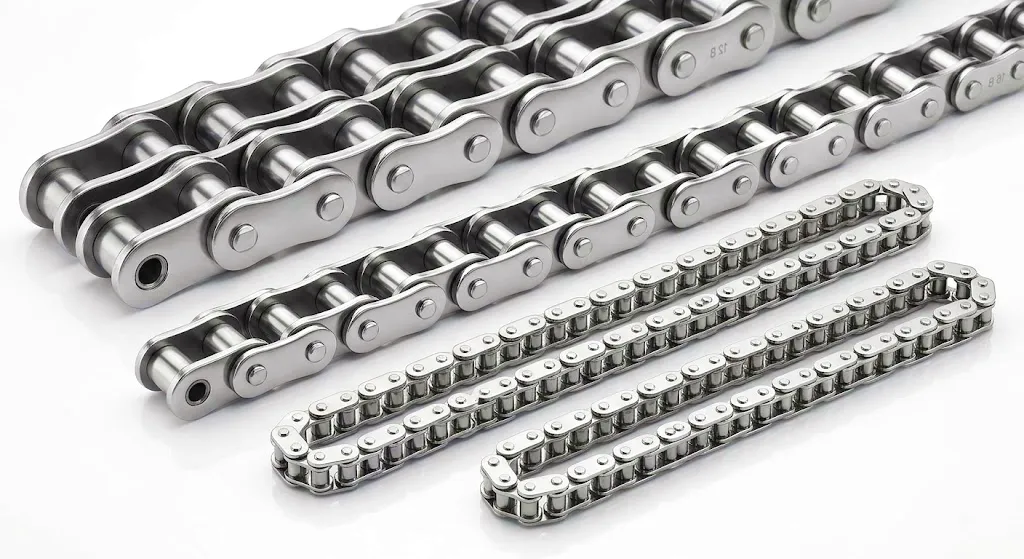
One of the first points of confusion engineers encounter when comparing roller chain catalogues is the designation format. ANSI chains carry a purely numeric designation: 25, 35, 40, 50, 60, 80, 100, 120. These numbers directly encode the pitch. The first one or two digits multiplied by one-eighth of an inch give the pitch — so a chain marked “50” has a pitch of 5/8 inch (15.875 mm). A suffix of “H” indicates a heavy-duty series with thicker plates; a “2” or “3” prefix indicates duplex or triplex strand configurations. This makes ANSI numbering relatively straightforward once the formula is understood, though the inch-based logic can feel counterintuitive for metric-trained European engineers.
ISO 606 chains use a different convention. A chain designated “08B-1” has a pitch of 8/16 inch, which equals 0.500 inch or 12.70 mm — the same pitch as an ANSI 40 chain. Here, the “08” prefix indicates the pitch in sixteenths of an inch, “B” specifies the European (British) series as opposed to the narrower “A” series (which closely mirrors ANSI dimensions), and the trailing “-1” denotes single strand. Despite sharing the same pitch, an ISO 08B-1 chain and an ANSI 40 chain are not directly interchangeable because their roller width, plate geometry, and attachment dimensions differ. This distinction has caused costly mismatches for procurement teams in Manchester and Leeds who assume pitch equivalence implies full substitutability.
ANSI Formula
Pitch = designation number ÷ 8 inches
Example: ANSI 80 = 80 ÷ 8 = 1.000 inch pitch
ISO 606 Formula
Pitch = prefix number ÷ 16 inches
Example: ISO 16B = 16 ÷ 16 = 1.000 inch (25.40 mm) pitch
Key Caution
Same pitch ≠ interchangeable. Inner width and roller diameter often differ between ANSI and ISO “equivalent” chains.
Technical Performance and Dimensional Parameters: ANSI vs ISO
The table below provides a direct technical comparison of the most commonly specified roller chain sizes across both standards. These are the working dimensions engineers rely on when specifying drives for conveyor systems, agricultural machinery, and power generation equipment throughout England’s industrial regions. Breakload figures shown represent minimum values for single-strand, new chain under controlled tensile test conditions.
All dimensions in millimetres. Break loads are minimum values per standard. Data for reference; confirm against current standard revisions for critical design.
Engineering Principle: How Roller Chain Transmits Power
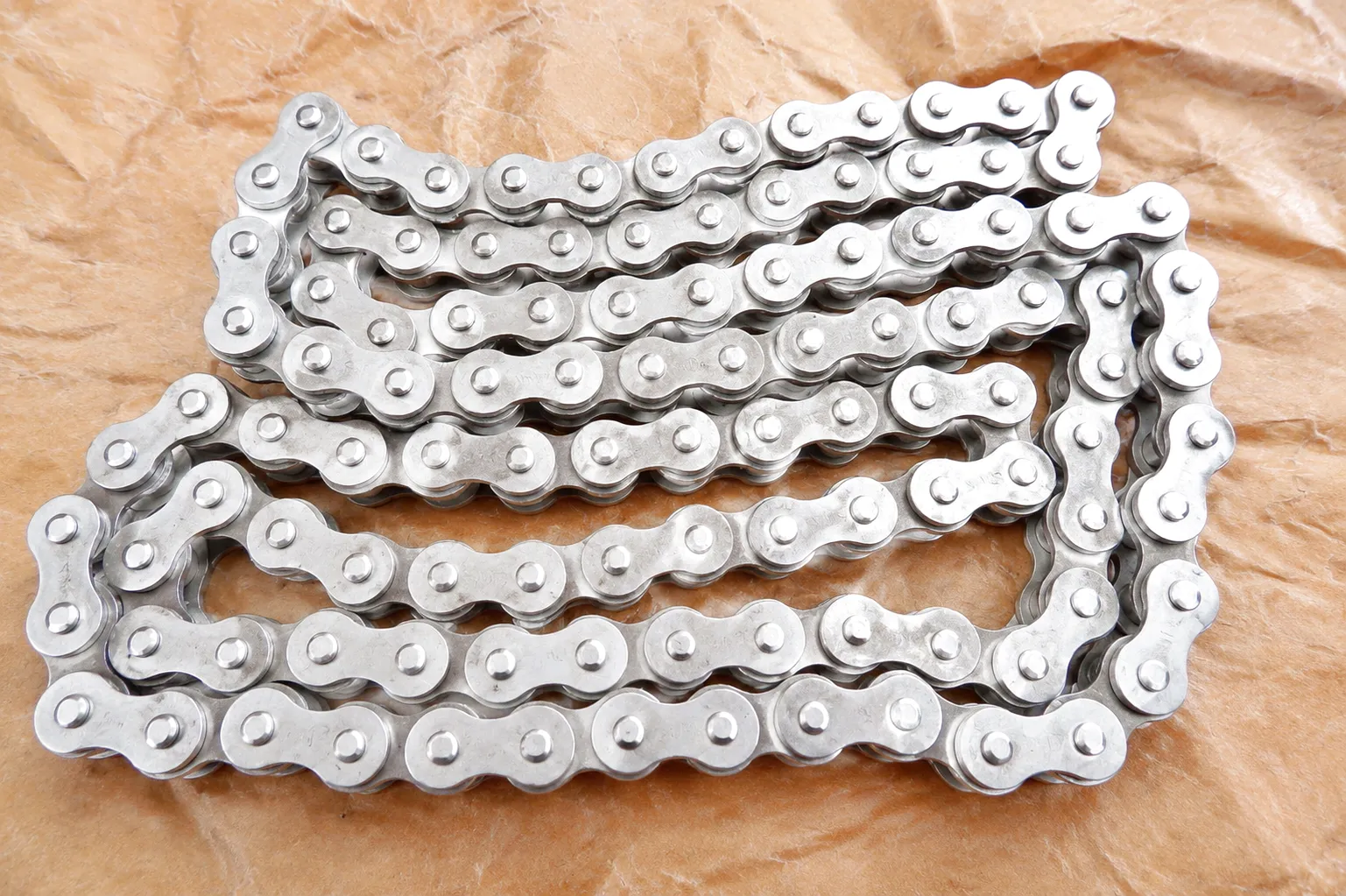
A roller chain operates on a deceptively elegant principle: it converts rotational motion from a driving sprocket into linear motion through the chain itself, which then drives a driven sprocket at the receiving end of the power train. Each link in the chain is built from an outer plate pair connected by a pin, and an inner plate pair connected by a hollow bushing. Around this bushing sits a hardened roller. As the chain engages a sprocket tooth, the roller — being free to rotate on the bushing — rolls into the tooth root rather than sliding against it. This rolling contact dramatically reduces friction compared to sliding-contact power transmission elements, producing mechanical efficiencies typically above 98% under normal operating conditions. This is the physical basis for the roller chain’s widespread adoption across British industry, from the coal handling conveyors that once served South Yorkshire mines to the precision transfer lines in today’s Midlands automotive plants.
The critical wear mechanism in a roller chain is elongation — commonly but imprecisely called “chain stretch.” True elongation occurs not from deformation of the steel plates but from progressive wear at the pin-bushing interface. As these hardened steel surfaces wear under cyclic loading, each link acquires a tiny additional clearance, and across one hundred or more links, these micro-increments accumulate into measurable elongation. ANSI and ISO standards both specify pin diameter, bushing bore, and plate hole tolerances, but their precise values differ, which affects wear rate, elongation pattern, and replacement threshold behaviour. Engineers comparing replacement intervals between American and European equipment running the same nominal chain pitch will often observe different wear curves precisely because the dimensional tolerances in the two standards are not identical.
Core Materials in Quality Roller Chain Manufacture
▹ Plates: Alloy Steel
Inner and outer plates are stamped from medium-carbon or alloy steel (typically 45C or 40Cr equivalents), then heat-treated to achieve tensile strength between 600 and 900 MPa depending on chain series. The plate geometry — height, thickness, and waist profile — governs static tensile capacity and fatigue resistance under dynamic loading, which is especially important in drives with significant shock load, such as presses and compactors.
▹ Pins: Case-Hardened Steel
Pins are machined from chromium or chrome-molybdenum alloy steel and subjected to carburising and case hardening to achieve a hard, wear-resistant outer layer (typically 58–64 HRC at the surface) over a tough, impact-absorbing core. Pin hardness and surface finish are particularly relevant when comparing ANSI and ISO designs, as the two standards specify slightly different diameter tolerances that influence the contact geometry with the bushing bore and hence the wear progression throughout chain service life.
▹ Bushings: Sintered or Machined Steel
Bushings represent the critical wear interface in the roller chain joint. High-quality chains use sintered powder-metallurgy bushings, which can be impregnated with oil during manufacture to provide boundary lubrication even in under-lubricated conditions. The bore diameter and surface finish of the bushing bore against the pin outer diameter are the principal determinants of chain elongation rate. ISO 606 and ANSI B29.1 bushing specifications are not identical, which means replacing an ISO chain with an ANSI equivalent — or vice versa — on the same sprocket can subtly alter both engagement geometry and wear behaviour.
▹ Rollers: Hardened Steel
The hardened steel roller surrounds the bushing and engages directly with sprocket teeth. Roller outer diameter — which differs between ANSI and ISO chains at nominally the same pitch — determines contact stress on the sprocket tooth flank. ISO 606 chains frequently feature a larger roller diameter than their ANSI counterparts at equivalent pitch sizes (most visibly at 06B vs. 35 and 08B vs. 40 comparisons), which distributes contact load over a wider area and contributes to the higher minimum breaking loads seen in ISO-series chains at some pitch sizes. For stainless steel roller chain applications in food processing environments, such as those found in Lancashire and Lincolnshire food manufacturing facilities, the roller material shifts to AISI 304 or 316 stainless, which changes hardness and corrosion resistance characteristics significantly.
The Five Critical Dimensional Differences That Actually Matter
Inner Plate Width
At equivalent nominal pitches, ISO 606 chains are generally wider in the inner plate spacing than their ANSI counterparts. This means ISO sprockets have wider tooth gullets. Fitting an ANSI chain onto an ISO sprocket of the same pitch will result in excessive lateral play; the chain can walk sideways and mistrack under load, accelerating plate-edge wear and increasing noise. Conversely, an ISO chain pressed onto an ANSI sprocket will be too tight laterally, causing binding, heat generation, and premature roller and bushing failure — conditions that procurement teams in Glasgow and Birmingham have encountered when sourcing replacement chain without verifying both pitch and inner width against the actual sprocket specification.
Rullediameter
Roller outer diameter controls how the chain seats into sprocket tooth roots. ISO 606 specifies a larger roller diameter than ANSI B29.1 for several of the most common pitch sizes. The practical consequence is that ISO chains often show a larger contact patch on sprocket teeth, which distributes Hertzian contact stress over a wider area and can extend sprocket life in heavily loaded drives. ANSI chain with its smaller roller diameter will sit lower in the same ISO sprocket’s tooth root, subtly altering the engagement geometry, increasing the velocity ratio variation — commonly called “chordal action” — and raising noise and vibration in drive systems designed around ISO dimensions.
Plate Height and Thickness
ISO 606 plates are, in most series comparisons, taller than ANSI plates at the same pitch. Greater plate height increases the cross-sectional area resisting bending fatigue, which is the primary failure mode for chains operating in high-shock environments such as quarrying equipment, sawmill conveyors, and heavy press transfer lines. For UK operations where equipment runs three shifts with minimal planned maintenance windows, plate fatigue strength can be the decisive factor in roller chain service life — and selecting ISO 606 chain with its generally taller plates may deliver longer fatigue life than an ANSI equivalent, even when the nominally equivalent pitch chain is specified at a similar price point.
Breaking Load Ratings
Looking at the data table above, engineers will notice that at some pitch sizes, ISO 606 minimum breaking loads exceed the ANSI equivalents — particularly at larger pitches such as 120/24B and 80/16B. This reflects differences in both plate geometry and the minimum material specifications each standard mandates. For drive system design, this means that an ISO 16B-1 chain may deliver more margin against tensile overload than a nominally equivalent ANSI 80 chain at the same pitch — a relevant consideration for safety-critical applications in the UK, where machinery must comply with BS EN ISO 4413 for hydraulic-adjacent drives and the Machinery Directive for overall design, both of which prefer traceable, standards-based safety factors.
Sprocket Tooth Profile
Because roller diameter and inner width differ between standards, the sprocket tooth profile — the geometry of the gap between consecutive teeth — must also differ. ANSI sprockets designed to B29.1 and ISO sprockets designed to ISO 606 are not interchangeable for chains of the same pitch. Mixing standards — fitting an ANSI chain to an ISO sprocket — causes the chain rollers to sit either too deep or too shallow in the tooth root, resulting in non-uniform load distribution across the engaged chain span. Drive engineers at manufacturing plants throughout the East Midlands have found this to be one of the more subtle and insidious failure modes: the drive appears to function initially, noise gradually increases, and then a run of premature sprocket tooth wear follows before the root cause — a standard mismatch — is identified.
Featured High-Strength Roller Chain Products
For demanding Caterpillar equipment applications — whether in quarrying operations around the Peak District, infrastructure projects across the Midlands, or port handling equipment at Immingham and Southampton — Ever Power’s High Strength series delivers proven load capacity and dimensional precision to specification:
● Heavy-Duty Series
Højstyrke rullekæde 120HSP-00
Engineered specifically for Caterpillar excavator and dozer undercarriage drives operating under sustained high-load conditions in UK construction, quarrying, and land remediation environments. The 120HSP-00 series features enhanced pin and bushing case hardening depth, premium alloy plate steel, and tight dimensional control to ANSI 120 class specifications for direct compatibility with Cat factory sprocket sets.
Se produktdetaljer →
● Premium Series
Højstyrke rullekæde C100HSP-00
The C100HSP-00 delivers ANSI 100 pitch performance in a heavy-duty format targeted at Caterpillar equipment requiring high fatigue resistance and extended service life between planned maintenance intervals. Featuring precision-machined rollers, vacuum-heat-treated pins, and 100% factory proof-load testing, this series is well suited for UK plant hire fleets where equipment utilisation rates leave minimal tolerance for unplanned downtime.
Se produktdetaljer →
Industrial Application Scenarios Across UK Manufacturing Sectors
Mining, Quarrying and Construction Equipment
Off-highway construction and quarrying equipment operating in Wales, Scotland, and Northern England commonly runs on ANSI-standard roller chains, particularly when the machinery is Caterpillar, John Deere, or Komatsu equipment designed to American dimensional standards. The heavy-duty series chains in ANSI 100, 120, and 140 pitches carry the structural loads generated by bucket elevators, feeder conveyors, and stacker systems in aggregate quarries and opencast coal operations. Understanding which standard the OEM designed to is the starting point for any replacement chain specification in this sector — and getting it wrong means either a failed fitment on delivery or a short-lived installation that costs far more than the price difference between a correctly specified chain and an incorrectly specified one.
Within the energy sector — particularly wind turbine pitch and yaw drive systems installed across the Scottish Highlands and along England’s east coast — ISO 606 predominates because European turbine designers uniformly build to this standard. The service-life demands are extreme: chains must deliver reliable performance across multi-year service intervals with minimal field maintenance in remote or elevated installations where servicing is costly and logistics are challenging.
Core Product Advantages of Premium Roller Chain in Both Standards
Høj mekanisk effektivitet
Rolling contact between hardened rollers and sprocket teeth maintains drive efficiency typically above 98%, reducing motor energy consumption across continuous-running applications — a meaningful cost advantage for UK operations managing energy budgets under current industrial electricity pricing.
Defined Load Capacity
Both ANSI and ISO standards publish minimum breaking load values and dynamic load ratings that allow design engineers to calculate safety factors precisely. This traceability to a published standard — rather than a manufacturer’s proprietary rating — gives UK engineering teams the confidence to document their drive designs under BS EN 13001 or similar structural calculation frameworks used in CE marking technical files.
Wide Speed Range
Precision roller chains in the finer pitch series (06B / 35, 08B / 40) are capable of operating at sprocket speeds exceeding 3,000 RPM in well-lubricated, aligned drives. The wide operational speed range — from near-zero indexing speeds in transfer machines to high-speed power take-off drives in agricultural equipment — makes roller chain uniquely versatile compared to timing belts or V-belts, both of which have harder speed-load combination limits.
Thermal and Chemical Robustness
Standard carbon-steel roller chains operate reliably in ambient temperatures from -20 °C to 250 °C with appropriate lubrication. Stainless and nickel-plated variants extend this into moderately corrosive chemical environments. This thermal range covers the vast majority of UK industrial environments, including outdoor installations at coastal aggregates handling sites where salt-laden air accelerates corrosion on inadequately specified chain materials.
Standardised Global Supply
Both ANSI B29.1 and ISO 606 are globally published standards with thousands of compliant manufacturers worldwide. This supply ecosystem means that correctly specified roller chain — with the standard clearly stated on the purchase order — can be sourced from multiple qualified suppliers, protecting UK buyers from single-source dependency and ensuring competitive pricing from suppliers like Ever Power who maintain consistent quality across large production volumes.
Customer Success Story: Resolving a Standards Mismatch at a Sheffield Forging Plant
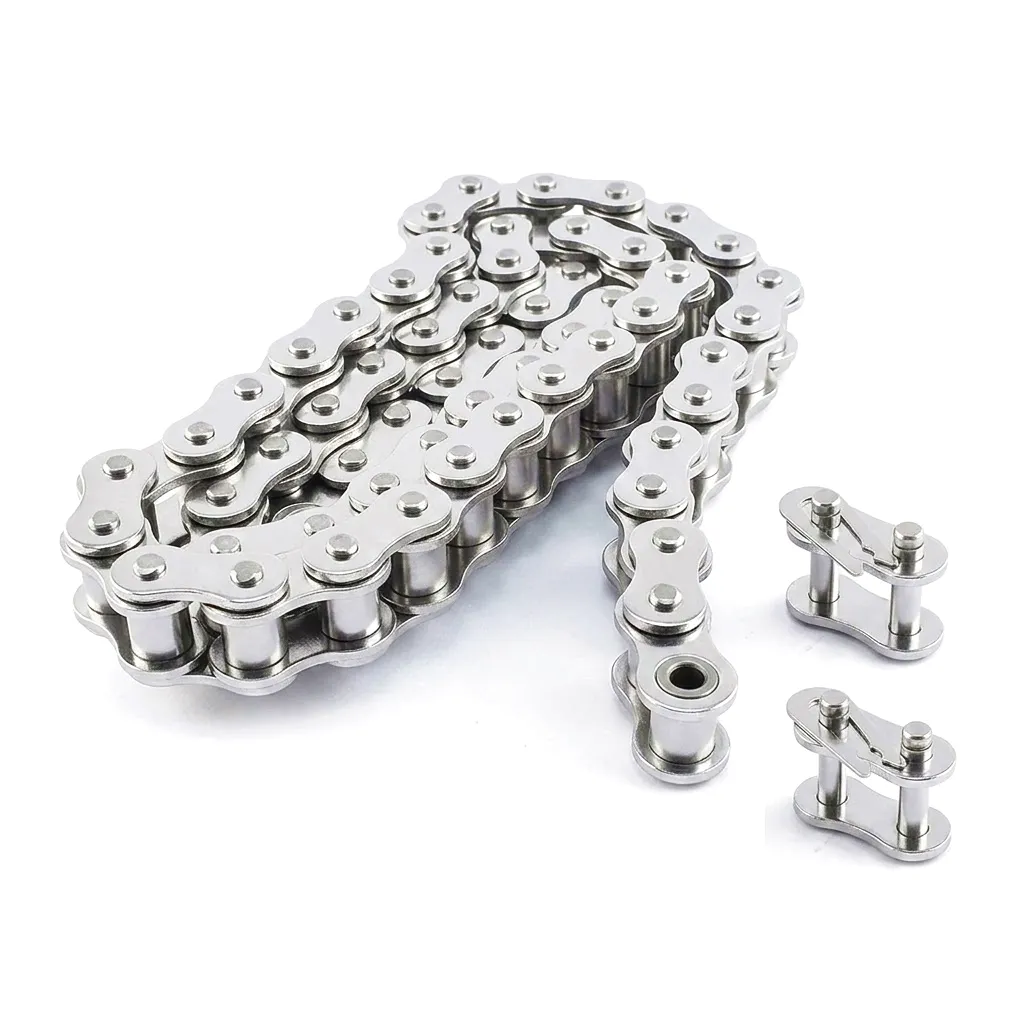
A medium-sized open-die forging company operating near Sheffield’s Lower Don Valley came to Ever Power after experiencing a pattern of premature roller chain failures on a billet transfer conveyor that had been maintained for eleven years without incident. The conveyor system used a 1-inch pitch roller chain drive in a three-strand configuration running across a 60-tooth driven sprocket. When the previous chain supplier withdrew the product line, the plant’s maintenance buyer sourced a replacement from a catalogue distributor based on pitch alone, specifying “1-inch pitch three-strand roller chain” without identifying the original standard.
The replacement chain arrived as ISO 24B-3 — a perfectly valid 1.500 inch (38.10 mm) pitch chain, but with a roller diameter of 25.40 mm versus the ANSI 120 original’s 22.23 mm roller. The inner width also differed by over 0.5 mm from the ANSI sprocket’s tooth space. The drive appeared to operate initially — pitch-to-tooth engagement still occurred — but lateral chain wander and incorrect roller seating in the sprocket tooth root generated abnormal tooth-flank loading. Within six weeks, the hardened sprocket teeth showed visible localised wear, and by week nine the drive required emergency shutdown for full chain and sprocket replacement.
Ever Power’s technical review identified the standard mismatch within the first assessment call. An ANSI 120-3 replacement chain was supplied to the plant’s planned shutdown two weeks later, dimensionally verified against the actual sprocket tooth space measurements provided by the plant engineering team. The reinstated drive has completed four months of continuous operation, including two production surge periods, without incident. Ever Power also supplied a dimensional reference card to the plant’s maintenance team clearly listing the ANSI chain designation alongside the ISO chain that must not be substituted — a simple but durable solution to a recurrence risk that had cost the plant nearly £28,000 in unplanned downtime and component replacement.
Kundeanmeldelser
David Hartley, Engineering Manager
Open-Die Forging Operations, Sheffield
“Ever Power identified the ANSI-to-ISO mismatch that had been destroying our sprockets within the first conversation. Their dimensionally verified ANSI 120-3 replacement arrived exactly when promised, and the drive has been running cleanly through two production surges since. Their technical depth is the real differentiator — we now send our chain specifications to them first, before procurement puts anything out to tender.”
Sandra Mellor, Head of Procurement
Automotive Component Supplier, West Midlands
“We run mixed-standard drive trains across our Birmingham site — some built to ANSI from a US OEM, the rest ISO from our European press line supplier. Ever Power maintains separate stock of both standards, issues compliant inspection certificates for each, and flags any specification ambiguity before despatch rather than after. For a procurement manager, that level of pre-delivery technical engagement is exactly what I need to keep my quality management system clean.”
James Thornton, Plant Maintenance Director
Quarry Operations, North Yorkshire
“Our Caterpillar equipment fleet runs Ever Power High Strength chains — specifically the 120HSP-00 series — across our primary crusher and conveyor drives. Service life has improved by approximately 30% compared to the previous supplier’s product, and the dimensional consistency across batches means our in-house fitting team has zero adjustment time on installation. The paperwork — inspection certificates, standard compliance declarations — all arrive with the delivery and drop straight into our ISO 9001 supplier file.”
How to Choose Between ANSI and ISO Roller Chain: A Practical Decision Framework
Step 1 — Identify the Machine Origin
Check the machine builder’s country of origin. American, Japanese (ANSI-aligned), and Canadian machines typically run ANSI. European — German, Italian, French, British, Dutch — machines specify ISO 606. This is the fastest initial filter, though not infallible, because some European builders use ANSI chain for specific sub-assemblies driven by American-sourced sub-systems.
Step 2 — Read the Existing Chain Marking
Quality roller chains carry a manufacturer’s mark and chain designation on the link plates or on the joining link. An ANSI chain will carry a number like “80” or “100H.” An ISO chain carries a designation like “16B-1” or “12B-2.” If the marking is worn or missing, measure the chain’s pitch (pin-centre to pin-centre over ten links, divided by ten) and compare against the dimension tables for both standards to determine which standard is consistent with the measured inner width and roller diameter.
Step 3 — Verify Sprocket Tooth Space
Measure the tooth space width at the root of the sprocket. This should match the roller diameter of the chain in use. If the sprocket cannot be removed for measurement, a calibrated bore gauge or a transferred impression can provide this dimension. Comparing the measured tooth root width against the ANSI and ISO roller diameter tables for the known pitch will confirm which standard the sprocket was designed for — and therefore which standard the replacement chain must meet.
Step 4 — Consult Your Supplier’s Technical Team
If steps one through three leave ambiguity — which is common for machinery without documentation, for older equipment, or for drives that have been modified by previous maintenance contractors — contact Ever Power’s technical team directly. Providing pitch, measured inner width, roller diameter, and the sprocket tooth count is typically enough to identify the correct chain specification without further site measurement. For UK clients, this process can take place by email with the chain marking photos and a digital calliper measurement sent before an order is placed.
Ofte stillede spørgsmål
Voice-search friendly answers for UK industrial buyers and maintenance engineers
Partner with Ever Power for Precision Roller Chain Supply
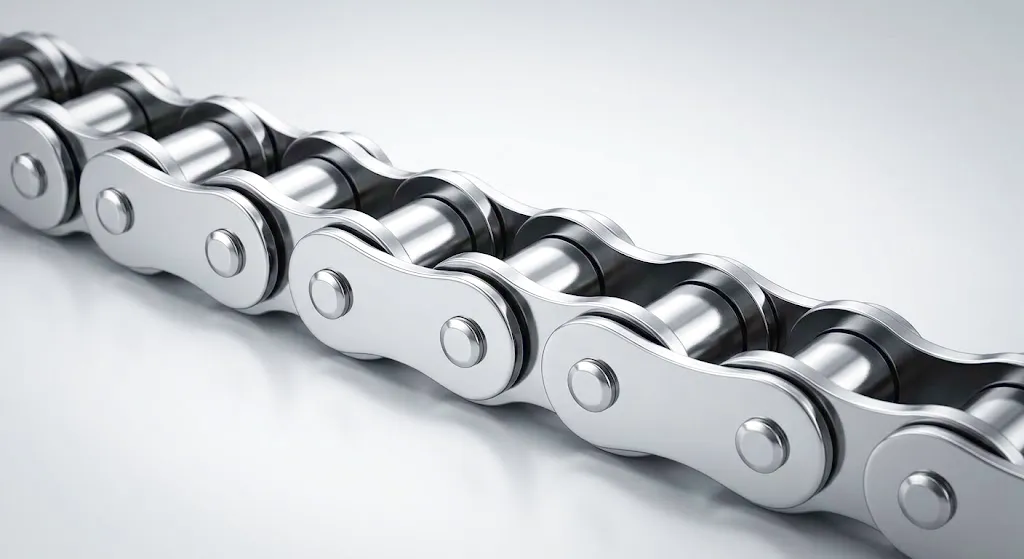
Whether you are specifying ANSI or ISO roller chain for a new drive design, sourcing replacement chain for legacy equipment, or investigating a standards mismatch that is shortening your component life — Ever Power’s engineering and supply team is ready to assist. Contact us with your specification and receive a technical review and competitive price from a manufacturer with the depth to supply what you actually need.
redigeret af gzl