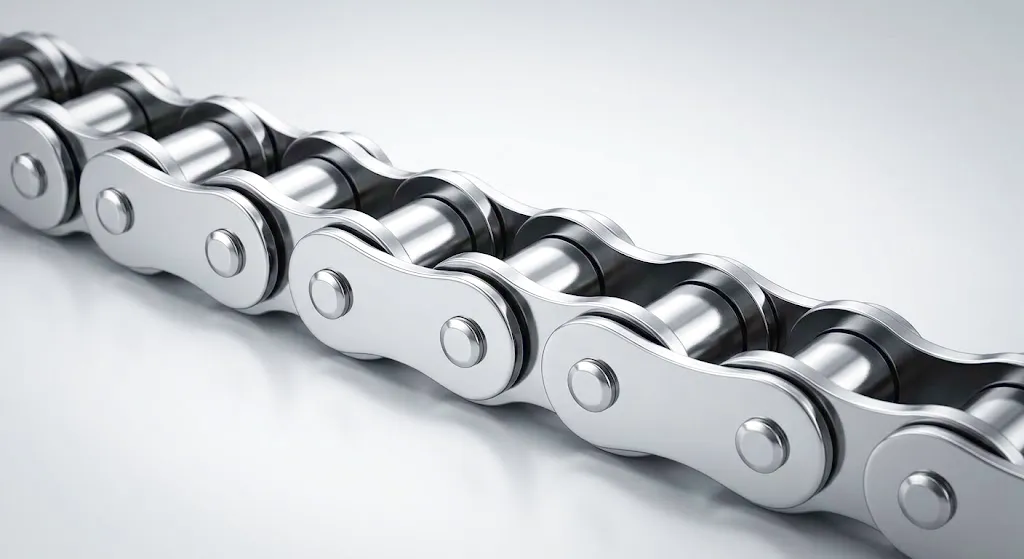
 Getting a roller chain join right is one of those tasks that separates a competent maintenance engineer from one who’s guessing. Done correctly, the connection is invisible in operation — the chain runs smooth, transfers load without interruption, and lasts the full service life the manufacturer intends. Done badly, you get a failure point that can damage sprockets, cause downtime, and in conveyor or lifting applications, create a genuine safety hazard. Across UK manufacturing — from the steel fabrication plants in Sheffield to the automotive component suppliers ringing Birmingham and the food processing lines in Leeds — the question of how to properly join a roller chain comes up on every maintenance floor, every equipment upgrade, and every line restart. The methods available — connecting links, cotter pin links, and press-fit spring clip arrangements — are not interchangeable, and choosing the wrong one for the duty cycle or speed rating of your chain is an error that costs money and time. This guide covers each technique in depth, including the mechanical principles at work, the correct procedure step by step, the material and performance considerations involved, and the situations where one approach is definitively better than another.
The Mechanical Foundation: Why Chain Joining Matters
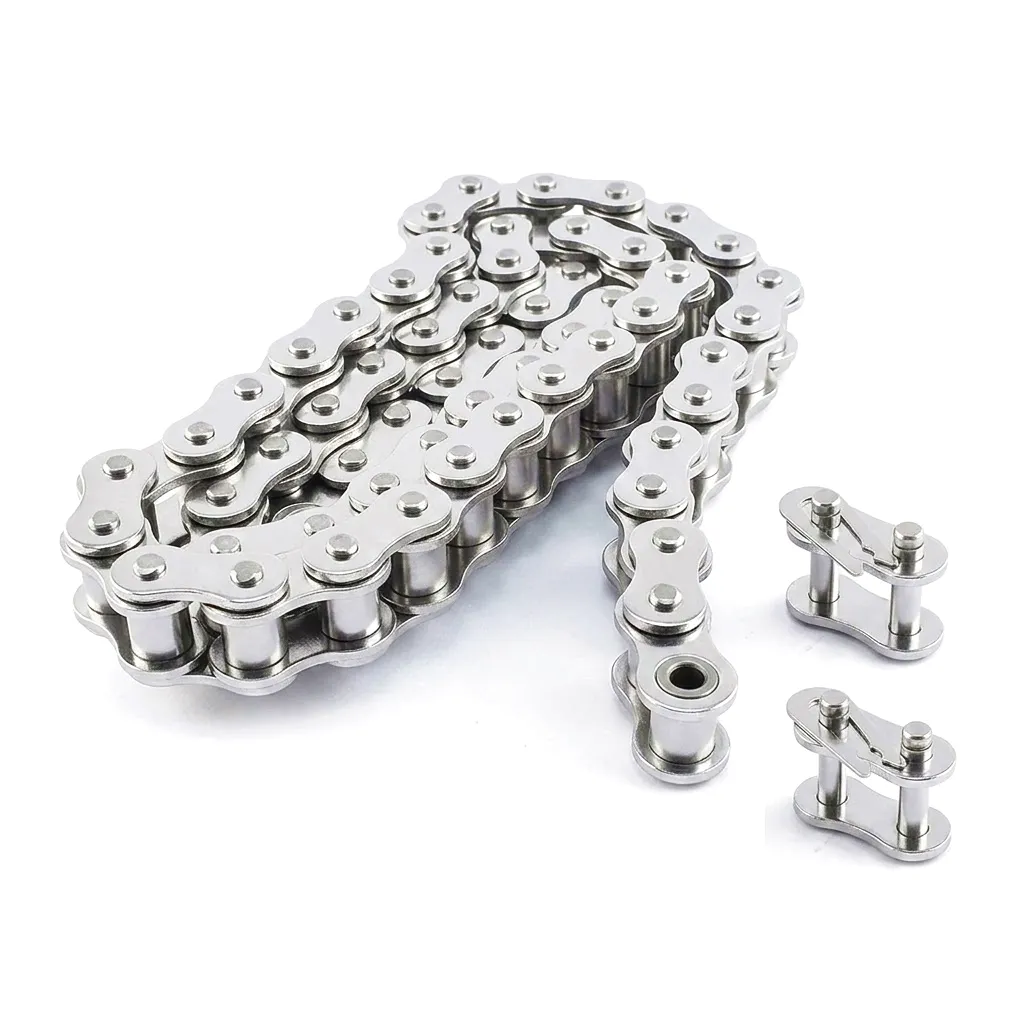 A roller chain is not a continuous structure in the way a drive belt is. It is an assembly of discrete link plates, rollers, pins, and bushings, engineered to articulate precisely on a sprocket and transmit rotational force with minimal power loss. The chain itself has a rated breaking load — often expressed in kilonewtons — and every link in the assembly must be capable of sustaining that load. The joining link is by nature the one element in the chain that was assembled in the field rather than in a controlled manufacturing environment, which is exactly why its integrity deserves serious attention. When a roller chain wraps onto a sprocket tooth, the roller seats into the root of the tooth profile. As the sprocket rotates, the tangential force is transferred through the pin and plate assembly. That force resolves through every link in the strand, including the master link or press-fit connection. Any geometric irregularity in the joint — a plate that sits fractionally off-centre, a pin that is not seated flush, a spring clip not fully engaged — introduces a stress concentration that cycles with every tooth engagement. Over hundreds of thousands of load cycles, that concentration manifests as fatigue crack initiation, often in the link plate near the pin hole, and the result is a fracture that is violent, sudden, and entirely preventable.
Chain pitch — the distance between pin centres — must match the sprocket exactly. Joining methods must preserve this pitch across the connection point. Whether you’re using a UK-standard BS roller chain or an ANSI chain, the connecting link must be the same pitch as the parent strand, manufactured from compatible materials, and assembled with the correct procedure for the speed and load conditions of that specific application.
Connecting Links (Master Links): The Most Widely Used Method
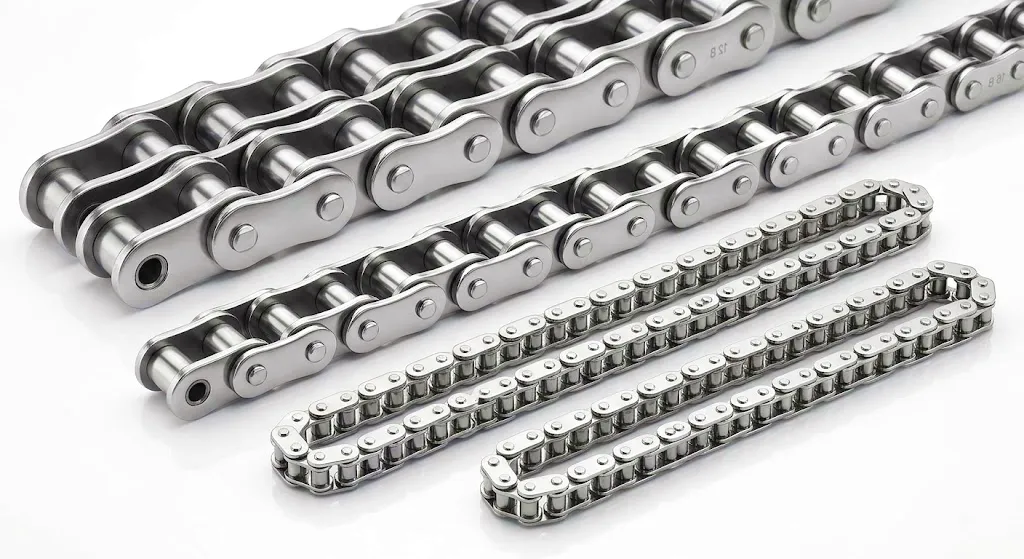
Step-by-step procedure for master link installation:
Clean all mating surfaces and inspect for wear before assembly. A worn pin hole will not retain the clip properly.
Thread the fixed-pin outer plate through the two inner link ends. Ensure the pins pass through the bushings cleanly — no forcing.
Slide the loose outer plate over both pin ends until it seats fully against the inner plates. The plate must sit flush — any gap indicates misalignment.
Install the spring clip with the open end facing away from the direction of chain travel. Use proper clip pliers — never improvise with a screwdriver.
Cotter Pin Connecting Links: High-Load Applications in Heavy Industry
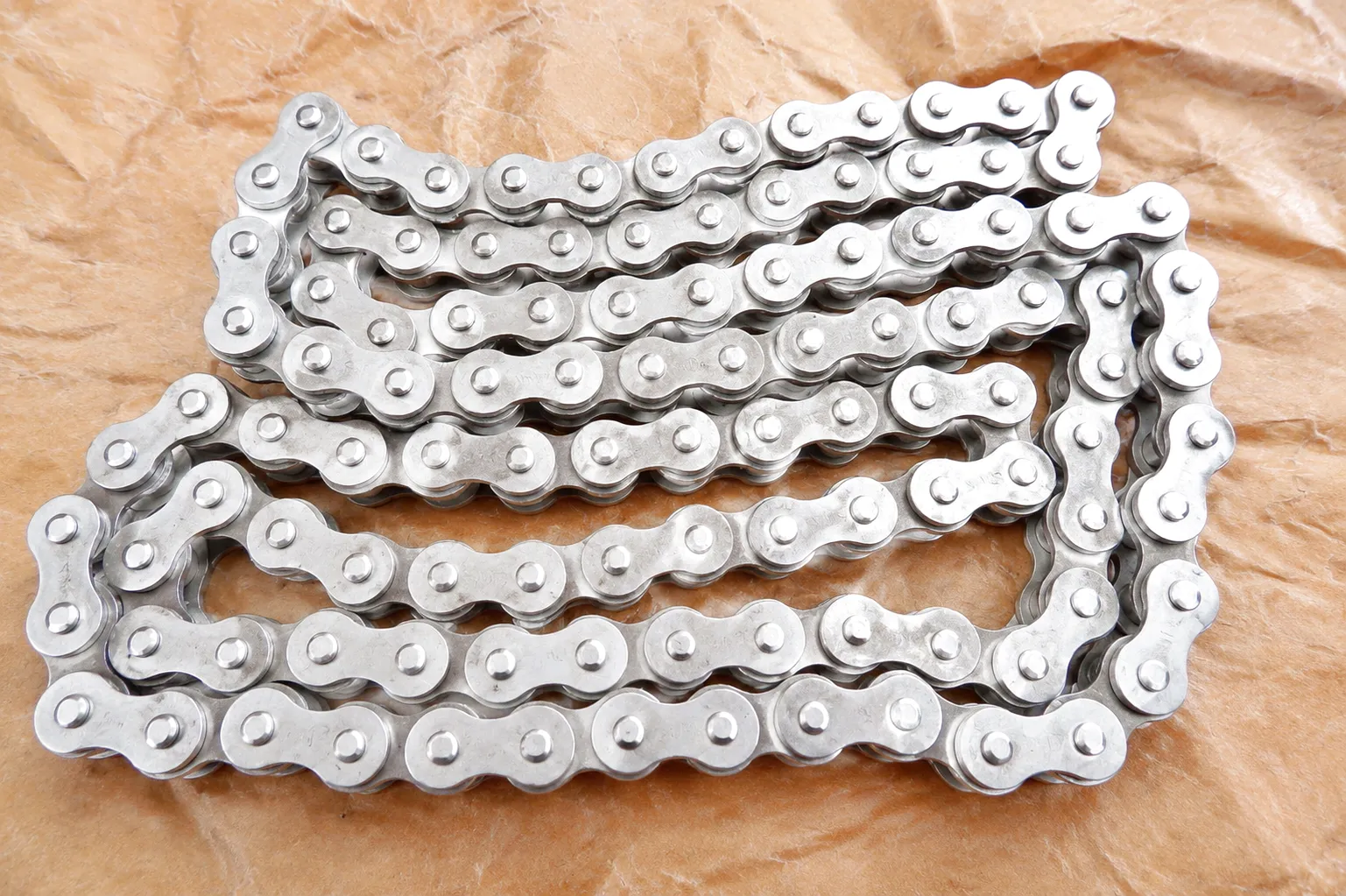
The cotter pins themselves are typically made from low-carbon steel wire or stainless steel for corrosive environments. They are single-use components — once bent, they should never be straightened and reused. UK maintenance practice in accordance with BSI guidance on mechanical power transmission treats bent cotter pins as consumables, and any chain inspection protocol should include replacement of cotters whenever a joining link is disturbed. The pin should be sized correctly for the connecting pin diameter; an undersized cotter can work loose, while an oversized one may not seat properly in the hole.
Press-Fit (Rivet) Joining: The Permanent High-Performance Solution
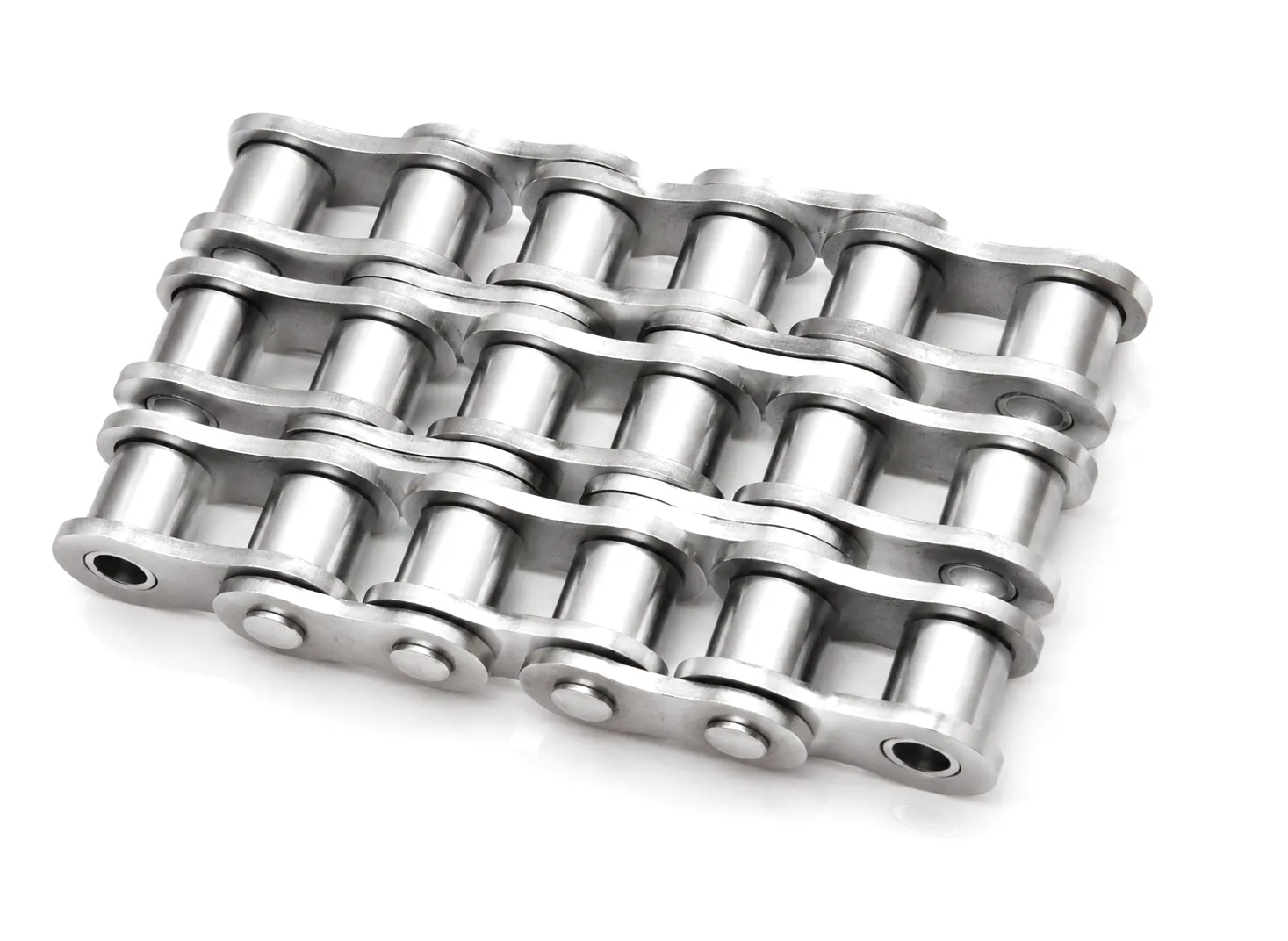
Press-fitting — often referred to in the UK engineering trades as riveting or staking — is the method used in the original factory assembly of virtually every modern roller chain, and it is increasingly specified for field repairs and joins where maximum strength and permanence are the priorities. In this method, a purpose-made connecting pin (slightly longer than a standard pin to allow for the peening process) is pressed through the outer link plates using a dedicated chain assembly tool that applies controlled hydraulic or mechanical pressure. Once the pin is fully seated, a swaging head on the tool forms a rivet head on the protruding end of the pin, locking the outer plate permanently in position. The result is a joint that is, for all practical purposes, as strong as any factory-built link in the strand. There is no retaining clip, no cotter pin, and no spring — the mechanical lock is inherent in the geometry of the peened pin head against the outer face of the link plate. The downside is disassembly: a press-fit joint cannot be opened without a chain breaker tool and the destruction of the connecting pin. For most continuous conveyor or drive applications — particularly in Birmingham’s automotive tier-1 supply chain, where uptime is critical and scheduled maintenance windows are tight — this is not a significant constraint, because the chain is inspected visually and by elongation measurement rather than opened at every service interval.
Key considerations for press-fit joining:
Рекомендовані товари
High-Performance Roller Chain for Demanding Applications
Engineered for heavy-duty duty cycles — including Caterpillar OEM replacement specifications
Високоміцний роликовий ланцюг 120HSP-00 для Caterpillar
Engineered to Caterpillar OEM specifications, the 120HSP-00 series roller chain is manufactured from alloy steel with precision heat treatment for maximum fatigue resistance. This chain is specified wherever connecting link integrity under vibration and high-cycle loading is critical — a common requirement in the quarrying, earthmoving, and bulk materials sectors heavily represented across the UK Midlands and northern England.
Високоміцний роликовий ланцюг C100HSP-00 для Caterpillar
The C100HSP-00 is built for applications where the joining method must perform under continuous high-tension loading without the possibility of spring clip fatigue failure. With a hardened pin, precision bushing fit, and matched link plate geometry, this chain supports press-fit joining at maximum rated load — making it ideal for UK construction equipment fleets and OEM replacement in Caterpillar machine maintenance contracts.
Roller Chain Joining Methods: Technical Performance & Parameter Comparison
| Параметр | Connecting Link (Master Link) | Cotter Pin Link | Press-Fit (Rivet) Link |
|---|---|---|---|
| Suitable Chain Pitch Range | #25 to #40 (up to 15.875mm pitch) | #50 and above (12.7mm+ pitch) | All pitches — manufacturer dependent |
| Tensile Load Retention | Up to rated chain load | Full rated + shock load | Equal to parent chain rating |
| Typical Max Working Speed | Moderate (up to 300 rpm on small sprockets) | Low to moderate | High speed — no practical restriction |
| Vibration/Shock Resistance | Moderate (clip can dislodge) | High (positive mechanical lock) | Very High (permanent assembly) |
| Reassembly / Re-opening | Easy — tool-free in small pitches | Moderate — cotter replacement required | Not re-openable — chain breaker required |
| Link Plate Material (typical) | Carbon steel / alloy steel | Alloy steel, heat treated | Alloy steel (matches parent chain) |
| Pin Surface Hardness | 58–64 HRC | 58–64 HRC | 58–64 HRC (OEM matched) |
| Typical Industry Application | Light conveyor, bicycle, small drive | Heavy conveyor, quarrying, steelworks | Agricultural, automotive, high-speed drive |
| BS / ANSI Standard Reference | BS ISO 606, ANSI B29.1 | BS ISO 606 (large pitch) | BS ISO 606, ANSI B29.1 |
Material Science Behind Roller Chain Joining Components
Industrial Application Scenarios for Each Joining Method
Light to medium-duty conveyor systems in distribution warehouses across the East Midlands and South East England. Package sortation lines in logistics centres. Light agricultural machinery drives for market garden operations in Kent and Lincolnshire. Textile machinery in the remaining fabric manufacturing operations across Yorkshire’s Colne Valley. Bicycle and light vehicle drive systems. Any application where the maintenance team needs to open and re-close the chain quickly during a scheduled maintenance window without specialist tooling.
Heavy-duty conveyor drives in quarrying operations across the Peak District and Welsh slate quarries. Steelworks material handling systems in Scunthorpe and Rotherham. Port and dock handling equipment at Tilbury, Southampton, and Liverpool. Mining machinery in the remaining deep-mine and surface-mine operations in the UK. Cement plant kiln drive systems. Any installation where the roller chain pitch is large (#50 or above) and the duty cycle includes shock loading or intermittent operation under high torque — typical of granular materials processing throughout northern England.
High-speed roller chain drives in automotive engine timing systems — a major sector in Birmingham’s automotive cluster and around Sunderland’s Nissan plant. Agricultural machinery including tractor PTOs and combine harvester grain conveyors, where Caterpillar OEM-equivalent roller chains from Ever Power are widely used. High-cycle packaging line conveyors in food production facilities across Lincolnshire and Humberside. Lift table and elevation conveyor systems in warehousing and distribution. Any application where chain speed exceeds 300 rpm at the drive sprocket and the failure consequences of a released clip would be unacceptable from a safety or product contamination standpoint.
Core Technical Advantages of Precision Roller Chain Joining
Sheffield Steel Fabricator Eliminates Conveyor Downtime with Ever Power Chain Solutions
Thornfield Fabrications Ltd, a structural steel manufacturer operating from a 45,000 sq ft facility in the Attercliffe industrial district of Sheffield, was experiencing chronic conveyor chain failures at the connecting link on three of their heavy-duty plate handling lines. The lines, which transfer steel blanks at up to 8.5 tonnes gross load between press stations, were using standard spring clip connecting links on #60H heavy series chain. The maintenance team was finding that clips were dislodging — or more precisely, were walking off the grooves — after as little as six weeks of operation in the hot, vibration-heavy environment near the press beds. Each failure event required a minimum two-hour unplanned shutdown, with consequential delays that knocked on through the cutting and dispatch schedule.
Working with Ever Power’s UK technical team, the specification was revised to cotter pin connecting links manufactured from alloy steel with a case hardening profile matched to the parent chain’s specification. Ever Power supplied a full set of connecting links for all three lines — including a batch of spare cotter pins and installation tooling — with delivery to Sheffield within five working days via their standard UK freight arrangement. The installation team switched all three lines during the next planned maintenance window, and the first quarterly inspection after the change found no evidence of joint movement, fretting, or clip displacement on any of the three conveyors. Thornfield’s maintenance manager estimated the change had saved the plant in excess of £18,000 in unplanned downtime costs in the twelve months following the conversion, with a further saving in the reduced stock of spare chain needed to cover emergency repairs.
The success of the Attercliffe installation led Thornfield to specify Ever Power roller chain — with cotter pin connecting links — as the standard for all new conveyor installations in a subsequent line expansion project, covering an additional six drive chains across two new production cells.
Що кажуть клієнти з Великої Британії про роликові ланцюги Ever Power
We switched our press conveyor line to Ever Power cotter pin links after repeated spring clip failures. Two years on, not a single joint failure. The dimensional precision on these connecting links is noticeably better than what we were using before — the pins seat cleanly, the cotter fits properly, and the whole assembly feels engineered rather than just made.
Our agricultural equipment workshop near Peterborough handles a lot of Caterpillar and John Deere fleet maintenance. Ever Power’s high-strength roller chain for Caterpillar applications is as good as anything we’ve sourced OEM — and the lead times from Ever Power are dramatically better. The press-fit connecting links they supply hold up through a full season without any attention.
As a procurement engineer for a Birmingham-based automotive components plant, I’ve been sourcing roller chain from multiple vendors for years. Ever Power’s connecting links arrive with a dimensional inspection report, which is something I’ve never had from our previous suppliers. When you’re running at 450 rpm on a precision timing drive, that documentation gives you real confidence in what you’re installing.
Frequently Asked Questions About Roller Chain Joining
How do I know which roller chain joining method is right for my heavy conveyor drive in a UK manufacturing plant?
The selection depends on three things: chain pitch, operating speed, and the severity of shock loading. For large-pitch chains (#50 and above) in heavy UK manufacturing environments — particularly in steelworks, quarries, and bulk materials handling — a cotter pin connecting link is the appropriate choice because it provides positive mechanical retention under vibration and shock. For high-speed, medium-pitch drives in automotive or food processing applications, press-fit joining is typically specified. Contact Ever Power’s technical team with your duty cycle data and they can recommend the correct joining method for your specific installation.
What is the price difference between a standard connecting link and a cotter pin link for BS roller chain in the UK, and where can I get a trade quote?
Cotter pin connecting links typically carry a modest price premium over spring clip master links — usually 20–40% more at standard catalogue pricing, though this varies significantly by chain pitch and material specification. For large orders or ongoing maintenance contracts, Ever Power offers volume pricing that can bring the cost per link well below distributor list prices. For a trade quote on BS chain connecting links delivered to Birmingham, Sheffield, Manchester, or anywhere in the UK, email [email protected] with your pitch size, quantity, and required delivery date.
Which way should the spring clip be fitted when joining a roller chain with a master link on a conveyor system?
The spring clip must always be installed with its closed end facing the direction of chain travel and the open end pointing away from travel. This orientation ensures that if the clip encounters any lateral interference — from the sprocket, a guide rail, or a foreign object — the force acts to push the clip further onto the pin groove rather than dislodge it. Installing the clip in the wrong orientation is one of the most common causes of premature connecting link failure and it is entirely preventable by following this simple rule at every maintenance event.
How often should I inspect the connecting links on my roller chain drives in a Sheffield engineering facility, and what signs of wear should I look for?
In light-duty environments, monthly visual inspection of connecting links is adequate. In heavy-duty drives — steelworks, quarries, heavy press conveyors — weekly visual inspection is the appropriate interval, with a check of the cotter pin or spring clip security at each inspection. Signs of wear to look for include: side plate elongation (the pin hole becoming oval), surface corrosion on the spring clip, cracking of the cotter pin legs, and any lateral play in the connecting link relative to the adjacent inner links. Any of these signs should trigger immediate replacement of the connecting link assembly rather than continued operation.
Who is the best UK supplier of custom-specification roller chain connecting links for Caterpillar OEM applications, and how quickly can they deliver to Birmingham or Manchester?
Ever Power is a dedicated specialist in high-strength roller chain including OEM-equivalent connecting link components for Caterpillar applications. Standard sizes are typically available for express despatch to Birmingham, Manchester, and other UK destinations within 3–5 working days. Custom specifications — including connecting links in stainless steel, extended pitch, or with modified plate geometry — can be produced and despatched on a schedule agreed at the time of order. Reach out to the technical sales team at [email protected] for a detailed delivery and cost quotation.
What tools do I need to install a press-fit roller chain connecting link correctly on site in a UK maintenance workshop?
Press-fit chain joining requires a dedicated chain assembly and breaking tool that is sized for the specific chain pitch — these are not interchangeable between pitches. The tool must provide a controlled pressing force sufficient to seat the connecting pin through both outer plates and form the rivet head to the correct profile. Hand-operated lever tools are adequate for pitches up to #60 in most workshop conditions. For larger pitches (#80 and above) or for high-volume maintenance applications, hydraulic chain tools are preferred because they provide more consistent force application and reduce operator fatigue. Ever Power can advise on suitable tooling as part of the supply package for any roller chain installation.
Ready to Specify the Right Roller Chain Solution?
Ever Power’s UK technical team can advise on joining method selection, material specification, and custom chain supply for any industrial application. Get a quote today.
редагування від gzl