The Mechanics of Initial Elongation: Why Chains Stretch in the First Place
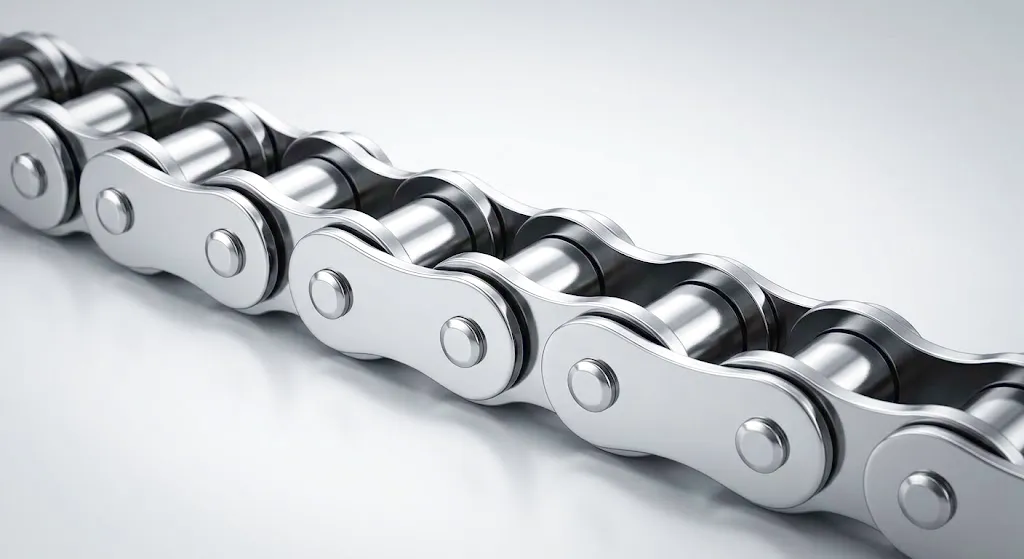
To understand pre-stretching, you first need a clear picture of what happens inside a roller chain during its initial hours of operation. A standard roller chain is not a solid, monolithic structure. It is an assembly of dozens of interacting components — inner plates, outer plates, bushings, pins, and rollers — each manufactured to close tolerances but still retaining microscopic irregularities at contact surfaces. When load is first applied, these surfaces bed in against each other. Asperities flatten. Lubricant distributes through the bushing-pin interface. The overall effect is that the chain lengthens slightly — not because the metal itself has deformed plastically, but because the assembly has settled into a more compact geometric arrangement.
This initial elongation is entirely predictable and well-documented in chain engineering literature. For a standard, unmodified roller chain, it typically accounts for the majority of the total wear elongation the chain will experience over its working life. Industry guidance generally advises that a chain should be replaced when its measured pitch elongation reaches 2% of nominal pitch, at which point sprocket tooth engagement begins to degrade rapidly. If most of that 2% window is consumed during initial break-in — a period that might last only a few weeks in a high-cycle application — the effective service life of the chain is dramatically shortened.
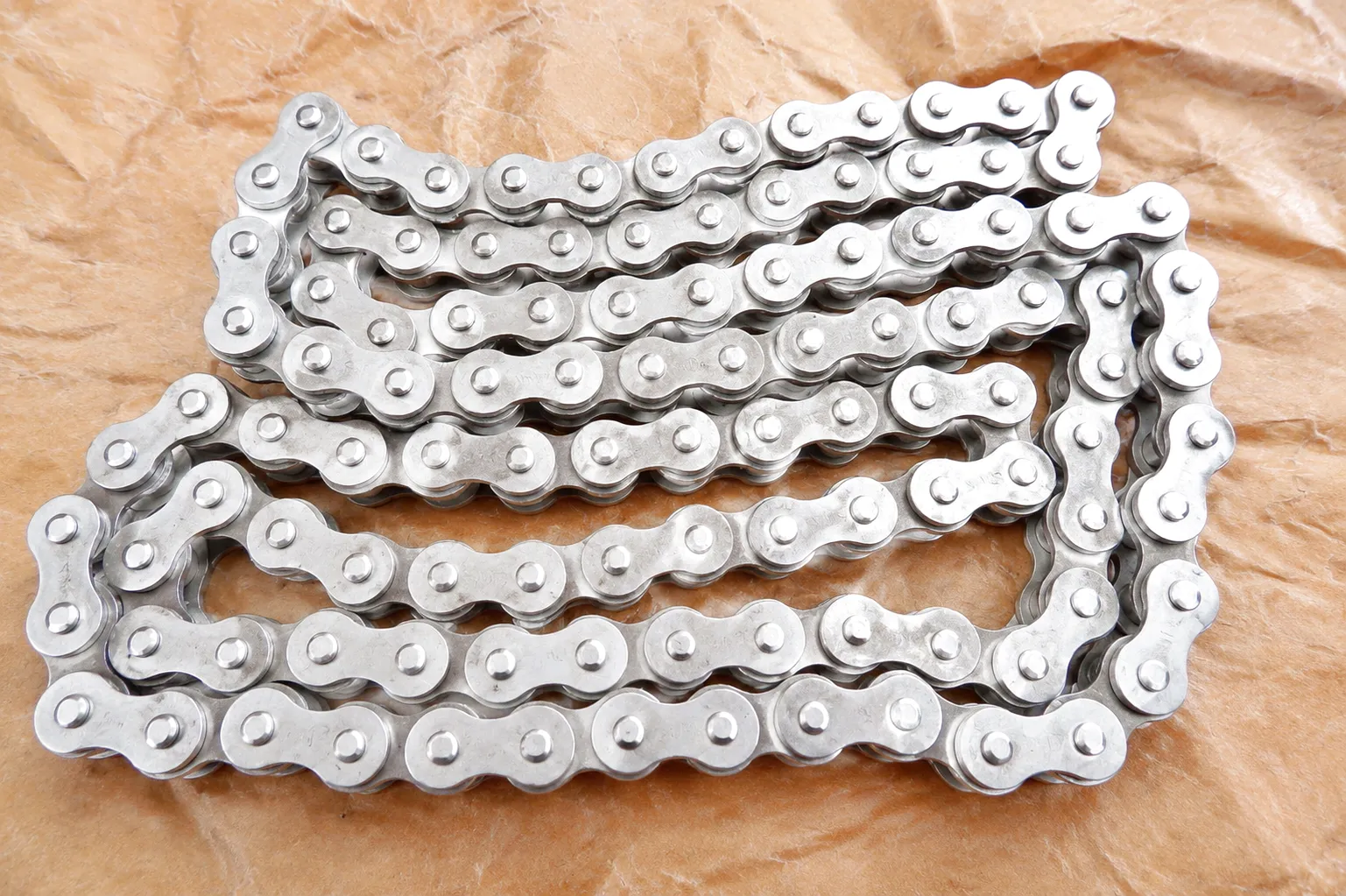
Pre-stretching addresses this by replicating the break-in process under controlled factory conditions. The chain is placed under a defined tensile load — typically between 30% and 50% of its minimum breaking load, depending on specification — and held or cycled for a period that fully settles all internal contact surfaces. The chain is then measured, trimmed or adjusted to exact pitch, and supplied as a dimensionally stabilised product. What reaches the customer is a chain that has, in effect, already completed its break-in period.
Featured High-Strength Roller Chain Products
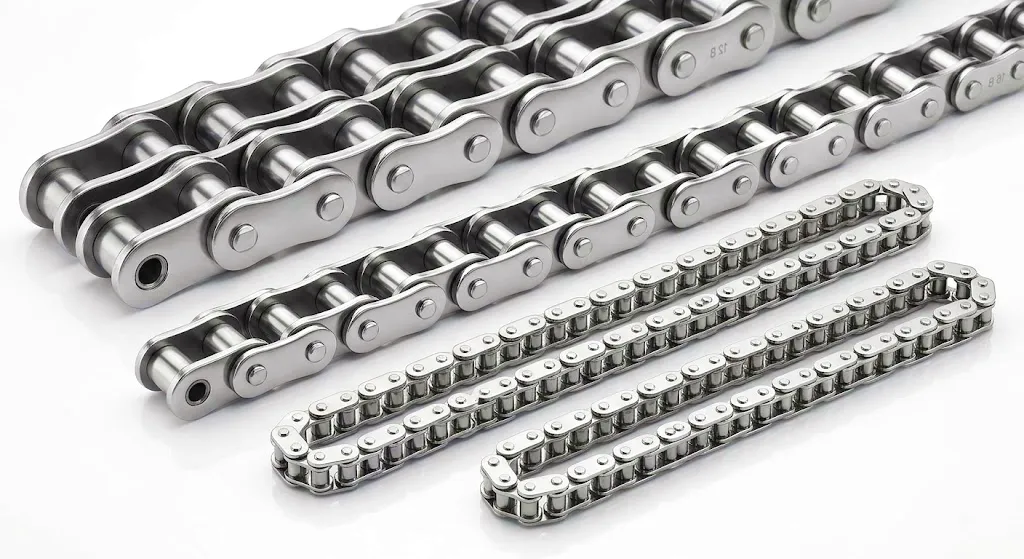
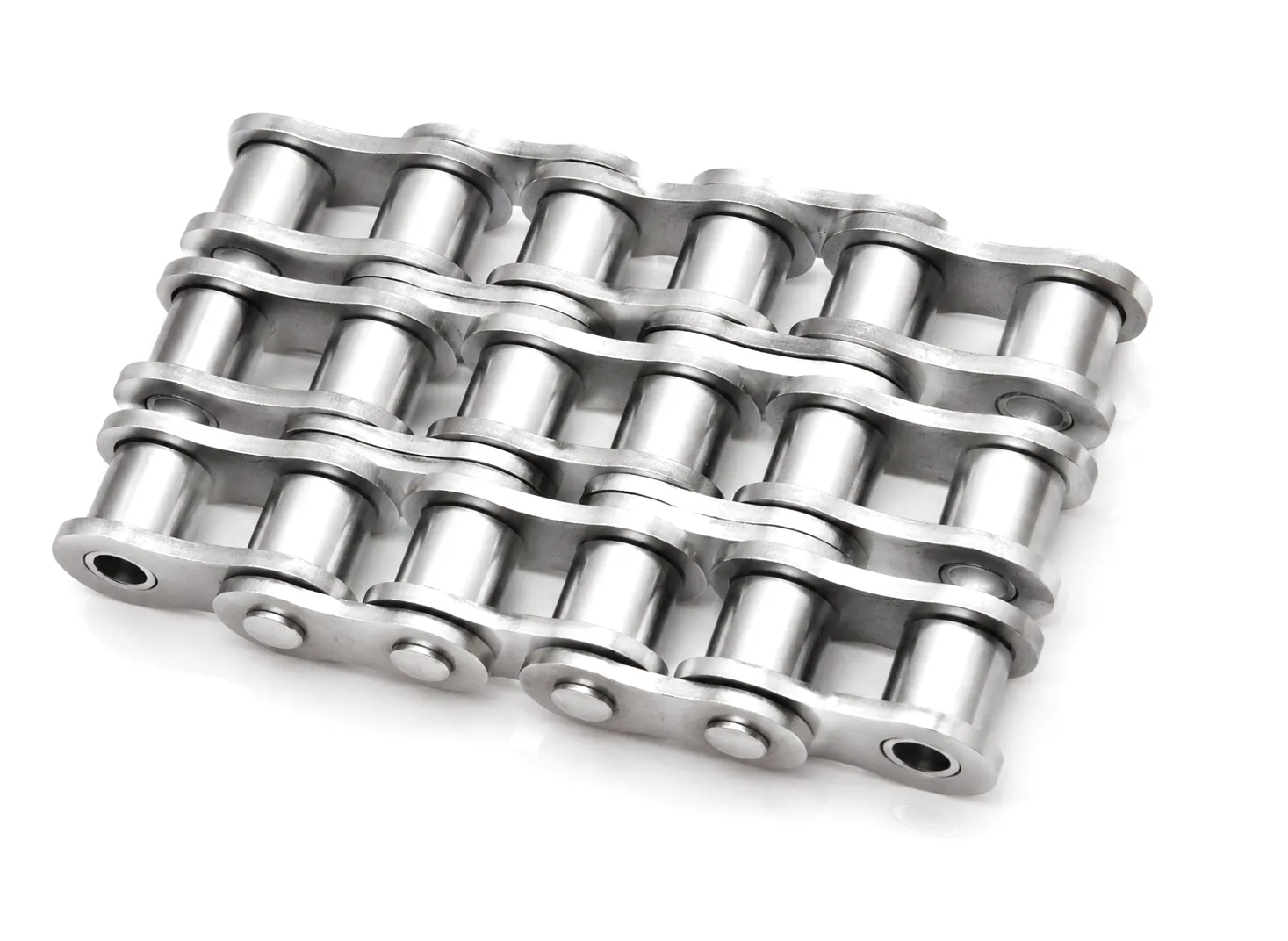
Високоміцний роликовий ланцюг 120HSP-00 для Caterpillar
Engineered for demanding Caterpillar equipment applications. Superior fatigue resistance, pre-stretched for dimensional stability, ideal for high-cycle heavy plant operations across UK construction and mining.
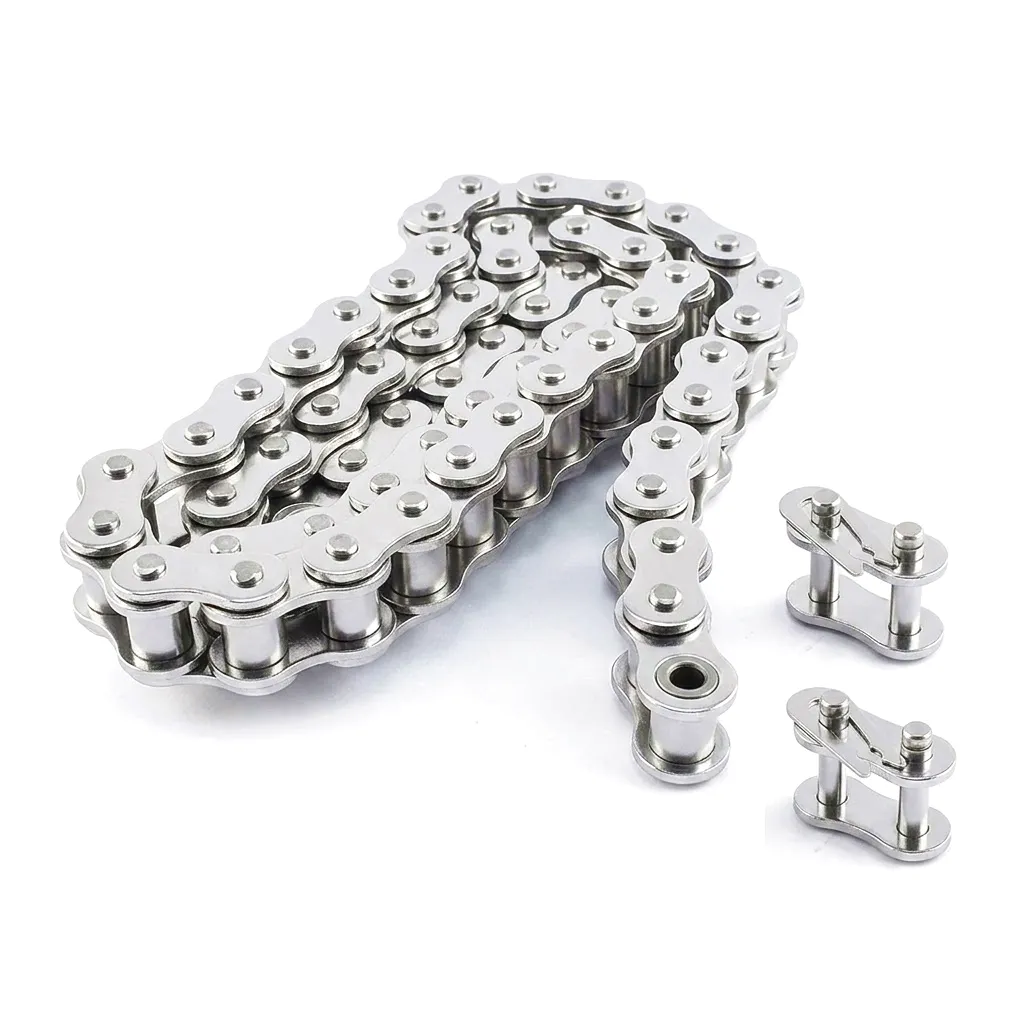
Високоміцний роликовий ланцюг C100HSP-00 для Caterpillar
The C100HSP-00 delivers consistent tensile performance in high-load Caterpillar platform environments. Pre-stretched and tested for pitch precision, suited to conveyor and lift drive systems demanding zero-tolerance elongation control.
Core Technical Advantages of Pre-Stretched Roller Chain
Pre-stretching is not a universal requirement, and it is not a magic solution for every power transmission challenge. But where it is correctly specified and properly manufactured, the advantages are well-documented and practically significant. The following benefits represent the outcomes that engineering teams across UK industry consistently report when they move from standard to pre-stretched roller chain in appropriate applications.
Pre-stretched roller chain arrives with its initial elongation already completed, meaning it can be installed in tight-tolerance drive systems — synchronised conveyors, indexing drives, precision timing chains — without the need to re-tension and re-adjust during the early operational period.
Because the majority of the total elongation allowance has been consumed during the pre-stretch process — not during service — the remaining wear life of the chain is preserved for actual operational use. In high-cycle applications such as automotive production lines or bottling plants, this can translate directly into measurably longer maintenance intervals.
Engineering and maintenance teams no longer need to schedule repeat visits during the initial run-in phase to re-tension the chain as it settles. In manufacturing environments where line downtime is costed at hundreds or even thousands of pounds per hour, this represents a genuine commercial advantage, not merely a convenience.
A chain that has not yet bedded in exhibits irregular pitch variation, which translates into vibration and audible noise at speed. Pre-stretched chains engage sprocket teeth with greater uniformity from the start of operation, reducing both noise levels and the dynamic loads imposed on bearings and housings throughout the drivetrain.
Condition monitoring and planned maintenance programmes depend on predictable degradation curves. Because a pre-stretched chain has a known starting elongation value, maintenance engineers can model wear rate more accurately, plan replacements proactively, and avoid the unplanned failures that drive emergency call-out costs in 24/7 production environments.
The uneven pitch spacing present in an un-bedded chain causes accelerated sprocket tooth wear — a phenomenon sometimes described as “hooking.” Pre-stretched roller chain, presenting a consistent pitch across the full assembly, distributes load more evenly across sprocket teeth, extending sprocket service life alongside the chain itself and reducing the total cost of the drive system.
Product Technical and Performance Specification Table
| Параметр | Light Duty (25-1 to 35-1) | Standard (40-1 to 60-1) | Heavy Duty (80-1 to 120-1) | Super Heavy (140-1+) |
|---|---|---|---|---|
| Крок (мм) | 6.35 – 9.525 | 12.70 – 19.05 | 25.40 – 38.10 | 44.45 – 76.20 |
| Мін. розривне навантаження (кН) | 3.5 – 7.8 | 14.1 – 42.0 | 58.0 – 130.0 | 170.0 – 320.0 |
| Pre-Stretch Load (% MBL) | 30 – 35% | 35 – 42% | 38 – 50% | 40 – 50% |
| Pin Material | Case-hardened carbon steel | Alloy steel (20CrMo) | Alloy steel (40CrMo) | High-alloy / stainless option |
| Plate Material | S45C carbon steel | S45C / 40Cr alloy | 40Cr / 40CrMo alloy | Високоміцна легована сталь |
| Plate Hardness (HRC) | 36 – 40 | 38 – 44 | 40 – 46 | 42 – 48 |
| Max. Allowable Elongation | 2.0% of pitch | 2.0% of pitch | 2.0% of pitch | 1.5 – 2.0% (application-dependent) |
| Operating Temperature Range | -10°C to +150°C | -20°C to +200°C | -30°C to +250°C | -30°C to +300°C (special grade) |
| Conforming Standard | ISO 606 / BS 228 | ISO 606 / BS 228 | ISO 606 / ANSI B29.1 | ISO 606 / ANSI / Custom |
Industrial Application Scenarios Where Pre-Stretched Roller Chain Delivers Real Value
Pre-stretched roller chain is not a universal specification — there are many applications where the cost premium is simply not justified, because the drive system has sufficient slack adjustment capacity and the application is forgiving of gradual initial elongation. But in certain operating environments, the dimensional precision offered by pre-stretching is not optional — it is a prerequisite for acceptable system performance. The application scenarios below represent those contexts, drawn from the industries where Ever Power works most closely with UK-based engineering and procurement teams.
The automotive plants of Birmingham and Coventry operate synchronised production lines where conveyor pitch accuracy is critical. Even small deviations in roller chain pitch cause mis-registration between vehicle body positions and robotic tooling stations, resulting in weld defects or paint application errors. Pre-stretched roller chain is the standard specification on these lines, precisely because it eliminates the run-in adjustment phase that would otherwise require a dedicated shut-down window in a production environment with no scheduled idle time.
Sheffield’s steel industry, though transformed from its peak, remains a globally important centre for specialty steel production, tube rolling, and precision metalworking. The drive chains used on rolling mills, coil handling equipment, and tube forming lines carry high, sustained tensile loads in environments that combine elevated temperature, scale contamination, and vibration. Pre-stretched, heavy-duty roller chain in grades 80-1 through 140-1 is widely used here, where the combination of dimensional stability and proven fatigue resistance reduces the frequency and cost of chain changes in operations running continuous or near-continuous shifts.
Hygienic chain drives in food processing must meet stringent cleanliness standards while also delivering the consistent timing that accurate portion control and packaging registration depend on. Pre-stretched stainless steel roller chain is used extensively on filling lines, slicing and portioning equipment, and tunnel oven conveyors throughout the UK’s large food manufacturing sector. The pre-stretch treatment is doubly valuable here: it delivers dimensional stability, and the controlled surface treatment applied during the process removes surface contaminants that could otherwise harbour bacteria during low-frequency wash-down cycles.
The chemical and pharmaceutical corridor stretching from Cheshire to Greater Manchester operates batch and continuous process equipment where drive precision directly affects product quality and batch integrity. Conveyor systems on tablet presses, filling lines, and inspection equipment are specified to tight tolerances. Pre-stretched roller chain eliminates the pitch variation that would otherwise cause irregular indexing in rotary table drives and star-wheel conveyors — mechanisms where the consequences of mistiming go well beyond a rejected batch, touching on patient safety and regulatory compliance.
The concentration of large-scale distribution and fulfilment operations around the Midlands motorway network — particularly along the M1/M6 corridors in Northamptonshire, Leicestershire, and Warwickshire — means roller chain drives in sortation and conveyor systems run for exceptionally long daily operating periods. Automated sorters, cross-belt conveyors, and pallet conveyors in these facilities operate 18 to 24 hours per day in many cases. The last thing a distribution centre operator needs is scheduled downtime two or three weeks after chain installation to re-tension a chain that is still bedding in. Pre-stretched roller chain removes that requirement entirely.
Construction equipment operating across UK infrastructure projects — particularly in the track drive systems of excavators, crawler cranes, and pipelayers using Caterpillar platforms — places roller chain under extreme, intermittent high-load conditions. The Ever Power 120HSP-00 and C100HSP-00 pre-stretched high-strength chains are engineered specifically to meet the demands of these environments, where the combination of shock loading, contamination, and variable ambient temperatures creates a uniquely challenging service condition that off-the-shelf standard chain rarely handles with acceptable service life.
Sheffield Steel Tube Rolling Plant: Eliminating Chain-Related Stoppages on a Continuous Mill Drive
A mid-sized specialty steel tube manufacturer operating a continuous cold-draw mill in Sheffield was experiencing persistent unplanned downtime related to drive chain performance on two of its primary tube-drawing benches. The benches used 80-1 roller chain in a heavy-duty pull configuration, and the maintenance team was replacing chains every four to six months — far shorter than the theoretical service life suggested by the load calculations alone.
Investigation by the plant’s mechanical engineering team identified a recurring pattern: chains were elongating rapidly in the first weeks after installation, causing the take-up mechanism to reach its adjustment limit prematurely. Because the benches operated continuously on two shifts with only a single scheduled maintenance window per week, the chain continued running in an over-tensioned state after the take-up mechanism bottomed out, accelerating fatigue wear on the link plates and, more critically, causing tooth tip wear on the driven sprockets that required replacement at the same time as the chain.
Ever Power’s technical team was engaged to review the drive specification. The assessment confirmed that the chain itself was being manufactured to an acceptable standard — the problem was structural: the take-up range was insufficient to absorb initial break-in elongation on a chain operating under high, sustained loads in a contaminated environment. The recommended solution was a switch to Ever Power pre-stretched 80-1 heavy-duty roller chain with an enhanced lubrication specification and modified chain guiding to reduce contamination ingress.
Following installation, the plant’s maintenance logs recorded zero emergency chain-related stoppages over the subsequent twelve months. The next scheduled chain replacement occurred at fourteen months — more than double the previous average interval. Sprocket wear rates also improved significantly, as the pre-stretched chain’s consistent pitch distributed load across all sprocket teeth rather than concentrating it on the first few teeth engaged by an over-elongated chain. The plant’s maintenance manager estimated total annual savings — across reduced parts costs, labour, and lost production time — in excess of £28,000 per bench per year.
“We had been through three different chain suppliers before Ever Power. None of them could explain why our chains were failing ahead of schedule. Ever Power’s engineers actually looked at the system, not just the chain number, and the pre-stretched specification they recommended solved the problem completely. Fourteen months without a chain-related stoppage is something we never managed before.”
“The dimensional consistency of the Ever Power pre-stretched chain was immediately obvious when we installed it. No bedding-in period, no re-tensioning calls during the first weeks. The team at Ever Power provided full documentation for our records and responded within hours when we had a technical question about the lubrication regime. That level of service support is rare at this price point.”
“We switched our distribution centre’s conveyor drives to Ever Power pre-stretched roller chain eighteen months ago. The facility runs 22 hours a day and we simply cannot afford downtime for re-tensioning runs that weren’t in the planned maintenance schedule. The change paid for itself inside the first three months. I would not go back to standard chain for these applications.”
Часті запитання
Answers to the most common questions from UK engineers, procurement teams, and maintenance managers about roller chain pre-stretching and specification.
Pre-stretching is a controlled tensioning process applied to a fully assembled roller chain before it leaves the factory. A calibrated hydraulic load — typically 30 to 50% of the chain’s minimum breaking load — is applied to bed in all internal contact surfaces and complete the geometric settling that would otherwise occur during the first weeks of operation. Standard chain from most UK distributors does not undergo this process. The result is a chain that arrives dimensionally stable, with a known, near-zero residual initial elongation, rather than one that will elongate measurably during its first operational period.
The unit price premium for pre-stretched chain over standard chain typically ranges between 10% and 25%, depending on chain size, order volume, and the specific pre-stretch specification required. For a West Midlands automotive supplier running precision conveyor or timing chain drives, this premium is generally recovered quickly through reduced commissioning downtime, extended service intervals, and lower sprocket replacement costs. In environments where unplanned downtime is costed at several hundred pounds per hour, a single avoided stoppage typically covers the additional chain cost for an entire production run. Please contact [email protected] for a specific quote tailored to your application and volumes.
The UK sectors where pre-stretched roller chain delivers the clearest value are automotive manufacturing (particularly in the Birmingham, Coventry, and Sunderland corridors), precision engineering and steel processing in Sheffield and Rotherham, food and beverage production across the East and West Midlands, pharmaceutical and chemical processing in the North West, and large-scale logistics and distribution operations in the Midlands motorway hub. Any application where precise pitch timing, high daily operating hours, or limited downtime windows make the run-in phase problematic is a strong candidate for pre-stretched chain specification.
Ever Power supplies pre-stretched roller chain to UK manufacturing customers with reliable lead time commitments and full technical support from qualified engineering staff. Enquiries, application reviews, and quotation requests can be submitted directly to [email protected]. Ever Power’s technical team will review your drive specification — including chain size, operating load, speed, environment, and precision requirements — and confirm whether a pre-stretched grade is appropriate, or whether an alternative specification would better serve your needs.
The standard replacement criterion for roller chain — including pre-stretched grades — is a measured pitch elongation of 2% or more relative to the nominal new chain pitch. For a Sheffield plant running continuous or near-continuous shifts, this should be measured at regular intervals using a calibrated chain wear gauge or a precision steel rule across a defined number of links, following the manufacturer’s measurement procedure. Pre-stretched chain provides the advantage of a known, stable starting dimension, making trend monitoring more reliable. When elongation approaches 1.5%, it is advisable to plan the replacement in the next scheduled maintenance window rather than waiting for the 2% limit to be reached under operational load.
Yes — Ever Power’s custom manufacturing capability covers non-standard pitch configurations, extended pitch chain, attachment chain with K1 and K2 attachments, and specialised surface treatments including stainless steel for food-grade hygiene compliance. The pre-stretching process is applied to custom configurations in the same way as standard products, with load parameters adjusted to reflect the specific geometry and material of the custom chain. Submit your specification — including conveyor speed, load per strand, pitch requirement, attachment configuration, and cleanliness standard — to [email protected] for a detailed technical review and quotation.
Ready to Specify the Right Roller Chain for Your Application?
Whether you need a standard pre-stretched grade for an existing drive system or a fully custom specification for a demanding industrial application, Ever Power’s engineering team is ready to help. Contact us with your drive data and we will provide a detailed technical recommendation and competitive quote.
[email protected] | Ever Power Industrial Transmission