Drive Systems • Engineering Insight
Roller Chain vs. Timing Belt:
A Head-to-Head Drive System Comparison
When engineering teams across Birmingham, Sheffield, and Manchester source power transmission components, the choice between roller chain and timing belt can define machinery uptime, maintenance cost, and total lifecycle value. This guide lays out every dimension of that decision.
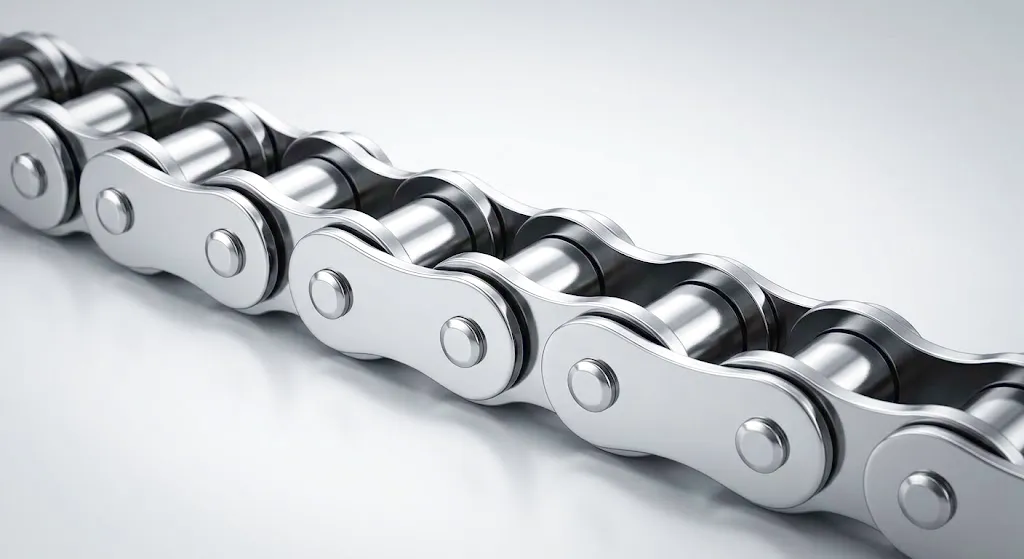
Power transmission is the backbone of industrial machinery, and no decision is more consequential than selecting the right drive system for your application. In the UK manufacturing sector — from the precision engineering workshops of Coventry to the heavy fabrication yards along the River Tyne — engineers routinely face the choice between two proven technologies: Rollenkette and timing belt drives. Both transfer rotational power from a source to a driven component, yet they achieve this through fundamentally different mechanisms, and the downstream implications — load capacity, speed range, maintenance intervals, environmental tolerance, and long-term cost — diverge sharply depending on what a production line actually demands. Making an uninformed choice can cost thousands of pounds in unplanned downtime, premature component replacement, and productivity losses that ripple through an entire supply chain. This in-depth comparison examines every critical factor side by side, drawing on the technical realities that matter most to procurement engineers and plant managers operating in demanding British industrial environments.
Understanding the Mechanical Principles
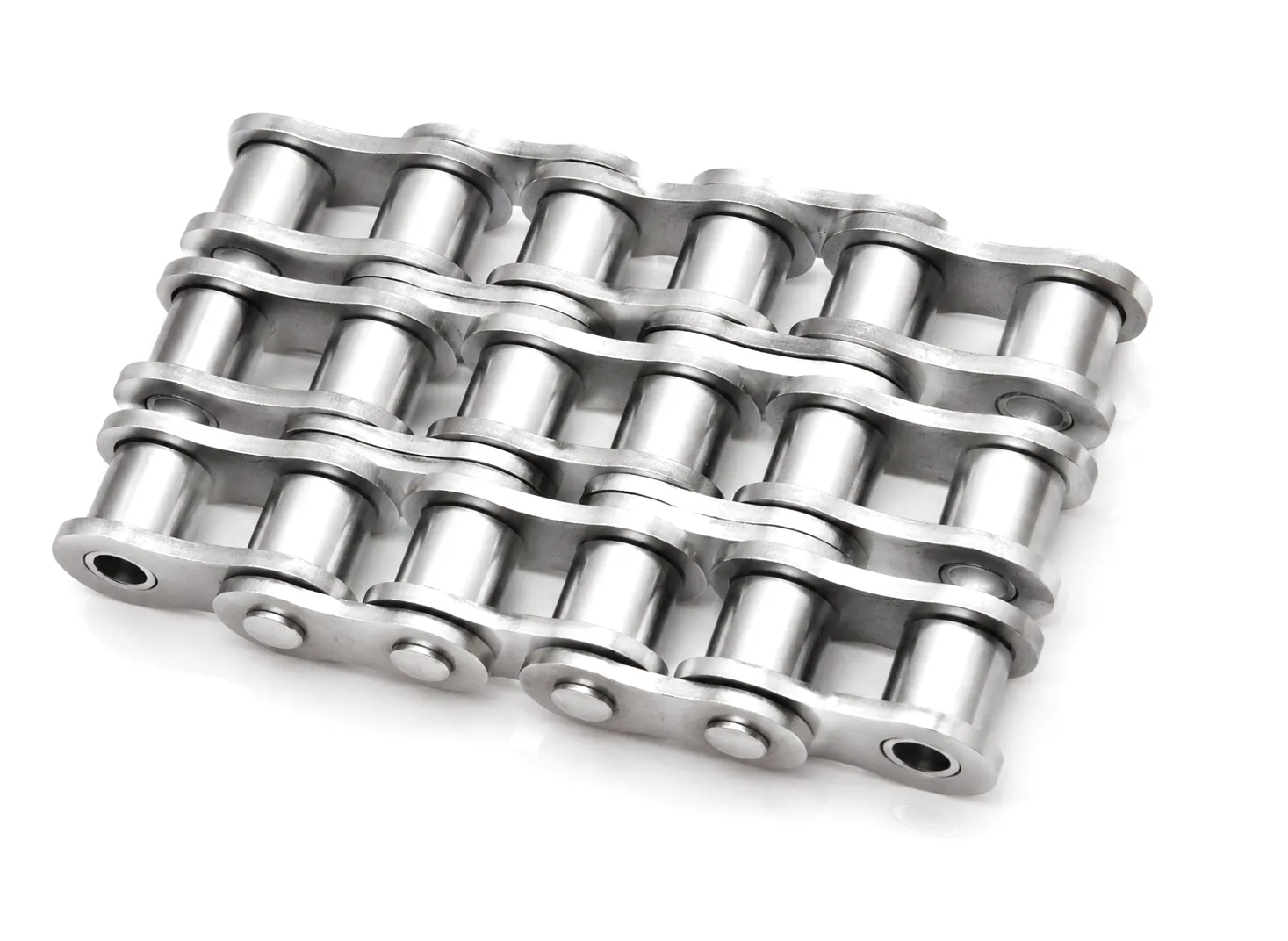
A roller chain operates through positive mechanical engagement between hardened steel links and sprocket teeth. Each link assembly consists of an inner plate, outer plate, pin, bushing, and a free-rolling cylindrical roller. As the chain wraps around a driven sprocket, the rollers seat precisely into the sprocket valleys, transmitting torque through direct metal-to-metal contact. This positive engagement means there is no possibility of slip under load — the drive ratio remains constant regardless of power fluctuations. Roller chains can be fabricated in any pitch from 6.35 mm (No. 40) up to 76.2 mm (No. 240) and beyond, accommodating torque values that no elastomeric product can approach. In heavy UK industries such as coal handling, offshore fabrication, and steel mill conveyors, this characteristic makes roller chain an engineering default rather than just a preference.
A timing belt (also called a synchronous belt) uses moulded teeth on the inner face of a reinforced elastomeric belt that mesh with corresponding grooves on toothed pulleys. The core is typically made from fibreglass, aramid, or carbon fibre cords, encased in neoprene, polyurethane, or HNBR rubber compounds. Because the teeth prevent slipping, timing belts are synchronous — they maintain a precise phase relationship between driver and driven shafts. This precision is critical in applications such as camshaft drives in internal combustion engines, CNC servo axes, and automated packaging machinery where angular position must be maintained within fractions of a degree. Timing belts are inherently quieter and lighter than roller chains, and they require no lubrication, making them attractive in food processing and pharmaceutical environments where contamination is a serious concern.
Materials: What They Are Actually Made Of
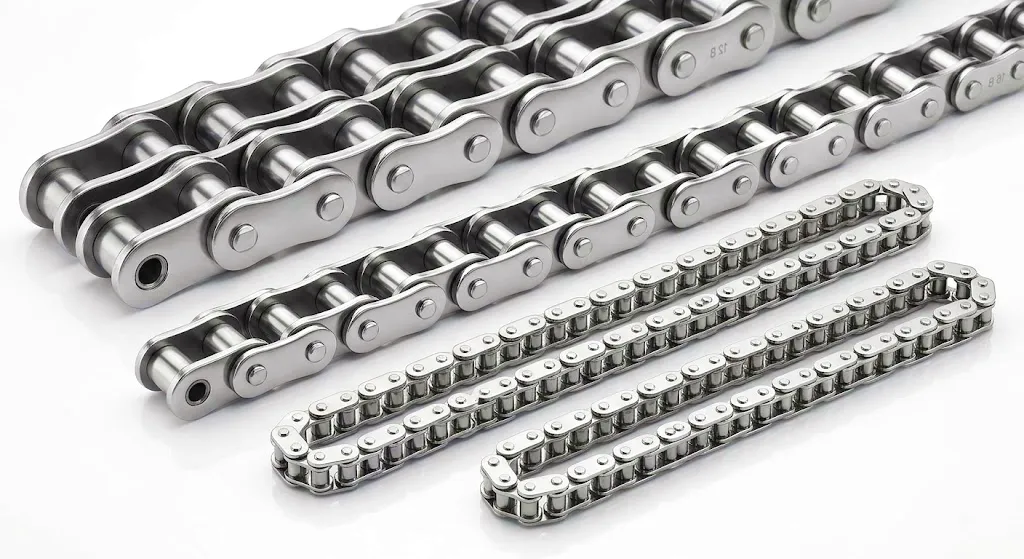 The material science behind roller chain has advanced considerably over the last two decades. Standard roller chains intended for general industrial use are manufactured from medium-carbon steel (typically AISI 1045 or equivalent EN 43 grade), with link plates, pins, and bushings undergoing case-hardening through carburising or induction hardening to achieve surface hardness values between 58 and 64 HRC. This hardened shell over a tough, ductile core gives roller chain an exceptional combination of wear resistance and impact toughness — a balance that elastomeric timing belts simply cannot match in high-shock environments.
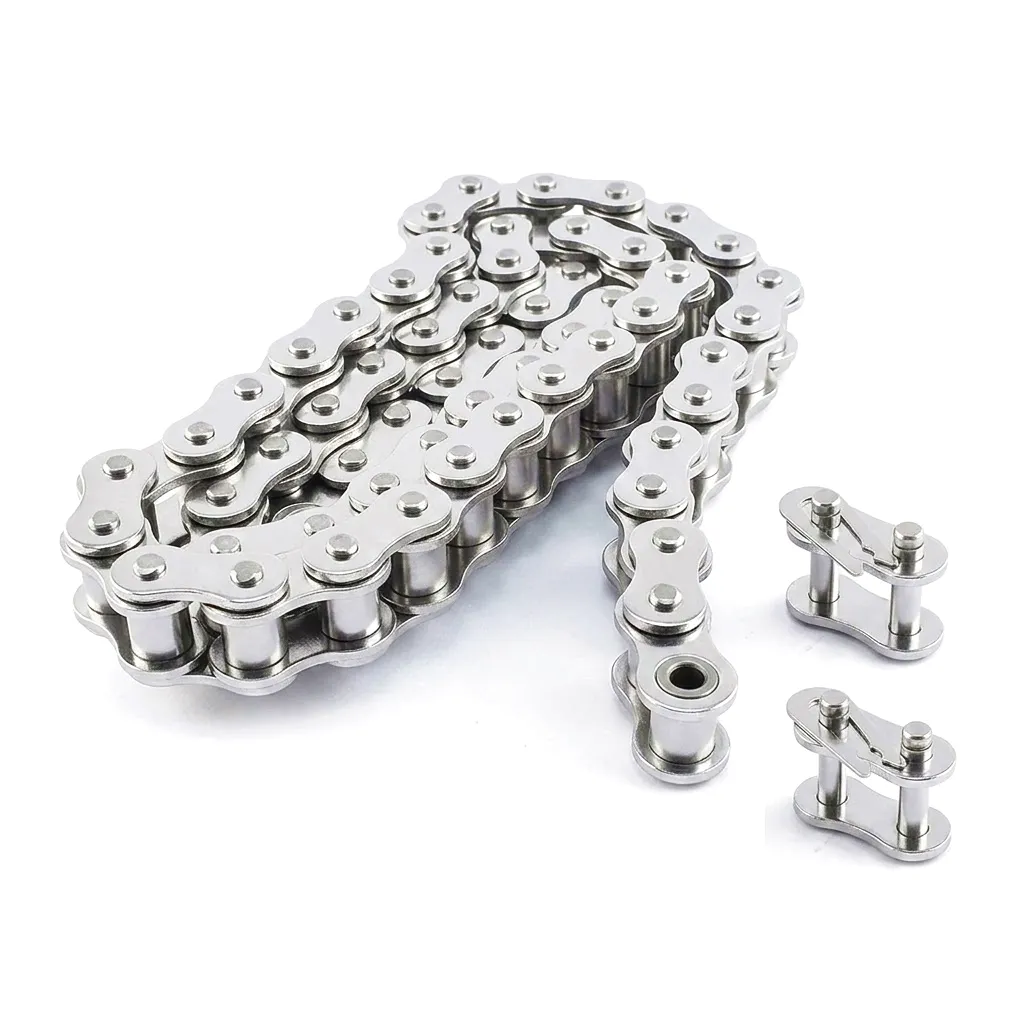
For corrosive or washdown environments — common in UK food processing plants in Yorkshire and East Anglia — stainless steel roller chains (typically AISI 304 or 316 grade) are widely specified. Nickel-plated variants offer a middle ground between cost and corrosion resistance. Self-lubricating chains incorporate sintered bronze bushings pre-impregnated with oil, enabling extended re-lubrication intervals in inaccessible or critical machinery installations.
Timing belts, by contrast, derive their structural strength from textile or polymer cord reinforcement rather than solid metal. The tooth geometry — whether trapezoidal (classical) or curvilinear (HTD, GT2, GT3 profiles) — is moulded in elastomer, which means maximum operating temperature is capped by the rubber chemistry, typically around 100°C continuous for neoprene and up to 130°C for HNBR compounds. In foundry environments or near furnace operations in Sheffield’s special steels sector, these thermal limits become a decisive disqualifying factor for timing belt selection.
Performance & Technical Parameters: Side-by-Side Table
| Parameter |
Rollenkette |
Timing Belt |
| Drive Type |
Positive mechanical (steel-steel engagement) |
Positive mechanical (rubber-pulley tooth mesh) |
| Typical Torque Capacity |
Up to 280 kN (large pitch heavy-duty chains) |
Up to approx. 40 kN (heavy-duty synchronous) |
| Max Continuous Speed |
Up to 25 m/s (fine pitch, precision grade) |
Up to 80 m/s (lightweight, CNC applications) |
| Betriebstemperatur |
-40°C to +500°C (with high-temp alloys) |
-30°C to +130°C (HNBR compound) |
| Lubrication Required |
Yes (oil bath, drip, or self-lube variants) |
NEIN |
| Slip Under Overload |
None (may break at extreme overload) |
Tooth jump possible under shock loads |
| Noise Level |
Moderate to high (metal engagement) |
Low (elastomeric dampening) |
| Service Life (typical) |
15,000 – 25,000 hours (well-lubricated) |
5,000 – 15,000 hours |
| Pitch Standards |
ANSI/ASME B29.1, ISO 606, BS/EN standards |
ISO 5296, DIN 7721, MXL/XL/L/H/XH/XXH |
| Korrosionsbeständigkeit |
Stainless/nickel-plated grades available |
Good (polymer inherently non-corrosive) |
| Repairability in Field |
Excellent (add/remove links, replace segments) |
Poor (full belt replacement required) |
| Relative Drive Cost (initial) |
Moderate–High (depends on pitch/grade) |
Low–Moderate |
Featured: High-Strength Roller Chains for Demanding Applications
Caterpillar OEM Replacement
Hochfeste Rollenkette 120HSP-00
Engineered as a direct Caterpillar replacement, the 120HSP-00 delivers superior tensile strength and extended wear life in excavators, dozers, and crawler undercarriage systems operating in heavy UK construction and mining environments. Case-hardened components meet and exceed OEM specifications.
Produkt ansehen →
Caterpillar OEM Replacement
Hochfeste Rollenkette C100HSP-00
The C100HSP-00 series addresses the specific demands of Caterpillar tracked machinery operating across UK quarrying and earthmoving projects. Enhanced chromium-carbon steel alloy pins and precision-ground bushings extend the re-lubrication interval while maintaining dimensional accuracy across the full service cycle.
Produkt ansehen →
Core Advantages of Roller Chain in Industrial Practice
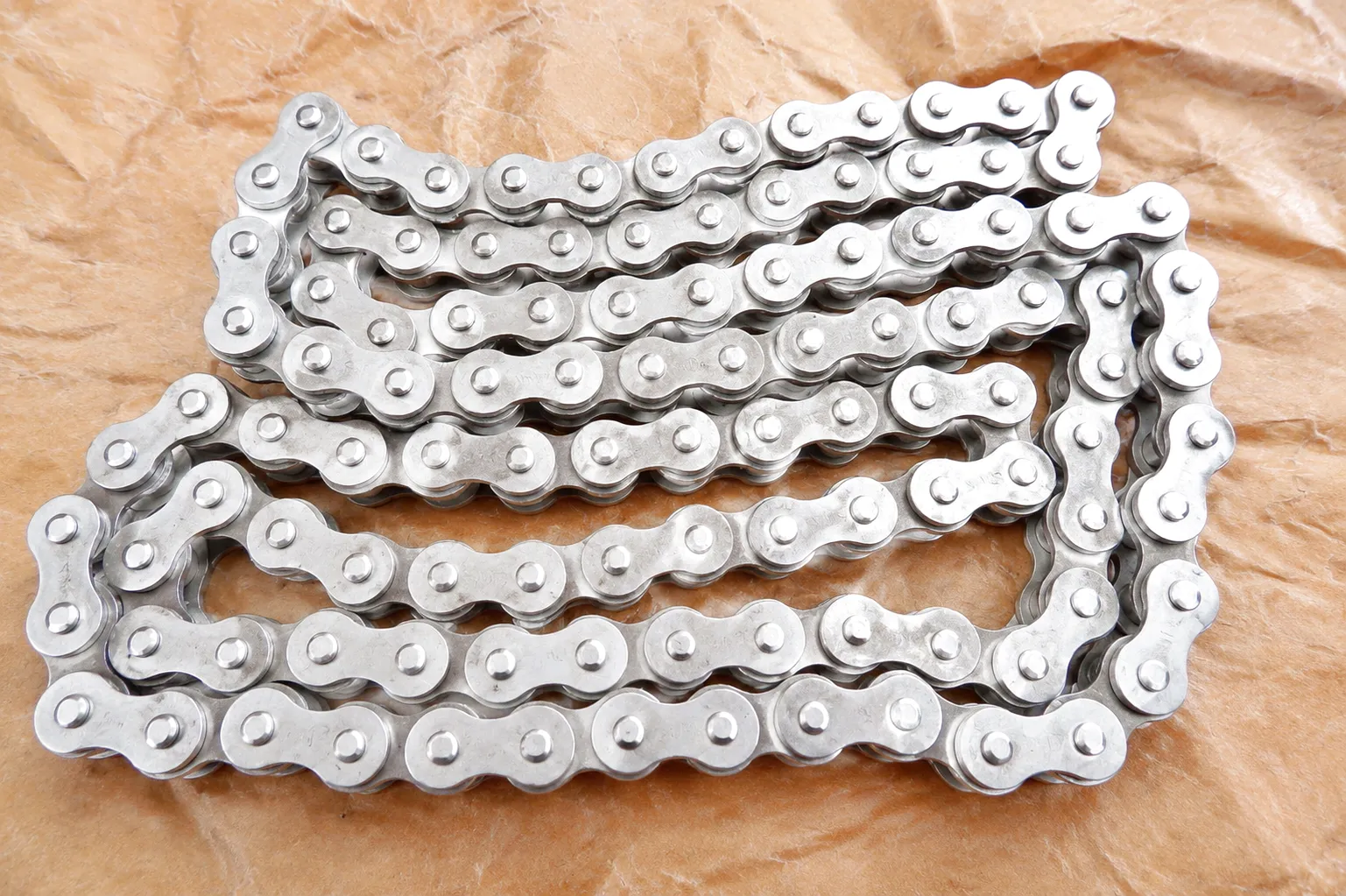
The technical superiority of roller chain in heavy-duty applications comes down to a cluster of properties that elastomeric drives genuinely cannot replicate. Load capacity is the most obvious: a size 120 duplex roller chain rated to approximately 280 kN breaking load operates in a regime where timing belts would fail catastrophically. But load capacity alone understates the case. Roller chains absorb shock loads — the sudden torque spikes generated by jaw crushers starting under load, or conveyor systems hitting blockages — through the mechanical elongation of pin-bushing contacts rather than the abrupt tooth shear failure that characterises timing belt overload events.
Field repairability gives roller chain an operational advantage that procurement managers in UK manufacturing recognise immediately. A worn or broken section of roller chain can be repaired by a fitter on the factory floor using a chain tool in under thirty minutes, with replacement links that can be held in stock without refrigeration, special packaging, or temperature controls. A failed timing belt requires sourcing an exact width-and-pitch-matched replacement — sometimes a proprietary item on a six-week lead time — and a complete drive disassembly for installation. In a Birmingham automotive pressings facility running at 168 hours per week, that maintenance model represents genuine unplanned downtime risk at a scale that changes the total cost of ownership calculation significantly.
Seven Reasons UK Engineers Specify Roller Chain
💪
Exceptional Load Capacity
From standard ANSI 40 to heavy-duty No. 240, roller chains cover a torque envelope that no elastomeric competitor can approach, making them suitable for mining conveyors, steel mill tables, and heavy construction OEM machinery.
🔥
Wide Temperature Range
Roller chains fabricated from high-alloy or heat-resistant steel remain operational at temperatures far beyond any elastomeric compound. In Sheffield’s casting and forging sector, this is not a marginal benefit — it is an engineering necessity.
🔧
Field Repairability
Failed links can be replaced on-site with common hand tools and standard chain stock. This directly reduces mean time to repair (MTTR) in time-critical production environments where every minute of unplanned downtime has a direct cost impact.
🔄
Centre Distance Flexibility
Roller chain spans are adjustable simply by adding or removing links, whereas timing belt lengths are fixed at manufacture. When layout changes are common — as in modular UK automated assembly lines — this adaptability cuts redesign costs significantly.
⏱
Longevity Under Load
Properly lubricated and tensioned roller chains routinely reach 20,000 operating hours in industrial use. The wear mechanism is gradual and measurable using simple elongation gauges, allowing condition-based replacement rather than calendar-based preventive schedules.
🏠
Multi-shaft Drives
A single roller chain can power multiple sprockets simultaneously, enabling complex conveyor networks and synchronised multi-shaft drives that would require separate belt loops and additional tensioners if implemented with timing belts — simplifying the overall drive architecture.
📋
Universal Standardisation
ANSI, ISO, DIN, and BS standards ensure that roller chains from any compliant manufacturer are fully interchangeable. This eliminates single-supplier dependency — a risk management consideration that UK procurement teams increasingly prioritise in post-Brexit supply chain planning.
Application Scenarios: Where Roller Chain Wins
Heavy Conveyor Systems — Yorkshire Aggregate & Quarrying: Limestone quarrying operations around Harrogate and Skipton depend on roller chain conveyors to move crushed aggregate from primary crushers to screening stations at rates exceeding 500 tonnes per hour. The abrasive dust, continuous loading, and outdoor temperature swings that characterise British quarrying make timing belts impractical — their elastomeric compounds degrade under persistent abrasive contact, whereas case-hardened roller chain with hardox-treated bushings handles the abuse routinely.
Agricultural Machinery — Midlands & East Anglia Harvest Equipment: Combine harvesters, straw walkers, grain augers, and header drive systems throughout Lincolnshire’s cereal farming sector rely on roller chain to survive the seasonal extremes of British harvest. The drives must tolerate ingested stones, stalks, and mud — conditions where any elastomeric belt would fail within days. Replacement chains are stocked widely across UK agricultural merchants, and roadside repairs in a field edge are routine.
Steel & Metals Processing — Sheffield Special Steels: Roller tables, billet transfer systems, and bar mill drives in Sheffield’s special steels sector operate at ambient temperatures that would destroy any rubber or polyurethane element. High-temperature roller chains fabricated from chromium-nickel alloy maintain their tensile properties above 300°C, enabling mill tables to run continuously in conditions that categorically exclude timing belt technology.
Caterpillar OEM Undercarriage — UK Civil Engineering & Groundworks: Ground-engaging machinery from Caterpillar deployed across UK infrastructure projects — from M25 widening schemes to HS2 earthworks — uses purpose-engineered roller chains in their crawler track and final drive systems. The 120HSP-00 and C100HSP-00 formats are precision-matched to Caterpillar specifications, ensuring the correct engagement geometry and rated breaking load that OEM operations demand. These are not generic alternatives — they are engineered to specification.
Marine & Offshore — Scottish North Sea Support Vessels: Chain-driven deck machinery aboard platform supply vessels and anchor-handling tugs operating out of Aberdeen must withstand salt spray, freezing North Sea temperatures, and shock loading from storm conditions. Stainless-grade roller chain with sealed links provides a service environment that no timing belt could survive, and the mechanical simplicity ensures reliability in remote locations far from specialist maintenance support.
Application Scenarios: Where Timing Belt Is the Right Answer
🍳 Food & Pharmaceutical Production
Timing belts produce no lubricant drip, an absolute requirement in BRC-accredited food factories across the UK. Their inherent cleanliness means they are specified for any drive system where oil contamination of product is a regulatory or safety concern.
🆕 CNC & High-Speed Servo Axes
Where linear positioning accuracy below 0.1 mm is required at speeds above 30 m/s, the combination of low mass and tight pitch tolerance in curvilinear-profile timing belts outperforms roller chain. CNC router gantries and pick-and-place automation in UK electronics manufacturing are typical examples.
🔊 Noise-Sensitive Environments
In clean-room medical device assembly or office equipment manufacturing — sectors growing in the Cambridge and Oxford technology corridors — timing belt drives maintain sub-50 dB noise levels that roller chain mechanisms simply cannot achieve, regardless of lubrication quality or chain grade.
Fertigungsexzellenz
Ever Power: Precision Roller Chain Manufacturing & Global Supply
Ever Power operates dedicated roller chain production lines equipped with CNC automatic link plate stamping presses, precision pin turning centres, and automated case-hardening furnaces capable of maintaining carburising atmospheres to within ±5°C — the tolerance that directly governs surface hardness consistency across production batches. Every chain product undergoes 100% tensile load testing before despatch, with test reports available to UK customers as standard documentation for BS EN ISO quality record-keeping requirements.
Customisation capability at Ever Power extends across every dimension of the chain specification: pitch, plate thickness, pin diameter and alloy grade, bushing material (carbon steel, stainless, or sintered bronze), roller diameter, and attachment plate geometry. The engineering team handles non-standard configurations — extended pins, bent attachment plates, double-pitch conveyor formats — on lead times that consistently undercut European competitors. For UK buyers working with machine builders in Birmingham’s precision engineering cluster or Coventry’s automotive Tier 1 supply chain, this flexibility eliminates the costly design compromise of adapting machinery to standard catalogue products.
◈ Supply Chain & Logistics
- Ex-stock availability on 85 standard ANSI/ISO sizes
- Direct DDP delivery to UK ports: Felixstowe, Southampton, Tilbury
- Air freight for urgent replacement on critical machinery
- UK-based distribution partnerships in Midlands and North-West
- Full material certification (mill certificates, hardness test records)
📈 Quality Standards
- ISO 9001:2015 quality management system
- 100% tensile load test on all production batches
- Conformance with ANSI B29.1, ISO 606, DIN 8187/8188
- Caterpillar OEM specification validation (120HSP, C100HSP series)
Customer Success Story: Nottingham Automotive Pressings Ltd
Nottingham Automotive Pressings Ltd (NAPL), a Tier 1 supplier of structural stampings for major UK vehicle manufacturers, had been operating a transfer press line with timing belt drives on the shuttle conveyor system since the facility’s original installation in 2017. By 2024, the plant engineering team was logging three to four unplanned belt failures per quarter — each requiring an average of four hours of downtime for diagnosis, sourcing, and replacement. At NAPL’s production rate of 1,200 pressings per hour and a gross margin of approximately £18 per part, each failure represented a direct production loss of around £86,400 — before accounting for overtime, scrap rectification, and the knock-on impact on customer just-in-time schedules.
The plant’s maintenance director approached Ever Power after identifying that the root cause of failures was shock loading from press blanking — a transient torque spike that the GT3 timing belts were not rated to absorb. Ever Power’s engineering team proposed a conversion to duplex ANSI No. 80-2 roller chain with sealed lubrication reservoirs on the shuttle conveyor drives. The pitch geometry was matched to the existing shaft centres, and custom attachment plates were fabricated to carry the shuttle fingers — eliminating the need to re-engineer the conveyor framework. Installation was completed during a scheduled quarterly maintenance shutdown, with zero additional downtime.
Twelve months post-conversion, NAPL has recorded zero unplanned conveyor stoppages attributable to drive failure. The roller chain system is inspected and lubricated during planned maintenance windows, with wear measured by elongation gauging — a five-minute check that replaced the previous regime of belt tension checks and empirical failure waiting. The annual saving in avoided downtime and belt replacement costs was independently calculated at over £320,000, yielding a project payback period of under six weeks on the conversion investment.
What UK Customers Say About Ever Power Roller Chain
★★★★★
“We specified the Ever Power duplex roller chain for our aggregate conveyor rebuild in Harrogate. The tensile test certificates matched spec exactly, and 18 months in, elongation is still within the 1.5% replacement limit. The supplier lead time was 12 days ex-works — genuinely impressive for a custom pitch with extended pins.”
James Whitfield
Maintenance Manager, Wharfedale Aggregates Ltd, Harrogate
★★★★★
“The C100HSP-00 Caterpillar replacement chains we trialled across four D6 dozers on our Midlands groundworks contract performed beyond expectation. We tracked wear over 2,200 machine hours and the sprocket engagement pattern stayed clean throughout. Ever Power’s DDP delivery to our Birmingham yard was straightforward and the paperwork was in order for our project compliance records.”
David Sinclair
Fleet & Equipment Director, Sinclair Civil Engineering Ltd, Birmingham
★★★★★
“We needed stainless 316 roller chain in a non-standard pitch for a washdown conveyor in our Sheffield processing facility. Most suppliers could only offer catalogue items. Ever Power’s technical team responded with a full drawing review, material certification, and price within 48 hours. Delivery was 16 days. The chain has now been running in a weekly hot caustic washdown cycle for nine months with no measurable pitting or link seizure.”
Rachel Thornton
Process Engineering Lead, Meridian Food Systems Ltd, Sheffield
Quick Decision Guide: Choosing Between Roller Chain and Timing Belt
| Requirement |
Rollenkette |
Timing Belt |
| Torque > 15 kN |
✔ Recommended |
✘ Not suitable |
| Temperature above 120°C |
✔ Recommended |
✘ Not suitable |
| Oil-free / food-grade environment |
≈ Possible (self-lube) |
✔ Recommended |
| Positioning accuracy < 0.1 mm |
✘ Not suitable |
✔ Recommended |
| Shock loading & heavy impact cycles |
✔ Recommended |
✘ Risk of tooth jump |
| High speed (> 30 m/s), light load |
✘ Not ideal |
✔ Recommended |
| Field repair essential |
✔ Excellent |
✘ Full replacement |
| Low noise requirement |
✘ Moderate noise |
✔ Recommended |
Häufig gestellte Fragen
How much does a heavy-duty roller chain cost from a UK supplier, and what factors affect the price?▼
The cost of roller chain depends on pitch, grade, material specification, and quantity. Standard ANSI No. 40 simplex chain in carbon steel is typically available from stock distributors across the UK at £20–£45 per metre. Heavy-duty sizes such as No. 120 or No. 160 in duplex or triplex format range from £80 to over £250 per metre, depending on alloy specification and surface treatment. Stainless steel and nickel-plated variants carry a premium of 40–80% over carbon steel equivalents. Custom configurations with attachment plates, extended pins, or non-standard pitches are priced on application — requesting a direct quote from Ever Power via
[email protected] will return a specific price based on your drawing or specification within 48 hours.
What is the best roller chain supplier for heavy construction machinery in the Birmingham and Sheffield area?▼
For buyers in Birmingham and Sheffield sourcing roller chain for heavy construction or steel processing machinery, the key criteria are conformance to ANSI/ISO pitch standards, hardness certification, and delivery reliability. Ever Power supplies direct to UK buyers with DDP delivery to major Midlands logistics hubs and offers full material test reports on all production. For Caterpillar-specific applications — common in the Birmingham groundworks and civil engineering sector — the 120HSP-00 and C100HSP-00 products provide OEM-matched specifications with rapid lead times typically not available through regional distributors.
When should I replace a roller chain drive with a timing belt in my UK food processing facility?▼
In UK food processing facilities operating under BRC or BRCGS certification, replacing a lubricated roller chain drive with a timing belt is appropriate when the conveyor or drive system operates in a zone where lubricant contamination of product or packaging is a realistic risk. If the drive torque is below 8–10 kN and speeds are moderate (below 15 m/s), a polyurethane HTD timing belt on sealed pulleys will provide a fully dry, no-contamination drive solution. However, if torque demands are higher — as in a tunnel pasteuriser or brine conveyor — self-lubricating stainless roller chain with sintered bronze bushings is the more practical solution, and can be made compliant with appropriate drip trays and sealed housings.
Which drive system offers a lower total cost of ownership for a heavy conveyor application in a Yorkshire quarrying operation?▼
For a Yorkshire quarrying conveyor handling abrasive aggregate at high tonnage rates, roller chain delivers materially lower total cost of ownership over a typical five-year plant lifecycle. While the initial roller chain drive assembly may cost 20–30% more than an equivalent timing belt drive, the service life advantage — typically 18,000–22,000 hours versus 6,000–10,000 hours in dusty, abrasive conditions — more than offsets the capital difference. Add the in-field repairability of roller chain (a £30–£80 link repair versus a full belt replacement at £400–£1,200 plus downtime) and the economic case is clear. Quarrying operations in the Dales and North York Moors uniformly favour roller chain for exactly these reasons.
Where can I get a quote for custom stainless steel roller chain delivered to my facility in the UK?▼
Ever Power accepts custom enquiries for stainless steel roller chain — AISI 304 or 316 grade — in any ANSI or ISO pitch, with non-standard features including extended pins, side plates, attachment links, and special coatings. To get a quote, email your drawing or specification to
[email protected]. Include the chain pitch, number of links, grade required, and delivery location (UK port or direct site delivery). Pricing is returned within 48 working hours. DDP delivery to Felixstowe, Southampton, or direct to your facility address can be arranged for standard and custom orders above minimum quantity.
How do I know when my Caterpillar roller chain needs replacing on a D8 dozer working on UK infrastructure projects?▼
For Caterpillar D8 or comparable crawler dozers deployed on UK HS2, A303 or road infrastructure projects, the standard wear indicator is track chain elongation — measured as pitch elongation across ten or more links. Caterpillar specifies replacement when elongation reaches 2% of nominal pitch over a measured length. Physical checks include visual inspection for cracked or deformed link plates, irregular roller rotation (indicating seized bushings), and audible clunking during direction change (indicating pin-bushing clearance). On high-utilisation UK civils contracts where machines accumulate 2,000+ hours per season, inspections should be conducted at 500-hour intervals. Replacement with OEM-spec chains such as the 120HSP-00 ensures correct pitch engagement with existing sprockets and idlers, avoiding premature sprocket wear caused by pitch mismatch.
Ready to Specify the Right Drive System?
Speak with Ever Power’s engineering team about roller chain specifications, custom formats, and UK delivery — from standard stock to fully engineered solutions.
bearbeitet von gzl