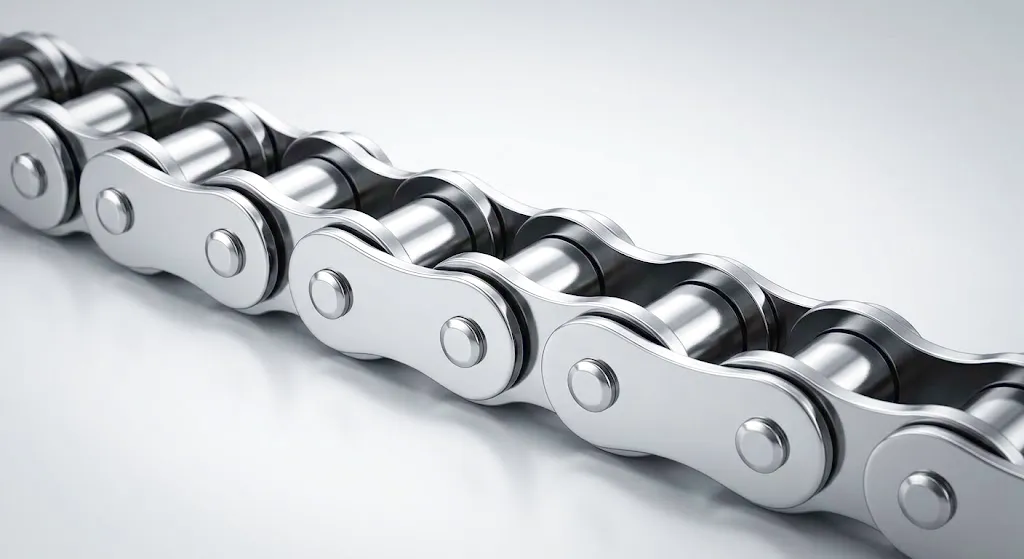
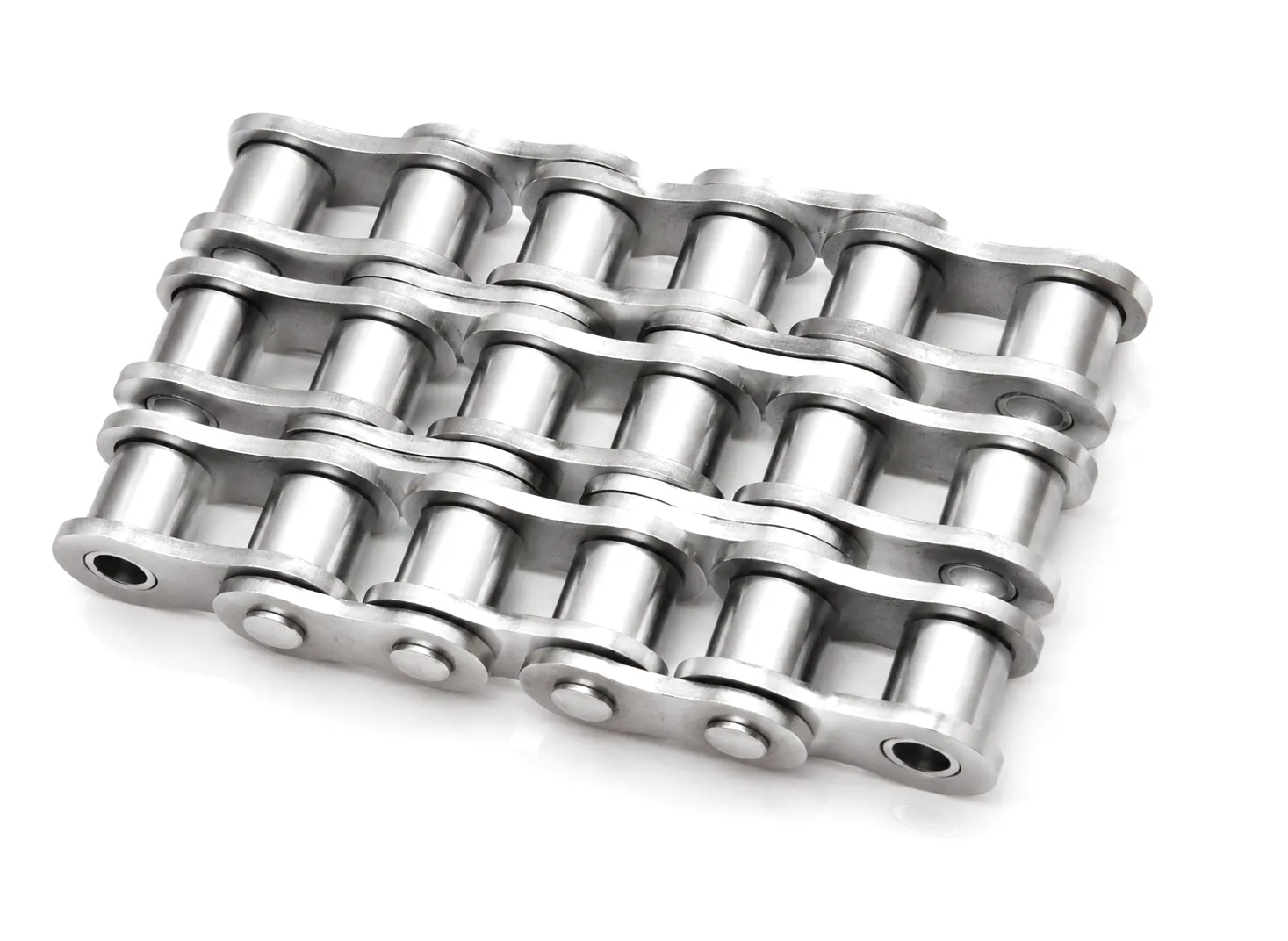
 The roller chain stands as one of the most enduring mechanical components in industrial history — a deceptively simple assembly of inner links, outer plates, bushings, rollers, and pins that has powered everything from Victorian textile mills to modern automated manufacturing cells. Walk the factory floor of any plant in Birmingham or Sheffield and the rhythmic engagement of chain on sprocket is a familiar, reassuring sound. What separates a precision-engineered roller chain from a commodity alternative, however, is not always obvious to the naked eye. It lives in the metallurgy of the pin and bushing, in the surface hardness profile of the roller, in the pitch tolerance held to a fraction of a millimetre across thousands of links. This article cuts through marketing language to examine the genuine engineering behind roller chain design, selection, and application — giving procurement engineers and plant managers the technical grounding they need to specify correctly, reduce unplanned downtime, and extract maximum value from their power transmission investment.
How a Roller Chain Works: The Kinematic Mechanism Explained
Positive Engagement
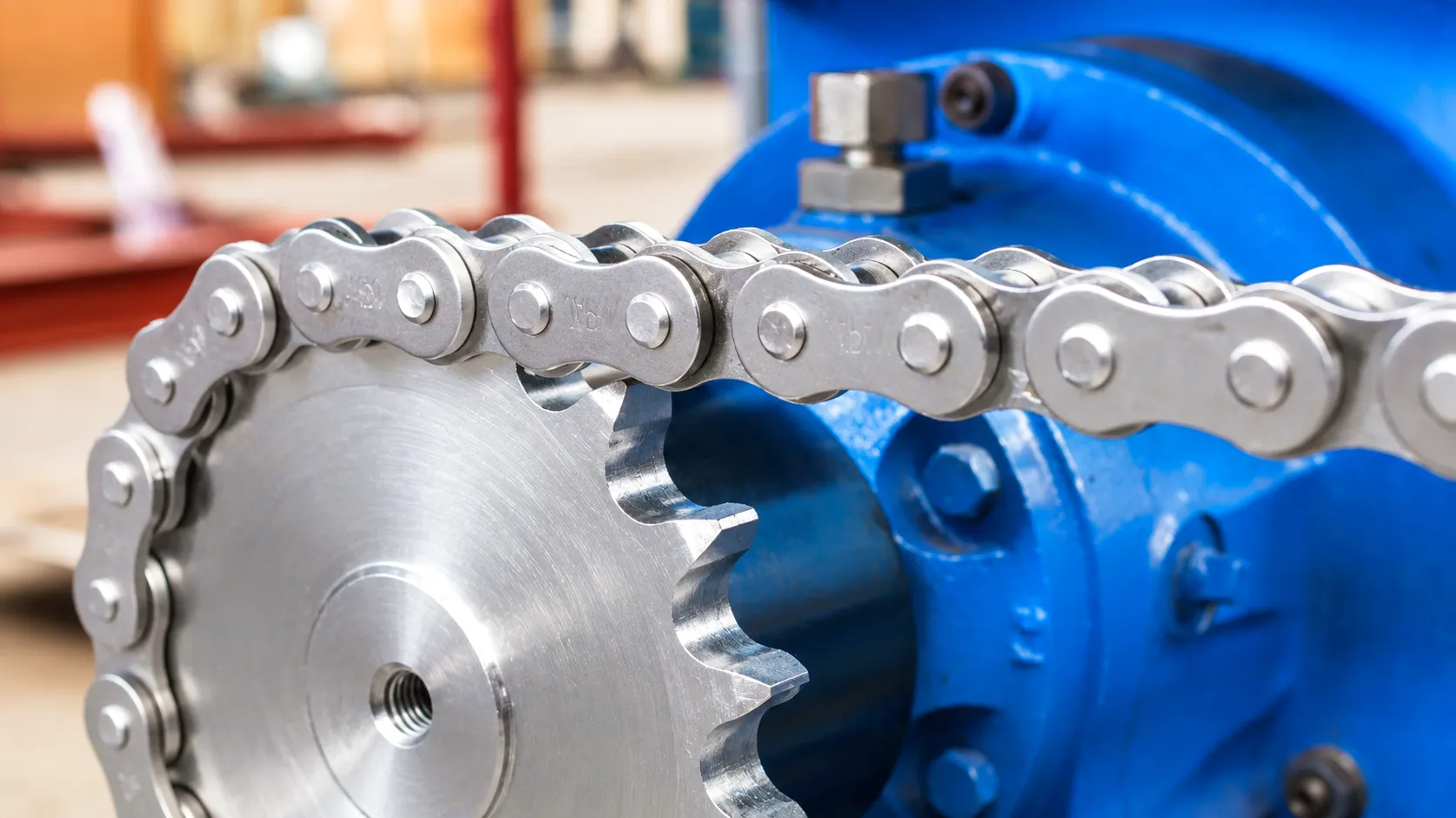
Unlike friction-dependent belt drives, a roller chain transmits torque through positive mechanical engagement between the chain rollers and the profiled teeth of the driving and driven sprockets. Each roller seats precisely in the sprocket tooth valley, and drive force is distributed across multiple teeth simultaneously. This means that — unlike V-belts — there is no creep, no slip, and no loss of speed ratio under load. The mechanical efficiency of a properly maintained roller chain drive routinely exceeds 98 percent, a figure that flat belts and even synchronous toothed belts struggle to match when environmental contamination or shaft misalignment is factored in.
Load Distribution & Articulation
As the chain travels around the sprocket, each pin-bushing joint must articulate — rotating relative to its neighbour through an angle equal to 360 degrees divided by the number of sprocket teeth. This articulation generates localised contact stress between pin and bushing. In well-designed roller chains, the pin diameter and bushing bore are matched to keep this contact pressure within the elastic limit of the selected alloy steel, preventing plastic deformation over the design life. The roller itself rolls freely on the bushing, so when it contacts the sprocket tooth, the impact energy is absorbed through rolling contact rather than sliding friction, dramatically extending the working life of both chain and sprocket.
The polygon effect is an inherent characteristic of all chain drives and deserves attention in high-speed applications. Because the chain wraps around a sprocket as a series of straight chords rather than a true circle, the effective pitch radius varies slightly with each tooth engagement. This produces a periodic speed fluctuation in the driven shaft, whose amplitude decreases as sprocket tooth count increases. Engineers specifying roller chain drives for sensitive machinery — CNC machining centres, food-grade conveyors, pharmaceutical packaging lines — typically select larger-diameter sprockets with higher tooth counts to minimise this vibration source. Standard BS/ISO specification roller chain operating on a 19-tooth or larger sprocket at moderate speed exhibits polygon variation well below the threshold that causes perceptible vibration or noise in most industrial environments.
Core Materials in Roller Chain Manufacturing
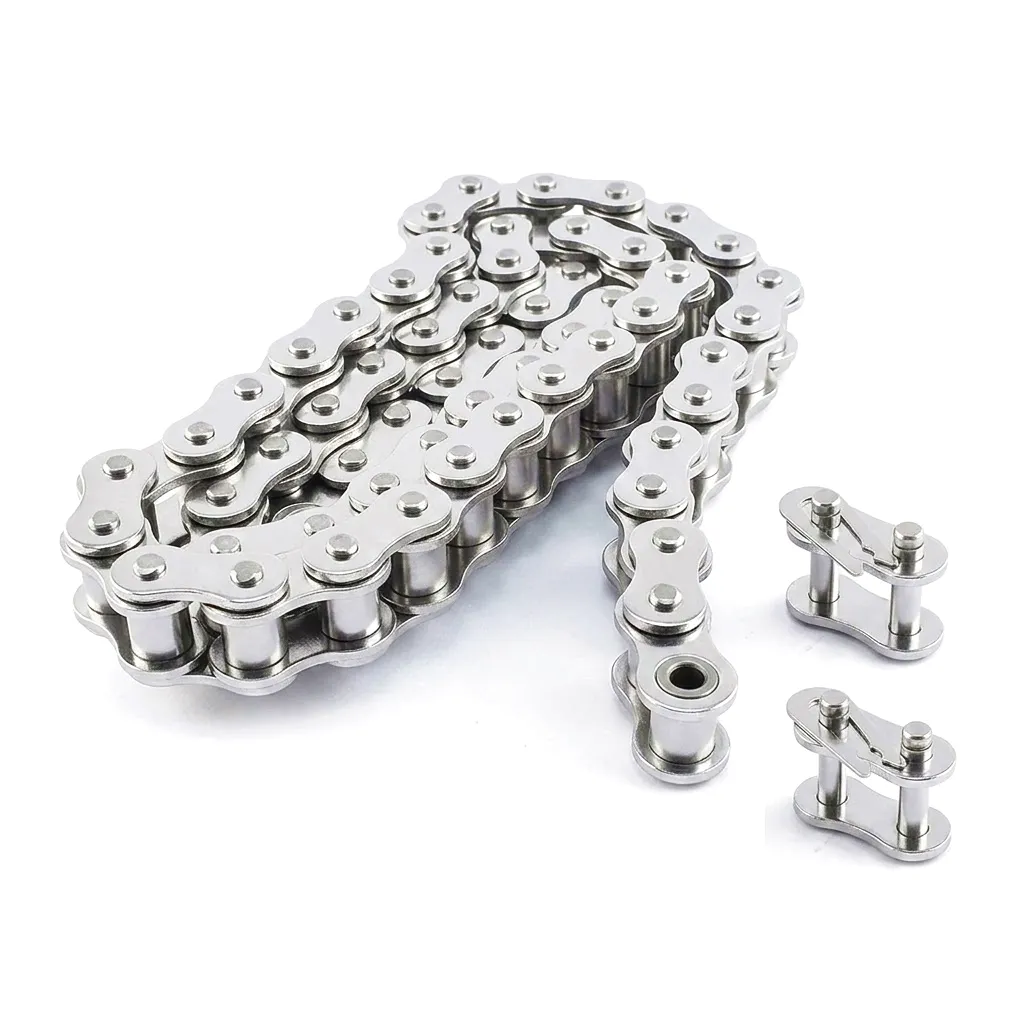
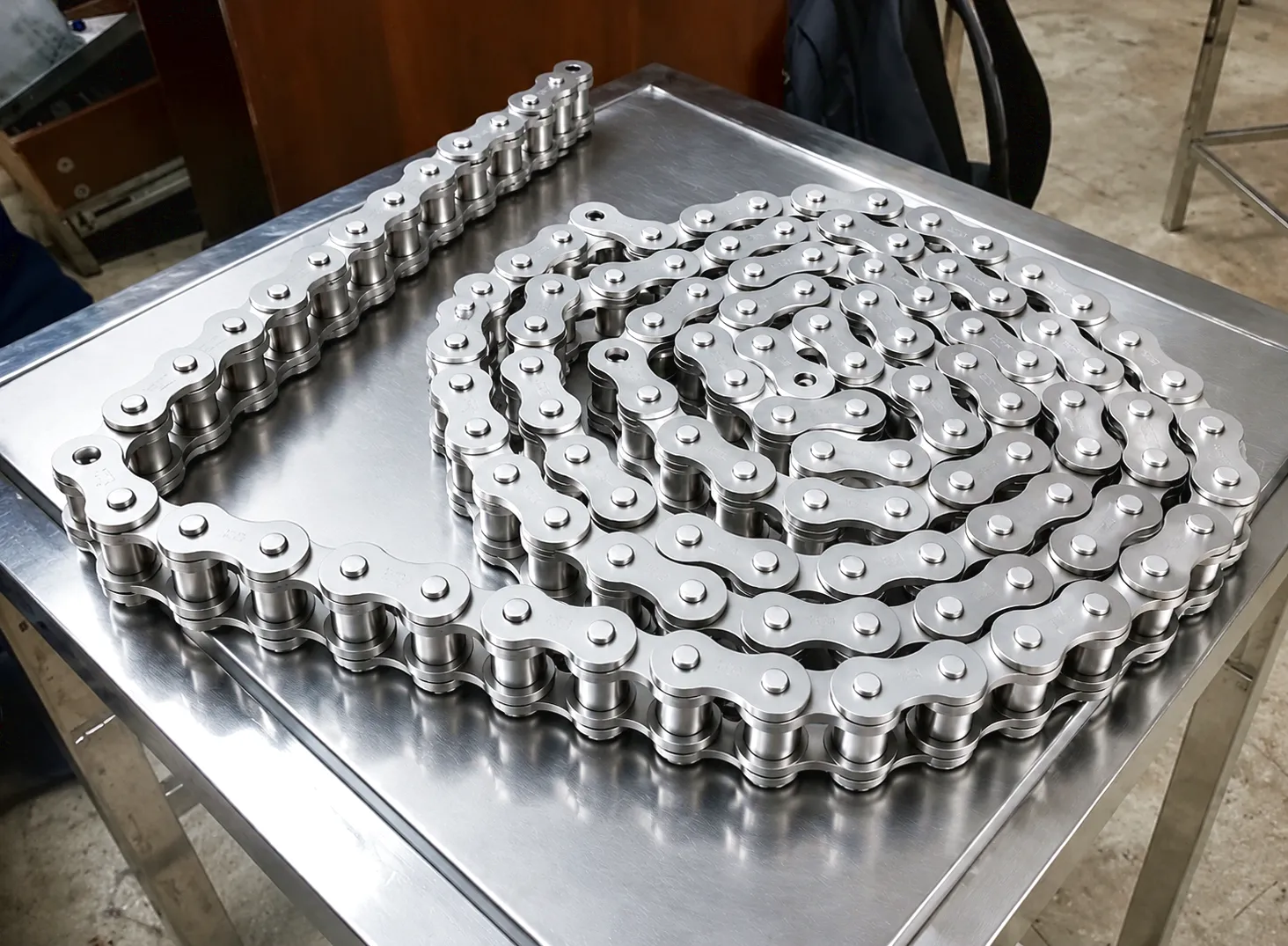
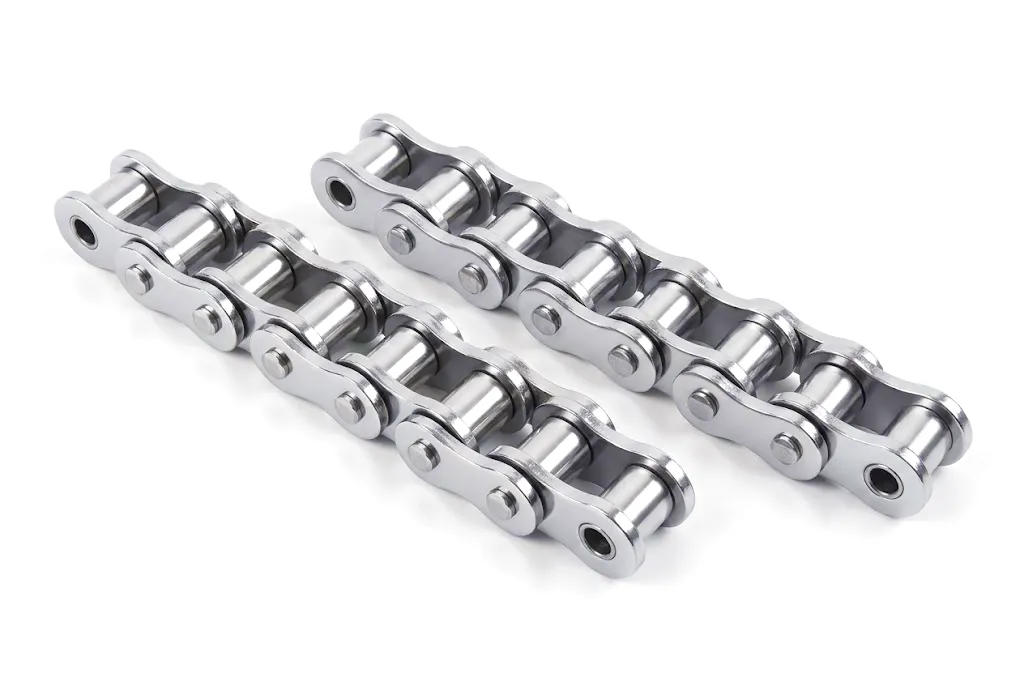 The performance envelope of any roller chain is ultimately determined by its materials. The pin and bushing are the highest-stress components — they experience repeated bending, torsion, and contact fatigue with every link articulation. Standard-duty roller chains use medium carbon steel, typically equivalent to AISI 1045 or BS EN 10083 grade C45, for these elements. The steel is through-hardened or case-hardened to achieve a core toughness that resists impact loads while the hardened surface layer — often reaching 58–62 HRC — provides wear resistance. For heavy-duty and corrosive-environment applications, chromium-molybdenum alloy steels (analogous to AISI 4140) are specified, offering substantially higher tensile strength and improved hardenability in larger cross-sections.
З'єднувальні пластини
Stamped from high-carbon or alloy strip steel, inner and outer plates are shot-blasted and given a compressive pre-stress to improve fatigue life. Waisted plate profiles (figure-8 shape) reduce stress concentrations at pin and bushing holes.
Піни
Precision-ground alloy steel pins are the backbone of tensile strength. Surface carburising to 0.3–0.8 mm depth achieves the hard outer layer needed for bushing-contact wear resistance while maintaining a ductile core to absorb shock loads.
Bushings
Cold-drawn seamless steel tube, case-hardened after forming, provides the bearing surface for both pin articulation and roller rotation. Dimensional accuracy is critical — a bore diameter variation of even 0.005 mm can alter load distribution and accelerate wear.
Ролики
The free-spinning roller contacts the sprocket teeth, converting sliding friction into rolling contact. Deep-hardened rollers resist denting from repeated impact. For conveyor applications, oversized rollers with flanges are available to guide chain laterally.
Stainless & Specialty Alloys
Grades 304 and 316 stainless steel chains are specified for food processing, pharmaceutical, and marine environments where corrosion resistance outweighs the modest reduction in tensile load capacity. Nickel-plated and zinc-galvanised variants extend outdoor service life.
Roller Chain Technical & Performance Specifications
The table below presents representative performance data for the most commonly specified BS/ISO simplex roller chain series. All tensile loads quoted are minimum breaking loads in accordance with BS EN ISO 606. Maximum allowable working loads are typically calculated at one-sixth to one-eighth of the breaking load, with appropriate service factors applied for shock loading and lubrication conditions.
| Chain No. (BS/ISO) | Pitch (mm) | Roller Dia. (mm) | Inner Plate Width (mm) | Pin Dia. (mm) | Min. Breaking Load (kN) | Weight (kg/m) | Max Speed (m/s) | Typical Application |
|---|---|---|---|---|---|---|---|---|
| 05B-1 | 8.00 | 5.00 | 3.00 | 2.31 | 4.4 | 0.18 | 8 | Light duty instruments, small conveyors |
| 06B-1 | 9.525 | 6.35 | 5.72 | 3.28 | 9.0 | 0.41 | 10 | Agricultural machinery, packaging lines |
| 08B-1 | 12.70 | 8.51 | 7.75 | 4.45 | 17.8 | 0.69 | 12 | General machinery, printing, woodworking |
| 10Б-1 | 15.875 | 10.16 | 9.65 | 5.08 | 22.2 | 1.02 | 15 | Conveyor drives, mid-duty plant |
| 12Б-1 | 19.05 | 11.91 | 11.68 | 5.72 | 28.9 | 1.50 | 15 | Mining equipment, material handling |
| 16Б-1 | 25.40 | 15.88 | 17.02 | 8.28 | 60.0 | 2.71 | 12 | Heavy plant, quarrying, steel mills |
| 20Б-1 | 31.75 | 19.05 | 19.56 | 10.19 | 95.0 | 3.73 | 10 | Heavy-duty drives, port cranes |
| 24Б-1 | 38.10 | 25.40 | 25.40 | 14.63 | 160.0 | 7.10 | 8 | Cement plants, heavy extraction |
Data per BS EN ISO 606. Service factors for shock loading (1.2 to 1.8) and poor lubrication (1.3 to 1.7) should be applied to the allowable working load in the design calculation.
Core Technical Advantages of Roller Chain Drives
Engineers who have specified both belt drives and chain drives across a range of UK manufacturing sites consistently cite the same cluster of benefits that makes roller chain the rational choice for demanding applications. These advantages are not marketing abstractions — they emerge directly from the physics of positive engagement and the material properties outlined above.
⚙
Precise Speed Ratio Maintenance
The no-slip characteristic guarantees an exact and constant velocity ratio between driver and driven shafts. In multi-stage gearbox bypass drives, indexing conveyors, and cam-driven machinery, this deterministic relationship is not merely convenient — it is a functional requirement that no friction drive can reliably meet over the full operating temperature and load range.
📈
High Power Density
Multiple-strand roller chains — duplex, triplex, and higher — allow power to be multiplied in proportion to the number of strands without increasing the sprocket width beyond what the shaft bearing span can accommodate. A 24B-3 triplex chain carries over 450 kN breaking load in a package narrower than many equivalent shaft-coupled gearboxes.
🕐
Long Service Life Under Adverse Conditions
When correctly selected and lubricated, a roller chain drive in industrial service will routinely outlast the V-belt alternative by a factor of three to five. A steel works or foundry environment in Sheffield, with airborne particulate and thermal cycling, is precisely where the inherent robustness of hardened steel chain shines against polymeric alternatives that embrittle at elevated temperature.
⚡
Wide Centre Distance Flexibility
Unlike gear drives, roller chain systems can span centre distances from as little as 30 pitches to several metres without additional intermediate components. Idler sprockets allow the transmission path to follow non-linear routes — a genuine practical advantage when retrofitting power transmission into existing structures where shaft alignment cannot be changed.
🔧
Ease of Installation and Field Modification
Standard connecting links (spring clip or cotter pin type) allow chains to be joined, split, and extended in the field without specialist tooling. In UK plants operating multi-shift production schedules where planned maintenance windows are often under two hours, this rapid changeout capability translates directly into higher overall equipment effectiveness.
🔮
Low Pretension Requirements
Chain drives require only modest sag in the slack strand — typically 1 to 2 percent of the centre distance — compared to the high pretension loads that V-belts impose on shaft bearings. This reduces the dynamic bearing load, extends bearing life, and allows lighter-section shafts to be used, reducing overall drive system mass.
Industrial Application Scenarios for Roller Chain
Roller chain drives are found across a broader range of UK industries than any other single mechanical transmission component. The following scenarios represent environments where chain drives deliver performance that alternative solutions genuinely cannot match at competitive cost.
🏭 Steel and Metal Production — Sheffield & Rotherham
The South Yorkshire steel corridor relies heavily on heavy-pitch roller chain for rolling mill entry guides, slab transfer tables, and ladle car traversing systems. Chains operating at temperatures approaching 150 degrees Celsius in the vicinity of furnace areas demand heat-resistant lubricants and, in some cases, high-temperature alloy construction. The combination of high tensile loads, shock cycling, and scale contamination makes this one of the most demanding roller chain applications in British industry.
🚗 Automotive Manufacturing — Birmingham & Coventry
Assembly line conveyors throughout the West Midlands automotive sector use roller chain as the primary load-carrying and drive element. Power-and-free overhead conveyor systems — where carriers can be accumulated and released independently — are built almost exclusively around heavy-duty roller chain operating in enclosed tracks. Engine timing chains in the vehicle itself are a precision variant that uses inverted-tooth or conventional silent chain, a close relative of the standard roller chain concept.
🌿 Food and Beverage Processing — Yorkshire Dales & East Anglia
Hygiene-grade roller chain in 304 or 316 stainless steel is standard in UK food processing facilities where washdown with caustic cleaning agents is routine. Plastic side-flexing chain — an evolution of the conventional roller chain concept — is used extensively on curved conveyor systems for bottling and canning. In ambient-temperature dairy and cold-chain bakery environments, self-lubricating sintered-bushing chains are increasingly preferred because they eliminate the contamination risk associated with conventional grease application.
△ Mining and Quarrying — Wales & Derbyshire Peak District
Aggregates extraction sites in North Wales and the Derbyshire limestone belt depend on large-pitch roller chain for jaw crusher drives, screening plant conveyor systems, and bucket elevator drives lifting crushed stone against gravity. The abrasive grit and moisture contamination in these environments accelerates wear through a grease-displacement mechanism — a problem addressed through sealed-joint and O-ring chain variants that maintain internal lubrication between external contamination and the critical pin-bushing interface.
🛒 Logistics and Distribution — Midlands Distribution Parks
Modern automated sortation systems in large logistics hubs around Coventry, Daventry, and Lutterworth incorporate roller chain sorter diverts where precise timed routing of parcels is achieved through chain-driven pop-up divert units. In high-throughput applications running 20 or more hours per day, the ability to rapidly replace a worn length of roller chain without dismantling the complete system structure is a major operational advantage that the maintenance engineering teams of major UK parcel carriers actively specify for.
⚡ Energy Generation — Offshore Wind & Coastal Infrastructure
Tidal barrages, offshore wind turbine installation vessels, and dock gate drives along the UK’s eastern coastline use heavy-pitch marine-grade roller chain in environments where salt air and wave spray create relentlessly corrosive conditions. Hot-dip galvanised and stainless chain variants are standard specification for these exposed assets, and planned-maintenance replacement intervals are calculated based on elongation measurements rather than calendar time, because the actual wear rate depends heavily on sea-state cycles.
Featured Roller Chain Products
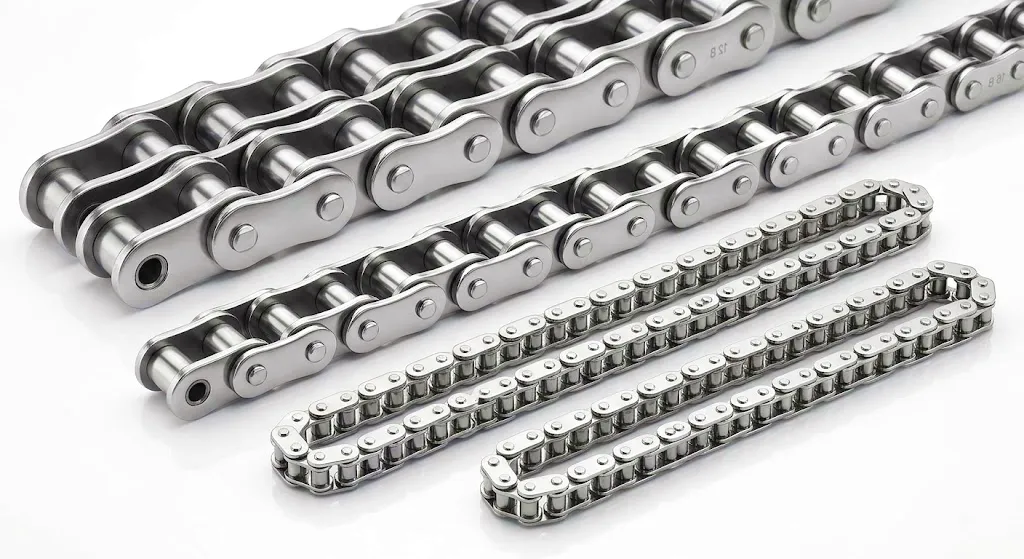
Ever Power’s rubber-top roller chain range covers conveyor applications where conventional chain surfaces are inadequate — where product contact, grip, or cushioning is required alongside the standard mechanical drive function. The two principal models from this range are detailed below.
10B-G1 Гумовий роликовий ланцюг
Built on the 10B-1 simplex base (15.875 mm pitch), the G1 variant adds a single-sided vulcanised rubber top to each outer link plate. This configuration is widely used in inclined conveyor sections where gentle product grip prevents slippage without marking the surface — well-suited to bottling lines, bakery goods handling, and light assembly flow systems. The rubber compound meets FDA and EU food-contact regulations as standard.
10B-G2 Гумовий роликовий ланцюг
The G2 variant offers a double-sided rubber top — rubber bonded to both faces of the outer link plate — providing grip and cushioning whether the chain is used in its primary running direction or inverted for return-path accumulation. Its symmetrical profile simplifies installation and eliminates the assembly error risk associated with single-sided chains. Suitable for carton erecting, tray filling, and orientation systems across UK packaging plants.
Ever Power: Precision Roller Chain Manufacturing & Customisation
Ever Power occupies a position in the global roller chain supply chain that goes well beyond catalogue distribution. The company’s manufacturing facilities operate multi-stage heat treatment lines — carburising furnaces, quench tanks, and tempering ovens — capable of processing pins, bushings, and link plates to the exact hardness profile specified for each application. Dimensional inspection occurs inline using contact gauging and optical comparator stations, with statistical process control data retained per production batch to support customer traceability requirements.
The customisation capability at Ever Power is genuinely broad. UK customers have specified non-standard pitch combinations for retrofit applications where existing sprockets cannot be replaced; extended pin variants for attachment plates and scrapers on conveyor chains; nickel and zinc plating of specific components for mixed corrosion-resistance and conductivity requirements; and bespoke polymer-coated chains for pharmaceutical handling applications. Every non-standard configuration is prototyped, load-tested to 150 percent of specification, and documented before serial production begins.
Supply chain reliability is a constant concern for UK maintenance engineers managing lean parts inventories under just-in-time production disciplines. Ever Power’s warehousing strategy maintains stock of the complete BS/ISO range in simplex, duplex, and triplex strand configurations, with dedicated next-day despatch to the United Kingdom. Custom orders are quoted within 24 hours, and production lead times for non-catalogue items are communicated at order placement rather than at ship date.
Ever Power Capabilities
Pitch Range
4 mm to 76.2 mm — full BS/ISO and ANSI series coverage
Surface Treatments
Nickel plating, zinc galvanising, black oxide, PTFE coating, polymer overlay
Матеріали
Carbon steel, Cr-Mo alloy steel, 304/316 stainless, self-lubricating sintered
Сертифікація
ISO 9001:2015 quality system; test reports and MTC on request
Customer Success Story: Heavy Plate Conveyor Upgrade, Rotherham Steel Processing Facility
A medium-sized steel processing operation in Rotherham had been running a heavy plate transfer conveyor using an imported 16B-3 triplex roller chain that was showing premature elongation within 14 months of installation — well short of the 36-month design life quoted by the original equipment manufacturer. The conveyor carries hot-rolled plate sections weighing up to 4.2 tonnes per unit and operates on a four-shift schedule with a two-hour weekly maintenance window. Unplanned chain failures had resulted in two line stoppages in the preceding 12 months, each costing roughly 6 hours of productive time across all downstream operations.
The plant’s mechanical engineering team contacted Ever Power for a replacement specification review. Ever Power’s application engineers conducted a site visit to measure actual load cycles using an inline tension meter mounted during a normal production run, and discovered that peak dynamic loads during plate transfer were reaching 94 percent of the original chain’s maximum allowable working load — significantly above the 70 percent threshold that standard design guidance recommends for sustained heavy-duty service. The operating temperature at chain level was also measured at 68 degrees Celsius, which was accelerating oxidation of the standard petroleum-based chain grease applied at weekly maintenance.
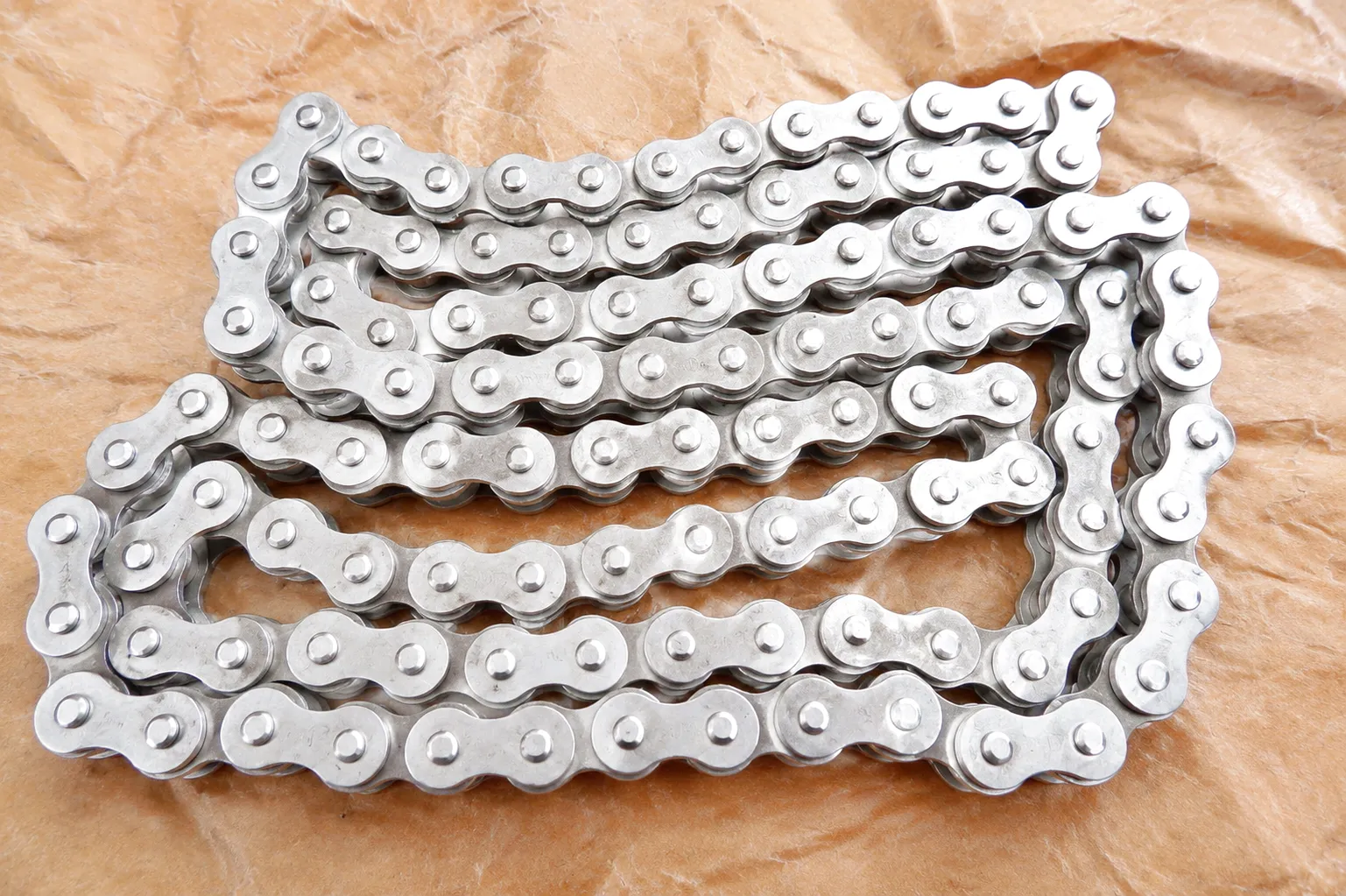
Ever Power recommended an uprated 20B-3 triplex chain in Cr-Mo alloy steel with a surface hardness of 61 HRC on pins and bushings, combined with a high-temperature synthetic chain lubricant rated to 150 degrees Celsius. The 20B pitch was compatible with the existing sprocket bore diameters after re-profiling, avoiding the need to replace the sprocket assemblies — a significant cost saving. Ever Power supplied the complete chain sets, connecting links, and the specified lubricant within 8 working days of order placement, enabling the changeover to be completed within a single planned maintenance weekend.
Eighteen months post-installation, chain elongation measurement showed the drive strands at 0.8 percent — within the 1 percent elongation limit that triggers a preventive replacement recommendation under the plant’s revised maintenance protocol. The plant has experienced zero unplanned chain-related stoppages in that period. The annual maintenance cost of the conveyor drive fell by approximately 34 percent compared to the 24-month period before the Ever Power upgrade.
What Our UK Customers Say
⭐
“We had been losing one planned production run every six weeks to chain-related failures on our main plate transfer line. The Ever Power 20B upgrade has run for a year and a half without a single stoppage. The hardness profile on those pins is noticeably superior — you can see it in the elongation figures.”
Plant Maintenance Engineer, Steel Processing Facility, Rotherham
⭐
“Ever Power supplied a non-standard pitch attachment chain for our aggregate bucket elevator within 10 days of confirming the drawing. Every dimension was spot-on, the surface finish on the extended pins was excellent, and the price was genuinely competitive versus anything we had sourced through UK distributors. They will be our first call on the next project.”
Chief Engineer, Quarrying Operations, Derbyshire
⭐
“The stainless-grade роликовий ланцюг Ever Power supplied for our washdown conveyor system has held up exceptionally well through daily high-pressure caustic cleans. Eighteen months in and the pitch elongation is still inside our replacement trigger. The self-lubricating bushings mean no contamination risk — that was the key requirement from our food safety team and it has been met consistently.”
Operations Manager, Food Processing Plant, Yorkshire
Frequently Asked Questions About Roller Chain in the UK
Ready to Specify Your Roller Chain?
Tell Ever Power your pitch, strand count, material requirement, and quantity — and receive a detailed quotation, MTC, and delivery schedule within 24 hours.
[email protected] · Ever Power Industrial Transmission Solutions
редагування від gzl