Need roller chain for your UK operation?
Custom pitch, material, and coating options available. BS/ISO compliant.
The Mechanics of a Roller Chain Joint
How the Drive System Works
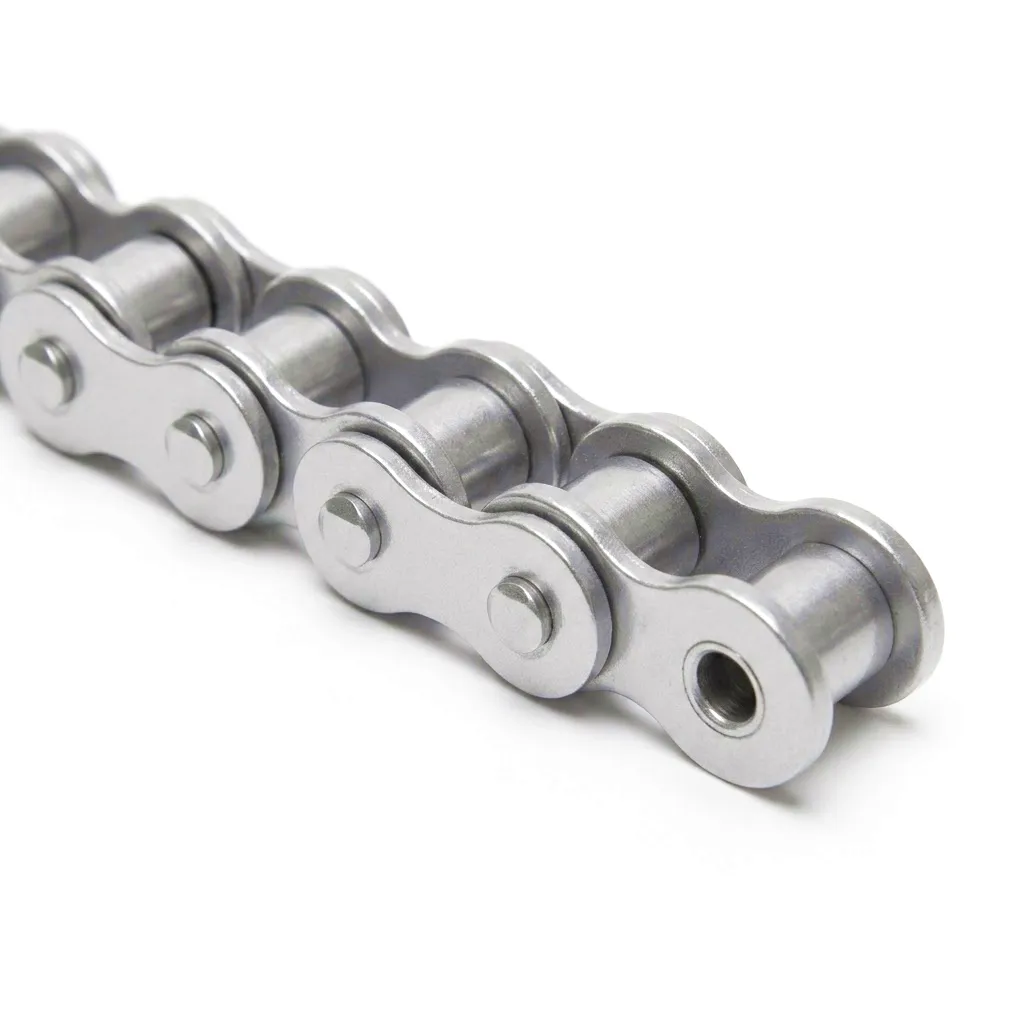
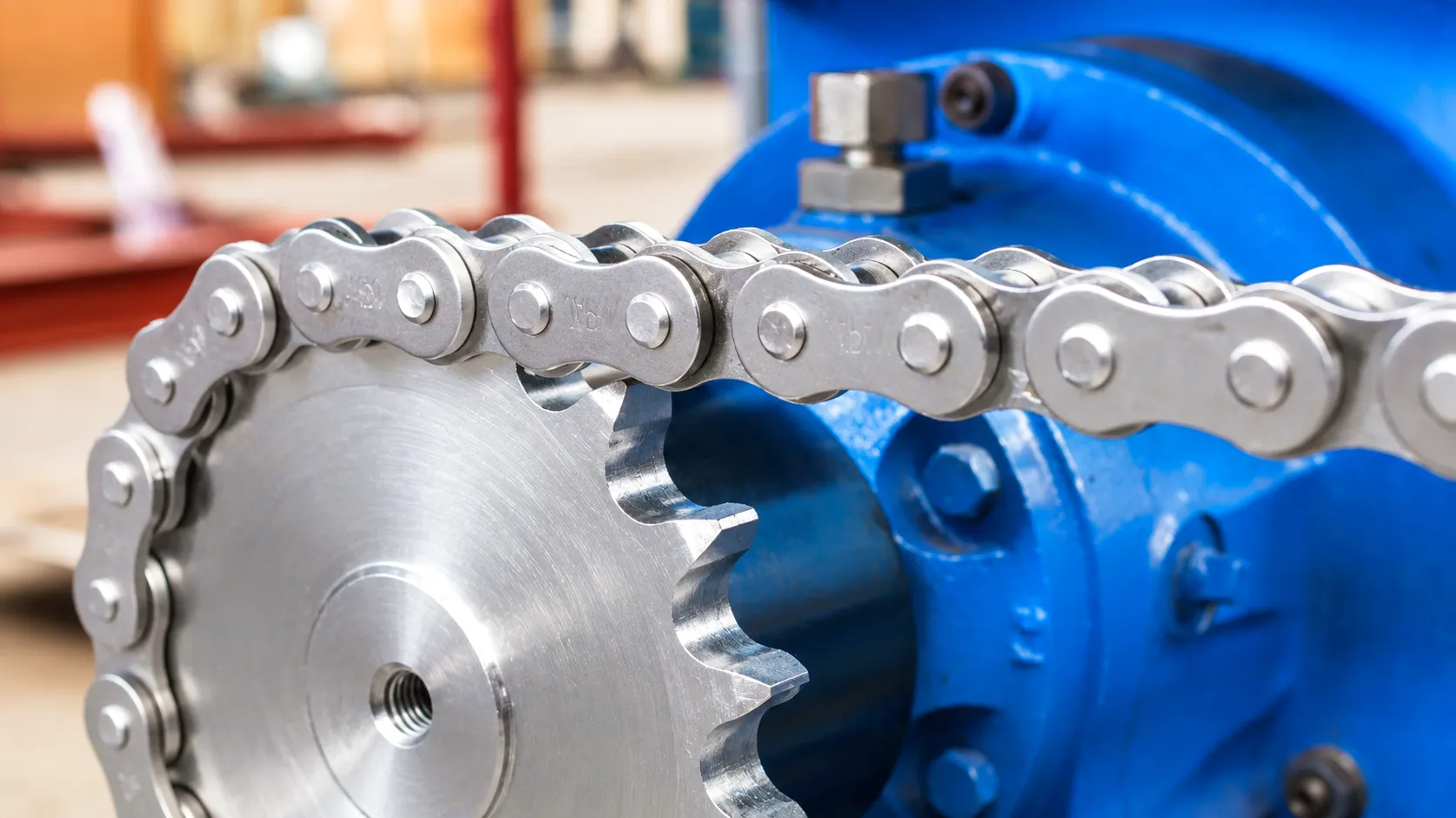
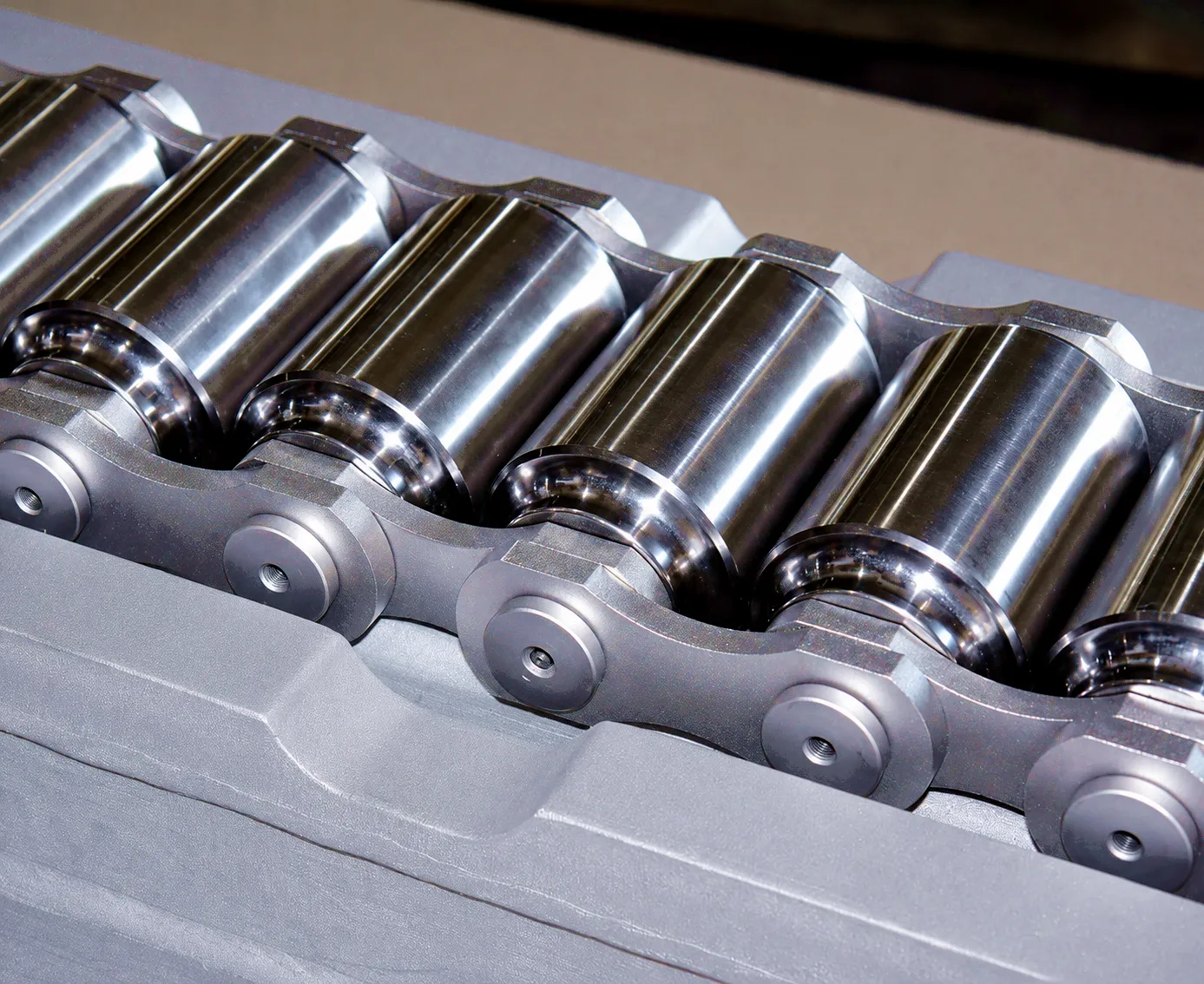
A roller chain transmits mechanical power by engaging sprocket teeth through its rollers, which rotate freely on bushings. The chain itself is a series of alternating inner and outer link plates joined by pins. The inner plates house hardened steel bushings; the outer (or pin) plates are pressed onto the pin ends. When the chain wraps around a driving sprocket, each roller seats cleanly into the sprocket valley, reducing contact wear while transferring torque efficiently. The chain’s connection point — where the two open ends of the chain are joined to form a closed loop — must reproduce the same mechanical integrity as every other link in the assembly. Any compromise at the joint means that link becomes the weakest point, and under cyclic loading it is almost always the first to fail. This is why both the master link and the press-fit pin method are engineered to specific tensile and fatigue ratings, not simply bolted together as an afterthought.
Load Distribution at the Link
When tension is applied to a roller chain, the load travels through the link plates in shear and through the pins in bending and bearing. At the connection point, the load path must be continuous and uninterrupted. A master link achieves this through a slip-fit outer link plate that is retained by a spring clip — meaning the pin-to-plate interface is slightly looser than a standard press fit. A press-fit riveted pin, by contrast, uses the same interference-fit construction as every other link in the chain, so the load path characteristics are identical throughout the loop. This distinction has meaningful implications for fatigue life, particularly in applications running above 200 RPM or carrying shock loads — conditions common in the steel processing corridors of Sheffield and the mining-adjacent industries of the North East.
Master Link (Clip Link) — Method, Advantages, and Limitations
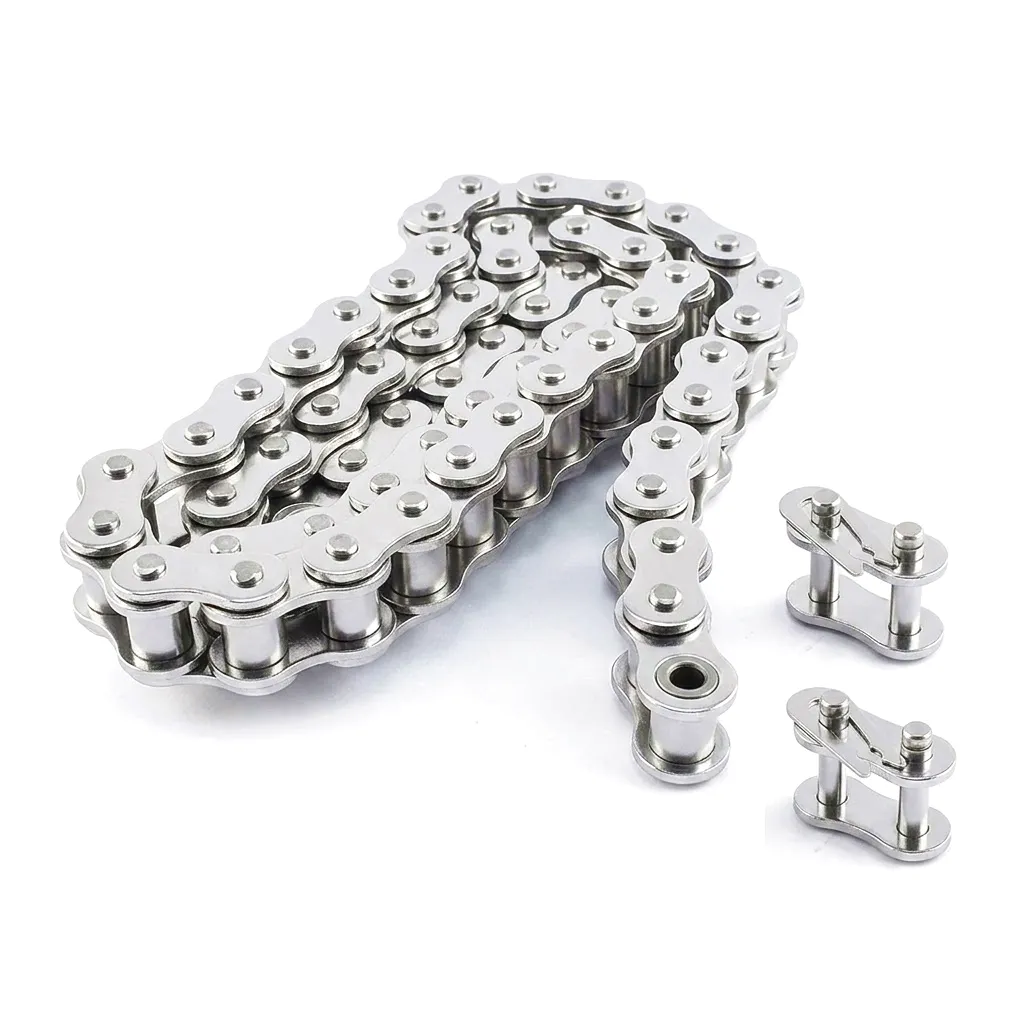
The master link — sometimes referred to in British engineering circles as a clip link or split link — is the most widely used connecting method across general industrial roller chain applications in the UK. It consists of four components: two pins fixed to an outer link plate (the U-link body), a second outer plate that slides over the protruding pin ends, and a spring retaining clip that locks the assembly. The clip is typically shaped like an omega (Ω) or a figure-of-eight and clips into circumferential grooves machined into the pin ends. Installation requires no specialist tooling; a pair of long-nose pliers is sufficient for most pitches up to 1 inch (25.4 mm). This simplicity makes the master link the default choice for maintenance teams in fast-moving environments — a packaging line in Swindon or a conveyor-driven sorting facility outside Manchester where chain changes need to happen quickly during short scheduled stops.
Fast Installation
No press tools or riveting equipment required. Clip engagement takes seconds once the link is seated, making it practical during planned maintenance windows with limited downtime budgets.
Reusable (With Caution)
The connecting link body can be reused if undamaged; only the spring clip should be renewed at each removal. Always replace the clip — a fatigued or distorted clip is a silent failure waiting to happen.
Tonehøjdeområde
Reliable from 1/4 inch (6.35 mm) up to approximately 1-1/2 inch (38.1 mm) pitch. Beyond this range, the clip retention force becomes marginal relative to working load, and riveted options are strongly preferred.
Where the master link shows its limitations is in dynamic, high-load environments. The slip-fit outer plate introduces a small but measurable degree of articulation looseness at the joint — not problematic under moderate tension, but under high-cycle fatigue or impact loading, the pin grooves that retain the clip can wear, and the clip itself can work loose through vibration. In applications such as roller chain on paper mill drives in the North West, or on large-scale agricultural machinery during the harvest season across East Anglian farmlands, the clip link may require more frequent inspection than the rest of the chain. Industry guidance, reflected in BS/ISO 606 and ANSI B29.1, recommends that clip links should not be used as permanent connections in applications exceeding 85% of the chain’s rated working load, or in any application where loss of the connection would create a safety hazard or cause damage to expensive downstream equipment.
For conveyor and light-industrial applications where the master link is appropriate, consider a specialised variant: the 24B-G1 Gummi Top Rullekæde from Ever Power — a heavier-pitch chain that pairs nicely with clip-link assembly on inclined conveyor systems where noise reduction and gentle product handling are priorities. The rubber top pads absorb vibration, easing stress on the connecting link joint during repeated starts and stops.
Press-Fit Riveted Pin — Method, Advantages, and Limitations
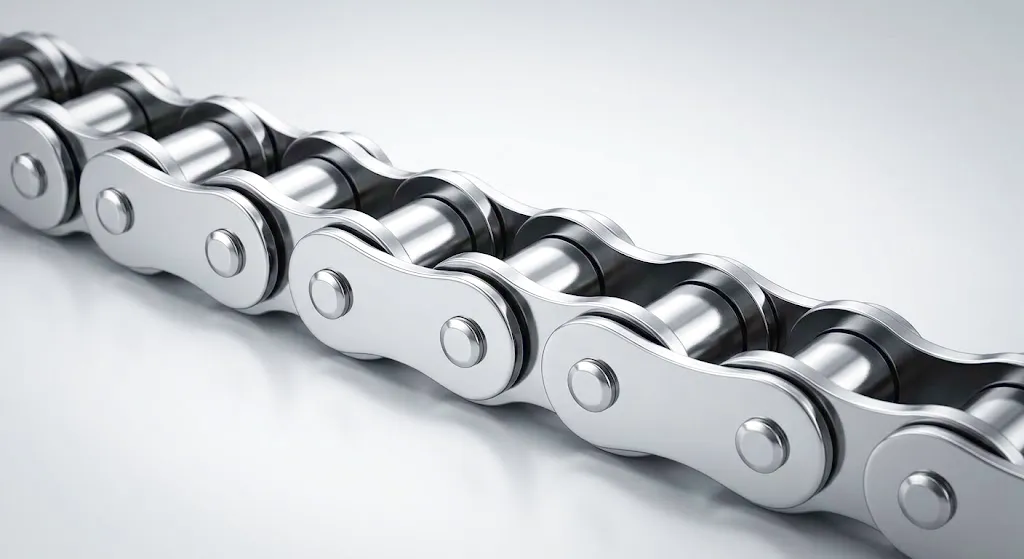
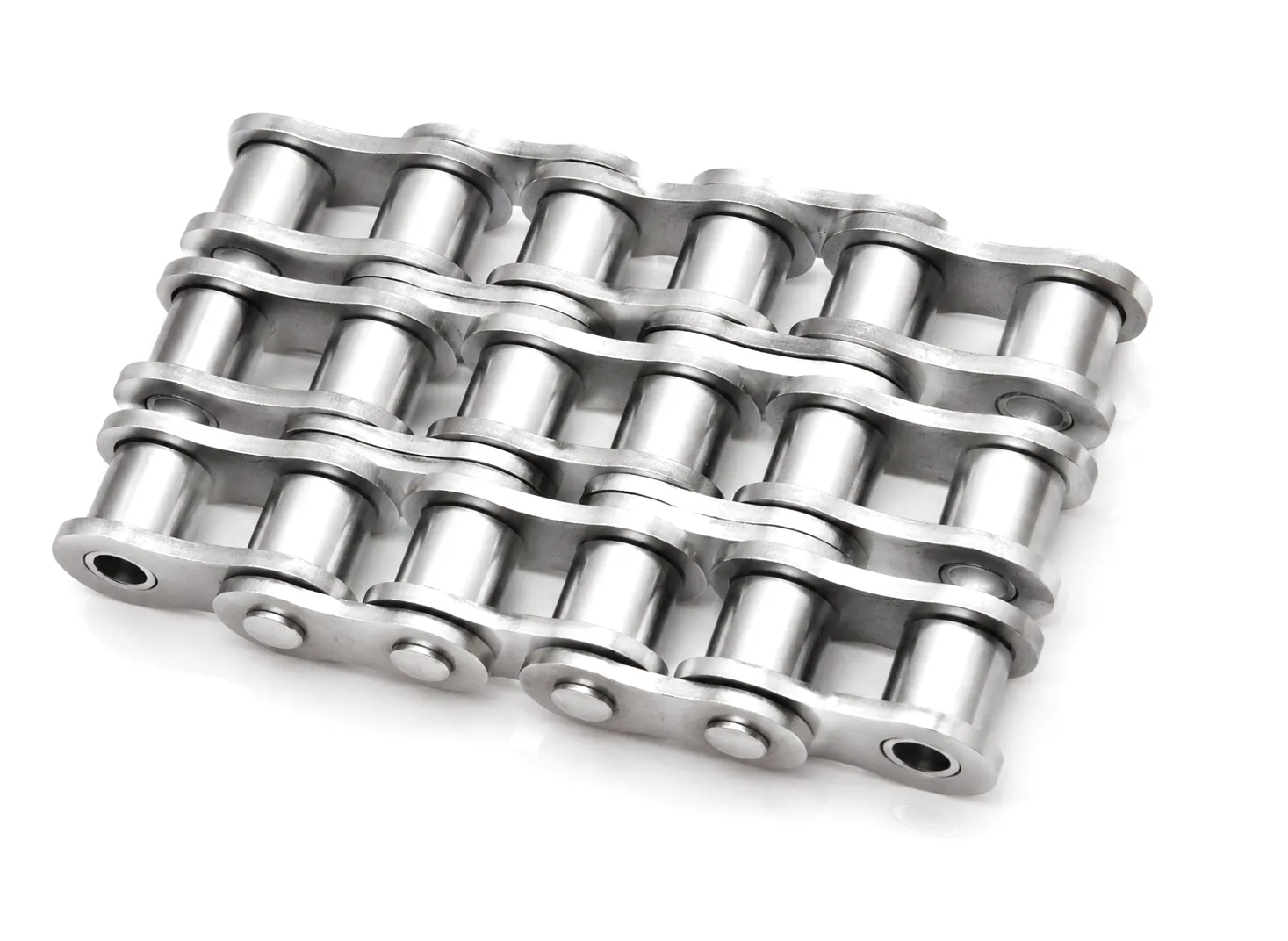
The press-fit (or peened/riveted) pin connection is the approach used during original chain manufacture and represents the highest-integrity method for permanently closing a roller chain loop. Rather than a sliding plate retained by a clip, the outer connecting plate is pressed onto the pin ends using an interference fit — the same construction method used at every other link in the chain. Once in position, the protruding pin ends are peened outward using a chain-riveting tool or hydraulic press, physically deforming the metal to lock the plate permanently in place. This creates a joint whose tensile strength is indistinguishable from the rest of the chain, with no additional mechanical weakness at the closure point.
The press-fit method is mandatory in several classes of application. Roller chain used in overhead lifting conveyors, safety-critical drive systems, and any roller chain configuration carrying human-safety implications — such as rides at leisure parks or guided transport systems — must be closed with a riveted pin connection. British standards governing lifting equipment and safety-critical machinery explicitly prohibit the use of spring clip master links in these scenarios. Similarly, large-pitch roller chains (above 1-1/2 inch / 38.1 mm) and multiple-strand chains used in heavy mining or quarrying equipment — including plants operating in the Midlands quarry belt — are consistently specified with riveted closures because the dynamic loads involved would place the clip under repeated stress cycles well beyond its reliable operating range.
Full Tensile Integrity
Joint strength matches the chain rating — no derating required. Essential for high-load applications above 85% of MBF.
Fatigue Resistance
No clip to vibrate loose. Ideal for high-cycle, high-speed, or shock-loaded drives running continuously in industrial settings.
Permanent Assembly
Not intended for repeated disassembly — chain must be broken with a pin-extractor tool for removal, meaning length adjustments require cutting.
Tooling Required
Requires a riveting press or peening hammer set matched to the chain pitch. Improper peening leads to cracked plates — always use calibrated tooling.
Step-by-Step: Correct Installation for Both Methods
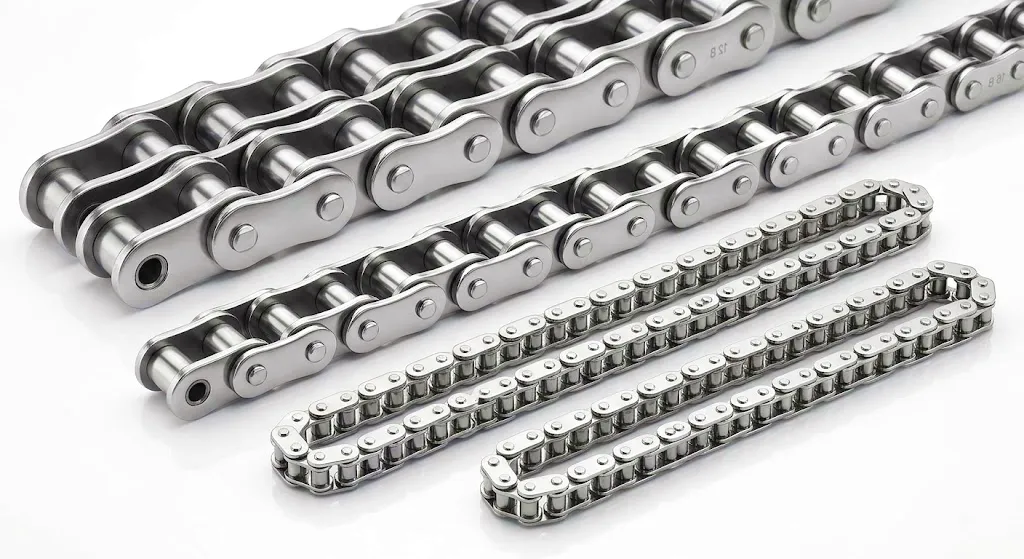
Technical Performance Comparison Table
The data below consolidates key specification parameters for both connection methods across the most common BS/ISO roller chain pitches encountered in UK industrial practice. Figures are representative of standard-grade carbon steel chain; stainless steel and nickel-plated variants will carry different working load ratings — consult the chain supplier’s individual data sheet for certified values.
Industrial Application Scenarios: UK Context
Selecting the right connection method is inseparable from understanding the application environment. The following scenarios reflect the real operating conditions found across British heavy manufacturing, food production, and material handling industries.
🏭
Automotive Manufacturing — West Midlands
Assembly line conveyors in the automotive clusters around Coventry and Birmingham run heavy roller chain continuously for multi-shift operations. These drives carry body panels and sub-assemblies across process stages at controlled speeds, but the chain is never idle for long enough to tolerate connection point failures. Press-fit riveted pins are standard here — the lines cannot afford the inspection intervals that a clip link would demand, and any joint failure at this scale triggers a line stoppage costing thousands of pounds per hour. The roller chain specification is typically heavy-duty BS ISO 10B-2 or 16B-2 in twin-strand configuration, with riveted closures as standard from the OEM supplier.
🍳
Food Processing — Yorkshire and Humber
Food-grade roller chain in biscuit, confectionery, and ready-meal production facilities across Yorkshire must meet strict hygiene standards under UK Food Standards Agency regulations, but it must also be field-serviceable by maintenance teams during short washdown windows. Here the master link — preferably in stainless steel or nickel-plated carbon steel to resist cleaning chemicals — is the pragmatic choice. Maintenance teams can replace a worn section of chain or re-close an opened run in minutes without bringing in a hydraulic press. The working loads in food conveyors are moderate; the real challenge is corrosion and chemical resistance rather than raw tensile load, which keeps clip links within their safe operating margin.
⛰
Steel Processing — Sheffield and Rotherham
Sheffield’s special steel and stainless steel processing industry still runs extensive roller chain on furnace-transfer conveyors, bar-rolling lines, and coil-handling systems. The temperatures, loads, and shock characteristics of these environments make the press-fit riveted pin the only viable connection method. Chains in furnace transfer applications often require heat-resistant pin coatings and hardened link plates specified to BS EN 10083 material grades — and the closure joint must meet exactly the same material specification. Custom-length chain with riveted closures is the standard procurement format for this sector.
🌿
Agricultural Machinery — East Anglia
Combine harvesters, balers, and grain dryers across the Lincolnshire and Norfolk flatlands run multiple roller chain drives simultaneously during the harvest window. Agricultural roller chain is typically ANSI/BS double-pitch in longer run lengths, and the connection method reflects the field-service reality: clip links dominate because repairs must happen in the field, with limited tooling, under time pressure during a harvest that may only last a few days at optimal grain moisture. Farmers and agricultural contractors in this region stock a variety of master link sizes — commonly 40, 50, and 60 ANSI pitch — as an essential part of their field service kit. The 20B-G1 Gummi Top Rullekæde from Ever Power is used in grain handling elevator legs where the rubber top reduces grain damage during transfer.
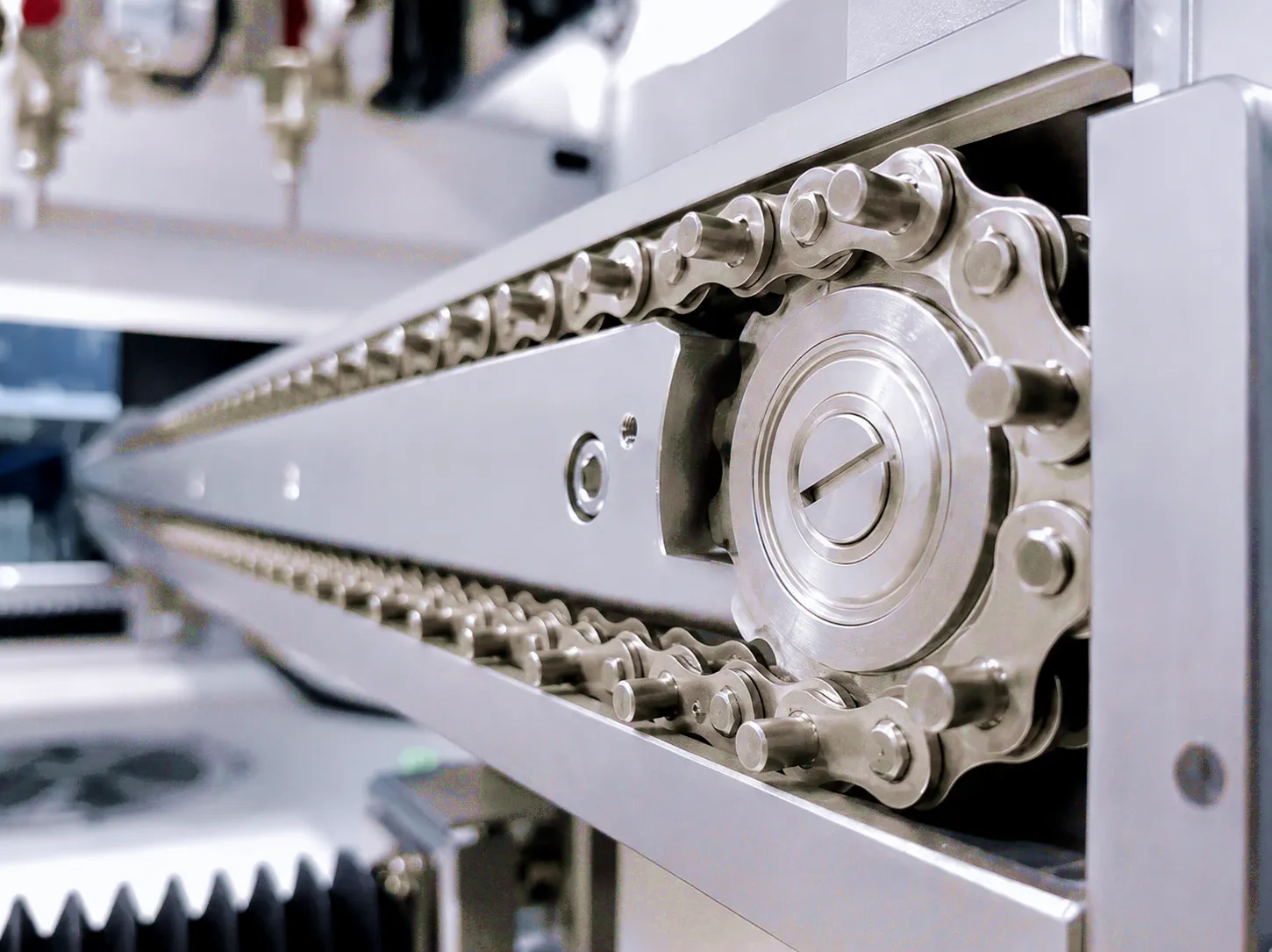
Materials in Roller Chain Connection Components
The mechanical properties of the connection are only as good as the material it is made from. Both the master link body and the press-fit connecting outer plate must be manufactured from stock that matches the base chain material, and in many cases the pin material is specified to a higher grade than the surrounding link plates to resist bending fatigue.
Carbon Steel (Case-Hardened)
The most common base material across standard BS/ISO and ANSI roller chains. Pins are carburised to a surface hardness of HRC 58–62 while maintaining a tough core, giving them resistance to both surface wear and shock bending. Link plates are stamped from strip steel to a specified ultimate tensile strength, typically 700–900 MPa for standard grade.
Stainless Steel (304 / 316)
Grade 316 is preferred wherever chloride exposure is possible — coastal processing facilities in the South West of England, marine-adjacent industries, and any application using aggressive cleaning agents. Master link clips in stainless are typically 316 as well. Note that stainless chain carries lower tensile ratings than an equivalent carbon steel grade, so working load calculations must be redone when upgrading to stainless.
Nickel-Plated Carbon Steel
A cost-effective middle ground between plain carbon and full stainless. The electroplated nickel layer provides a degree of corrosion resistance suitable for mild wet or washdown environments without the cost premium of solid stainless construction. Widely specified by UK food manufacturers who need HACCP-compatible chain with the tensile performance of carbon steel.
Spring Steel (Clip Material)
The retaining clip on a master link is stamped from high-carbon spring steel, heat-treated to provide the elastic retention force that keeps the clip locked in the pin groove. A clip that has been over-flexed, corroded, or left in service beyond its rated cycle count will lose spring force and can disengage — which is why visual inspection of the clip at every maintenance visit is non-negotiable.
Customer Success Story: Sheffield Special Steel Processor
Kundeanmeldelser
“The riveted press-fit closing links that came with our 16B-2 batch were exactly what we needed — same tolerance as the chain body, fully certified, and the peening was clean and consistent on every single one. We have not had a single joint failure across six months of continuous three-shift operation. That speaks for itself.”
D. Hartley — Engineering Manager, Sheffield Steel Processing
“We specified nickel-plated master link sets from Ever Power for our food-grade conveyor upgrades across the West Yorkshire site. The clips arrived pre-packed by pitch size and were accompanied by a clear installation torque guide. Our maintenance team got through the entire conveyor changeover in one planned shutdown window without any rework. Supplier communication was excellent throughout.”
S. Patel — Maintenance Supervisor, Ready Meal Production, Leeds
“We switched to custom-length closed loops from Ever Power for our quarry conveyor upgrade in Derbyshire. The tight tolerance on length across all eight drives has eliminated the uneven chain elongation we were seeing with our previous supplier’s product. The press-fit closures have been in service for eight months now across a very demanding application and there are no signs of fatigue cracking or clip issues — because there are no clips to worry about.”
T. Birch — Plant Engineering Lead, Aggregate Processing, Derbyshire
Ofte stillede spørgsmål
Voice-search and long-tail questions from UK industrial engineers and procurement teams
Klar til at finde præcisionsrullekæder til din virksomhed i Storbritannien?
Ever Power supplies BS/ISO compliant roller chain with master link sets and press-fit riveted connecting kits directly to UK buyers — with certified documentation, custom lengths, and responsive technical support.
redigeret af gzl