Wie man zwischen Standard- und Schwerlast-Rollenketten wählt
A technical guide for procurement engineers, plant managers, and maintenance teams across the UK manufacturing sector — from Birmingham’s automotive suppliers to Sheffield’s steel processing facilities.
The Mechanical Principle Behind Roller Chain Transmission
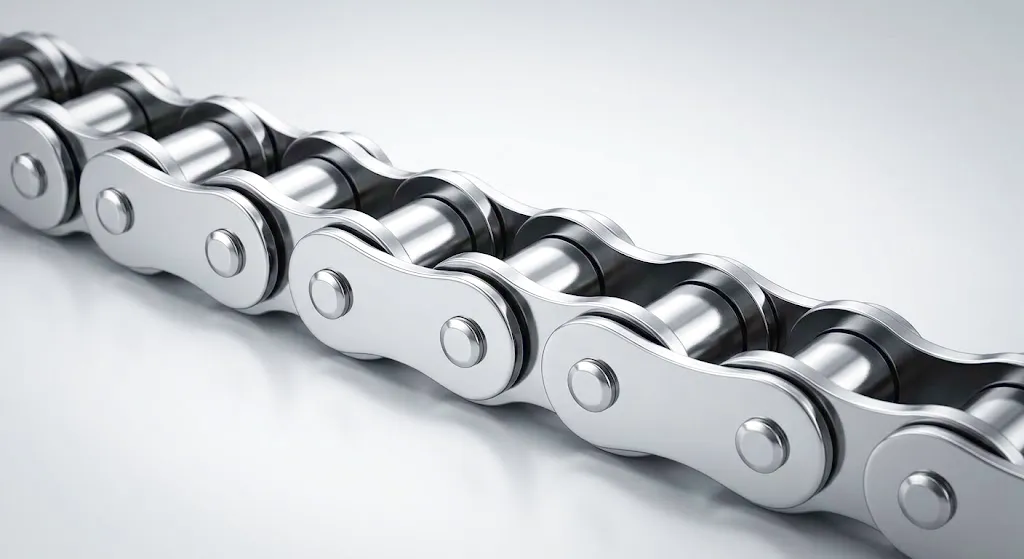
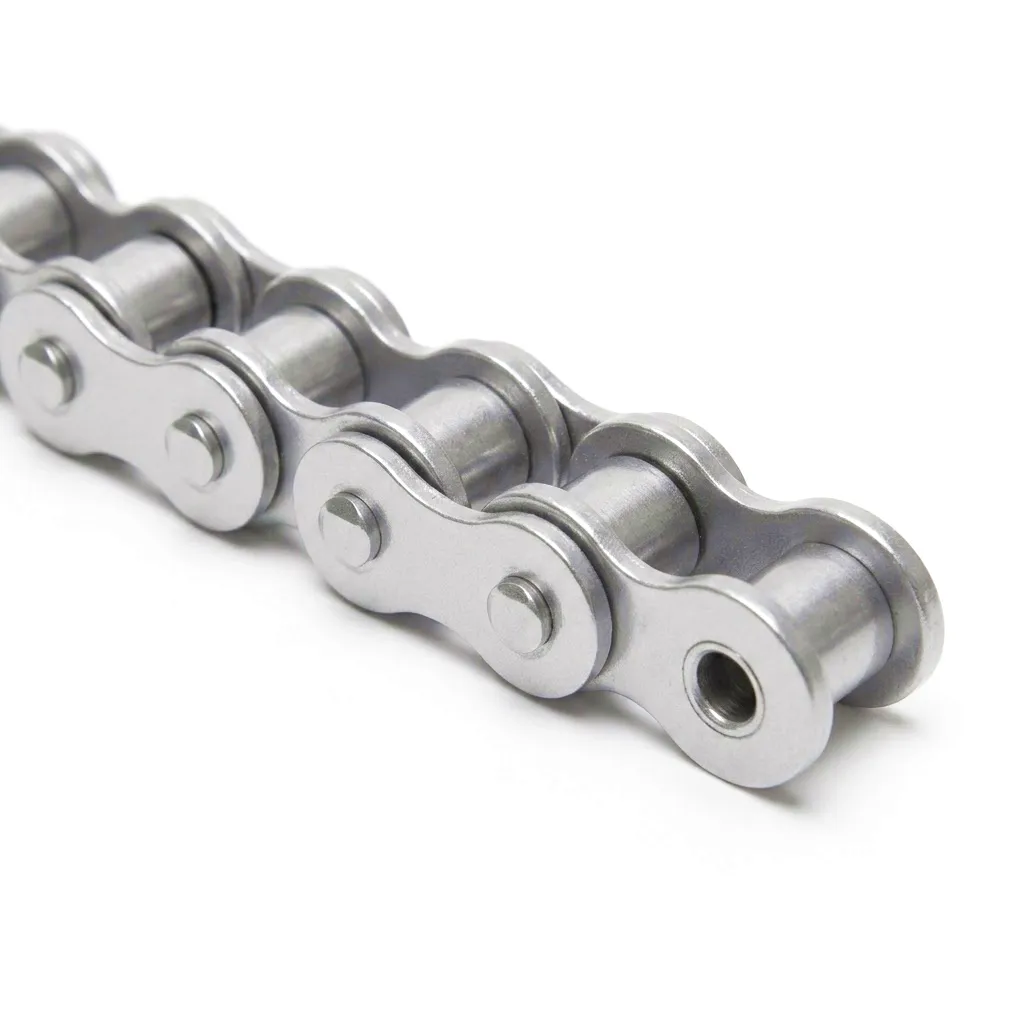
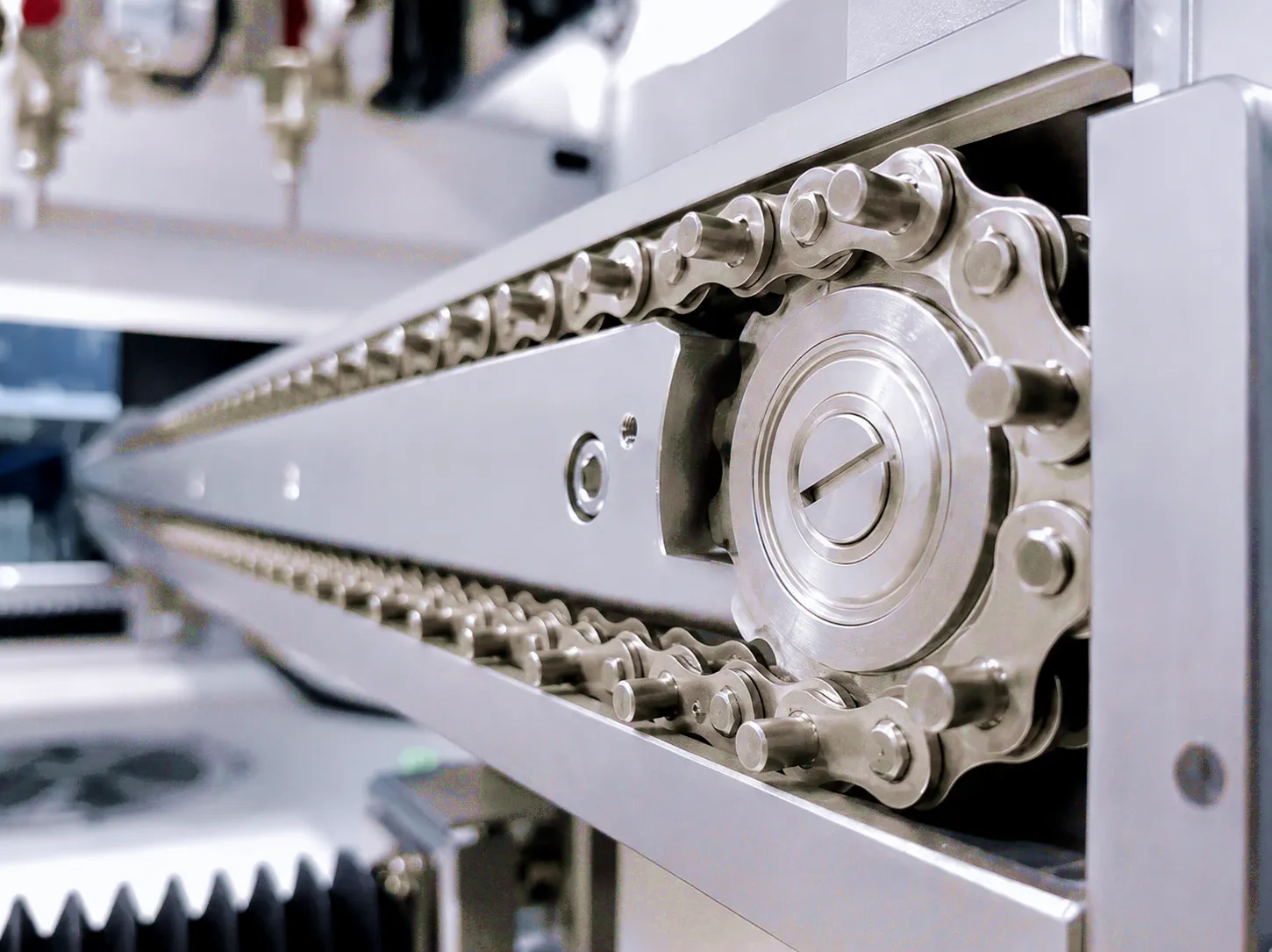
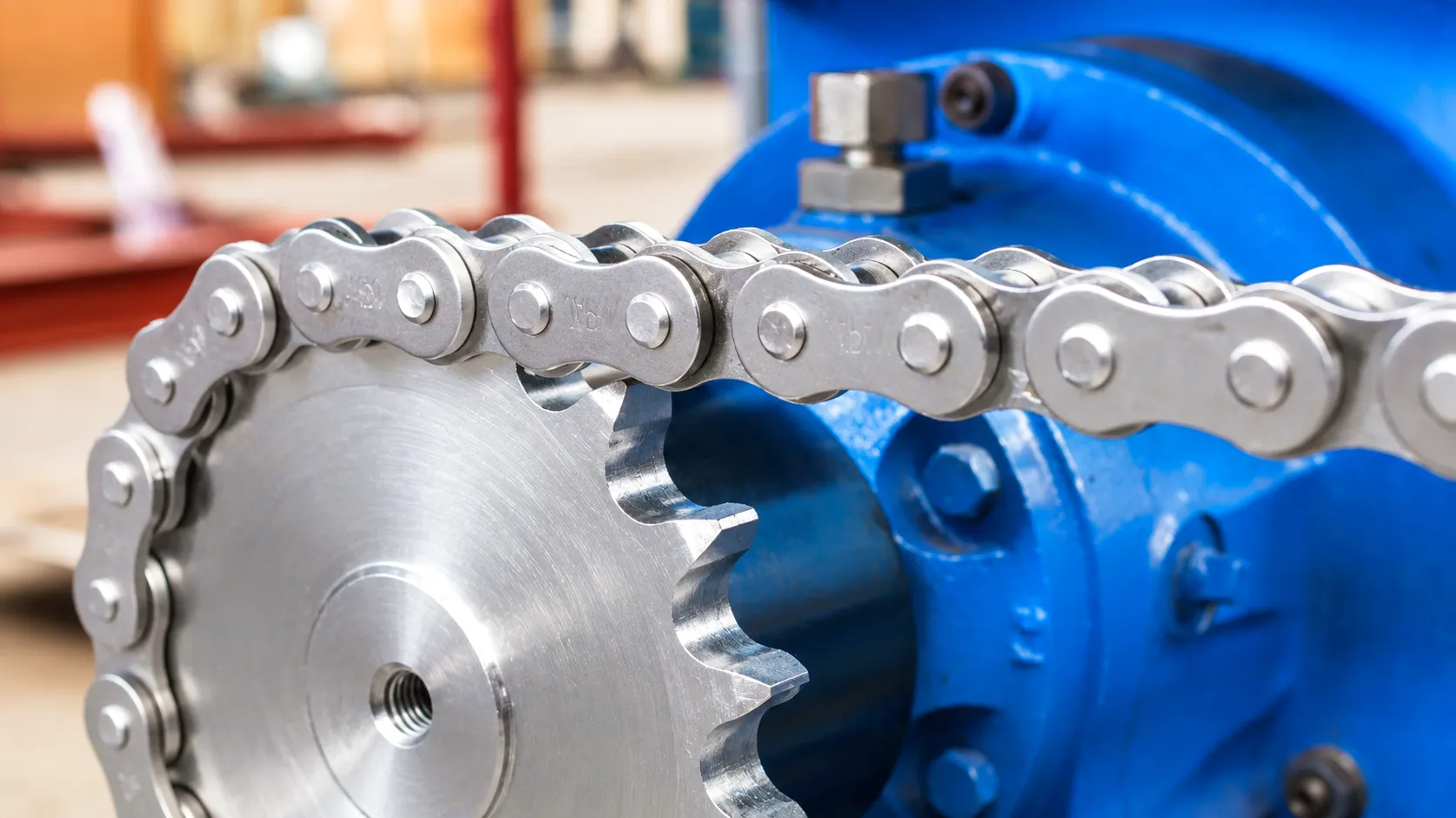
A roller chain transmits mechanical power between two or more sprockets by interlocking precisely machined link plates, pins, bushings, and rollers in a continuous loop. When the driving sprocket rotates, its teeth engage the rollers — which are free to rotate on the bushings — and pull the chain in a positive drive action. Because the rollers distribute load across the entire contact area rather than at a single point, the system achieves very high mechanical efficiency, typically between 97% and 99% under optimal lubrication conditions. The positive engagement mechanism means there is no slip, making roller chains vastly superior to V-belts in applications requiring precise speed ratios or synchronisation between drive shafts.
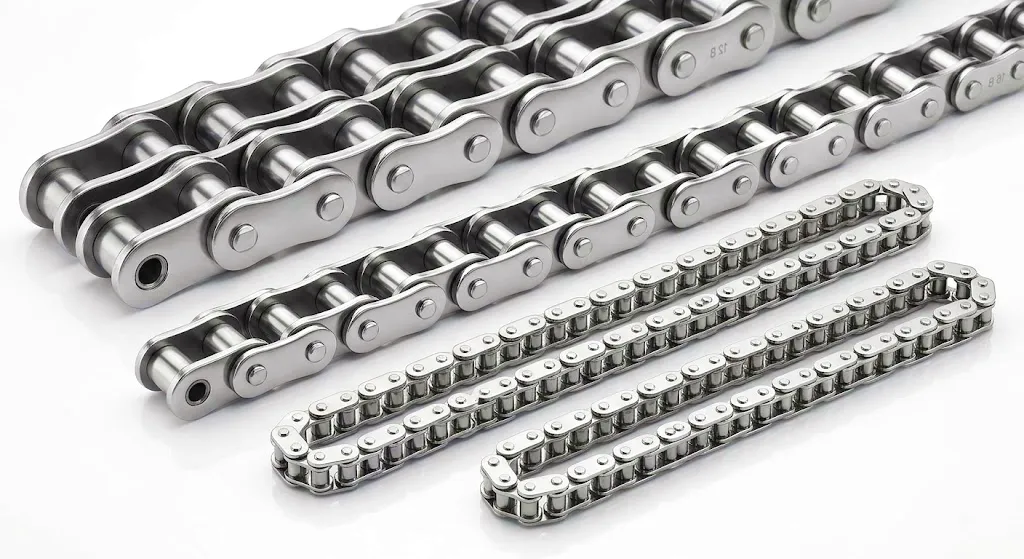
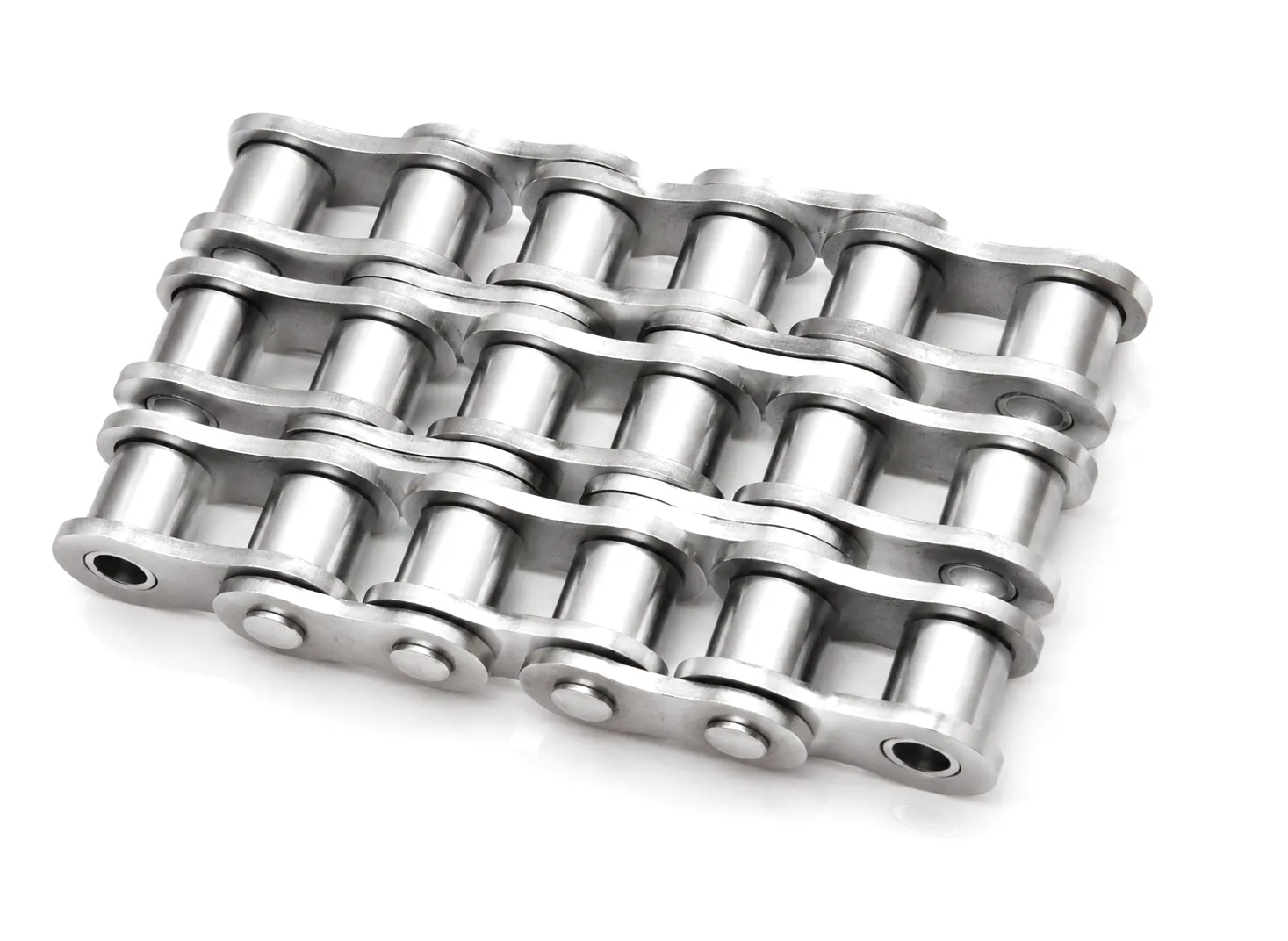
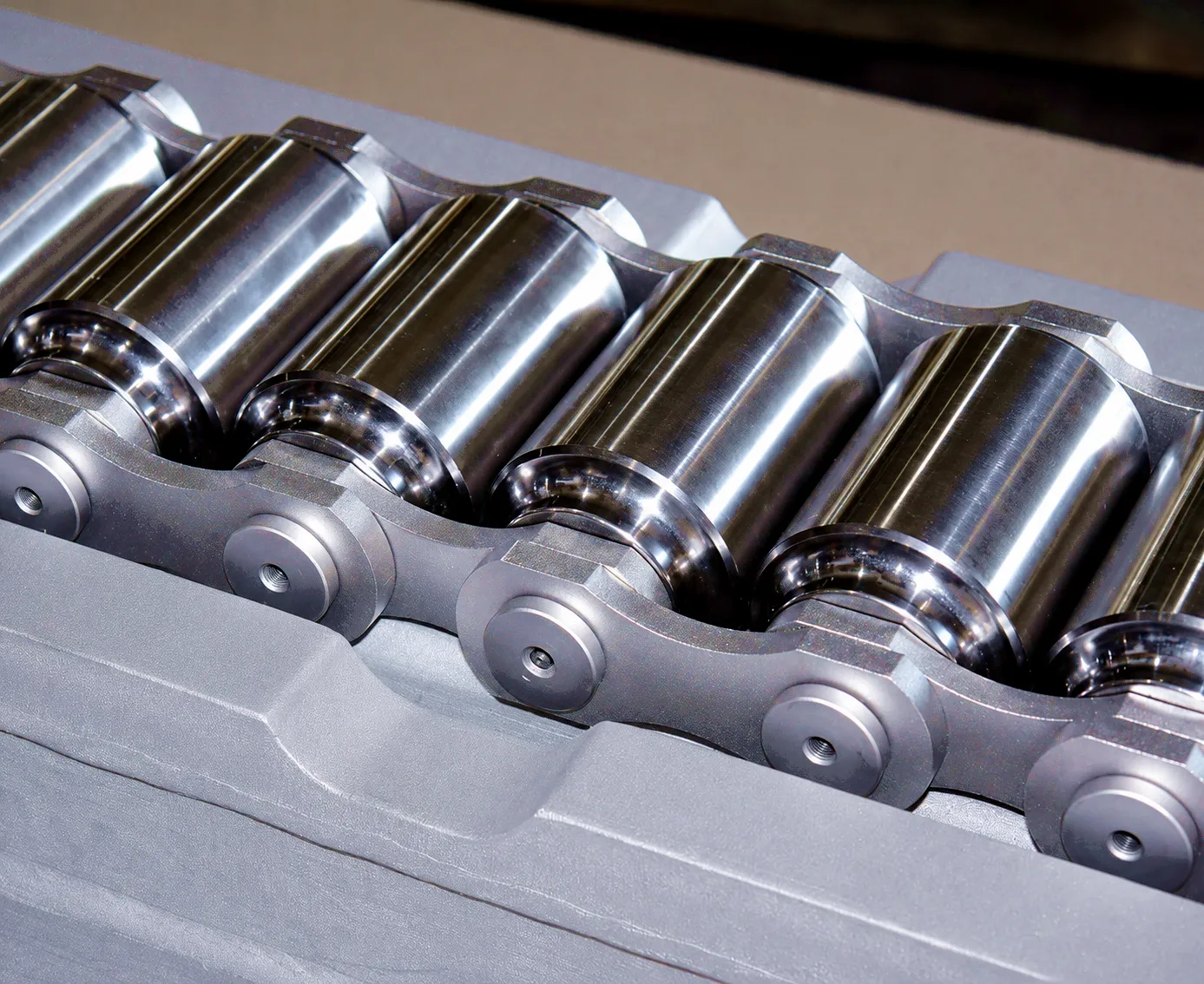
The pitch — the centre-to-centre distance between pins — is the fundamental dimensional parameter that defines a chain’s classification. Standard-series chains (manufactured to ISO 606 / BS 228 specifications) are designed with proportional plate thickness, pin diameter, and roller diameter calibrated for moderate-to-high loads within a defined pitch range. Heavy-series roller chains share identical pitch dimensions with their standard counterparts but feature substantially thicker inner and outer link plates, larger-diameter pins, and in many designs, increased bush wall thickness. This geometry gives heavy-series chains a significantly higher tensile strength and fatigue limit without requiring any change to the sprocket pitch, allowing direct interchangeability in existing drive systems where capacity must be upgraded.
Kernmaterialien für die Rollenkettenherstellung
Carbon Steel (Standard-Series)
Standard-series roller chains are predominantly manufactured from medium-carbon or carbon-manganese steel, with hardened rollers, bushings, and pins produced via precision cold-forming and then case-hardened through induction or carburising processes. The link plates are typically stamped from carbon steel strip with controlled tensile properties, resulting in a finished chain that balances cost-efficiency with reliable tensile strength ratings ranging from roughly 8 kN for 06B pitch up to approximately 400 kN for the largest standard pitches. For general industrial applications across the UK — conveyor lines in food processing facilities in the East Midlands, or aggregate handling equipment in quarry operations across Wales and the North West — this material profile delivers the performance-to-cost ratio that procurement teams prioritise.
Alloy Steel (Heavy-Series)
Heavy-series roller chains require material specifications that go beyond standard carbon steel. The link plates in heavy-series chains are typically produced from chromium-molybdenum alloy steel (e.g., 20CrMo or equivalent EN10277 grades), which provides significantly enhanced fatigue strength and impact toughness. Pins are often manufactured from nickel-chromium alloy steel and subjected to through-hardening followed by precision grinding, achieving surface hardness values of HRC 58–64 while retaining a tough core. This combination allows heavy-series chains to sustain substantially higher shock loads — a critical property in applications such as steel rolling mills in Sheffield, timber processing lines in Scotland, or heavy aggregate crushing plants in Northern England where impact forces and reverse-loading cycles are routine design considerations.
Stainless Steel & Specialty Variants
For environments where corrosion resistance takes precedence over maximum tensile load — dairy processing in Somerset, pharmaceutical manufacturing in Cheshire, or coastal marine installations — both standard and heavy-series roller chains are available in AISI 304 or AISI 316 stainless steel. Nickel-plated chains offer a mid-tier corrosion resistance level at lower cost than full stainless, while self-lubricating chains incorporate sintered bush technology pre-impregnated with oil, eliminating the need for manual lubrication cycles in inaccessible or food-grade areas. Specialised rubber-topped roller chain variants, such as the 24B-G1 Gummi-Oberrollenkette Und 20B-G1 Gummi-Oberrollenkette, extend the application envelope further into product conveying, bottle handling, and assembly line transport where grip and surface protection are critical parameters alongside tensile performance.
Technische und Leistungsparameter des Produkts
Technical Advantages: Why Roller Chain Outperforms Alternative Drives
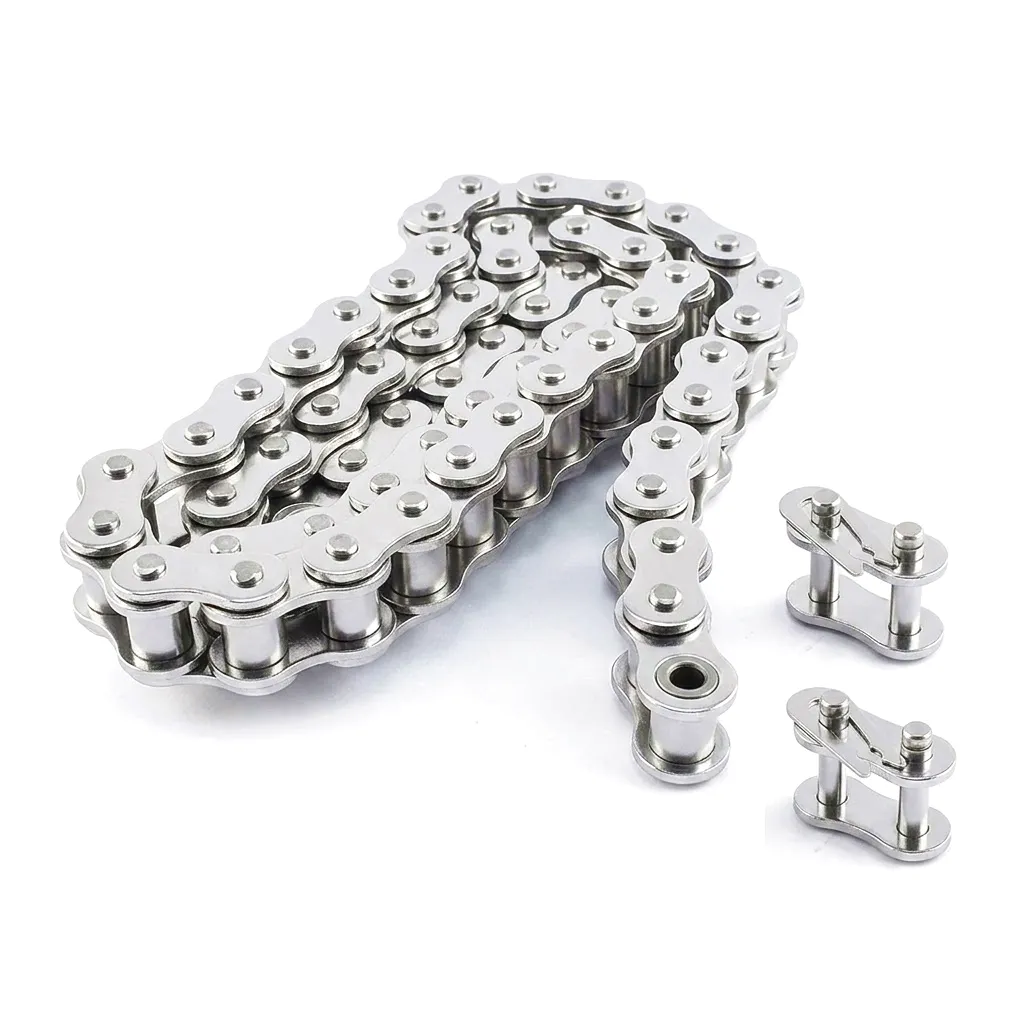
The mechanical efficiency advantage of a roller chain drive — regularly measured at 97% to 99% — is one of the most compelling reasons UK plant engineers continue to specify them in preference to friction belt drives. In a large conveying or processing line running continuously for 6,000 hours per year, the percentage difference in energy losses translates directly into measurable electricity cost reduction. For an industrial site in the Midlands managing multiple parallel drive trains, the accumulated savings across a full production year can represent a genuinely significant operational budget improvement, particularly relevant as energy cost management becomes a primary concern for UK manufacturers operating under volatile electricity tariff conditions.
Precise speed ratio maintenance is another distinguishing capability. Because roller chain engages sprocket teeth in positive-drive fashion, the driven shaft speed is a fixed mathematical ratio of the driving shaft speed at all times — there is no creep, no slip-under-load, and no progressive ratio change as the chain wears and elongates (beyond the natural elongation accommodation built into the drive geometry). This is especially critical in multi-stage drives used in packaging machinery in the East Midlands or printing equipment lines in London where synchronisation between stations is a hard requirement.
The ability to drive multiple shafts from a single chain loop — by adding intermediate sprockets — gives roller chain drives a flexibility that is simply unavailable to direct belt configurations without complex tensioner arrangements. Combined with the ease of length adjustment by adding or removing individual links, roller chain drives remain uniquely adaptable to plant modification, which is an important operational consideration for UK manufacturers who regularly reconfigure production lines to respond to shifting market requirements or new product introduction schedules.
Industrielle Anwendungsszenarien in der britischen Fertigungsindustrie
Heavy-series roller chains are the specification of choice in Sheffield’s steel processing sector, where they are deployed in roll table drives, coiler feeds, and slab transfer conveyors. The combination of high shock loading from material impact, elevated ambient temperatures from the hot rolling environment, and the need to maintain precise transport speeds without chain failure makes heavy-series alloy steel chains — often with heat-resistant lubrication systems — the only technically credible solution. Standard-series chains would rapidly develop fatigue cracks in the link plates under the cyclic impact loads typical of this environment, while heavy-series chains, properly maintained, achieve operational lifespans measured in years rather than months.
Birmingham’s automotive supply chain, one of the densest in Europe, relies on roller chain drives throughout robotic welding cells, transfer press lines, and camshaft/timing chain systems within engine assembly. In transfer press applications, standard-series simplex or duplex roller chains manage the index table drives where loads are moderate and speeds are moderate-to-high. In the heavier stamping presses and forging line indexers of the Black Country manufacturing corridor, heavy-series chains handle the enormous shock impulses generated by each press stroke, where the instantaneous dynamic load far exceeds the steady-state nameplate figure. Specifying the correct series in these applications is not simply a cost optimisation exercise — it is a production reliability decision with direct consequences for line output rates.
Across Lincolnshire, Yorkshire, and East Anglia — the UK’s primary agricultural production belt — roller chains drive combines, balers, threshers, and root crop harvesters in challenging field conditions. Standard-series chains in duplex or triplex configurations handle the power take-off drives and elevator conveyors of most medium-scale agricultural machinery, where loads are relatively predictable. For large-scale root vegetable processing facilities in Lincolnshire and Cambridgeshire, stainless steel roller chains in standard or heavy-series configurations serve the washing, grading, and packing conveyors, where a combination of water, mud, and abrasive soil particles creates a corrosive and abrasive environment that carbon steel chains could not reliably withstand through a full seasonal campaign without replacement.
The UK’s aggregate quarrying industry, concentrated in regions of North Wales, the Peak District, and the Pennine quarries of Yorkshire and Lancashire, places extreme demands on power transmission components. Jaw crushers, impact crushers, and vibrating screen drives subject roller chains to loading patterns characterised by sudden, high-magnitude shock pulses each time an oversized piece of rock contacts the crushing mechanism. In these applications, heavy-series duplex or triplex roller chains are specified not as a conservative over-engineering choice but as the correct engineering selection. The additional plate thickness and the enlarged pin section of heavy-series chains provide the fatigue life that makes the difference between a reliable drive running 300 tonnes per hour and a chain failure that results in an emergency shutdown, lost production, and a hazardous maintenance operation.
The Selection Decision Framework: Which Series Fits Your Drive?
The decision between a standard and a heavy-series roller chain is not simply a matter of choosing the “stronger” option as a default. Over-specification carries its own costs — higher chain purchase price, increased system weight, potentially higher inertial loads on the drive motor, and the need to check that shaft bearings and sprocket structures can handle the additional mass. The correct engineering approach starts with a complete load analysis, not with a chain catalogue. You need to know the continuous transmitted power in kilowatts, the drive speed in revolutions per minute, the sprocket sizes and the resulting chain speed in metres per second, and — critically — the nature and frequency of any shock or dynamic loading.
Once peak equivalent load is established through proper application of service factors (the ISO and BS standards provide detailed service factor tables covering prime mover type, driven load character, and lubrication method), you compare the result against the allowable working loads in the manufacturer’s specification table for each chain designation. If the calculation falls within the standard-series allowable range with a comfortable margin, standard-series is the correct choice. If the application falls above that range, or if the service factor analysis reveals severe shock loading that pushes the effective load close to or beyond standard-series capacity, the heavy-series variant of the same pitch designation is the appropriate step up — before escalating to a larger pitch or a multi-strand configuration.
Environmental factors add a second axis to the selection. Standard carbon steel chains — whether standard or heavy-series — are unsuitable in continuously wet or chemically contaminated environments without protective plating or surface treatment. In those cases, the material selection (stainless, nickel-plated, or polymer-coated) becomes the primary filter before the series selection discussion begins. For UK food manufacturers or water utility operations, this environmental constraint frequently drives the specification conversation before load capacity is even evaluated.
- Continuous loads are stable and predictable with minimal shock
- Speed ratio requirements are moderate and multi-strand can supplement if needed
- Budget and weight constraints are primary procurement drivers
- Applications include light conveying, packaging, printing, and general machine drives
- Operating environment is controlled and lubrication can be maintained regularly
- Chain speed is relatively high, where mass increase from heavy series would reduce performance
- Drive experiences frequent, high-magnitude shock loads or reverse-direction impulses
- Load analysis using service factors exceeds standard-series allowable working load
- Application involves crusher drives, press feeds, heavy conveyor head ends, or mill drives
- Extended service intervals between maintenance windows are operationally mandatory
- Elevated temperature environments demand greater material mass for thermal stability
- Existing drive infrastructure (sprocket size, centre distance) constrains upgrade to larger pitch
Ever Power: Precision Manufacturing and Global Supply Capability
Ever Power has built its position in the global power transmission market on a straightforward principle: manufacturing quality that engineering teams can stake production reliability on, backed by a customisation capability that allows procurement teams to specify exactly what their application demands rather than compromising with whatever standard catalogue product is available. Operating from a state-of-the-art manufacturing facility with ISO 9001 certification and rigorous in-process quality control, Ever Power produces roller chains across the full pitch range from 06B through 48B in both standard and heavy-series configurations, in simplex, duplex, and triplex strand arrangements.
The customisation capabilities at Ever Power extend well beyond catalogue variations. UK customers regularly specify modified link plates with extended attachment lugs for conveying system integration, corrosion-resistant coating systems for coastal or chemically challenging environments, custom pitch drilling for attachment plates, side-flexing chain configurations for curved conveyor paths, and high-temperature alloy steel specifications for furnace and kiln applications. Each custom configuration is fully documented with material certificates, dimensional inspection reports, and tensile test data — the standard evidence package that UK engineering procurement teams require before approving a non-catalogue component for use on a production-critical drive.
Supply chain reliability matters as much as product quality to UK buyers. Ever Power maintains strategic stock of the highest-demand chain sizes, enabling prompt despatch for urgent replacement requirements, while the dedicated technical sales team provides pre-order application review to ensure customers receive the correct specification — not just the most convenient standard catalogue item. For bulk orders on major facility projects in Birmingham, Manchester, Glasgow, or any other major UK industrial centre, Ever Power offers dedicated project coordination with confirmed lead-times and packaging configured for direct line-side delivery.
Customer Success Story: Aggregate Processing Upgrade in Leeds
A bulk materials processing operation based on the outskirts of Leeds, West Yorkshire, was running a primary crusher drive and two secondary vibrating screen drives on standard-series 24B duplex roller chains. The facility processes approximately 200 tonnes per hour of limestone aggregate for construction aggregate supply across the Yorkshire region, operating two production shifts five days per week. Chain failures were occurring with uncomfortable regularity — roughly every four to six months on the primary crusher drive — each resulting in an unplanned shutdown of between four and eight hours while the maintenance team fitted a replacement chain and re-tensioned the drive.
The site maintenance manager contacted Ever Power’s technical sales team with detailed load data and a description of the failure mode. The failure analysis revealed clear fatigue cracking initiating at the link plate holes — a textbook symptom of service load exceeding the fatigue endurance limit of the standard-series chain, driven by the severe shock factor associated with limestone blocks entering the jaw crusher. Ever Power’s technical team recommended upgrading to heavy-series 24B-H duplex chain in chromium-molybdenum alloy steel, with a high-viscosity chain lubricant specified for the dust-laden environment.
The first heavy-series chain installation went in during a scheduled maintenance shutdown in March. At the time of a follow-up review fourteen months later, the chain had completed over 3,400 operating hours without a single unplanned failure, compared to a maximum of approximately 900 hours for the standard-series chains it replaced. The facility estimates the change eliminated between three and four unplanned shutdowns per year on that drive alone, representing a direct saving in lost production and emergency maintenance labour that substantially exceeded the incremental cost of the heavy-series chain specification.
What UK Customers Say About Ever Power
James Thornton, Maintenance Engineering Manager — Sheffield Steel Processor
“We’ve run Ever Power heavy-series chains on our roll table drives for going on two years now without a failure. The application review their technical team provided before we ordered was genuinely useful — they flagged a lubrication interval we’d been underestimating and that alone has extended our maintenance cycle significantly. When you’re running a hot rolling facility in Sheffield, an unexpected chain failure doesn’t just cost you the replacement part. It costs you hours of production on a very expensive asset. Ever Power understood that from the start.”
Rachel Obi, Plant Engineer — Midlands Food Processing Facility, Birmingham
“We specified stainless steel standard-series roller chains from Ever Power for our vegetable washing and grading lines. The quality matched exactly what we were seeing in the documentation — the dimensional consistency was noticeably better than some previous suppliers we’d used, and the chains have performed without issue through a full production season including peak demand in autumn. The customisation on the attachment plates for our conveyor integration was handled quickly and the parts arrived with full material traceability documentation, which our quality team required. Would recommend without reservation.”
Mark Lawson, Procurement Lead — Quarry Operations, North Yorkshire
“Getting a quote from Ever Power was straightforward — response time was fast and the pricing was very competitive for the heavy-series specification we needed. More importantly, the technical specification they helped us arrive at was correct for our crusher application. We’ve had zero unplanned chain failures in the nine months since we switched. For context, the previous supplier’s chains were giving us one to two failures per quarter. The difference in operational reliability has been significant and the cost saving across a full year of operations more than justifies the procurement decision.”
Häufig gestellte Fragen
The decision comes down to a load analysis that accounts for shock factors. Crusher drives typically carry a service factor of 2.0 or higher under ISO guidelines, which means the effective design load is at least double the steady-state nameplate value. If that calculated load exceeds the allowable working load of your standard-series chain at its rated speed, a heavy-series chain of the same pitch is the correct step up. Ever Power’s technical team can review your drive data and confirm the right specification — contact them at [email protected] for a no-obligation application review.
Heavy-series roller chains typically carry a price premium of 25% to 45% over equivalent-pitch standard-series chains, reflecting the increased material content — thicker plates, larger pins, and in many cases higher-grade alloy steel. However, the comparison should always be made on a cost-per-operating-hour basis rather than a unit price basis. If a heavy-series chain lasts three to four times as long as a standard-series chain in the same aggressive application, the total cost of ownership — including replacement chain cost and shutdown labour — is substantially lower for the heavy-series specification.
Ever Power serves UK industrial customers across Sheffield, Birmingham, Leeds, Manchester, and beyond with a combination of standard stock and customised chain manufacturing. For steel processing applications specifically, Ever Power offers heavy-series chains in heat-resistant alloy steel grades with high-temperature lubrication specifications, supported by full material certificates and dimensional inspection documentation. Enquiries for both standard stock and custom orders are handled through [email protected] with rapid response and competitive lead times.
ISO 606 is the primary international standard governing short-pitch transmission roller chains, and it is effectively identical to the previous British Standard BS 228 in terms of dimensional requirements. UK buyers should specify chains to ISO 606 to ensure full interchangeability with existing sprockets. Heavy-series variants are covered by the H-series suffix within ISO 606 or separately under DIN 8188 in the German standard system, which is also widely recognised by international manufacturers. When requesting a quote, specifying both the pitch designation (e.g., 16B, 24B) and the series (standard or H/heavy) along with the number of strands ensures the supplier delivers exactly what the drive requires.
In dusty, abrasive quarry environments in Northern England, lubrication strategy is as important as chain selection. For heavy-series chains on aggregate conveyor drives, a high-viscosity chain lubricant with tackifier additives is preferred — it adheres to the pin-bush contact surfaces better than thin oils that are quickly displaced by dust and vibration. Application method matters: drip-feed or brush-applied lubrication at the inside of the chain loop, aiming for the inner plate clearances, is more effective than spray lubrication in dusty environments. Frequency depends on chain speed and dust exposure, but a weekly inspection with lubricant top-up, and a full cleaning and re-lubrication every 500 operating hours, is a reasonable starting framework for most quarry applications.
Yes — this is one of the practical engineering advantages of the heavy-series chain system. Because heavy-series chains share identical pitch dimensions with their standard-series counterparts, they engage the same sprocket tooth profile without any modification. The increased plate thickness adds slightly to the overall chain width, so you need to confirm there is adequate clearance between the chain and any adjacent guards, flanges, or structural elements. However, the sprockets themselves do not need to be replaced or modified. This makes upgrading from standard to heavy-series on an existing Birmingham automotive line drive a relatively straightforward maintenance window task rather than a major capital modification project.
Contact Ever Power’s technical team with your drive specifications. Standard and heavy-series, simplex through triplex, carbon steel to full stainless — all with prompt delivery to any UK location.