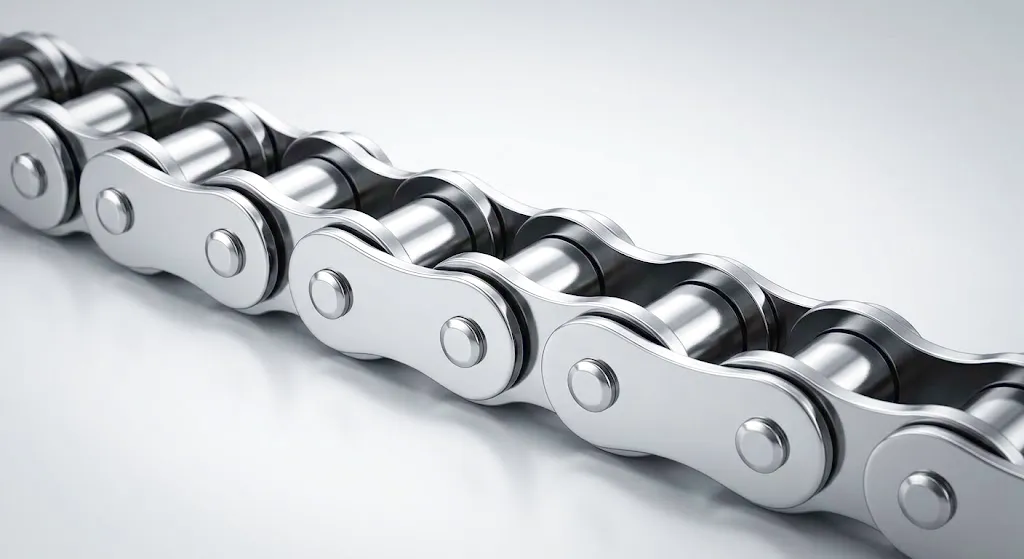
How Roller Chain Transmits Power — and Where Alignment Enters the Equation
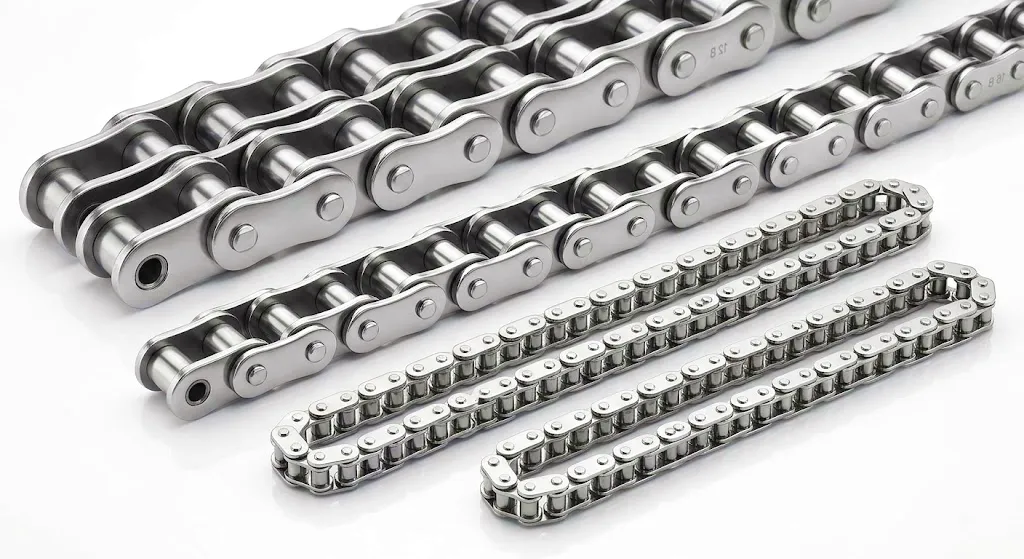
Materials Engineering Behind High-Performance Roller Chain
The ability of a roller chain to withstand misalignment-induced stresses without catastrophic failure depends enormously on the metallurgical choices made in its manufacture. A chain that might survive years in a perfectly aligned drive can fail within weeks if the base material lacks sufficient toughness to absorb lateral bending and fatigue cycling. Understanding the materials hierarchy in quality roller chain gives procurement teams a meaningful framework for specifying components that will perform reliably even when field alignment conditions are less than textbook-perfect.
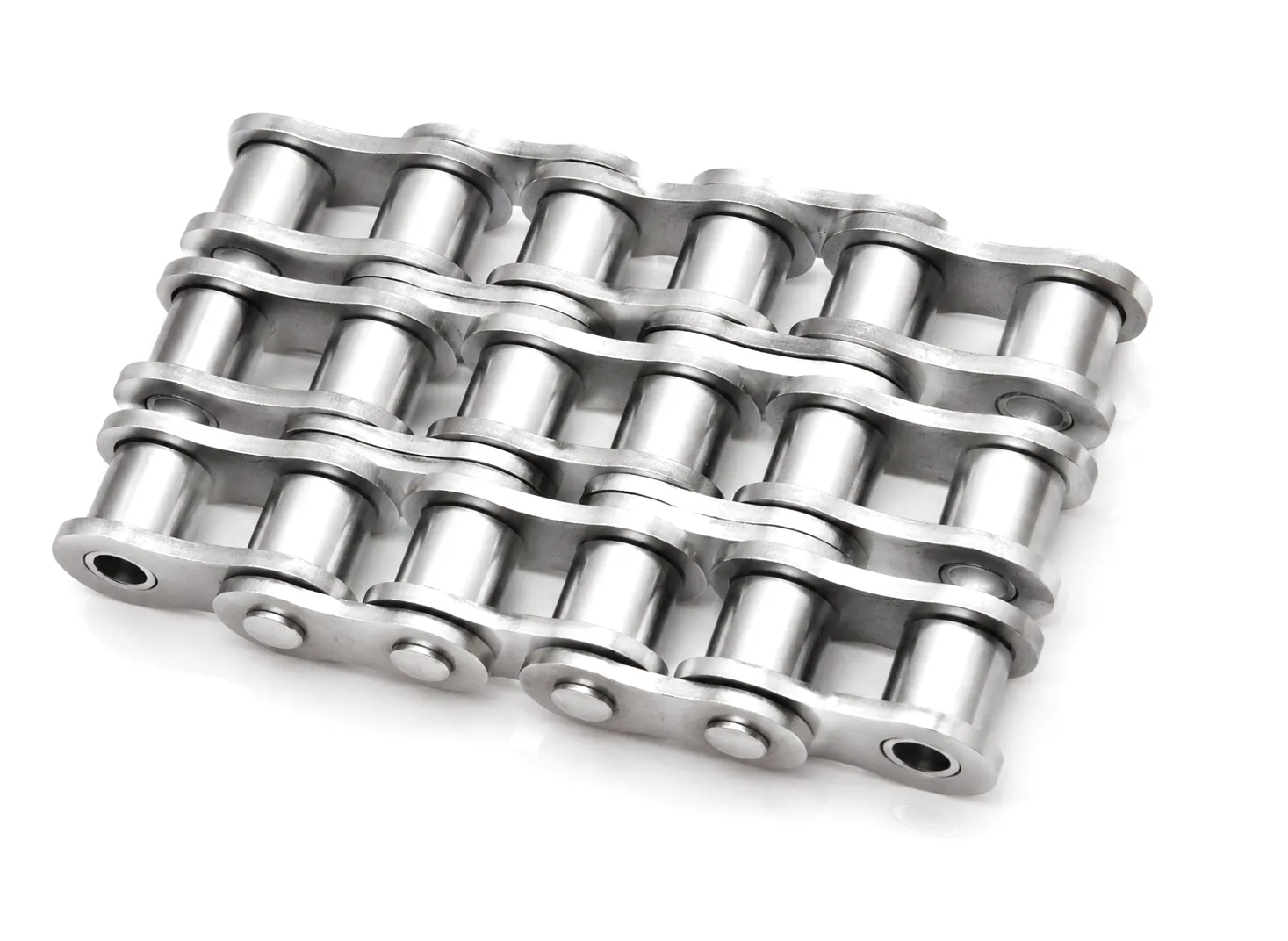
Cold-stamped from medium-carbon sheet, link plates are heat-treated to a controlled hardness band — typically HRC 38–42 on the side plate body — that balances tensile strength with the ductility needed to absorb bending cycles without brittle fracture. In Ever Power’s manufacturing line, each plate undergoes shot-peening after stamping, inducing a compressive residual stress layer on all surfaces. This dramatically extends fatigue life in environments where lateral loading from misaligned sprockets imposes cyclic bending moments on the plate.
Pins are case-carburised to a surface hardness of HRC 58–64, producing a hard outer shell over a tough, ductile core. This dual-layer structure is essential under misalignment: the hard surface resists the scuffing and galling that occur when side loads push the pin against the bushing bore asymmetrically, while the ductile core prevents snap fracture if an impact load arrives. Pin diameter tolerances are held within ±0.002 mm at Ever Power’s facility, ensuring the press-fit into outer link plates remains interference under thermal cycling in typical UK manufacturing environments.
The bushing is the tribological heart of the chain, rotating on the pin with every articulation cycle. Misalignment accelerates pin-bushing wear by introducing a cantilevered side load that concentrates contact pressure at one end of the bushing bore, collapsing the hydrodynamic lubricant film in that zone. High-quality bushings are carburised to a case depth of 0.2–0.4 mm and finished to a bore surface roughness of Ra 0.4 µm or better. This combination supports a fuller lubricant film even under modest side loading, extending intervals between re-lubrication on UK plant where relubrication frequency is often dictated by shift patterns rather than engineering optimum.
The roller’s job is to convert the sliding contact between chain and sprocket tooth into rolling contact, cutting friction and tooth wear dramatically. Under misalignment, the roller engages the sprocket tooth at a non-perpendicular angle, increasing edge-contact stress on one side of the roller crown. Through-hardening the roller to its core — unlike surface-only treatments — ensures the material beneath any edge-load zone is equally hard and fatigue-resistant. Premium rollers are also crowned slightly along their length to distribute edge loads smoothly rather than concentrating them at a geometric corner.
Classifying Misalignment: Angular, Lateral, and Axial Forms
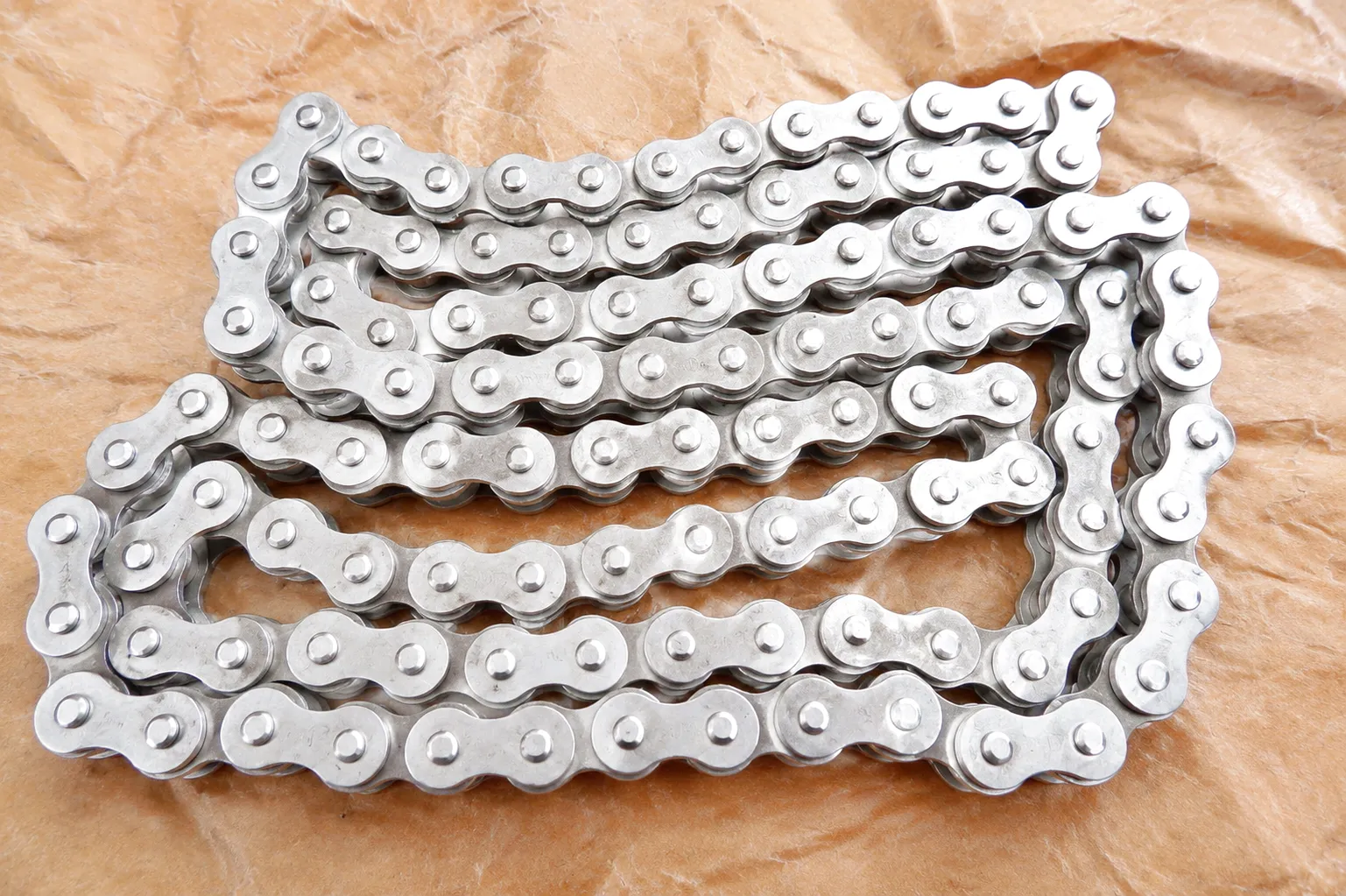
Sprocket centreplanes parallel but displaced. Side plate edge wear, chain climbing sprocket flank, higher noise at low speed. Most prevalent after bearing replacement without realignment check.
Shaft axes non-parallel. Symmetrical plate fatigue, link plate cracking at pin holes, pulsating drive noise that changes character with load. Often caused by baseplate distortion or soft-foot condition on motor mounting.
One sprocket displaced along its shaft axis relative to the other. Accelerated tooth flank wear on a fixed arc, uneven chain tension across width, common after centre distance adjustments on agricultural or conveyor drives.
Core Performance Advantages of Precision-Manufactured Roller Chain
A well-designed roller chain from a quality manufacturer brings tangible engineering advantages that compound over the operating life of the drive. These advantages are especially pronounced in the context of sprocket alignment: chains with tighter manufacturing tolerances and superior surface treatments maintain their geometry for longer, meaning that small, residual misalignment errors — which are almost unavoidable in real plant environments — produce proportionally less damage.
Shot-peened link plates and rigorously controlled case-hardening depth translate to substantially longer fatigue life under combined tensile and bending loads. In high-cycle applications typical of Birmingham’s automotive component suppliers, this means maintenance intervals of 8,000–12,000 hours are achievable versus 4,000–5,000 hours for standard-quality chains under comparable alignment conditions.
Precision-bored bushings matched to ground pins minimise pin-bushing clearance while maintaining adequate lubrication film space. Lower articulation friction directly reduces the heat generated at the pin-bushing interface, which in turn reduces lube oxidation rate and extends oil-change intervals. For UK food and beverage manufacturers requiring H1-grade lubrication, this efficiency gain also reduces contamination risk from lubricant consumption.
Pitch elongation — the gradual increase in effective pitch caused by pin-bushing wear — is the primary mechanism driving chain replacement. Tight pin diameter tolerances and superior bushing surface finish from quality manufacturers slow pin-bushing wear, maintaining pitch accuracy within the ISO-recommended 1.5% elongation limit for 40–60% longer than standard commodity chains. This is critically important in synchronised conveyor applications where pitch mismatch between adjacent chain strands causes tracking errors.
Premium roller chains incorporate wider-faced rollers and slightly tapered roller ends that allow them to tolerate minor residual alignment errors without the aggressive tooth-flank contact that characterises cheaper alternatives. This built-in geometric compliance does not excuse poor alignment practice, but it does provide an engineering margin that prevents catastrophic early failures when alignment drifts between planned maintenance inspections — a critical feature for remote or difficult-access drives common in UK quarrying and aggregates processing operations.
Ұсынылған Ever Power Roller Chain өнімдері
Engineered specifically for Caterpillar heavy equipment applications. The 120HSP-00 features an extended-pitch design with hardened sidebars, pre-loaded pin-bushing assemblies for rapid break-in, and a proprietary surface treatment that delivers outstanding wear resistance even in high-contamination environments typical of UK quarrying and earthmoving operations. Its dimensional compatibility with OEM Caterpillar sprockets eliminates the guesswork from replacement planning.
The C100HSP-00 is designed for severe-duty Caterpillar undercarriage and drive applications where impact loading combines with continuous lateral stress from ground engagement forces. The chain features an over-spec tensile strength margin of at least 25% above standard grade, a dual-sealed roller assembly that excludes abrasive fines, and precision-matched sprocket engagement geometry. Particularly well-suited for the demolition and civil engineering contractor fleet operating widely across the UK construction supply chain.
Roller Chain Technical Performance Parameters
The following table reflects typical performance parameters for ISO-grade precision roller chain as manufactured and supplied by Ever Power. Values are indicative for standard single-strand chains and should be verified against specific application requirements.
| Параметр | Chain Size 08B (1/2″) | Chain Size 12B (3/4″) | Chain Size 16B (1″) | Chain Size 24B (1-1/2″) |
|---|---|---|---|---|
| Қадам (мм) | 12.70 | 19.05 | 25.40 | 38.10 |
| Breaking Load (kN) min. | 18.0 | 29.0 | 60.0 | 160.0 |
| Pin Diameter (mm) | 3.96 | 5.72 | 7.92 | 14.63 |
| Roller Diameter (mm) | 8.51 | 12.07 | 15.88 | 25.40 |
| Link Plate Height (mm) | 11.80 | 16.13 | 21.34 | 32.18 |
| Max. Operating Speed (m/s) | 12 | 10 | 8 | 5 |
| Pin Hardness (HRC) | 58 – 64 (case-carburised, all sizes) | |||
| Roller Hardness (HRC) | 54 – 60 (through-hardened, all sizes) | |||
| Plate Material | C45 medium-carbon steel, shot-peened | |||
| Max. Permissible Lateral Misalignment | ± 0.5 mm | ± 0.8 mm | ± 1.0 mm | ± 1.5 mm |
| Max. Angular Misalignment | 0.5 degrees (all sizes) | |||
| Стандартты | BS/ISO 606:2015 (British Standard equivalent) | |||
Practical Alignment Measurement Methods for UK Plant Engineers
Industrial Application Scenarios Where Alignment Matters Most
High-speed transfer lines and cam-driven press feeds in the West Midlands automotive supply chain run roller chains at sustained speeds of 6–10 m/s over two-shift, six-day-per-week cycles. Any misalignment-induced vibration at these speeds amplifies into audible resonance that quality control teams flag immediately, while the accelerated wear compounds as pitch error grows. Alignment checks are built into quarterly planned maintenance windows, with laser verification specified in OEM subcontractor quality plans.
Rolling mill auxiliary drives — coiler mandrel drives, edge trimmer feeds, and reheat furnace conveyor systems — operate under heavy, variable torque loads in environments with significant thermal gradients. Thermal expansion of shafts and housings can shift alignment by 0.3–0.8 mm over an eight-hour heating cycle. Sheffield steelmakers typically install adjustable bearing housings and specify thermal alignment analysis at design stage, pre-setting sprocket positions to achieve nominal alignment at operating temperature rather than at cold installation conditions.
The East Midlands logistics corridor — centred around Northampton, Rugby, and Milton Keynes — hosts some of the UK’s largest automated fulfilment centres. Multi-lane sorter conveyors use dozens of parallel roller chain strands that must maintain precise pitch synchronisation to prevent package jamming. Lateral misalignment between adjacent parallel chains causes differential elongation rates that create progressive skew across the conveyor width. Precision alignment at installation, combined with matched chain sets (chains manufactured and measured together as a batch), is the industry standard in this sector.
Food processing environments introduce two additional alignment challenges: frequent washdown cycles with high-pressure water that penetrate seals and accelerate corrosion, and regular deep-clean disassembly that disturbs alignment each time the drive is reinstated. Plants in the Yorkshire and Lancashire food manufacturing clusters have adopted colour-coded alignment reference marks on shaft ends, applied during commissioning, that allow maintenance technicians to restore the sprocket to its correct axial position after each clean-in-place cycle without requiring a full laser alignment each time.
Ever Power: Precision Manufacturing and Customisation Capabilities
Full quality management system compliance with documented calibration, traceability, and batch records available to UK customers on request.
Pin diameter tolerance ±0.002 mm, pitch tolerance controlled to ±0.05%, bushing bore surface finish Ra 0.4 µm — all verified by coordinate measuring machine on every production lot.
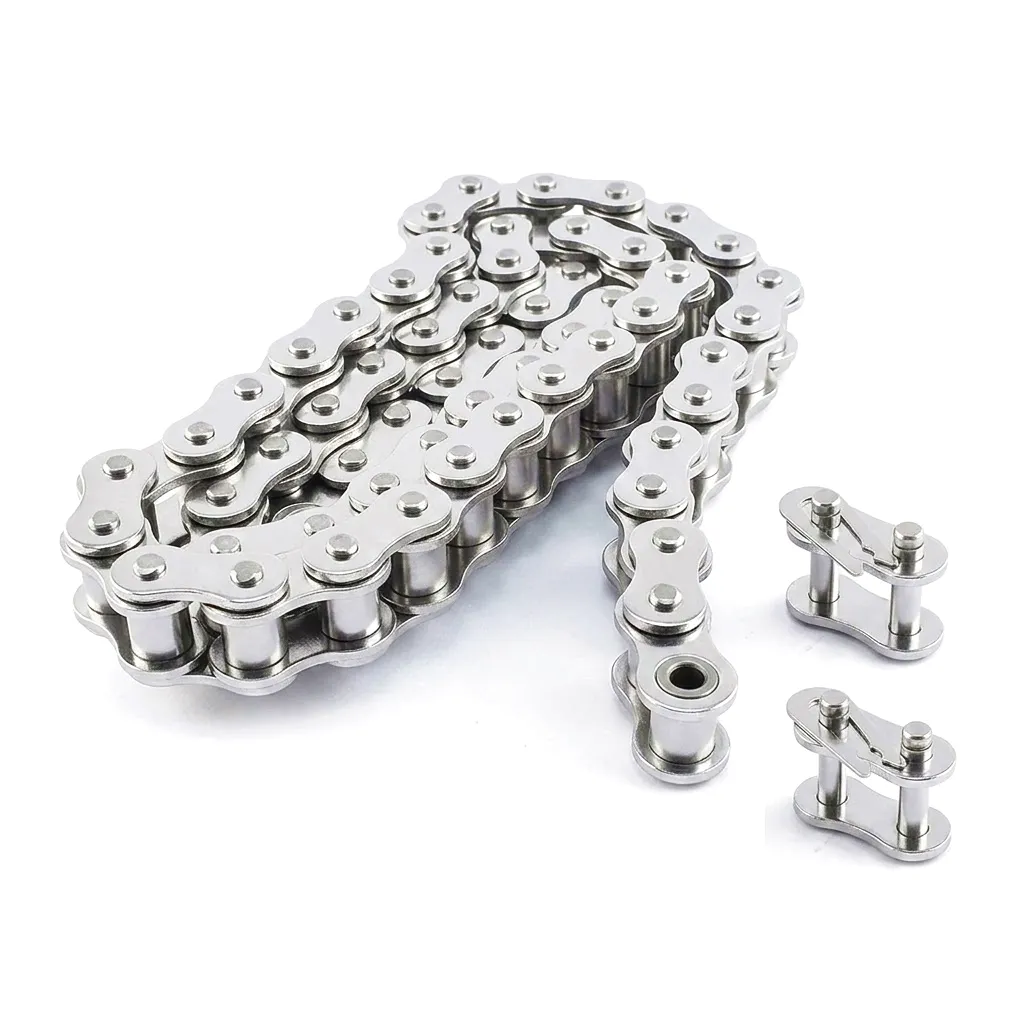
Non-standard pitch, extended pitch, stainless steel, corrosion-protected, self-lubricating, and multi-strand matched sets — all engineered and manufactured in-house with lead times discussed at enquiry stage.
DDP (Delivered Duty Paid) terms available for UK buyers. Shipment documentation pre-prepared for HMRC import compliance. Standard items ex-stock for airfreight or sea consolidation depending on urgency.
Customer Success Story: Sheffield Steel Products Ltd
Sheffield Steel Products Ltd operates a continuous strip processing line at their Attercliffe facility, producing precision cold-rolled steel sections for the UK construction and structural engineering market. The facility runs three coiler drive assemblies on a 24/5 production schedule, each using 1″ (25.4 mm pitch) heavy-duty roller chain to transmit up to 28 kW of torque from the main reducer to the mandrel assembly. By mid-2023, the maintenance team was replacing chains on Drive 2 every 3–4 months — roughly a third of the planned service interval — and had logged two unscheduled stoppages attributable to chain fatigue failure in a twelve-month period.
A detailed inspection conducted jointly by Sheffield Steel’s reliability engineer and an Ever Power technical representative identified a compound alignment problem: Drive 2’s driven sprocket had migrated 2.1 mm laterally on its keyed shaft due to a loose shaft collar that had been overlooked during previous maintenance, while the supporting bearing housings showed an angular error of 0.7 degrees accumulated through baseplate distortion under thermal cycling. The cumulative effect had been concentrating chain side loads on the inner plate faces adjacent to the driven sprocket, producing the classic one-sided burnishing and early fatigue cracking pattern consistent with lateral misalignment in a high-torque application. Ever Power supplied a matched replacement chain in hardened and pre-loaded 16B specification, along with a detailed alignment correction procedure tailored to the specific coiler drive geometry. Sheffield Steel implemented the procedure during a scheduled Saturday maintenance window, and commissioned laser verification to confirm the result.
Drive 2 subsequently ran for 14 months without chain replacement, returning the drive to its planned replacement cycle and saving Sheffield Steel an estimated £18,000 in unplanned maintenance costs and production downtime over that period. The facility has since adopted the alignment verification protocol across all three coiler drives as a standard 6-monthly PM task, and transitioned all three drives to Ever Power precision chain supply under a standing blanket order arrangement.
“The pitch accuracy on Ever Power’s 16B chain is noticeably better than what we were getting from our previous supplier. When we measured the replacement chain across 20 links with a digital pitch gauge, the accumulated error was inside 0.08% — well within the BS EN ISO 606 tolerance. That consistency directly translated into quieter running and eliminated the intermittent snatch we were seeing under peak load.”
“What set Ever Power apart wasn’t just the chain quality — it was the technical support. Their representative came on-site, identified the alignment issue we had been chasing for months, and documented a correction procedure specific to our coiler geometry. That level of engagement from a supplier is rare. We’ve now put all three of our coiler drives on Ever Power supply and the procurement team has consolidated the blanket order to simplify logistics.”
“We specified stainless steel attachment chain with custom welded tabs for a washdown-intensive section of our process line — it’s an unusual requirement that most suppliers quoted 10–14 weeks for. Ever Power’s customisation team turned around a drawing approval in 48 hours and delivered the first production batch in 6 weeks. The custom chain has now been running for over a year without any corrosion-related wear issues — a genuine improvement over the standard carbon chain it replaced.”
Frequently Asked Questions — Roller Chain and Sprocket Alignment
Contact our technical sales team for pricing, technical datasheets, or a custom specification discussion. UK B2B enquiries receive same-day response.