When a drive system fails in a Sheffield steel processing plant or a Birmingham automotive assembly line, the question is rarely whether a roller chain was used — it’s whether the right configuration was chosen. The selection between single-strand and multi-strand roller chain is one of the most consequential decisions in mechanical power transmission design, yet it’s frequently reduced to a vague rule of thumb rather than a rigorous engineering exercise. Getting it wrong costs more than a replacement part; it costs unplanned downtime, accelerated wear on sprockets, and in some cases, complete drivetrain overhaul.
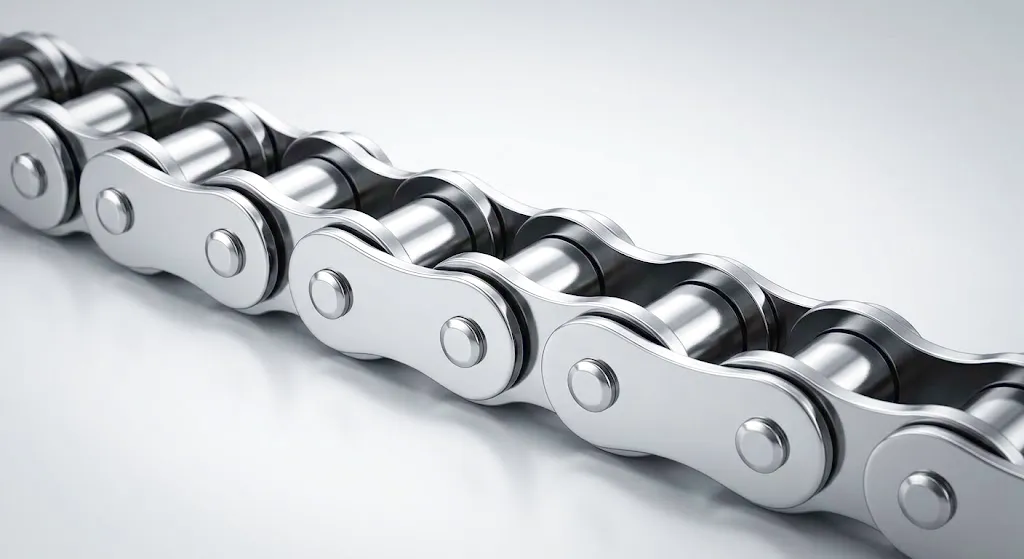
A roller chain, at its most fundamental level, converts rotational motion into linear force through a series of interlocked components: inner plates, outer plates, bushings, rollers, and pins. The simplicity of this architecture belies the extraordinary precision required to manufacture it reliably. Whether you are specifying a drive for agricultural equipment in Yorkshire, a conveyor system for a distribution centre in Manchester, or a heavy-duty mining rig in South Wales, understanding how strand count, pitch, and breaking load interact is the foundation of every sound specification decision.
The Anatomy of a Roller Chain and Why Configuration Matters
Inner Link Assembly
Two inner plates, one bushing press-fitted through each plate hole, and one roller that rotates freely on the bushing. The roller’s free rotation is what minimises friction with the sprocket teeth, directly impacting efficiency and wear life.
Outer Link Assembly
Two outer plates and one pin, which passes through the bushing of the inner link. The pin is press-fitted into the outer plates. The interference fit at this joint is one of the most critical quality checkpoints in chain manufacture, as fatigue failure nearly always initiates at the pin-plate interface.
Pitch: The Master Dimension
Pitch is the centre-to-centre distance between consecutive pin centres, measured in inches under ISO/ANSI numbering. A No. 50 chain has a 5/8 in pitch; a No. 100 chain, 1-1/4 in pitch. Pitch governs sprocket compatibility, chain speed limits, and the baseline load capacity before strand count is introduced.
Understanding these components is not academic — it directly informs strand selection. When engineers at a Leeds packaging machinery firm consider whether to upgrade from a single-strand to a double-strand configuration, they are effectively asking which limiting factor — pitch or strand count — should be the variable they adjust. Increasing pitch raises the chain’s individual link strength but also increases the polygon effect at high speeds, reducing smoothness. Adding strands, on the other hand, multiplies load capacity while preserving the same pitch and sprocket geometry. This trade-off is at the heart of every strand-count decision.
Single-Strand Roller Chain: Engineering Characteristics and Ideal Applications
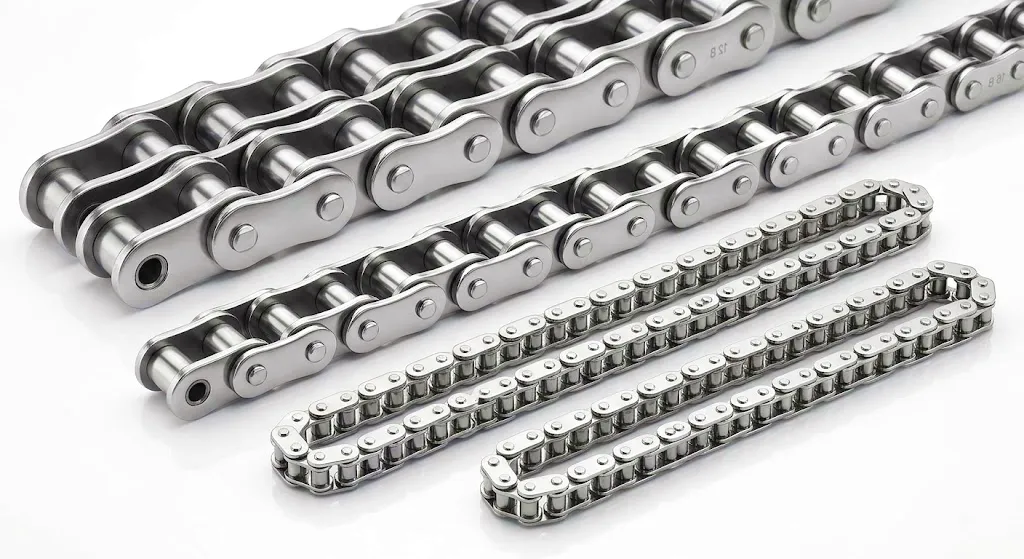
Single-strand roller chain is the most widely deployed power transmission medium in British manufacturing. From the bottling lines of a Derbyshire food producer to the conveyor systems of a Coventry automotive parts supplier, its prevalence reflects not just historical inertia but genuine engineering logic. A single-strand chain offers the lowest installed cost per unit of capacity, the simplest alignment requirements, and the widest availability of replacement parts throughout the UK supply chain.
The key engineering advantage of a single-strand drive is its lateral rigidity. With only one row of links, the chain tracks consistently on the sprocket teeth without the risk of uneven load distribution across multiple strands. This makes single-strand configurations inherently more forgiving of minor misalignment — a practical consideration in retrofit installations where achieving perfect shaft parallelism is constrained by existing machine architecture.
However, the single-strand configuration reaches its limits quickly when power density requirements rise. As the transmitted horsepower approaches the chain’s rated capacity, the designer must choose between increasing pitch (heavier, less smooth) or accepting higher replacement frequency. Neither outcome is ideal for continuous-operation facilities where every maintenance window represents a direct production cost. This is the engineering crossroads where multi-strand roller chain enters the decision.
Multi-Strand Roller Chain: Power Density, Precision, and Heavy-Duty Performance
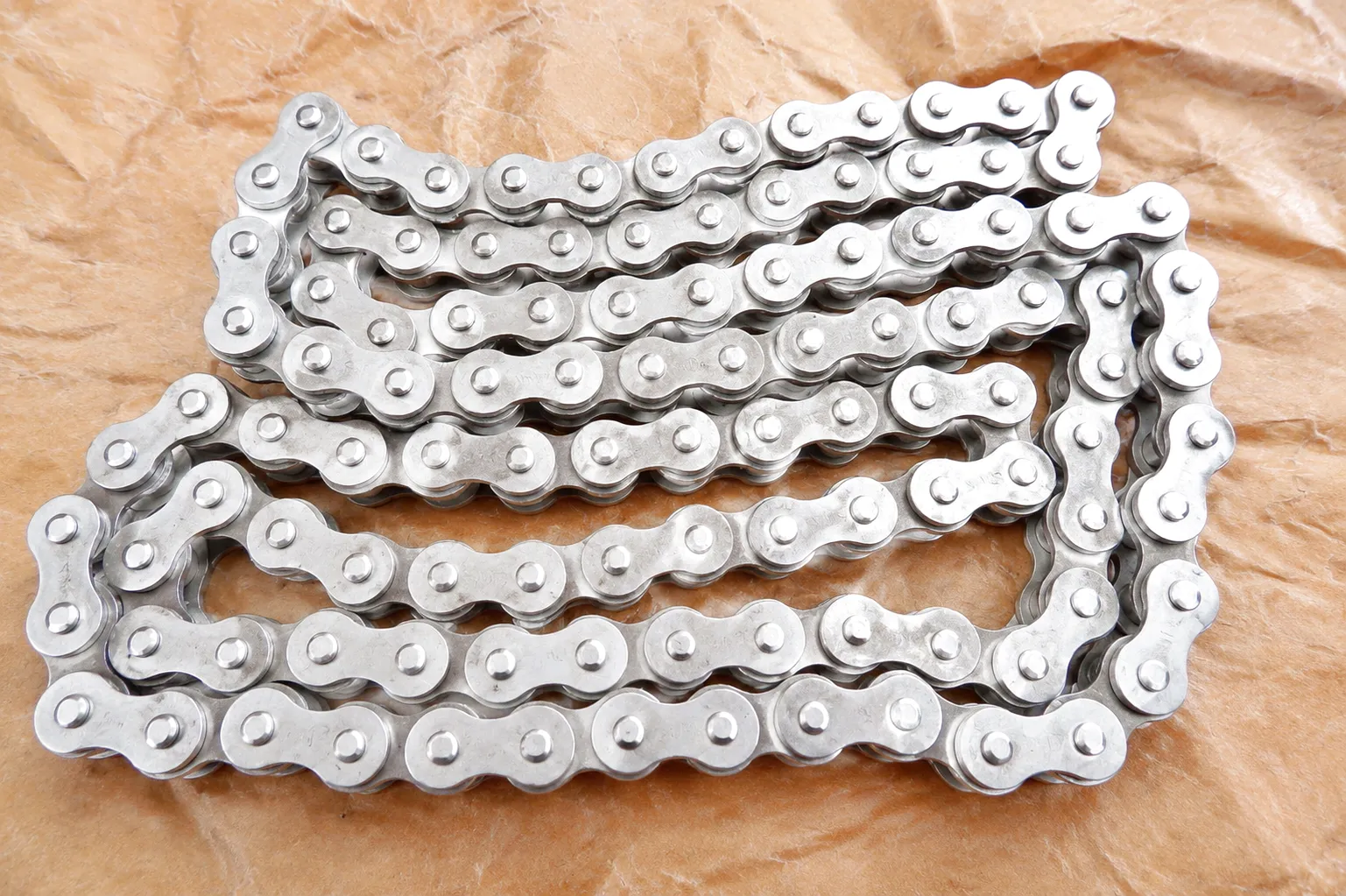
Multi-strand roller chain — double-strand (duplex), triple-strand (triplex), or higher — is constructed by placing two or more rows of link plates on common pins, with precisely controlled inner widths (called the transverse pitch) separating each strand. The mechanical effect is additive: a double-strand chain of a given pitch delivers approximately 1.7 times the rated load capacity of its single-strand equivalent. The reduction factor from 2.0 reflects the statistical reality that load distribution across multiple strands is never perfectly equal in service — manufacturing tolerances, sprocket tooth profiles, and dynamic shock loading all introduce asymmetry.
The greatest engineering advantage of the multi-strand configuration is its ability to transmit higher power at the same pitch and chain speed. This is critical in applications where space constraints rule out a larger-pitch chain and where operating speed is fixed by process requirements. A triple-strand No. 80 chain running at 600 RPM, for example, can transmit significantly more kilowatts than a single-strand No. 120 chain at the same speed — while occupying less sprocket face width and generating less polygonal chordal action due to the smaller pitch.
Multi-strand roller chain is the configuration of choice for high-torque, slow-speed drives such as those found in quarrying equipment in the Peak District, heavy agricultural drives in the East Midlands, and steel mill auxiliary drives in the South Yorkshire industrial corridor. When engineers in Sheffield specify a drive for a continuous caster auxiliary, a multi-strand configuration is not merely preferred — it is typically the only viable option short of migrating to an entirely different power transmission technology.
High Strength Roller Chain 120HSP-00
Engineered specifically for Caterpillar heavy equipment applications, the 120HSP-00 features shot-peened link plates and a fatigue-rated pin specification that extends service life by up to 40% in cyclic-load environments typical of earthmoving and construction plant.
High Strength Roller Chain C100HSP-00
The C100HSP-00 is optimised for Caterpillar undercarriage systems operating in high-abrasion environments. Its case-hardened rollers and chromium-alloyed bushings deliver exceptional resistance to the abrasive wear patterns that accelerate chain stretch in quarrying and demolition applications.
How Roller Chain Transmits Power: Working Principles Across Strand Configurations
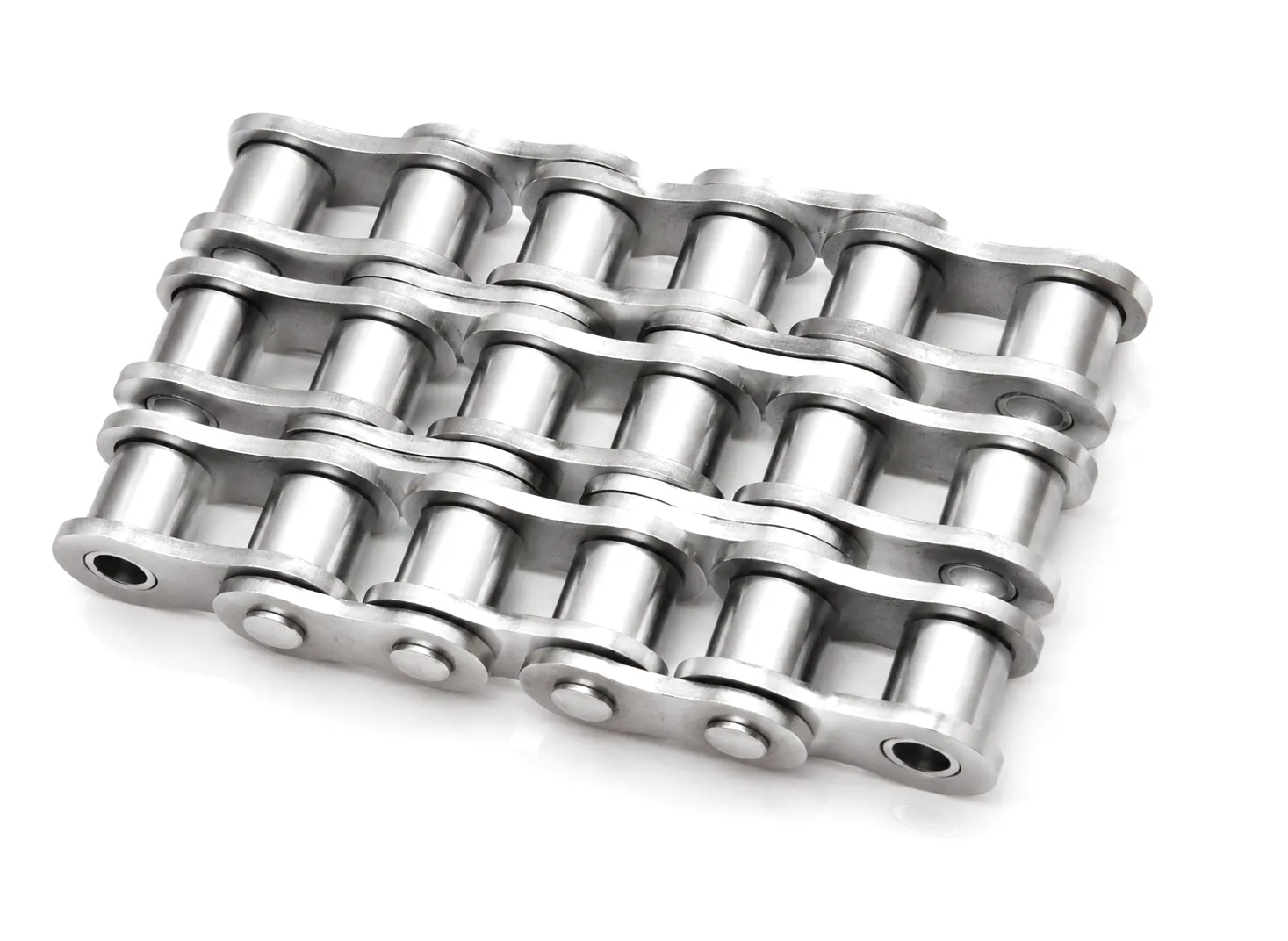
Power transmission via roller chain operates on a remarkably straightforward mechanical principle, but the underlying physics demand careful engineering attention. As the driving sprocket rotates, its teeth engage the rollers — which rotate freely on the bushings — drawing the chain through the drive. The chain exits the driving sprocket under tension on the tight side and returns under minimal tension on the slack side. The difference between tight-side and slack-side tension constitutes the effective tension that transmits useful power.
In a multi-strand configuration, this tensile load is distributed across all strands simultaneously. Ideally, each strand bears an equal share; in practice, the strand nearest the bearing shoulder of the sprocket typically carries a marginally higher load due to deflection of the sprocket body under load. This is why multi-strand sprockets must be manufactured to tighter dimensional tolerances than single-strand equivalents — any eccentricity or face-runout error amplifies the uneven load distribution problem.
The chordal action effect — the rhythmic rise and fall of chain tension caused by the polygon geometry of the sprocket — decreases as tooth count increases and as pitch decreases relative to the sprocket diameter. Multi-strand chains, running on the same pitch as a single-strand equivalent but at higher power, allow the designer to use larger sprockets with more teeth, directly reducing chordal action and the vibration that shortens component life.
Material Specification: What Goes Into a High-Performance Roller Chain
Link Plates — Medium Carbon Steel
S45C or equivalent medium-carbon steel (0.42–0.48% carbon) is the standard plate material. Heat treatment raises surface hardness to HRC 40–48 while maintaining a tough core. High-performance variants use chromium-molybdenum alloy steel for applications above 200°C or under severe shock loading.
Pins — Case-Hardened Alloy Steel
Pins bear the full shear load at each articulation point. SCM415 or 20CrMnTi alloy steel, case-carburised to a surface hardness of HRC 58–62 with a core hardness of HRC 30–40, is the industry benchmark. The hardened case resists wear; the tough core prevents brittle fracture under impact loads.
Bushings & Rollers — Through-Hardened Steel
Bushings are through-hardened to HRC 50–58, ensuring uniform hardness across the full wall thickness where pin-to-bushing wear occurs. Rollers are typically through-hardened to HRC 54–62, with surface grinding achieving the tight cylindricity tolerance that ensures smooth engagement with sprocket teeth and even load distribution.
Stainless Steel & Specialty Variants
For food processing, pharmaceutical, and marine environments — prevalent in the UK’s food manufacturing sector across Lincolnshire, Norfolk, and the Scottish Highlands — AISI 304 or 316 stainless steel variants provide corrosion resistance at the expense of a modest reduction in tensile strength compared to carbon steel equivalents.
Surface finishing choices profoundly influence roller chain longevity in British industrial environments, where humidity, temperature cycling, and chemical exposure are everyday operational realities. Zinc-nickel electroplating provides superior corrosion protection compared to standard zinc plating alone, while shot-peening the link plates introduces compressive residual stress that raises the fatigue limit significantly — typically by 15–25% — enabling chains to survive in the cyclic-load regimes that characterise packaging, printing, and textile machinery. In multi-strand assemblies, the material consistency between strands is particularly critical: any variation in plate thickness, pin hardness, or roller cylindricity creates differential wear rates that compound over time and ultimately cause unequal load sharing even in a well-manufactured sprocket system.
Roller Chain Performance & Technical Parameter Reference Table
| Chain No. (ISO/ANSI) | Pitch | Strand Configuration | Min. Breaking Load | Max. Allowable Load | Typical Max. Speed | Pin Dia. | Material Grade |
|---|---|---|---|---|---|---|---|
| 40 / 08B | 1/2 in (12.70 mm) | Single | 17.8 kN | 4.4 kN | 3,400 RPM | 3.97 mm | S45C / Carbon Steel |
| 50 / 10B | 5/8 in (15.875 mm) | Single / Duplex | 21.8 kN / 43.6 kN | 5.4 kN / 9.1 kN | 2,800 RPM | 5.09 mm | S45C / Alloy |
| 60 / 12B | 3/4 in (19.05 mm) | Single / Duplex / Triplex | 31.3 kN / 53 kN / 75 kN | 7.8 kN / 13.3 kN / 18.7 kN | 2,200 RPM | 5.96 mm | Alloy / SCM415 |
| 80 / 16B | 1 in (25.40 mm) | Single / Duplex / Triplex | 58.0 kN / 99 kN / 139 kN | 14.5 kN / 24.6 kN / 34.7 kN | 1,700 RPM | 7.95 mm | 20CrMnTi / Alloy |
| 100 / 20B | 1-1/4 in (31.75 mm) | Single / Duplex | 88.5 kN / 150 kN | 22.2 kN / 37.7 kN | 1,400 RPM | 9.54 mm | SCM415 / CrMo Alloy |
| 120 / 24B (HSP) | 1-1/2 in (38.10 mm) | Single (Heavy Duty) | 127.0 kN | 31.8 kN | 1,100 RPM | 11.10 mm | Shot-peened CrMo Alloy |
Data represents standard ISO 606 / ANSI B29.1 compliant chains. HSP denotes heavy-series, shot-peened specification. Actual capacities vary with operating conditions, lubrication regime, and temperature. Contact Ever Power engineering for application-specific calculations.
Core Technical Advantages of Roller Chain Over Competing Power Transmission Technologies
Positive Drive with Zero Slip
Unlike V-belts, which rely on friction and can slip under overload, roller chain transmits torque through direct mechanical engagement between rollers and sprocket teeth. This positive drive characteristic maintains precise velocity ratios critical for synchronised multi-axis machines in packaging and printing.
High Mechanical Efficiency
A properly lubricated roller chain achieves a transmission efficiency of 97–99% in single-pass drives. This compares favourably to gear drives (95–98%) when installation complexity and centre-distance flexibility are considered, and significantly outperforms flat-belt drives over comparable centre distances.
Centre-Distance Flexibility
Roller chain operates across a wide range of centre distances, from very short (two-tooth engagement minimum) to very long, simply by adjusting chain length in half-pitch increments. This adaptability is invaluable in plant layout redesigns, a common requirement in the UK’s older manufacturing facilities where available floor space dictates machine positioning.
Thermal Resilience
Standard carbon-steel roller chain operates reliably from -30°C to 180°C with appropriate lubrication selection. Specialist alloy and stainless variants extend this range. This thermal window covers virtually all UK industrial operating environments, including furnace conveyors in foundries and refrigerated warehouse automation in food distribution.
Scalable Load Capacity via Strand Count
The ability to multiply load capacity simply by adding strands — without changing the chain pitch or sprocket geometry — gives designers extraordinary flexibility. A system designed for a single-strand No. 80 drive can be upgraded to a duplex configuration if production output demands increase, with only sprocket replacement required.
Standardised Global Interchangeability
ANSI B29.1 and ISO 606 standardisation ensures that roller chain from any compliant manufacturer can replace worn chain in service without modification. For UK procurement teams managing multi-site facilities or just-in-time production schedules, this standardisation represents a critical risk mitigation factor in the supply chain.
Application Scenarios: Where Single-Strand and Multi-Strand Roller Chain Excel in UK Industry
Automotive Manufacturing — Midlands Assembly Plants
Multi-Strand Dominant
West Midlands automotive assembly — from powertrain build lines in Solihull to stamping plants in the Black Country — relies heavily on duplex and triplex roller chain for overhead conveyor systems, engine assembly transfer lines, and press-room automation. The precise synchronisation demanded by lean manufacturing cell layouts, where conveyor speed must be matched exactly to line takt time, makes the positive drive characteristic of multi-strand roller chain indispensable. Chain pitch selection in these environments tends to centre around No. 80 duplex, balancing load capacity with the moderate speeds required for assembly-pace conveyance.
Agricultural Machinery — East Midlands and Yorkshire Arable Regions
Single & Multi-Strand
Combine harvesters, grain conveyors, forage harvesters, and seeding machinery deployed across Lincolnshire, Nottinghamshire, and the Yorkshire Wolds represent one of the most demanding application environments for roller chain. The combination of high shock loads (stone ingestion events in harvesting chains), abrasive contamination, and aggressive ingress of crop residue means that single-strand chains in these machines are typically specified at two to three times the theoretical load rating. For header drives and feeder house main drives — where transmitted power routinely exceeds 50 kW on modern combines — duplex or triplex configurations on No. 80 and No. 100 pitch chains have become the standard, supported by extended-pitch variants optimised for crop-drag conditions.
Food & Beverage Processing — Nationwide UK Facilities
Stainless / Single-Strand
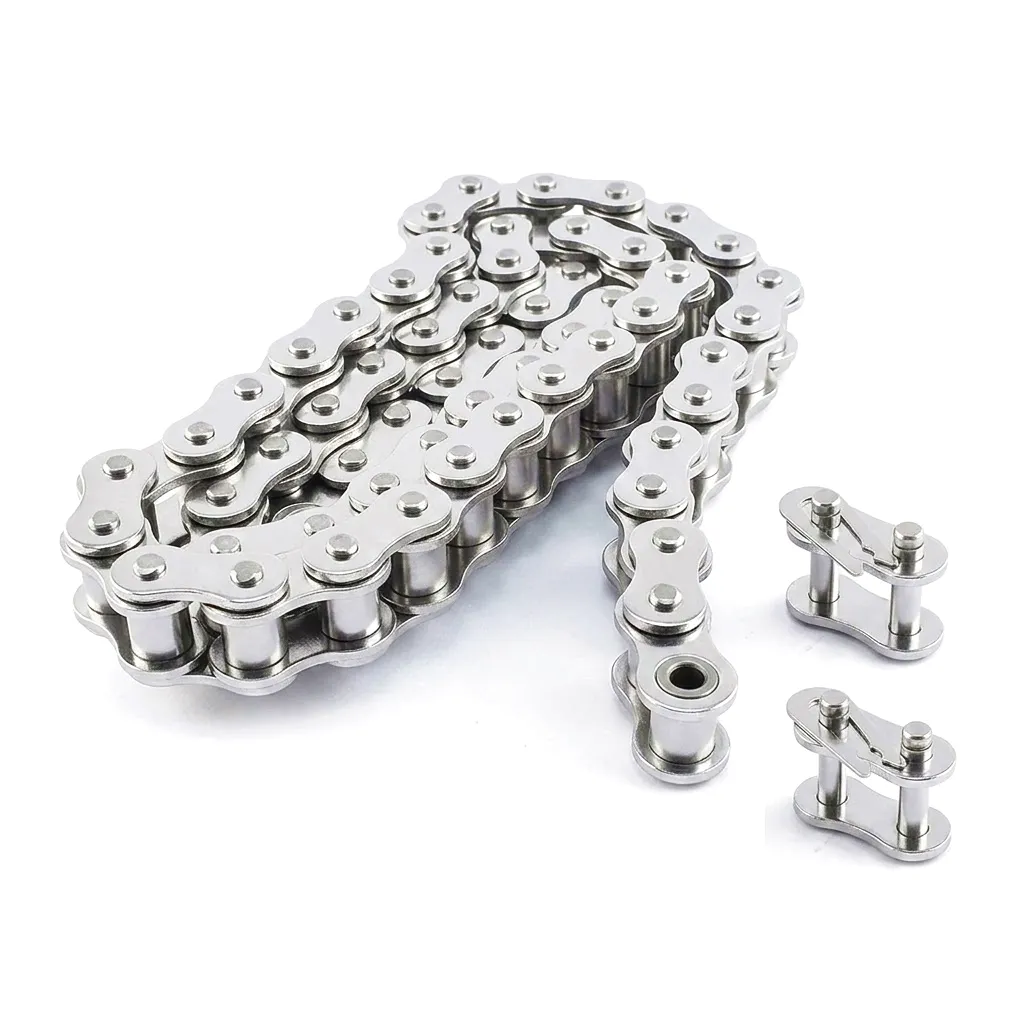
Biscuit production in Reading, soft drinks bottling in Glasgow, seafood processing in Grimsby — across the breadth of the UK food industry, single-strand stainless steel roller chain dominates where hygiene standards are governed by British Retail Consortium Global Standards or Food Safety System Certification requirements. The preference for single-strand in food environments is driven partly by washdown maintenance: a single-strand chain is far easier to clean thoroughly than a multi-strand assembly where the interior strand gaps can harbour bacterial colonisation in the event of lubrication failure. Self-lubricating sintered-bushing variants, which eliminate the need for external lubrication entirely, have seen strong adoption particularly in direct-contact food handling applications.
Mining & Quarrying — Peak District and Welsh Valleys
Heavy Multi-Strand
Scraper conveyors, flight conveyors, and crusher drive systems in aggregate quarrying and coalmine surface operations represent the highest-load segment of the roller chain market. Triplex and even quadruplex chain configurations on No. 100 and No. 120 pitch are routinely specified for face conveyor drives in UK coal preparation plants, where a chain break means a full conveyor shutdown costing tens of thousands of pounds per hour. Ever Power’s heavy-duty shot-peened series — including the 120HSP-00 for Caterpillar equipment — was developed specifically for this application class, with fatigue performance validated under the shock-load cycles that characterise extraction machinery operation.
Steel Production & Metal Processing — Sheffield and Scunthorpe
High-Temp Multi-Strand
Sheffield’s special steel sector and Scunthorpe’s integrated steelworks rely on roller chain for furnace charging conveyors, billet transfer tables, and rolling mill auxiliary drives. At elevated operating temperatures — ambient radiant heat around furnace zones commonly exceeds 120°C — standard lubricants break down rapidly, demanding either high-temperature grease formulations or sealed-and-lubricated chain designs. Multi-strand configurations in this sector are selected not merely for load capacity but also for the safety factor margin they provide: in a rolling mill, unscheduled chain failure creates a serious risk of runaway billet, requiring the chain system to be over-specified by a factor of three or more against the calculated load.
How to Choose Between Single-Strand and Multi-Strand: A Practical Engineering Framework
| Design Parameter | Choose Single-Strand When… | Choose Multi-Strand When… |
|---|---|---|
| Power Requirement | Below 75% of single-strand rated capacity | Approaching or exceeding single-strand limit |
| Operating Speed | High speed, low torque (light machinery) | Low speed, high torque (heavy drives) |
| Space Envelope | Width-constrained, depth available | Pitch constrained, face width available |
| Misalignment Tolerance | Moderate misalignment expected | Precise shaft alignment achievable |
| Budget / Installed Cost | Cost-sensitive, lower initial outlay | Lifecycle cost drives selection; uptime critical |
| Shock Load Character | Light to moderate, predictable loads | Severe shock, intermittent overload expected |
| Environment | Food-grade, washdown, or hygienic | Heavy industrial, mining, steel, quarrying |
Ever Power: Precision Roller Chain Manufacturing and Custom Engineering Solutions
Ever Power has built its position in the global power transmission market not through volume alone, but through a manufacturing philosophy centred on dimensional precision and material traceability. Every roller chain that leaves the Ever Power facility is manufactured against a documented production traveller that records heat treatment parameters, dimensional inspection results, and tensile test data for the steel coil used in plate cutting. This level of traceability is not standard practice in commodity chain manufacturing — it reflects a commitment to the engineering standards that UK and European industrial customers increasingly require as part of their supplier qualification processes.
The customisation capability at Ever Power spans every dimension of roller chain design. Beyond standard ANSI and ISO catalogue items, Ever Power’s engineering team handles non-standard pitch requests, custom attachment configurations (including bent-plate, extended pin, and carrier-plate designs), custom inner widths for multi-strand assemblies, and corrosion-resistant surface treatment specifications including fluoropolymer coating for chemical-resistant applications. For UK buyers requiring chains with ATEX-compatible materials for use in potentially explosive atmospheres — common in grain handling facilities and chemical processing plants — Ever Power offers consultation and documentation support throughout the specification process.
Manufacturing Capabilities
- ✓ ANSI B29.1 & ISO 606 compliant production lines
- ✓ Shot-peening facility for fatigue-rated plates
- ✓ In-house heat treatment with documented curves
- ✓ CMM-based 100% dimensional inspection
- ✓ Custom pitch, width, and attachment designs
- ✓ Stainless 304 & 316, Duplex alloy available
- ✓ Express despatch to UK ports via established freight partnerships
Speak with an Ever Power application engineer about your roller chain configuration requirements. Custom quotations are provided within 24 hours for standard enquiries.
Case Study: Reducing Unplanned Downtime at a Sheffield Special Steel Processor
📍 Application Profile
Location: Sheffield, South Yorkshire
Industry: Special steel processing — bar cutting and coil processing
Application: Bar transfer conveyor main drive — continuous three-shift operation
Previous Chain: No. 80 single-strand, standard carbon steel
Replacement: Ever Power No. 80 duplex, SCM415 alloy with shot-peened plates
The plant’s bar transfer conveyor had been suffering repeated single-strand roller chain failures approximately every eight to eleven weeks, each requiring a four-hour unplanned maintenance window that cascaded into significant production shortfalls in a made-to-order steel environment. A detailed load analysis commissioned through Ever Power’s application engineering team revealed that the original single-strand specification had been calculated for average torque load, without adequate allowance for the shock factor introduced by bar-end impact as individual steel bars engaged the conveyor at the cutting station.
Ever Power’s engineering recommendation was to migrate to a duplex configuration on the same No. 80 pitch, providing a 1.7x increase in rated load capacity and, more importantly, a substantial increase in the fatigue margin against the cyclic shock loading profile. The shot-peened plate specification was selected specifically to raise the fatigue limit of the outer plates, which the load analysis identified as the failure initiation point in the previous chain breakages.
Following installation of the Ever Power duplex chain set — including custom offset link connectors to match the existing centre distance without sprocket modification — the conveyor ran continuously for 14 months before the first planned replacement inspection. No unplanned failures occurred during this period. The plant’s maintenance manager estimated that the change delivered a net saving of over £85,000 in avoided downtime costs in the first year alone, against an incremental chain cost of approximately £1,200 for the duplex specification versus the previous single-strand procurement price.
Customer Reviews
“The duplex chain Ever Power supplied for our bar transfer conveyor has transformed our maintenance planning. Fourteen months without a failure on a drive that used to break every two months — that speaks for itself. The application engineering support during specification was genuinely impressive.”
— Site Maintenance Manager, Sheffield Special Steel Processor
“We needed a non-standard inner width on a triplex configuration for a specialist press drive. Most suppliers told us the lead time would be 16 weeks. Ever Power came back with a production sample in five weeks and got the full order right first time. The dimensional accuracy was within spec on every link we checked.”
— Lead Mechanical Engineer, Birmingham Press Tool Manufacturer
“We’ve been buying 316 stainless single-strand chain for our seafood processing lines for three years now. The consistency from batch to batch is the thing — you know exactly what you’re getting. The material certification documentation Ever Power provides satisfies our BRC audit requirements without any supplementary testing on our end.”
— Procurement Manager, Grimsby Seafood Processing Facility
Lubrication, Installation, and Service Life Considerations for Multi-Strand Drives
Lubrication is the single most influential variable in roller chain service life, and this truth is amplified in multi-strand configurations where the interior strand gaps are harder to reach with manual lubrication methods. The three lubrication modes — manual drip oiling, oil bath or disc systems, and pressurised spray systems — correspond roughly to chain speeds below 4 m/s, 4–12 m/s, and above 12 m/s respectively under ISO and ANSI power rating tables. For multi-strand applications running at moderate to high power, an automatic oil bath or spray system is not merely recommended — it is a prerequisite for achieving the rated service life upon which the chain selection calculation is based.
Initial elongation management is another area where multi-strand chains demand attention. All new roller chains exhibit a measurable elongation during the first 50–100 operating hours as the link plates and pins bed in at their contact surfaces. In a single-strand drive, this is managed with a simple tensioner adjustment. In multi-strand drives, the elongation of each strand must be equal — any differential elongation creates the load imbalance discussed earlier. Specifying chains from a single manufacturing batch, ensuring identical initial tension in each strand during installation, and using matched master links, eliminates the primary sources of differential elongation.
Chain Wear Monitoring — When to Replace
Roller chain retirement is triggered by 3% elongation in a standard-pitch chain (measured over a reference length of approximately 300 mm / 12 links). At 3% elongation, the pitch geometry no longer matches the sprocket tooth profile accurately, producing rapid accelerating wear of both chain and sprocket. Multi-strand drives should be measured on each strand independently; if any strand has reached 3%, the full assembly is replaced to avoid load imbalance on the fresh chain.
Frequently Asked Questions About Roller Chain Selection in the UK
How do I know whether I need a single-strand or multi-strand roller chain for my heavy-duty manufacturing plant in Birmingham? ▼
The starting point is a calculation of the drive’s design power — the nameplate motor power multiplied by a service factor that accounts for shock loading, duty cycle, and the number of drive starts per hour. If the design power exceeds about 75% of the rated single-strand capacity for your chosen pitch, a duplex (double-strand) configuration is generally the better engineering choice. For a Birmingham automotive or metalworking plant running continuous three-shift operation with moderate shock, a service factor of 1.4 to 1.7 is typically appropriate. Ever Power’s application engineering team can run this calculation for your specific drive parameters at no charge.
What is the typical price difference between single-strand and duplex roller chain, and is the cost justified for UK industrial buyers? ▼
Duplex roller chain of a given pitch typically costs 1.6 to 1.85 times the price of the single-strand equivalent, reflecting the additional material in the second set of link plates and rollers and the tighter manufacturing tolerances required for strand alignment. For UK buyers evaluating the cost justification, the correct comparison is not chain price alone but total cost of ownership — including the value of avoided downtime, which in a continuous-operation facility routinely runs to many times the annual chain procurement spend. Contact us at [email protected] for a current price indication for your specific pitch and configuration requirement.
Which UK industries use the most triplex and quadruplex roller chain configurations, and where can I find a reliable supplier? ▼
Triplex and quadruplex configurations are most commonly specified in UK mining and quarrying (South Wales, Peak District, Nottinghamshire), heavy steel processing (Sheffield, Scunthorpe), large-scale aggregate production, offshore oil and gas machinery manufactured in Aberdeen and the North East, and large agricultural harvesting machinery drives. These industries share the common characteristic of very high torque, low-to-moderate speed drives where chain failure represents an extreme operational or safety risk. Ever Power supplies multi-strand chains of up to six strands and can source or manufacture non-standard configurations for OEM and aftermarket replacement applications.
How long does it take to get a quote from a roller chain manufacturer for a custom multi-strand configuration, and what lead times should I expect for delivery to the UK? ▼
For standard catalogue chains in common pitches, Ever Power provides indicative pricing within 24 hours of enquiry via [email protected]. Custom configurations — including non-standard pitch, specialty alloy, or unusual attachment patterns — typically require 48–72 hours for engineering review and quotation. Production lead times for standard in-stock items to UK ports are typically 7–14 working days from order confirmation. Custom and non-standard items typically require 4–6 weeks production, plus shipping. Ever Power works with established freight forwarding partners serving major UK freight terminals including Felixstowe, Southampton, and London Gateway.
What is the difference between ANSI and ISO roller chain standards, and which one should I specify when sourcing chain for a UK manufacturing facility? ▼
ANSI B29.1 and ISO 606 are both widely recognised standards that define chain geometry, strength requirements, and dimensional tolerances. For most UK applications, ISO 606 (also sold as BS EN ISO 606 in British Standards catalogues) is the preferred specification, as European machinery manufacturers — who supply the majority of plant and equipment in UK factories — design their sprockets to ISO geometry. ANSI-standard chains use a slightly different roller diameter and inner width in some pitches, which can lead to compatibility issues on ISO-designed sprockets. Ever Power manufactures to both standards; when placing an enquiry, specify which standard your existing sprockets were manufactured to, and our team will confirm compatibility before processing your order.
When should I consider upgrading from a single-strand to a multi-strand roller chain on my Sheffield industrial conveyor, and what performance improvements can I realistically expect? ▼
The clearest indicators that a single-strand drive is approaching its limits are accelerating chain elongation (reaching the 3% retirement limit faster than the design life predicted), repeated pin failure rather than gradual elongation, and thermal discolouration of the chain suggesting inadequate lubrication or operation above the rated load. A well-specified duplex upgrade on the same pitch — as the Sheffield case study described above demonstrates — typically delivers a 60–80% extension in service intervals, a measurable reduction in peak operating temperature (because load per strand falls), and improved smooth running through better fatigue margin. The concrete performance gains depend heavily on the original design safety factor; drives that were borderline on single-strand capacity see the largest improvements.
Ready to Specify Your Roller Chain Drive?
Whether you’re engineering a new installation, troubleshooting a drive that’s underperforming, or evaluating a single-strand to multi-strand upgrade, Ever Power’s application engineers are ready to help. Reach out today for a no-obligation technical consultation and quotation.
📧 Get a Quote — [email protected]
Responses within 24 hours · Custom configurations welcome · UK freight delivery available
edit by gzl