Select Page

Mechanical Transmission · Engineering Guide

How to Calculate Roller Chain Length
for Any Drive System

Precision chain length calculation is the invisible backbone of every efficient power transmission system. Whether you are commissioning a conveyor line in Birmingham, fitting out an agricultural harvester in Yorkshire, or specifying a drive unit for a Sheffield steel plant, getting the chain pitch count exactly right determines whether your machinery runs quietly for years or suffers premature wear within months.

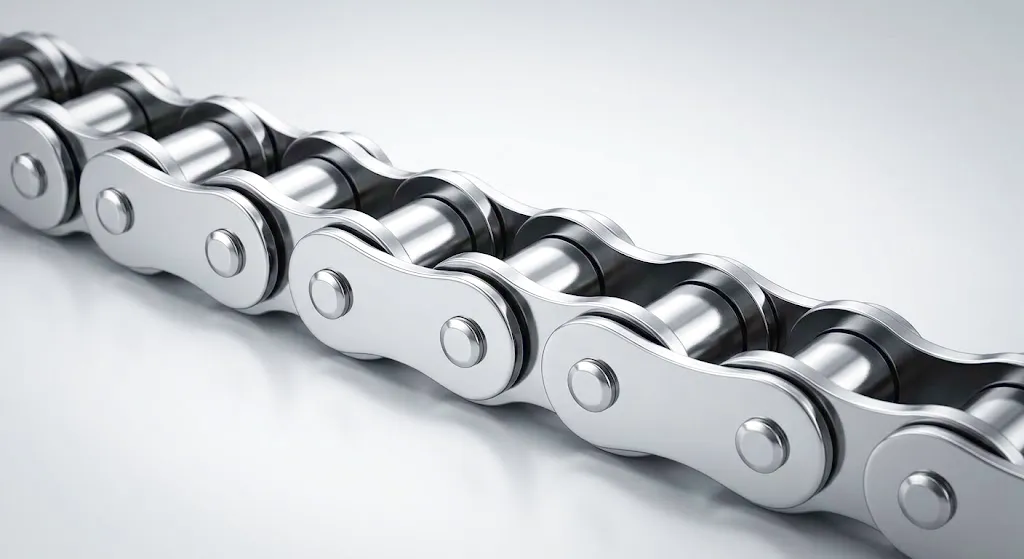
Roller Chain Drive System

Roller chain has remained one of the most reliable and widely used power transmission elements in mechanical engineering for well over a century. Its operating principle rests on a beautifully simple interlock between hardened steel rollers and precision-cut sprocket teeth. As the sprocket rotates, each tooth engages a roller, transferring rotational force through the chain links to the driven shaft. The result is a positive, slip-free drive that maintains an accurate speed ratio between driver and driven sprockets — a characteristic that belts and friction drives simply cannot match under heavy dynamic loading.

Understanding roller chain length calculation is not merely a technical exercise. It directly affects installation tension, system efficiency, sprocket tooth wear, and the overall operational lifespan of the drive. Engineers across the UK — from automotive component plants in Coventry to food processing facilities in Leeds — rely on correct length formulae to avoid the twin evils of a chain that is too tight (generating destructive bearing loads) or too loose (producing vibration, noise, and eventual skip-tooth failure).

Chain drives are characterised by their pitch — the centre-to-centre distance between consecutive roller pins. This single dimension governs everything: the number of links needed, the sprocket geometry, and the available centre distance adjustment range. Before any calculation can begin, the engineer must know the pitch of the selected chain, the number of teeth on each sprocket, and the desired centre distance between shaft centrelines.

The Standard Roller Chain Length Formula Explained

The Formula
L = 2C/p + (N1 + N2)/2 + (N2 – N1)^2 / (4 * pi^2 * C/p)

Where L = chain length in pitches (number of links), C = centre distance between sprocket shafts (mm or inches), p = chain pitch, N1 = number of teeth on the smaller (driver) sprocket, N2 = number of teeth on the larger (driven) sprocket.

Why Even Numbers Matter

The formula almost always yields a decimal result. Engineers round up to the next even number of pitches whenever possible. An odd number of links requires an offset link — a slightly weaker connecting piece — which ideally should be avoided in high-load applications. Most drive designers in UK manufacturing environments specify an even pitch count and then fine-tune the shaft centre distance to suit, using adjustable bearing mounts or jockey sprockets.

Once the pitch count is fixed, the actual centre distance can be back-calculated. This is standard practice in machinery built to BS ISO 606 and ANSI B29.1 standards, both of which are widely referenced by UK procurement engineers when sourcing roller chain from overseas suppliers.

Step-by-Step Calculation: A Worked Industrial Example
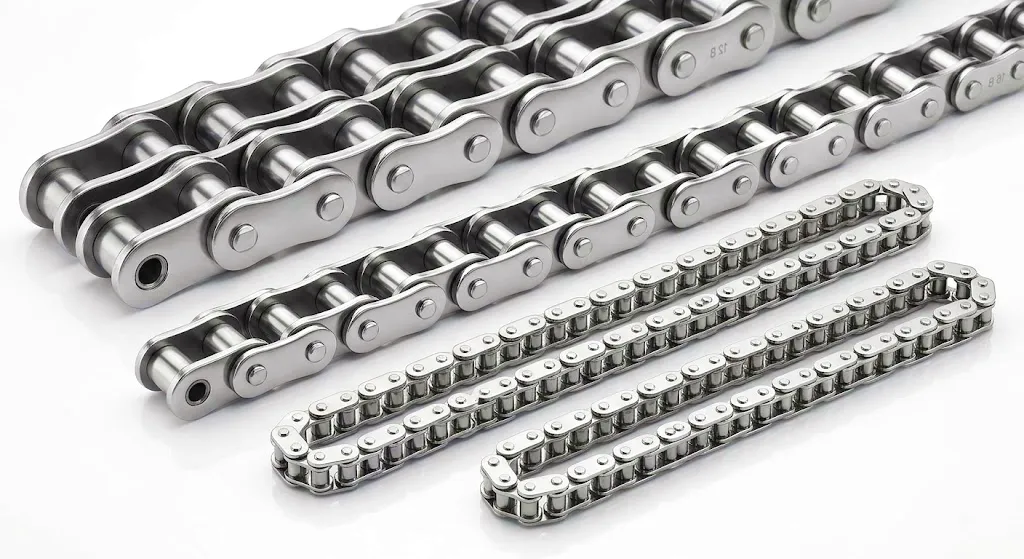
Roller Chain Manufacturing

To bring the formula to life, consider a practical scenario from an automotive sub-assembly line in the West Midlands. The drive motor runs at 960 rpm and carries a 17-tooth driver sprocket. The driven conveyor shaft must run at approximately 480 rpm, so a 34-tooth sprocket is selected (giving an exact 2:1 ratio). The chain specified is BS 16B-1 with a pitch of 25.4 mm (1 inch). The desired shaft centre distance is approximately 650 mm.

Substituting into the formula: C/p = 650 / 25.4 = 25.59. The bracket term (N2 – N1) = 34 – 17 = 17. Squaring: 289. Dividing by (4 × 9.8696 × 25.59) = 1011.5. Correction term = 289 / 1011.5 = 0.286. Main calculation: L = 2 × 25.59 + (17 + 34)/2 + 0.286 = 51.18 + 25.5 + 0.286 = 76.97 pitches. This rounds up to 78 pitches (even number). The actual centre distance is then back-calculated to be approximately 659 mm — well within typical adjustment range.

This kind of calculation is carried out routinely by mechanical engineers across UK industry. What matters is not simply arriving at a number, but understanding what that number represents in physical terms — the number of inner and outer link plates that will cycle through the drive, absorbing shock, transmitting torque, and articulating through the sprocket teeth many millions of times over the service life.

01
Select Chain Pitch
Match pitch to the power transmitted and operating speed. Higher speeds favour smaller pitches.
02
Determine Sprocket Teeth
Minimum 17 teeth on the driver is recommended for smooth engagement. Calculate the driven sprocket teeth from the required ratio.
03
Estimate Centre Distance
A good starting point is 30–50 pitches. Centre distance must be adjustable by at least 2 pitches for tensioning.
04
Apply Formula & Round
Round the calculated link count to the nearest even number, then back-calculate the exact fitted centre distance.

Roller Chain Technical Performance Data Table

The following table covers the most common roller chain standards specified in UK and international industrial projects. Data conforms to BS ISO 606 (metric series) and ANSI B29.1 (inch series) norms. These figures represent standard single-strand specifications; multi-strand and heavy-duty variants carry proportionally higher ratings.

Chain Standard Pitch (mm) Roller Dia. (mm) Breaking Load (kN) Max Speed (m/s) Material Typical Application
BS 06B-1 9.525 6.35 8.9 5.4 Carbon Steel Light conveyor, cam drives
BS 08B-1 12.7 8.51 17.8 4.8 Alloy Steel General industrial drives
BS 10B-1 15.875 10.16 22.2 4.1 Case-harden. Steel Agricultural, food machinery
BS 12B-1 19.05 12.07 28.9 3.5 Alloy Steel Moderate industrial drives
BS 16B-1 25.4 15.88 60.0 2.8 Case-harden. Steel Heavy industrial, automotive
ANSI 40 12.7 7.92 14.1 5.0 Carbon Steel US-spec equipment in UK
ANSI 80 (Heavy) 25.4 15.88 88.5 2.5 Alloy Steel Mining, heavy conveying
120HSP Caterpillar 38.1 22.23 190.0+ 1.5 High-strength Alloy Earthmoving, construction

Material Science Behind Roller Chain Durability
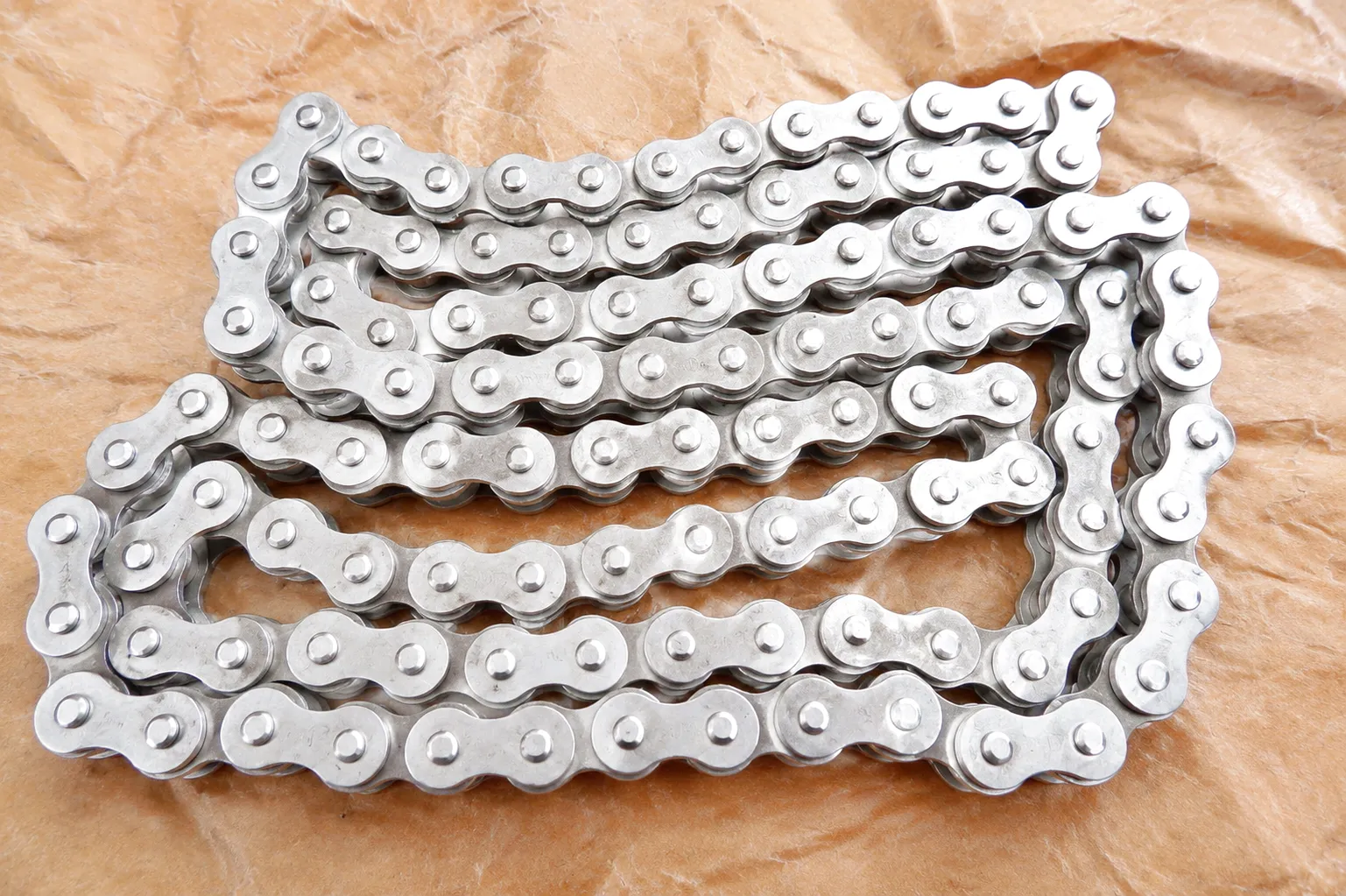
Roller Chain Material Quality

The performance of any roller chain drive is ultimately determined by the metallurgy of its components. Link plates — the flat, load-carrying members — are typically stamped from medium-carbon steel or alloy steel and then subjected to controlled heat treatment. The goal is to achieve a microstructure that offers high tensile strength in the body of the plate combined with a degree of toughness that resists crack propagation from fatigue loading. Carbon content in the range of 0.40% to 0.55% is typical for standard-duty chains, rising to 0.55% to 0.75% for heavy-duty and high-strength variants used in earthmoving equipment.

Pins — the axles around which the inner and outer plates articulate — must withstand both bending and surface shear simultaneously. Through-hardened alloy steel, frequently chromium-molybdenum grades, is the material of choice. Surface hardness above 58 HRC at the pin surface is common, enabling reliable operation across millions of articulation cycles. Bushings, which contact the inner surface of the roller, are made from similar steels but are often engineered to retain lubricant within micro-pockets on their surface.

The rollers themselves carry the contact stress between the chain and the sprocket teeth. Case-hardened steel with a surface hardness of 55–62 HRC and a tough, ductile core is the standard. For corrosive environments — a concern in coastal UK facilities such as those in ports along the Humber or in food-processing plants where frequent wash-down occurs — stainless steel and nickel-plated variants are available, though these require careful re-assessment of lubrication intervals and maximum allowable loads.

Carbon Steel Chains
Cost-effective, widely available to BS/ANSI standards. Suitable for dry or lightly lubricated, non-corrosive environments. Breaking load 8–90 kN across common pitch range. Ideal for general mechanical drives in English Midlands manufacturing.
Stainless Steel Chains
Grade 304 or 316 stainless for food, pharmaceutical, and marine environments. Lower tensile strength than carbon steel at equivalent pitch, but exceptional corrosion resistance. Wash-down safe — critical for UK food processing in Yorkshire and Lancashire.
High-Strength Alloy Chains
Chrome-molybdenum or nickel-chromium alloys heat-treated to maximum hardness. Used in excavators, dozers, and heavy quarrying plant. Breaking loads exceeding 190 kN. The preferred specification for OEM replacement in Caterpillar and Komatsu equipment across UK construction sites.
Self-Lubricating Chains
Sintered bushings pre-impregnated with lubricant. Maintenance intervals extended dramatically — key for remote or inaccessible drive points. Increasingly specified for automated warehousing systems being installed across logistics hubs in Coventry and Milton Keynes.

Featured Products · Ever Power

High-Strength Roller Chains for Caterpillar Equipment

120HSP-00
High Strength Roller Chain 120HSP-00
Engineered specifically for Caterpillar earthmoving machinery, the 120HSP-00 delivers exceptional tensile strength and fatigue resistance. The chain uses premium chromium-molybdenum alloy steel throughout, with heat-treated pins and shot-peened link plates for enhanced endurance. Ideal for high-shock, high-load applications in UK quarrying, roadworks, and ground preparation projects.

View Product Details →

C100HSP-00
High Strength Roller Chain C100HSP-00
The C100HSP-00 is the compact-pitch counterpart to the 120HSP series, designed for Caterpillar equipment requiring a 100-pitch heavy specification. Manufactured with tight dimensional tolerances to ensure OEM-compatible fitment, this roller chain maintains high articulation performance even under continuous shock loading. Widely used in crawler excavator undercarriages operating across UK infrastructure and civil engineering sites.

View Product Details →

Industrial Application Scenarios for Roller Chain Drives

Roller chain drives are specified wherever exact velocity ratio, high torque capacity, and long service life must coexist. The breadth of UK industry sectors relying on roller chain is remarkable — from traditional heavy engineering to cutting-edge automated fulfilment centres.

▶ Automotive Manufacturing — West Midlands
Engine assembly conveyors, camshaft drive chains, and transfer lines in the Birmingham and Coventry automotive sector rely on BS 16B and duplex roller chains for precise, vibration-free power transmission. Cycle time requirements in these facilities are extremely demanding, making chain length accuracy and fatigue life critical.
▶ Agricultural Machinery — East Anglia
Combines, forage harvesters, and straw balers deployed across Lincolnshire and Cambridgeshire arable farms use agricultural roller chain (CA550, CA620) for crop elevator drives and header mechanisms. Correct chain length calculation and seasonal tensioning adjustments are fundamental to maintaining harvest throughput.
▶ Steel & Metals Processing — Sheffield
The steel sector in Sheffield and Rotherham has historically demanded the most robust chain specifications. Rolling mill entry tables, bar transfer conveyors, and coil handling equipment use heavy-duty multi-strand roller chains with alloy steel construction and high-temperature grease lubrication, operating continuously in challenging thermal environments.
▶ Food & Beverage Processing — Yorkshire
Stainless steel and nickel-plated roller chains dominate food and drink production facilities across Yorkshire and the North West. From bottle conveyors in breweries to product sorting lines in confectionery plants, hygienic chain construction and verifiable material certifications are non-negotiable requirements for compliance with UK food safety regulations.
▶ Construction & Earthmoving — UK-Wide
Undercarriage drive chains for crawler excavators, dozers, and compact track loaders on UK construction sites require the highest available tensile strength combined with impact resistance. The Caterpillar-series high-strength roller chains supplied by Ever Power are designed precisely for this duty cycle, ensuring minimal downtime during critical project phases.
▶ Logistics & Warehousing — Midlands & South
The growth of e-commerce fulfilment centres in the East Midlands and along the M1 corridor has driven demand for long-run, low-maintenance conveyor chain systems. Self-lubricating and stainless variants run 24 hours a day in these facilities, making correct initial chain length — and adequate tensioner travel — essential for minimising planned maintenance shutdowns.

Core Technical Advantages of Modern Roller Chain

Positive Slip-Free Transmission
Unlike V-belts or flat belts, roller chain engages sprocket teeth mechanically, guaranteeing an exact speed ratio under all load conditions. No power loss from slippage — critical for synchronised multi-station production lines.
🔗
High Power Density
Roller chain transmits substantially more torque per unit of width compared to standard V-belts. Multi-strand configurations multiply capacity proportionally, allowing compact drive designs in space-constrained machinery.
🔧
Adjustability & Repairability
Individual links can be added or removed using a standard chain breaker. A worn drive chain can be replaced without removing sprockets or disturbing shaft alignment, minimising downtime in production environments. Spare links and connecting links are readily held in stock.
🎯
Temperature & Environment Resilience
Standard roller chain operates reliably between -10°C and +150°C. Specialised chains extend this range further. Unlike rubber belts, steel roller chain does not degrade from UV exposure, ozone, or moderate chemical splash — a significant advantage in UK outdoor and semi-outdoor applications.

Chain Sag, Tensioning, and the 2% Rule
Roller Chain Tensioning

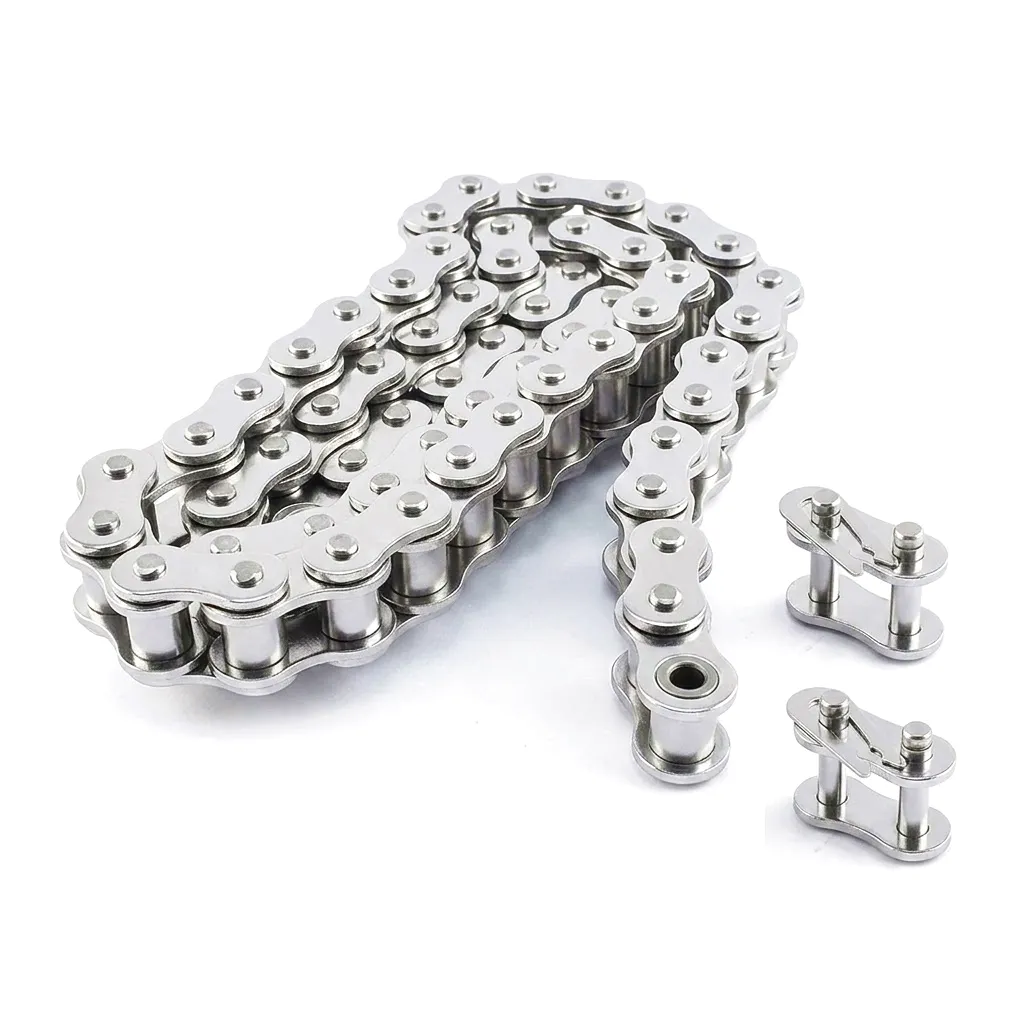
Even when chain length is calculated precisely, correct tensioning after installation determines whether that calculation translates into long service life or premature failure. Roller chain is not a taut element like a toothed belt; it operates with a controlled amount of sag on the slack strand. The generally accepted guideline is that the sag on the slack side should equal approximately 2% of the centre distance for a horizontal drive. So for the 659 mm centre distance in our earlier example, the target sag would be about 13 mm — easily checked with a straight edge or taut string.

Drives that are inclined between 45° and 90° from horizontal require tighter tensioning since gravity assists chain motion on the slack strand. Vertical drives need the tightest settings of all, and often incorporate a tensioner sprocket or slide-rail guide. In reversing drives — common in transfer machinery and certain agricultural equipment — there is no permanently slack strand, so the chain must be set to a snugger initial condition.

Engineers should also account for stretch over the operational life. A roller chain that has worn by 3% of its original pitch length is generally considered to have reached its service limit. At this point, the chain pitch is sufficiently increased that the rollers no longer seat correctly in the sprocket valleys, causing the chain to “ride up” on the teeth — known as chain climb — which rapidly accelerates sprocket wear. For this reason, replacing chain and sprockets together at the end of service life is standard practice recommended by all major transmission standards bodies.

Engineer’s Note: The Stretch Monitoring Protocol
Measure chain elongation by placing the chain under light tension and measuring the distance across a known number of pitches (typically 20). Compare against the nominal value from the manufacturer’s data sheet. Elongation beyond 3% demands immediate replacement. Many UK maintenance engineers now use digital verniers or laser-based chain wear gauges for speed and repeatability — particularly on high-value or safety-critical drives.

Manufacturing Excellence

Ever Power: Precision Roller Chain Manufacturing & Customisation

Ever Power operates a vertically integrated roller chain manufacturing facility equipped with CNC cold-forming presses, precision wire EDM, and fully automated heat treatment lines. Our quality management system is certified to ISO 9001:2015, and every batch of chain is subjected to destructive tensile testing, dimensional inspection using CMM equipment, and hardness verification before despatch. This level of process control enables us to hold dimensional tolerances consistently tighter than the maximum permitted by BS ISO 606, giving engineers confidence that Ever Power chain will perform reliably in their most demanding drive applications.

Our customisation capabilities extend far beyond standard catalogue products. Ever Power engineering team will work with your specifications to produce roller chain with modified link plates (extended, bent, or chamfered), special attachments (K1, K2, M, A, or fully bespoke profiles), non-standard pitches, engineered polymer rollers for noise reduction, and corrosion-resistant surface treatments including zinc plating, electroless nickel, and passivated stainless finishes. Minimum order quantities for custom production runs are competitive, and our supply chain reliability means that repeat orders to UK customers typically ship within 7–14 working days from confirmed order.

📧 Request a Custom Chain Quote

✓ Customisation Services
Non-standard pitches, special attachments, modified plates, polymer rollers, OEM matching
✓ Quality Assurance
ISO 9001:2015 certified, 100% dimensional inspection, CMM verification, destructive batch testing
✓ Supply Chain Reliability
7–14 day lead time for UK delivery on standard products. Dedicated account management for repeat orders

Customer Success Story: Sheffield Steel Conveyor Upgrade
4.7x
Service Life Extended
62%
Unplanned Downtime Reduction
£38k
Annual Maintenance Saving

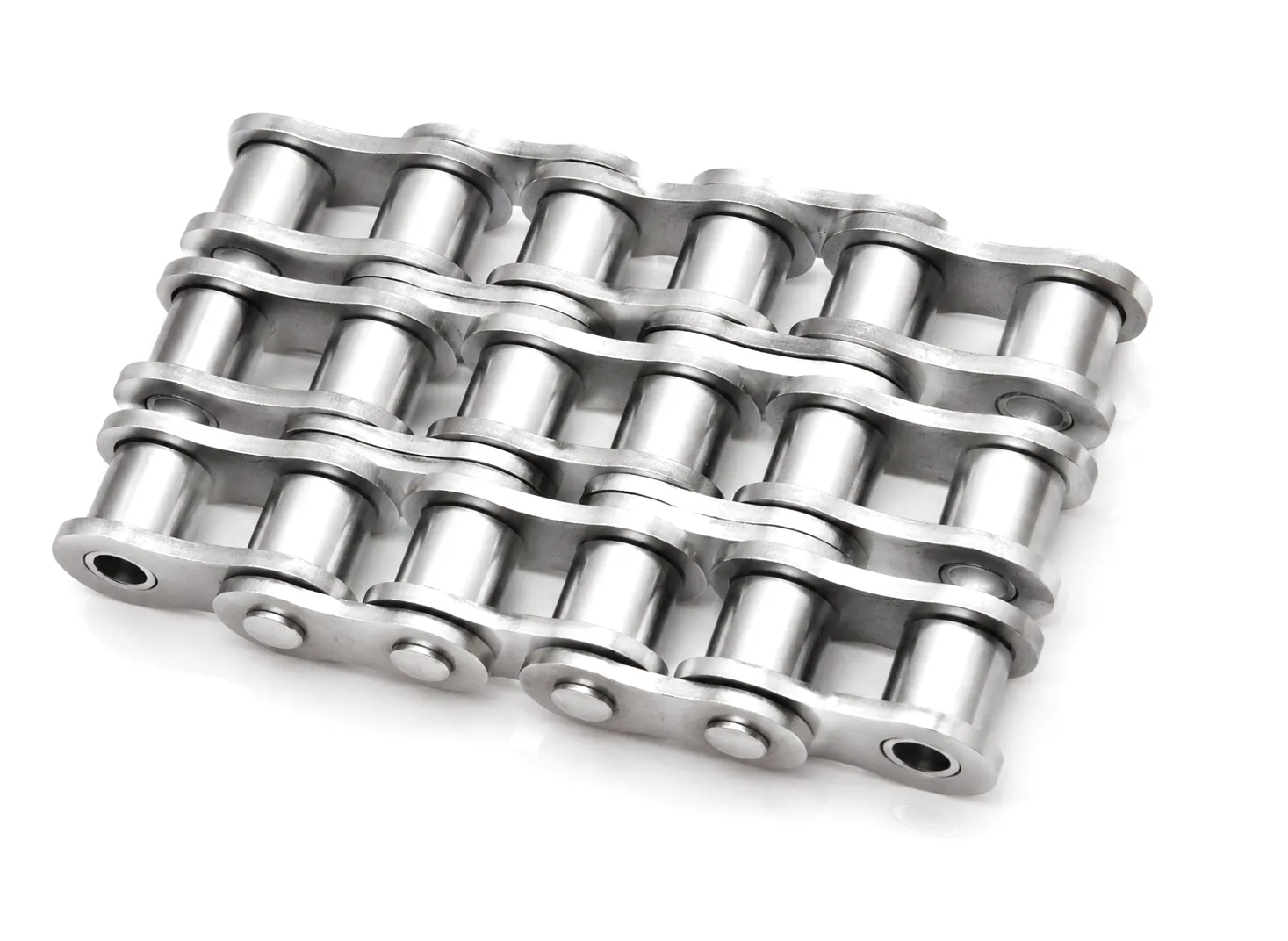
Industrial Roller Chain ApplicationsThornton Steel Components, a precision steel stockholder and processor operating from a 14,000 sq. m. facility on the outskirts of Sheffield, approached Ever Power in late 2024 with a chronic chain reliability problem. Their main billet transfer conveyor — a 34-metre system carrying cut steel sections weighing up to 2.1 tonnes — had been running on an imported standard carbon steel roller chain that required full replacement every four to five months. Each replacement took the conveyor offline for a full shift, costing the plant approximately £6,200 per incident in lost production, labour, and materials.

The Ever Power technical team conducted an on-site drive analysis, measuring the actual operating loads, shock factor, and ambient temperature range in the mill bay. The assessment identified that the original chain specification was undersized by a safety factor of roughly 2.1 for the actual peak loads experienced during batch changeovers. A custom specification was developed: BS 20B-2 duplex roller chain in chrome-molybdenum alloy steel with shot-peened link plates, induction-hardened pins, and a Molykote EP paste pre-lubrication treatment applied at the factory.

The re-engineered roller chain drive has now been in continuous operation for 23 months without a single chain-related stoppage. Stretch monitoring readings taken at six-month intervals confirm that the chain is wearing at less than one-quarter of the rate of its predecessor. Thornton Steel’s maintenance manager has independently estimated the annualised saving across avoided replacement, labour, and production recovery at approximately £38,000 — funding the initial investment in upgraded chain and associated sprocket replacement within the first five months of operation.

What Our Customers Say

★★★★★

“Ever Power’s technical team didn’t just quote us a chain — they calculated our actual load profile and recommended a grade we hadn’t even considered. The custom chain they supplied has been running in our Sheffield facility for nearly two years without a single issue. That’s the kind of engineering support that genuinely changes how you think about a supplier.”

D. Thornton
Maintenance Manager — Thornton Steel Components, Sheffield
★★★★★

“We ordered stainless BS 10B roller chain for our conveyor wash-down zones. The dimensional consistency was exceptional — every link within tolerance, and the material certification arrived with the shipment. Lead time from confirmed order to delivery at our Leeds site was 11 working days. We’ve since standardised on Ever Power for all our stainless chain requirements.”

M. Atkinson
Plant Engineer — Northern Foods Processing, Leeds
★★★★★

“Sourcing Caterpillar-spec high-strength roller chain from a reliable supplier at a competitive price is not easy. Ever Power quoted promptly, supplied a test batch with full dimensional and material test reports, and the chain matched OEM fitment perfectly. We’ve since placed three repeat orders for our plant hire fleet maintenance operation in Birmingham. Response times from their sales team are genuinely impressive.”

S. Rao
Procurement Manager — Midlands Plant Hire Ltd, Birmingham

Roller Chain
Industrial Chain Drive
Chain Manufacturing
Precision Chain

Ready to Specify Your Roller Chain Drive?

Contact the Ever Power technical team for chain length calculation support, product selection assistance, or a competitive quote on any standard or custom roller chain specification.

📧 Get Your Free Quote — [email protected]

edit by gzl