Seite wählen
Technical Deep Dive · Power Transmission

Roller Chain vs. Silent Chain: Key Differences and When to Use Each

A precision engineering guide for UK manufacturers, plant engineers, and procurement specialists — covering construction, performance data, application matching, and specification guidance.

📅 Published 2026
|
📖 3,000+ Words
|
🏴 UK Market Focused
|
⚙ Ever Power Engineering

Roller Chain manufactured by Ever Power

Walk through any working production facility in Birmingham, Sheffield, or Leeds, and you will encounter two types of chain drive technology that have shaped British industrial output for over a century — roller chain and silent chain. Both transmit mechanical power between rotating shafts, yet they differ fundamentally in geometry, acoustic profile, load capacity, speed range, and the environments where each one thrives. Getting that choice right matters enormously: an incorrect specification can mean noise complaints in a food processing facility, premature sprocket wear in a heavy-duty conveyor application, or catastrophic tensioning failures in a high-speed automotive timing system. This guide unpacks every dimension of that decision with the technical depth that UK plant engineers and procurement specialists actually need.

Roller chain, governed internationally by ISO 606 and in the British market often cross-referenced against BS/DIN standards, remains the dominant general-purpose power transmission solution across agriculture, mining, material handling, and general engineering. Silent chain — sometimes called inverted-tooth chain or Morse chain — trades the cylindrical roller element for a series of toothed link plates that engage sprocket teeth with a smooth, ramp-on profile rather than an impact. Each architecture produces a distinctly different service characteristic profile, and neither is universally superior. The best answer is always application-specific, and that is precisely what the pages that follow will help you determine with confidence.

Working Principles

How Roller Chain and Silent Chain Actually Work

Roller Chain: Impact-Driven Engagement

A standard roller chain consists of alternating inner and outer link plates, press-fitted bushings, hardened steel pins, and freely rotating cylindrical rollers. Power is transmitted when these rollers seat into the valleys — technically the dedendum — of a toothed sprocket. The engagement is a rolling-contact event: the roller approaches the sprocket tooth, contacts the curved flank, and rides down into the seated position driven by the chain wrap angle and tension. Because each roller impacts the sprocket at the moment of engagement, a characteristic “chordal action” occurs, causing slight velocity variations and an audible click at each pitch — the familiar mechanical sound associated with industrial roller chain drives. Lubrication is critical because pin-bushing wear at high speeds generates heat rapidly. Correctly maintained roller chain operates with remarkable efficiency — typically between 97% and 99% — making it one of the most mechanically efficient power transmission methods available at an accessible cost. The geometry of engagement means roller chain performs best at moderate to high loads and moderate speeds, where the slight velocity irregularity introduced by chordal action remains within acceptable tolerance for the driven machine.

Silent Chain: Smooth Meshing Engagement

Silent chain replaces the cylindrical roller with a set of inverted-tooth link plates — flat steel plates profiled with two pointed teeth on their inner face. These teeth do not impact the sprocket valley; instead, they glide onto the sprocket flanks in a smooth, progressive meshing action that closely resembles the engagement of a gear pair. A guide link or side-plate arrangement keeps the chain centred on the sprocket face. The result is a dramatically reduced impact impulse at engagement, which cuts noise levels by up to 15–20 dB(A) compared to an equivalent roller chain drive — hence the name “silent chain.” The tooth profile also distributes load across a wider contact area per link, improving load-sharing characteristics. Velocity fluctuation from chordal action is virtually eliminated, because the meshing geometry produces near-constant velocity ratio across the full pitch cycle. Silent chain is routinely operated at pitch-line velocities exceeding 30 m/s in automotive camshaft timing applications, and specialist designs push beyond 40 m/s. The trade-off is manufacturing precision — silent chain requires tighter dimensional tolerances on both the chain and the sprocket, raising unit cost versus comparably-rated roller chain.

Core Materials

Material Science Behind Each Chain Type
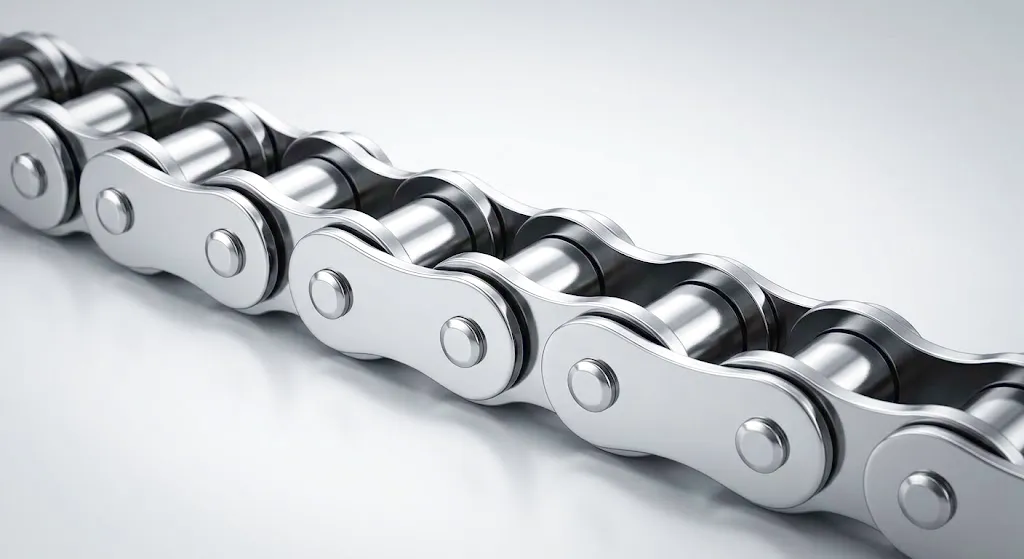
Ever Power high-strength roller chain close-up

Roller chain link plates are punched from medium carbon steel strip — typically SAE 1045 through SAE 1060 alloy grades — and subsequently heat-treated to a surface hardness of 58–64 HRC on the load-bearing edges while retaining a tough, impact-resistant core. Pins are manufactured from case-hardened alloy steel with a surface hardness of 60–64 HRC to resist galling against the bushing bore. Bushings — the cylindrical inserts that the roller sits on — are made from low-carbon steel tubes that are drawn, cut, and carbonitrided. Rollers themselves are produced from tubing that is formed, hardened, and ground to a surface hardness of 58–62 HRC with a finish grind that ensures free rotation under load. In food-grade or pharmaceutical applications, austenitic stainless steel (typically 304 or 316L) is used throughout, sacrificing hardness for corrosion resistance in line with UK Food Standards Agency guidance. Heavy-duty agricultural roller chains may incorporate nickel-chromium alloy steels for improved fatigue strength in the abrasive, shock-laden environments typical of combine harvester and round baler applications.

Silent chain link plates are typically manufactured from higher-grade strip steel — SAE 5160 or equivalent chromium-vanadium alloy — because the tooth profile must carry bending loads as well as tensile loads. The plates are oil-quenched after forming to achieve 52–58 HRC, then lightly tempered to improve toughness. Guide links, which prevent lateral migration of the chain on the sprocket, are often made from the same alloy but at a slightly lower hardness to permit slight elastic conformance. Automotive silent chain applications — particularly timing chains in BMW, Jaguar Land Rover, and Rolls-Royce engines produced at UK facilities in Oxford and Solihull — demand exceptional fatigue life and use shot-peened plates to induce residual compressive surface stress, extending the fatigue threshold by 20–30%. Coatings including zinc-nickel plating and DLC (diamond-like carbon) are applied to premium silent chain products for reduced friction at the plate articulation joints.

🔧
Verbindungsplatten
SAE 1045–1060 / 5160 alloy steel, 58–64 HRC
🔬
Stecknadeln
Case-hardened alloy steel, 60–64 HRC surface
Buchsen
Low-carbon steel, carbonitrided for wear resistance
🌞
Stainless Variants
AISI 304 / 316L for food & pharma environments
🛣
Coatings
DLC, Zn-Ni plating, shot-peened for fatigue life

Performance Advantages

Core Technical Advantages of Each Chain Type

⚬ Roller Chain Advantages

Exceptional Load Capacity
Heavy-duty roller chain configurations — including double-pitch, triplex, and quad-strand — can transmit breaking loads exceeding 800 kN, making them suitable for the demanding applications found in Sheffield steel processing lines and Yorkshire quarrying operations where no other flexible drive element matches the raw load capacity per unit width.
Cost-Effective Specification
Standard roller chain is manufactured in high volume to ISO 606 tolerances, meaning replacement parts are readily available across the UK distribution network. A 25B-1 or 50-1 chain can typically be sourced same-day from industrial distributors in Birmingham, Manchester, or Glasgow without specialist lead times.
Variable Ratio Flexibility
Roller chain drives can achieve high single-stage speed ratios — typically up to 7:1 or beyond — and can be adapted for multiple-sprocket arrangements across a single chain run, enabling complex drive layouts in agricultural machinery and bespoke conveyor systems without the need for gearboxes or intermediate shafts.
Shock Load Tolerance
The pin-bushing-roller construction absorbs momentary overloads through elastic deformation across multiple elements simultaneously. Roller chain drives routinely operate under impact loads 200–300% of rated capacity for brief durations — essential in stone crushers, baling presses, and reciprocating machine drives common to UK heavy industry.

● Silent Chain Advantages

Near-Silent Operation
Noise reduction of 15–20 dB(A) versus equivalent roller chain drives is the headline benefit. In UK food production facilities operating under the Workplace (Health, Safety and Welfare) Regulations 1992, and in precision packaging lines where acoustic environments affect operator communication, this reduction is not merely a comfort feature — it is a regulatory compliance tool that reduces mandatory hearing protection zones.
High-Speed Capability
Silent chain routinely operates at pitch-line velocities of 25–40 m/s — a range where standard roller chain is typically limited to 15–20 m/s before chordal action, resonance, and lubrication breakdown become performance-limiting factors. This higher speed range makes silent chain indispensable in internal combustion engine timing systems, high-speed printing presses, and turbomachinery coupling applications.
Constant Velocity Ratio
The tooth-form engagement of silent chain produces an essentially constant velocity ratio throughout the full chain-pitch arc of engagement. This eliminates the rotational velocity fluctuation inherent in roller chain drives and makes silent chain the correct engineering choice for drives that power registration-sensitive machinery such as multi-colour printing presses, precision web-fed packaging systems, and high-speed rotary cutter drives.
Long Fatigue Life in Precision Drives
Load distribution across a wider tooth engagement surface, combined with the absence of engagement impact, reduces peak stress per link plate. When combined with premium alloy steel and shot-peening surface treatment, silent chain timing drives in automotive engines regularly exceed 200,000 km service life — a benchmark that few roller chain drive arrangements at comparable speed can match without frequent replacement.

Featured Products

Ever Power High-Strength Roller Chain Series

Engineered for maximum performance in the most demanding industrial environments — including Caterpillar heavy equipment applications where chain failure has real operational and safety consequences.

120HSP Series

Hochfeste Rollenkette 120HSP-00 für Caterpillar

The 120HSP-00 delivers exceptional tensile strength and wear resistance specifically engineered for Caterpillar machine undercarriage environments. Manufactured to OEM-matching dimensional specifications, it combines premium alloy steel link plates with a proprietary heat treatment protocol that extends service life by up to 40% versus standard grade chain in abrasive ground-engaging conditions. UK earthmoving contractors operating Caterpillar 320 and 330 excavators across sites from the Scottish Highlands to the south-west quarrying belt have reported significant cycle extension with this specification.

Produkt ansehen →

C100HSP Series

Hochfeste Rollenkette C100HSP-00 für Caterpillar

The C100HSP-00 addresses the specific pitch and load requirements of Caterpillar compact and mid-frame equipment — a critical niche given the widespread deployment of Cat 308 through Cat 316 machines on UK infrastructure projects including rail maintenance corridors and highway improvement schemes. Shot-peened plate surfaces and a precisely controlled pin case depth deliver measurably improved fatigue life in cyclic loading environments. The chain is manufactured with sealed-joint technology to retain factory-applied lubricant for extended periods between service intervals, reducing maintenance downtime on remote or difficult-access UK construction sites.

Produkt ansehen →

Technical Data

Product Technical & Performance Parameter Comparison Table

All values represent typical ranges for standard industrial grades. Custom specifications available from Ever Power for demanding or specialised applications.

ParameterStandard-RollenketteHSP Roller Chain (Ever Power)Silent Chain
Tonhöhenbereich6.35 mm – 76.2 mm25.4 mm – 76.2 mm (custom)6.35 mm – 31.75 mm
Typical Breaking Load (single strand)8.9 kN – 400 kNUp to 520 kN10 kN – 180 kN
Maximum Operating SpeedUp to ~20 m/sUp to ~18 m/s (heavy-duty)Up to 40+ m/s
Mechanischer Wirkungsgrad97% – 99%97.5% – 99%98% – 99%
Noise Level (relative)Moderate – HighModerate (optimised geometry)Very Low (–15 to –20 dB(A))
Link Plate Material (standard)SAE 1045–1060 steelNiCrMo alloy steel (proprietary)SAE 5160 / CrV alloy steel
Surface Hardness (HRC)58–62 HRC (pins/rollers)60–64 HRC (enhanced)52–58 HRC (plates, tempered)
Velocity UniformitySlight chordal variationSlight chordal variationNear-constant velocity ratio
Shock Load ToleranceExcellent (200–300% momentary)Excellent (250–320% momentary)Moderate (plate bending sensitive)
Relative Unit CostLow – MediumMedium – HighHigh – Very High
Primary Standard ReferenceISO 606 / ANSI B29.1ISO 606 + Ever Power specISO 9633 / DIN 8190

Industrial Applications

Application Scenarios: Where Each Chain Type Delivers
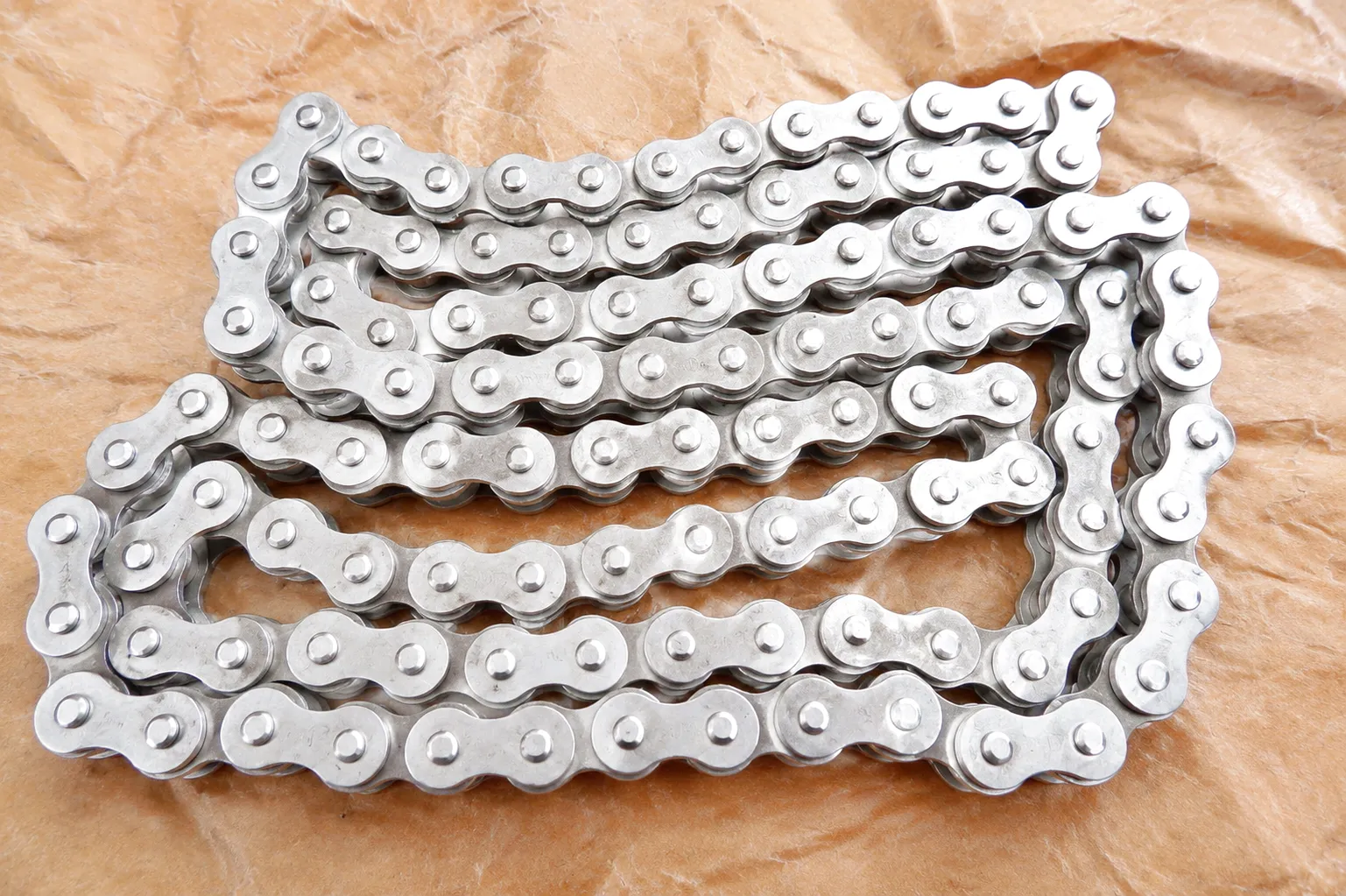
Roller chain application in UK industrial setting

Roller chain thrives wherever raw torque transmission, high loads, and cost-effective maintainability take priority over acoustic refinement. Across the UK’s diverse industrial geography — from the offshore support vessel yards of Aberdeen to the automotive Tier 1 supplier parks around Coventry and Sunderland — roller chain drives handle power transmission tasks that would overwhelm belt drives and are impractical for gear trains. Agricultural combine harvesters deploy dozens of roller chain drives simultaneously to route power from the engine to the header, threshing drum, straw walkers, and clean grain elevator. Each of these drives operates under oscillating loads in a dust-laden, damp environment where replacement parts must be available at any agricultural merchant nationwide — which is why ISO 606 standardisation of roller chain remains so commercially important for UK farmers and contractors.

Conveyor systems in the West Midlands automotive pressing plants running continuous production rely on heavy-duty roller chain running at relatively low speeds but under enormous sustained loads. The chain is typically driven in oil bath enclosures, with lubrication managed automatically to extend service intervals and meet HSE requirements for worker safety around unguarded rotating equipment. Material handling conveyors in the Tees Valley petrochemical complex use stainless steel roller chain specifically because the combination of aqueous wash-down processes, moderate temperatures, and light mechanical loads matches the stainless grade’s corrosion resistance better than any coated carbon steel alternative.

🏗
Construction & Earthmoving (UK-wide)

Excavator undercarriage chains, mini-digger drive sprockets, and crawler crane travel systems across UK infrastructure projects — from HS2 enabling works to Scottish Highland road construction — depend on high-strength roller chain capable of sustained operation in mud, grit, and variable temperature ranges typical of the British climate. The Caterpillar-compatible HSP series fills this requirement precisely, matching OEM specifications at competitive lead times through Ever Power’s direct supply chain.

🍂
Agriculture (Yorkshire, East Midlands)

Round balers, square balers, straw choppers, and forage harvesting equipment operating across the Yorkshire Wolds and Lincolnshire arable belt rely on agricultural-spec roller chain for header drives, bale-forming mechanisms, and PTO distribution. The combination of shock loading from crop variation, abrasion from silica-laden crop residues, and seasonal use patterns demands chain with proven fatigue resistance and accessible UK-wide parts availability.

Steel & Metals Processing (Sheffield, Port Talbot)

Roller chain drives on walking-beam furnace conveyors, coil transfer cars, and bar mill runout tables in Sheffield’s surviving special steels sector and Port Talbot’s strip mill operations endure elevated ambient temperatures, scale particles, and continuous duty cycles that require both high tensile strength and controlled elongation under load. Case-hardened pin specifications and sealed-joint designs are standard requirements for this application category.

🚗
Automotive Timing Systems (Midlands, Oxford)

Silent chain is the unambiguous choice for camshaft timing drives in passenger car and light commercial vehicle engines produced at UK facilities in Oxford, Solihull, and Hams Hall. The near-constant velocity ratio ensures accurate ignition and valve timing at all engine speeds, while the low noise profile satisfies NVH targets that would be unachievable with roller chain at comparable engine speeds. Tensioner and guide systems are invariably designed around the silent chain’s known dynamic behaviour rather than being adapted from roller chain designs.

🕹
Food & Beverage Processing (Scotland, East Anglia)

Scottish whisky distillery bottling lines, East Anglian sugar beet processing factories, and UK dairy packaging halls all deploy stainless steel roller chain in wash-down environments where regular high-pressure water contact makes lubrication retention a challenge. Silent chain variants in stainless grades are also deployed in the highest-speed conveyor sections of these facilities — particularly where noise regulations restrict operational hours and demand acoustic control across the full processing line, not just the drive enclosures.

📦
High-Speed Printing & Packaging

Commercial web-offset printing presses operating in London publishing facilities and Sheffield printed packaging plants run at paper speeds where any velocity fluctuation in the main drive train introduces registration errors visible in the finished product. Silent chain’s constant velocity ratio characteristic is the foundational requirement that makes it the specified drive element in most high-speed rotogravure and offset litho press designs. Registration accuracy of ±0.1 mm or better at line speeds exceeding 600 m/min would be unachievable with a roller chain main drive.
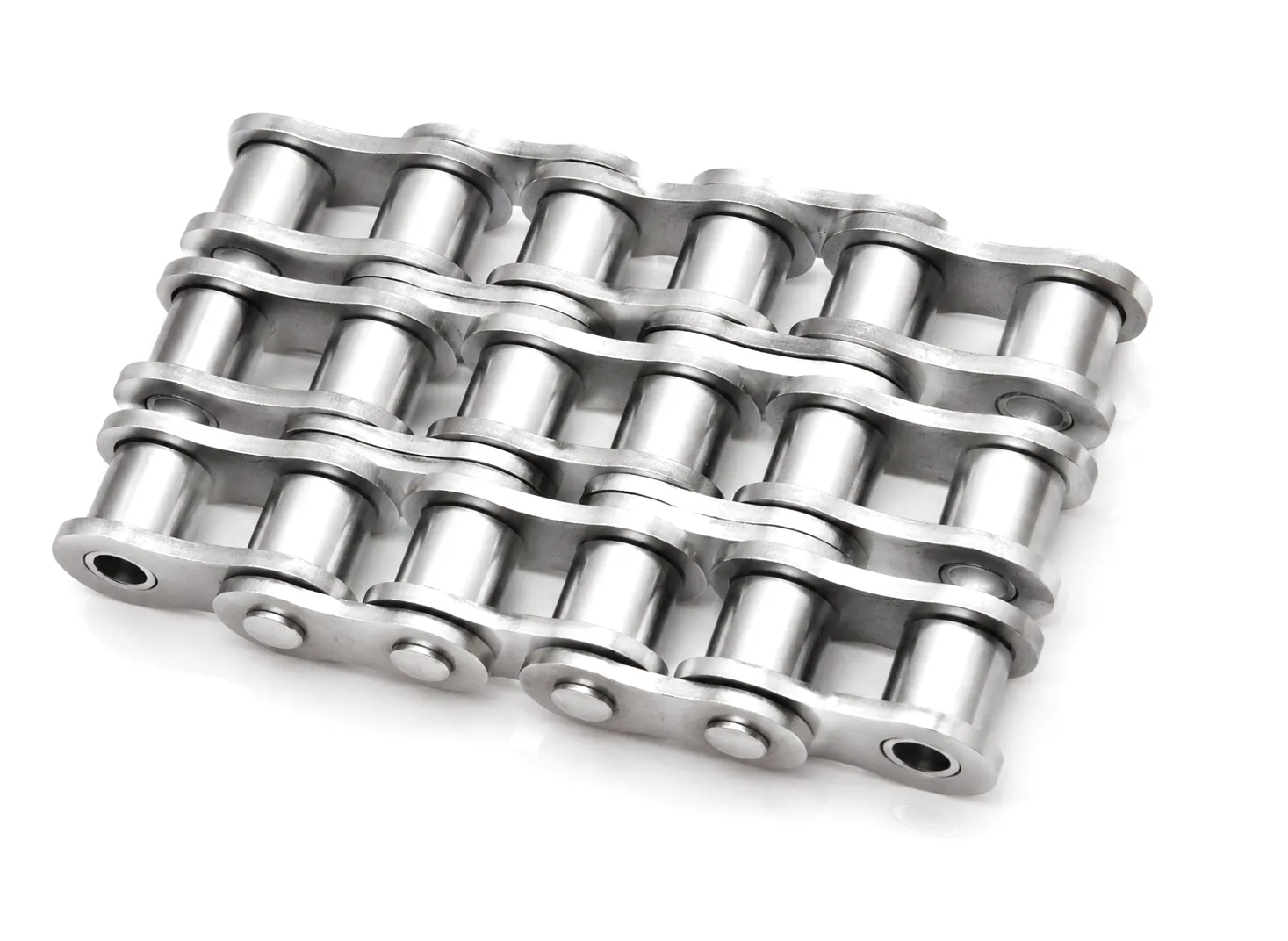
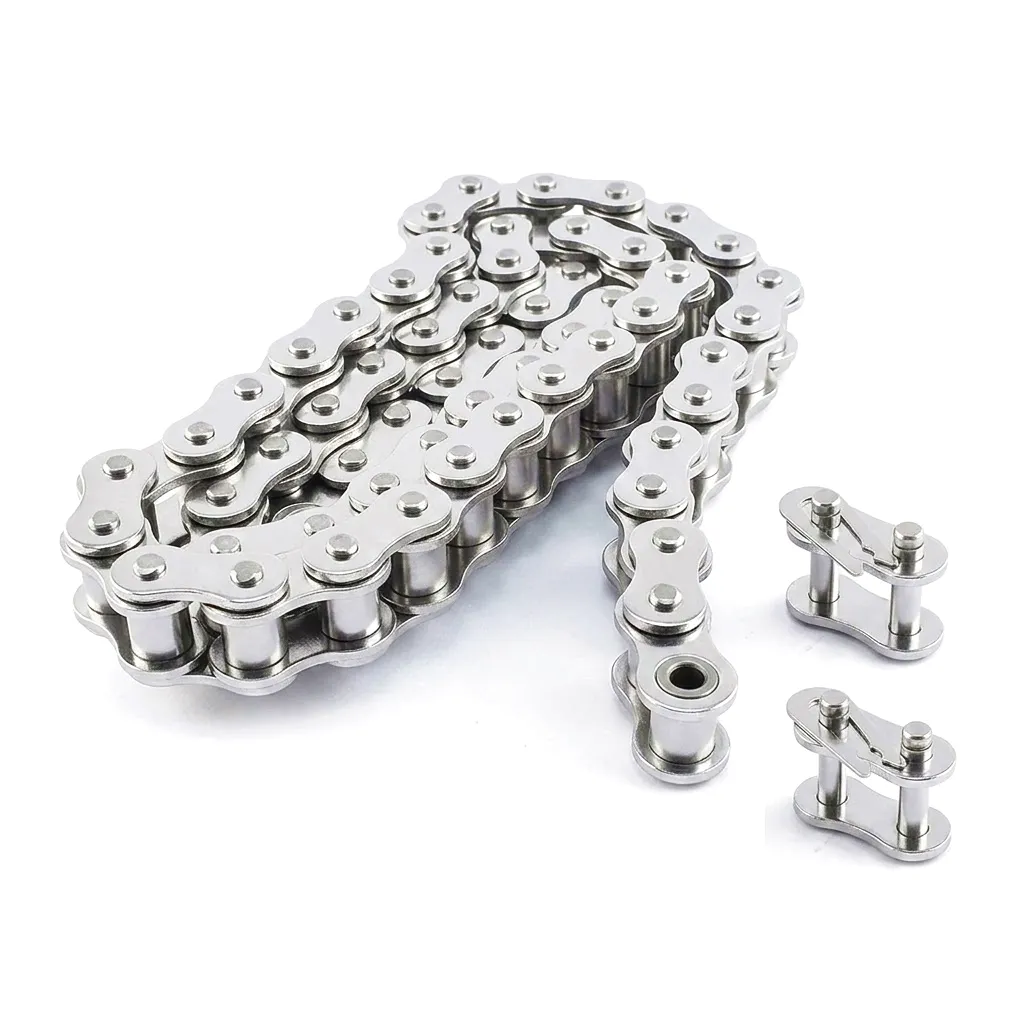
Ever Power roller chain product
High strength roller chain manufacturing
Precision roller chain Ever Power

Manufacturing Excellence

Ever Power: Precision Manufacturing and Customisation Capability

Ever Power operates a vertically integrated manufacturing facility equipped with multi-axis CNC machining centres, automatic link plate stamping and progressive die tooling, continuous carbonitriding furnace lines, and an in-house quality laboratory operating under ISO 9001 quality management principles. Every component of our roller chain products — from raw steel bar through final assembly and lubrication — is produced and verified within our facility, giving us full traceability across the supply chain. For UK procurement teams who have experienced supply disruption through multi-tier supply chains during recent years, this single-source manufacturing model is a meaningful operational advantage.

Customisation is not an afterthought at Ever Power — it is a core competency. We work directly with engineering teams at UK manufacturers to develop bespoke roller chain specifications that address the unique mechanical, environmental, and dimensional requirements of each application. Modifications routinely requested by our UK clients include non-standard pitches and strands, extended pin or extended connecting link configurations for attachment chain applications, corrosion-resistant coating systems beyond standard zinc phosphate, custom heat treatment profiles for extreme temperature environments, and through-hardened plates for applications where surface hardness alone is insufficient. Our engineering team can review CAD drawings, FEA load models, and operational data to recommend the optimum chain specification for your drive, and we provide prototype samples for validation testing ahead of volume supply commitment.

Our supply chain management infrastructure ensures that UK clients receive consistent delivery performance supported by proactive inventory management. We maintain buffer stock programmes for high-volume repeat orders, enabling responsive replenishment without requiring UK distributors or end-users to hold excessive safety stock. Airfreight options for emergency replacement supply to UK sites are available through our logistics partnerships, and our technical support team operates across UK business hours to assist maintenance engineers with specification queries, lubrication recommendations, and troubleshooting guidance — all without the layers of distribution markup that inflate costs in traditional chain supply chains.

100%
In-house component manufacturing — full supply chain traceability
ISO 9001
Quality management system — documented, audited, consistent
Custom
Bespoke pitch, strand, coating, and heat treatment per application
Request a Custom Specification

📧 Get a Quote

Customer Success Story

Case Study: Sheffield Bulk Materials Handling — Conveyor Chain Overhaul

Location
Sheffield, South Yorkshire
Industry
Bulk Minerals Processing
Kettentyp
Heavy-duty roller chain (custom)
Result
+62% service life extension

Thornbridge Aggregates Ltd, a bulk minerals processor operating a crushing and screening facility on the eastern edge of Sheffield, had been experiencing frustrating chain failures on their primary pan conveyor — the backbone system that moves crushed limestone from the secondary crusher discharge to the screening towers. The conveyor ran three eight-hour shifts, five days per week, carrying abrasive material with particle sizes up to 80 mm at temperatures elevated by frictional heat from the crushing process. Their incumbent chain, sourced through a national industrial distributor as a standard grade, was delivering only eleven weeks of service before elongation exceeded the 2% withdrawal limit and replacement became necessary. The cost of unplanned conveyor stoppages — including production loss, overtime for maintenance crews, and emergency parts procurement at spot prices — was running at approximately £38,000 per year against a chain replacement materials cost of £12,000.

Thornbridge’s engineering manager contacted Ever Power following a recommendation from a West Yorkshire equipment refurbisher they worked with periodically. After reviewing the conveyor specifications — pitch, load profile, speed, environment, and operating hours — the Ever Power technical team proposed a custom-specification heavy-duty roller chain with an extended pin diameter for improved bushing contact area, through-hardened link plates rather than surface-hardened only, and a factory-applied molybdenum disulphide paste lubricant to bridge the gap between maintenance intervals in a facility where automatic lubrication system installation was constrained by budget. A prototype batch of twenty metres was supplied within six weeks for a supervised trial run monitored by both Thornbridge’s maintenance team and an Ever Power field engineer who visited the Sheffield site to observe the first chain installation and confirm correct tension and alignment.

The trial chain exceeded thirty weeks of service before elongation reached the withdrawal threshold — a 174% improvement over the previous specification. Thornbridge subsequently standardised on the Ever Power custom specification across all three conveyor pan drives at the Sheffield facility and commissioned a frame supply agreement covering their annual requirement with a guaranteed price for twelve months. The engineering manager’s annual cost-versus-downtime calculation now shows the total chain-related operational cost reduced to approximately £22,000 — a saving of £16,000 per year, achieved without any capital investment in new equipment or changes to the operating schedule.

What Our UK Clients Say

★★★★★

“The custom pin-extended specification Ever Power developed for our limestone conveyor has completely changed our maintenance planning. We went from eleven weeks average to over seven months before the first elongation check triggered a replacement. That is a step change, not an incremental improvement. The Sheffield site visit from their engineer at installation gave us the confidence that the chain was tensioned correctly from day one.”

— D. Hartley, Engineering Manager, Thornbridge Aggregates Ltd, Sheffield
★★★★★

“We switched our agricultural attachment chain supply to Ever Power for our Lincolnshire dealership network two seasons ago. The quality of the link plate punching and the consistency of the heat treatment across batches is noticeably better than what we were receiving from our previous European supplier. Our workshop technicians commented unprompted that the pin-press-fit felt tighter and more consistent. When you are fitting chain under field conditions with a harvest clock running, that consistency matters.”

— R. Stanton, Parts & Service Director, Fenlands Agricultural Machinery, Spalding
★★★★★

“Sourcing Caterpillar-compatible roller chain at OEM-matching specifications without paying OEM prices has been a persistent challenge for our equipment reconditioning business in Birmingham. Ever Power’s HSP series has solved that problem. The dimensional conformance is exact — we have verified this against our gauge sets and against original equipment samples — and the lead time from their confirmed order to our Birmingham goods-in is reliable enough that we can plan our project schedules around it.”

— P. Okafor, Procurement Manager, Midland Plant Reconditioning Ltd, Birmingham

Selection Guide

How to Choose: The Decision Framework for UK Engineers

Roller chain selection guide

The decision between roller chain and silent chain ultimately reduces to four key parameters evaluated against your specific application: operating speed, noise tolerance, shock load magnitude, and budget. Where pitch-line velocity exceeds 20 m/s, silent chain is the technically correct starting point — the engagement dynamics of roller chain at that speed range introduce vibration, accelerated wear, and noise levels that no amount of lubrication optimisation can fully address. Where speed is below 15 m/s and loads are high with intermittent shock content, roller chain is almost always the more pragmatic and cost-effective selection, and specifying silent chain adds cost without adding proportional benefit.

The speed range from 15 to 22 m/s is genuinely contested territory where both chain types can be appropriate, and the decision must factor in acoustic requirements, maintenance access, and the availability of replacement parts in your specific UK operational geography. A Birmingham manufacturing plant with an in-house maintenance department and a local industrial distributor relationship may legitimately choose roller chain in this speed band for its simpler maintenance requirement. A sealed-for-life conveyor mechanism on a remote Scottish Highland site where unplanned opening of the drive enclosure is impractical may benefit from silent chain’s lower inherent wear rate despite the higher initial procurement cost.

Decision CriterionChoose Roller ChainChoose Silent Chain
Pitch-line speedUnder 20 m/sAbove 20 m/s
Noise sensitivityLow — industrial environmentHigh — food, pharma, automotive
Shock load exposureHigh (200–300% momentary)Low to moderate only
Velocity uniformity needNot criticalCritical (printing, timing systems)
Budget priorityCost-efficiency, easy sourcingLifetime cost acceptable at premium
Drive application typeConveyor, agricultural, miningEngine timing, printing, packaging

Häufig gestellte Fragen

Frequently Asked Questions

What is the price difference between roller chain and silent chain for UK industrial buyers?
Silent chain typically costs two to five times more per metre than an equivalent-rated standard roller chain in ISO 606 grades. The premium reflects tighter manufacturing tolerances, higher-grade alloy steel link plates, and lower production volumes. For UK procurement teams comparing total cost of ownership rather than unit price, silent chain’s longer service life in high-speed applications can narrow the gap significantly — particularly in automotive timing applications where a £300 timing chain replacement at 200,000 km compares favourably to a £120 roller chain requiring replacement at 60,000 km. For a custom roller chain quote from Ever Power, contact [email protected].
How do I find a reliable roller chain supplier in the UK who can provide custom specifications?
UK plant engineers sourcing custom roller chain — whether for non-standard pitches, attachment chain configurations, or specialist material grades — should look for manufacturers with in-house heat treatment and quality management certification rather than distributors re-boxing standard product. Ever Power supplies directly to UK buyers across Birmingham, Sheffield, Leeds, Manchester, and beyond, with engineering support for custom specification development, documented test reports, and supply agreement options for repeat requirements. Direct engagement with a manufacturer eliminates the specification drift that can occur through multi-tier distribution and ensures accountability when performance claims need to be verified.
Which type of chain should I use for a conveyor system operating in a Sheffield steel processing facility?
For conveyor applications in steel processing environments — characterised by moderate speed, elevated ambient temperature, abrasive scale particles, and high continuous loads — heavy-duty roller chain is the standard engineering choice. The key specification decisions are surface hardness of the pin and bushing, presence of sealed joints to retain lubricant in contaminated environments, and whether a through-hardened plate or surface-hardened plate grade is appropriate for the elongation rate observed in service. Ever Power’s engineering team can review your conveyor parameters and recommend the specific grade, finish, and lubrication system that will maximise service life in Sheffield’s demanding processing environments.
When is it worth paying a higher price for silent chain in a UK food production plant?
Silent chain justifies its premium in food processing environments where three conditions converge: operating speed exceeds 18 m/s on a drive that cannot be easily slowed down, noise levels are subject to regulatory or contractual limits that standard roller chain cannot meet, and the drive system will run continuously for extended periods between planned maintenance opportunities. UK food manufacturers — particularly those producing ambient products on high-speed horizontal form-fill-seal lines — regularly specify silent chain for these reasons. Where operating speed is below 15 m/s and acoustic treatment of the drive enclosure can meet noise targets, stainless roller chain is typically a more cost-effective approach for food and pharmaceutical environments.
How do I get a competitive quote for Caterpillar-compatible roller chain delivered to a UK site?
To obtain a competitive quote for Caterpillar-compatible roller chain — including the 120HSP-00 and C100HSP-00 specifications — UK buyers should contact Ever Power directly with their Caterpillar model number, the chain size reference from the operator’s manual or current installed chain markings, annual estimated consumption volume, and preferred delivery frequency. Ever Power’s commercial team will return a detailed quotation including unit pricing, delivery lead time to the specified UK address, and available supply agreement options. Email enquiries to [email protected] are typically acknowledged within one UK working day.
What are the main signs that a roller chain in my UK agricultural machinery needs replacing?
The primary withdrawal criterion for roller chain in agricultural applications is elongation — measured as percentage increase in chain length over a defined number of links compared to the nominal pitch dimension. A 2% elongation reading on a chain gauge or with a steel rule is the standard industry withdrawal threshold for most agricultural drive applications and is consistent with AFBMA guidance referenced in UK machinery service documentation. Secondary indicators include visible side-plate cracking or deformation at the pin holes, visually rough or corroded roller surfaces that prevent smooth sprocket engagement, and abnormal noise or vibration that worsens progressively during operation — all of which indicate a chain that has reached the end of its safe service life regardless of elongation measurement.

Ready to Specify the Right Chain for Your Application?

Whether you are an engineering manager in Sheffield specifying a bulk conveyor overhaul, a procurement specialist in Birmingham sourcing Caterpillar-compatible undercarriage chain, or a plant engineer in Leeds evaluating roller chain versus silent chain for a new packaging line — Ever Power’s technical and commercial team is available to support your specification decision with application knowledge that comes from decades of precision chain manufacturing experience.

📧 Get a Quote — [email protected]

bearbeitet von gzl