How Long Should a Roller Chain Last?
Factors That Affect Service Life
A technical deep-dive for UK engineers and procurement teams — understanding chain fatigue, elongation tolerances, lubrication cycles, and when replacement is no longer a choice.
What Counts as a Normal Roller Chain Lifespan?
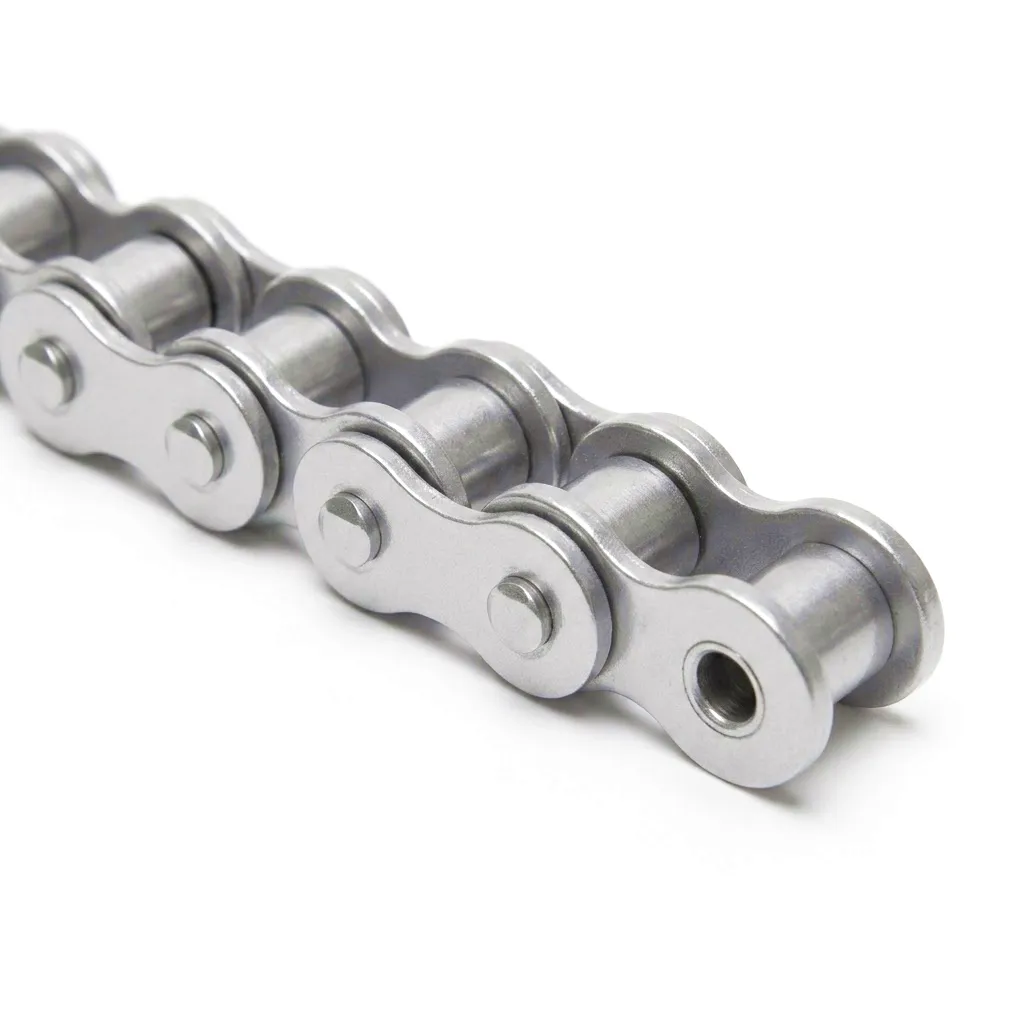
These figures come from years of field data and align with the ISO 10823 guidance on chain selection and life estimation. The key insight is the enormous spread: a chain running in a clean, well-oiled gearbox on a textile line in Manchester might outlast by three or four times the identical chain fitted without a drip-oiler in a dusty aggregate-processing plant outside Leeds. Service life is not a product specification — it is an outcome shaped by decisions made during installation, during daily operation, and during planned maintenance windows. Understanding which decisions matter most is the starting point for extending chain life and reducing unplanned downtime, which remains one of the most costly disruptions in UK manufacturing.
How a Roller Chain Works — and Where Wear Begins
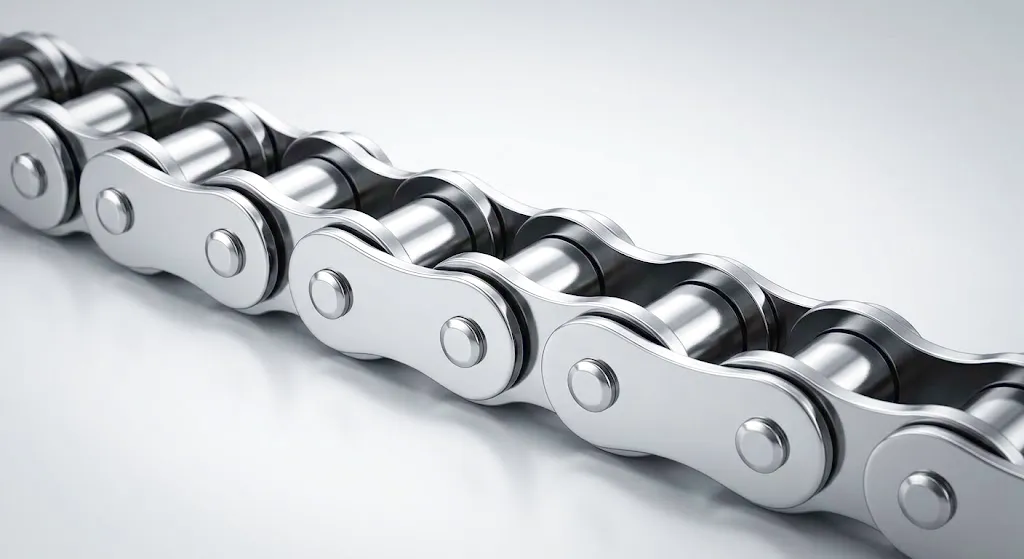
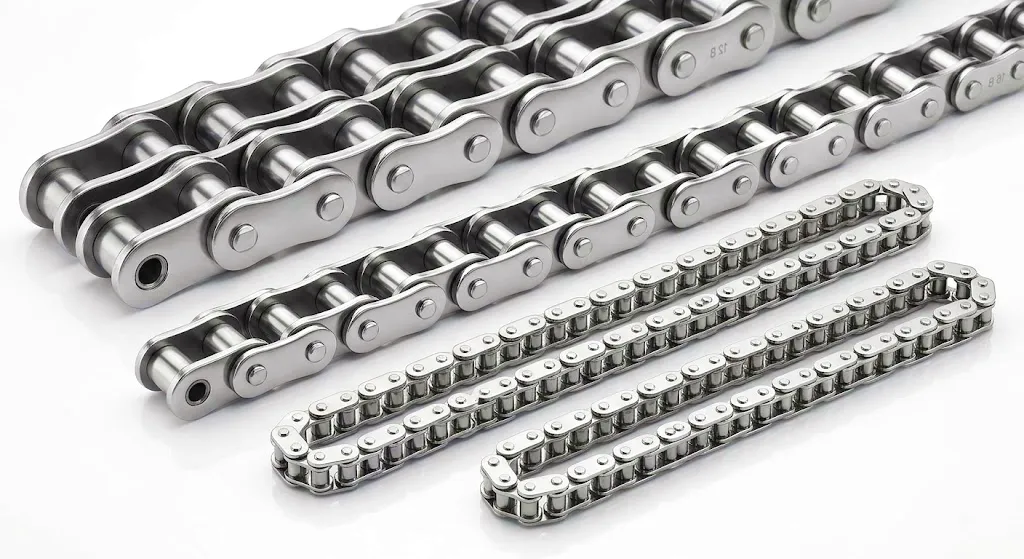
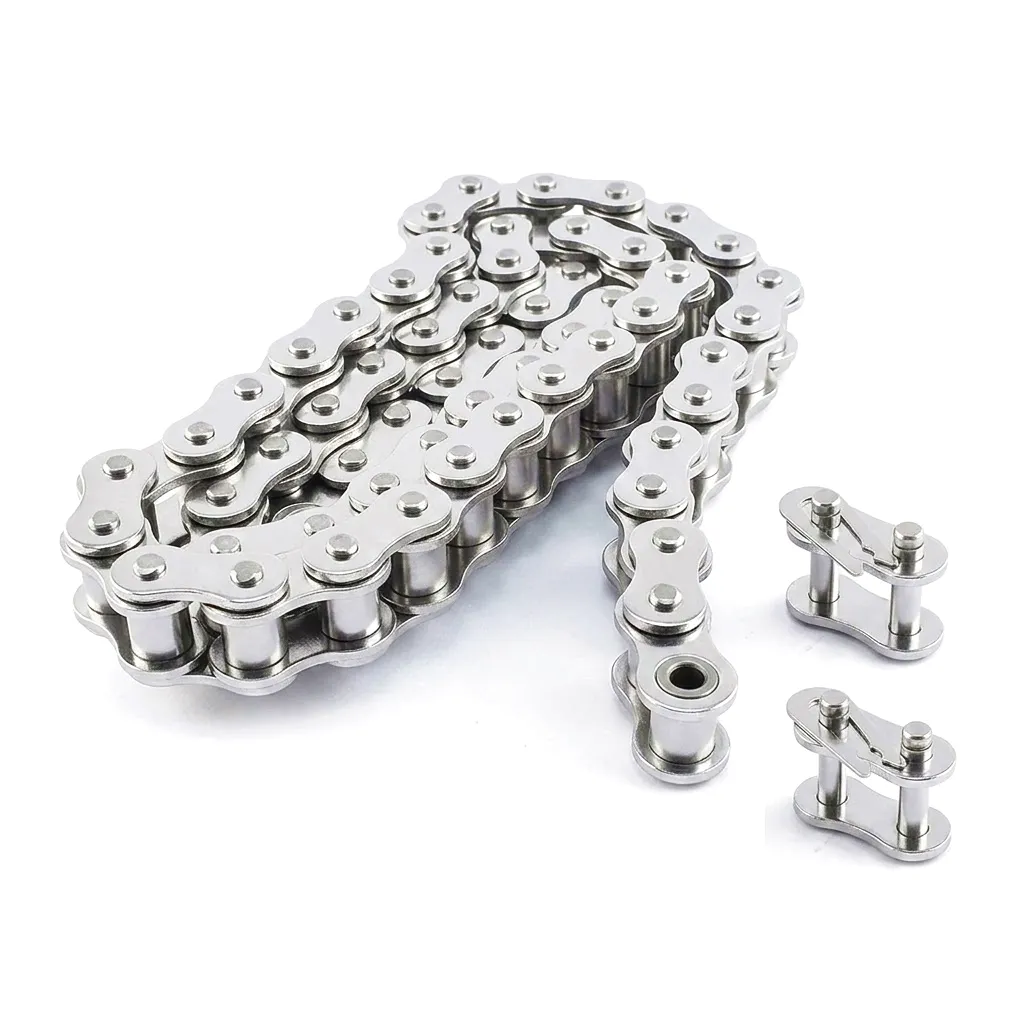
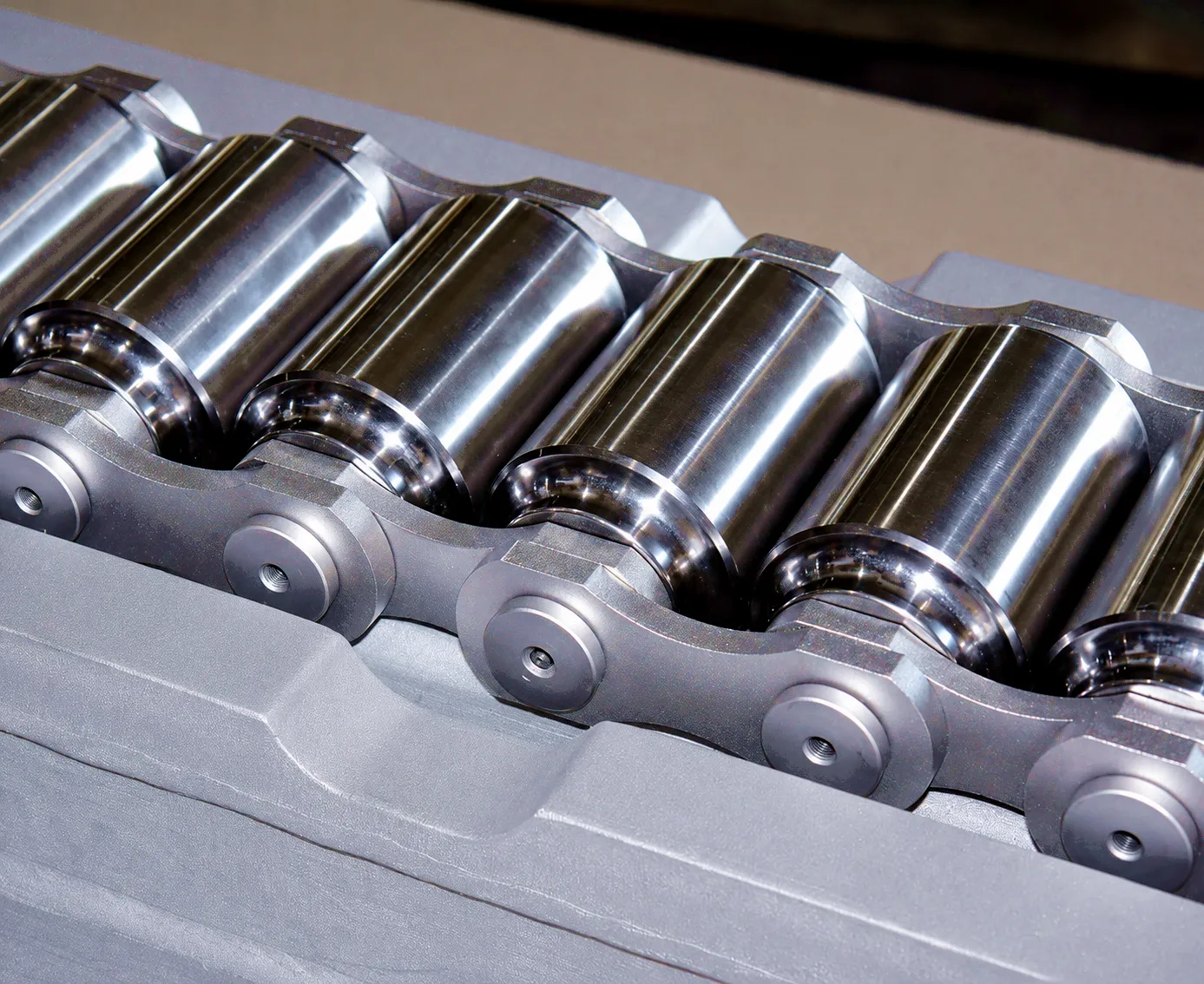
A roller chain transmits power through a remarkably simple mechanism: alternating inner and outer link plates, connected by hardened pins and bushings, with free-rolling cylindrical rollers seated between the bushings and the sprocket teeth. When the drive sprocket rotates, each tooth engages a roller, pushing it — and the entire chain — forward. The chain then wraps around the driven sprocket, transmitting the torque of the prime mover to the output shaft. The elegance of this design is that the rolling contact between sprocket tooth and roller distributes the contact stress over a larger surface than a simple sliding contact would, and the pin-bushing interface is kept enclosed and, in well-maintained systems, bathed in lubricant.
Wear, however, begins precisely at the pin-bushing interface. Every time the chain articulates — every time a link bends around a sprocket tooth — the pin rotates fractionally inside the bushing. Under load, the contact pressure at this interface can be extremely high, and if the lubricant film is insufficient, metal-to-metal contact occurs. Each microscopic wear event removes a few microns of material from either the pin or the bore of the bushing. Over thousands of operating hours, this cumulative material loss causes the pitch of the chain to increase — the distance between adjacent pin centres grows. This phenomenon is known as chain elongation or chain wear elongation, and it is the primary reason chains are eventually replaced. A chain that has elongated beyond the manufacturer’s tolerance — typically 1.5% to 3% above nominal pitch for most ISO standard roller chains — can no longer engage the sprocket tooth geometry correctly, leading to rapid accelerated wear on both chain and sprocket, and eventually to the risk of skip or jump, where the chain climbs the sprocket teeth rather than seating properly.
Material Selection and Its Impact on Chain Longevity
The grade of steel used for pins, bushings, rollers, and link plates is perhaps the single most consequential manufacturing decision affecting roller chain life. Premium chains start with medium-carbon or case-hardening alloy steels — typically grades equivalent to SAE 1045 to SAE 8620 — that can be heat-treated to achieve the surface hardness needed to resist wear while retaining a tough, impact-absorbing core. Case carburising, carbonitriding, or induction hardening produces a hard outer shell, typically 58–64 HRC at the surface, with a considerably tougher interior. This combination resists both abrasive wear at the contact surfaces and fatigue fracture in the body of the component.
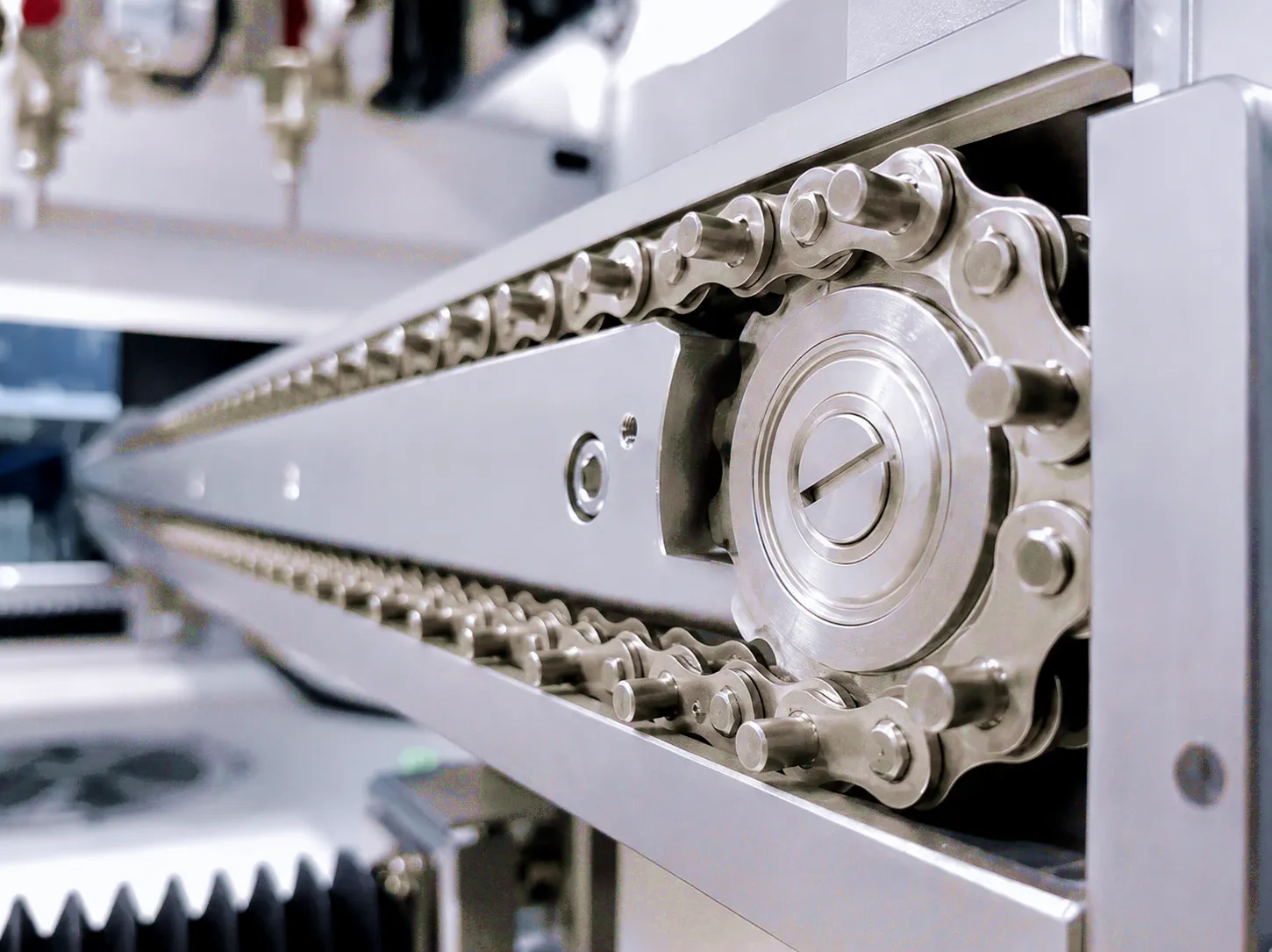
For corrosive environments — food processing facilities in the East Midlands, coastal engineering operations around the Humber Estuary, or chemical handling plants on Teesside — stainless steel chains offer substantially improved corrosion resistance at the cost of some hardness. Nickel-plated and zinc-plated options occupy a middle ground, protecting the outer surfaces while maintaining the wear resistance of alloy steel internals. In highly contaminated environments, sintered self-lubricating bushings can dramatically extend service intervals by releasing a metered supply of lubricant with every articulation cycle, even when external oiling is impractical.
Six Factors That Determine How Long Your Roller Chain Lasts
Each variable below can independently halve — or double — the operational life of the same chain. Understanding them together is the basis of any serious maintenance strategy.
Lubrication is, without question, the single most powerful lever engineers have over roller chain service life. When an adequate film of oil is maintained at the pin-bushing interface, the pins float on a hydrodynamic wedge of lubricant and metallic contact is almost entirely eliminated. Remove that film — through contamination, evaporation, insufficient application frequency, or simply the wrong grade of oil for the operating temperature — and wear rates can accelerate by a factor of ten or more compared to a properly lubricated chain. For most industrial chains running at moderate speeds, ISO VG 68 to ISO VG 100 oil applied at the correct interval (typically every 8 to 80 hours depending on the method) is sufficient. Bath lubrication, drip feed, oil stream, and sealed-for-life grease packs each suit different applications, and choosing correctly for your drive is as important as the oil grade itself. In Sheffield’s heavy fabrication shops, where ambient temperatures swing widely, ensuring the lubricant does not become too viscous to penetrate the pin-bushing clearance in cold morning conditions is a frequently overlooked problem.
Every roller chain is rated for a maximum allowable working load and, more critically, for a fatigue limit — the cyclic load below which fatigue failure is theoretically indefinitely deferred. Operating consistently below the fatigue limit is the goal; driving the chain into the fatigue zone, even intermittently, accumulates damage that is irreversible. Engineers must account not just for the nominal transmitted load but for shock and dynamic loading — conveyors that start against a full load, drives that experience regular reversals, or systems coupled to reciprocating machinery like piston compressors will see peak loads that may be two or three times the steady-state value. The ISO 10823 service factor methodology exists precisely to quantify these dynamics and translate them into an appropriate chain selection. Overloaded roller chains in the aggregate processing industry around Barnsley, for example, often fail at less than a quarter of their potential life because initial sizing was based on motor rated power without a realistic shock factor applied.
Chain speed affects wear through two mechanisms. At high speeds, the impact velocity as each roller strikes the sprocket tooth increases, raising the instantaneous contact stress and accelerating roller and bushing wear. At very high speeds in inadequately lubricated systems, the centrifugal throw of the lubricant away from the chain compounds the problem. Sprocket tooth count matters enormously: a small sprocket with fewer teeth produces a sharper polygon effect — the cyclic variation in chain velocity and direction known as the chordal action effect — that generates vibration and additional dynamic stress with every tooth engagement. The general rule of thumb endorsed by most chain manufacturers is a minimum of 17 teeth on the smaller sprocket for continuous duty drives, and ideally 21 or more for smooth, low-vibration operation. Running a 9-tooth drive sprocket on a high-speed conveyor, as is occasionally seen in older automated warehouse equipment around Milton Keynes, predictably shortens chain life to a fraction of what a properly specified drive would achieve.
The operating environment acts as a constant background multiplier on all other wear mechanisms. Abrasive mineral dust — present in cement production around Rugby or quarrying operations in the Peak District — embeds in the lubricant film and turns it into a lapping compound, grinding away pin and bushing surfaces with ruthless efficiency. Moisture promotes surface oxidation, and even thin oxide films within the pin-bushing clearance act as abrasive particles once they break free. Temperature extremes attack lubricant viscosity: too hot and the oil thins below the minimum film thickness for hydrodynamic separation; too cold and it fails to penetrate the tight clearances before the machine warms up. Acidic or alkaline chemical splash, common in water treatment facilities and agricultural chemical processing plants in Lincolnshire, can destroy protective surface coatings within weeks. Enclosure, sealing, and environment-appropriate material specification are the primary design responses to contaminated environments.
A chain fitted with correct initial tension, precisely aligned sprockets, and correct centre distance will always outlast the same chain installed hurriedly. Initial chain tension is a commonly misunderstood topic: a roller chain should not be installed tightly like a belt. The correct sag for a horizontal drive is approximately 2% of the centre distance — tighter than this creates additional load on the chain and bearings with no benefit. Sprocket alignment is critical because lateral misalignment forces the rollers to ride on the sides of the sprocket teeth rather than centring in the tooth gap, creating uneven loading across the width of the link plates and causing premature sidewear on both chain and sprocket. Even a misalignment of 1° to 2° can reduce chain life by 30% to 50% on a heavily loaded drive. Taking the time to align properly during installation — using a straight-edge or laser alignment tool — pays back many times over across the chain’s operating life.
Even in ideal conditions, roller chains wear. The question is whether that wear is caught and managed before it crosses critical thresholds. Regular measurement of chain elongation — with a calibrated chain wear indicator tool or a simple steel rule against a known number of links — allows maintenance teams to track wear rate and predict replacement needs before failure. Most manufacturers recommend replacement when elongation reaches 1.5% to 2% of nominal pitch length for standard drives, and stricter thresholds — sometimes as low as 0.5% to 1% — for precision indexing applications or drives coupled to expensive gearboxes where a chain skip could cause downstream damage worth tens of thousands of pounds. Alongside chain measurement, sprocket tooth wear inspection should be performed at each chain change; a worn sprocket will accelerate wear on a new chain to the point where the new chain’s life is a fraction of what it should be. Replace chain and sprockets together whenever sprocket wear is visible.
Rullaketjun tekniset suorituskykyparametrit
Reference values for standard ISO metric (B-series) and ANSI (A-series) roller chains. Data compiled in accordance with ISO 606 and ANSI B29.1 standards.
| Ketjun koko | Jako (mm) | Murtokuorma (kN) | Suurin nopeus (m/s) | Tapin halkaisija (mm) | Plate Thickness (mm) | Materiaali |
|---|---|---|---|---|---|---|
| 06B-1 | 9.525 | 8.9 | 5.6 | 3.28 | 1.3 | Alloy steel, case-hardened |
| 08B-1 | 12.70 | 17.8 | 4.8 | 4.45 | 1.6 | Alloy steel, case-hardened |
| 16B-1 | 25.40 | 60.0 | 3.6 | 8.28 | 4.0 | Alloy steel, case-hardened |
| 20B-1 | 31.75 | 95.0 | 3.2 | 10.19 | 4.5 | Alloy steel, case-hardened |
| 24B-1 | 38.10 | 160.0 | 2.8 | 14.63 | 5.0 | Alloy steel, case-hardened |
| 08B-1 (SS) | 12.70 | 14.2 | 3.8 | 4.45 | 1.6 | AISI 316 stainless steel |
| 16B-1 (NP) | 25.40 | 58.0 | 3.4 | 8.28 | 4.0 | Nickel-plated alloy steel |
SS = Stainless Steel variant. NP = Nickel-Plated variant. Breaking load values per ISO 606. Max speed at recommended power rating — reduce by 20% in shock-load conditions.
Conveyor Application: Rubber Top Roller Chain for UK Packaging and Food Lines
One variant where chain service life takes on additional complexity is rubber top roller chain, used extensively in conveyor systems where the chain must both transmit power and provide a stable, non-slip surface for product transport. These chains are particularly prevalent in the food and beverage packaging lines concentrated in the Midlands and the North West, where gentle product handling combined with robust chain performance is a non-negotiable requirement. The rubber or polyurethane attachment pads bonded to standard chain attachments create additional considerations for service life: the adhesive bond between the rubber element and the metal attachment is itself a wear point, and the rubber is subject to degradation from cleaning chemicals, UV exposure, and thermal cycling.
Industrial Application Scenarios — Where Chain Life Varies Most
The same chain family behaves very differently depending on the application. These are the environments where service life management matters most for UK manufacturers.
Ever Power — Precision Manufacturing and Custom Roller Chain Solutions
Ever Power operates state-of-the-art roller chain manufacturing facilities equipped with CNC precision machining centres, automated heat treatment lines, and rigorous dimensional inspection systems aligned to ISO 9001 quality management standards. The company’s deep metallurgical expertise — spanning case-hardened alloy steel, austenitic stainless steel, and advanced surface treatment processes — enables it to produce roller chains that consistently meet and exceed the performance benchmarks set by ISO 606 and ANSI B29.1 standards.
What distinguishes Ever Power in the UK B2B market is an exceptional capacity for customisation. Standard catalogue chains serve most needs, but many industrial applications — particularly in the specialist engineering sectors concentrated in Birmingham, Coventry, and the wider Midlands manufacturing corridor — demand non-standard pitches, modified attachment designs, extended pin lengths, special coatings, or multi-strand configurations that off-the-shelf products simply cannot provide. Ever Power’s engineering team works directly with UK procurement managers and design engineers to develop bespoke chain solutions, from initial application analysis through prototype manufacture to volume supply, with lead times competitive against European alternatives.
Supply chain reliability matters as much as product performance to British manufacturers operating lean inventory models. Ever Power maintains substantial finished goods inventory across its most popular sizes, supports expedited shipment schedules for urgent replacement requirements, and provides full material certifications and test reports — requirements that are non-negotiable for sectors such as aerospace subcontracting, defence supply, and nuclear facility maintenance, all of which have significant presence in the UK industrial base.
✓ Extended or modified attachment plates
✓ Special surface treatments (zinc, nickel, black oxide)
✓ Stainless steel and food-grade specifications
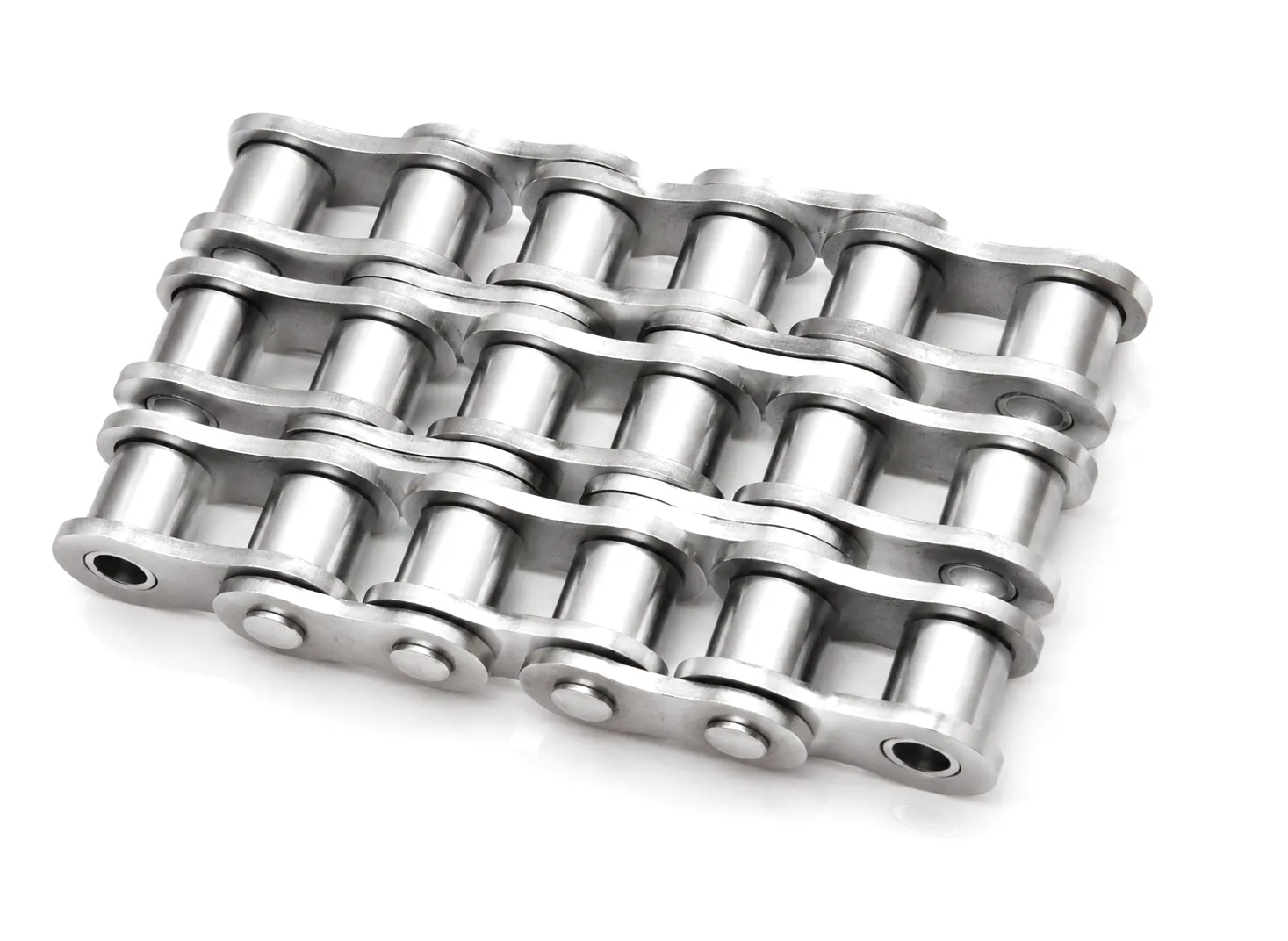
✓ Multi-strand assembly up to 4 strands
✓ Custom inner and outer link ratios
✓ Bespoke connecting link designs
✓ 100% breaking load test on safety-critical batches
✓ CMM dimensional inspection
✓ Full material traceability certificates
✓ Hardness and surface finish reports on request
Customer Success Story: Coventry Precision Engineering, West Midlands
Hartwell Precision Engineering, a Tier 2 automotive components manufacturer based in Coventry, had been experiencing recurring roller chain failures on three of its transfer conveyor lines feeding a robotic welding cell. The chains — a 16B-1 single strand operating on a 60 kW drive — were typically failing at around 6,000 to 7,000 hours, well short of the 18,000-hour target the plant maintenance manager had set based on previous experience with a different product family. The failures were fatigue fractures at the link plate holes, rather than elongation-induced skip, suggesting the chains were operating in or near the fatigue zone rather than failing from simple wear.
An Ever Power application engineer reviewed the drive specification in detail, including the actual measured peak load data from the plant’s monitoring system. The analysis revealed that the true peak load on the transfer conveyor — which engaged against a loaded pallet through a spring-loaded buffer — was approximately 2.8 times the mean transmitted load, yielding an actual chain tension close to the fatigue limit of the chain being used. The service factor applied at original specification had not accounted adequately for this buffer impact loading.
Ever Power recommended an upgrade to 20B-1 chain with a higher-grade alloy steel specification, combined with a change in the drive arrangement to a 21-tooth small sprocket replacing the original 13-tooth pinion to reduce chordal action and dynamic loading. Custom 20B-1 chains with extended inner plates for improved fatigue resistance were produced to order and delivered to Coventry within 14 working days of the order. The redesigned drive — now running with correct ISO service factor compliance — has completed over 19,000 hours at the time of writing without failure, with chain elongation monitoring showing wear well within the 1.5% replacement threshold.
Client Reviews
“The application review that Ever Power provided was more thorough than anything we’d had from our previous UK distributor. They identified the root cause within two days and had a custom solution on the line within a fortnight. Our conveyor lines have run without an unplanned chain stop for over a year now — that’s a genuine step change in our OEE.”
“We source nickel-plated 08B-1 in volume from Ever Power for our washdown conveyor systems in our Cheshire facility. Material certs are always complete, delivery to our logistics provider in Birmingham is consistently within the agreed lead time, and the breaking load consistency across batches is noticeably tighter than what we were getting before. These are chains we trust.”
“Ever Power’s customisation service is what keeps us coming back. We needed extended-pin 20B-1 with a specific attachment plate geometry for our aggregate screening plant in Barnsley — a configuration no catalogue product covers. Their engineering team turned a detailed drawing around quickly, and the prototype matched our tolerance requirements on the first submission. Custom supply is now part of our annual framework agreement.”
Usein kysytyt kysymykset
Real questions from UK engineers and procurement teams — answered directly.
Ever Power’s technical team supports UK engineers from application analysis through chain selection, custom manufacture, and ongoing supply. Contact us for a no-obligation engineering review.
✉ Get a Free Quote — [email protected]