The Working Principle Behind Agricultural Roller Chains
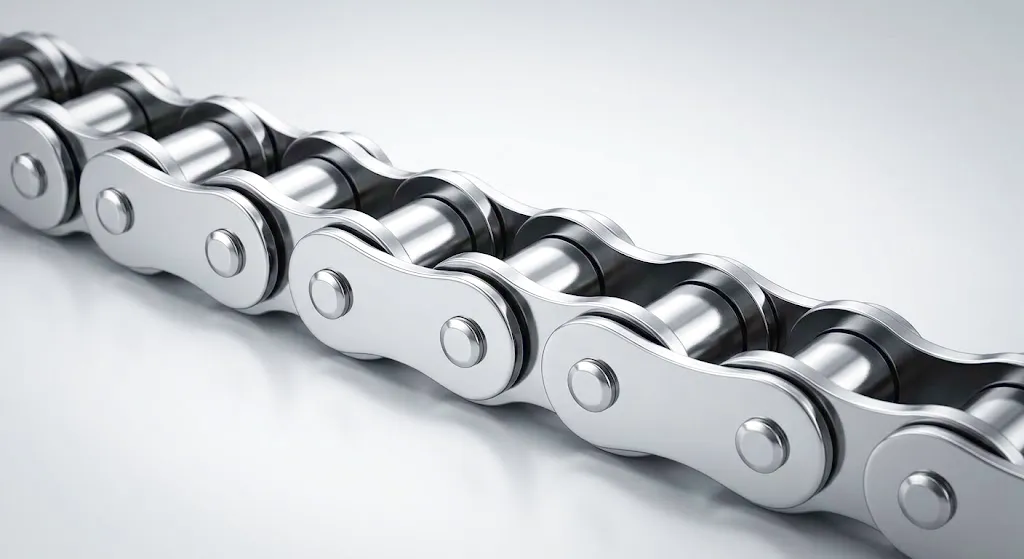
A roller chain operates on a beautifully straightforward mechanical principle: a series of interconnected links, each composed of inner plates, outer plates, pins, bushings, and free-rotating rollers, engages with the teeth of a sprocket to transmit mechanical power from a driving shaft to a driven shaft. The key distinction that sets roller chains apart from other chain types — such as leaf chains or silent chains — is the free-rolling action of the cylindrical rollers. When the chain wraps around a sprocket tooth, the roller does not slide across the tooth face; instead, it rolls against it, dramatically reducing friction, minimising wear on both the chain and the sprocket, and substantially increasing the mechanical efficiency of the power transmission event. In an agricultural context where engines must work at near-maximum output during peak harvest hours, every fraction of percentage recovered through efficient power transfer translates directly into fuel savings and component longevity.
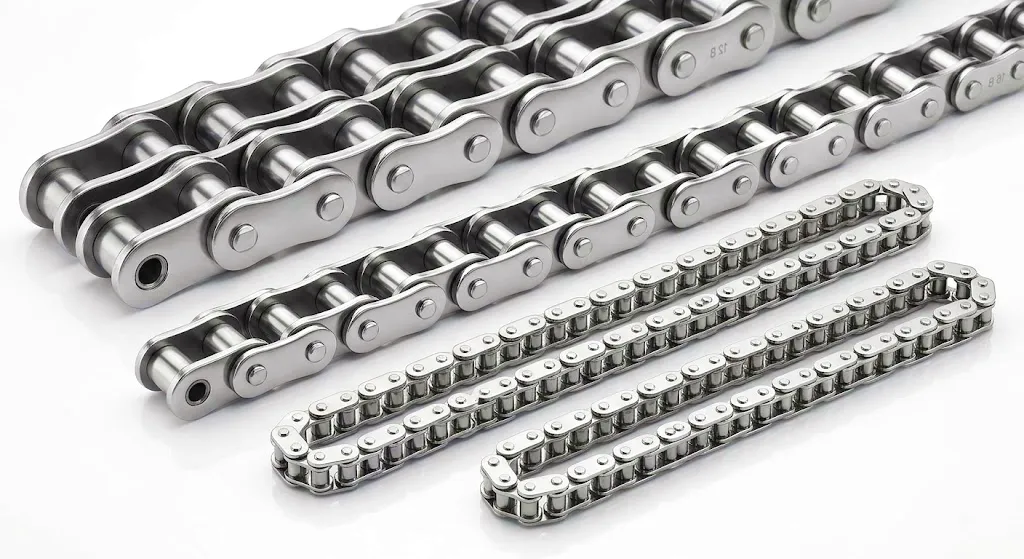
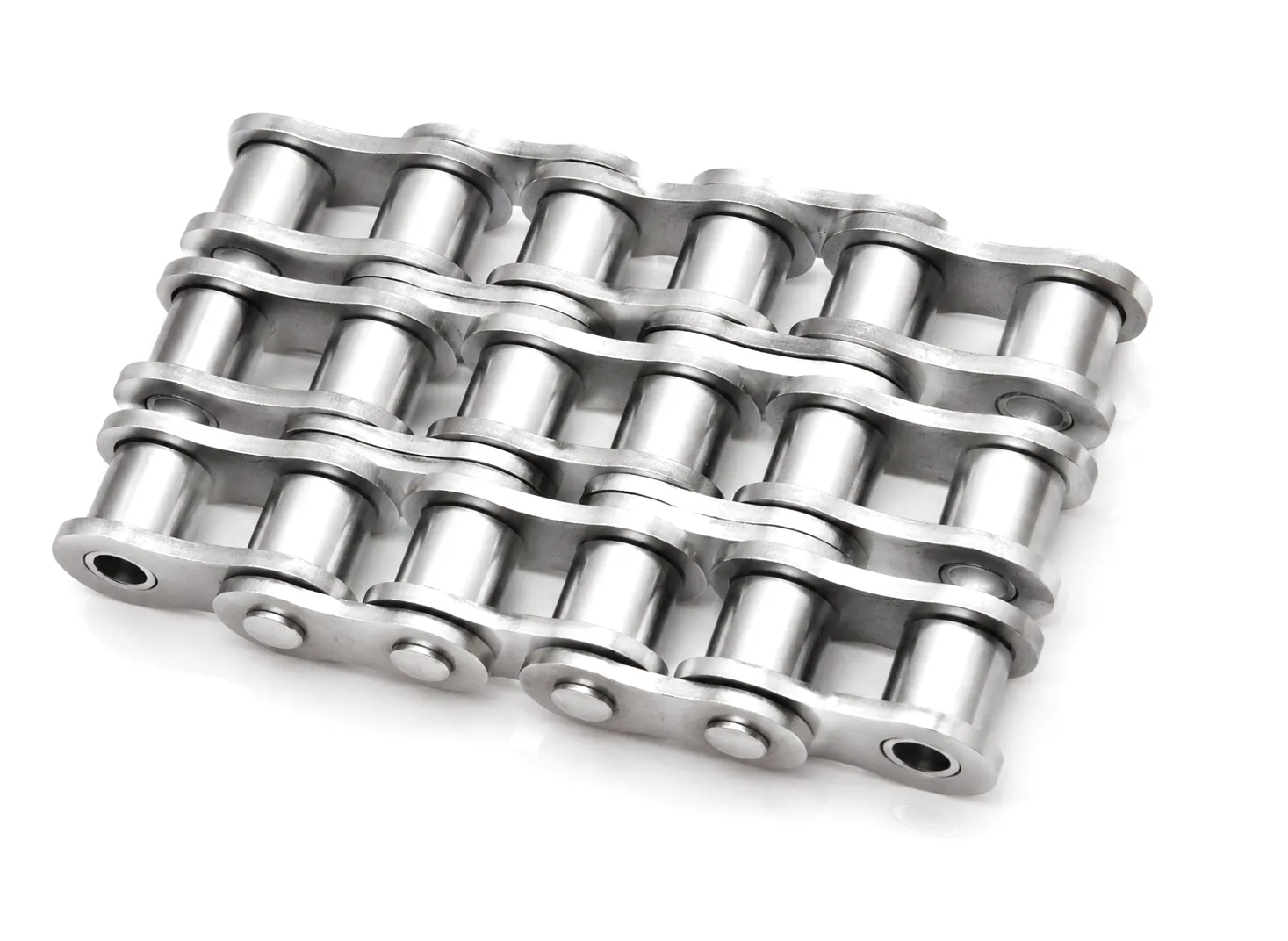
The pitch — the centre-to-centre distance between the pins of consecutive links — is the fundamental sizing parameter that governs chain-to-sprocket compatibility. Standard pitches in agricultural use range from 15.875 mm (5/8 inch, Series 40) up to 50.8 mm (2 inch, Series 160), with the heavier agricultural series such as 80H, 100H, and 120H being common on combines, forage harvesters, and large-scale balers. Duplex and triplex chain configurations, where two or three chains run in parallel on the same multi-row sprocket, are widely employed when single-strand chain would be under-rated for the transmitted load, particularly on main driveline components that bear the full engine torque output.
Core Materials Used in Agricultural Roller Chain Manufacturing
▶ Carbon & Alloy Steel Grades
SAE 1070–1090 high-carbon steel for plates; low-alloy grades such as 20CrMnTi and 20MnCr5 for pins and bushings, chosen for their excellent carburising response and uniform case depth consistency across production batches.
▶ Stainless Steel Options
AISI 304 and AISI 316 grades deployed where hygiene, humidity, or chemical exposure — such as fertiliser contact on crop seeding equipment — makes standard carbon steel unsuitable. Grade 316 provides superior chloride resistance in coastal UK growing regions.
▶ Surface Treatments & Coatings
Zinc-nickel plating, dacromet coating, and black oxide finishing are available to enhance corrosion resistance without sacrificing the dimensional accuracy that tight-tolerance agricultural sprocket systems require. O-ring and X-ring sealed variants retain grease within the bushing-pin interface for drastically extended re-lubrication intervals.
Core Technical Advantages of Agricultural Roller Chains
High Tensile Strength and Fatigue Resistance
Agricultural heavy-duty roller chains in the H-series designations carry minimum tensile strengths of 55 kN (Series 60H) up to 250 kN or beyond (Series 160H), enabling them to transmit the full rated engine output of modern large-frame combines and forage harvesters without permanent deformation. The fatigue strength — the ability to survive millions of load cycles without crack initiation — is equally critical, as agricultural drives cycle continuously for eight to sixteen hours at a stretch during peak harvesting seasons. Case-hardened alloy steel chains from reputable manufacturers demonstrate fatigue limits well above the working load envelope, providing a conservative safety factor that accommodates the unpredictable shock loads inherent to crop harvesting operations in UK field conditions.
Extended Service Intervals Through Precision Lubrication Retention
O-ring and X-ring sealed roller chains pre-pack grease within the bushing-pin interface during manufacture, sealing it in and preventing the ingress of abrasive dust, fine soil particles, and moisture that accelerate internal wear in open-chain configurations. Studies on sealed chain performance in dusty agricultural environments — such as those encountered during cereal harvesting on the chalk downlands of Hampshire and Wiltshire — consistently show a two-to-three-fold extension in service life compared with standard open roller chains operating under equivalent loading and contamination conditions. This translates directly into reduced planned maintenance downtime, lower spare parts consumption, and fewer costly emergency field repairs during critical harvesting windows where every hour of machine availability matters.
High Mechanical Efficiency and Low Power Losses
Correctly lubricated and properly tensioned roller chains routinely achieve mechanical efficiency values of 98 to 99 percent — a performance level that exceeds many belt-drive alternatives and all gear drive systems when drive ratio flexibility is required. In large combine harvesters consuming in excess of 300 litres of fuel per day during peak operation, even a one percent improvement in driveline efficiency represents measurable cost savings at the farm level. The rolling action of the hardened rollers against the sprocket tooth flanks is central to this performance; it minimises sliding friction to a negligible contribution to overall chain losses, leaving only the internal articulation losses at the pin-bushing interface as the dominant efficiency-reducing mechanism.
Versatility and Customisation Range
The roller chain architecture is inherently modular: pitch, strand count, attachment type, roller diameter, and material can all be independently varied to produce a chain tailored to a precise application requirement. Agricultural equipment designers and aftermarket engineers in the UK frequently require non-standard configurations — such as extended-pitch chains with bent attachment plates for conveying harvested root crops, or chains with special offset sidebar designs for driving cleaning shoe mechanisms in combine harvesters. This design flexibility, combined with the global standardisation of roller chain dimensions through ISO 606 and DIN 8187, ensures interoperability across the international agricultural machinery supply chain that UK farm equipment importers rely upon.
Roller Chain Technical and Performance Parameters
The following table presents representative technical parameters for the most widely used agricultural roller chain series in UK farm machinery applications. Data reflects standard ISO 606 / DIN 8187 dimensional standards combined with the enhanced strength ratings applicable to H-series (heavy) chain variants. Actual performance values for specific equipment drive systems should always be verified with the chain manufacturer’s engineering data sheets and matched against the drive design load calculations provided in the equipment’s technical documentation.
HT = Heat Treated; CH = Case Hardened. Tensile values represent standard single-strand ratings; duplex configurations approximately double rated capacity. Speed limits apply to lubricated, properly tensioned installations.
Industrial Application Scenarios in Agricultural Machinery
🌿 Combine Harvester Drive Systems — Lincolnshire & East Yorkshire
👓 Round and Large Square Balers — Yorkshire Dales & Scottish Borders
In the livestock farming regions of the Yorkshire Dales, the Scottish Borders, and the Welsh Marches, round balers and large square balers work intensively during the grass silage and hay harvesting seasons, processing enormous volumes of material through relatively compact machine footprints. The pick-up reel drive, the rotor or belt tension mechanism, the plunger drive on square balers, and the twine or net wrap feed mechanism all rely on roller chains to transmit power from the machine’s PTO input shaft to the working components. Round baler main frame chains — typically operating at pitches of 19.05 mm (Series 60H) through to 25.4 mm (Series 80H) — are subject to particularly aggressive duty cycles during peak silage cutting periods when operators run the machines at near-maximum capacity to beat unpredictable British summer weather windows. The abrasive nature of dried grass stalks and the sticky, high-moisture content of silage crops both accelerate chain wear through different mechanisms, making material selection and lubrication strategy critical decisions that significantly affect the seasonal maintenance burden.
🌿 Forage Harvesters and Silage Equipment — Cheshire Plain & South Wales
Self-propelled and trailed forage harvesters operating across the dairy farming country of Cheshire, Shropshire, and South Wales encounter some of the most demanding roller chain duty conditions in British agriculture. The crop accelerator — a high-speed paddle rotor that throws chopped material through the spout — is driven via a multi-strand heavy roller chain that must transmit peak loads approaching the machine’s full engine output during heavy-crop passes. Main driveline chains in these machines are typically 120H or 160H series in duplex or triplex configurations, engineered to withstand both the sustained high-torque loading during normal operation and the severe shock loads that occur if a stone or metallic contaminant enters the chopping mechanism. Modern metal detector and stop systems reduce the severity of these events, but they cannot eliminate them entirely, making the choice of high-quality, high-fatigue-strength roller chains a non-negotiable aspect of forage harvester specification for UK contractors who operate these expensive machines at high utilisation rates across multiple farm customers.
🥐 Root Crop Harvesters — The Fens and Norfolk Broads
🌾 Grain Handling, Bucket Elevators, and Drying Systems
On-farm grain storage and drying installations, which are widespread across the major cereal growing counties of Suffolk, Essex, Hertfordshire, and Cambridgeshire, depend heavily on roller chain drives in their bucket elevator legs, drag conveyors, and rotating drum dryers. Bucket elevator chains — typically operating at pitches of 38.1 mm (Series 120) or 50.8 mm (Series 160) with cups attached at regular intervals — run continuously for extended periods during harvest, elevating grain vertically by six to eighteen metres. The loading is relatively steady compared with field harvesting machinery, but the continuous running hours accumulate rapidly, and any chain failure in a grain elevator leg results in a complete shutdown of the drying and storage system at the worst possible time. Fatigue-resistant, precision-manufactured roller chains with accurate pitch consistency along their full length are essential here, as even small pitch variations cause uneven loading across the bucket attachment points and accelerate localised fatigue crack propagation.
High-Performance Roller Chains for Heavy Equipment
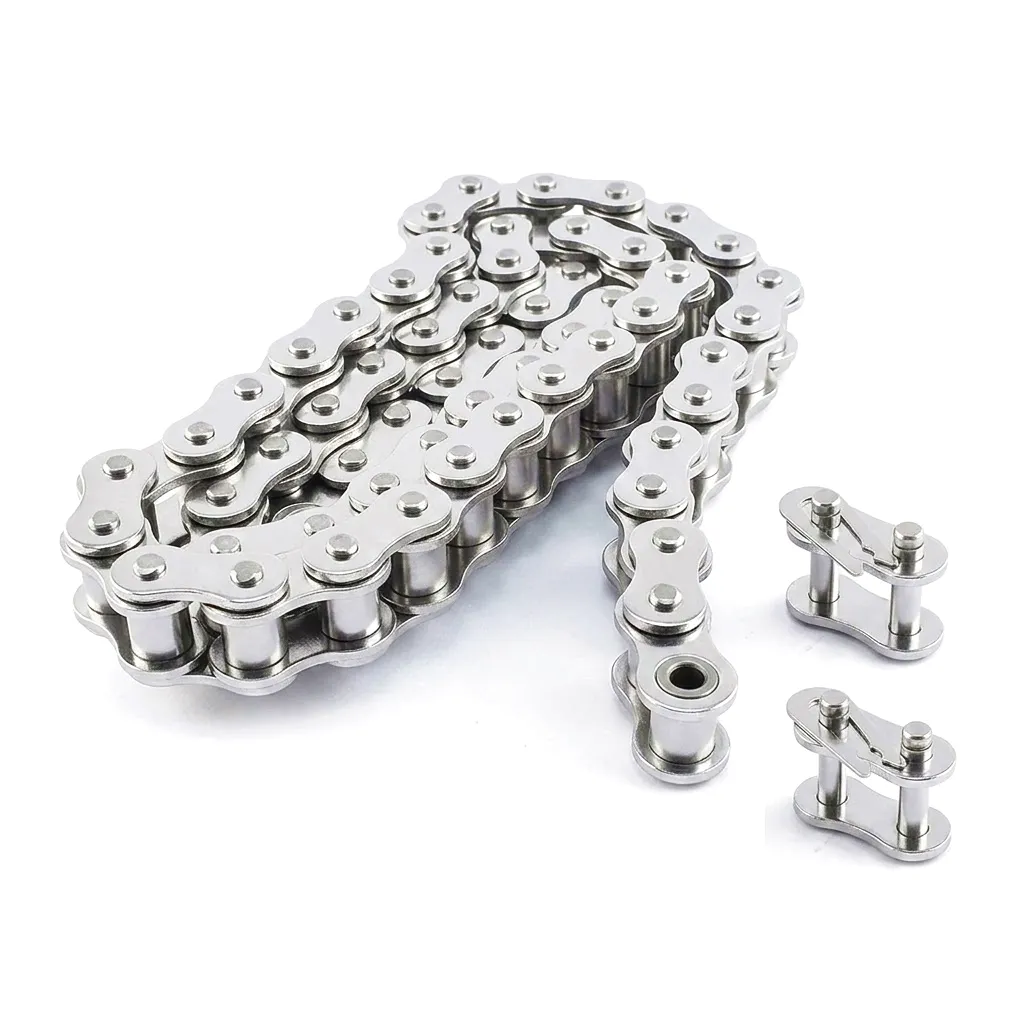
Purpose-engineered for demanding Caterpillar applications and compatible heavy machinery platforms used across UK construction and agricultural sectors.
Essential Roller Chain Maintenance Tips for Agricultural Machinery
🔌 Tension Checking and Adjustment
Correct chain tension is arguably the single most important maintenance parameter for agricultural roller chains. Industry guidelines recommend a sag of approximately 2 to 4 percent of the centre distance for horizontal or near-horizontal runs, translating to roughly 12 to 25 mm of deflection in the slack strand when measured mid-span with a moderate finger-pressure test. Chains running too tightly generate excessive side loads on the sprocket bearings and accelerate pin and bushing wear through elevated contact stress; chains running too slack whip and slap against guards, risk disengagement from sprocket teeth under sudden load reversal events, and generate noise levels that are a useful early warning sign for maintenance crews. Tension should be checked at every 50-hour service interval during the operational season and immediately after any new chain installation, as new chains settle by stretching slightly in the first few hours of operation under load, requiring a re-tensioning at the end of the first shift.
📈 Wear Elongation Measurement
Roller chain wear manifests primarily as elongation — an increase in the effective pitch of the chain caused by progressive abrasive removal of material from the pin outer surface and the inner surface of the bushing bore. Standard ISO and industry practice recommends replacement when the chain has elongated by 2 percent of its nominal pitch length, measured over a minimum span of 20 to 30 links using a caliper or dedicated chain wear gauge. Measuring over a shorter span introduces unacceptable measurement error. At 2 percent elongation on an 80H chain with 25.4 mm nominal pitch, the cumulative pitch error across a typical 80-link chain is already exceeding 40 mm, causing the chain to ride up the sprocket teeth in a characteristic “climbing” action that rapidly damages tooth profiles. Agricultural maintenance engineers in regions with intensive seasonal machinery use — such as the large-scale arable operations of Cambridgeshire or the intensive livestock equipment runs in the Lake District — benefit from keeping wear gauges readily accessible on all machines throughout the season.
💧 Lubrication Strategy
Effective lubrication of open roller chains in agricultural use requires penetrating the tight clearances between inner and outer link plates and reaching the bearing surfaces of the pin and bushing, not merely coating the visible outer surface of the chain with a viscous oil that provides little penetration benefit. The preferred lubricant for most agricultural roller chain applications is a thin penetrating chain oil — a SAE 20W to 40W grade petroleum or synthetic oil applied via a drip oiler, an automated chain lubricator, or a pressurised oil can directed at the inside of the chain as it passes over a sprocket. Thick greases should generally be avoided on open chains in dusty environments, as grease holds abrasive particles in contact with the chain surfaces rather than allowing them to be flushed away. Lubrication frequency for open chains in agricultural use typically ranges from every 8 to 10 operating hours in clean, dry conditions up to every shift (8 hours) in wet, contaminated environments such as root crop harvesting or livestock manure handling systems.
🔧 Sprocket Inspection and Replacement Timing
Installing a new roller chain onto worn sprockets is one of the most common — and expensive — maintenance mistakes made in agricultural workshops across the UK. Sprocket tooth wear transforms the originally symmetric involute tooth profile into a characteristic hooked or shark-fin shape on the driving flank, with the driven flank remaining comparatively unworn. When a new chain with its nominal pitch is placed on sprockets worn to match an elongated chain’s effective pitch, the new chain immediately begins operating at an effective pitch mismatch, accelerating its own elongation and never achieving the service life it would deliver on correctly profiled sprockets. The recommended practice is to replace the sprocket whenever the tooth profile shows visible hooking, when the tooth tip has thinned by more than 15 percent of its original width, or whenever a chain replacement is planned and the sprocket has already run for more than two full chain replacement cycles. Farm equipment dealers and agricultural engineering workshops in Sheffield, Birmingham, and Exeter’s agricultural service centres increasingly follow this protocol as part of scheduled pre-harvest machinery preparation programmes.
एवर पावर: सटीक विनिर्माण और अनुकूलित रोलर चेन समाधान
Ever Power has built its reputation over two decades as a vertically integrated roller chain manufacturer whose capabilities span the full range of standard and custom configurations demanded by the global agricultural machinery supply chain. Operating from a state-of-the-art production facility equipped with precision CNC grinding centres, automated press lines, and closed-loop quality control systems that verify dimensional conformance at every production stage, Ever Power delivers roller chains that meet and exceed the exacting requirements of BS, ISO, DIN, and ANSI standards applicable to UK agricultural market supply. Every material batch entering the facility is subjected to incoming chemical composition verification using spectrographic analysis, ensuring that the steel grades deployed in pin and bushing manufacture conform precisely to the engineering specifications that underpin the fatigue life and hardness profile guarantees provided with each production lot.
The company’s customisation capabilities extend well beyond pitch and strand count selection. Agricultural equipment designers and OEM procurement teams at UK farm machinery manufacturers — including those supplying the growing market for precision farming equipment and autonomous harvesting platforms — can specify ever Power chains with any combination of attachment plate profiles, bent links, offset sidebars, extended pins, rubber damping inserts, and custom seal configurations. Minimum order quantities for custom agricultural chain configurations are deliberately kept low to accommodate the small-batch requirements of specialist UK agricultural engineering companies who design and build bespoke harvesting and handling equipment for niche crops and high-value horticultural operations. Rapid prototyping services ensure that engineering validation samples are available within weeks of specification confirmation, compressing the development timeline for new agricultural machine designs.
240+
Export Domains Served
58–62
HRC Pin Surface Hardness
आईएसओ 606
Certified Standard
48hr
Typical Quote Response
Ready to Source Precision Agricultural Roller Chains?
Contact our technical sales team for custom specifications, volume pricing, and UK delivery lead times.
Case Study: Transforming Harvest Reliability for a Lincolnshire Cereal Contractor
The Ever Power Solution: Harrow Agri Services contacted Ever Power ahead of the 2024 season, providing the detailed driveline loading calculations and OEM sprocket specifications for all feeder house and header drive positions across the combine fleet. Ever Power’s engineering team recommended a fleet-wide upgrade to 80H-series duplex roller chains with X-ring sealed joints for the feeder house positions and standard 80H heavy-series single-strand chains for the header drives, all pre-lubricated with a high-temperature stable grease and supplied in extended lengths to minimise joining link usage. A structured pre-season check programme and in-season wear measurement protocol using calibrated chain wear gauges was also provided as part of the supply package.
The Outcome: The 2024 harvest season was completed across all 12,000 hectares without a single roller chain related breakdown in the fleet — the first failure-free harvest season the business had experienced in over seven years of operation. Post-season inspection of the Ever Power chains showed elongation values well within the 2 percent replacement threshold, indicating that the same chains could safely continue into the 2025 season with a mid-season lubrication top-up. The owner estimated a direct cost saving of over £18,000 compared with the 2023 season across breakdown costs, emergency parts, contractor hire, and crop quality losses.
ग्राहक समीक्षाएँ
★★★★★
“The difference in build quality between Ever Power’s 80H sealed chains and what we had previously been using is immediately obvious when you handle the product. The pin finish is noticeably smoother, the chain articulates cleanly without any stiff links straight from the box, and the X-ring seals sit perfectly in their grooves without the compression issues we had with cheaper alternatives. We went through the entire 2024 harvest — over 8,000 acres — on the same feeder house chains with zero adjustments needed beyond the standard pre-season tensioning check. These are the chains we will be specifying permanently going forward.”
— David Harrow, Harrow Agri Services, Boston, Lincolnshire
★★★★★
“We run three large square balers across our farm contracting business in the Yorkshire Wolds, and baler drive chains have historically been one of our highest consumable costs due to the aggressive nature of baling straw in very dry conditions. After switching our main rotor drive and plunger drive chains to Ever Power’s custom-specification 60H chains with surface-treated plates, we noticed a significant drop in our chain replacement frequency — from roughly two replacements per machine per season to one, with the chains still within service specification at the end of the baling campaign. The technical support from Ever Power’s team when we were selecting the correct specification was genuinely helpful and not just a sales exercise.”
— Sarah Thornton, Thornton Farm Contracting Ltd., Driffield, East Yorkshire
★★★★★
“As an agricultural machinery dealer covering the Sheffield and Derbyshire Peak District areas, we stock a broad range of spare parts for the mixed fleet our farming customers operate. Ever Power’s supply chain reliability has been one of the most significant practical advantages: quoted lead times have been consistently met or beaten over the two seasons we have been trading with them, and the dimensional accuracy of the chains means we have had zero returns due to compatibility issues with OEM sprockets — something that was an occasional frustration with previous suppliers. Our workshop manager specifically notes that the consistent press-fit quality on the pin-plate joints makes chain assembly and service link installation noticeably cleaner than the norm.”
— James Whitfield, Peak Agricultural Supplies Ltd., Sheffield, South Yorkshire
Frequently Asked Questions About Agricultural Roller Chains
What is the best type of roller chain to use on a combine harvester feeder house operating in the UK’s wet harvest conditions?
For UK combine harvester feeder house applications, the most reliable specification is an H-series (heavy) duplex roller chain in the 80H or 100H pitch range, with X-ring sealed joints to retain internal lubrication and exclude the moisture and crop debris that are endemic in British harvest conditions. The X-ring seal dramatically extends the maintenance interval and improves resistance to the fine crop dust contamination that accelerates open-chain bushing wear. Alloy steel construction with case-hardened pins and bushings is non-negotiable at feeder house duty levels, and the duplex configuration ensures an adequate safety factor against the severe shock loads that occur when the crop mat density surges during high-yield field passes.
How much does a custom-specification agricultural roller chain cost when ordering from a UK-market supplier like Ever Power, and what factors affect the price?
The cost of agricultural roller chain varies significantly based on pitch series, strand count, material specification (standard carbon steel versus alloy steel versus stainless), surface treatment, seal type, and custom attachment or sidebar configuration. For a guide price on standard heavy-series H chains in agricultural pitches, Ever Power offers transparent volume pricing structures that reflect the realistic ordering patterns of UK agricultural equipment dealers and OEM procurement teams. Custom configurations carry a modest tooling and setup cost for small initial quantities, which reduces to negligible proportions at production volumes. For an accurate quote tailored to your specific application, machine model, and annual volume requirement, contacting Ever Power directly at [email protected] is the most reliable route to a competitive and technically validated price.
Where can I find a reliable roller chain supplier in the UK who can deliver agricultural-grade chains quickly enough to support the short UK harvest season?
For the UK agricultural market, the combination of technical specification expertise, stock depth in the key H-series agricultural pitches, and rapid despatch capability that the British harvest season demands is difficult to find through general engineering distributors who do not specialise in agricultural driveline products. Ever Power maintains dedicated stock of the most common agricultural roller chain series and offers airfreight delivery options from its manufacturing facility that can typically place product at UK agricultural dealers or farm workshops within three to five working days, even for non-stock custom configurations. Agricultural machinery dealers in Birmingham, Nottingham, Lincoln, and York who supply the major UK cereal-producing regions can arrange standing supply agreements to ensure pre-season availability without the risk of harvest-period stock shortages.
How often should I replace roller chains on my baler to avoid unexpected breakdowns during the silage or hay harvesting season in Yorkshire or the Scottish Borders?
Replacement interval guidance for baler roller chains depends on machine type, annual throughput, lubrication discipline, and chain quality, but a practical rule for working farms in silage-intensive regions is to measure chain elongation at the mid-season service point and replace any chain that has reached 1.5 percent elongation before the season’s end, even if it has not yet reached the 2 percent full-retirement threshold — this conservative approach eliminates the risk of in-season failure during the critical second or third cut. For round balers covering a high annual area in the demanding wet-grass conditions typical of the Borders and Yorkshire Dales, annual chain replacement on the main drive circuits as a planned preventive maintenance item is an economically justified strategy when calculated against the cost of a breakdown during a weather-sensitive harvesting window.
Which roller chain series is compatible with Caterpillar agricultural and construction equipment used in UK land management operations?
Caterpillar equipment deployed in UK agricultural and land management roles — including track-type tractors used for heavy cultivations, loader backhoes used in farm yard management, and hydraulic excavators used for drainage and land improvement works — uses proprietary drive chain specifications that Ever Power has reverse-engineered and validated against OEM dimensional datasheets. The High Strength Roller Chain 120HSP-00 and the C100HSP-00 are the two primary Ever Power products specifically engineered for Caterpillar compatibility, covering the most common driveline positions across the Caterpillar equipment families seen in UK agricultural and forestry operations. These chains offer equivalent or superior performance to OEM Caterpillar chain supplied through the dealer network, at a substantially more competitive price point that reflects the efficiency of Ever Power’s direct manufacturing supply model rather than multi-tier distribution markups.
What is the correct way to lubricate roller chains on agricultural equipment to maximise their service life in the muddy field conditions found across East Anglia?
In the heavy clay and peaty soils of East Anglia, open agricultural roller chains should be lubricated with a thin penetrating chain oil applied to the inside of the chain where it passes over the smallest sprocket — ideally using a pressurised oil can or automated chain lubrication system that delivers oil directly to the plate edges, allowing capillary action to carry lubricant to the pin-bushing interface. Thick grease should be avoided in muddy conditions as it traps abrasive particles. Lubrication frequency in these contaminated conditions should be every eight working hours minimum. For highest-value chain positions such as feeder house elevators, sealed-joint chains pre-packed with high-quality grease at manufacture are preferable, as they eliminate the need for in-season external lubrication access to locations that are difficult or hazardous to reach on a running machine.
Partner with Ever Power for Your Agricultural Roller Chain Supply
From standard replacement chains for combine harvesters in Lincolnshire to fully bespoke configurations for specialist horticultural equipment anywhere across the UK — Ever Power delivers precision, reliability, and responsive technical support.
जीजेडएल द्वारा संपादित