Engineered Class Steel Chain:
When Standard Roller Chain Is Not Enough
A deep-dive technical reference for procurement engineers, maintenance managers, and OEM designers across UK heavy industry.
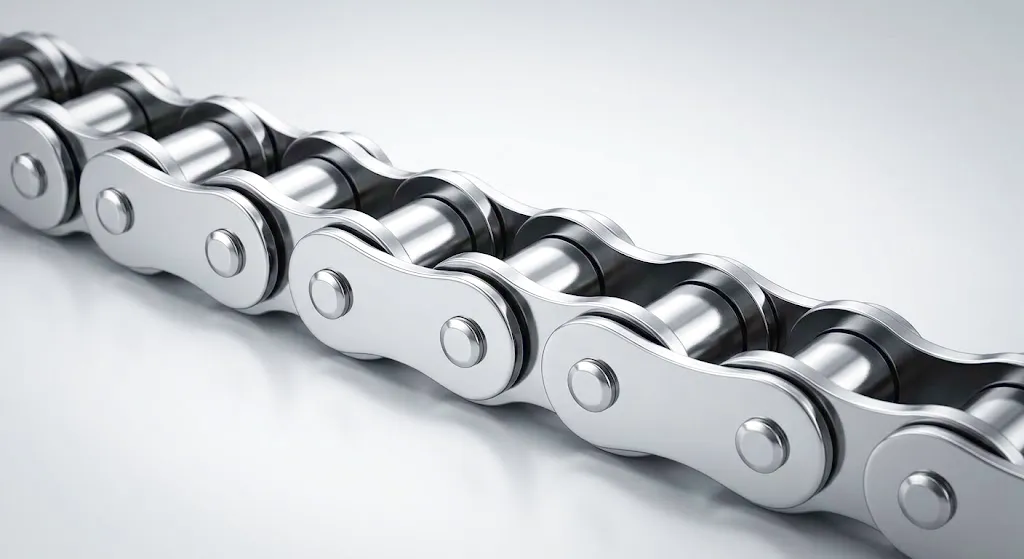
Across the sprawling manufacturing corridors of Birmingham, the steel yards of Sheffield, and the heavy processing plants along the Humber estuary, one question returns with persistent regularity: at what point does a standard roller chain become an inadequate solution? The answer is not always obvious at the specification stage, but it tends to reveal itself in the most costly possible manner — an unplanned shutdown, accelerated wear, or a catastrophic drive failure under surge loading. Engineered class steel chain exists precisely to address those boundary conditions where off-the-shelf roller chain reaches the limit of what its geometry and material tolerances can sustain.
Unlike precision roller chain produced to ANSI B29.1 or ISO 606 standards for general industrial drives, engineered class chain is designed from the ground up to handle the demands of conveying, elevating, and processing environments where pitch accuracy, side-plate thickness, and pin hardness must meet far more exacting tolerances. The distinctions are not cosmetic. They translate directly into mean time between failure, maintenance interval, and total cost of ownership across the asset lifecycle — metrics that procurement teams in the UK manufacturing sector increasingly use as primary evaluation criteria when selecting drive components.
Response within 24 hours | UK & worldwide supply | OEM & aftermarket
How Engineered Class Steel Chain Actually Works
Working Principle
Pin and Bush Articulation
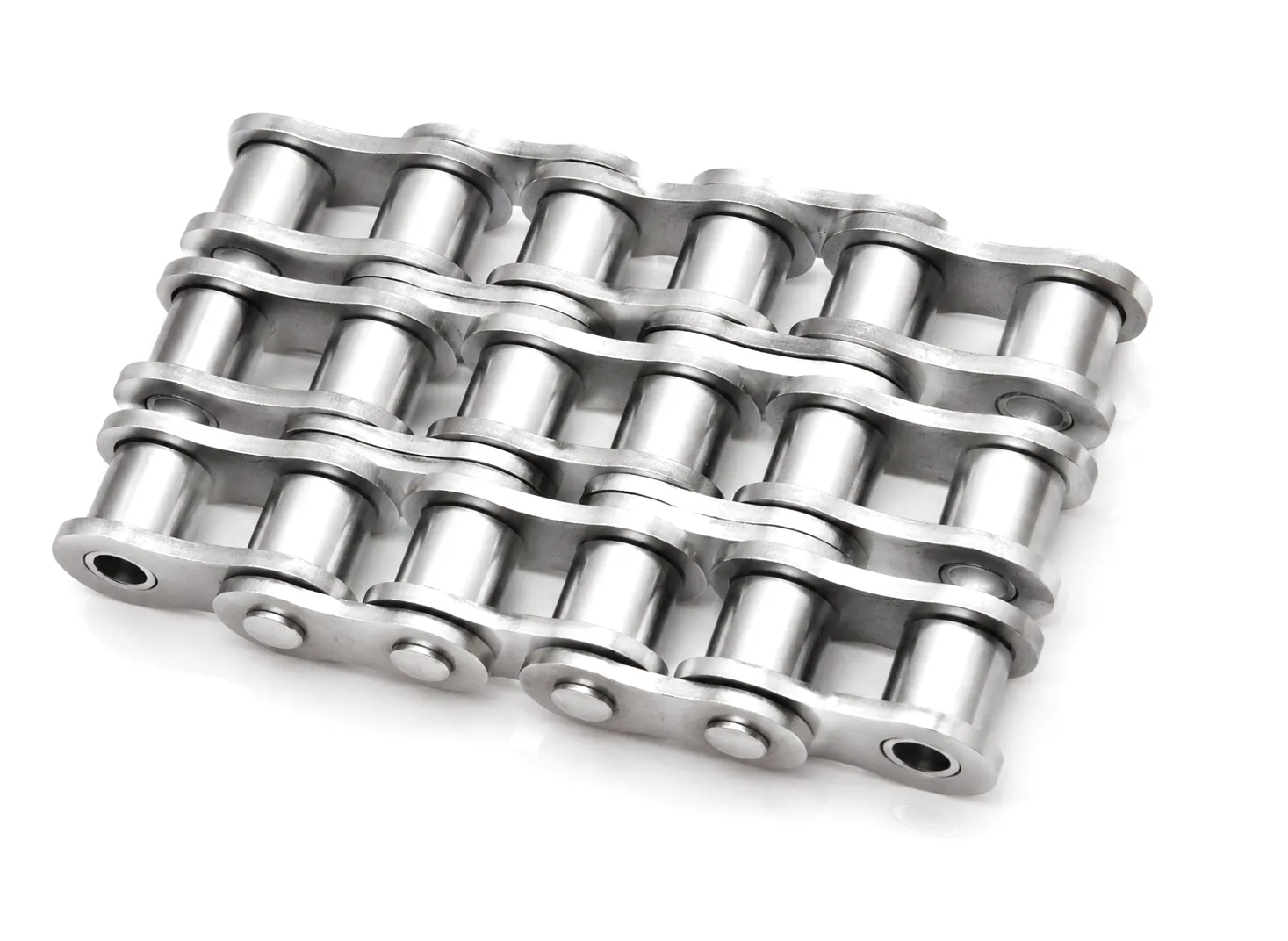
At its most fundamental level, a roller chain transmits rotary motion and torque through a repeating series of pin-link plates and roller-link plates connected by hardened steel pins, bushings, and rollers. When the chain wraps around a sprocket, each roller seats into a tooth gap, and the pin-bush interface articulates through a working angle. In engineered class variants, the clearance between pin and bush is held to tighter tolerances than in standard chain, reducing impact velocity at engagement and distributing contact stress across a larger bearing area.
Load Distribution Mechanics
As tension propagates through the strand during loading, it is carried by the pin-bush bearing pairs and transferred through the side plates in tension. The geometry of the side plate — its width, thickness, and the radius of the pin hole relief — determines how efficiently that tensile stress is distributed. Engineered class chain employs thicker side plates with machine-finished contours, reducing localised stress concentration at the pin holes and extending fatigue life under cyclic loading that is typical in conveyor and elevator applications running around the clock in UK food processing and automotive manufacturing plants.
Roller Engagement and Chordal Action
The roller reduces friction at the sprocket tooth face by converting sliding contact into rolling contact. In a roller chain, the dynamic impact as each roller seats into its sprocket pocket generates a vibration cycle known as chordal action. Engineered class steel chain mitigates this through tighter pitch tolerances, which maintain consistent polygon geometry across the drive and reduce the amplitude of speed variation per revolution. This is particularly relevant in high-speed conveying applications where chordal action-induced vibration can damage product, destabilise carriers, and accelerate bearing wear in both the chain and the driven machinery.
Core Materials and Metallurgy
Material Science
Side Plates
High-Carbon Alloy Steel
Grade C45 or 40Cr alloy steel, through-hardened and tempered to achieve tensile strength in the range of 800–1,100 MPa. The higher carbon content compared to mild steel delivers superior fatigue resistance under the alternating tension loads seen in continuous conveyor drives. Plates are blanked with precision tooling and then shot-blasted to introduce compressive residual stresses at the surface, extending the fatigue threshold by a measurable margin.
पिंस
Case-Hardened Chromium Steel
Pins are the most critically stressed components in the chain assembly. Engineered class pins are manufactured from 20CrMo or equivalent chromium-molybdenum alloy steel, carburised and case-hardened to a surface hardness of 58–62 HRC with a core hardness of 35–45 HRC. This dual-property profile gives the pin a wear-resistant case capable of resisting abrasive contact with the bush bore while retaining a tough core that absorbs shock loading without brittle fracture — a combination that standard bright-drawn carbon steel pins cannot reliably provide.
बुशिंग्स
Sintered or Wrought Steel
Bushings in engineered class chain are typically formed from wrought tubing and case-hardened to 58–62 HRC, matching the pin hardness to ensure even wear distribution across the contact interface. In some configurations, oil-impregnated sintered bushings are employed in sealed-for-life variants, allowing the chain to operate in environments where periodic lubrication is impractical — such as elevated conveyor systems in pottery and ceramics manufacturing in Stoke-on-Trent, or automated storage retrieval systems in large distribution warehouses.
रोलर्स
Heavy-Duty Hardened Steel
Rollers are press-formed from cold-drawn tube and heat-treated to 40–50 HRC. In heavy-duty engineered class variants, the roller wall thickness is increased relative to standard precision chain to resist the deformation forces experienced under heavy working loads. Some heavy-duty configurations adopt a flanged roller design to prevent lateral displacement of the chain on flat-topped conveying rails, particularly relevant in the bottling and canning lines of Yorkshire’s food and beverage processing sector.
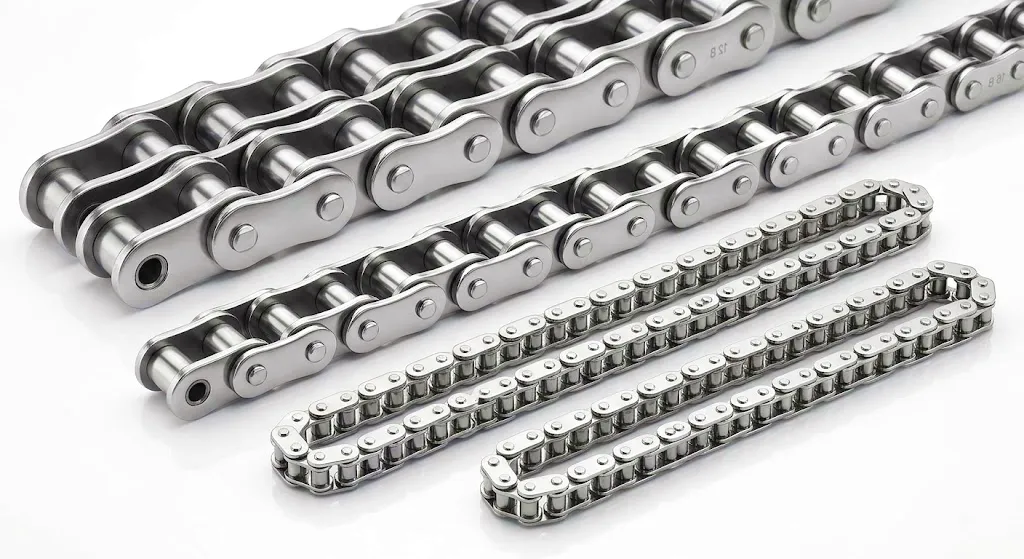
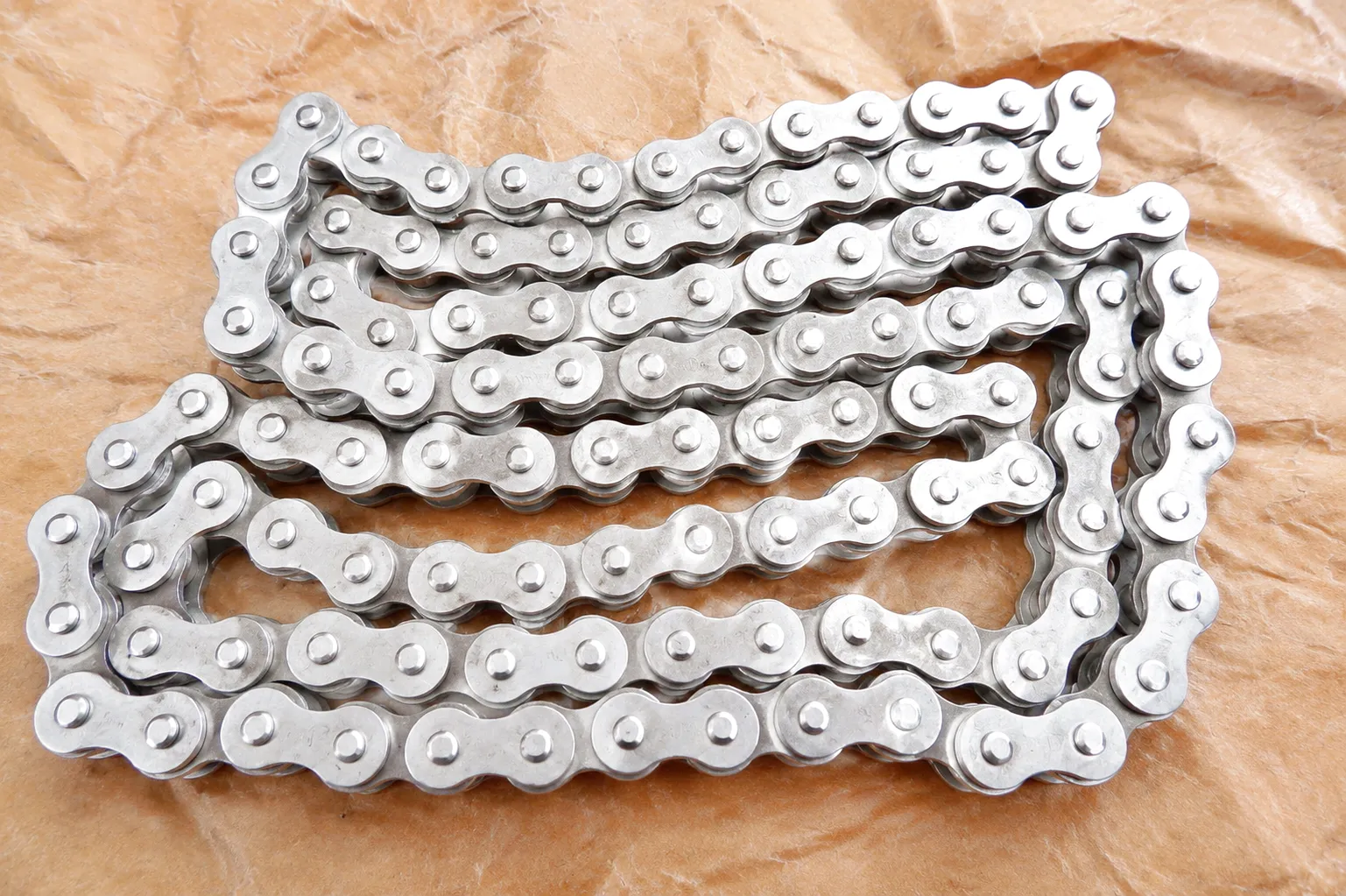
Core Technical Advantages Over Standard Roller Chain
उत्पाद के लाभ
Superior Ultimate Tensile Strength
Engineered class steel chain is rated to breaking loads that typically exceed those of standard precision roller chain in the same pitch by a factor of 1.5 to 2.5x. This is achieved through the combination of heavier side plate profiles, increased pin diameters relative to pitch, and the use of alloy steel grades that respond to heat treatment to levels beyond what plain carbon steel can reliably achieve. For drives serving presses, granulators, or heavy aggregate conveyors in the West Midlands manufacturing sector, this additional tensile margin is not a theoretical luxury — it is the difference between planned replacement and unscheduled failure.
Extended Wear Life Under Abrasive Conditions
Wear elongation — the progressive increase in effective pitch caused by metal loss at pin-bush interfaces — is the primary failure mode for roller chains in service. In abrasive environments such as quarrying, aggregate processing, recycling facilities, or grain and feed handling, this elongation is accelerated significantly. Engineered class steel chain addresses this through hardened pins and bushings that offer substantially greater resistance to abrasive wear, sometimes achieving three to five times the wear life of standard chain in the same application, thereby reducing the frequency of strand replacement and the associated lost production time.
Fatigue Resistance Under Cyclic Loading
Applications involving repeated start-stop cycles, frequent load surges, or drives serving machinery with inherent torque spikes — such as jaw crushers, shredders, and reciprocating pumps — impose cyclic fatigue demands on the chain strand. Standard roller chain may reach its fatigue limit well before its nominal breaking load is approached. Engineered class steel chain is specifically designed with side plate geometry and shot-peened surfaces that push the fatigue endurance limit substantially higher, ensuring the chain survives the intended service interval without developing the side plate cracking that manifests as sudden catastrophic fracture.
Corrosion Resistance Options
Many UK industrial environments expose drive components to moisture, cleaning chemicals, and temperature cycling. Engineered class chain is available in nickel-plated, stainless steel, and zinc-phosphate-treated variants that extend service life in these environments. Food-grade stainless variants using 304 or 316L alloys are particularly relevant for compliance with UK Food Standards Agency hygiene regulations in the dairy, bakery, and ready-meal sectors. The higher material cost of stainless engineered chain is invariably offset by extended replacement intervals and the elimination of contamination risk.
Featured High Strength Roller Chain Products
Product Catalogue
कैटरपिलर के लिए उच्च शक्ति वाली रोलर चेन 120HSP-00
The 120HSP-00 is engineered to meet and exceed the demanding operating requirements of Caterpillar earthmoving and construction equipment. With a pitch of 38.1 mm and a design maximum working load substantially above standard ANSI #120, this chain is the go-to selection for contractors and plant hire companies across Scotland and the North of England operating in wet, muddy, and abrasive ground conditions. The HSP designation signifies heavy side plate construction, providing the additional fatigue margin required for the high-frequency shock loading characteristic of excavator and dozer track-drive environments.
कैटरपिलर के लिए उच्च शक्ति वाली रोलर चेन C100HSP-00
Operating at a metric-compatible 31.75 mm pitch, the C100HSP-00 bridges the gap between standard ANSI #100 chain and the much heavier duty requirements of Caterpillar compact plant and mid-range machinery. The “C” prefix denotes a corrosion-resistant treatment specification that makes this chain particularly suited to the wet upland environments common in Wales and the Scottish Highlands where compact plant operates in forestry, drainage, and infrastructure maintenance work. Procurement managers at plant hire depots in Manchester and Leeds have cited this variant as offering the best total cost of ownership when replacement frequency and lubricant consumption are factored into the evaluation.
Technical and Performance Parameters
Specifications Table
| पैरामीटर | मानक रोलर चेन | Engineered Class Steel Chain | इकाई / नोट्स |
|---|---|---|---|
| पिच रेंज | 6.35 – 50.8 | 12.7 – 152.4 | mm; heavier pitches for conveying |
| Min. Breaking Load (ANSI #120) | ~156 kN | 220 – 350 kN | kN; depends on HSP plate grade |
| साइड प्लेट की मोटाई | Standard profile | +20% to +60% over standard | mm; heavy or super-heavy plate |
| Pin Surface Hardness | 50 – 55 HRC | 58 – 62 HRC | HRC; case-hardened alloy steel |
| Tensile Strength (Side Plate) | 600 – 800 MPa | 900 – 1,200 MPa | MPa; alloy steel grade |
| Wear Elongation Limit | 3% max (standard) | 2% max (precision-grade) | % of nominal pitch; per ISO 606 |
| तापमान रेंज आपरेट करना | -10 to +150°C | -40 to +400°C | °C; depends on material/coating |
| Available Materials | कार्बन स्टील | Alloy steel, SS304, SS316L, Ni-plated | Application-dependent |
| Pitch Tolerance | +/- 0.25% | +/- 0.10% | % of nominal pitch; reduces chordal action |
औद्योगिक अनुप्रयोग परिदृश्य
Where Engineered Class Steel Chain Excels
Heavy Construction and Earthmoving
Crawler tracks, drive sprockets, and auxiliary conveying systems on excavators, bulldozers, and crawler cranes rely on engineered class roller chain to transmit the enormous torque generated at low machine speeds. Sheffield-based plant maintenance companies sourcing replacements for Caterpillar machinery have found that HSP-designated chains significantly extend service intervals compared to generic alternatives. The combination of heavy side plates and high-hardness pins withstands the continuous shock loading as tracks encounter rock, rubble, and compacted clay without the fatigue cracking that compromises standard chain in these conditions.
Quarrying and Aggregate Processing
Limestone quarries in the Peak District and granite operations in Cornwall subject drive chains to a relentless combination of silica-laden dust, constant vibration, and frequent shock overloads as oversized material enters primary jaw crushers. Engineered class steel chain fitted with sealed-and-lubricated joint assemblies provides the dual protection of mechanical strength and contamination resistance. Many quarry operators in the UK’s aggregates sector have moved away from scheduled chain replacement in favour of condition-monitoring programmes that track wear elongation on engineered chain, extending planned maintenance windows from quarterly to semi-annual cycles.
Agricultural Machinery and Harvesting Equipment
Combine harvesters, forage harvesters, and potato harvesters operating across the flat arable expanses of Lincolnshire and East Anglia place demanding requirements on their drive chain systems. Crop residue, soil, and stone ingestion into chain runs is unavoidable in field conditions, and the abrasive wear this generates can bring standard roller chain to its wear limit within a single season. Engineered class chain in nickel-plated or stainless grades provides the combination of abrasion resistance and corrosion protection needed to survive the full harvest season and the long winter storage period without developing the pitting and surface rust that predetermines premature failure at the next season’s start.
Chemical and Pharmaceutical Processing
Drive systems in chemical plants along the Teesside chemical corridor, and in pharmaceutical manufacturing facilities regulated by the Medicines and Healthcare products Regulatory Agency (MHRA), demand chain that maintains dimensional integrity and cleanliness in environments where solvent vapours, cleaning agents, and elevated temperatures are routine. Stainless steel engineered class chain with electropolished surfaces meets these requirements while providing the load capacity needed for heavy conveying duties within the plant. The absence of a separate lubrication requirement in sealed variants eliminates one potential source of product contamination — a critical consideration for API and vaccine manufacturing lines.
Automotive Manufacturing and Press Lines
Body panel press lines at vehicle assembly plants in the East Midlands and Merseyside operate transfer and conveying systems at high cycle rates with significant dynamic loads imposed by press return strokes and automated material handling equipment. Engineered class roller chain running in these systems must sustain fatigue loads that accumulate to tens of millions of cycles over a planned maintenance interval. Heat-treated alloy steel side plates and precisely matched pin-bush hardness pairs ensure consistent performance throughout the interval, avoiding the early-onset wear elongation that disrupts the tight positional tolerances of automated handling and welding systems.
Steel and Metal Processing
Rolling mill conveyors, billet transfer tables, and coil handling systems operating in the steelworks remaining in South Wales and the Humber region require chain capable of managing both the thermal environment — with surface temperatures sometimes exceeding 200°C near the rolling mill — and the scale and grit contamination present on all hot-worked steel product. High-temperature alloy steel variants of engineered class chain, sometimes fitted with ceramic or graphite-based dry lubricants, address both requirements simultaneously, and their higher mass and section thickness provides a thermal heat sink effect that slows the rate of temperature rise during intermittent proximity to hot material.
एवर पावर: सटीक विनिर्माण और अनुकूलन
Factory Capability
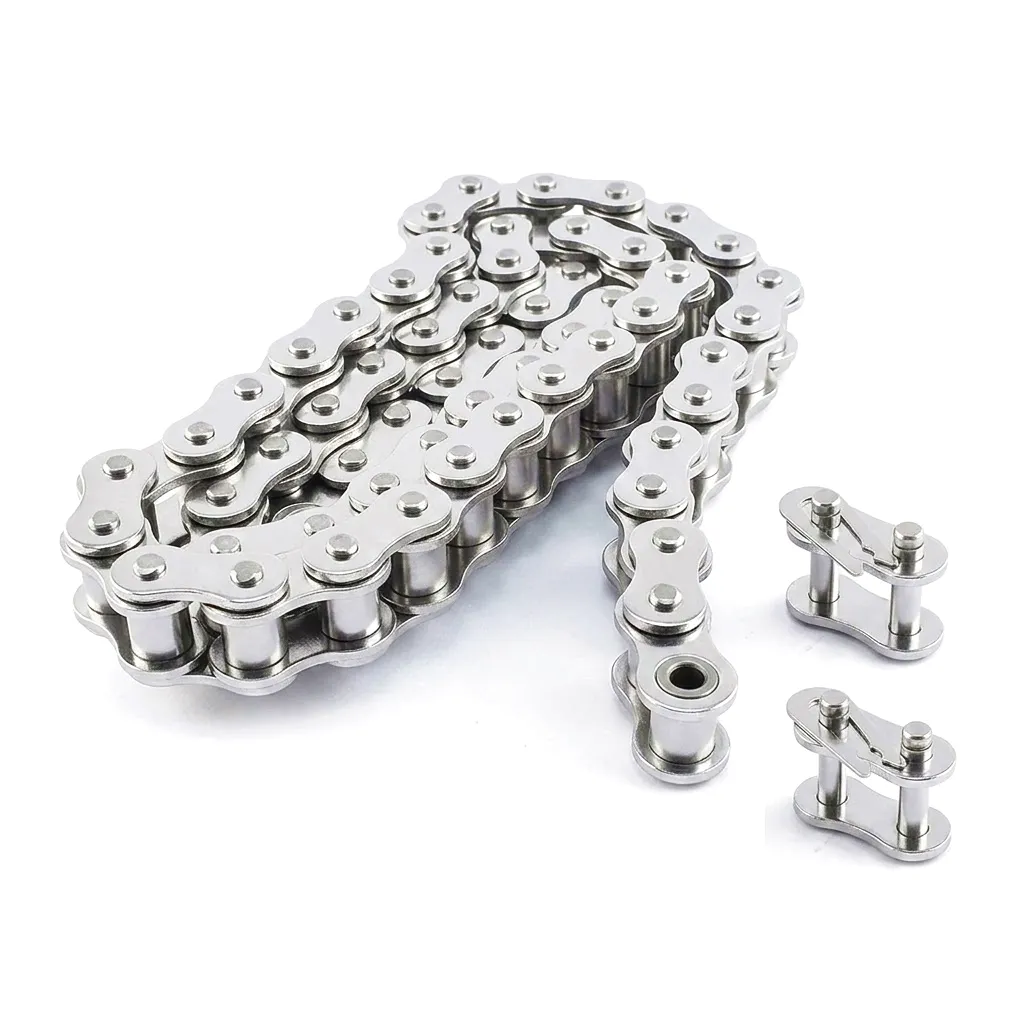
Ever Power brings over two decades of focused experience in the manufacture of engineered class steel chain to the B2B supply chain serving UK and European industrial customers. The manufacturing facility, equipped with CNC hobbing machines, precision heat-treatment furnaces, and automated assembly lines, operates to tolerance standards that meet or exceed ISO 606 and ANSI B29.100 requirements for engineered class chain. Every batch is subject to dimensional verification including pitch accuracy measurement, breaking load proof-testing on calibrated tensile machines, and hardness spot-testing using calibrated Rockwell instruments — documentation that is supplied as standard to customers requiring traceable quality records for their maintenance management systems.
The customisation capabilities at Ever Power go well beyond catalogue variants. The engineering team routinely handles non-standard pitch specifications, modified link geometry including extended pins, bent tabs, and attachment plates for conveyor system integration, and material upgrades including duplex stainless, titanium-coated, and high-temperature alloy variants. Customers in the UK’s offshore energy, petrochemical, and aerospace supply chains have found that Ever Power’s in-house tooling department can translate technical drawings into production-ready tooling within timescales that domestic alternatives in this market segment cannot match. The supply chain infrastructure includes European stock holding and direct air freight capability for urgent maintenance requirements, ensuring that a verified order placed by a Birmingham or Glasgow engineering department on a Monday can typically be at the receiving dock by mid-week.
Request a Custom Quote from Ever Power
[email protected] | UK & international enquiries welcome
Customer Success Story: Rotherham Steel Components Ltd
Case Study | South Yorkshire, UK
Rotherham Steel Components Ltd operates one of the UK’s remaining integrated steel forging and heat treatment facilities, supplying precision steel billets and near-net-shape forgings to the automotive and aerospace supply chains. The company’s billet conveying system — a three-strand arrangement running eight hours per day, six days per week — was experiencing chain replacement on a six-week cycle when using a generic ANSI #120 chain sourced from a European catalogue supplier. The problem was not breaking load failures; the chain was simply wearing beyond its 3% elongation limit far too quickly in the scale and grit environment adjacent to the forge press discharge area.
After consultation with Ever Power’s technical team, the conveyor was re-specified to use the 120HSP-00 engineered class steel chain with sealed-and-lubricated joints and hardened roller pins. The roller chain was also fitted with specially extended attachment side plates to interface with the conveyor’s existing carrier bar system, a customisation that Ever Power produced to drawing within three weeks of receiving the specification. The result was transformative: the replacement cycle extended from six weeks to over nine months, reducing chain procurement cost by approximately 78% on an annualised basis and eliminating four unplanned production stoppages that had previously been triggered by chain failure during billet runs. The total procurement and installation saving in the first year of operation exceeded £47,000 against the incremental cost of the higher-grade chain.
हमारे ग्राहक क्या कहते हैं
“The wear life improvement was genuinely beyond what we expected. We went from replacing chain every six weeks to getting past nine months on the same run. The sealed joint design was the critical factor for our scale environment — no more daily re-lubrication on the billet conveyor.”
“Ever Power’s ability to manufacture to our non-standard attachment plate drawing within three weeks is something that catalogue suppliers simply cannot match. For a facility running a tight maintenance schedule, that responsiveness is as important as the chain performance itself. We now specify Ever Power as our preferred source for all engineered class chain requirements.”
“The C100HSP-00 was exactly what we needed for our compact plant fleet operating in the Scottish Highlands — the corrosion-resistant treatment has eliminated the rust-related seizure we were seeing with generic chain after winter storage. The breaking load documentation they provide meets our insurance and risk management requirements without needing to chase for it.”
अक्सर पूछे जाने वाले प्रश्नों
Voice Search Ready
What is the difference between engineered class steel chain and standard roller chain, and which one should I be using for my conveyor system in Birmingham?
Engineered class steel chain is manufactured to heavier side plate profiles, tighter pitch tolerances, and higher pin and bush hardness specifications than standard precision roller chain. It is intended for applications where loads exceed what standard chain can carry reliably over the planned maintenance interval, or where environmental conditions — abrasion, corrosion, elevated temperature — accelerate wear beyond acceptable limits. For a Birmingham conveyor system handling heavy fabricated components or raw stock in a production environment, engineered class is the appropriate choice if the drive experiences shock loading, runs continuously, or operates in contaminated conditions.
How much does engineered class steel roller chain typically cost from a UK supplier, and can I get a competitive price quote for a large volume order?
Pricing for engineered class steel chain varies considerably based on pitch, strand count, material grade, and any special features such as attachment plates, corrosion-resistant coatings, or sealed joints. As a rough guide, expect engineered class chain to cost between 1.5 and 3 times the price of catalogue-grade standard roller chain in the same pitch. However, when total cost of ownership is considered — including replacement frequency, lubricant consumption, and lost production during unplanned changes — the higher upfront investment routinely delivers a positive return within the first replacement cycle. Contact Ever Power directly at [email protected] for a volume-specific quotation.
Where can I find a reliable UK supplier who can manufacture custom roller chain with non-standard attachment plates and deliver quickly to Sheffield?
Ever Power maintains a direct-to-customer supply capability for the UK market, including European stock-holding and air freight for urgent requirements. Custom configurations including non-standard attachment plates, extended pins, bent tabs, and modified side plate profiles can be manufactured to drawing, with lead times depending on the complexity of the modification. For Sheffield and South Yorkshire customers with urgent requirements, standard in-stock variants of engineered class chain are typically available for dispatch within 48 hours of a verified order.
Which type of steel chain is best for a Caterpillar excavator replacement application, and what specification should I be asking for when I request a quote?
For Caterpillar excavator and crawler applications, the HSP (heavy side plate) designation is the correct starting point. The specific variant depends on the machine model: the 120HSP-00 covers equipment operating at the ANSI #120 pitch range, while the C100HSP-00 addresses the metric-compatible 31.75 mm pitch range of Caterpillar compact and mid-range plant. When requesting a quotation, you should specify the machine model number, the chain pitch if known, any environmental conditions (wet, muddy, abrasive), and the intended service interval. Ever Power’s engineering team will then verify and advise on the appropriate specification.
When should a UK manufacturing plant consider upgrading from standard roller chain to engineered class chain, and what signs indicate the current chain is underspecified for the application?
The key indicators that a drive is underspecified include: chain replacement cycles significantly shorter than the manufacturer’s rated wear life, side plate fatigue cracking appearing before the wear limit is reached, visible pin galling or bush scoring at intervals of less than 500 operating hours, and any instance of chain breakage under normal — not overload — conditions. If any of these symptoms are present, the existing chain is almost certainly operating at or beyond its fatigue limit, and a move to engineered class chain in the same pitch is warranted. The engineering team at Ever Power can assist with a drive audit and re-specification at no charge for qualifying UK industrial customers.
How does stainless steel engineered chain compare in price to carbon alloy variants, and who should be ordering stainless grade for UK food and pharmaceutical applications?
Stainless steel engineered chain typically carries a price premium of 2.5 to 4 times the equivalent alloy steel grade, reflecting the material cost and the additional machining demands of austenitic stainless alloys. The premium is justified in applications regulated by the UK Food Standards Agency or MHRA, where carbon steel chain — even treated — poses an unacceptable contamination risk. Food processors in Yorkshire and the East Midlands operating dairy, bakery, or ready-meal lines, and pharmaceutical manufacturers on sites regulated under GMP, should specify 316L stainless as standard. For lower-risk food-adjacent environments, 304 grade at a somewhat lower price point may be acceptable following a HACCP assessment.
Ready to Specify the Right Chain for Your Application?
Ever Power’s technical team provides free drive audits and re-specification support for UK and international customers. Send your drawings, application details, or simply describe the problem — we will respond within 24 hours.
edit by gzl | Ever Power Roller Chain | [email protected]