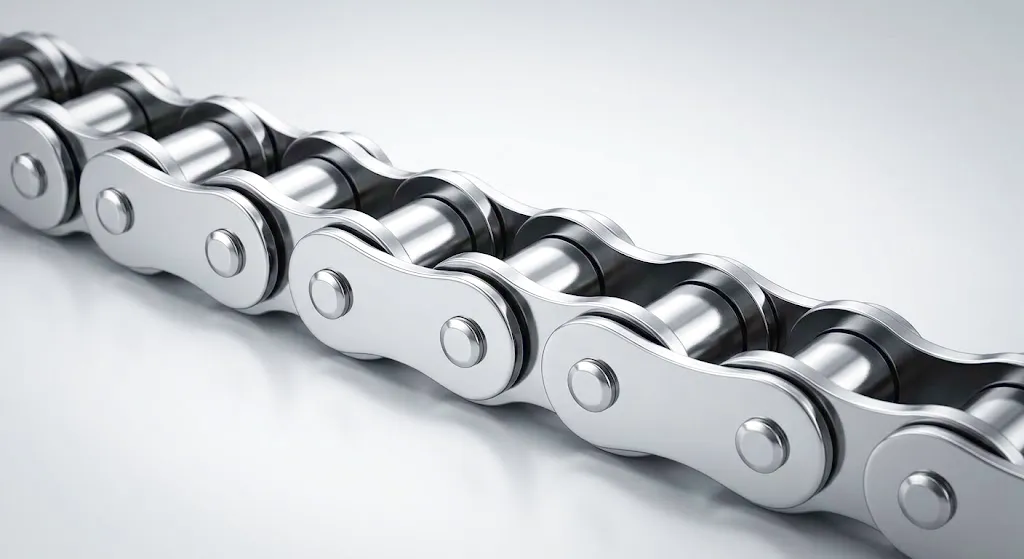
 Roller chain is one of the most enduring and mechanically sophisticated power transmission devices in modern industry. Developed through iterative refinement since the late nineteenth century, it serves as the backbone of countless manufacturing lines, agricultural platforms, and materials handling systems operating across the United Kingdom today. At its core, a roller chain translates rotational motion from a driving sprocket to a driven sprocket with minimal slippage, achieving efficiency levels that exceed ninety-eight percent under well-lubricated, correctly tensioned conditions. This combination of simplicity and high mechanical performance explains why industries ranging from automotive body pressing in Coventry to food packaging in Leeds continue to depend on precisely engineered roller chain assemblies for their most demanding continuous-duty applications. Understanding the nuanced relationship between chain geometry, metallurgical composition, load-cycle characteristics, and environmental exposure is essential for engineers who specify chain drives in safety-critical and productivity-critical contexts.
Unlike belt drives, a roller chain transmits force through positive mechanical engagement rather than friction. Each link in the assembly contacts the sprocket tooth with a hardened steel roller that rotates freely on a precision-ground bushing, distributing contact stress across a generous surface area and dramatically reducing wear compared to sliding-contact alternatives. The result is a drive component that can withstand shock loading, high radial forces, and harsh environmental conditions while maintaining repeatable pitch accuracy — a property critical to the synchronised multi-axis drives found throughout automotive assembly plants in Birmingham and high-throughput logistics sortation facilities along the M1 and M6 corridors.
How Roller Chain Works: The Mechanical Principle
The hardened steel rollers seat into sprocket tooth profiles, creating a positive mechanical interlock. Unlike friction-based belt drives, there is no slip under rated load, making roller chain the preferred choice wherever speed ratios must remain absolutely constant — such as in CNC transfer lines and automated packaging lines.
The roller rotates freely on a hardened bushing, converting what would otherwise be sliding friction into rolling friction. This fundamental principle reduces wear rates by an order of magnitude compared to chain types lacking rollers, extending service life considerably in high-cycle-rate environments found across UK manufacturing sectors.
Chain pitch — the centre-to-centre distance between adjacent pin axes — is the primary design parameter governing speed ratios, sprocket tooth count, and tangential force capacity. Selecting the correct pitch for a given power-speed combination is the foundational step in every roller chain drive design, and incorrect specification accounts for the majority of premature drive failures reported in field service studies.
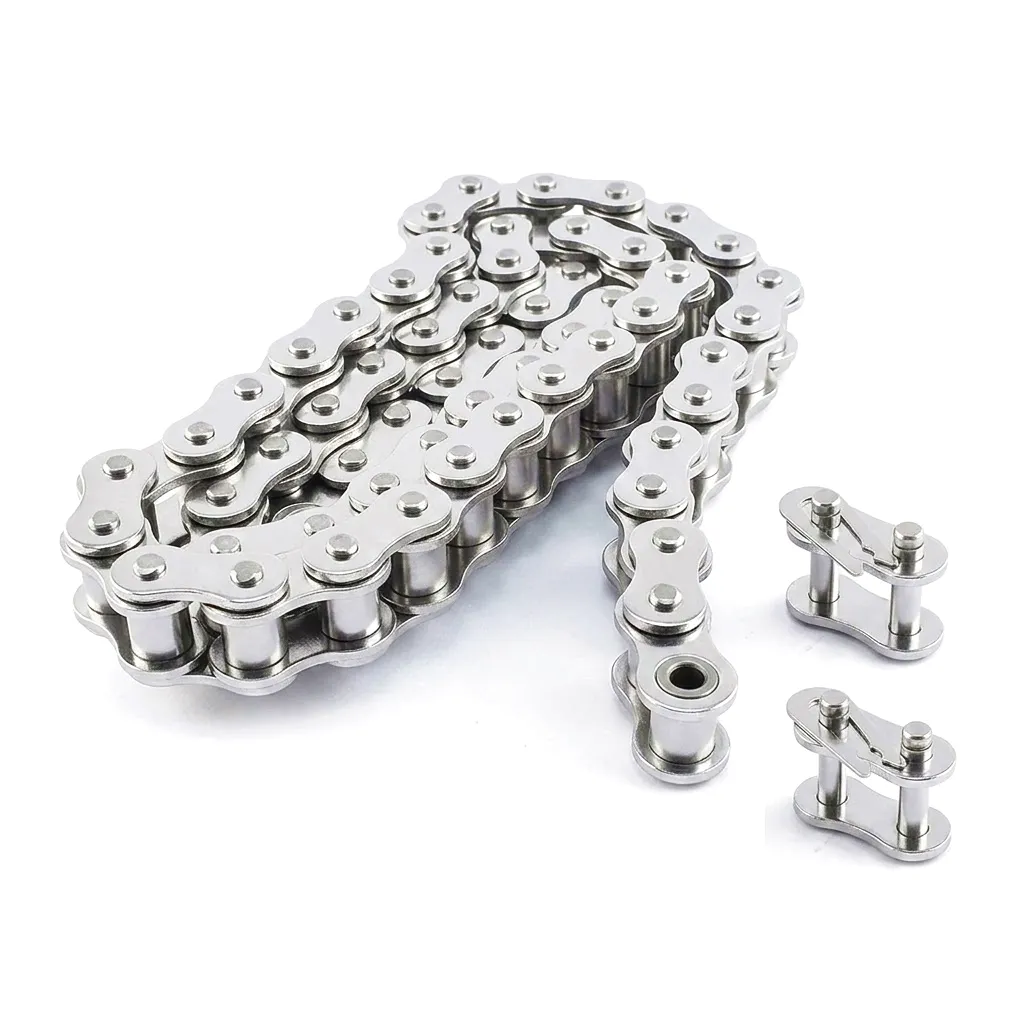 A complete roller chain assembly consists of alternating inner link sets and outer link sets joined by precision-ground steel pins. Each inner link set comprises two inner plates pressed onto hardened bushings, with a roller fitted over each bushing. Each outer link set comprises two outer plates secured to the pins, which pass through the bushings of adjacent inner links. The assembly articulates freely at every pin-bushing junction, allowing the chain to wrap smoothly around sprockets of varying diameters without introducing bending stresses into the plates themselves. This articulation mechanism also enables the chain to accommodate small angular misalignments between sprocket shafts — a practical advantage in the confined machine frames common to British sheet metal forming and textile machinery installations.
When the driving sprocket rotates, its teeth engage successive rollers, pulling the chain forward and transmitting tangential force through the link plates to the driven sprocket. The driven sprocket converts this linear chain motion back into rotational output. Lubrication is delivered to the pin-bushing and bushing-roller interfaces, where relative motion — and therefore wear — actually occurs. Proper lubrication selection, whether drip-fed oil, bath lubrication, disc-flinger systems, or pressurised spray rings, is as important to long-term chain performance as the metallurgy of the chain itself. The key message for UK plant engineers: neglecting lubrication adequacy is the single most common root cause of chain elongation and premature failure across every industry sector.
Core Materials in Roller Chain Manufacturing
The material specification of every individual component within a roller chain determines the assembly’s fatigue life, corrosion resistance, temperature tolerance, and tensile strength ceiling. Modern chain manufacturing draws on a sophisticated palette of alloy steels, surface treatments, and — in specialised applications — stainless, nickel-plated, and polymer-coated variants to match the aggressive demands of contemporary industry.
Cold-drawn carbon steel (typically 40Mn or 50Mn grade) or alloy steel (20CrMnTi, 40Cr). Plates undergo heat treatment to achieve a tensile strength in the range of 600–900 MPa for standard series and up to 1,200 MPa for heavy-duty variants, combined with a degree of toughness to resist dynamic shock loading without brittle fracture.
Case-hardened alloy steel pins (20CrMo or 20CrNiMo) are ground to precise diameters and then carburised and quenched to produce a hard outer shell — typically 58–64 HRC surface hardness — over a tough, ductile core. This dual-zone structure resists the combined bending, shear, and wear stresses the pin experiences during each engagement cycle with the sprocket.
Seamless cold-drawn tube is cut and case-hardened to produce bushings with excellent dimensional stability. The bushing is the primary wear interface: it oscillates against both the pin and the inner diameter of the roller during chain articulation. Premium bushings employ carbonitriding to achieve superior surface hardness while preserving sufficient core toughness to resist crack propagation under cyclic loading.
Deep-drawn from carbon steel strip and hardened to 40–50 HRC, rollers must maintain dimensional accuracy across their working life. Their outer profile is matched to the sprocket tooth geometry defined in BS/ISO 606 and ANSI B29.1 standards. In food-grade and pharmaceutical applications operating in UK facilities, stainless steel rollers (AISI 304 or 316L) are substituted to meet hygiene and corrosion resistance requirements.
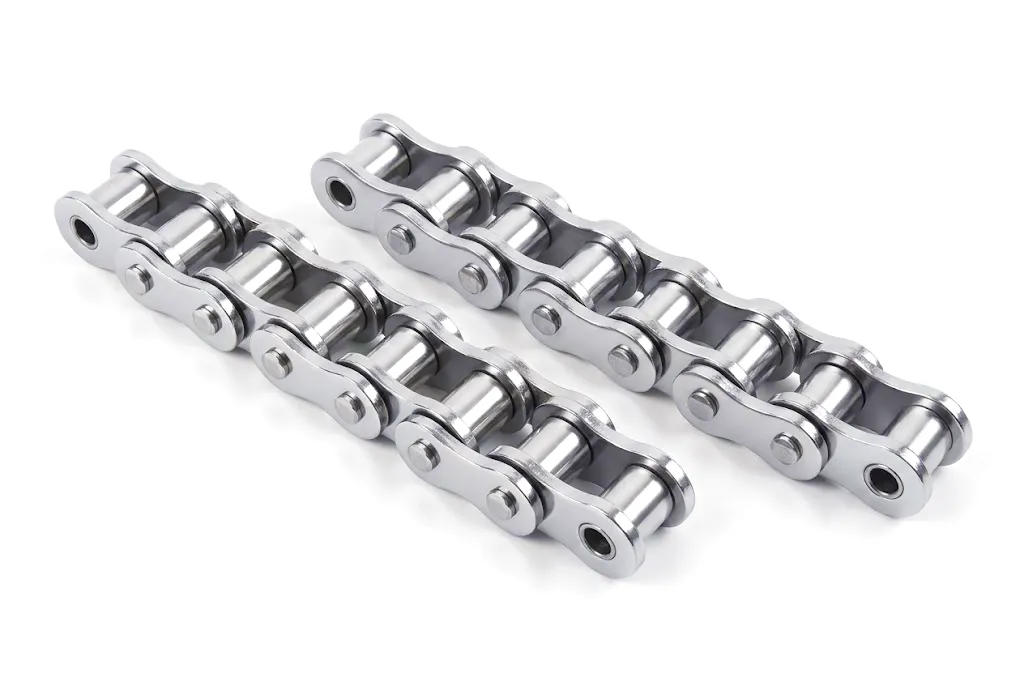 Surface finishing processes applied after the primary heat treatment programme have a significant influence on both corrosion resistance and fatigue strength. Shot peening is routinely applied to link plates and pins in heavy-duty series chains, introducing compressive residual stresses at the surface that retard fatigue crack initiation. Zinc phosphating followed by oil impregnation is the standard surface finish for general-purpose roller chain sold into UK markets, providing adequate corrosion protection during storage and the initial operating period. For more aggressive environments — coastal facilities in ports such as Bristol and Southampton, outdoor agricultural operations across the East Midlands, or chemical processing plants in the Teesside industrial cluster — electroless nickel plating or hot-dip zinc coating provides a substantially enhanced corrosion barrier.
Stainless steel roller chain constructed entirely from AISI 304 or 316L components represents the premium tier of corrosion-resistant options. While not as hard as case-hardened carbon steel, stainless chain is frequently the only technically acceptable solution in applications involving direct food contact, pharmaceutical cleanroom environments, swimming pool plant rooms, or coastal infrastructure maintenance equipment. The trade-off is approximately thirty percent reduction in tensile strength compared to equivalent-pitch carbon steel chain, which must be accommodated in the drive design by either selecting a larger pitch series or reducing the design power factor applied during chain selection calculations.
Technical & Performance Specifications — Standard Roller Chain Series
The table below consolidates the principal dimensional, mechanical, and performance parameters across the most widely specified roller chain series in the UK market, conforming to BS/ISO 606 and ANSI B29.1 interchangeable standards. Engineers should treat these as nominal baseline values; actual rated power capacity figures must be selected from manufacturer power tables that account for sprocket tooth count, shaft speed, lubrication method, and service factor.
| Chain Series (BS/ISO) | Pitch (mm) | Roller Dia. (mm) | Inner Width (mm) | Min. Tensile Strength (kN) | Avg. Weight (kg/m) | Max Speed (m/s) | Typical Material |
|---|---|---|---|---|---|---|---|
| 06B-1 | 9.525 | 6.35 | 5.72 | 9.0 | 0.41 | ≤ 14 | Carbon steel / SS 304 |
| 08B-1 | 12.7 | 8.51 | 7.75 | 18.0 | 0.70 | ≤ 16 | Alloy steel / Ni-plated |
| 10B-1 | 15.875 | 10.16 | 9.65 | 22.2 | 0.93 | ≤ 14 | Alloy steel / SS 316L |
| 12B-1 | 19.05 | 11.91 | 11.68 | 29.0 | 1.15 | ≤ 12 | Alloy steel / Zn-Ni coated |
| 16B-1 | 25.4 | 15.88 | 17.02 | 60.0 | 2.71 | ≤ 10 | High-tensile alloy steel |
| 20B-1 | 31.75 | 19.05 | 19.56 | 95.0 | 3.70 | ≤ 8 | High-tensile alloy steel |
| 24B-1 | 38.1 | 25.4 | 25.4 | 160.0 | 7.10 | ≤ 6 | Heavy-duty alloy steel |
| 32B-1 | 50.8 | 29.21 | 30.99 | 250.0 | 10.25 | ≤ 5 | Heavy-duty alloy steel |
All values are indicative nominal figures. Consult Ever Power engineering team or official manufacturer data sheets for rated power selection. Duplex and triplex multi-strand variants achieve approximately 1.7x and 2.5x the single-strand capacity at equivalent pitch and speed.
Core Technical Advantages of Roller Chain Drive Systems
Rolling contact engagement eliminates the slippage losses inherent to V-belt and flat-belt drives. In high-power applications such as compressor drives and mill conveyors, the efficiency advantage of roller chain over belts translates directly into measurable energy savings and reduced heat generation at the drive unit — a compelling argument for UK facilities pursuing ISO 50001 energy management certification.
The articulating link structure of roller chain absorbs transient overloads through distributed elastic deformation across many links simultaneously. This makes it far more tolerant of shock loading than rigid gear couplings in applications such as jaw crusher drives, heavy forklift mast elevations, and reciprocating pump drives where impulse forces are an unavoidable feature of normal operation.
A single chain design family spans from sub-kilowatt instrument drives in light packaging machinery up to multi-megawatt steel mill main drives using heavy duplex or triplex chain. No other flexible drive element covers this breadth of application without fundamental changes in design approach, which is why roller chain remains the dominant choice for UK manufacturers specifying drives across diverse product line-ups.
Unlike a V-belt or synchronous belt that must be ordered to a precise circumferential length, roller chain can be cut and joined at any pitch increment using standard connecting links or offset links. On-site length adjustment during installation and minor repairs using replacement links can be carried out by maintenance technicians without specialist tooling — a practical advantage for UK engineering maintenance teams working to minimise unplanned downtime.
A single roller chain can simultaneously drive multiple output shafts fitted with sprockets at various points along its run — a feature that no belt type can replicate without additional idler pulleys and tensioning complexity. Multi-shaft roller chain drives are standard practice in agricultural harvesting machinery, poultry processing lines, and multi-head filling machines common to UK food and drink manufacturing, where space constraints favour consolidated drive architecture.
Carbon steel roller chain can operate continuously at temperatures up to approximately 200°C with appropriate high-temperature lubricants, extending to 400°C for specially sintered or ceramic-coated variants. This capability makes roller chain — rather than any polymer-element belt — the only viable flexible drive option for brick kiln conveyors, forge handling equipment, and glass annealing lehr drives, all of which are active sectors in the UK Midlands and Yorkshire manufacturing base.
Industrial Application Scenarios Across the United Kingdom
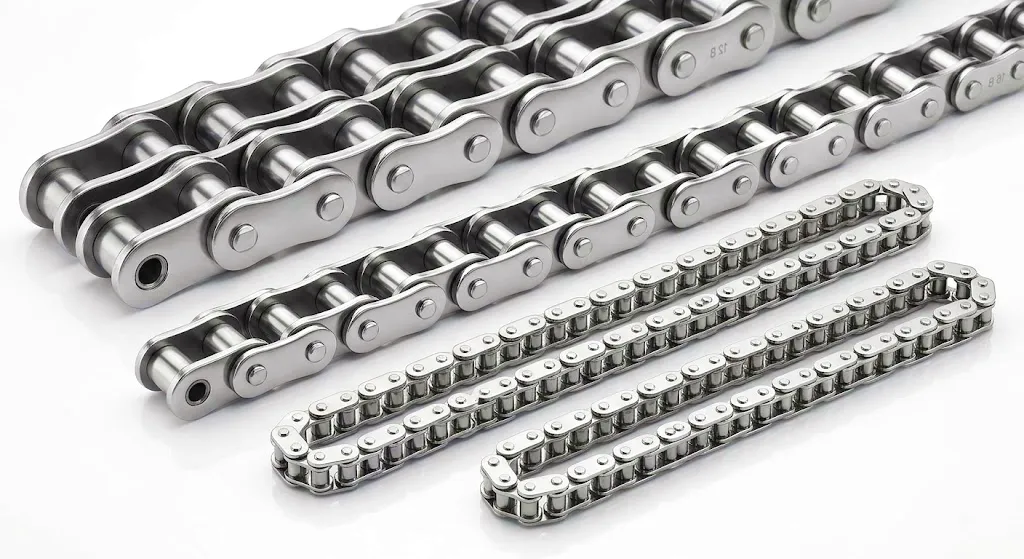 Automotive Manufacturing — Birmingham and Coventry Body Plants: Body-in-white transfer lines in the West Midlands automotive corridor rely extensively on 16B and 20B duplex roller chain for overhead power-and-free conveyors, floor-mounted slat conveyors, and synchronised build carriers moving between assembly stations. The chain must deliver repeatable pitch accuracy to maintain station-to-station synchronisation while withstanding heavy carrier loads and the stop-start cycle profiles of takt-controlled assembly. Shot-peened, pre-loaded drive chain with sealed-and-lubricated joints substantially extends service intervals in these dusty press-shop environments, reducing the frequency and cost of planned maintenance stops that erode OEE figures.
Steel Processing and Rolling Mills — Sheffield and Rotherham: Long-loop conveyor chain in Sheffield steel service centres handles coil, plate, and section products at load ratings that can exceed several tonnes per metre of chain. Heavy-duty roller chain in the 24B and 32B series, often in duplex or triplex configuration, provides the combination of high tensile capacity, abrasion resistance, and pitch stability that steel processing demands. High-temperature variants operate within the water-cooled roller table sections immediately downstream of rolling mill finishing stands, where ambient temperatures and scale contamination present conditions that would destroy any polymer drive element within hours.
Food and Beverage Processing — Grimsby, Lincolnshire and Humber Ports Region: Stainless steel roller chain — predominantly 08B and 10B series in AISI 316L — is specified throughout Grimsby’s extensive food processing sector, which handles fish, poultry, prepared meals, and vegetables for national distribution. The combination of USDA-accepted materials, resistance to regular wash-down cycles using caustic and acid detergents, and the ability to operate in chilled environments at -20°C distinguishes stainless roller chain from every other flexible drive option in this sector. Food-grade oil lubrication applied through metered drip systems completes the hygiene-compliant specification.
Combine harvesters, grain augers, potato harvesters, and sugar beet harvesters deployed across the flat arable farmland of Cambridgeshire, Lincolnshire, and Norfolk depend heavily on agricultural-specification roller chain — typically conforming to BS/ISO 487 heavy series — for header drives, elevator chains, and straw-walker mechanisms. These applications demand chains capable of handling large volumes of abrasive crop material while operating in the heavily contaminated, dust-saturated environment of harvest season, often with limited opportunity for systematic lubrication maintenance during peak periods of crop throughput.
The major distribution and fulfilment centres operating along the M1 corridor south of Northampton rely on 08B and 10B roller chain in conveyor sortation equipment, accumulation roller beds, and cross-belt sorter drives running at speeds up to twelve metres per second. Noise-reduced chain variants incorporating polymer bushings or sintered-bush construction are increasingly specified in these facilities to meet nighttime operating sound limits imposed under local planning conditions in residential-adjacent industrial estates, while preserving the speed and load capacity advantages of conventional steel roller chain.
Web-offset printing presses and paper converting lines depend on 06B and 08B precision roller chain to synchronise impression cylinder phasing, paper feed registration, and cutting-unit timing. The critical performance parameter here is pitch consistency from link to link — a specification that demands grinding and selective assembly to a tolerance of ±0.08 mm on pin-to-pin pitch. At press speeds of up to 900 mm/s at the chain periphery, even small pitch errors accumulate into print register errors that can render entire production runs unusable.
Track-type construction equipment, tunnelling machines, and quarry conveyors operating in the challenging environments of North Wales slate quarries and the coal measure districts of South Yorkshire demand roller chain with maximum fatigue resistance, elongation tolerance, and field replaceability. Heavy-series chain in alloy steel with induction-hardened link plates, combined with self-lubricating sintered bushing technology, represents the current best practice for minimising unscheduled downtime in remote or difficult-access operating locations where maintenance logistics are complex and parts availability timelines are measured in days rather than hours.
Featured Ever Power Roller Chain Products
Among the most specification-requested products in the Ever Power catalogue are the rubber top roller chain variants, which combine conventional roller chain mechanics with an over-moulded rubber attachment on the outer plate to create an integrated conveying surface. These are particularly valued in UK food, pharmaceutical, and light assembly sectors where gentle product handling, lateral product retention, or surface friction control is required alongside positive-drive power transmission.
Built on the 15.875 mm pitch 10B base chain, the G1 variant features a single-row rubber block attachment moulded directly to alternate outer link plates. The rubber compound — typically food-grade NBR or polyurethane — provides a resilient non-slip surface for inclined conveyors, gentle product lanes, and elevation systems handling cartons, bottles, cans, and loose pharmaceutical blister packs. The 10B-G1 is widely specified in UK beverage filling lines, snack food packaging, and personal care product conveyors.
The G2 variant upgrades the rubber attachment profile to a wider, double-projection design that increases the effective conveying width per chain strand and improves lateral product stability on inclined sections. Reinforced rubber moulding with embedded steel backing plates prevents attachment shear-off under side-load conditions, making the 10B-G2 appropriate for heavier unit loads and steeper incline angles than the G1. UK applications include bottle-washing line in-feed guides, sloping sections in distribution centre sorters, and incline sections in automotive parts washing systems.
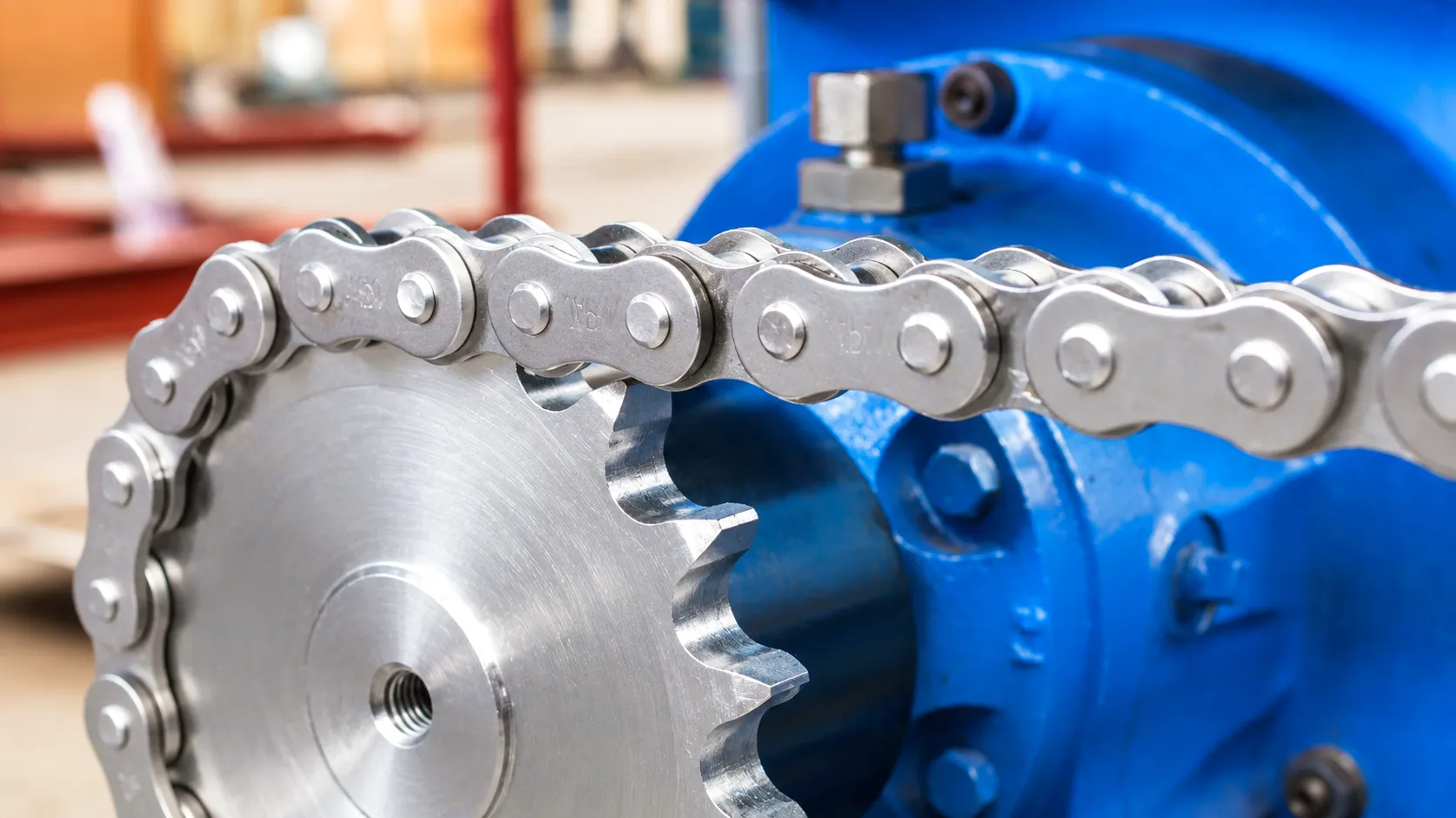 Ever Power has spent over two decades building a manufacturing infrastructure specifically optimised for high-precision, high-volume roller chain production. The company’s production facilities operate advanced cold-drawing and precision-stamping equipment capable of producing link plates to ±0.015 mm dimensional tolerances, with automated vision inspection systems performing 100% plate checking before assembly. Pin grinding machines deliver surface roughness values of Ra 0.2 or below across the entire bearing surface — a standard that directly translates into reduced bushing wear rates and extended field service life.
Customer Success Story: Sheffield Steel Service Centre Drive Upgrade
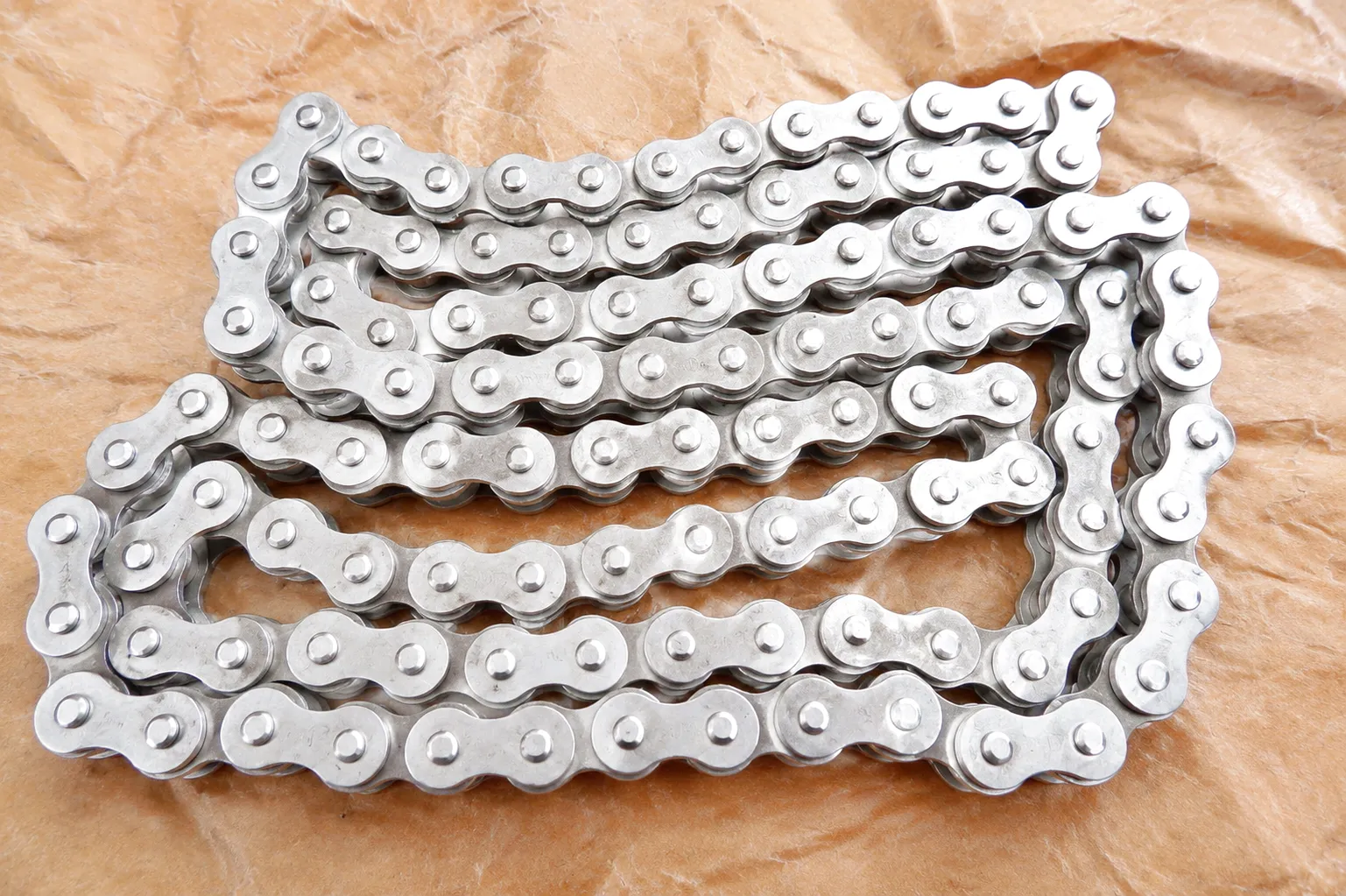 A Sheffield-based steel service centre operating a high-throughput coil-to-cut-to-length processing line was experiencing chain drive failures at an average interval of eleven weeks across three conveyor lines handling hot-rolled coil up to 12 mm thickness and 2,000 mm width. The installed chain — a competitor’s 24B duplex product — was showing accelerated roller crushing and link plate elongation, caused primarily by the combination of high inertia shock loading during coil infeed and persistent contamination of the lubrication film by steel scale particles. The operational impact was significant: each failure required a twelve-hour shutdown for chain replacement, at a direct production cost exceeding £18,000 per incident.
The service centre’s engineering manager contacted Ever Power following a recommendation from a West Midlands-based drive engineering consultancy. Ever Power’s technical team conducted an on-site drive analysis, reviewing chain speed data, load cycle records from the line PLC, and wear particle analysis from lubricant samples. The recommendation was to transition to Ever Power’s heavy-duty 24B duplex roller chain with induction-hardened link plates, increased pin diameter for the specific chain width, and a polymer-sealed pin-bushing interface pre-charged with high-viscosity EP grease — eliminating the dependency on external lubrication in the contaminated environment.
A 24-month field trial across all three conveyor lines demonstrated an average service life improvement from eleven weeks to forty-two weeks before inspection-triggered replacement — a 3.8-fold improvement. The modified chain specification was adopted as the standard for all three conveyor lines, and the improved reliability profile contributed to a documented reduction in unplanned downtime of 68% across the steel service centre’s processing division. The annual maintenance cost saving attributable to the chain upgrade alone exceeded £120,000, delivering a capital payback period for the premium chain specification of less than four months.
We had resigned ourselves to quarterly chain changes as an unavoidable cost of running a high-throughput coil line. Ever Power’s sealed-pin design has fundamentally changed that equation. The technical support from their team was genuinely thorough — they didn’t just sell us chain, they identified the root cause and solved the actual problem.
The custom chain Ever Power produced for our poultry processing conveyor in Grimsby met every hygiene specification we requested — stainless plates, food-grade rubber top attachments, and sanitary connecting links. Lead time was six weeks from confirmed order to delivery at our site, which for a custom build is genuinely impressive. Wash-down performance after twelve months of operation has been excellent.
We switched our combine header drive chains to Ever Power’s agricultural series after repeated failures with our previous supplier during last year’s oilseed rape harvest in Cambridgeshire. The difference in elongation resistance has been measurable — we’ve completed a full season without a single chain replacement on four machines, which simply wasn’t achievable before. Pricing was competitive and delivery to our farm depot was straightforward.
Maintenance Best Practices for Extended Roller Chain Service Life
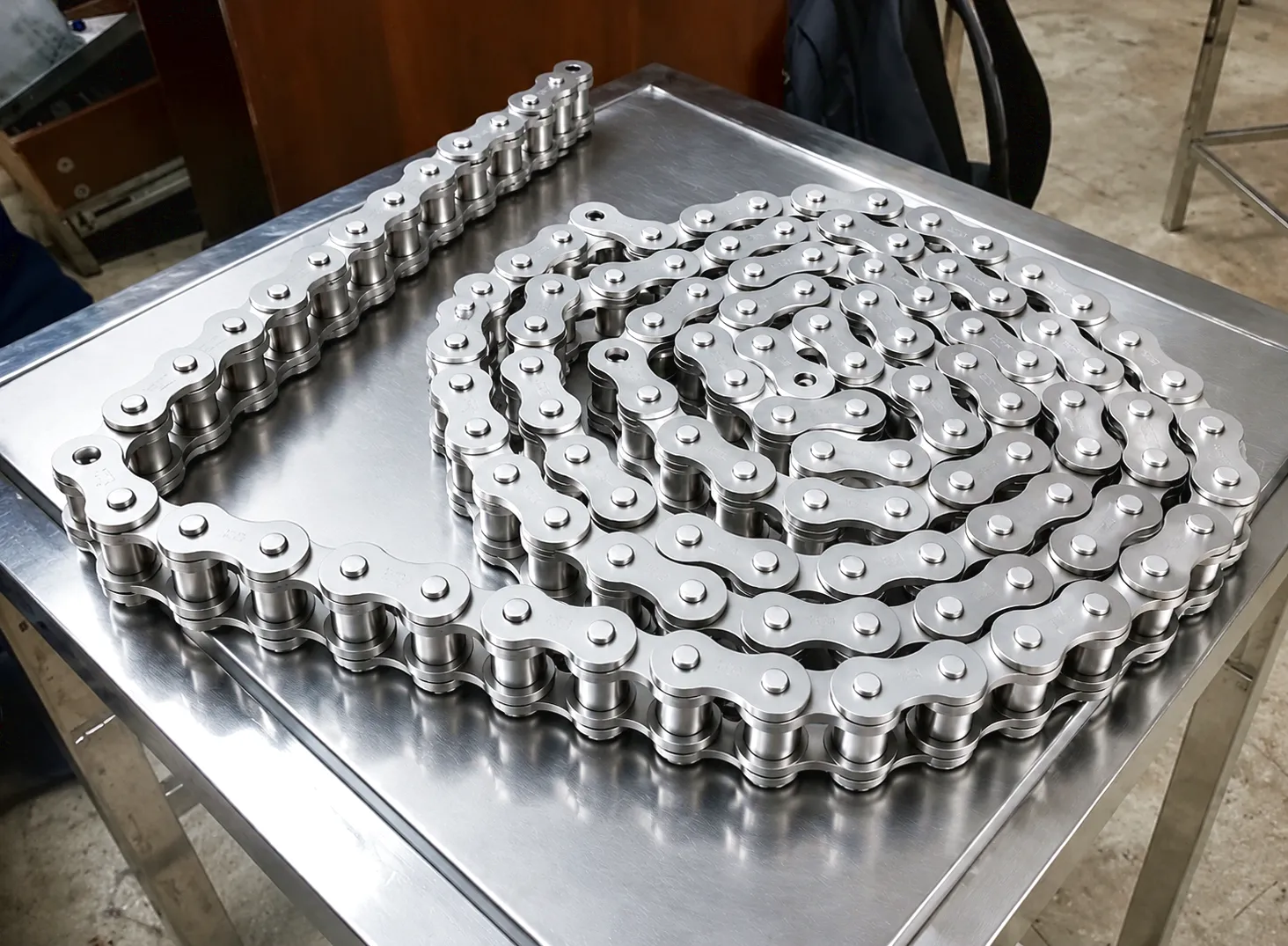 The most reliable predictor of roller chain longevity is not the grade of steel from which it is manufactured but rather the quality and consistency of the maintenance regime applied during its operating life. A standard-grade chain maintained according to manufacturer recommendations will consistently outlast a premium-grade chain operating under-lubricated or in a contaminated lubricant condition. Understanding this principle allows plant engineers to make informed cost-benefit calculations between investing in higher-specification chain and investing in better lubrication system design.
Chain elongation measurement is the primary maintenance tool for assessing remaining service life. As the pin-bushing interface wears, the effective pin-to-pin pitch increases — a phenomenon commonly (though misleadingly) described as chain stretch. BS/ISO 606 defines the maximum permissible elongation before chain replacement as two percent of the nominal chain length over a reference span of six pitches. Beyond this threshold, the chain no longer seats correctly in the tooth valleys of the sprocket and begins to ride up the tooth flanks, accelerating both chain and sprocket wear at an exponential rate. Measuring elongation with a simple two-point gauge applied across a defined number of pitches should be incorporated into every planned preventive maintenance routine for chain-driven equipment.
Sprocket condition should always be assessed concurrently with chain condition. Replacing a worn chain onto worn sprockets will see the new chain adopt the worn sprocket’s pitch polygon within hours of operation, severely shortening the replacement chain’s service life. The characteristic signs of excessive sprocket tooth wear — a hooked profile on the tooth leading face, reduced tooth root radius, and asymmetric wear indicating misalignment — should be recognised by any maintenance technician responsible for chain drive systems in UK industrial facilities.
Frequently Asked Questions About Roller Chain in the UK
Ready to Source High-Performance Roller Chain for Your UK Application?
Send your specification to Ever Power’s technical sales team and receive a detailed quotation, chain selection recommendation, and lead time confirmation within 24 business hours.
✉ Contact Us: [email protected]
gzl tarafından düzenlendi