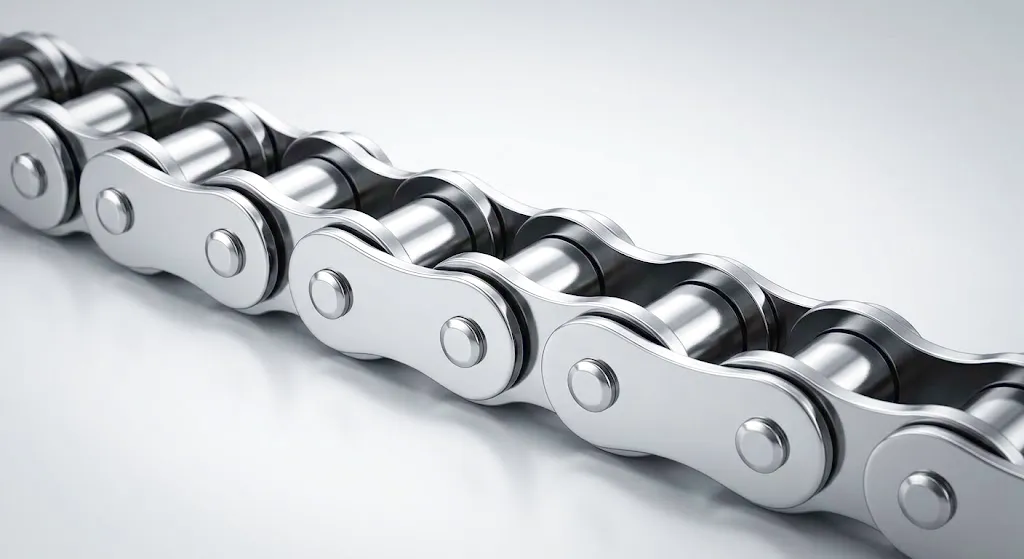
 Across manufacturing floors in Birmingham, Sheffield, and Coventry — wherever heavy machinery drives product lines — roller chain noise is one of the most reported yet frequently misunderstood maintenance challenges. It surfaces not just as an irritant to operators working eight-hour shifts, but as a genuine engineering signal that something within the power transmission system demands attention. The acoustic behaviour of a roller chain system is a composite result of mechanical geometry, lubrication chemistry, sprocket tooth profile, tensioning mechanics, and the cumulative wear pattern of individual chain links. Understanding why a roller chain generates noise — and what specific engineering intervention will reduce it — requires a structured, multi-variable diagnostic approach rather than a single blanket fix. In the UK’s demanding industrial sectors, from automotive tier-one suppliers in the West Midlands to food-grade processing plants in Yorkshire, the stakes of unresolved chain noise extend well beyond decibel levels: they translate directly into premature component failure, unplanned downtime, and significant replacement cost.
The Physics Behind Roller Chain Noise Generation
Every time a roller chain engages a sprocket tooth, there is a physical impact event. The roller — a cylindrical component sitting between inner link plates — contacts the sprocket tooth flank and then the root radius at a speed proportional to chain velocity and sprocket pitch. At higher operational speeds, this contact generates a characteristic metallic clatter that many engineers in Sheffield’s steel-processing facilities describe as “chordal action noise.” The chordal effect is a kinematic reality: because a chain engages a polygon-shaped sprocket rather than a perfect circle, the chain’s linear velocity fluctuates cyclically with every pitch of engagement. This velocity variation introduces dynamic impulses. Each impulse radiates acoustic energy through the chain, sprocket, shaft, and ultimately the machine frame. The energy amplitude — and therefore the noise level — scales with the square of the chain speed and is highly sensitive to pitch size: a 1-inch pitch ANSI 80 chain running at 600 RPM produces significantly more impact noise than a finer-pitch equivalent transmitting the same power at lower speed-to-load ratio.
The polygon effect deserves engineering attention as one of the principal structural causes of roller chain noise in high-speed applications. As a chain wraps around a sprocket, the pitch polygon — defined by the straight line segments between chain pin centres — produces an inherent speed variation in the chain’s linear velocity. The percentage of this variation is determined by the number of sprocket teeth: a 9-tooth sprocket produces a velocity fluctuation of approximately 6.1%, while a 25-tooth sprocket reduces this to under 0.8%. This is why UK mechanical engineers specifying new roller chain drives for conveyor systems or bottling lines in food manufacturing plants in Leeds routinely select the highest practical number of sprocket teeth. The velocity fluctuation not only generates acoustic noise but also creates dynamic loading cycles in the chain and bearing components — contributing to fatigue crack initiation in link plates operating at the boundaries of their rated tensile strength. Selecting finer-pitch chains with larger tooth-count sprockets is a primary engineering mitigation for polygon-effect noise in precision-critical applications.
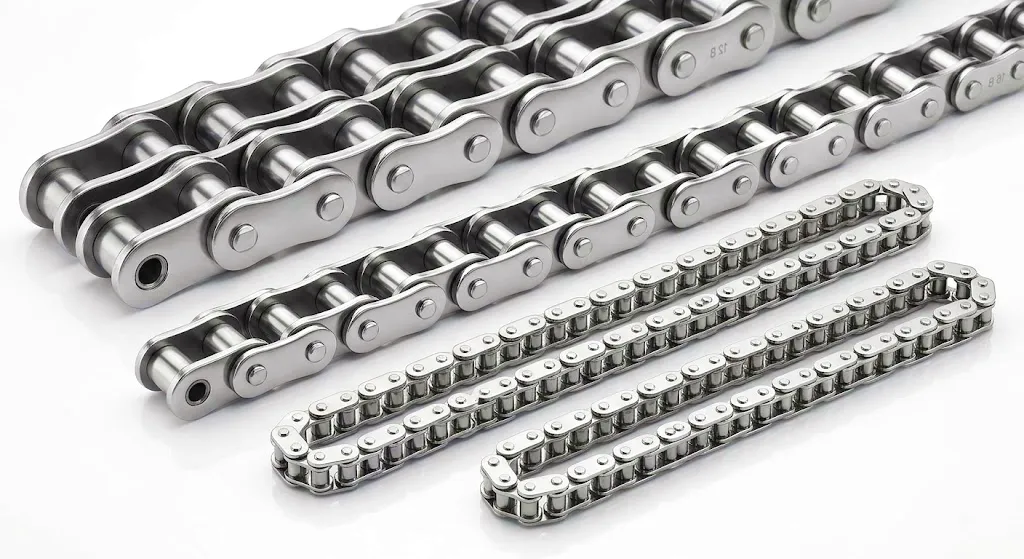 Roller chain wear elongation is the single most common root cause of progressive noise increase in installed drive systems, and it is consistently underestimated by maintenance teams managing high-cycle applications. As roller chain runs under load, the pins and bushings that form each articulating joint undergo continuous micro-sliding contact. Without sufficient lubrication film, this contact is metal-to-metal, generating abrasive wear particles and gradually increasing the effective pitch of the chain. The industry standard wear limit is 3% elongation relative to nominal pitch — a point at which the chain can no longer properly seat in the sprocket root and begins to ride up the tooth flanks. In a Sheffield manufacturing environment running three-shift operations on heavy-duty conveyors, a roller chain can reach this 3% threshold in as few as 3,000 to 5,000 operating hours if lubrication intervals are inadequate or if the environment is contaminated with abrasive particles such as metal swarf, casting sand, or industrial dust. The acoustic signature of wear elongation is distinctive: a rhythmic, low-frequency clunking that increases in intensity as load cycles and progressively shifts in phase as the chain-to-sprocket pitch mismatch worsens. Routine monitoring using a vernier calliper or a calibrated chain wear indicator tool — measuring across a minimum of 12 links — allows maintenance engineers to catch elongation before noise becomes a precursor to link plate failure.
Roller Chain Noise: Diagnostic Reference Table
The table below consolidates the primary noise generation mechanisms, their diagnostic indicators, engineering root cause, and the recommended corrective action category. UK maintenance engineers should use this as a first-stage triage tool when investigating a noisy roller chain drive system.
| Noise Type | Acoustic Signature | Root Cause | Key Indicator | Corrective Action |
|---|---|---|---|---|
| Chordal / Impact | High-frequency clatter; speed-dependent | Polygon effect; few sprocket teeth | Increases with RPM; 70–90 dB(A) | Increase tooth count; reduce pitch |
| Wear Elongation | Rhythmic low-frequency clunk; load-dependent | Pin/bush wear; inadequate lubrication | >1.5% pitch elongation measured | Replace chain; upgrade lubrication regime |
| Resonance / Vibration | Droning hum; harmonic overtones | Drive frequency matching span natural freq. | Amplified at specific RPM range | Adjust tension; change centre distance |
| Misalignment | Scraping / lateral rubbing; directional | Shaft parallelism or sprocket offset error | Edge wear on link plates; visible offset | Realign shafts; check sprocket run-out |
| Lubrication Starvation | Dry squeal or metal grinding; temperature-linked | Oil film failure at pin-bush interface | Rust discolouration; rapid heat build-up | Implement pressure/bath/oil drip lubrication |
| Overtension | High-pitched whine; constant frequency | Excessive chain tension; tight-side overload | Elevated bearing temperatures; chain stiff | Recalculate tension; adjust centre distance |
| Roller Fatigue / Cracking | Irregular impacts; noise spikes at chain frequency | Roller material fatigue; impact cycling | Visible roller cracks or flat spots | Replace chain; review shock load specification |
Engineering Solutions for Roller Chain Noise Reduction
Among all corrective measures for roller chain noise, optimised lubrication engineering delivers the most immediate and measurable noise reduction results — consistently achieving 5 to 12 dB(A) reduction in field applications when the lubrication regime is correctly matched to chain speed, load, and environment. There are four principal lubrication methods used in UK industrial practice, each with a distinct speed-and-load application window. Manual brush or drip lubrication is appropriate for slow drives below 3 m/s where maintenance access is regular — common in agricultural machinery service workshops in East Yorkshire. Bath lubrication, where the chain partially submerges in an oil reservoir, suits moderate-speed enclosed drives up to 12 m/s and is widely used in gearbox-integrated conveyor drives across the West Midlands automotive supply chain. Oil-disc lubrication uses a rotating disc to pick up oil from a sump and deposit it onto the chain, extending the range to 15 m/s. For high-speed precision applications above 20 m/s — such as those found in pharmaceutical packaging lines in the East Midlands — forced-circulation pressure spray systems are the engineering standard, delivering metered oil directly to pin-bush interfaces with filtration return circuits. Selecting a lubricant with the correct SAE viscosity grade for the ambient temperature range is equally critical: ISO VG 68 is a common baseline for indoor industrial UK temperatures of 10–40°C, while operations in unheated northern facilities may require ISO VG 46 to maintain adequate film thickness during winter months.
Correct roller chain tensioning is a non-negotiable foundation of quiet, long-life operation. The standard engineering guideline for horizontal drives specifies a free-span sag of 1% to 2% of the centre distance — a figure that accounts for the required slack-side compliance that absorbs dynamic load variations without creating either overtension noise or excessive whipping vibration. In vertical or inclined drives common in mining and quarrying applications in South Wales and the East Midlands, the sag allowance must be recalculated to prevent catenary-driven load spikes. A common error observed in Sheffield’s heavy engineering sector is the over-tensioning of replacement roller chains during installation: technicians often tighten chains to a drum-like rigidity believing this will prevent slap, when in reality the additional pre-load dramatically increases pin-to-bush contact pressure, accelerating wear and paradoxically generating more noise within 500 to 800 operating hours. Automatic tensioning devices — either spring-loaded or hydraulic — maintain optimal sag continuously as the chain undergoes thermal expansion during the operating cycle, eliminating the need for manual re-tensioning intervals and providing consistent noise levels throughout the service life. For the roller chain span between sprockets, the critical natural frequency of the free span must not coincide with the rotational frequency of the drive: this resonance condition creates a sustained, high-amplitude vibrational noise that is distinctly different from impact noise and requires centre distance adjustment or speed change to resolve.
High-Strength Roller Chain Solutions for Demanding Applications
For applications where standard roller chain noise solutions are insufficient due to extreme load or speed conditions, specifying a precision-engineered high-strength variant is the appropriate engineering response. Ever Power supplies the following product grades for Caterpillar and equivalent heavy-duty applications:
Engineered specifically for Caterpillar equipment operating under extreme cyclic loading. The 120HSP-00 features shot-peened link plates for increased fatigue resistance, precision-ground pins to reduce run-in noise, and a case-hardened roller assembly that dramatically reduces impact sound at engagement. Ideal for UK construction plant fleets operating out of depots across the Midlands and North England.
The C100HSP-00 addresses noise-at-load scenarios common in Caterpillar C-series undercarriage and drive system applications. The chain uses an optimised bush-to-roller clearance tolerance that reduces free-play rattling under variable load conditions — a known issue in quarrying and aggregate processing operations across Yorkshire and Derbyshire. The manufacturing tolerance on pitch is held to ±0.05mm, ensuring smooth, quiet engagement across the full sprocket arc.
Material Selection and Its Noise Implications
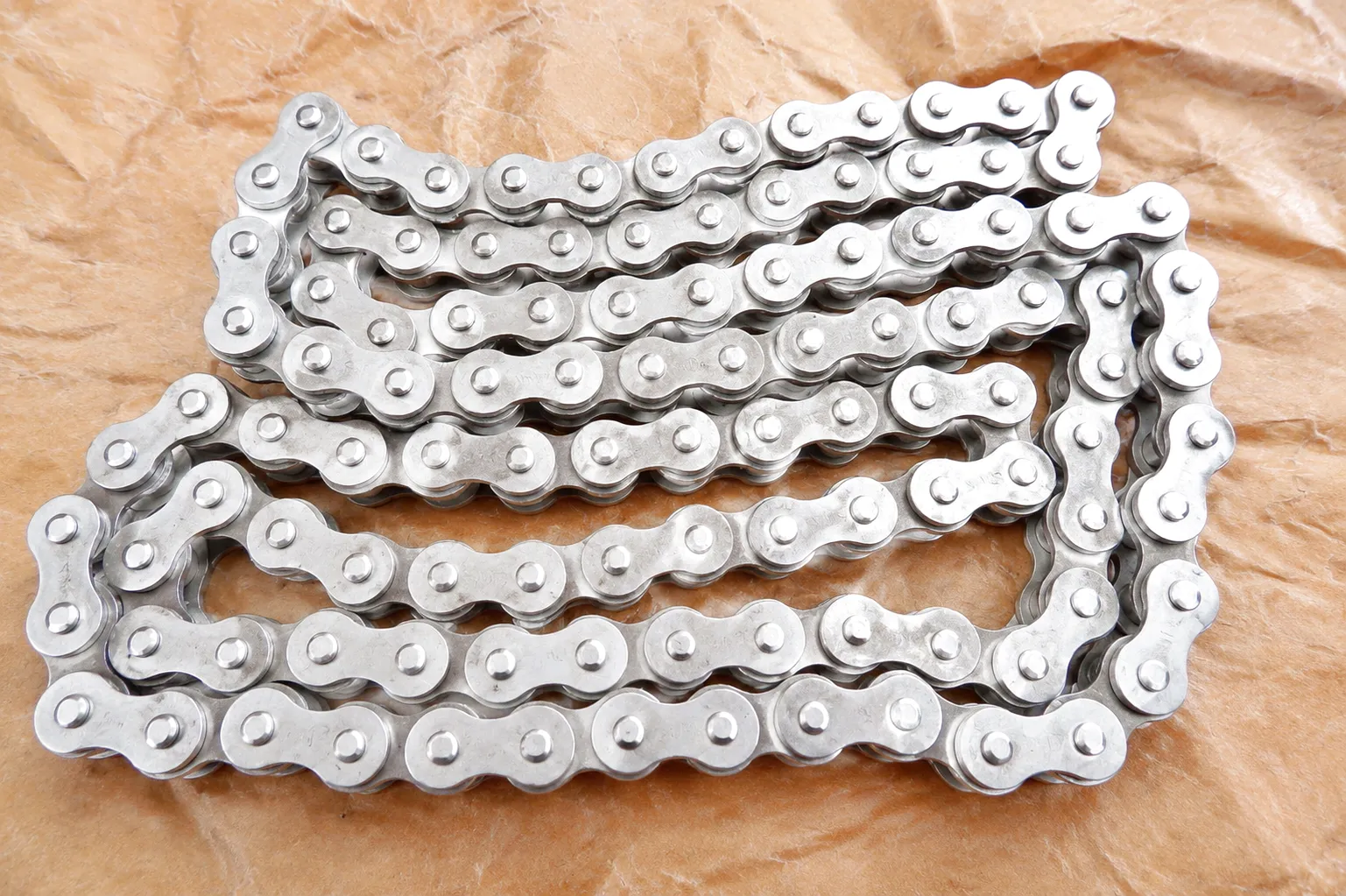
Highest strength-to-cost ratio; appropriate baseline for the majority of UK industrial conveyor, manufacturing, and agricultural applications. Noise levels are moderate and predictable when lubrication is maintained. Link plate material: 35CrMo or S45C; pin hardness: 56–62 HRC; roller hardness: 54–58 HRC. Standard ISO 606 pitch tolerances. Recommended for applications where noise control is a maintenance discipline rather than a design constraint.
Elastomeric ring seals lock in grease at each pin-bush joint, eliminating external lubrication dependency in hostile environments such as food processing and washdown applications in Yorkshire and Lancashire. Delivers 4–8 dB(A) noise reduction versus unsealed equivalent. Elastomer compound selection — NBR for oil resistance, EPDM for hot-water washdown — must align with the operating environment to prevent premature seal degradation. Service life extension of 2x to 4x versus standard chain in contaminated environments.
316L or 304 stainless steel construction for food, pharmaceutical, and marine applications in UK coastal industrial zones such as Humberside and the Thames estuary. Higher material damping coefficient versus carbon steel translates to marginally lower radiated noise levels, but the softer material means tighter tolerance control is required during manufacture to prevent premature wear. Pitch accuracy must be maintained to ±0.03mm to compensate for the lower surface hardness of stainless components in high-cycle applications.
Roller Chain Noise in UK Industrial Application Scenarios
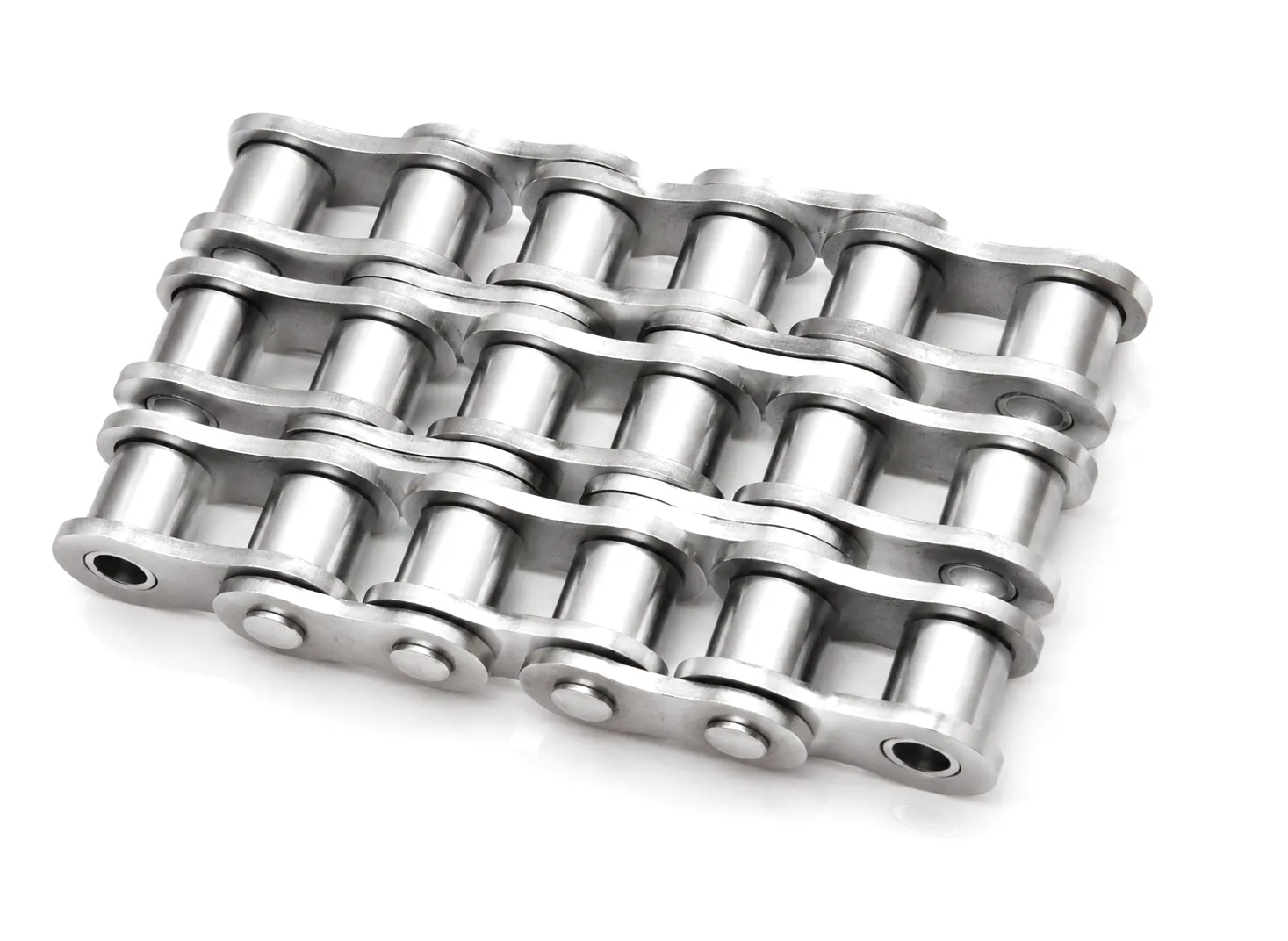
Sheffield retains a significant heavy-forging and steel-processing sector where roller chains drive furnace charging equipment, rolling mills, and slab-handling conveyors under extreme heat and load. The noise environment in these facilities is inherently demanding, but chain noise specifically manifests as a symptom of thermal expansion mismatch between chain and sprocket in the transition from cold start to operating temperature. Engineering solutions include selecting chains with confirmed thermal expansion coefficients matched to the operating temperature range, installing automatic tensioners with temperature-compensating spring rates, and specifying lubricants with high viscosity-index ratings that maintain adequate film thickness across the 20–280°C temperature range encountered near furnace entries. Ever Power’s engineering team has supplied custom-specification heavy-pitch roller chains to Sheffield-area steel processors, with pin diameters and link plate thicknesses selected to match the specific shock-load profile of each application.
Agricultural roller chain applications in Yorkshire’s arable belt and the fenlands of East Anglia deal with noise generated by contamination as much as by mechanical design. Crop residue, soil particles, and moisture create an abrasive paste that accelerates bush-pin wear at rates far above clean industrial equivalents. The noise signature — a progressive worsening clatter through harvest season — correlates directly with the rate at which contaminants infiltrate the chain’s articulating joints. Sealed chain variants with O-ring or X-ring seals are increasingly the specification baseline for UK combine harvester straw-walkers, header drives, and grain elevator chains. Ever Power supplies ISO-606-compliant agricultural roller chain in BS and ANSI pitch series with crop-environment-compatible seal materials and pre-lubricated designs that extend field service intervals and maintain quieter operation across a full harvest season without manual re-lubrication stops.
Technical Performance Parameters — Roller Chain Noise Engineering
The following technical parameters table provides reference data for engineers specifying or diagnosing roller chain drives where noise reduction is a design requirement. Values represent typical industry ranges; specific application calculations should be performed using ANSI B29.1, ISO 10823, or BS 228 as appropriate.
| Parametri | Standard Range | Low-Noise Target | Unit / Notes |
|---|---|---|---|
| Chain pitch | 6.35 – 101.6 | ≤ 25.4 | mm — smaller pitch = lower impact energy |
| Sprocket tooth count (drive) | 9 – 25 | ≥ 21 | Higher count = less polygon effect noise |
| Permissible chain speed (std.) | 0.5 – 25 | ≤ 15 for noise priority | m/s — noise scales approx. v^2 |
| Wear elongation limit | 3% | Replace at 1.5% | % of nominal pitch — low-noise maintenance threshold |
| Pin hardness | 56–62 HRC | 58 – 62 HRC | Rockwell C — higher hardness for wear resistance |
| Pitch tolerance | ±0.05 – ±0.15 | ±0.03 – ±0.05 | mm — tighter = quieter engagement; Ever Power precision grade |
| Lubricant viscosity (ISO VG) | 46 – 220 | 68 – 100 (10–40°C UK ambient) | ISO VG — correct viscosity prevents starvation noise |
| Tensile strength (1″ pitch) | 31.8 – 222 | Application-specific | kN — oversizing for noise margin reduces relative dynamic load |
| Free span sag (horizontal) | 2 – 4% | 1 – 2% of centre distance | % — overtension causes whine; undertension causes slap |
| Noise reduction (O-ring vs standard) | 3 – 8 | 5 – 8 | dB(A) — measured under identical load/speed conditions |
Customer Success: Noise Elimination at a Sheffield Forging Plant
What UK Customers Say About Ever Power Roller Chain
“We had a chronic roller chain noise issue on our transfer line that was triggering health and safety reviews every quarter. Ever Power’s precision ANSI 50 chain and the matched sprocket recommendation eliminated the problem within the first week of operation. Six months later, chain wear is tracking at roughly half the rate of what we were seeing with the previous supplier’s product. The dimensional consistency is clearly superior — we’ve had zero pitch-related engagement problems since the change.”
“We operate a high-speed bottling line at our Leeds facility and chain noise at the accumulation conveyor was a persistent complaint from the QA team working nearby. Ever Power supplied us with their O-ring sealed chain in a custom strand length and the difference on commissioning was immediately noticeable — the site foreman described it as ‘like someone turned the volume dial down.’ We’ve since standardised on Ever Power’s BS 10B O-ring chain across all three of our UK production sites.”
“We were replacing our forge press transfer chains every 14 to 16 weeks due to high shock loading and heat — the noise was secondary, but it was severe enough to be a factor in operator fatigue assessments. Ever Power recommended their heavy-duty pitch chain with shot-peened plates and we’re now at 26 weeks and counting. The custom specification service was straightforward — our parameters were clearly understood from the first conversation and the delivered product matched the drawing exactly. Thoroughly recommend their technical team’s input on complex applications.”
Frequently Asked Questions — Roller Chain Noise (UK)
UK-stocked. Custom-specified. Engineer-supported. Get your free application consultation and quote today.
Get a Quote — [email protected]