The Working Principle Behind Self-Lubricating Roller Chain
Continuous lubrication, zero external input
Sintered Oil-Impregnated Bushings
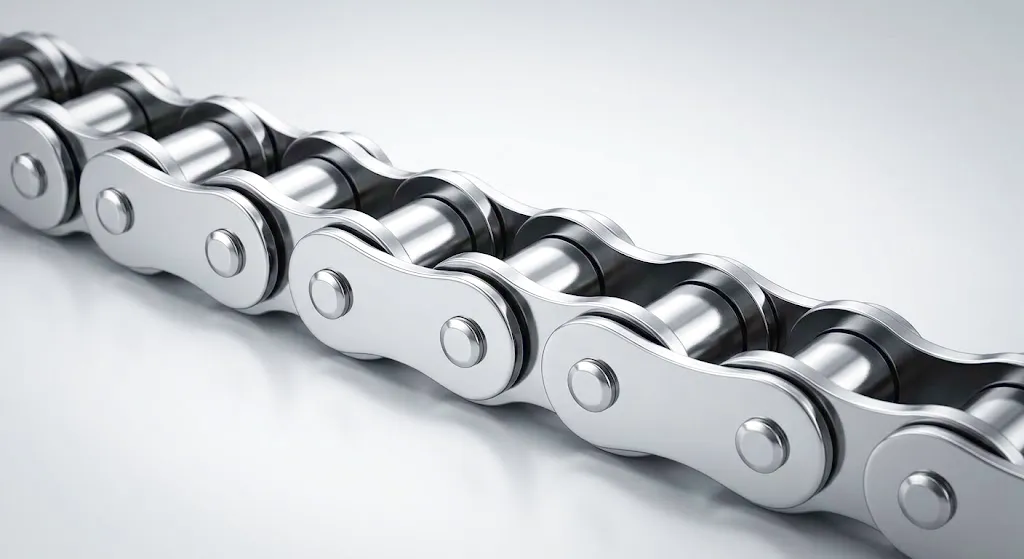
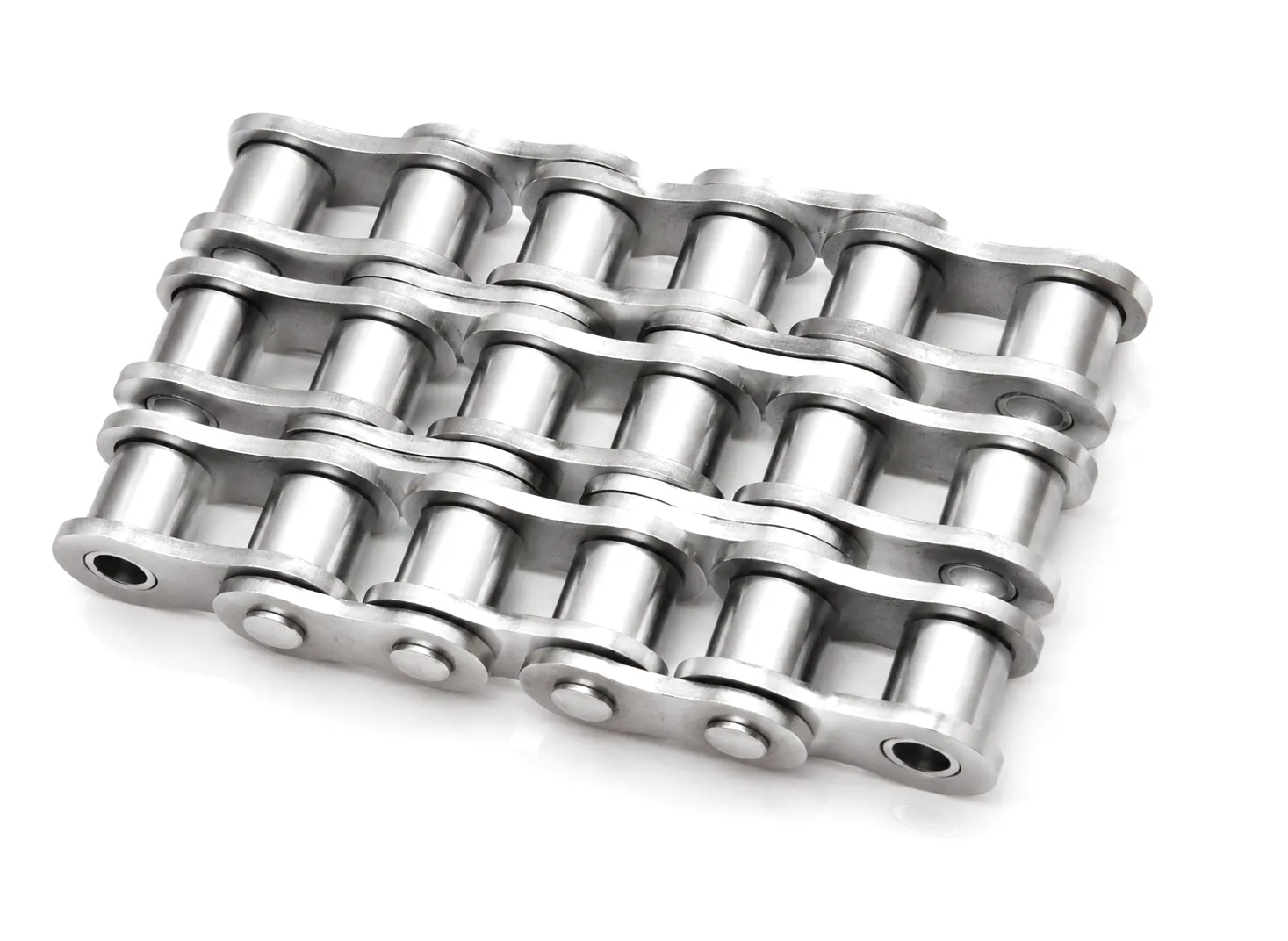
At the heart of every self-lubricating roller chain sits the oil-impregnated sintered bushing. This component is manufactured using powder metallurgy — a process in which metal powders (typically a blend of iron, copper, and carbon) are compacted under high pressure into a die and then sintered at elevated temperatures just below the melting point. This creates a rigid yet highly porous metallic structure with interconnected voids that are then vacuum-impregnated with a specific grade of oil. The porosity level is typically controlled to sit between 18–25% by volume, giving the bushing a meaningful lubricant reservoir. As the chain operates, frictional heat and contact pressure cause the bushing to “breathe,” drawing a micro-film of oil to the contact surface. When load reduces, capillary forces pull the oil back into the pores for storage. This thermal-pressure lubrication cycle repeats continuously throughout the chain’s service life, with no external intervention required at any point.
Pin-to-Bushing Interface Dynamics
The critical wear point in any roller chain is the pin-to-bushing interface — the location where articulation occurs every time a link engages or disengages from a sprocket tooth. In a conventional chain, this interface depends entirely on externally applied oil reaching the joint clearance through gravity, splash, or a drip lubrication system. When external lubrication is insufficient — whether due to spray-off in high-speed operation, wash-off in wet environments, or simply a missed maintenance event — metal-to-metal contact begins, initiating abrasive wear. In a self-lubricating roller chain, the porous bushing ensures that a micro-film of oil is always present at this interface, maintained by the capillary and thermal-pressure mechanisms described above. The lubricant migrates outward from the bushing’s internal pore network under operational conditions, coating the pin surface with a protective hydrodynamic film. This fundamentally changes the wear kinetics of the chain, extending pitch elongation intervals dramatically compared to conventionally lubricated chains in equivalent service conditions.
Thermal Regulation and Load Response
One of the underappreciated engineering qualities of a self-lubricating roller chain is its inherent response to operational load changes. Under heavy loads or elevated ambient temperatures — common in steel processing facilities in Sheffield or large-scale quarrying equipment in Wales — the sintered bushing releases proportionally more lubricant to the contact surface because increased pressure accelerates the expulsion from pore openings and higher temperature reduces oil viscosity, improving migration. This creates a feedback mechanism that aligns lubricant delivery with the chain’s actual tribological demand. During light-load or idle periods, lubricant redistribution back into the pore network recharges the bushing for the next demand cycle. Engineers familiar with tribology will recognise this as a form of demand-driven lubrication, a feature previously only achievable with active centralised lubrication systems or regular manual maintenance schedules.
Core Materials That Define Performance
Material science is the backbone of every self-lubricating roller chain specification
Alloy Steel Plates & Pins
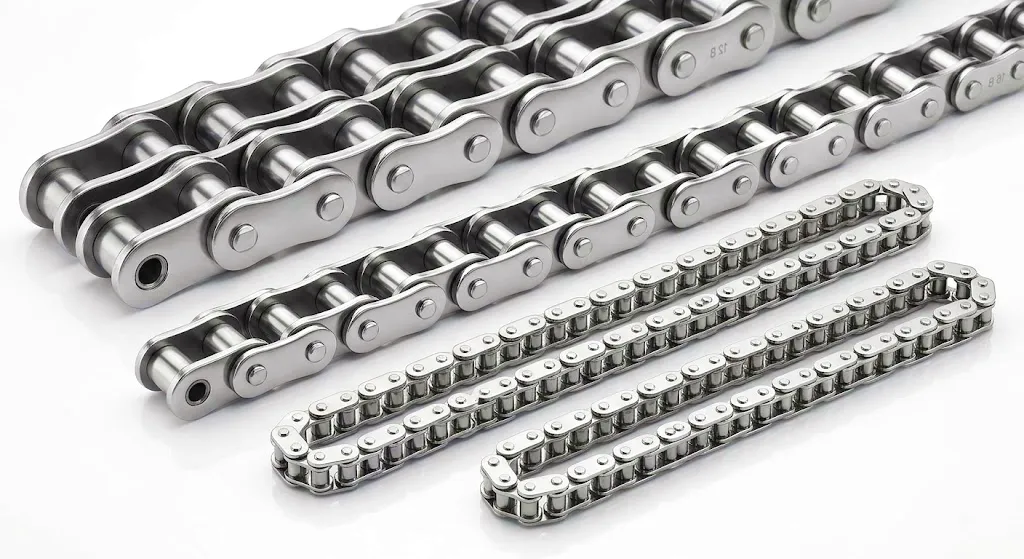
The inner and outer link plates are stamped from medium-carbon alloy steel — typically 40Cr or equivalent EN36 grades commonly specified in UK engineering standards — and then subjected to precision heat treatment including carburising or carbonitriding to achieve a surface hardness of 58–62 HRC while maintaining a tougher, more ductile core. This combination resists fatigue cracking under the oscillating tensile stresses that characterise roller chain operation. Connecting pins are manufactured from high-carbon chromium steel, precision-ground to tight diameter tolerances and then through-hardened. The combination of hard outer plate and an equivalently hard, precisely dimensioned pin ensures that the load is distributed evenly across the chain’s cross-section, which is critical for achieving rated tensile strength without localised stress concentration points that could initiate fracture.
Sintered Iron-Copper Bushings
The bushing is the defining component, and its material composition is no accident. A typical sintered self-lubricating bushing uses a base of iron (Fe) with copper (Cu) additions — usually in the 8–15% range by mass — along with controlled carbon content and sometimes small additions of tin or molybdenum disulphide for enhanced tribological properties. The copper phase acts as a solid lubricant supplement and improves the thermal conductivity of the bushing, helping to dissipate frictional heat away from the contact zone. After sintering, the bushing undergoes vacuum oil impregnation in ISO VG 46 or ISO VG 68 mineral oil, chosen for its viscosity stability across the typical operating temperature range of -10°C to +120°C. For food-grade or pharmaceutical applications — relevant to many UK processing facilities — NSF H1-registered lubricants are used instead, complying with UK Food Safety Act requirements and BRCGS standards.
Hardened Rollers & Surface Treatments
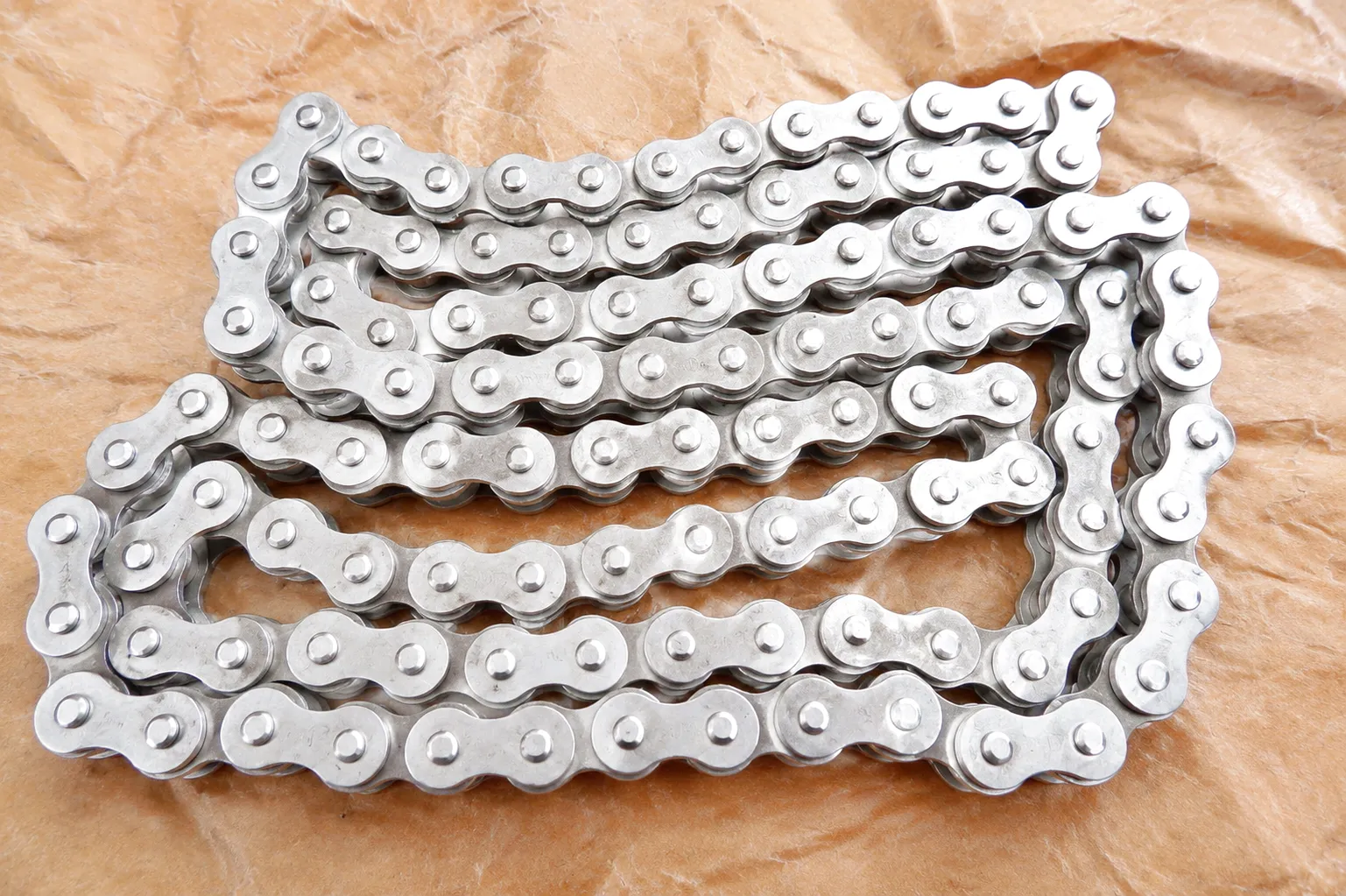
The outer roller, which contacts the sprocket tooth, is made from low-carbon case-hardened steel. Precision roll-forming followed by carbonitriding brings the roller surface hardness to HRC 54–58, adequate to resist the compressive contact stresses at the sprocket tooth interface without fracturing under impact loads. Self-lubricating roller chain can be further enhanced with a zinc-phosphate conversion coating on the outer plates for improved corrosion resistance in damp environments — a relevant consideration given the UK’s humid coastal and rainy inland climate that affects so many industrial sites from Manchester to Bristol. In particularly aggressive environments, stainless steel variants using 304 or 316L grade can be manufactured, offering excellent resistance to saltwater, acid mist, and aggressive cleaning chemicals used in modern food and beverage manufacturing plants.
Core Technical Advantages
Why engineers and procurement teams across the UK are switching
Maintenance Interval Elimination
The most commercially significant advantage is the elimination of scheduled re-lubrication. In a conventional drive chain installation, maintenance engineering teams in UK manufacturing facilities — operating under BS EN ISO 9001 quality management systems — must schedule regular lubrication tasks that consume labour hours, require appropriate lubricants to be stocked, and present risks of under-lubrication if intervals slip. Self-lubricating roller chain removes this entirely from the maintenance schedule, reducing the total cost of ownership considerably over a three-to-five-year service life. In high-access environments such as enclosed conveyor tunnels or elevated walkways, the safety benefits of eliminating routine lubrication access are equally significant.
Clean Environment Compatibility
Traditional chains drip, fling, or allow excess lubricant to migrate into adjacent process areas, creating contamination risks unacceptable in food processing, pharmaceutical packaging, and electronics assembly. A self-lubricating roller chain, by design, releases only a micro-film of oil — the minimum necessary to maintain the lubricant film at the pin-bushing interface — and does not generate the oil spillage or mist associated with external lubrication systems. UK facilities operating under Food Standards Agency guidelines or MHRA requirements increasingly specify this chain type for overhead conveying in production zones where any hydrocarbon contamination of product would trigger a recall. The clean-operation characteristic also eliminates the need for protective drip trays and regular chain-oil disposal, reducing the facility’s environmental compliance burden.
Extended Service Life
Field data consistently demonstrates that self-lubricating roller chain achieves between two and three times the operational life of a standard chain in equivalent conditions where conventional lubrication is suboptimal. The key measure of roller chain wear life is pitch elongation — as the pin and bushing wear, the effective chain pitch increases, eventually causing poor meshing with the sprocket and accelerated, destructive wear. ISO 606 specifies a 3% pitch elongation as the replacement threshold. Because the sintered bushing’s continuous self-lubrication maintains the hydrodynamic film at the pin contact throughout service, the rate of pin diameter reduction is dramatically slower, and the time to reach the 3% elongation limit is correspondingly extended. For industries operating continuous shifts — common in UK automotive component supply chains where just-in-time delivery demands near-100% uptime — this life extension directly translates to fewer unplanned stoppages and longer intervals between planned chain replacements.
Reduced Noise and Vibration
The consistent lubrication film maintained by the self-lubricating roller chain also delivers measurable acoustic benefits. Vibration and impact noise in a chain drive system arises partly from metal-to-metal contact at the pin-bushing interface and at the roller-sprocket contact point. When lubrication fails or is insufficient, the metallic contact intensity increases, and audible chatter and vibration increase correspondingly. The self-lubricating chain’s continually maintained oil film dampens these micro-impacts, reducing airborne noise levels at the drive. In UK manufacturing environments governed by the Control of Noise at Work Regulations 2005, this noise reduction can contribute meaningfully to maintaining noise exposure below the Upper Exposure Action Value of 85 dB(A), potentially reducing the need for mandatory hearing protection zones around chain drive installations and improving the working environment for operational staff.
Esitellyt erittäin lujat rullaketjutuotteet
Engineered for extreme-duty drive applications
CATERPILLAR COMPATIBLE
Korkean lujuuden rullaketju 120HSP-00 Caterpillarille
Designed to meet the demanding drive chain specifications of Caterpillar heavy equipment, the 120HSP-00 series delivers high-tensile link plates and precision-ground pins capable of sustaining the severe shock loads common in earthmoving and construction machinery. The chain pitch is precision-controlled to ISO 606 tolerances, ensuring direct interchangeability with OEM specifications and full compatibility with sprockets already installed on Caterpillar machines. The sintered self-lubricating bushings are oil-impregnated to ISO VG 68 specification for high-temperature operating ranges, making this chain appropriate for equipment operating in demanding UK infrastructure and civil engineering projects, from the HS2 construction corridor to port expansion projects.
CATERPILLAR COMPATIBLE
Caterpillarille tarkoitettu erittäin luja rullaketju C100HSP-00
The C100HSP-00 is the metric-pitch counterpart in the HSP high-strength series, designed for Caterpillar machines where metric chain systems are specified. Featuring identical bushing technology with oil-impregnated sintered alloy construction, this chain offers enhanced fatigue resistance through optimised plate profile geometry that distributes tensile load more evenly across the plate cross-section. The roller OD is precision-controlled to provide consistent contact geometry with the sprocket tooth profile, reducing chordal action noise and vibration in high-speed conveying duties. Its compatibility with Caterpillar’s own sprocket standards means no modifications are required during installation, making it a direct maintenance replacement with the added benefit of self-lubricating technology for UK plant operators looking to reduce ongoing maintenance costs.
Technical Performance Parameters
ISO 606 compliant specifications — standard and heavy series
| Ketjun koko | Jako (mm) | Roller OD (mm) | Sisäleveys (mm) | Minimivetolujuus (kN) | Keskimääräinen paino (kg/m²) | Bushing Material | Oil Grade | Temp Range (°C) |
|---|---|---|---|---|---|---|---|---|
| 08B-1 SL | 12.70 | 8.51 | 7.75 | 17.8 | 0.69 | Fe-Cu Sintered | ISO VG 46 | -10 to +100 |
| 10B-1 SL | 15.875 | 10.16 | 9.65 | 22.2 | 0.93 | Fe-Cu Sintered | ISO VG 46 | -10 to +100 |
| 12B-1 SL | 19.05 | 12.07 | 11.68 | 28.9 | 1.15 | Fe-Cu-Sn Sintered | ISO VG 68 | -10 to +120 |
| 16B-1 SL | 25.40 | 15.88 | 17.02 | 60.0 | 2.71 | Fe-Cu-MoS2 Sintered | ISO VG 68 | -10 to +120 |
| 20B-1 SL | 31.75 | 19.05 | 19.56 | 95.0 | 3.73 | Fe-Cu Sintered | ISO VG 68 | -10 to +120 |
| 24B-1 SL | 38.10 | 25.40 | 25.40 | 160.0 | 7.10 | Fe-Cu-MoS2 Sintered | ISO VG 68 | -15 to +120 |
| 120HSP-00 SL | 38.10 | 22.23 | 25.40 | 190.0 | 8.50 | Fe-Cu-MoS2 Sintered | ISO VG 68 | -15 to +130 |
SL = Self-Lubricating variant | All values nominal; confirm with technical datasheet before engineering specification
Teollisuuden sovellusskenaariot eri puolilla Isoa-Britanniaa
Where self-lubricating roller chain delivers the highest value
Automotive Component Manufacturing — West Midlands
The West Midlands remains a cornerstone of UK automotive manufacturing, with major OEM plants and a dense supply chain network radiating outward from Birmingham through Coventry, Wolverhampton, and Solihull. Transfer lines, cam drive systems, and inter-machine conveyors within engine assembly facilities operate continuously across multiple shifts, with any unplanned downtime immediately triggering costly production stoppages that ripple through just-in-time supply schedules. Self-lubricating roller chain is particularly well-suited to camshaft drives and precision indexing conveyors in this environment, where dimensional consistency matters as much as load capacity. The stable pitch maintenance provided by the chain’s continuously lubricated bushing ensures that timing-critical applications such as robotic welding jig indexing remain within the positional tolerances demanded by Tier 1 automotive quality plans. Engineers at facilities around the Gaydon and Solihull sites have reported measurably improved drive reliability after switching cam drive chains to self-lubricating specification on planned maintenance intervals.
Steel and Metals Processing — Sheffield and Rotherham
Sheffield’s identity as the Steel City endures even today, with companies including Liberty Steel, Sheffield Forgemasters, and a range of specialist alloy producers using roller chains throughout their material handling, furnace transfer, and rolling mill auxiliary drives. In these environments, elevated ambient temperatures from furnace radiation, fine metallic dust particles from grinding and cutting operations, and aggressive scale particles from hot rolling present a severe challenge to conventional lubricated chains. Standard chains subjected to these conditions see dramatically accelerated pitch elongation because the external lubricant either burns away, mixes with abrasive scale to form a lapping compound, or simply cannot be applied safely to high-temperature moving components. Self-lubricating roller chain, with its internally stored lubricant sealed within the bushing pore network, is far less susceptible to lubricant contamination and thermal degradation of the lubricant film. For furnace entry chain drives operating at ambient temperatures up to 120°C, ISO VG 68 high-temperature oil variants are specified within the self-lubricating bushing for sustained reliable performance under continuous thermal load.
Pharmaceutical and Life Sciences Manufacturing
The UK life sciences sector — with a significant cluster of facilities along the M4 corridor from West London through Reading, Swindon, and into Bristol, as well as the Cambridge biotech hub — operates under arguably the most stringent regulatory environment of any UK industry. GMP-compliant manufacturing requires that every component in contact with or located above open product containers or exposed tablet lines meets strict material and cleanliness standards. Self-lubricating roller chain manufactured with NSF H1-compliant lubricant and stainless steel (316L) plates and rollers provides a drive solution that passes MHRA inspection criteria, eliminates hydrocarbon contamination risk, and can be validated under 21 CFR Part 11 documentation protocols. The clean-room compatibility of this chain type also makes it the preferred choice for blister packaging line drives, tablet press feed systems, and sterile filling line conveyors at facilities from AstraZeneca’s manufacturing sites to mid-size contract manufacturing organisations across the Home Counties.
Mining and Quarrying Equipment — Wales and Northern England
Underground and open-cast mining operations across Wales, Derbyshire, and Yorkshire make extensive use of heavy-duty drive chains in face haulage systems, pan conveyors, and crusher drives. The extremely harsh operating conditions — including rock dust saturation, water ingress, and shock loading from irregular material feed — make any chain lubrication system that relies on accessible lubrication points or automatic lubricators subject to rapid failure or contamination. High-strength self-lubricating roller chain, specified to BS EN ISO 606 Heavy Series or to DIN 8187 heavy standards, provides robust pitch elongation resistance in these conditions. Chains fitted to underground face haulage systems at collieries and aggregates extraction sites can realise service intervals two to three times those of conventionally lubricated chains, reducing the frequency of the hazardous and time-consuming task of chain replacement in confined underground environments — a meaningful improvement for site safety officers and maintenance managers alike.
Agricultural Machinery and Grain Handling
Across the arable farming heartlands of East Anglia and Lincolnshire, combine harvester drives, grain auger systems, and grain drying plant conveyors put enormous seasonal demands on roller chain components. The highly seasonal nature of agricultural machinery means chains are often stored for extended periods and then expected to perform reliably immediately on restarting. Conventional chains stored without lubrication lose their lubricant film to evaporation and oxidation during storage, and corrosion can begin to establish on pin and bushing surfaces during the off-season. Self-lubricating roller chain retains its oil within the sealed pore network of the bushing throughout storage periods, arriving at the start of each harvest season in a lubricated, corrosion-protected state. The wheat-dust and chaff environments inside a combine harvester header also represent a contamination risk for drip-lubricated chains, whereas the self-lubricating design offers inherent resistance to external contamination of the lubrication source.
Customer Success Story: Barnsley Steel Components Ltd
South Yorkshire, UK — Heavy Metal Fabrication & Press Line Operations
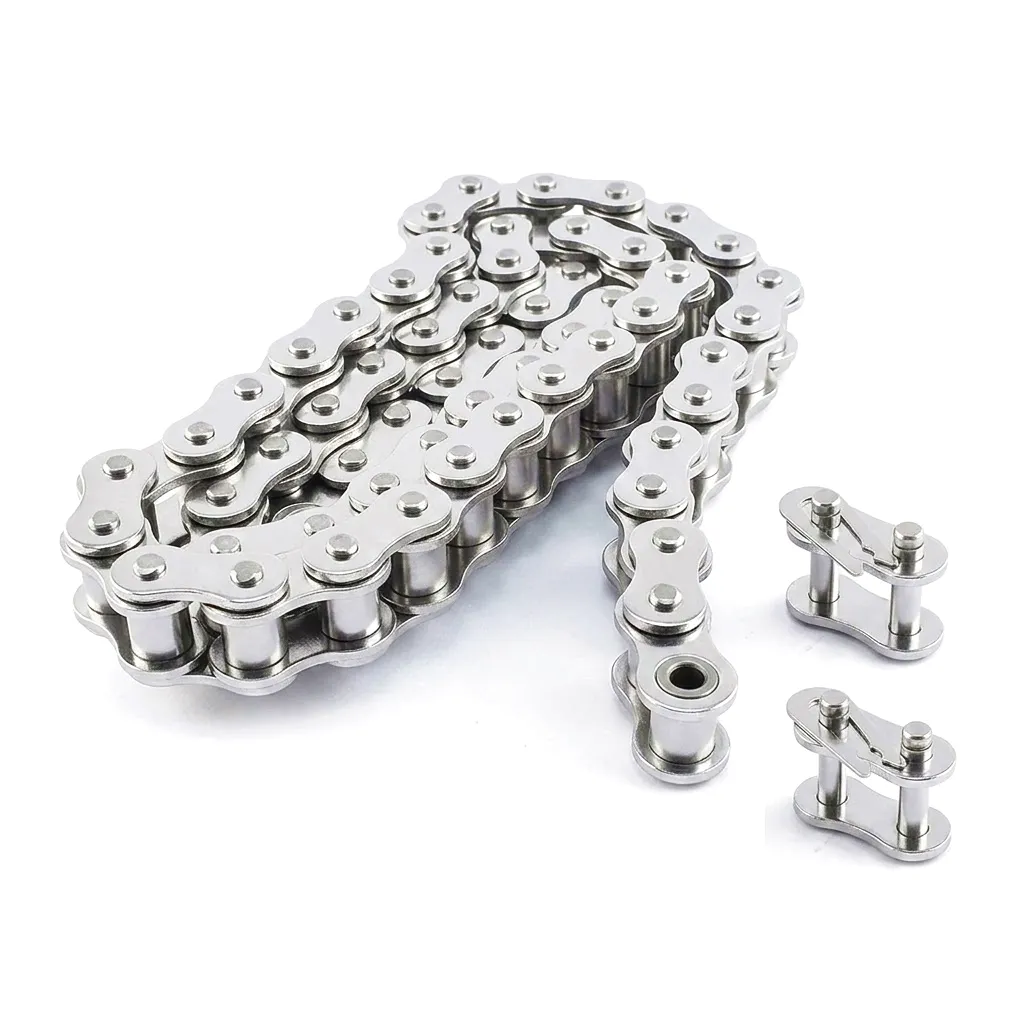
Barnsley Steel Components Ltd operates a 22,000 sq ft fabrication and progressive press facility in the Dearne Valley industrial corridor, supplying structural steel subassemblies and pressed components to the construction, rail, and yellow goods sectors. Their transfer press line — a bank of five mechanical presses operating in sequence — is connected by precision roller chain conveyors that index blanks and part-formed stampings between operations. The chains used in this application experience repeated shock loads as press rams contact the tooling, combined with the fine metal debris and cutting oil mist inherent in a stamping environment.
Prior to working with Ever Power, Barnsley Steel was replacing their press line conveyor chains every nine months, equating to a planned maintenance shutdown of 14 hours per replacement cycle across the five-press line. The maintenance engineering team, led by the site’s Plant Reliability Manager, had identified chain wear as the single largest contributor to planned downtime in the facility. External oil drip lubrication had been tried and quickly abandoned because the cutting fluid used in press operations proved incompatible with the drip oil, creating a degraded emulsion that accelerated rather than reduced pin and bushing wear.
Following a detailed application review by Ever Power’s technical team — who visited the Barnsley facility, reviewed press cycle rates, load profiles, and environmental conditions — a 16B-1 self-lubricating heavy-series roller chain manufactured with Fe-Cu-MoS2 sintered bushings and vacuum-impregnated with ISO VG 68 oil was specified. After one full production year, Barnsley Steel recorded a 26-month service life on the first set of Ever Power self-lubricating chains — representing an 177% extension over their previous nine-month average. Annual maintenance cost savings from reduced chain replacements, eliminated drip lubrication consumables, and recovered shutdown hours have been calculated at approximately £38,000 per year for the five-press line configuration. The facility’s Plant Reliability Manager noted that the chains had maintained measurement within ISO pitch tolerance at the 26-month inspection, suggesting further service life remained.
Asiakasarvostelut
“We trialled the 16B-1 self-lubricating chain from Ever Power on our most heavily loaded press indexer — the one that had historically given us the most grief with chain stretch. After 26 months we pulled the chain for inspection and it was still within pitch tolerance. That’s extraordinary given what that machine does to conventional chains. The MoS2-enhanced bushing spec made a real difference in our contamination environment.”
David Cartwright
Plant Reliability Manager, Barnsley Steel Components Ltd, South Yorkshire
“Our procurement team was initially sceptical about the price premium over standard chain, but Ever Power’s engineering team walked us through the whole-life cost analysis and the numbers were clear. We’ve eliminated two planned shutdowns per year, avoided three unplanned stoppages in the first year alone, and our BRCGS auditor commented positively on the clean-running conveyor drives during her inspection visit. The customised NSF H1-lubricated stainless variant for our open-product zone was exactly what we needed.”
Sarah Hibberd
Engineering Projects Manager, Prepared Foods Manufacturer, East Midlands
“The lead time from Ever Power was better than any other supplier we approached — 22 working days DDP to our Sheffield site for a non-standard pitch with tab attachments. Their documentation package met our ISO 9001 audit requirements without any back-and-forth. The chain itself has performed exactly as the technical sheet promised. We’ve now standardised on their self-lubricating 20B-1 heavy series across all our furnace transfer lines.”
Marcus Thornton
Maintenance Engineering Lead, Precision Alloy Products Ltd, Sheffield
Usein kysytyt kysymykset
Answers to the questions UK buyers and engineers ask most often
Ready to Upgrade Your Drive Systems?
Ever Power’s engineering team is ready to review your application, recommend the right self-lubricating roller chain specification, and provide a competitive price with full technical documentation.
[email protected] · Response within 1 business day
gzl:n muokkaama