The Mechanics Behind Roller Chain Wear
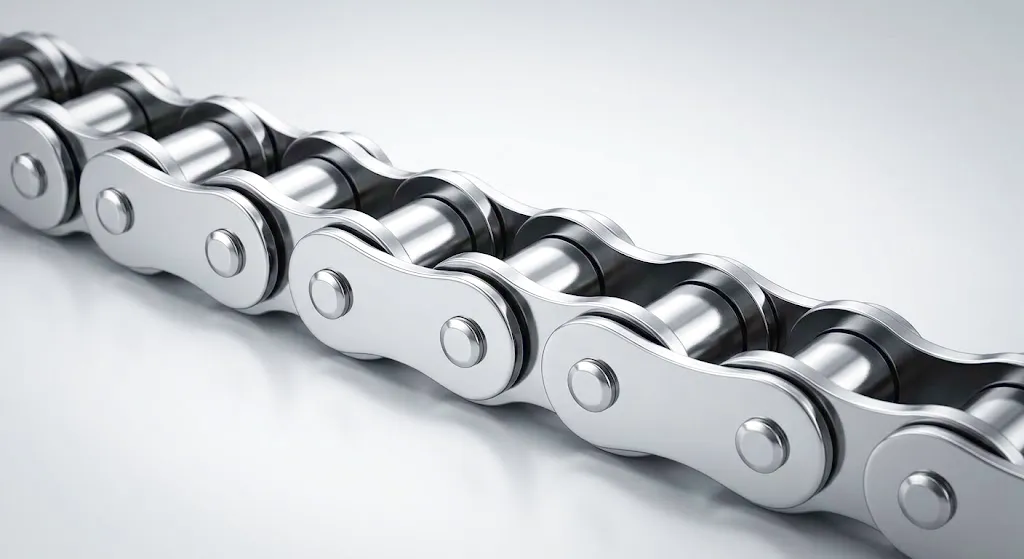
Roller chain wear is not a single uniform process — it is the cumulative result of several distinct but interrelated mechanical and chemical phenomena acting simultaneously on the chain’s components. The primary and most significant form is pin-and-bushing wear, often referred to as internal wear or articulation wear. Every time the chain engages and disengages with a sprocket tooth, the pin rotates within the bushing under load. Over time, even with adequate lubrication, this repeated relative motion removes microscopic amounts of material from both the pin surface and the inner bore of the bushing. This material loss is what causes the chain to elongate — not because the individual links stretch in any physical sense, but because the cumulative clearance at every pin-bushing joint increases by a small amount. When that clearance is multiplied across dozens or hundreds of pitches in a working chain, the overall chain length increases measurably. This elongation causes the chain to ride higher on the sprocket teeth, eventually leading to the jumping or skipping behaviour that signals imminent failure.
Beyond internal wear, roller chain also suffers from roller and sprocket wear — where the outer surface of the roller contacts the sprocket tooth flanks under dynamic impact loading — and side plate fatigue, which occurs in chains subjected to cyclic bending and tensile stress near the maximum rated load. In environments common across UK heavy industry, such as foundries in the Midlands or chemical processing plants in Teesside, abrasive contamination from dust, scale, or process debris accelerates all of these wear modes simultaneously, often halving or quartering the expected service life compared to a clean enclosed drive.
Core Causes of Accelerated Roller Chain Wear in Industrial Applications
Material Science: What Your Roller Chain Is Made From and Why It Matters
How to Measure Roller Chain Wear Correctly on the Shop Floor
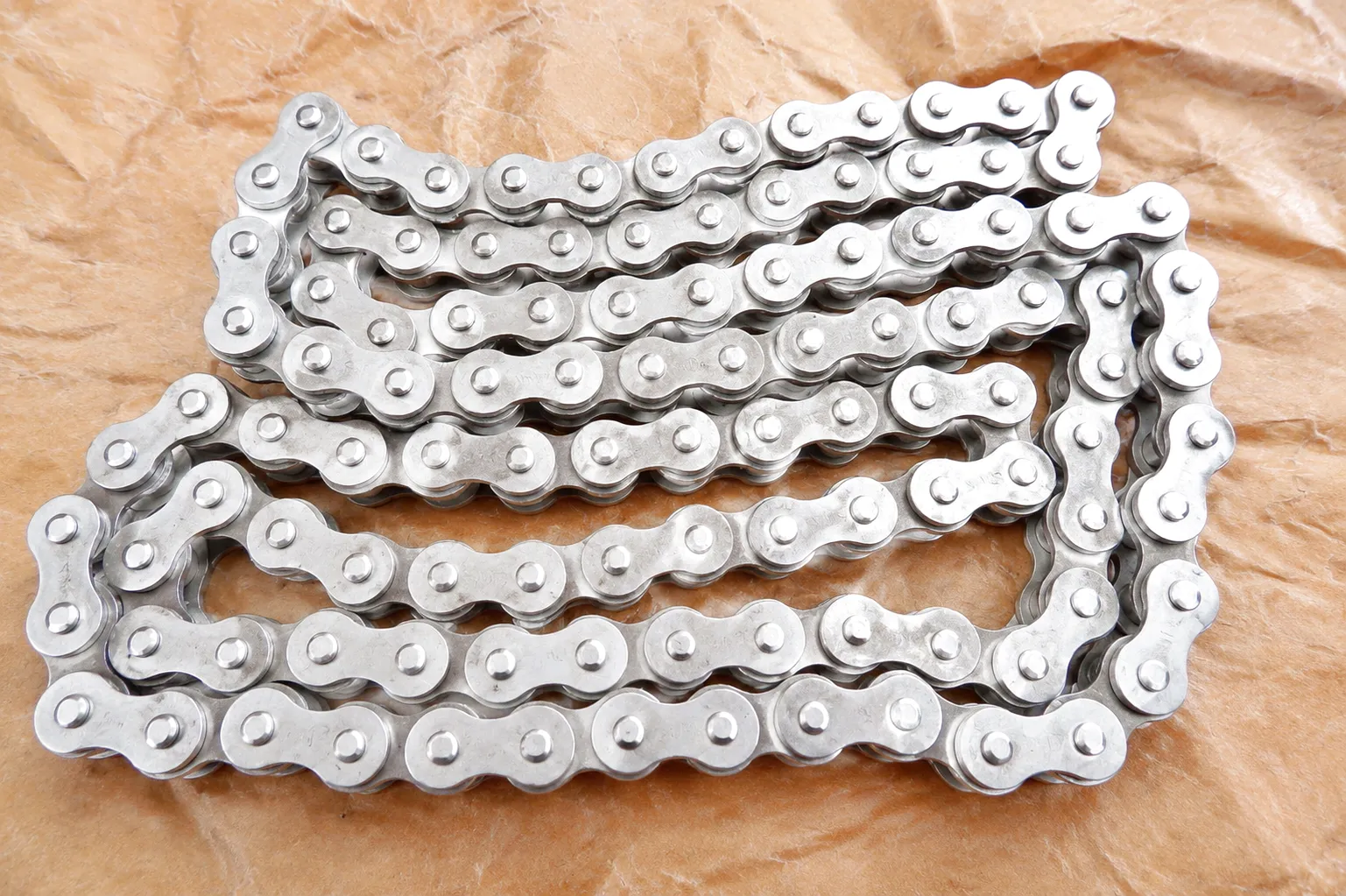
Accurate measurement of roller chain elongation is essential for making sound replacement decisions. The correct method is not to simply pull on the chain and judge its sag by eye — that approach is qualitative at best and misleading at worst, particularly on shorter drives where the chain has insufficient span to sag visibly. The standard measurement technique is to count a defined number of pitches — typically 12, 24, or 48 pitches depending on the chain type — and measure the overall length of that span. This measured length is then compared against the theoretical nominal length (number of pitches multiplied by the nominal pitch dimension) to calculate the percentage elongation.
The general guideline for replacement at 1% to 3% elongation is widely quoted, but it requires contextual interpretation. For high-precision applications such as indexing mechanisms or synchronised multi-strand conveyors operating in an automated warehouse or automotive assembly plant, a replacement threshold of 1% elongation is appropriate because even small timing deviations introduce quality or coordination issues. For general industrial conveyor applications, 2% to 2.5% elongation is typically the replacement trigger. For low-speed agricultural drives operating below 50 rpm with large sprockets and minimal precision requirements, extension to 3% may be acceptable, but only after sprocket tooth inspection confirms that the tooth profile has not been significantly distorted by the elongated chain’s riding-up action.
The critical point that many maintenance guides underemphasise is that the sprocket must be inspected simultaneously with the chain. A worn sprocket fitted with a new roller chain will destroy that chain at an accelerated rate because the worn tooth profile cannot support the roller correctly, generating concentrated contact stress rather than distributed load across the tooth face. When the chain’s measured elongation exceeds the replacement threshold, the sprockets should be measured against their original tooth profile geometry, and replaced if wear exceeds the manufacturer’s tolerance — which for most standard sprocket materials is typically defined as 10% to 15% reduction in tooth thickness at the pitch circle.
Roller Chain Technical & Performance Parameter Reference Table
The following table provides key technical parameters for standard and heavy-duty roller chain series commonly used across UK industry, covering the ANSI and BS/DIN dimensional standards that correspond to most domestically deployed drive systems. These values serve as a baseline reference for maintenance scheduling and replacement planning.
High-Strength Roller Chain for Demanding OEM Applications
Purpose-engineered for Caterpillar and equivalent heavy machinery platforms
Engineered for the extreme demands of Caterpillar heavy equipment, the 120HSP-00 features a precision-machined high-tensile alloy steel pin assembly and case-hardened bushings delivering measurably superior resistance to the pin elongation that shortens standard chain life. The 38.1 mm pitch series is built to withstand the high shock loads and abrasive site conditions characteristic of UK quarrying, groundworks, and infrastructure construction operations. Minimum breaking load exceeds 213 kN, with every production batch subject to tensile load testing before despatch.
The C100HSP-00 addresses the demanding requirements of Caterpillar crawler and excavator undercarriage drive systems, where the combination of high tensile load, lateral forces, and abrasive ground contact creates one of the most severe operating environments for any drive chain. Produced to a 31.75 mm pitch, this heavy-duty variant incorporates an enhanced side plate thickness and a proprietary pin surface treatment that raises the micro-hardness of the pin’s bearing surface, delivering meaningful reductions in internal wear rate compared to standard ANSI 100 chain across documented field trials in comparable applications.
Industrial Application Scenarios: Where Roller Chain Wear Management Is Critical
Replacement Intervals: Moving from Reactive to Predictive Chain Management
Customer Success Story: Sheffield Structural Steel Fabricator Reduces Chain-Related Downtime by 74%
A mid-sized structural steel fabrication company operating from a purpose-built facility in the Sheffield industrial corridor approached Ever Power’s UK sales team in early 2024 following a period of escalating maintenance costs and unplanned production stoppages traced directly to premature roller chain failures across three of their main billet-handling conveyor drives. The drives operated in a demanding environment: ambient temperatures frequently exceeded 45°C near the cutting and welding bays, metallic scale contamination was continuous and heavy, and the lines ran double shifts six days per week — accumulating over 6,000 operating hours per year per drive system.
The company’s maintenance team had been replacing standard ANSI 80 catalogue chain every 10 to 14 weeks at a combined cost (parts and labour) of approximately £2,200 per replacement event across the three drives. An Ever Power application engineer visited the facility, conducted a comprehensive drive audit including measurement of sprocket wear, review of the lubrication system, and analysis of the chain operating loads, and recommended a transition to Ever Power’s heavy-duty case-hardened ANSI 80 chain with enhanced shot-peened side plates and a purpose-specified EP gear oil drip lubrication system calibrated for the operating speed and temperature conditions.
Following a phased transition — including replacement of the most worn sprockets to ensure the new chains were not immediately loaded onto damaged tooth profiles — the Sheffield facility achieved an average replacement interval of 38 weeks across the three drive systems in the 12 months following the changeover. This represented a 74% reduction in chain replacement frequency, a first-year saving of approximately £14,800 across the three drives, and complete elimination of the unplanned production stoppages that had been causing schedule disruptions and customer delivery problems. The plant maintenance manager reported that the combination of the higher-specification chain and the corrected lubrication regime together produced the outcome — neither change alone would have delivered the same result.
“We had been through four or five different chain suppliers over the years and kept getting the same result — chains wearing out too quickly and the maintenance bill climbing every quarter. The Ever Power application team actually bothered to come out, look at our drives properly, and tell us what the real problem was. The new chain spec combined with the lubrication changes has made a very tangible difference to our maintenance budget.”
“The surface hardness on the Ever Power HSP pins is noticeably superior to what we have seen from other suppliers at similar price points. We run heavy excavator equipment through extreme ground conditions in the northeast, and the C100HSP series has held up considerably better than the OEM-brand chains we were previously buying. Lead times from Ever Power have also been reliable — critical when you are trying to keep a machine on-site.”
“As a food manufacturer operating under strict audit conditions in Lincolnshire, we cannot afford any ambiguity in our supply chain’s material compliance. Ever Power provided full traceability documentation and material certificates for our stainless steel chain order, which our technical and compliance teams reviewed thoroughly before approval. Performance in our washdown environment has been excellent, and the chain has now exceeded our previous service life benchmark by around 40%.”
Frequently Asked Questions: Roller Chain Wear, Measurement, and Sourcing in the UK
Talk to an Ever Power application engineer about the right roller chain specification for your UK industrial application. Custom chain, rapid delivery, full technical support.