Technical Reference · UK Edition
ANSI vs. ISO Roller Chain Standards:
Key Differences and Complete Comparison
Everything engineering procurement teams in Birmingham, Sheffield, and across the UK need to know about choosing the right chain standard — and why it matters more than most buyers realise.
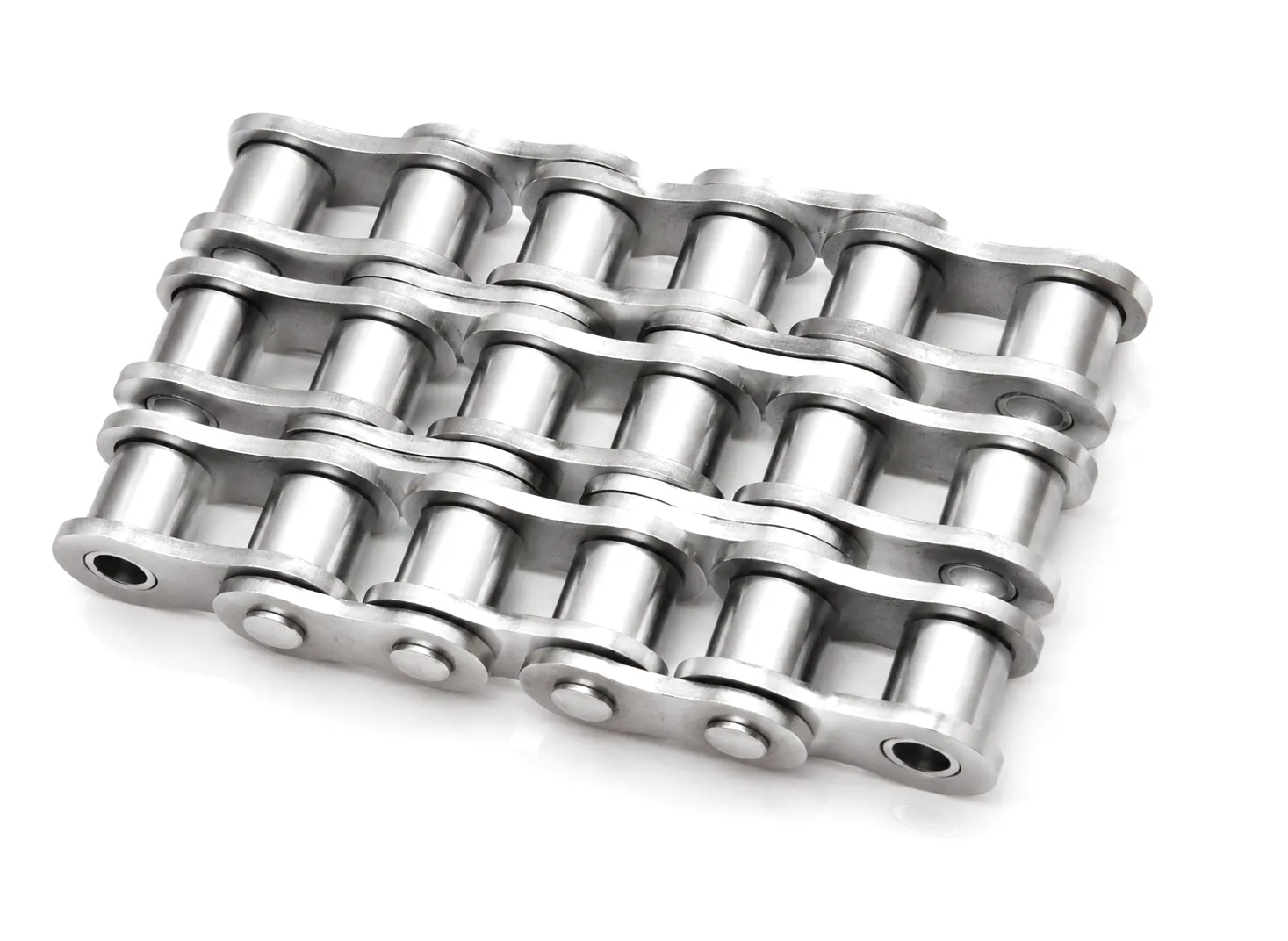
Walk into any heavy manufacturing facility in Sheffield or a food processing plant in Leeds, and somewhere in the machinery you will find a roller chain doing quiet, relentless work. It is one of the most widely deployed mechanical power transmission components in the world — which is precisely why the standards that govern its manufacture are not a trivial concern. Whether you are specifying replacement parts for legacy equipment or designing a new conveyor system from scratch, the question of ANSI versus ISO conformance shapes every dimension of your procurement decision: interoperability, load ratings, supplier availability, and long-term maintenance cost.
The two principal standards in use today — ANSI/ASME B29.1 from the American National Standards Institute, and ISO 606 maintained by the International Organization for Standardization — govern the pitch, roller diameter, plate width, pin diameter, and ultimate tensile strength of roller chain. On paper they describe nearly the same product. In practice, the differences are specific enough to cause misfit, accelerated wear, or complete mechanical incompatibility when the wrong type is installed. For UK and European engineering teams, who may source from both domestic suppliers and global manufacturers, a clear understanding of both standards is not optional — it is fundamental to avoiding costly downtime.
Understanding ANSI and ISO: What Each Standard Actually Governs
🇺🇸
ANSI / ASME B29.1
The American National Standards Institute standard — formally ASME B29.1 — was first codified in the early twentieth century and has been refined through decades of industrial application. ANSI chains are identified by a numeric designation where the first one or two digits express pitch in eighths of an inch. A chain marked 40, for instance, carries a pitch of 4/8 inch, or exactly half an inch. The suffix H denotes a heavy series with thicker side plates, and the suffix SS or NSS indicates the lubrication and material variant. ANSI is dominant in North American markets and in machinery exported from the United States, including many agricultural and construction machines that operate globally.
🌍
ISO 606 (British Standard BS/ISO 606)
ISO 606 — which the British Standards Institution formally adopted as BS ISO 606 — uses a metric-derived designation system. Chain sizes are expressed in millimetres of pitch, and the designation includes a prefix letter identifying the series. The most commonly encountered ISO chains in UK industry are the 08B, 10B, 12B, 16B, and 20B series, where the number corresponds to pitch in sixteenths of an inch (retained from historical British practice) and the B denotes the British/European series. ISO 606 is the default standard for machinery manufactured in the UK, continental Europe, and most of Asia outside of markets served predominantly by US equipment.
The practical coexistence of both standards in the UK is a direct legacy of Britain’s position as a major importer of American industrial machinery throughout the mid-twentieth century, combined with its alignment with European metric standardisation after 1973. A manufacturer in Birmingham running Caterpillar equipment alongside German conveyors may have both ANSI and ISO roller chains operating on the same production floor — a situation that demands rigorous labelling, separate spare parts inventories, and a procurement team that knows exactly which standard applies to which machine. Getting this wrong does not usually produce an immediate catastrophic failure; instead, it creates a slow degradation — increased noise, uneven wear on sprocket teeth, and ultimately premature chain fatigue that shortens service intervals and raises maintenance costs.
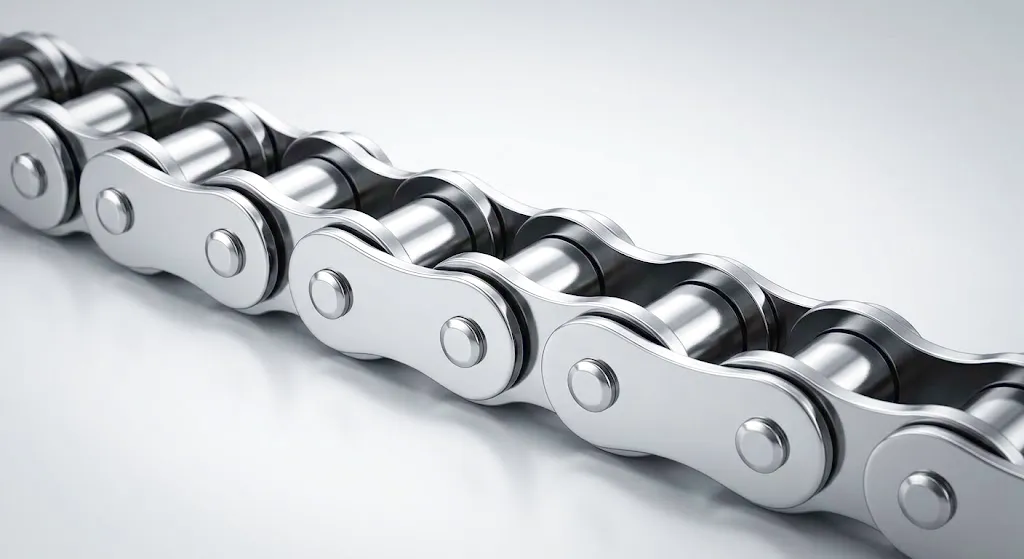
Key Dimensional Differences: Where ANSI and ISO Actually Diverge
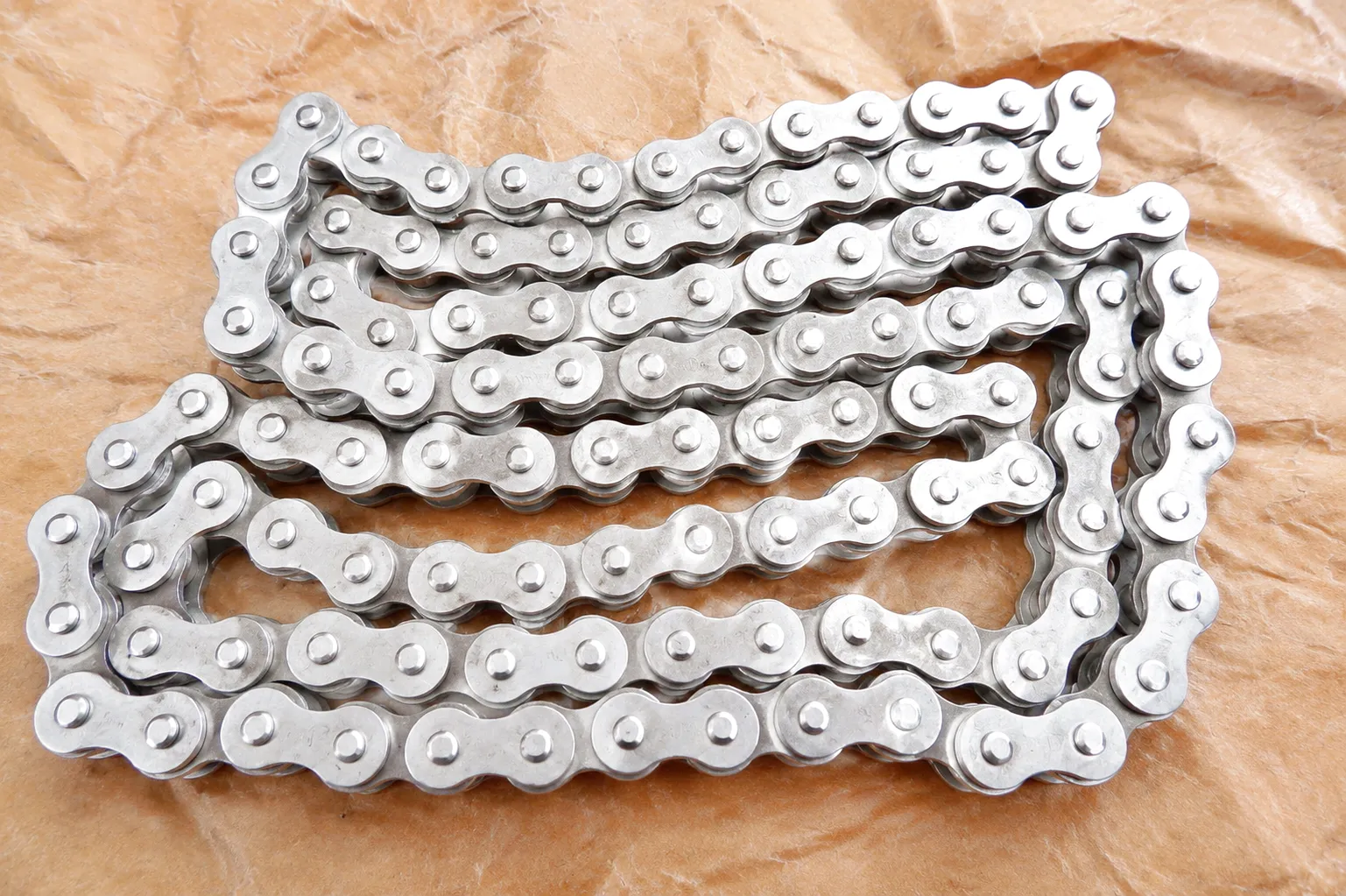
The most consequential difference lies not in pitch — which for commonly paired sizes is genuinely close — but in the inner plate width, roller diameter, and attachment hole spacing. An ANSI 40 chain and an ISO 08B chain share a pitch of 12.7 mm, yet their roller diameters differ: the ANSI 40 roller sits at 7.92 mm while the ISO 08B roller measures 8.51 mm. That 0.6 mm discrepancy means the roller will not seat correctly in the sprocket tooth gap of the opposing standard. Over thousands of articulations per minute, this mismatch causes the roller to ride high on the sprocket tooth flanks rather than nestling in the valley, increasing contact stress, accelerating surface fatigue, and generating heat — all of which shorten chain and sprocket life significantly.
Pin diameter is another critical divergence. The ISO 08B uses a 4.45 mm pin versus the ANSI 40’s 3.96 mm pin. A larger pin means higher resistance to shear loading, which is why ISO B-series chains are often described as having slightly higher tensile strength at equivalent pitch. The inner plate width also differs: ANSI 40 inner width measures 7.85 mm against ISO 08B’s 7.75 mm. While this is less than a tenth of a millimetre, precision manufacturing processes for sprockets are designed around one or the other, and mixing creates clearance issues that are immediately apparent to an experienced engineer inspecting the chain run.
Roller Chain Technical & Performance Parameters Table
| Parameter |
ANSI 40 |
ISO 08B |
ANSI 50 |
ISO 10B |
ANSI 80 |
ISO 16B |
| Steek (mm) |
12.70 |
12.70 |
15.875 |
15.875 |
25.40 |
25.40 |
| Roller Diameter (mm) |
7.92 |
8.51 ▲ |
10.16 |
10.16 |
15.88 |
17.02 ▲ |
| Pin Diameter (mm) |
3.96 |
4.45 ▲ |
5.08 |
5.08 |
7.92 |
8.28 ▲ |
| Binnenplaatbreedte (mm) |
7.85 |
7.75 |
9.40 |
9.65 |
15.75 |
17.02 |
| Minimale treksterkte (kN) |
17.8 |
17.8 |
21.8 |
22.2 |
58.0 |
60.0 |
| Standard Material |
Carbon steel |
Carbon steel |
Carbon steel |
Carbon / Alloy |
Gelegeerd staal |
Gelegeerd staal |
| Max. Allowable Speed (rpm) |
3,200 |
3,000 |
2,500 |
2,400 |
1,800 |
1,700 |
| Bedrijfstemperatuur |
-20°C to +150°C |
-20°C to +150°C |
-20°C to +150°C |
-20°C to +150°C |
-30°C to +200°C |
-30°C to +200°C |
▲ = higher than ANSI equivalent at same pitch. Values per ASME B29.1 and ISO 606 published specifications.
Material Science Behind Roller Chain: What Both Standards Demand
⚙
Carbon & Alloy Steel Plates
Both ANSI and ISO chains use cold-rolled, medium-carbon steel side plates, typically SAE 1040 to SAE 1050 grade. Premium series chains — including Ever Power’s high-strength variants — upgrade to alloy steel such as 20CrMnTi, which delivers a surface hardness of 58–64 HRC after carburising and quenching while maintaining a tough, ductile core. The combination prevents brittle fracture under shock loads.
🔩
Hardened Pins & Bushings
Pins are produced from case-hardened alloy steel with surface hardness exceeding 60 HRC. The through-hardened bushing — the component that contacts the sprocket tooth directly in all standard roller chain designs — achieves 50–58 HRC. The interference fit between pin, bushing, and side plates is critical: too tight causes cracking under load; too loose allows fretting and premature wear.
⬡
Rollers: Precision Bearing Elements
The roller itself is a precision-formed tube, hardened to 58–64 HRC, with a wall thickness and diameter tolerance of ±0.008 mm in high-grade production. It serves as a load-bearing rolling element that converts the sliding friction of chain-on-sprocket engagement into rolling friction — dramatically reducing wear. Ever Power’s rollers are shot-peened to induce compressive residual stress, extending fatigue life by 20–30% compared to standard pressed rollers.
🛡
Stainless & Special Alloys
Both ANSI and ISO standards permit stainless steel variants — typically 304 or 316L — for food processing, pharmaceutical, and marine environments. Nickel-plated chains serve mid-range corrosion requirements. For extreme temperatures, titanium-alloy pin versions are available. UK food manufacturers operating under BRCGS accreditation increasingly specify 316L stainless ISO-standard chains to meet hygiene zone requirements.
Featured: High-Strength Caterpillar-Grade Roller Chain
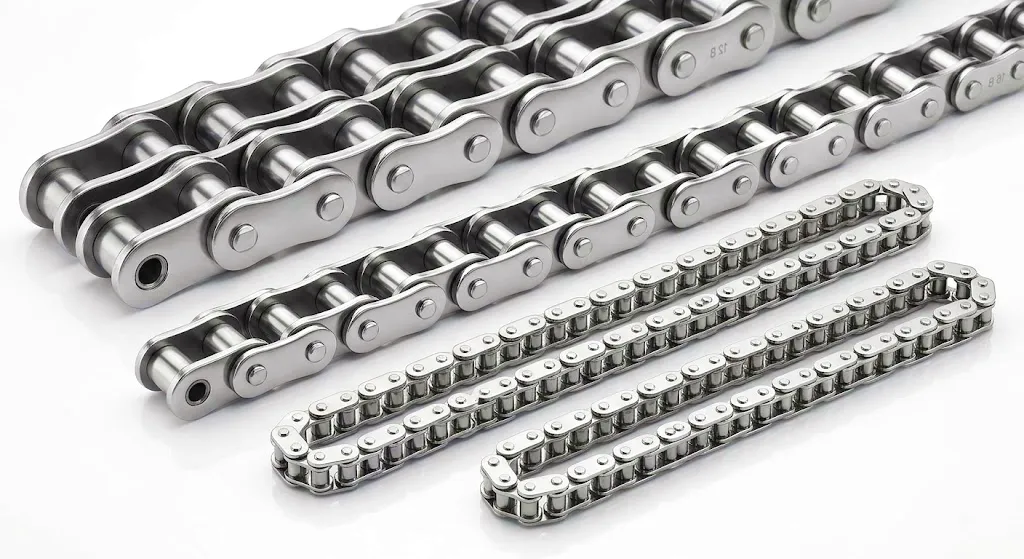
Ever Power’s HSP series is manufactured to exceed both ANSI and ISO minimum tensile specifications, purpose-built for heavy plant equipment and extreme service cycles.
ANSI Series · HSP
Sterke rollenketting 120HSP-00
Heavy Series · C-Type
Sterke rollenketting C100HSP-00
Core Technical Advantages of ISO-Standard Roller Chain for UK Industry
For manufacturers operating in the UK, ISO 606-compliant roller chain carries specific engineering and commercial advantages that extend well beyond simple compliance. The first and most important is parts availability. The UK supply chain — from regional distributors in Bristol and Glasgow to national trade centres in Birmingham’s industrial districts — stocks ISO B-series chains as the default. Lead times for ISO parts are typically two to five days from UK-based distributors, compared to ten to twenty-one days for imported ANSI chain. In a planned maintenance environment, that difference is manageable. In an emergency breakdown situation at a Sheffield steel plant or a Welsh paper mill, it can mean the difference between a four-hour repair and a three-day production halt.
Higher Pin-to-Plate Area
ISO B-series chains typically carry a larger contact bearing area on the pin-to-inner-plate interface, distributing load more evenly and reducing peak contact pressure — particularly beneficial in pulsating or shock-load applications common in recycling facilities and quarry conveyors.
BS EN Regulatory Alignment
Post-Brexit UK conformity assessment still broadly references ISO standards. Machine builders submitting UKCA-marked equipment benefit from ISO chain conformance, as it simplifies the technical file and supports the harmonised standard references embedded in machinery directive successor frameworks.
Sprocket Compatibility Across EU
ISO-standard chains mesh with sprockets manufactured to DIN 8187 and related European standards, meaning a UK plant exporting machinery to Germany, France, or the Netherlands does not need to specify separate sprocket tooling for different markets — a meaningful cost saving on long production runs.
Lubrication Retention
ISO B-series chains are specified with consistent O-ring or X-ring sealing options across the full size range, improving lubricant retention in dusty environments — a critical advantage in aggregate processing, cement works, and the kind of bulk materials handling sites found throughout the East Midlands and Yorkshire industrial corridors.
Industrial Application Scenarios: Where the Standard Choice Matters Most
Steel & Metals
Sheffield · Scunthorpe · Port Talbot
Steel mills and rolling plants represent one of the most demanding environments for roller chain. Ambient temperatures around furnaces can exceed 80°C continuously, fine steel scale acts as an abrasive in the chain articulation, and the conveying loads on roller hearth furnace chains can reach several hundred kilonewtons in a drive arrangement. Sheffield’s surviving special steels sector — producing precision bar, tube, and forgings — operates equipment ranging from historic plant built in the 1970s to modern electric arc furnaces. The older plant invariably runs ISO 16B or ISO 20B chains, while newer imported US-built equipment may specify ANSI 80 or ANSI 100. Ever Power manufactures chains in both standards to exacting tolerances and can supply matched pairs for double-strand arrangements where strand-to-strand pitch variation must be held below 0.05 mm to prevent uneven load distribution across the drive.
Landbouwmachines
Lincolnshire · Norfolk · Yorkshire Wolds
Agricultural equipment — combines, balers, seeders, and grain elevators — represents a mixed-standards environment that creates real procurement complexity for UK farm machinery dealerships and repair workshops. John Deere and Case IH equipment traditionally uses ANSI chains for primary drives. CLAAS, Fendt, and other European brands default to ISO. A dealership in Lincolnshire servicing a diverse fleet must stock both ranges. For elevator and conveying chains on grain storage facilities, the ISO B-series is almost universal across UK agri-businesses, with 12B and 16B being the workhorses of the sector. Harvest season breakdowns demand next-day parts availability — a constraint that strongly favours ISO-standard chains given UK distribution infrastructure.
Food & Beverage Processing
Grimsby · Hereford · East Anglia
Food-grade roller chain for the UK processing sector must comply with hygiene standards that go beyond mere dimensional specification. ISO 606-compliant 316L stainless chains with FDA-approved lubricants are the standard choice for high-care and high-risk food zones. In the seafood processing facilities clustered around Grimsby — one of Europe’s largest fish processing centres — wash-down environments with chlorine cleaning chemicals demand chains that resist corrosive attack and do not harbour bacteria in crevices. Solid side-plate construction, certified lubricants, and traceable material certification are all procurement requirements that Ever Power routinely satisfies with full material traceability documentation, EN 10204 3.1 mill certificates, and lot-by-lot batch records.
Mijnbouw en steengroeven
Derbyshire · Cornwall · Welsh Valleys
Extractive industries subject roller chain to abrasive contamination, shock loading, and extended outdoor exposure in all British weather conditions. The Caterpillar equipment operating in Derbyshire limestone quarries and Cornish china clay operations runs predominantly on ANSI-series chains — reflecting the American origins of the plant. Ever Power’s 120HSP-00 high-strength chain is specifically engineered for these applications, with a minimum tensile strength exceeding the ANSI 120 standard by a tested margin of 15%, offering extended service life that significantly reduces the total cost of ownership. Planned maintenance cycles in mining operations typically extend to 2,000 hours, and chain life that falls short of this interval forces expensive mid-cycle shutdowns.
Manufacturing Partner
Ever Power: Precision Manufacturing Across Both Standards
Ever Power operates advanced manufacturing facilities with CNC-controlled cold-forming lines, automated heat treatment cells, and ISO 9001:2015-certified quality management systems. The production floor is equipped to manufacture chains conforming to both ANSI B29.1 and ISO 606 to identical quality standards, with full dimensional measurement using CMM equipment and 100% tensile proof-load testing on safety-critical grades. This dual-standard capability means that Ever Power can serve as a single consolidated supplier for UK companies managing mixed-equipment fleets — eliminating the inefficiency of maintaining two separate supply chains and two sets of supplier relationships.
Customisation is a core competency. Ever Power engineers work with procurement and design teams to develop non-standard chain configurations including extended-pitch variants, modified side plates for specific attachment requirements, oversized rollers for extended sprocket life, and special coatings including zinc-nickel, PTFE, and black-oxide. Minimum order quantities for custom variants are typically 50 metres, with lead times of four to six weeks from drawing approval. For UK buyers, consignment stock arrangements are available through Ever Power’s logistics partnerships, allowing critical spares to be held in a UK-based warehouse under bonded inventory terms.
240+
Standard chain sizes in production
ISO 9001
2015 Quality Certified
100%
Tensile proof-load tested
4–6 wks
Custom variant lead time
Customer Success Story: Midlands Aggregate Processing, Birmingham
CASESTUDIE
Harrington Aggregates Ltd — Birmingham, West Midlands
Industry
Aggregate Processing
Kettingmaat
ANSI 120 / 120HSP-00
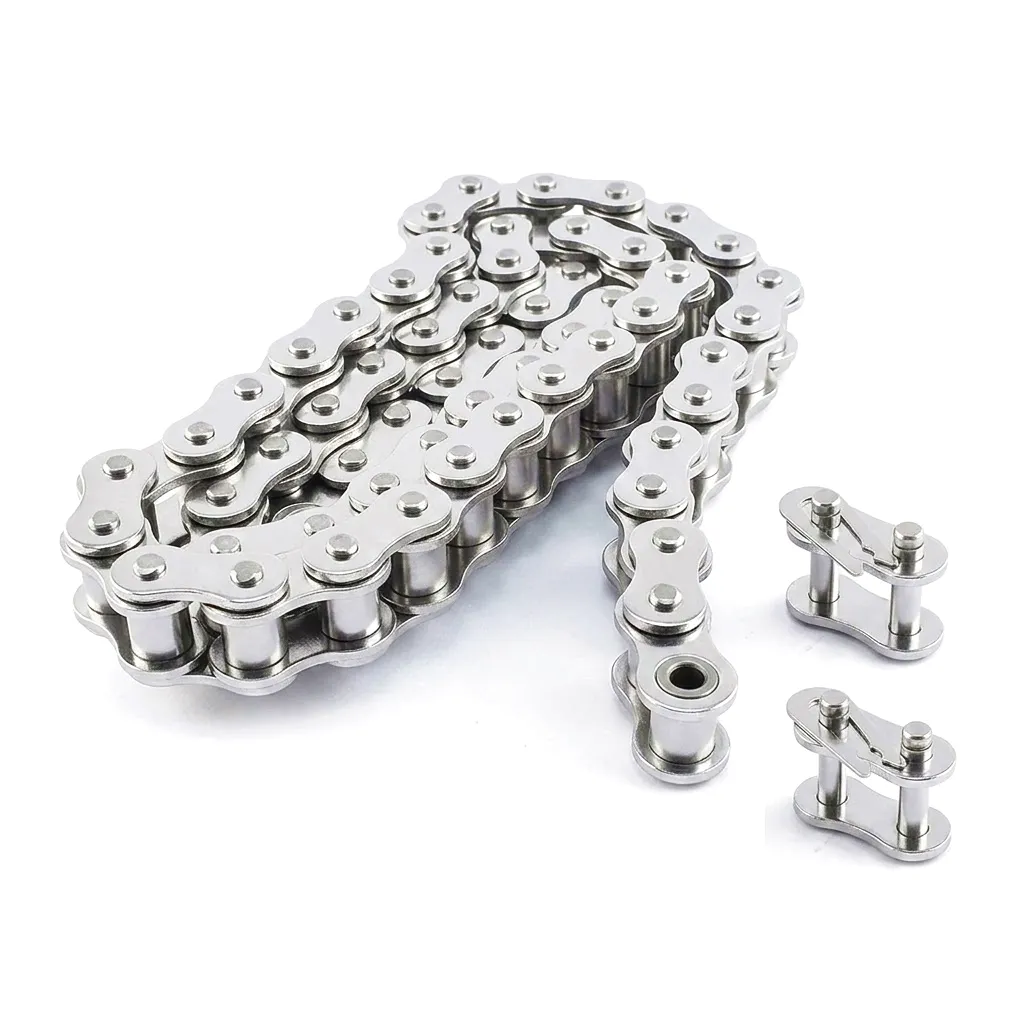 Harrington Aggregates Ltd operates three fixed crushing and screening plants in the West Midlands, processing in excess of 800,000 tonnes of recycled and primary aggregate per year. Their primary drive conveyors were specified with American-manufactured ANSI 120 chains when the plant was originally commissioned in 2019 using Caterpillar-based equipment. By 2023, the operations manager was observing average chain replacement intervals of just fourteen months — well below the twenty-month target built into the maintenance plan. Investigations revealed a combination of abrasive contamination, insufficient lubrication frequency, and marginal tensile capacity on peak-load events during bulk stone processing.
After evaluating suppliers, Harrington’s engineering team trialled Ever Power’s 120HSP-00 high-strength series across one conveyor drive, running the standard ANSI 120 in parallel on an adjacent drive for direct comparison. At the eighteen-month inspection, the Ever Power chain showed 40% less elongation — the key indicator of wear progress — than the standard chain. The alloy steel construction and shot-peened rollers were identified as the principal contributors. The trial was extended to the full fleet in early 2024, and at the time of writing Harrington’s maintenance records project an average service interval of nineteen to twenty months — recovering the original design target and reducing annual chain replacement spend by approximately £18,000 across the site.
★★★★★
“We had written off achieving our original twenty-month change interval. The Ever Power 120HSP genuinely recovered it. The elongation figures at eighteen months were the best we have measured on any chain across this site. Ever Power’s technical team also responded within four hours to a dimensional query we had about a modified attachment we needed — that kind of responsiveness matters when you are managing multiple plant sites.”
— D. Harrington, Operations Manager · Harrington Aggregates Ltd, Birmingham
★★★★★
“We needed a non-standard pitch chain with a modified A2 attachment for a bespoke transfer conveyor in our processing line. Ever Power turned around certified sample chains within five weeks of drawing approval — that was faster than two of our established European suppliers. The dimensional certification and 3.1 mill certs were provided without having to chase them up.”
— P. Thornton, Maintenance Engineer · Central Quarry Services, Worcestershire
★★★★★
“We switched our steel plant’s walking beam furnace drive from a domestic ISO supplier to Ever Power’s 16B heavy series two years ago. The heat treatment consistency on the Ever Power chain is noticeably better — we have had zero link plate fractures in that period, compared with two incidents in the previous two-year interval with our prior supplier. Cost per metre was within 8% of our previous supplier on a like-for-like specification.”
— R. Matthews, Plant Engineering Director · Northern Special Steels Ltd, Sheffield
Choosing Between ANSI and ISO: A Decision Framework for UK Engineers
The decision framework is straightforward once the machinery context is established. When specifying replacement chain for existing equipment, the rule is absolute: match the original standard. Substituting an ISO chain onto an ANSI sprocket, or vice versa, is an engineering error that will cause premature failure and may void equipment warranties. The only correct exception is where a full sprocket replacement accompanies the chain change — a situation that arises during major overhauls or machinery upgrades.
For new equipment design, UK engineers working primarily for domestic markets have a strong practical argument for defaulting to ISO 606. Spare parts availability, alignment with BS EN machinery standards, and compatibility with European-sourced sprockets all point in this direction. The exception is when equipment is destined for export to North American markets or is intended to interface directly with American-made machines — in which case ANSI conformance may be specified in the customer’s design requirements or maintenance manual.
For capital-intensive applications where chain service life is a primary total cost of ownership driver — mining, cement, steel, heavy conveying — the choice of standard is secondary to the choice of chain grade. A premium ISO 16B heavy-series chain from Ever Power will substantially outlast a standard ANSI 80 from a commodity supplier, even though their pitch is nominally identical. Procurement teams that specify only by standard designation without specifying tensile strength grade, heat treatment specification, and quality certification level are leaving significant service life value on the table.
Veelgestelde vragen
What is the difference between ANSI and ISO roller chain standards, and which one should I be using for my UK manufacturing plant? +
ANSI refers to the American standard ASME B29.1, while ISO 606 (adopted in the UK as BS ISO 606) is the international standard used across Europe and most of Asia. The key dimensional differences include roller diameter, pin diameter, and inner plate width — meaning the two types are not interchangeable on the same sprocket. For UK plants running European or domestically designed equipment, ISO 606 is almost always the correct choice. For equipment imported from the United States — particularly Caterpillar, Deere, and Case construction or agricultural machinery — ANSI chain is the correct replacement specification.
How much does it typically cost to get a quote for custom ISO or ANSI roller chain from a supplier like Ever Power for a Birmingham-based manufacturing operation? +
Getting a quote from Ever Power is entirely free and typically returned within 24 working hours for standard sizes, or two to three working days for custom specifications. Pricing for standard ISO and ANSI chain depends on the size, grade, quantity, and any special materials or coatings required. Larger volume orders qualify for tiered pricing, and consignment stock arrangements are available for UK buyers who need guaranteed next-day availability without holding large capital inventory. Send your enquiry with the chain designation and quantity to
[email protected] to receive a detailed price comparison.
Where can I find a reliable roller chain supplier in the UK who can supply both ANSI and ISO standard chains with fast delivery to Sheffield or the East Midlands? +
Ever Power works with established UK logistics partners to offer fast despatch to all mainland UK locations, including Sheffield, Birmingham, Derby, Nottingham, and surrounding areas. Standard stocked sizes can typically be despatched within one to three working days. For urgent requirements, expedited freight options are available. The key advantage of working with Ever Power is the ability to consolidate ANSI and ISO procurement through a single supplier relationship, with unified quality documentation and simplified accounts payable administration.
Which roller chain standard is used in UK food processing plants, and what food-grade certifications should I be asking for when purchasing chain for a Grimsby seafood processing facility? +
UK food processing facilities almost universally use ISO 606-standard chain, typically in 316L stainless steel for high-care and high-risk zones. Key certifications to request include FDA-compliant lubricant approval, EN 10204 3.1 mill certification for the stainless steel material, and HACCP-compatible design confirmation (no internal lubricant voids that could harbour bacteria). Wash-down resistant chain should be specified with solid outer plates rather than hollow-pin variants. Ever Power supplies all of these certification packages as standard on food-grade orders.
How do I know when my roller chain needs replacing, and what are the early warning signs of wear on both ISO and ANSI chains used in heavy industrial applications in the UK? +
The primary indicator of roller chain wear is elongation — the increase in measured pitch length caused by pin and bushing wear. Both ISO and ANSI standards recommend replacement when elongation exceeds 1.5% of nominal length for precision drives, or 3% for lower-speed conveying applications. Practically, this means measuring a 30-link section: a new ISO 12B chain with 19.05 mm pitch should measure 571.5 mm over 30 pitches, and replacement is indicated when this length exceeds 580.1 mm (1.5% elongation). Other warning signs include lateral stiffness in individual links, visible surface pitting on rollers, and increased drive noise particularly at startup.
Who manufactures the best high-strength ANSI roller chain for Caterpillar equipment operating in UK quarrying and mining sites, and what price difference should I expect compared to standard grade chain? +
Ever Power’s HSP-series chains are specifically designed for Caterpillar and similar heavy plant equipment, with tensile strengths exceeding the ANSI B29.1 minimums by 12–18% depending on the size. The price premium over standard-grade ANSI chain is typically 15–25%, but the extended service life — usually 30–40% longer in abrasive quarrying environments — delivers a substantially lower cost per operating hour. For UK quarry operators running continuous shifts across two or three plant stations, the business case for premium-grade chain is generally conclusive within the first maintenance cycle. Contact Ever Power with your Caterpillar model number and current chain specification to receive a direct cost-per-hour comparison.
Ready to Specify?
Talk to Ever Power’s Engineering Team
Whether you need ANSI, ISO, or a custom specification, Ever Power can supply certified roller chain with full quality documentation. UK delivery available.
✉ Vraag een offerte aan — [email protected]
bewerkt door gzl