How Sealed Roller Chain Technology Works
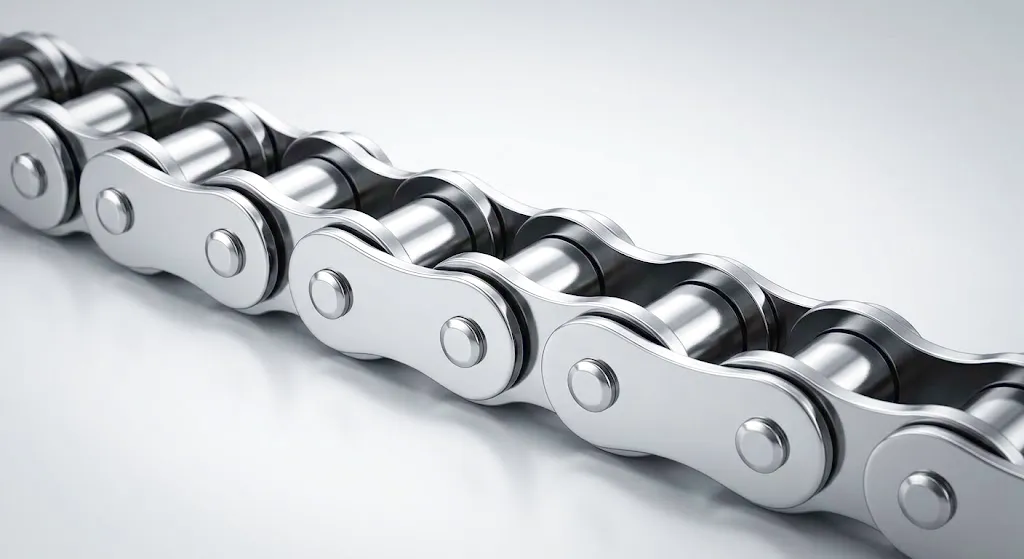
At the heart of every roller chain is the contact between the pin and the bushing. During every articulation event — as the chain engages and disengages with the sprocket — these two components rotate relative to each other under load. In an unsealed chain, the grease applied during assembly migrates away from this critical zone over time. In a sealed chain, an elastomeric ring sits in a groove machined into the outer plate, pressing against a hardened contact surface on the inner plate. This creates a closed cavity around the pin-bushing junction that holds manufactured grease in place for the entire operational life of the chain.
The O-ring is a torus — a simple circular cross-section ring — that sits in a rectangular or semi-circular groove. When the chain is assembled, the outer link plate compresses the O-ring, creating a sealing force around its entire circumference. This compression is carefully engineered: too little, and the seal leaks; too much, and friction losses become unacceptable. O-ring chains have been the industry standard for sealed chain applications for several decades, and their simple geometry means manufacturing tolerances are well understood and consistently achievable at scale.
The X-ring — sometimes called a quad-ring or four-lip seal — has a cross-section shaped like the letter X. This geometry creates four contact lips rather than two, which produces two important engineering advantages. First, the sealing contact area is reduced per unit of compression force, which lowers friction and parasitic power loss. Second, the X-ring creates two distinct sealing lips on each face, so even if one lip sustains minor wear or encounters a small contaminant particle, the second lip maintains the seal. The result is a chain that runs measurably cooler, with lower frictional losses, and with a service life that consistently exceeds equivalent O-ring designs in side-by-side comparative tests.
The engineering philosophy behind both designs converges on the same goal: eliminate the lubrication failure mode that kills standard roller chain long before the steel itself would wear out. What differentiates the two is how aggressively they pursue that goal and what performance trade-offs they accept in the process. A well-lubricated standard chain in a clean, controlled environment may perform adequately, but the reality of most UK industrial settings — from the damp, particulate-laden environments of aggregate processing plants in the North East to the chemically aggressive atmospheres found in chemical manufacturing along the Humber Estuary — demands the protection that sealed chains deliver as standard.
Materials Science Behind Sealed Roller Chains
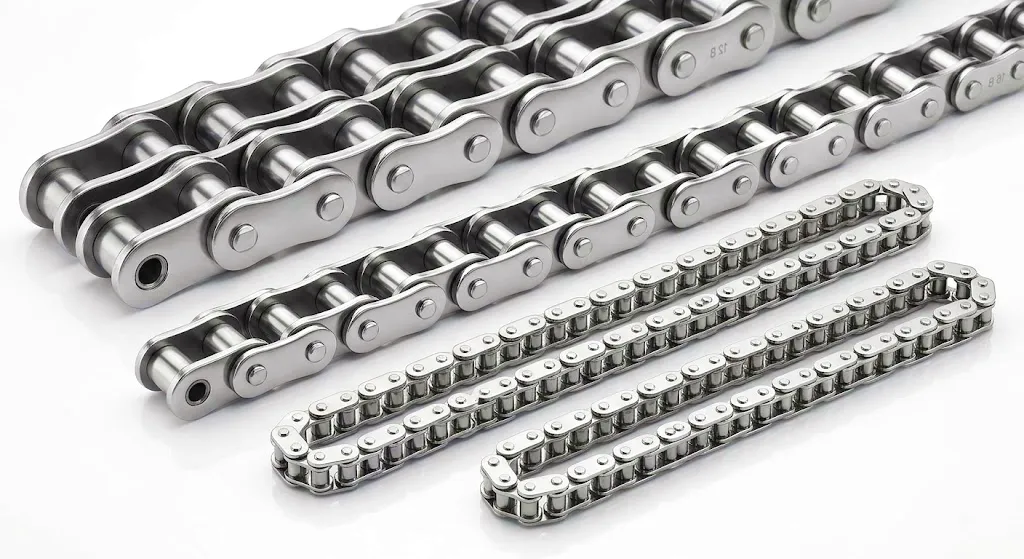
The workhorse seal material for petroleum-based lubricant environments. Excellent resistance to mineral oils, gasoline, and hydraulic fluids. Operational temperature range: -40°C to +120°C. Suitable for the majority of general industrial roller chain applications.
Specified for chemically aggressive environments or elevated temperatures. Resists aromatic hydrocarbons, strong acids, and most solvents. Upper continuous temperature limit: +200°C. Preferred for chemical processing and high-temperature food-adjacent applications.
Excellent ozone, UV, and weathering resistance. Preferred for outdoor and washdown environments. Poor resistance to petroleum products, so requires a compatible synthetic lubricant within the sealed cavity. Common in agricultural and outdoor forestry chain applications.
Wide temperature range (-60°C to +230°C) makes silicone seals attractive for extreme environments, but lower mechanical strength requires careful application engineering. Niche use in aerospace, food processing, and some pharmaceutical conveying systems where thermal excursions are routine.
Featured High-Performance Roller Chain Products
Selecting the right sealed chain for heavy-duty or OEM applications requires matching not just the seal type but the entire chain specification — pitch, tensile strength, break load, and plate geometry — to the application. The products highlighted below represent two benchmark specifications within Ever Power’s sealed roller chain range, both engineered for Caterpillar-compatible drives where performance margins are non-negotiable and downtime carries severe financial consequences.
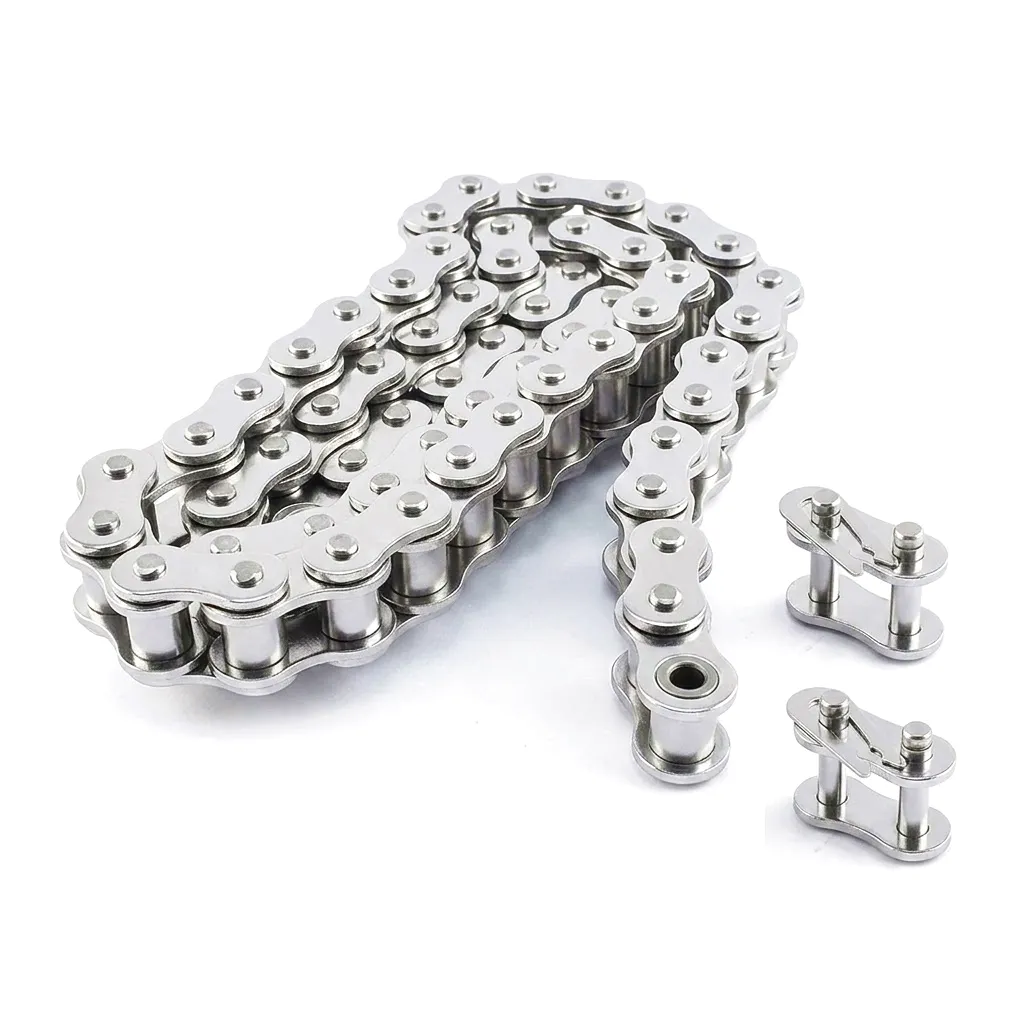
The 120HSP-00 is engineered for the punishing duty cycles encountered in Caterpillar undercarriage and drive systems. Featuring precision-ground pins and bushings, an optimised X-ring seal retention groove, and a plate steel specification that delivers high tensile breaking load with exceptional fatigue resistance, this chain is built to survive where standard roller chain would fail within a fraction of the service interval. Its dimensional compatibility with Caterpillar OEM specifications ensures drop-in fitment without drive system modification.
Where 120-pitch geometry meets the C-series dimensional envelope, the C100HSP-00 fills a critical specification gap in the Caterpillar-compatible chain range. This chain combines the sealed bearing concept with a reinforced plate design that accommodates the elevated shock loads and high angular velocities of modern Caterpillar machinery operating in quarrying, construction, and bulk material handling environments. The seal compound is selected for resistance to the mineral-based and synthetic lubricants commonly used across UK plant hire fleets.
Core Technical Advantages of Sealed Roller Chains
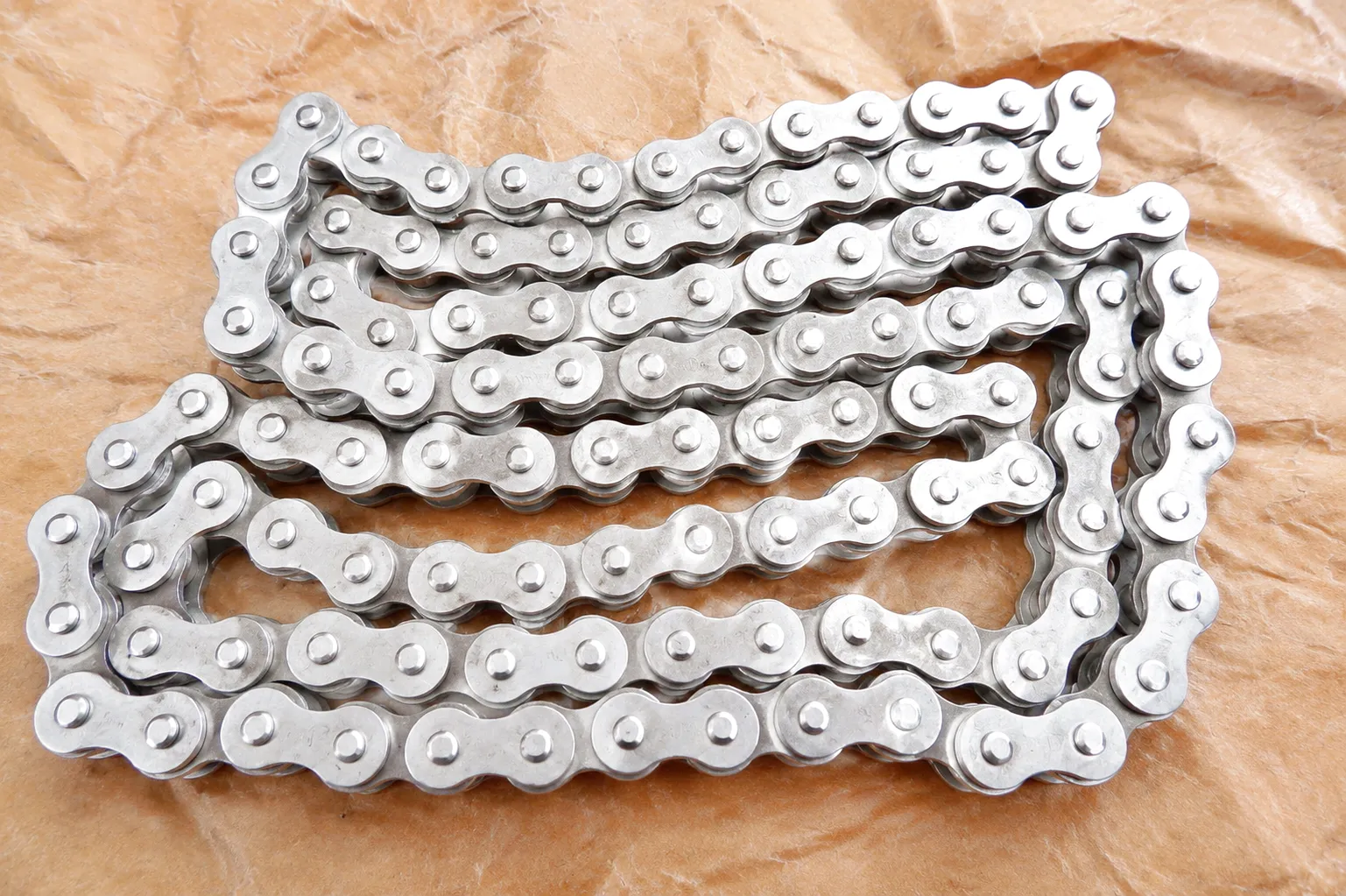
Sealed chains routinely achieve 3–6x the service life of standard chains in abrasive, wet, or contaminated environments, significantly reducing replacement frequency and the cost per hour of drive chain operation.
Factory-sealed grease eliminates the need for frequent re-lubrication stops. Maintenance teams can re-deploy time previously spent on chain oiling schedules to higher-value predictive maintenance activities.
Consistent lubrication at the pin-bushing interface suppresses the primary wear mechanism responsible for chain elongation. Drives using sealed chain maintain correct pitch-sprocket engagement for far longer, protecting sprocket tooth profiles and improving overall drive efficiency.
The continuous lubricant film maintained by the seal damping metal-to-metal impact at each articulation point produces measurably lower noise output — an important factor for occupational noise compliance in UK industrial facilities.
The elastomeric seal acts as a bidirectional barrier — retaining lubricant within the sealed cavity while excluding abrasive dust, grit, water, and chemical contaminants from reaching the wear-critical pin-bushing contact zone.
X-ring designs in particular show lower frictional drag compared to O-ring chains, translating to marginally lower operating temperatures, reduced energy consumption, and improved drive efficiency across the entire speed range.
Technical Performance Parameters: O-Ring vs X-Ring Roller Chain
The table below consolidates key technical parameters for comparison across standard, O-ring, and X-ring sealed roller chain specifications. Data represents typical values for ANSI/ISO standard pitches; custom-engineered chains may differ based on application-specific requirements.
| Parameter | Standard Chain | O-Ring Chain | X-Ring Chain |
|---|---|---|---|
| Seal Type | Geen | Circular toroidal ring | Four-lip X-profile ring |
| Lubrication Retention | Poor (leaks rapidly) | Good (sealed for life) | Excellent (dual-lip barrier) |
| Typical Service Life Multiplier | 1x (baseline) | 3x – 4x | 4x – 6x |
| Seal Contact Area | N/A | Full circular contact (2 points) | Four-point reduced contact |
| Friction Loss vs Standard | Baseline | +5% to +10% (seal drag) | +2% to +5% (lower drag) |
| Bedrijfstemperatuurbereik | -20°C to +150°C | -40°C to +120°C (NBR) | -40°C to +120°C (NBR); up to +200°C (FKM) |
| Plate Steel Grade (Typical) | C35 – C45 | C45 – 42CrMo4 | C45 – 42CrMo4 |
| Pin/Bushing Surface Hardness | 50–56 HRC | 56–62 HRC | 56–62 HRC |
| Elongation at Replacement (max.) | 0.5% – 1.5% | 0.3% – 0.8% | 0.25% – 0.7% |
| Contamination Resistance | Low | Hoog | Very High |
| Relative Cost vs Standard | Baseline | 1.6x – 2.2x | 1.9x – 2.8x |
| Re-lubrication Required | Yes (frequent) | No (external cleaning only) | No (external cleaning only) |
Industrial Application Scenarios Across UK Manufacturing
Ever Power: Precision Manufacturing and Custom Sealed Chain Solutions
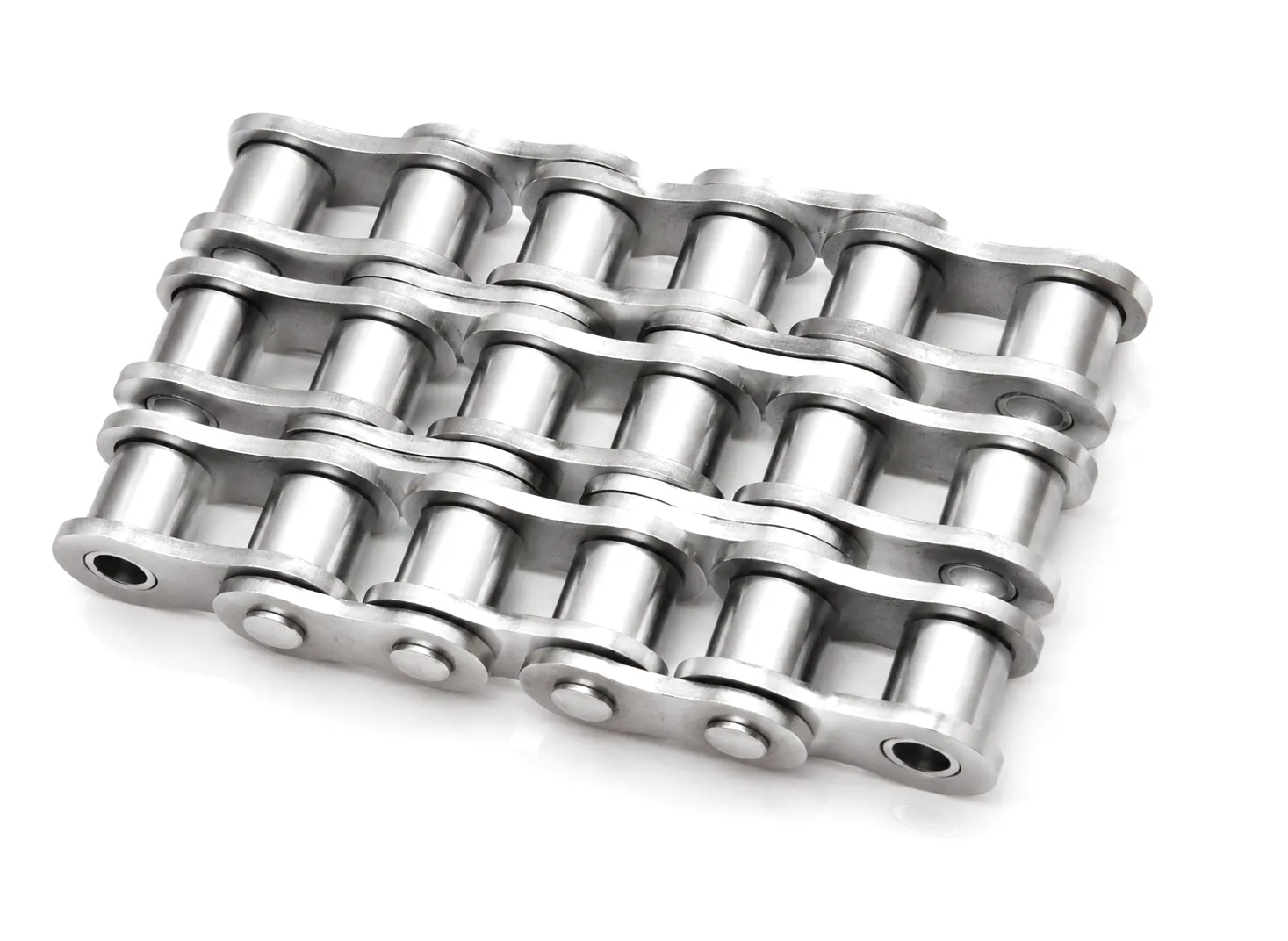
Customer Success Story: Rotherham Bulk Handling — From Monthly Breakdowns to Annual Maintenance
Customer Reviews
“The X-ring chains Ever Power supplied for our bucket elevators have now completed a full year without a single replacement. That’s not something we thought was achievable given how badly this environment eats standard chain. The FKM seal specification was exactly right for our conditions. The technical support before the order was placed was genuinely impressive — they understood the application immediately.”
“We trialled Ever Power’s sealed chains on our transfer conveyors running alongside stone dust classification screens. After the first quarter without a chain change, we extended the trial to all drives in the screening house. The elongation readings at month nine were well within specification. The custom pitch they supplied matched our existing sprockets without modification — that mattered a lot to us on a live production site.”
“Our procurement team had been resistant to the higher per-metre cost of sealed chain for years. After we put an Ever Power X-ring specification onto our shaker conveyor line in Birmingham and tracked the results against our standard chain cost per hour, the numbers made the case completely on their own. Lifetime cost per chain drive dropped by just over 60%. We’ve since converted every high-contamination drive in the facility.”
Choosing Between O-Ring and X-Ring: A Practical Decision Guide
 The choice between O-ring and X-ring sealed chain is not always self-evident from a product catalogue, and it is easy to over-specify or under-specify if the decision is made on price or availability alone rather than application characteristics. The guidance below distils the key selection criteria into a practical framework that can be applied by engineers, maintenance planners, and procurement managers across UK industry without needing detailed tribology knowledge.