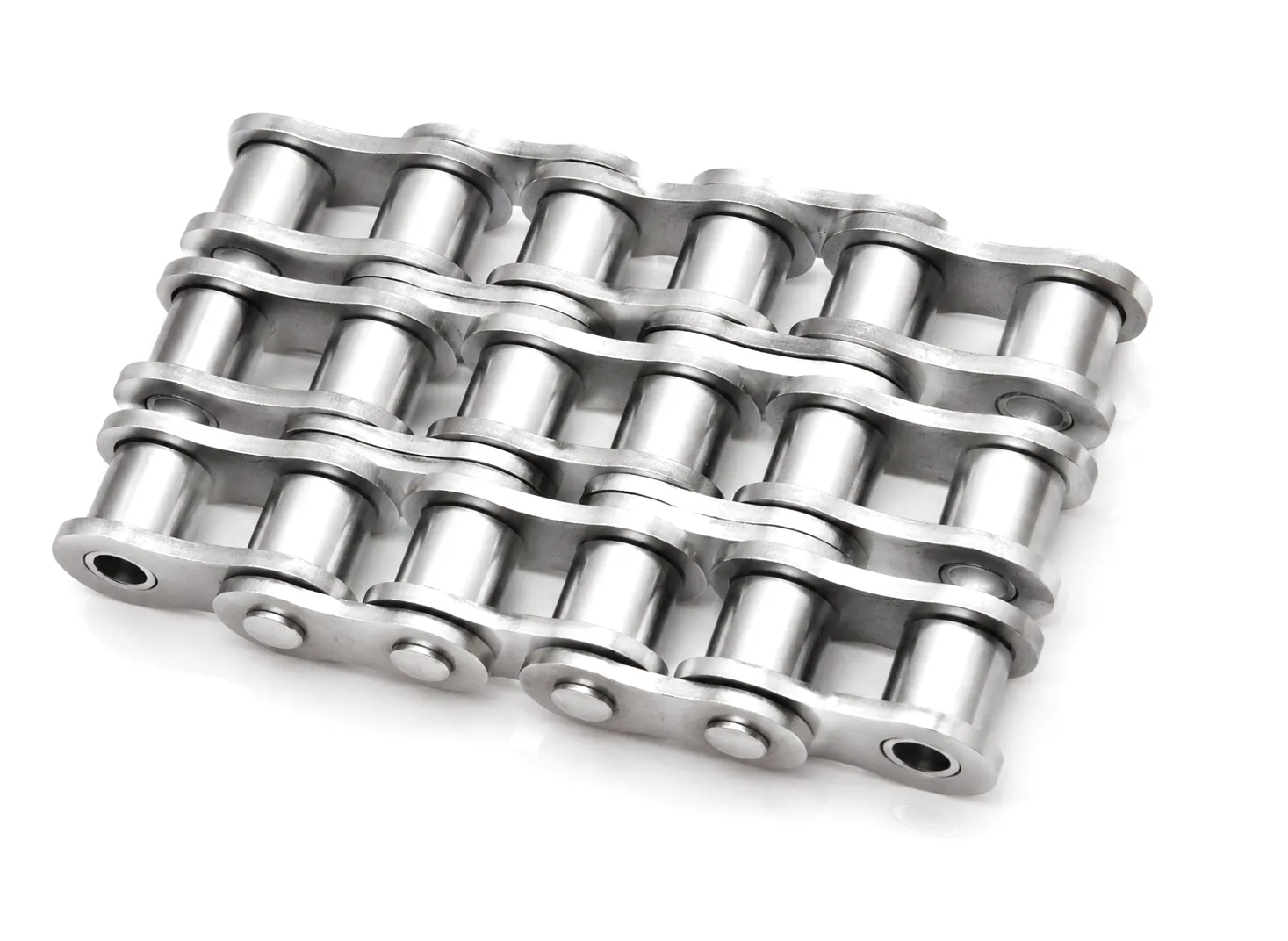
De steek van een rollenketting uitgelegd: hoe stem je de ketting af op het tandwiel?
A technical guide for engineers and procurement teams across the UK — covering pitch measurement, sprocket compatibility, material selection, and verified performance data for industrial roller chain applications.
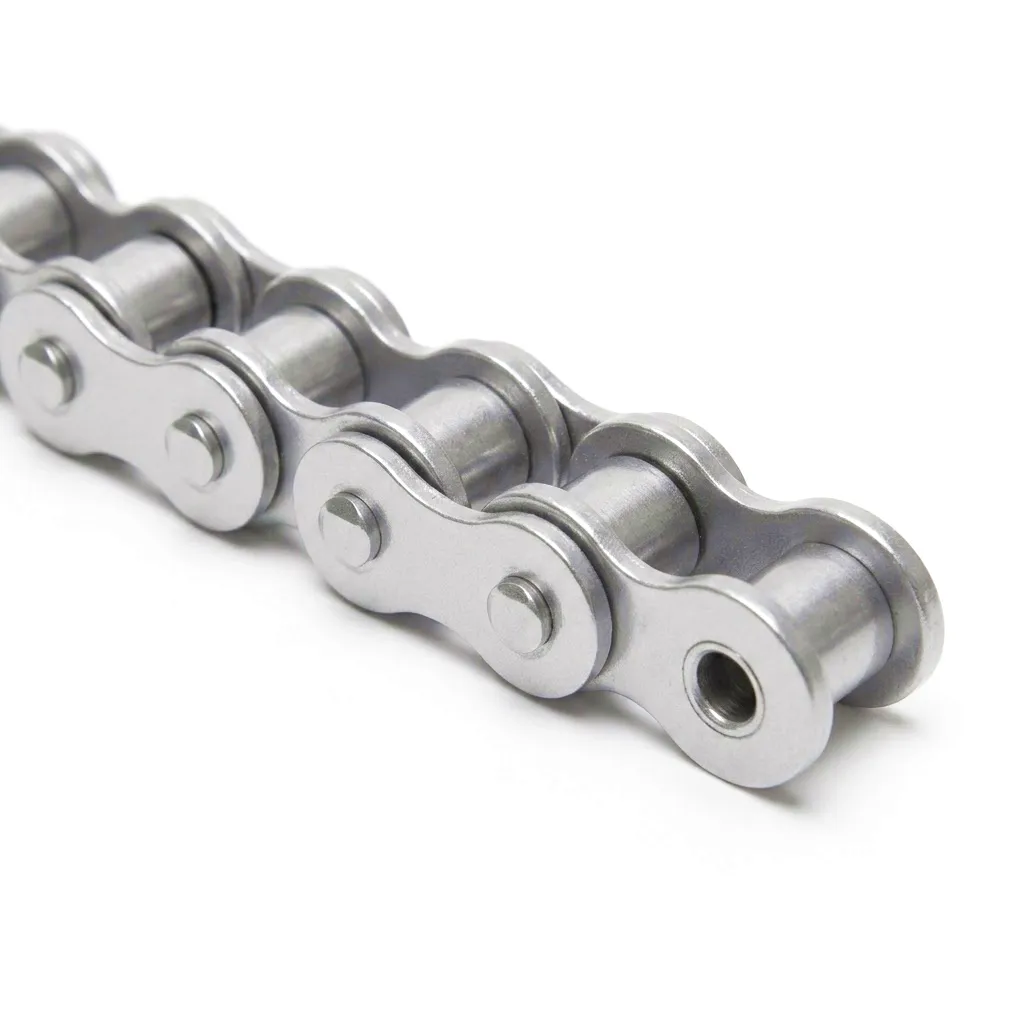 The pitch of a roller chain — defined as the centre-to-centre distance between adjacent pin centres — is the single most critical dimension that governs whether a chain and sprocket will work together without vibration, premature wear, or catastrophic failure. Yet across the UK’s automotive plants in the West Midlands, steel fabrication shops in Sheffield, and food processing facilities in Yorkshire, mismatched pitch remains one of the most common causes of unplanned downtime. Chain pitch is not a minor specification; it dictates the load distribution across every roller and every tooth on the driven sprocket. When the pitch matches precisely, the chain seats cleanly into the sprocket gullet, power transfers smoothly, and the system runs at rated efficiency. When pitch deviates even fractionally — due to incorrect chain selection, worn elongation, or a substituted sprocket — the resulting polygon effect generates shock loads that multiply wear rates by a factor of three to five times the engineered design life.
Need a roller chain specification confirmed for your production line? Ever Power’s engineering team delivers certified data sheets and custom chain quotes within 24 hours — serving UK clients from Sunderland to Southampton.
How Roller Chain Pitch Is Measured and Standardised
The British Standard BS 228 — now harmonised with ISO 606 — defines pitch in millimetres for all simplex, duplex, and triplex roller chains used across UK industry. The pitch number corresponds to the nominal pin-to-pin distance and forms the basis of the chain’s ISO designation. For example, a 12B chain carries a 19.05 mm pitch; a 16B chain steps up to 25.40 mm. These values align directly with the BS sprocket tooth profile geometry, meaning that a verified BS-compliant chain and sprocket will mesh with zero pitch mismatch — provided both components are from the same ISO pitch family and neither has accumulated elongation beyond the 1% wear limit. In practice, Sheffield-based maintenance teams specify by BS designation on replacement orders to guarantee direct interchangeability on legacy equipment.
A persistent source of specification errors in UK manufacturing is the confusion between American National Standards Institute (ANSI) and British Standard (BS) chains, particularly in facilities that operate imported American or Asian equipment alongside domestic machinery. While many ANSI and BS chains share nominally similar pitch values — both No. 40 ANSI and 06B BS are 9.525 mm pitch — the inner link width, roller diameter, and plate height differ significantly. Interchanging them causes the chain to either jam in the sprocket gullet or ride high on the tooth tips, both conditions generating rapid wear. Buyers in Birmingham’s automotive supplier network are advised to verify the full dimensional specification against both standards before authorising substitutions on cross-market equipment.
Field measurement of chain pitch is carried out over a span of at least ten pitches to reduce cumulative measurement error. The measured length is divided by the number of pitches in the span; if the result exceeds the nominal pitch by more than 1% (the ISO wear limit), the chain must be replaced before elongation causes the links to ride up the sprocket teeth and skip under load. Maintenance engineers in the paper mills of Aylesford, Kent, and the ceramic tile plants of Stoke-on-Trent routinely use this ten-pitch measurement protocol as a predictive maintenance checkpoint, recording results against the baseline at commissioning to trend wear progression over service intervals.
Working Principle: How a Roller Chain Transfers Power
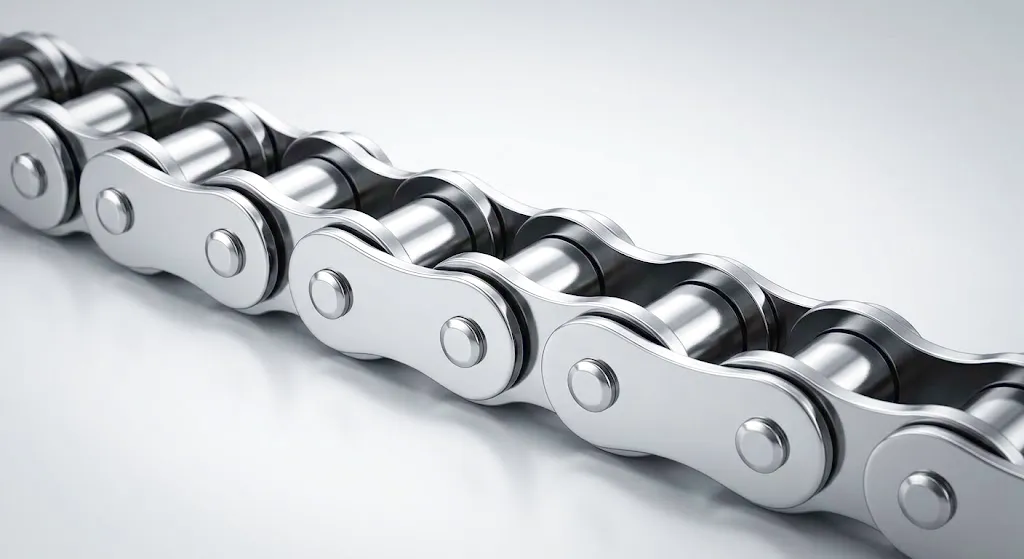
A roller chain transmits rotary motion and torque between two or more sprockets through the interlocking action of hardened steel rollers seating into the matching tooth profiles of the sprocket. The chain consists of alternating inner and outer links: inner links carry two bush-mounted rollers that engage the sprocket teeth, while outer links — sometimes called pin links — connect adjacent inner links via hardened pins that pass through the bushings. As the driving sprocket rotates, each tooth lifts a roller up the tooth flank, pulling the chain forward under tension. The driven sprocket receives rollers in sequence, converting chain linear velocity back into shaft rotation. The precision of this engagement — entirely governed by pitch — determines whether the roller seats at the correct radial depth in the tooth gullet. When pitch is matched perfectly, the roller contacts the tooth flank tangentially, distributing the transmitted load across the full roller width rather than concentrating it at a point, which is the scenario that causes fretting wear and eventual link plate fatigue.
The polygon effect — a minor speed variation inherent to chain drive geometry — becomes more pronounced as sprocket tooth count decreases or chain pitch increases. This is why high-speed drives in UK packaging machinery and bottling lines in Northamptonshire typically specify small-pitch chains with higher tooth-count sprockets: the smaller pitch reduces the chordal rise and fall of each link as it wraps around the sprocket, smoothing velocity transmission and reducing audible noise levels below the occupational exposure thresholds required by UK health and safety regulations.
Core Materials in Precision Roller Chain Manufacture
The predominant link plate material for standard industrial roller chains is medium-carbon or alloy carbon steel — typically 40Cr or 50Mn — cold-stamped to final geometry and then heat-treated to achieve tensile strengths of 800–1000 N/mm². The high strength-to-weight ratio of carbon steel plates allows compact chain cross-sections capable of transmitting high torque within tight sprocket clearances, a requirement common in the conveyor systems of Birmingham’s automotive assembly plants.
Pins are the most heavily stressed components in the chain assembly, carrying both bending and shear loads while rotating within the bush during articulation. Ever Power specifies low-alloy steel pins carburised and case-hardened to a surface hardness of 58–62 HRC with a case depth of 0.3–0.6 mm. This combination provides a hard wear-resistant skin over a tough, ductile core — critical for absorbing impact loads without brittle fracture, a property validated through Charpy impact testing at Ever Power’s manufacturing facility.
The sintered oil-retaining bush — manufactured from iron-copper powder metallurgy and impregnated with lubricating oil during the sintering process — is the tribological heart of a self-lubricating roller chain variant. As the bush articulates around the pin under load, pressure squeezes a thin lubricant film to the pin-bush interface, dramatically reducing friction and wear without the need for external lubrication points. This makes sintered-bush chains the preferred specification for roller chain applications in the enclosed conveyors of pharmaceutical clean rooms in Macclesfield and biscuit production lines in Manchester.
For applications where corrosion resistance outweighs the need for maximum tensile strength, 304 or 316L stainless steel is specified for all chain components. Stainless roller chains are standard in UK seafood processing plants along the Scottish coast, offshore rig maintenance workshops in Aberdeen, and washdown environments in dairy facilities across the Somerset Levels where high-pressure water jets and caustic cleaning agents would rapidly corrode carbon steel. Working load ratings for stainless chains run approximately 20–25% below their carbon steel equivalents, a trade-off that must be factored into the drive power calculation during system design.
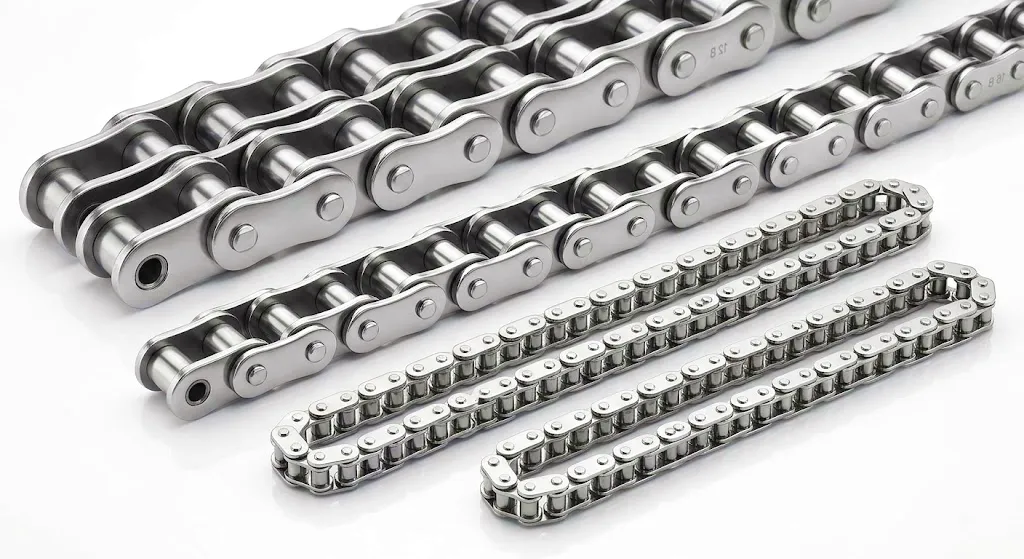
Technical Performance Parameter Table: BS Roller Chain Series
All values per ISO 606 / BS 228. Tensile strength data for single-strand simplex chain.
| Chain Size (BS) | Steek (mm) | Diameter van de rol (mm) | Binnenbreedte (mm) | Min. Break Load (kN) | Maximale snelheid (m/s) | Materiaal | Typische toepassing |
|---|---|---|---|---|---|---|---|
| 06B-1 | 9.525 | 6.35 | 5.72 | 8.9 | 8.5 | C45 Steel / 304 SS | Lichte machines, instrumenten |
| 08B-1 | 12.700 | 8.51 | 7.75 | 17.8 | 7.0 | 40Cr Alloy Steel | General engineering |
| 10B-1 | 15.875 | 10.16 | 9.65 | 22.2 | 6.5 | 40Cr Alloy Steel | Agriculture, conveyors |
| 12B-1 | 19.050 | 12.07 | 11.68 | 28.9 | 5.5 | 50Mn / Alloy | Automotive, steel plant |
| 16B-1 | 25.400 | 15.88 | 17.02 | 60.0 | 4.5 | 40Cr / Chrome-Moly | Mijnbouw, zwaar transport |
| 20B-1 | 31.750 | 19.05 | 19.56 | 95.0 | 3.5 | Chrome-Moly Alloy | Quarrying, port handling |
| 24B-1 | 38.100 | 25.40 | 25.40 | 160.0 | 2.5 | Chrome-Moly / Duplex | Steel mills, bulk handling |
Core Technical Advantages of Precision Roller Chain
Specialised Roller Chain Variants for Demanding UK Industries
Beyond standard chain, specific industrial environments call for engineered variants that modify the base roller chain design to meet additional functional requirements without sacrificing pitch accuracy or load capacity.
Industrial Application Scenarios Across the UK
Heavy-duty 20B and 24B roller chains operate in continuous casting lines and rolling mill conveyor drives under extreme thermal and abrasion loading. Chains in these environments encounter temperatures up to 400°C in proximity zones and carry scale-laden billets weighing several tonnes per metre of conveyor. Chrome-moly alloy chains with graphite-packed joints are the standard specification for Sheffield’s remaining integrated steel operations, replacing chains every 6–12 months under this punishing duty cycle.
The West Midlands automotive cluster — home to Jaguar Land Rover’s Castle Bromwich facility and numerous Tier 1 component suppliers — relies on 12B and 16B roller chains for powertrain conveyor systems, paint shop overhead conveyors, and engine component transfer systems. These applications demand ultra-tight pitch tolerances to maintain positioning accuracy on CNC machining transfer lines, where a chain pitch error of just 0.1 mm can cause a fixture to misalign and result in a scrap component worth thousands of pounds.
Combine harvesters, potato harvesters, and sugar beet harvesters operating across the flat arable expanses of East Anglia and the Lincolnshire Wolds use multiple roller chain drives in their threshing, elevation, and cleaning systems. Agricultural roller chains must tolerate dusty, abrasive conditions, sudden shock loads from stone ingestion, and highly variable operating temperatures across the UK’s harvest season. O-ring sealed chains are increasingly specified for crop harvesting equipment to extend lubrication intervals through a full harvest season without the risk of lubrication failure in the field.
Food and beverage processing facilities in Yorkshire — ranging from the large abattoirs of West Yorkshire to the confectionery plants of Halifax — operate roller chain conveyors under stringent food-safe conditions. Chains must be compatible with NSF H1-approved food-grade lubricants, constructed from 304 or 316L stainless steel to resist acidic washdown solutions, and designed without lubricant reservoirs that could harbour bacteria. Ever Power’s food-grade stainless roller chain range meets BRCGS packaging material standards, making them directly compliant with the auditing requirements of major UK retailers including Tesco, Sainsbury’s, and Marks & Spencer.
The UK’s two largest container ports — Felixstowe in Suffolk and Southampton on the Solent — operate continuous conveyor and crane systems that use large-pitch roller chains in their bulk cargo handling infrastructure. Port environments combine marine salt air corrosion with heavy duty cycle demands and minimal scheduled maintenance windows. Zinc-nickel plated or hot-dip galvanised roller chains are specified for exposed conveyor structures, while sealed-for-life lubrication variants serve enclosed crane drive systems that cannot be taken offline for routine lubrication during peak vessel turnaround periods.
Underground and surface extraction operations in the slate quarries of North Wales and the open-cast coal recovery sites of County Durham demand roller chains with extreme resistance to abrasion, impact, and misalignment. Large-pitch 20B and 24B chains with thickened side plates — a variant sometimes called engineering-class or heavy-series chain — are specified for scraper conveyor systems that drag quarried material across rough rock surfaces under static loads that can approach 70% of the chain’s minimum breaking strength. Ever Power produces these heavy-series variants with customised plate thickness from 2.5× to 3× standard, accommodating the elongated design life requirements of remote mining operations where chain replacement requires crane access and extended production shutdowns.
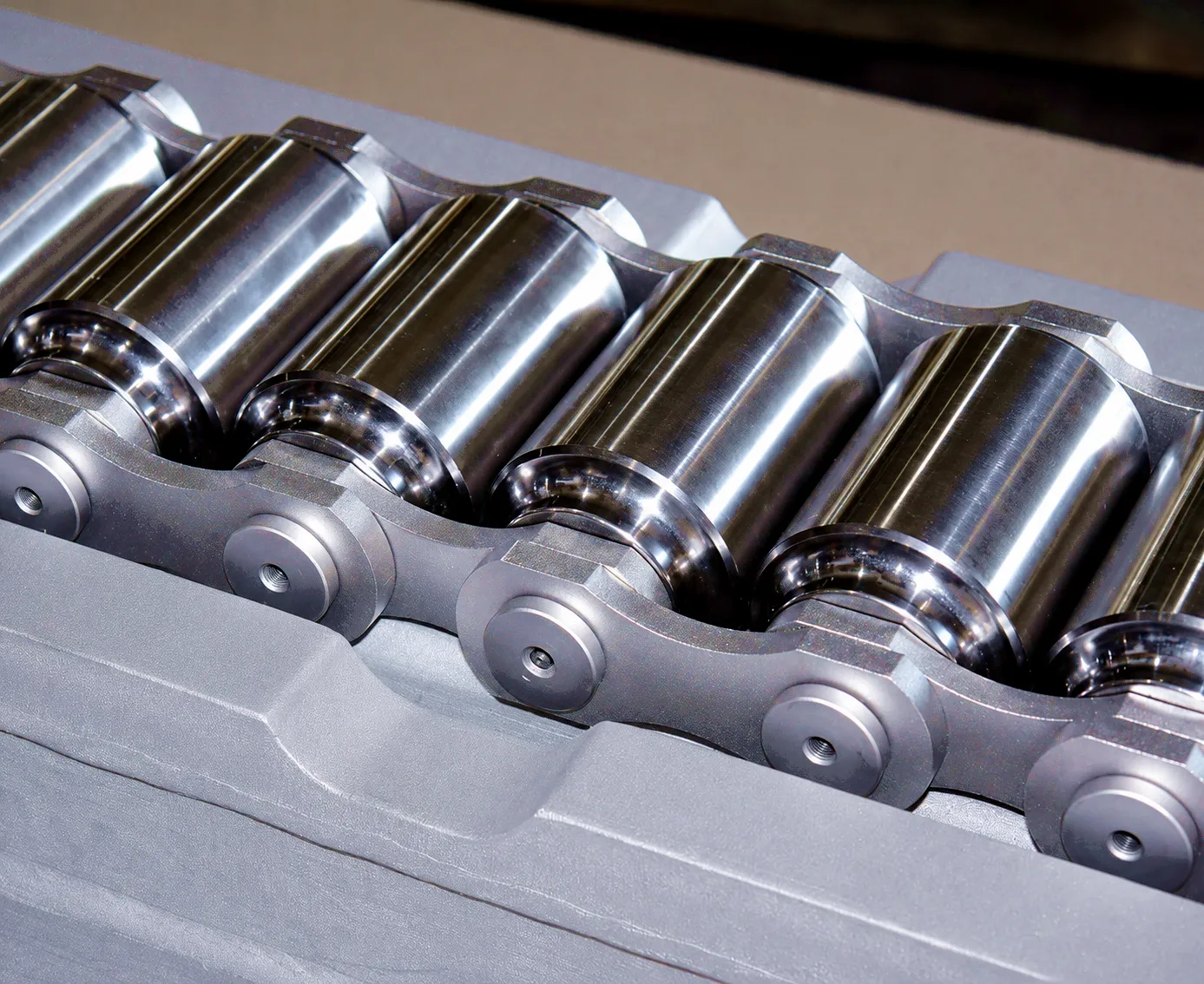
How to Match Roller Chain Pitch to Sprocket: A Practical Engineering Framework
The first step in matching chain to sprocket is confirming that both components belong to the same pitch family and standard — verifying the nominal pitch dimension from the chain’s data sheet against the sprocket’s tooth pitch, which is defined by the sprocket’s tooth count and pitch circle diameter (PCD). For a sprocket with N teeth and chain pitch P, the pitch circle diameter is given by: PCD = P / sin(180° / N). This relationship shows that as tooth count increases for a fixed pitch, PCD grows approximately linearly, reducing the polygon effect. The recommended minimum tooth count for the small (driver) sprocket is 17 teeth for smooth operation at moderate speeds, and 21 teeth for high-speed applications. Below 15 teeth, the polygon effect introduces speed variation and shock loads that significantly reduce roller chain service life regardless of pitch accuracy.
Centre distance between sprocket shafts must be set to achieve an acceptable chain wrap angle on the small sprocket — ideally 120° or greater — to spread the transmitted load across a sufficient number of engaged teeth. For a two-sprocket drive with pitches P, driver tooth count z1, and driven tooth count z2, the theoretical centre distance C for a chain with L links (where L must be an even number to allow use of a standard connecting link rather than an offset link) follows the standard chain drive geometry equations. Consulting these formulas — or using Ever Power’s online chain drive calculator — before ordering ensures that the chain length, number of links, and any required adjustment slot in the machine frame are all correctly specified from the outset.
One practical complication for UK maintenance engineers working on older equipment — particularly legacy textile machinery in the mill conversions of Bradford, or Victorian-era pump stations undergoing heritage restoration — is that the original sprockets may be worn to a point where their effective tooth pitch has increased beyond the tolerance range. In these situations, fitting a new roller chain to a worn sprocket will result in accelerated chain wear because the new chain’s rollers engage only the tips of the worn teeth rather than seating into the gullet. The correct practice is to replace chain and sprocket together, or — where the sprocket is integral to a large shaft and replacement is impractical — to specify a chain with a slightly enlarged pitch tolerance to match the worn sprocket geometry while budgeting for full sprocket replacement at the next planned shutdown.
| Speed (m/s) | Smeertype |
|---|---|
| 0 – 0.5 | Manual / brush |
| 0.5 – 3.0 | Drip feed oiler |
| 3.0 – 8.0 | Oil bath / disc |
| > 8.0 | Forced circulation |
Ever Power: Precision Roller Chain Manufacturing and Global Supply
When your production line depends on pitch-accurate chain delivered on time and to specification, the manufacturer you choose determines your operating costs as much as the chain itself.
Ever Power operates a dedicated roller chain manufacturing facility equipped with automated cold-press stamping lines, continuous mesh-belt heat-treatment furnaces with nitrogen atmosphere control, and coordinate-measuring machine (CMM) verification cells that validate pitch tolerances on statistical samples from every production batch. The facility holds ISO 9001:2015 certification, and all chain destined for UK markets is produced against BS 228 dimensional specifications with full material traceability documentation — a mandatory requirement for procurement under the UK’s engineering industry compliance frameworks.
Customisation is where Ever Power’s engineering capability genuinely distinguishes itself. Beyond the standard product catalogue, Ever Power routinely produces roller chains with modified specifications including: non-standard pitches for legacy equipment that predates the current ISO harmonisation; duplex and triplex multi-strand assemblies; extended pin chains with customer-specified attachment geometry; nickel-plated, zinc-nickel, or dacromet-coated chains for elevated corrosion resistance; and O-ring or X-ring sealed variants for applications requiring extended lubrication intervals. Lead times for standard catalogue items are typically 3–7 working days from the UK distribution warehouse, while custom-specification orders ex-factory range from 3–6 weeks depending on complexity — significantly faster than many European chain manufacturers who lack in-house heat treatment capacity.
Ever Power’s supply chain infrastructure supports UK businesses through port-of-entry clearance at Felixstowe and direct distribution via a UK-based logistics partner network, meaning customs clearance and delivery scheduling require no involvement from the procurement team beyond placing the initial purchase order. For repeat supply agreements, Ever Power offers blanket order programmes where stock is pre-positioned in UK-bonded warehouse against scheduled call-offs — a service particularly valued by automotive Tier 1 suppliers operating just-in-time production lines in the Midlands who cannot tolerate lead time variability in their chain supply.
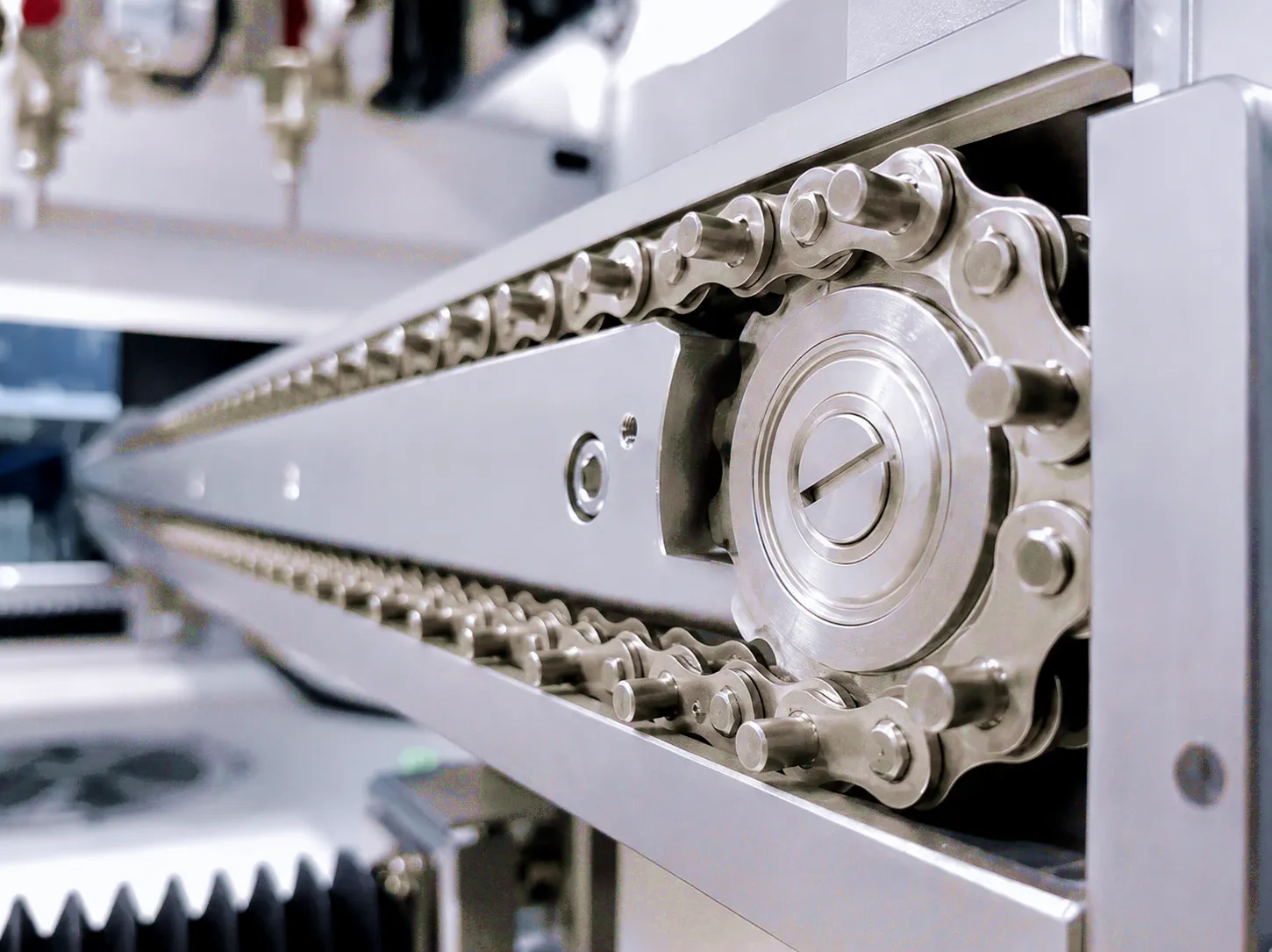
Customer Success Story: Conveyor Rebuild in Sheffield’s Special Metals District
Hadfield Alloys Ltd, a specialist processor of high-alloy and stainless bar stock based in Sheffield’s Lower Don Valley, operates a walking-beam conveyor system to transport 6-metre alloy bars from the induction heating furnace to the rolling stand. The conveyor uses 24B-1 simplex roller chains running on cast manganese steel sprockets and operates at approximately 1.2 m/s under sustained loads of 48 kN per strand. By early 2024, the facility was experiencing chain failures roughly every eight weeks — significantly below the 26-week replacement cycle the system was designed for — resulting in extended unscheduled shutdowns averaging 14 hours per event and an annual unplanned maintenance cost exceeding £85,000.
An analysis by Hadfield’s maintenance manager identified two root causes: the replacement chains sourced through a local distributor showed measured pitches ranging from 38.05 mm to 38.28 mm — significantly outside the ±0.10 mm tolerance the sprocket geometry required — and the heat treatment of the side plates was inconsistent, with Rockwell hardness readings varying from 28 to 44 HRC across the batch. Chains with softer plates were deforming in the high-temperature, high-load proximity zone near the furnace outlet, causing rapid elongation and eventual link plate fatigue fracture. Ever Power was approached for an alternative supply, and the team specified a customised 24B-1 chain with chrome-moly alloy plates (quench-tempered to 36–40 HRC), graphite-packed sealed joints for the high-temperature zone, and a full-batch CMM pitch verification certificate supplied with each delivery.
Following the switch to Ever Power’s custom-specification chains in March 2024, Hadfield Alloys completed a full 30-week service interval without a single unplanned chain failure — the longest uninterrupted run the conveyor system had achieved in four years. The annual maintenance cost for chain-related shutdowns fell by 68%, and the procurement team standardised on Ever Power as the sole roller chain supplier for the site, placing a blanket order for 12-month rolling supply with quarterly deliveries to the site stores in Sheffield.
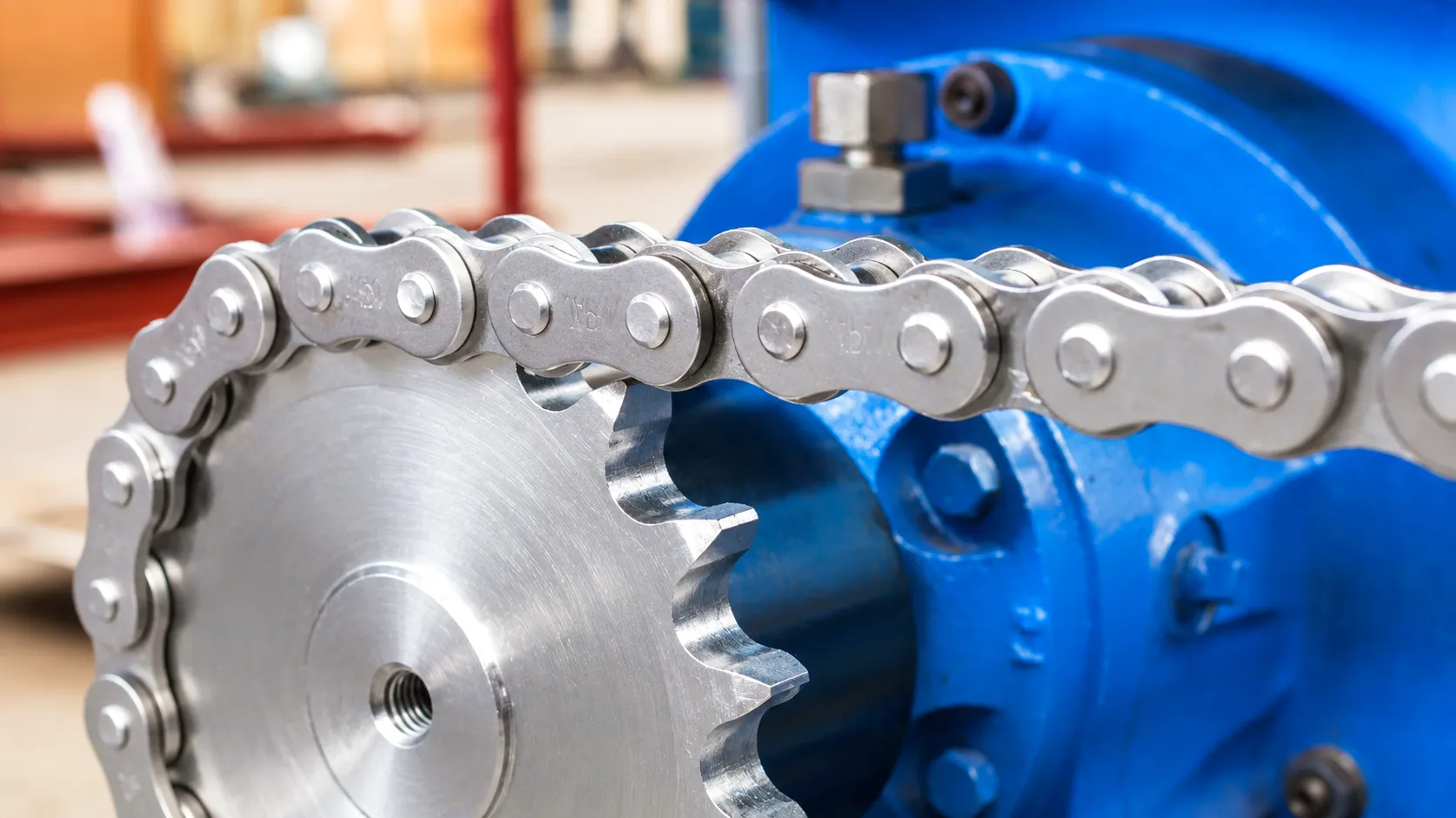
“The pitch consistency on Ever Power’s 24B chain is genuinely measurable — we spot-check every delivery, and they’ve never been outside 38.1 ±0.05 mm. That accuracy is what eliminated our premature wear failures completely.”
“We specified graphite-packed sealed joints for the furnace zone — a customisation that took three email exchanges to specify and was delivered exactly as described. No other supplier we approached could turnaround a custom heat-treatment spec on a standard lead time.”
“The CMM batch certificate shipped with every delivery has been invaluable for our ISO 9001 incoming inspection records. It proves conformance without us having to do the measurement ourselves — a genuine time saving for a three-man maintenance team.”
Veelgestelde vragen
Common questions from UK engineers and procurement teams sourcing roller chain.
Contact Ever Power’s engineering team for pitch verification, material selection advice, and a direct manufacturing quotation — no distributor mark-up.