Selecteer een pagina

Technical Knowledge Series · Ever Power

Inzicht in slijtage van rollenkettingen: oorzaken, meting en vervangingsintervallen

A comprehensive technical guide for UK engineers, maintenance teams, and procurement specialists managing drive systems across heavy industry, agriculture, and manufacturing.

Maintenance Engineering
UK Industrial Standards
Drive Chain Technology

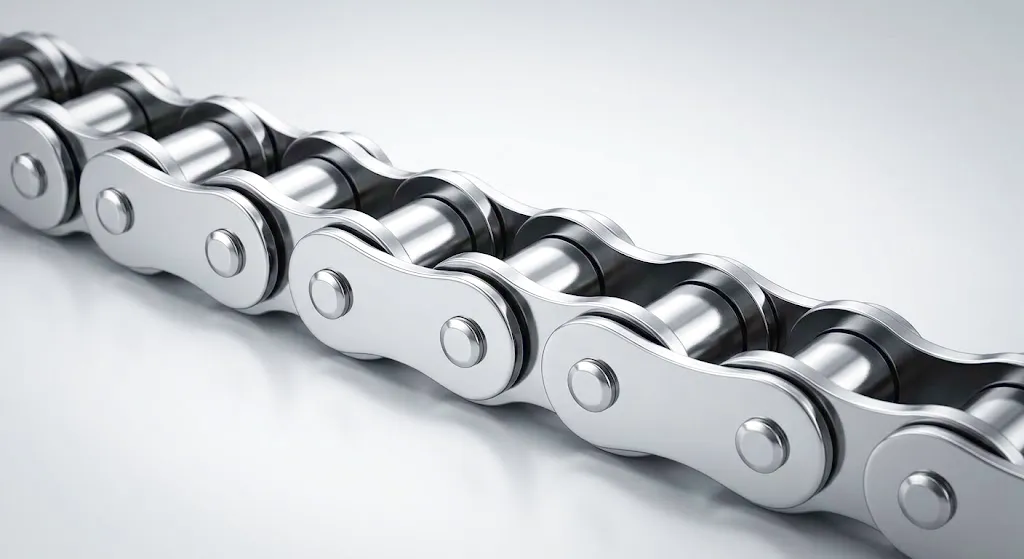
Roller chain close-up showing link and pin assembly

Roller chain is one of the most widely deployed power transmission components in industrial machinery across the United Kingdom, yet it remains one of the most frequently misunderstood in terms of its wear behaviour. Whether you are managing a conveyor line in a Sheffield steel fabrication facility, maintaining agricultural equipment in East Anglia, or overseeing drive systems in a Birmingham automotive parts plant, understanding exactly why roller chain wears, how to measure that wear accurately, and when the chain must be replaced is not merely a matter of operational efficiency — it is a direct factor in plant safety and profitability. A worn chain that is allowed to run beyond its serviceable life does not simply degrade in isolation: it accelerates sprocket wear, introduces vibration into gearboxes and bearings, and in high-load applications, creates a genuine risk of sudden catastrophic failure. The financial consequences of unplanned downtime in a UK manufacturing environment can comfortably reach thousands of pounds per hour, making proactive chain management a straightforward return-on-investment calculation.

This guide is designed to give maintenance engineers, plant managers, and procurement teams a thorough technical grounding in roller chain wear mechanics. We cover the metallurgical and mechanical causes of wear, the correct methods for measuring chain elongation in the field, and the industry-accepted replacement intervals for different operating conditions. We also look at how material selection and precision manufacturing directly influence service life — and how Ever Power’s customised roller chain solutions are helping UK industry reduce total cost of ownership across some of the most demanding applications on British soil.

The Mechanics Behind Roller Chain Wear

Roller chain wear is not a single uniform process — it is the cumulative result of several distinct but interrelated mechanical and chemical phenomena acting simultaneously on the chain’s components. The primary and most significant form is pin-and-bushing wear, often referred to as internal wear or articulation wear. Every time the chain engages and disengages with a sprocket tooth, the pin rotates within the bushing under load. Over time, even with adequate lubrication, this repeated relative motion removes microscopic amounts of material from both the pin surface and the inner bore of the bushing. This material loss is what causes the chain to elongate — not because the individual links stretch in any physical sense, but because the cumulative clearance at every pin-bushing joint increases by a small amount. When that clearance is multiplied across dozens or hundreds of pitches in a working chain, the overall chain length increases measurably. This elongation causes the chain to ride higher on the sprocket teeth, eventually leading to the jumping or skipping behaviour that signals imminent failure.

Beyond internal wear, roller chain also suffers from roller and sprocket wear — where the outer surface of the roller contacts the sprocket tooth flanks under dynamic impact loading — and side plate fatigue, which occurs in chains subjected to cyclic bending and tensile stress near the maximum rated load. In environments common across UK heavy industry, such as foundries in the Midlands or chemical processing plants in Teesside, abrasive contamination from dust, scale, or process debris accelerates all of these wear modes simultaneously, often halving or quartering the expected service life compared to a clean enclosed drive.

Core Causes of Accelerated Roller Chain Wear in Industrial Applications
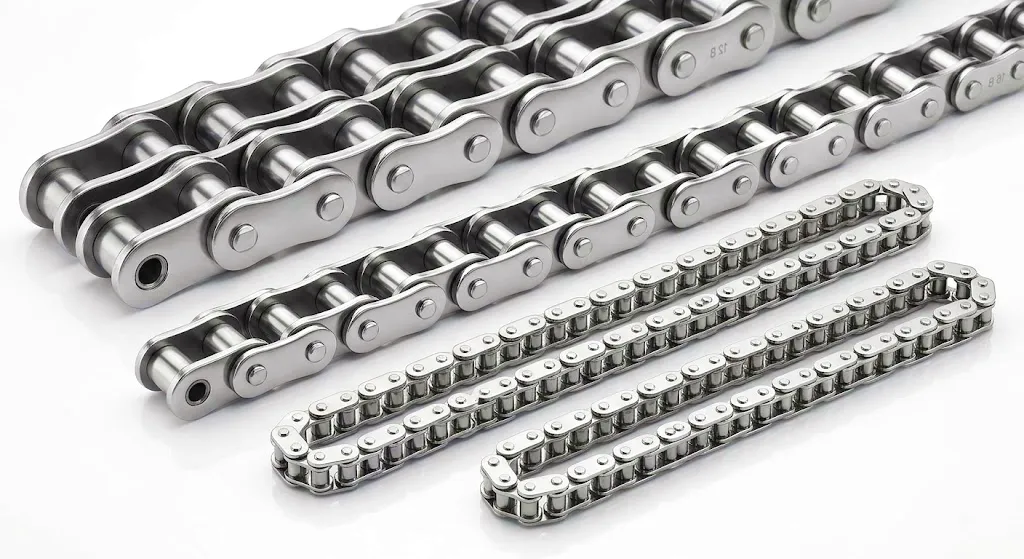
Industrial roller chain on sprocket drive system

Inadequate lubrication is the single most common cause of premature roller chain wear in industrial settings. The lubricant in a chain drive must penetrate the pin-bushing joint and the roller-bushing interface, creating a thin hydrodynamic film that separates the metal surfaces under load. When lubrication intervals are too long, when the wrong viscosity oil is applied, or when the lubrication method (bath, drip, or pressure) is poorly matched to the operating speed and load, metal-to-metal contact occurs during every articulation cycle. In moderate-speed applications such as agricultural conveyors or packaging line drives running at between 100 and 400 rpm, a manual relubrication interval of every 40 to 80 operating hours is typically appropriate under standard conditions. In high-speed enclosed drives, a continuous oil bath or pressure lubrication system is generally required to maintain adequate film thickness.

Overloading is the second major factor. Every roller chain is rated to a specific working load — typically expressed as a fraction of the chain’s minimum breaking load. Operating consistently above the design load compresses the lubricant film, causing boundary lubrication conditions where surface asperities on the pin and bushing make direct contact. This generates localised frictional heat and accelerates adhesive wear. In UK manufacturing environments operating with legacy equipment or running processes that have been uprated without a corresponding review of the drive specification, overloading is remarkably common and is frequently undiagnosed until sprocket tooth damage or chain failure makes it apparent.

Misalignment — both angular and parallel — between the driving and driven sprockets introduces lateral forces on the chain’s side plates and rollers. These forces cause the rollers to contact the sprocket flanks at an angle rather than seating cleanly in the tooth gullet, generating wear patterns on the sprocket that mirror back onto the chain. Even a modest misalignment of two to three millimetres across a one-metre shaft centreline distance can reduce chain life by 30% or more in practice. Drive designers and maintenance teams in UK facilities should routinely verify shaft alignment using a straight-edge or laser alignment tool as part of any planned maintenance programme.

🔩
Abrasive Contamination
Dust, metal swarf, and process debris entering the pin-bushing joint act as a lapping compound, dramatically accelerating internal wear. Sealed or O-ring chain variants offer significant protection in contaminated environments.
🌡️
Thermal Stress
Elevated operating temperatures thin the lubricant film and can cause oxidative hardening of the oil, leaving deposits that prevent fresh lubricant from reaching the joint surfaces. Applications above 80°C require specialist high-temperature lubricants or stainless steel chain.
Dynamic Impact Loading
Shock loads generated by abrupt starts, reversals, or load surges create peak tensile stresses in the chain that can be five to ten times the nominal running load. Repeated impact loading causes fatigue crack initiation in the side plates and press-fit failure at the pin-to-plate joint.
💧
Corrosion
In food processing, outdoor agricultural, and marine environments across the UK coast, moisture and chemical exposure promote surface corrosion on pins and bushings. Corrosion pitting roughens joint surfaces and significantly accelerates the abrasive wear process.

Material Science: What Your Roller Chain Is Made From and Why It Matters
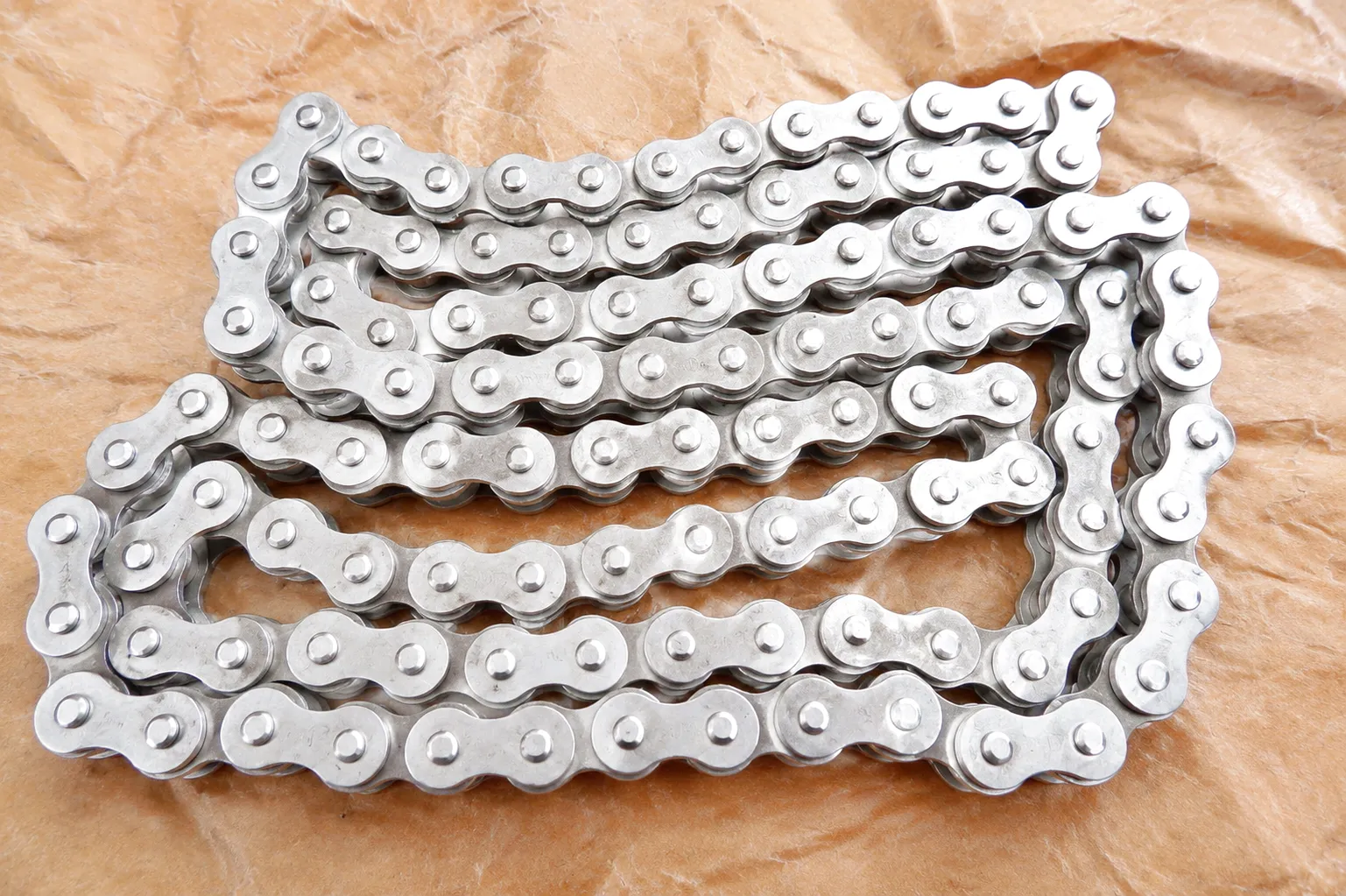
High-quality roller chain components showing material finish

The wear resistance of a roller chain is determined to a very large degree by the materials from which its components are manufactured and the heat treatment processes applied to them. Standard industrial roller chain in the UK market is typically manufactured from alloy steel grades chosen for their response to case-hardening treatments. The pins — arguably the most critically loaded component in the chain — are produced from alloy steels such as 20CrMnTi or equivalent grades that respond well to case carburising, developing a surface hardness in the range of 58 to 62 HRC while retaining a tough, ductile core that can absorb shock loads without brittle fracture. The bushing, which bears against the pin during articulation, is similarly carburised and quenched to achieve surface hardness values that minimise the material removal rate at the pin-bushing interface under load.

The rollers are typically manufactured from bearing-quality steel and receive a through-hardening or case-hardening treatment that provides a wear-resistant outer surface for contact with the sprocket teeth. Side plates are produced from medium-carbon or alloy steel strip, punched to precise geometry, and either left bright or given a light carburising treatment depending on the chain’s design load and intended application. The precision of the plate geometry — particularly the accuracy of the pin hole diameter and its positional tolerance relative to the plate’s pitch — directly influences the consistency of the press fit between pin and plate, which is a primary factor in joint integrity under load.

For specialised UK industrial applications, Ever Power offers roller chain variants manufactured from stainless steel (316L and 304 grades) for food-grade and corrosive environments, nickel-plated chains for moderate corrosion resistance in outdoor agricultural and construction machinery, and self-lubricating sintered bushing chains for enclosed applications where re-lubrication access is restricted. The choice of material package is not a commodity decision — it has a direct and quantifiable impact on the chain’s operational life in a specific environment.

How to Measure Roller Chain Wear Correctly on the Shop Floor

Accurate measurement of roller chain elongation is essential for making sound replacement decisions. The correct method is not to simply pull on the chain and judge its sag by eye — that approach is qualitative at best and misleading at worst, particularly on shorter drives where the chain has insufficient span to sag visibly. The standard measurement technique is to count a defined number of pitches — typically 12, 24, or 48 pitches depending on the chain type — and measure the overall length of that span. This measured length is then compared against the theoretical nominal length (number of pitches multiplied by the nominal pitch dimension) to calculate the percentage elongation.

Field Measurement Protocol — Step by Step
1Relieve all drive tension before measuring — do not attempt to measure a chain under working load as this will produce artificially low elongation readings.
2Apply a light tension to remove joint clearance slack — use a spring scale to apply a tension equal to approximately 2% of the chain’s minimum breaking load.
3Measure the outside-to-outside pin distance over the specified number of pitches using a vernier calliper or dedicated chain wear indicator gauge.
4Calculate elongation percentage: (Measured Length − Nominal Length) / Nominal Length × 100%. Replace when this figure reaches the application-specific threshold.
5Record the measurement and date. A wear rate trend is more informative than any single measurement — tracking elongation over time allows accurate prediction of the remaining service life.

The general guideline for replacement at 1% to 3% elongation is widely quoted, but it requires contextual interpretation. For high-precision applications such as indexing mechanisms or synchronised multi-strand conveyors operating in an automated warehouse or automotive assembly plant, a replacement threshold of 1% elongation is appropriate because even small timing deviations introduce quality or coordination issues. For general industrial conveyor applications, 2% to 2.5% elongation is typically the replacement trigger. For low-speed agricultural drives operating below 50 rpm with large sprockets and minimal precision requirements, extension to 3% may be acceptable, but only after sprocket tooth inspection confirms that the tooth profile has not been significantly distorted by the elongated chain’s riding-up action.

The critical point that many maintenance guides underemphasise is that the sprocket must be inspected simultaneously with the chain. A worn sprocket fitted with a new roller chain will destroy that chain at an accelerated rate because the worn tooth profile cannot support the roller correctly, generating concentrated contact stress rather than distributed load across the tooth face. When the chain’s measured elongation exceeds the replacement threshold, the sprockets should be measured against their original tooth profile geometry, and replaced if wear exceeds the manufacturer’s tolerance — which for most standard sprocket materials is typically defined as 10% to 15% reduction in tooth thickness at the pitch circle.

Roller Chain Technical & Performance Parameter Reference Table

The following table provides key technical parameters for standard and heavy-duty roller chain series commonly used across UK industry, covering the ANSI and BS/DIN dimensional standards that correspond to most domestically deployed drive systems. These values serve as a baseline reference for maintenance scheduling and replacement planning.

Chain Type / StandardSteek (mm)Minimale breeksterkte (kN)Max. Allowable ElongationPin Diameter (mm)Plate Material / HRCTypische toepassing
ANSI 40 / BS 06B12.717.82.0%3.97Alloy Steel / 58–62Light conveyor, agricultural aux. drives
ANSI 60 / BS 10B19.0542.32.0%5.96Alloy Steel / 58–62Algemene industriële, verpakkingsmachines
ANSI 80 / BS 16B25.488.51.5%7.95Alloy Steel / 60–64Heavy conveyor, steel fabrication, mining
ANSI 100 / BS 20B31.75142.31.5%9.55High-Tensile Alloy / 60–64Automotive, crane hoists, quarry plant
ANSI 120 / BS 24B (HSP)38.1213.01.0%11.12High-Tensile Alloy / 62–66Caterpillar equipment, heavy mining, OEM
Stainless Steel 10B15.87524.02.5%5.08316L Stainless / 35–42Food processing, chemical, washdown
O-Ring Sealed 8025.484.02.0%7.95Alloy Steel / 60–62Agricultural, outdoor, dusty environments

High-Strength Roller Chain for Demanding OEM Applications

Purpose-engineered for Caterpillar and equivalent heavy machinery platforms

OEM Heavy-Duty

Engineered for the extreme demands of Caterpillar heavy equipment, the 120HSP-00 features a precision-machined high-tensile alloy steel pin assembly and case-hardened bushings delivering measurably superior resistance to the pin elongation that shortens standard chain life. The 38.1 mm pitch series is built to withstand the high shock loads and abrasive site conditions characteristic of UK quarrying, groundworks, and infrastructure construction operations. Minimum breaking load exceeds 213 kN, with every production batch subject to tensile load testing before despatch.

Bekijk product →

OEM Heavy-Duty

The C100HSP-00 addresses the demanding requirements of Caterpillar crawler and excavator undercarriage drive systems, where the combination of high tensile load, lateral forces, and abrasive ground contact creates one of the most severe operating environments for any drive chain. Produced to a 31.75 mm pitch, this heavy-duty variant incorporates an enhanced side plate thickness and a proprietary pin surface treatment that raises the micro-hardness of the pin’s bearing surface, delivering meaningful reductions in internal wear rate compared to standard ANSI 100 chain across documented field trials in comparable applications.

Bekijk product →

Industrial Application Scenarios: Where Roller Chain Wear Management Is Critical
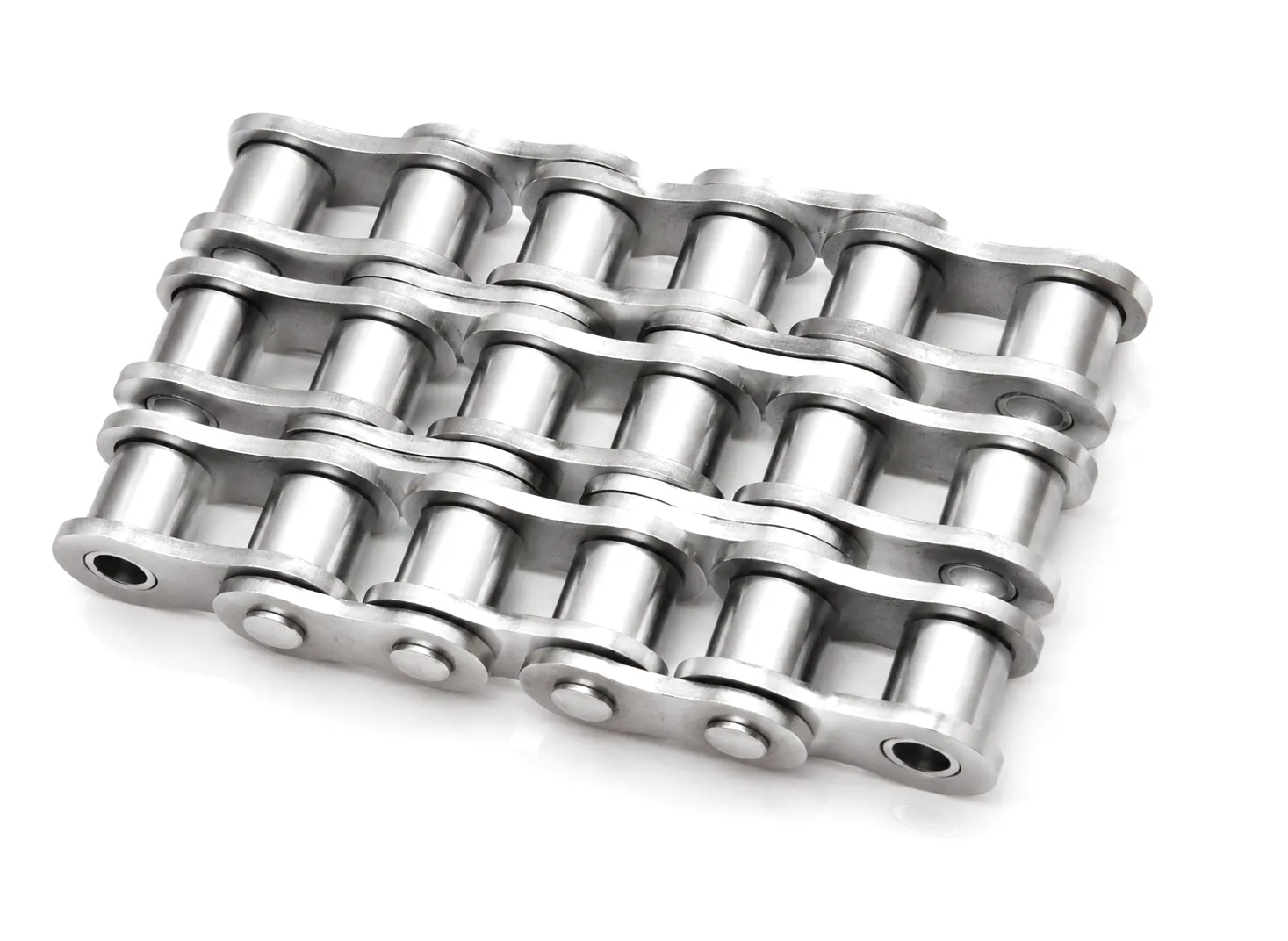
Roller chain drive in industrial conveyor system

Steel and Metal Manufacturing — Sheffield and the West Midlands: The UK’s remaining steel and metal fabrication sector, concentrated in Sheffield, Rotherham, and across the West Midlands manufacturing corridor, operates heavy-duty conveyor and material-handling drives in environments characterised by high ambient temperatures, metallic scale contamination, and continuous-duty operation. Roller chain drives in billet handling, coil slitting lines, and cooling bed conveyors are subjected to abrasive scale contamination that is particularly aggressive at the pin-bushing interface. In these applications, chain replacement intervals of three to six months are not uncommon under sub-optimal lubrication conditions, whereas properly maintained and correctly specified chains can achieve 12 to 18 months of service life. The economic argument for proactive wear monitoring and precision chain specification in this sector is substantial.

Agricultural Machinery — East Anglia, Yorkshire, and the Scottish Borders: UK agricultural equipment — including round balers, forage harvesters, grain conveyors, and potato handling machinery — relies heavily on roller chain drives operating in outdoor conditions with exposure to crop debris, soil contamination, moisture, and seasonal temperature extremes. The wear challenge in agricultural roller chain is compounded by the seasonal, often intermittent nature of operation: chains that sit stationary for months between seasons can suffer corrosion that effectively welds the pin inside the bushing, causing the chain to behave as a rigid member rather than articulating correctly. Seasonal inspection and proper storage lubrication protocols are as important as in-service maintenance for agricultural drive chains across UK farming operations.

🏭
Automotive Manufacturing — Oxford, Sunderland, Derby
High-volume automotive assembly lines demand roller chain drives with extremely consistent timing and minimal elongation, as even small pitch errors in transfer and indexing conveyors can cause assembly jigs to misalign. Replacement thresholds of 1% elongation are standard in this sector, and predictive maintenance programmes using chain wear measurement data integrated into plant CMMS systems are increasingly common across UK automotive facilities.
⚙️
Mining and Quarrying — Wales, Northeast England, Scottish Highlands
Extractive industries represent one of the most severe operating environments for roller chain. High loads, abrasive silica and mineral contamination, impact loading from crusher feed conveyors, and outdoor exposure combine to create conditions where standard chain can fail in weeks. HSP-series and large-pitch heavy-duty chains with extended pin diameters and reinforced side plates are the appropriate choice, often combined with sealed roller designs to limit contamination ingress at the bushing-roller interface.
🍽️
Food Processing — Lincolnshire, East Yorkshire, County Down
UK food manufacturers operating under BRC or FSSC 22000 certification standards require roller chain that meets food-safe material specifications. Stainless steel or nickel-plated chains with NSF H1-approved lubricants are standard in direct or indirect food contact zones. The regular high-pressure washdown cycles used in these facilities strip conventional lubricants rapidly, making re-lubrication intervals and lubricant selection a critical maintenance variable in managing wear rate and regulatory compliance simultaneously.

Replacement Intervals: Moving from Reactive to Predictive Chain Management
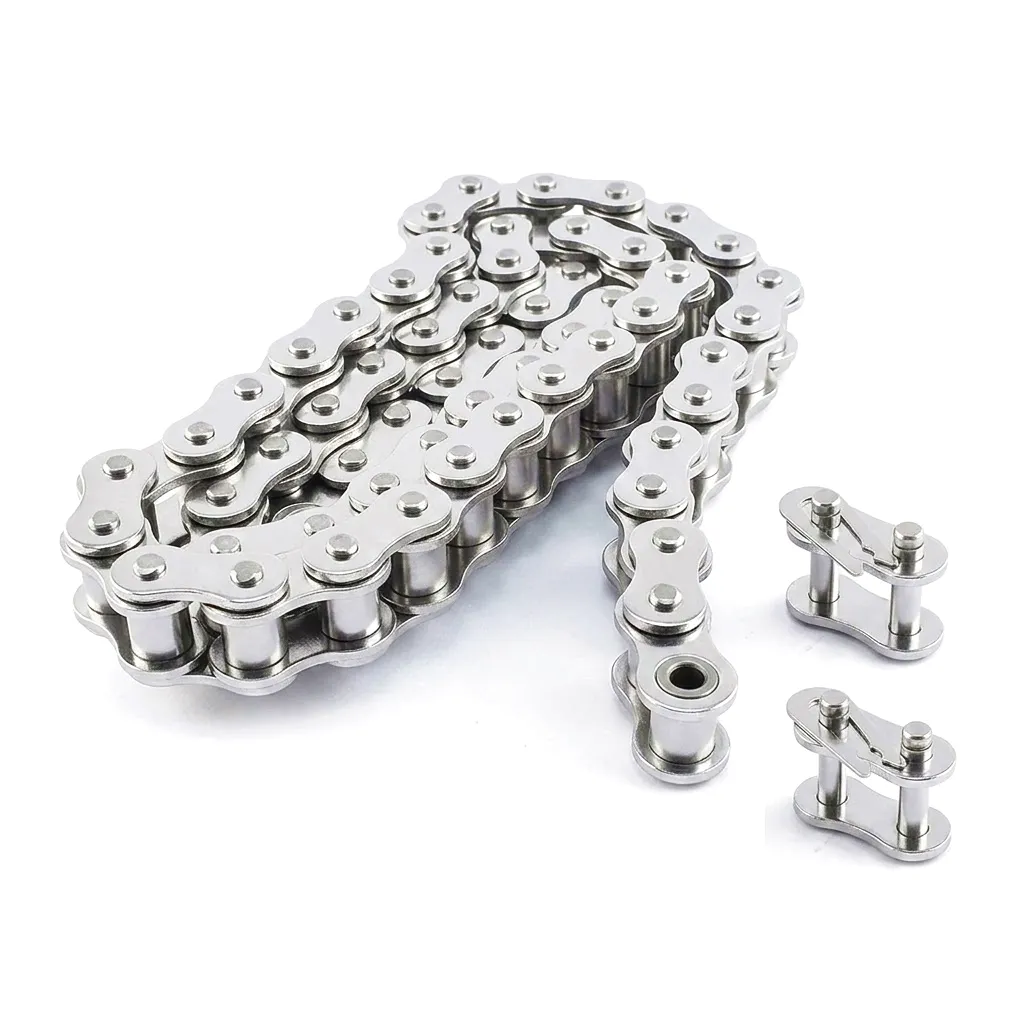
Roller chain inspection and measurement tools

The most common failure mode in UK industrial facilities is not sudden fracture — it is gradual elongation to the point where the chain can no longer correctly engage the sprocket and begins to skip or slip under load. This failure mode is predictable, measurable, and entirely preventable with a systematic wear monitoring programme. The transition from reactive replacement — replacing the chain after it has already caused production disruption — to predictive replacement based on measured elongation data is one of the most cost-effective maintenance improvements available to plant engineering teams across British industry.

A practical predictive maintenance programme begins with establishing a baseline measurement of the new chain’s actual length immediately after installation and initial run-in (typically 24 to 48 hours of operation, during which new chain seats against the sprocket). Subsequent measurements at defined intervals — monthly in high-duty applications, quarterly in moderate-duty applications — are plotted on a simple elongation trend chart. The wear rate (expressed as percentage elongation per 1,000 operating hours) calculated from the first two or three data points allows a confident projection of the replacement date, enabling chain procurement to be planned in advance and replacement to be scheduled during a planned maintenance window rather than as an emergency response.

For UK operations with multiple identical drive systems, a statistical approach is valuable: tracking the actual replacement intervals achieved across a population of similar chains in similar operating conditions, then setting a time-based replacement interval at the 10th percentile of observed service life (i.e., replacing at a time at which only 10% of chains would have failed). This conservative approach eliminates virtually all in-service failures while avoiding excessive premature replacement, and the replacement interval figure can be refined over successive cycles as more data accumulates. Many larger UK manufacturing sites are now incorporating chain wear data into their overall asset management platforms, enabling central tracking and automated work-order generation when a drive approaches its replacement threshold.

Ever Power: Precisieproductie en maatwerkoplossingen voor rollenkettingen

Ever Power’s manufacturing operation represents a fully vertically integrated approach to roller chain production — from raw material selection and in-house steel processing through to precision component machining, heat treatment, assembly, and final quality inspection. This integration is not incidental; it is central to Ever Power’s ability to offer UK procurement teams and engineering departments the combination of consistent quality, rapid lead times, and genuine customisation capability that commodity importers and catalogue distributors simply cannot match. Where a standard catalogue chain from a generic supplier may be assembled from components from multiple sub-tier sources with varying quality standards, every Ever Power roller chain is built to a controlled bill of materials with documented heat treatment records and hardness verification at the component level.

Ever Power’s customisation capability is particularly relevant for UK customers in niche or specialised applications where standard catalogue chain does not fully address the application’s specific demands. Common customisation requests handled by Ever Power include non-standard pitch configurations for replacement of obsolete OEM chains, extended-pin or attachment-plate variants for conveyor carrier systems, custom surface treatments including nickel plating, manganese phosphating, or zinc-nickel alloy coating for corrosion resistance, and premium shot-peening of side plates to improve fatigue strength in high-cycle loading applications. Customers across UK sectors including offshore support, defence supply, and specialist agricultural machinery manufacture regularly specify Ever Power custom chain solutions because the performance improvement in their specific application justifies the investment relative to standard product.

🔬
Nauwkeurige warmtebehandeling
Controlled carburising furnaces with atmosphere monitoring deliver consistent case depth and surface hardness, verified by hardness testing on every production batch.
📐
Dimensional Accuracy
CNC machining of pin and bushing components to tolerances of ±0.01 mm ensures correct press-fit integrity and consistent pitch geometry across the full chain length.
🧪
Tensile Load Testing
Destructive tensile testing on batch samples to verify minimum breaking load compliance, with test certificates available for quality-critical procurement requirements.
🚚
Supply Chain Reliability
Maintained inventory of standard series in bulk, with direct air freight options for urgent replacement requirements reaching UK ports within 5 to 7 working days.

Customer Success Story: Sheffield Structural Steel Fabricator Reduces Chain-Related Downtime by 74%

Case Study — Sheffield, South Yorkshire

A mid-sized structural steel fabrication company operating from a purpose-built facility in the Sheffield industrial corridor approached Ever Power’s UK sales team in early 2024 following a period of escalating maintenance costs and unplanned production stoppages traced directly to premature roller chain failures across three of their main billet-handling conveyor drives. The drives operated in a demanding environment: ambient temperatures frequently exceeded 45°C near the cutting and welding bays, metallic scale contamination was continuous and heavy, and the lines ran double shifts six days per week — accumulating over 6,000 operating hours per year per drive system.

The company’s maintenance team had been replacing standard ANSI 80 catalogue chain every 10 to 14 weeks at a combined cost (parts and labour) of approximately £2,200 per replacement event across the three drives. An Ever Power application engineer visited the facility, conducted a comprehensive drive audit including measurement of sprocket wear, review of the lubrication system, and analysis of the chain operating loads, and recommended a transition to Ever Power’s heavy-duty case-hardened ANSI 80 chain with enhanced shot-peened side plates and a purpose-specified EP gear oil drip lubrication system calibrated for the operating speed and temperature conditions.

Following a phased transition — including replacement of the most worn sprockets to ensure the new chains were not immediately loaded onto damaged tooth profiles — the Sheffield facility achieved an average replacement interval of 38 weeks across the three drive systems in the 12 months following the changeover. This represented a 74% reduction in chain replacement frequency, a first-year saving of approximately £14,800 across the three drives, and complete elimination of the unplanned production stoppages that had been causing schedule disruptions and customer delivery problems. The plant maintenance manager reported that the combination of the higher-specification chain and the corrected lubrication regime together produced the outcome — neither change alone would have delivered the same result.

★★★★★

“We had been through four or five different chain suppliers over the years and kept getting the same result — chains wearing out too quickly and the maintenance bill climbing every quarter. The Ever Power application team actually bothered to come out, look at our drives properly, and tell us what the real problem was. The new chain spec combined with the lubrication changes has made a very tangible difference to our maintenance budget.”

D. Hargreaves — Maintenance Manager
Structural steel fabrication, Sheffield
★★★★★

“The surface hardness on the Ever Power HSP pins is noticeably superior to what we have seen from other suppliers at similar price points. We run heavy excavator equipment through extreme ground conditions in the northeast, and the C100HSP series has held up considerably better than the OEM-brand chains we were previously buying. Lead times from Ever Power have also been reliable — critical when you are trying to keep a machine on-site.”

A. Patterson — Plant Director
Plant hire and quarrying, County Durham
★★★★★

“As a food manufacturer operating under strict audit conditions in Lincolnshire, we cannot afford any ambiguity in our supply chain’s material compliance. Ever Power provided full traceability documentation and material certificates for our stainless steel chain order, which our technical and compliance teams reviewed thoroughly before approval. Performance in our washdown environment has been excellent, and the chain has now exceeded our previous service life benchmark by around 40%.”

S. Brightwell — Engineering Lead
Food processing and packing, Lincolnshire

Frequently Asked Questions: Roller Chain Wear, Measurement, and Sourcing in the UK

How do I know when my industrial roller chain needs to be replaced, and what measurement method is most accurate for UK factory conditions?
The most reliable method is pitch elongation measurement using a vernier calliper across 12 to 24 pitches under light tension. Replace when elongation reaches 1% for precision timing applications and 2% to 2.5% for general industrial conveyor drives. Do not rely on visual assessment alone — a chain can appear serviceable by eye while already exceeding safe elongation limits.
What is the typical price or cost of a high-strength roller chain in the UK, and where can I get a quote from a reliable supplier for Birmingham manufacturing applications?
Pricing varies significantly with chain series, material specification, and order volume. Standard ANSI 60 simplex chain starts from approximately £8 to £15 per metre for catalogue-grade product, while heavy-duty HSP series and custom-specification chain can range from £25 to £80+ per metre depending on complexity. Contact Ever Power at [email protected] for a tailored quote based on your specific application parameters.
Which type of roller chain material is best suited for outdoor agricultural machinery operating in wet UK field conditions in Yorkshire and the East Midlands?
For outdoor agricultural applications in wet UK climates, O-ring sealed chain with a nickel-plated finish offers the best balance of corrosion resistance and wear life. The O-ring seals retain the factory-applied lubricant at the pin-bushing joint and exclude moisture and crop debris, while the nickel plating protects external surfaces from rust during seasonal storage. Standard bright steel chain in these conditions requires very frequent re-lubrication and will corrode during off-season storage without specific protective treatment.
How often should I replace the sprockets when I fit a new roller chain on heavy conveyor equipment at a Sheffield or Rotherham steel plant?
You should inspect sprocket tooth profiles every time you replace the chain. If the tooth profile shows hooked wear, significant thinning at the pitch circle, or visible surface pitting, the sprocket must be replaced alongside the chain. Fitting a new roller chain on a worn sprocket accelerates wear on the new chain disproportionately and can reduce the new chain’s service life by 50% or more. As a general guide, standard carbon steel sprockets should be replaced every second or third chain replacement in moderate-duty applications.
Where can I find a UK-based roller chain supplier who can offer custom chain specifications and deliver quickly to a site in Manchester or the northwest of England?
Ever Power supplies UK customers nationwide, including the northwest manufacturing corridor covering Manchester, Salford, Warrington, and Preston. Standard series chains are held in inventory and can be despatched for next-day delivery to UK mainland addresses, while custom specification chains are typically produced and delivered within 15 to 25 working days depending on complexity. Request a quote or specification review by emailing [email protected].
What causes a roller chain to skip on the sprocket and how can I tell whether the cause is chain elongation or a worn sprocket tooth profile on my UK plant equipment?
Chain skipping is caused by the roller riding up the sprocket tooth rather than seating correctly in the tooth gullet. This happens when the chain’s effective pitch (extended by elongation) no longer matches the sprocket’s designed pitch geometry. To diagnose: if the chain measures within its elongation limit but skipping persists, the sprocket is the primary cause — inspect for hooked teeth or reduced tooth width. If the chain exceeds 2% elongation, replace the chain first, then reassess. Skipping under load is a safety hazard and should be addressed immediately.

Ready to Improve Your Drive Chain Performance?

Talk to an Ever Power application engineer about the right roller chain specification for your UK industrial application. Custom chain, rapid delivery, full technical support.


✉ Get a Quote Now

bewerkt door gzl