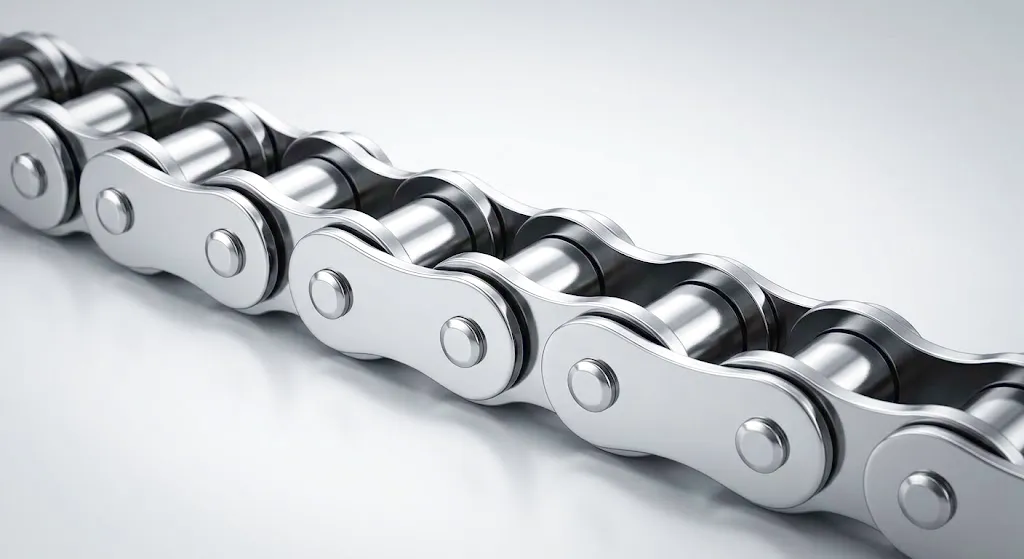
 In virtually every corner of British industry — from the steel fabrication plants of Sheffield to the automotive assembly lines threading through the West Midlands — the roller chain remains one of the most quietly indispensable components in mechanical power transmission. Its genius lies in simplicity: a series of interlocking pins, bushings, rollers, and plates that convert rotational energy into precise, repeatable linear or mechanical motion. Yet that same simplicity conceals an engineering truth that many maintenance teams overlook until it becomes expensive: without deliberate, correctly applied lubrication, even the most precisely manufactured roller chain degrades far faster than it should. Understanding how lubrication actually functions at the contact surfaces of a roller chain — and why getting it wrong costs both downtime and money — is the kind of knowledge that separates reactive maintenance from genuinely strategic asset management.
This article unpacks the mechanics of roller chain lubrication from the inside out. It covers the tribological principles at work between pin and bushing, the material properties of chain components that govern lubrication performance, the different lubrication methods available and when to deploy each, and the measurable impact on service life extension when best practices are consistently followed. Whether you are managing a conveyor system in a Birmingham distribution hub or specifying drive chains for a new agricultural machinery line in Lincolnshire, the principles covered here translate directly into fewer breakdowns, lower total cost of ownership, and more reliable production throughput.
The Working Principle: What Happens Inside a Roller Chain Under Load
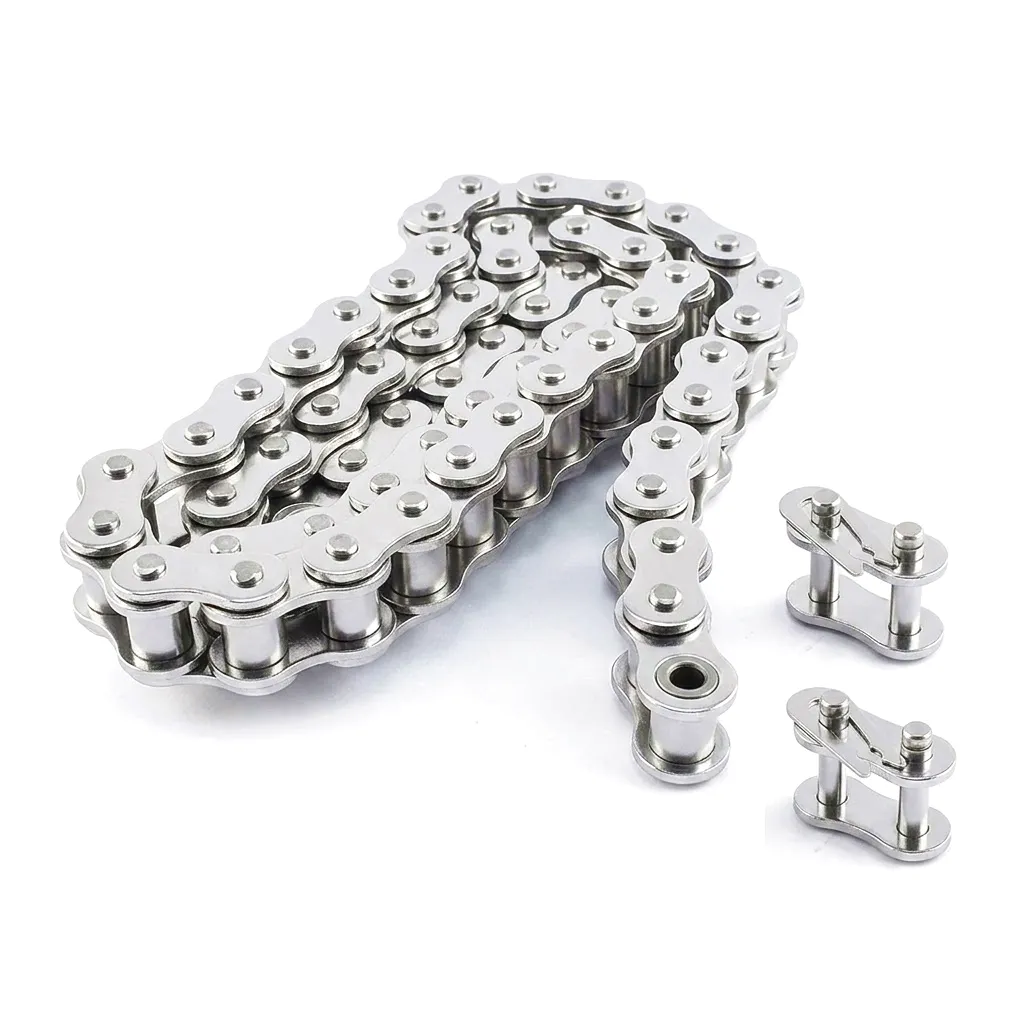
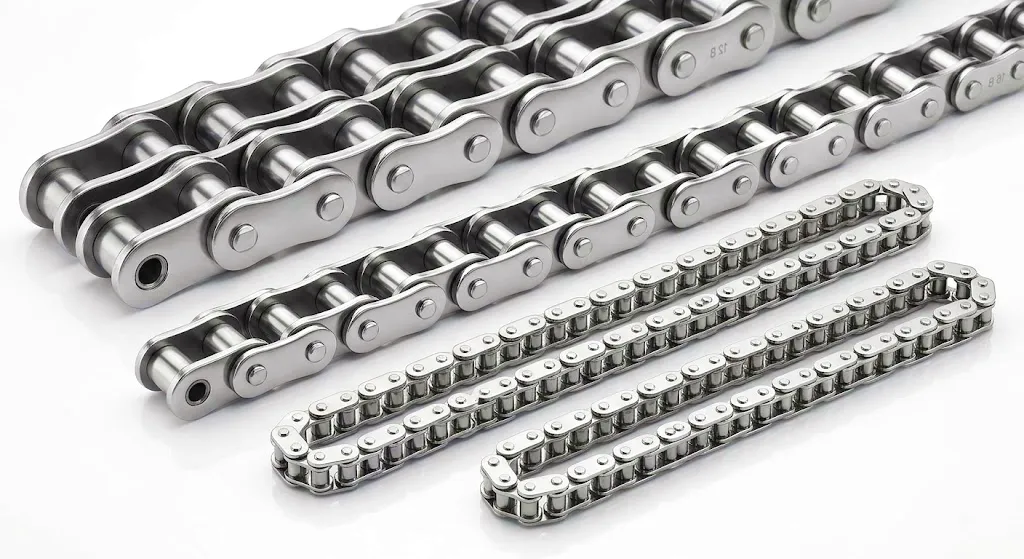 A roller chain operates by transmitting torque and speed between sprockets through a mechanical link system. As the driving sprocket rotates, its teeth engage with the chain rollers in a continuous meshing cycle. Each link consists of two sets of plates — inner and outer — connected by precision pins that pass through hardened bushings pressed into the inner plates. The rollers themselves sit freely over the bushings and make direct contact with the sprocket teeth. This multi-surface architecture creates several distinct friction zones, and it is at these zones where lubrication becomes critically important.
When load is applied, the pin articulates within the bushing each time a link engages or disengages the sprocket. Under high cycle frequencies, this articulation can occur thousands of times per minute. Without adequate lubrication, the metal-on-metal contact between pin and bushing generates frictional heat, accelerates surface wear through adhesive and abrasive mechanisms, and progressively elongates the chain through material loss. This elongation — commonly described as chain stretch — is the primary failure mode in improperly lubricated roller chain installations. The tribological system here is not passive. Oil drawn into the pin-bushing interface must survive high contact pressures, cyclic shear forces, and variable temperatures, all of which degrade a lubricant’s viscosity and film integrity over time.
The roller-to-sprocket interface presents a different lubrication challenge. While the roller rolls rather than slides against the tooth face — reducing friction significantly compared to the pin-bushing contact — impact loading during tooth engagement creates Hertzian contact stresses that can cause pitting and spalling if the lubricant film breaks down. Effective roller chain lubrication must therefore form and maintain hydrodynamic or elastohydrodynamic films at both these contact interfaces simultaneously, under conditions that may include contamination from dust, moisture, or chemical agents depending on the operating environment. UK manufacturing environments — particularly food processing facilities in Yorkshire and chemical plant operations across Teesside — add further complexity through contamination control requirements that influence lubricant selection.
Core Materials in Roller Chain Manufacturing and Their Lubrication Implications
Alloy Steel Pins (Carbon & Case-Hardened)
Typically manufactured from medium-carbon alloy steels such as 40Cr or 20MnCr5, pins are case-hardened to HRC 58–62 to resist wear while maintaining a tough core. The hardened surface creates a relatively smooth contact geometry but remains susceptible to adhesive wear if the oil film breaks. Lubricant viscosity must be matched to operating speed and load to maintain an adequate film thickness ratio (lambda ratio) above 1.5 for acceptable boundary lubrication conditions.
Sintered Bushings & Solid Steel Bushings
Bushings in standard roller chains are pressed-in components formed from sintered or wrought steel. Sintered bushings carry an inherent porosity that can absorb and slowly release oil, providing a modest self-lubricating effect in lightly loaded applications. Solid steel bushings, used in heavy-duty and attachment chain variants, offer greater strength but depend entirely on external lubrication replenishment. The bushing bore clearance to pin diameter — typically 0.01 to 0.04 mm — defines the hydrodynamic wedge geometry available for oil film formation.
Stainless Steel & Nickel-Plated Variants
In corrosive or hygienically sensitive environments — common in UK food manufacturing and pharmaceutical production — 304 or 316 grade stainless steel roller chains are the standard. These materials resist oxidation and chemical attack but present a distinct lubrication challenge: stainless-to-stainless galling risk is higher than carbon steel, making the lubricant’s anti-wear additive package critically important. Food-grade lubricants (H1 rated) with synthetic base oils such as PAO or white mineral oil must be used to meet UK and EU food contact regulations while still providing adequate film protection.
Side Plates & Roller Steel Grades
Link plates are typically cold-stamped from medium-high carbon steel strip, offering high tensile strength at lower mass. The press-fit integrity between pin and outer plate, and between bushing and inner plate, is a primary quality indicator affecting the chain’s load-bearing capacity under dynamic conditions. Rollers are hollow-section hardened components that interface with sprocket teeth. Their surface hardness (typically HRC 48–55) and roundness tolerance directly affect how smoothly lubrication is distributed during tooth engagement cycles.
Featured Products: High Strength Roller Chains for Heavy-Duty Applications
Höghållfast rullkedja 120HSP-00 för Caterpillar
Engineered for Caterpillar heavy equipment drivetrains, the 120HSP-00 delivers superior fatigue resistance under pulsating loads. Its precision-ground pins and heat-treated bushings retain lubricant film integrity even at elevated operating temperatures typical of construction and quarrying environments, making it a trusted specification for UK plant hire operations in areas like the Midlands and North West England.
Höghållfast rullkedja C100HSP-00 för Caterpillar
The C100HSP-00 complements the 120HSP-00 series with a compact pitch design suited to lighter Caterpillar drivechain configurations. Its case-hardened components and precisely controlled pin-to-bushing clearance enable consistent hydrodynamic lubrication even in low-speed, high-torque cycles — conditions common to aggregate processing and materials handling across Yorkshire and the Humber industrial corridor.
Lubrication Methods: Selecting the Right Approach for Your Application
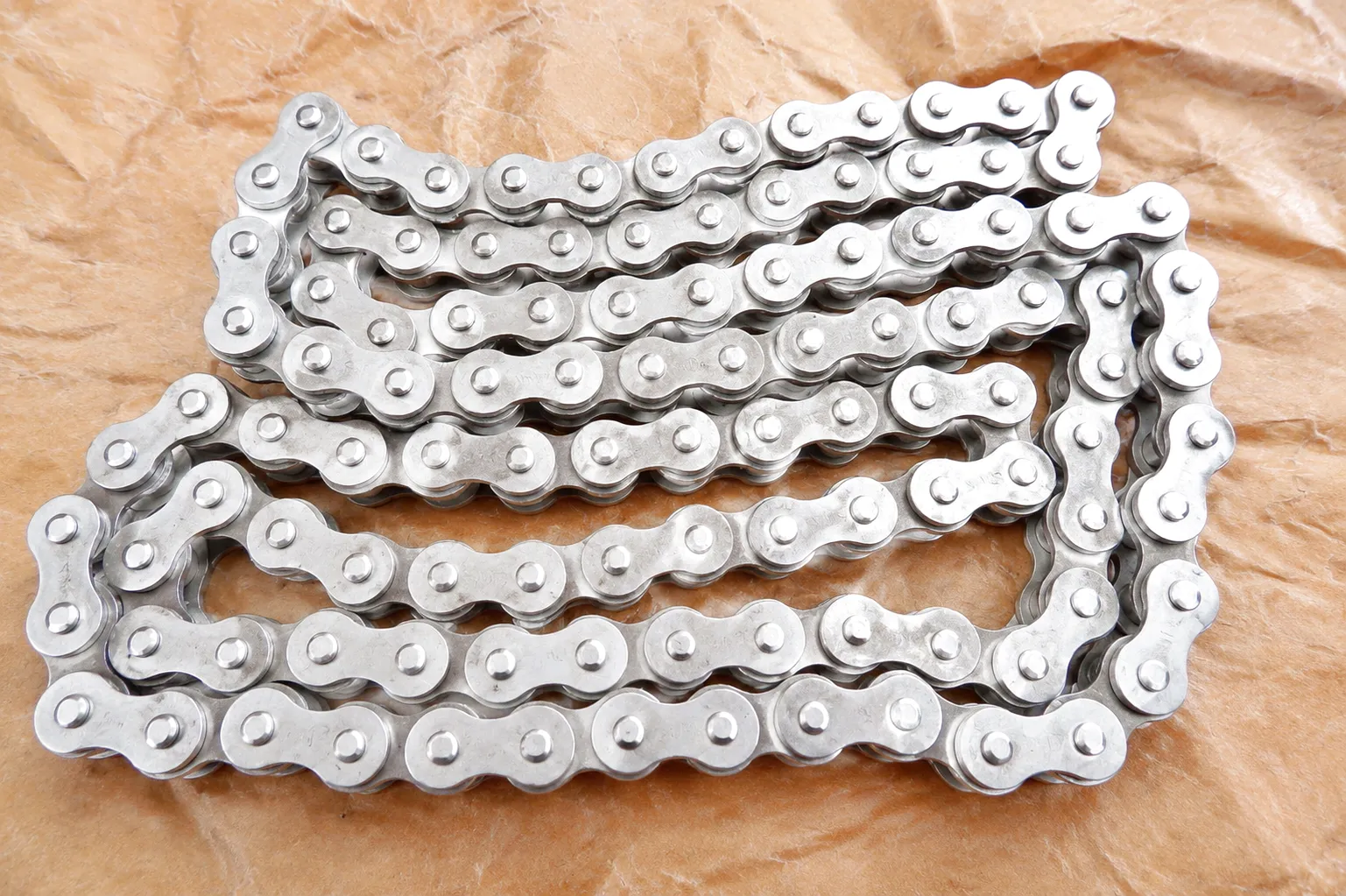 Choosing the correct lubrication method is not simply a matter of matching speed ranges from a chart. Environmental factors play an equally significant role. In Birmingham’s metal fabrication sector, chain drives exposed to fine metal particulate must use fully enclosed lubrication systems to prevent abrasive contamination from accelerating wear cycles. Along the coastal logistics corridors of ports like Felixstowe and Southampton, salt-laden air demands lubricants with superior corrosion inhibitor packages. Matching the lubrication method to the combined demands of speed, load, temperature, contamination exposure, and regulatory environment produces service life outcomes that manual lubrication alone can never approach — often extending chain replacement intervals from several months to multiple years in well-managed installations.
Product Advantages: Why Proper Lubrication Transforms Roller Chain Performance
Dramatic Wear Rate Reduction
A properly lubricated roller chain operates with pin-bushing wear rates as low as 0.1–0.3 mg per 100 hours under standard industrial loads, compared to 2–5 mg/100hr in dry or under-lubricated conditions. This 10–15x reduction in wear rate directly translates to service life measured in years rather than months, drastically reducing replacement frequency and associated installation labour costs.
Power Transmission Efficiency Gain
A well-lubricated roller chain drive achieves power transmission efficiency of 98–99%, compared to 92–96% in poorly lubricated conditions. At industrial scale — a 75 kW drive running 6,000 hours annually — this efficiency difference represents a significant reduction in energy costs. UK manufacturing facilities with multiple chain drives operating under Energy Savings Opportunity Scheme (ESOS) obligations can quantify this directly in their compliance audits.
Noise and Vibration Control
Metal-on-metal contact in dry or boundary-lubrication conditions generates impact noise at each sprocket tooth engagement. Adequate lubrication reduces the impact energy absorption by the chain, lowering operational noise levels by 5–12 dB in practical measurements. In UK workplaces governed by the Control of Noise at Work Regulations 2005, maintaining low operational noise through proper chain lubrication can help facilities avoid the need for costly engineering controls such as noise enclosures.
Corrosion Protection and Contamination Sealing
A continuous oil film across link surfaces acts as a physical barrier against moisture ingress and oxidative corrosion, particularly important in the damp climate conditions common across the UK, from the industrial hinterlands of South Wales to the coastal processing facilities of East Anglia. Modern chain lubricants with rust-inhibitor additive packages can maintain corrosion protection for 300–500 hours between applications in moderate moisture environments.
Reduced Total Cost of Ownership
When total cost of ownership is calculated across a 5-year asset period, properly lubricated roller chain systems consistently demonstrate 40–60% lower maintenance expenditure compared to reactive replacement programmes. This calculation must include not just the chain cost itself, but sprocket wear (accelerated by chain elongation), associated labour, lost production throughput during unplanned downtime, and any secondary damage to gearboxes or bearings caused by shock loading from a worn or failed chain.
Temperature Stability Under High-Cycle Loading
Synthetic lubricants formulated for roller chain applications maintain stable viscosity from -20°C to 150°C, protecting chains in both unheated outdoor applications — common in UK agriculture and construction — and high-temperature industrial settings such as foundry conveyor systems or ceramic kiln drives. Petroleum-based chain oils, by contrast, may degrade significantly above 90°C, accelerating chain wear in thermally demanding applications.
Product Technical and Performance Parameter Table
| Parameter | Standard (ISO 606) | High Strength HSP | Rostfritt stål | Unit |
|---|---|---|---|---|
| Tonhöjdsområde | 6.35 – 76.2 | 25.4 – 76.2 | 6.35 – 50.8 | mm |
| Tensile Strength (min.) | 14.1 – 400 | 125 – 500+ | 8.9 – 280 | kN |
| Stifthårdhet | HRC 56–62 | HRC 60–64 | HRC 30–40 | Rockwell C |
| Roller Hardness | HRC 48–55 | HRC 52–58 | HRC 28–36 | Rockwell C |
| Plate Material | 40Mn / S45C | 40CrMo / 20MnCr5 | SUS304 / SUS316 | — |
| Recommended Lube Viscosity | ISO VG 68–150 | ISO VG 100–220 | ISO VG 46–100 (H1) | cSt @ 40°C |
| Driftstemperatur | -10 to +120 | -20 to +150 | -30 to +120 | °C |
| Max. tillåten förlängning | 2.0% | 1.5% | 2.0% | % of nominal length |
| Lubrication Interval (manual) | 100–300 hrs | 150–400 hrs | 100–300 hrs | operating hours |
| Ytbehandling | Shot blast / zinc-phosphate | Shot blast / pre-lube | Electropolish | — |
| Standardöverensstämmelse | ISO 606 / DIN 8187 | ANSI B29.1 / OEM spec. | ISO 606 / FDA/EU 10/2011 | — |
Industrial Application Scenarios Across UK Manufacturing
Steel Processing and Metals Fabrication — Sheffield & Rotherham
In the rolling mills and coil processing lines of South Yorkshire’s steel corridor, roller chains drive coiler mechanisms, shear tables, and hot-strip handling systems under extremely demanding combinations of heat, scale contamination, and high torque. The chain lubrication regime in these environments typically employs high-viscosity EP (extreme pressure) oils with sulfur-phosphorus additive packages to protect against the shock loads generated by material impact events. Chains operating in direct proximity to hot metal must be specified from high-temperature alloys and lubricated with synthetic fluids that resist carbonisation above 200°C.
Automotive Assembly Lines — West Midlands (Birmingham & Coventry)
The automotive sector in the West Midlands — from Tier 1 component stamping plants around Coventry to final assembly facilities near Birmingham — relies on roller chain conveyor systems for body-in-white transport, paint line indexing, and powertrain assembly sequencing. These applications demand precision chain pitch consistency to maintain positional accuracy within ±0.5 mm across conveyor lengths of 50–200 metres. Clean-room adjacent sections require lubricants with very low particulate emission profiles. Scheduled lubrication audits are built into production shutdown windows, typically aligned with the twice-yearly plant maintenance programmes common in UK automotive OEM supply chains.
Food and Beverage Processing — Yorkshire and the East Midlands
Food processing facilities — biscuit lines in Leeds, brewing conveyor systems in Burton-on-Trent, dairy processing plants across Lincolnshire — use roller chains in environments where hygiene compliance is non-negotiable. Chain lubrication in these settings must use NSF H1-registered food-grade oils. Regular high-pressure water washdowns mean that standard petroleum-based lubricants wash away within hours, making synthetic food-grade greases or oils with superior adhesion and water-resistance properties essential. The increased washdown frequency also demands more robust chain construction — solid roller, sealed-joint variants — to prevent water ingress to the pin-bushing clearance during washdown events.
Mining and Quarrying — Wales and Northern England
Quarry operations in North Wales, limestone extraction in the Peak District, and coal handling infrastructure in the North East deploy heavy-duty roller chain systems in one of the most aggressive tribological environments imaginable. Continuous exposure to rock dust, silica particles, and moisture creates compound wear mechanisms that no lubrication system alone can fully defeat without the right chain specification. Extended-pitch heavy conveyor chains and scraper chains in these settings are designed with larger pin diameters and thicker side plates to provide more wear volume. Centralised automatic lubrication systems dispensing grease at timed intervals have become standard practice in UK quarry operations following Health and Safety Executive guidance on machinery maintenance.
Agricultural Machinery — Lincolnshire and East Anglia
Combine harvesters, baling machinery, potato harvesters, and grain conveyors deployed across the flatlands of Lincolnshire and the Fenlands of East Anglia use multiple roller chain drives in applications where maintenance windows are dictated by seasonal crop cycles. A missed lubrication interval during the harvest season — typically spanning just 3–6 weeks in the UK climate — can result in chain failure at the worst possible time with no realistic prospect of an immediate replacement. Pre-season lubrication, chain condition measurement using go/no-go elongation gauges, and stocking of matched replacement chain lengths are all standard practice for large arable farm machinery fleets.
Warehousing and Logistics — East Midlands Distribution Hubs
The distribution centres clustering around the M1 corridor in Northamptonshire, Leicestershire, and Derbyshire — serving major UK retailers, e-commerce fulfilment operators, and 3PL providers — operate conveyor and sortation systems running 18–24 hours per day, seven days per week. Roller chains in these high-utilisation environments accumulate wear at rates that would destroy inadequately lubricated chains within weeks. Automatic lubrication systems programmed to deliver measured doses of oil at every operational shift are industry standard. Condition monitoring through real-time elongation measurement — increasingly integrated into smart conveyor management platforms — provides advance warning of chain replacement needs without requiring manual inspection, supporting the continuous operation demands of next-day delivery fulfilment logistics.
Ever Power: Precision Manufacturing, Custom Solutions & Supply Chain Excellence
Ever Power operates one of the most comprehensively equipped roller chain manufacturing facilities available to the global B2B market, combining German-calibrated CNC machining centres, automated heat treatment lines, and precision assembly cells to produce chains that meet and in many cases exceed ISO 606, ANSI B29.1, and relevant DIN standards. The manufacturing philosophy at Ever Power centres on dimensional consistency — the property that matters most for lubrication performance. A chain with uniform pin-to-bushing clearances across all links maintains oil film geometry throughout its operational life, resisting elongation far more effectively than chains produced with wider tolerances.
What truly distinguishes Ever Power in the UK supply chain is the depth and flexibility of its customisation capability. Standard catalogue chains represent only a fraction of what the manufacturing platform can produce. Ever Power’s engineering team works directly with UK OEMs, machinery builders, and plant engineers to develop bespoke chain specifications addressing unique pitch requirements, unconventional attachment configurations, custom inner link widths for non-standard sprocket profiles, and special material combinations — for example, alloy steel outer plates with stainless inner components for corrosive environments with structural loading demands that stainless-only chains cannot meet.
Supply chain reliability is not an afterthought at Ever Power. The company maintains strategic stock of key chain pitch sizes and material grades, enabling rapid dispatch of standard product to UK customers via established freight forwarding routes with typical transit times of 7–14 days from order confirmation. For high-volume OEM supply contracts, Ever Power provides dedicated blanket order programmes with agreed call-off schedules, eliminating the purchasing delays that often disrupt UK manufacturing maintenance planning cycles.
Customisation Capabilities
- Bespoke pitch and strand configurations
- OEM-matched attachment chains
- Food-grade stainless assemblies
- High-temperature alloy specification
- Pre-lubricated factory-filled chains
- Sealed-joint and O-ring variants
- Custom corrosion protection coatings
- Third-party testing and certification
Request a Custom Quote from Ever Power →
[email protected] · Typically responds within 1 business day
Customer Success Story: Sheffield Engineering Works Achieves 3x Chain Service Life
Prospect Steel Components Ltd, Sheffield — Heavy Section Steel Fabrication
Steel Fabrication
Success Story
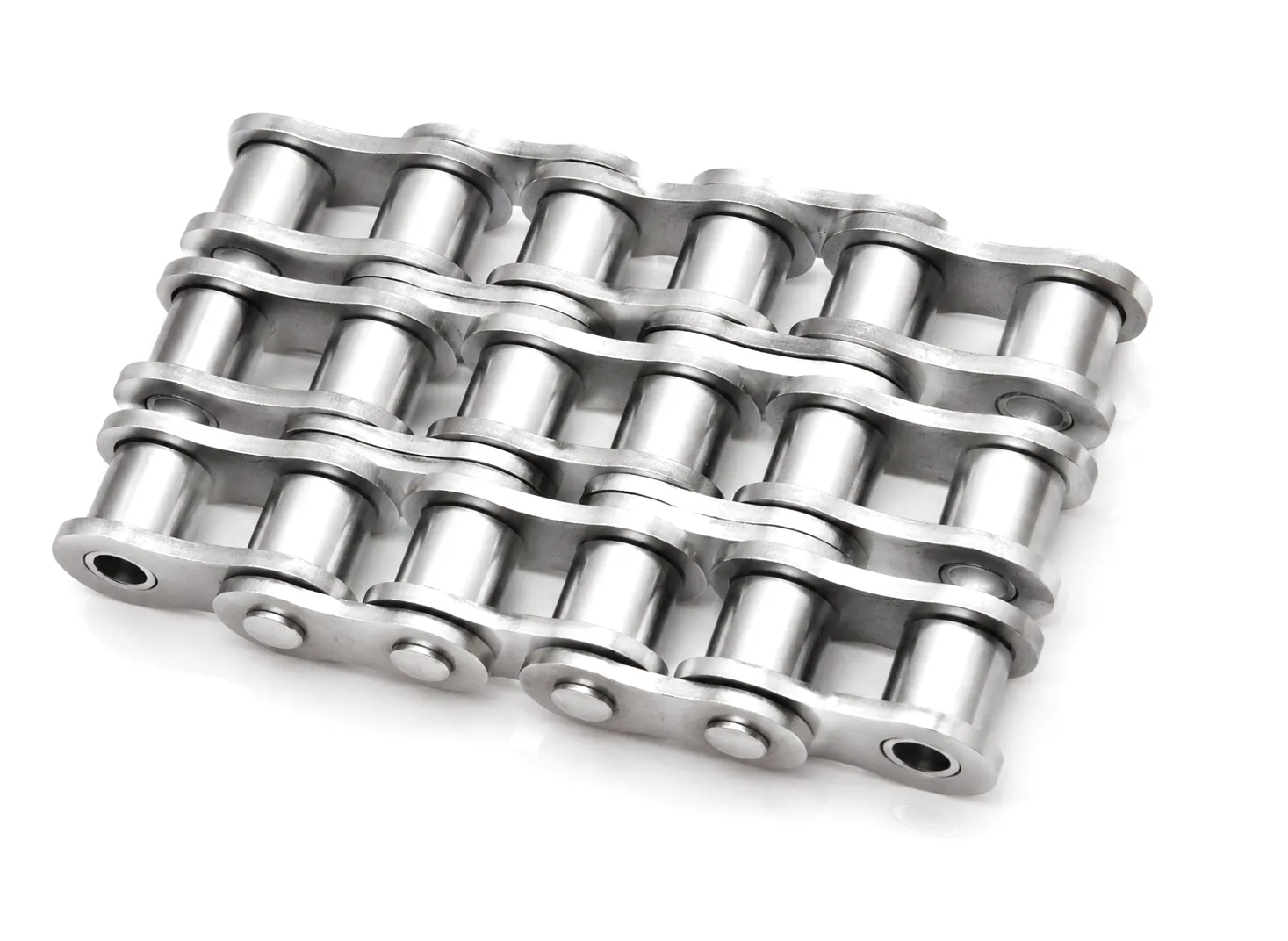 Prospect Steel Components Ltd operates a 24,000 square metre fabrication facility on the outskirts of Sheffield, producing precision-cut structural steel sections for construction, offshore, and rail infrastructure projects across the UK. The facility runs four billet conveyor lines and two profile cutting gantry systems, all of which rely on heavy-duty roller chain drives to index steel sections through measurement, cutting, and sorting stations continuously, with production running two 10-hour shifts per day.
The maintenance team was replacing conveyor drive chains on all four lines every 8–10 months on average, with two unplanned emergency replacements in the previous 12 months that each caused 4–6 hours of production stoppage. Chain failure analysis identified inadequate lubrication penetration to pin-bushing interfaces as the primary wear mechanism, compounded by scale and fine metal particle contamination accumulating in the chain links during hot steel handling cycles. Standard ISO VG 100 mineral oil applied manually every two weeks was failing to maintain effective film protection between applications.
Working with Ever Power’s applications engineering team, Prospect Steel Components transitioned to high-strength roller chain specified with solid-bushing construction and pre-loaded with high-temperature synthetic lubricant. An automatic centralised lubrication system delivering metered doses of ISO VG 150 synthetic EP oil every 4 hours was installed across all four conveyor lines. After 14 months of operation under the new specification, not a single chain on any line had reached the 2% elongation replacement threshold. The projected chain replacement interval extended to 26–30 months — representing a 3x improvement in service life. The maintenance team estimates annual savings of approximately £47,000 when accounting for reduced chain cost, eliminated emergency downtime, and reduced labour hours for planned maintenance tasks.
Kundrecensioner
“The switch to Ever Power’s pre-lubricated chain made an immediate difference. We’ve gone from chains that looked worn within a few months to a system that’s running cleanly after over a year. The technical support during the specification process was thorough and genuinely helpful — they understood our scale dust contamination problem straight away.”
— David Hargreaves, Maintenance Manager, Prospect Steel Components Ltd, Sheffield
“We specified the 120HSP-00 chains for our heaviest billet indexing conveyor after a recommendation from our plant engineer. The dimensional tolerances are noticeably better than what we were getting from our previous supplier, and the chains are taking the lubrication and holding it through the full shift cycle without dry spots forming mid-run. Exactly what we needed.”
— Sandra Whitfield, Procurement Lead, Prospect Steel Components Ltd, Sheffield
“Getting a custom quote from Ever Power was straightforward and the lead time was clearly communicated from the start. What impressed me most was that they actually asked the right questions about our operating environment before quoting — temperature range, contamination type, shift pattern. That kind of professional engagement from a supplier is not as common as it should be.”
— Tom Bradley, Senior Engineer, Prospect Steel Components Ltd, Sheffield
Vanliga frågor
Ready to Extend Your Chain Service Life?
Talk to Ever Power’s Engineering Team
Custom specifications · Competitive pricing · Reliable UK delivery
redigerad av gzl