How Temperature Affects Roller Chain Fatigue
and Material Selection
A technical reference for mechanical engineers, procurement managers, and maintenance teams operating across the UK’s heavy manufacturing and industrial sectors.
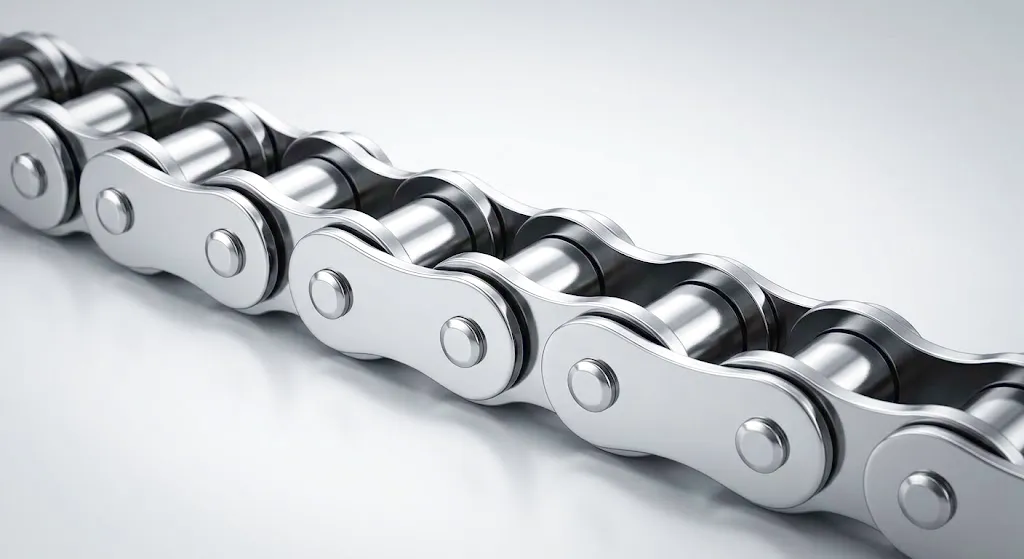
Temperature is one of the most underestimated variables in roller chain engineering. Across the UK’s manufacturing heartlands — from the steel mills of Sheffield to the automotive plants of Birmingham and the food processing facilities of Leeds — roller chains operate in environments where thermal cycles can be extreme, erratic, and relentlessly punishing. A chain that performs flawlessly at ambient workshop temperatures can exhibit premature fatigue cracking, accelerated wear, and catastrophic elongation when subjected to the temperature swings common in real-world industrial settings. Understanding how heat and cold alter the mechanical properties of chain components is not merely an academic exercise; it is a prerequisite for any engineer serious about reliability, uptime, and total lifecycle cost.
Roller chain fatigue — the progressive structural degradation caused by cyclic loading — interacts with temperature in ways that are often non-linear and sometimes counterintuitive. Elevated temperatures soften lubricants, alter metallurgical microstructures, and reduce the tensile strength of even hardened alloy steels. Sub-zero environments introduce brittleness, restrict lubricant flow, and change the ductile-to-brittle transition behaviour of certain chain materials. Getting material selection wrong in thermally challenging applications costs far more than the price difference between grades; it costs production time, maintenance labour, and sometimes safety.
How Roller Chains Actually Work — and Why Thermal Load Changes Everything
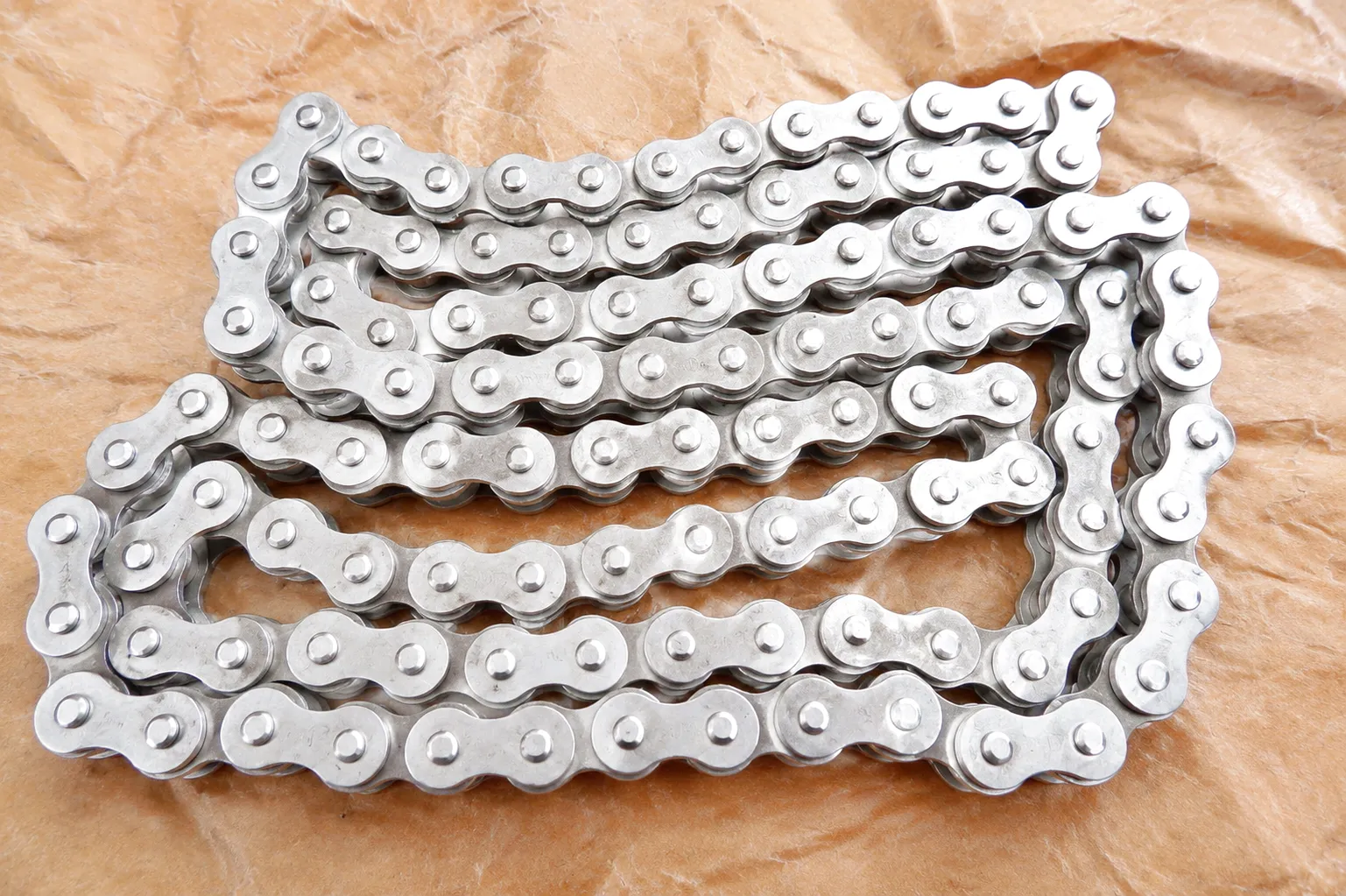 A standard roller chain transmits power through a series of interconnected links. Each link consists of inner plates, outer plates, bushings, pins, and rollers — all working together to engage with sprocket teeth and transfer torque along a defined path. During normal operation, the pin rotates within the bushing, and the roller rolls against the sprocket tooth. The contact stresses at these points are substantial. When you add heat to this picture, every material property that determines how well those components handle stress begins to shift.
At temperatures above approximately 150°C, the case-hardened surface of conventional carbon steel chain components begins to lose its hardness through a process called tempering. The carefully engineered surface hardness — typically in the range of 58–62 HRC — softens progressively, reducing the wear resistance at pin-bushing and roller-sprocket interfaces. Simultaneously, the yield strength of the steel itself decreases, making the chain plates more susceptible to plastic deformation under the same cyclic loads they previously handled without distortion. In industrial ovens, drying systems, and heat treatment facilities throughout the West Midlands and South Yorkshire, these effects are not theoretical — they are observed in shortened maintenance intervals and elevated replacement costs.
Fatigue in roller chains is driven by the alternating tension and relaxation each link experiences as it wraps around the drive sprocket and then travels along the slack side. Each cycle introduces a stress amplitude into the chain plates and pins. According to classical fatigue theory, the number of cycles a component can withstand before failure is inversely related to the stress amplitude — and temperature directly modifies the effective stress amplitude by changing the modulus of elasticity, the yield strength, and the surface condition of each component. A chain running in a forge shop at 220°C is not just running hot; it is running with fundamentally different material properties than the datasheet rating assumes.
Material Science of Roller Chain — What Goes Into Each Link
The backbone of most industrial roller chains. Carbon steel — typically AISI 1045 to AISI 1080 — offers an excellent balance of tensile strength, machinability, and cost. After carburising or induction hardening, surface hardness reaches 58–62 HRC while the core retains toughness. However, carbon steel suffers meaningfully above 150°C, where tempering softens the case and accelerates wear. For ambient to mildly elevated temperature environments across the UK’s general manufacturing sector, carbon steel chain remains the standard choice.
Chromium-molybdenum and nickel-chromium alloy steels extend the usable temperature range significantly. Grades such as 20CrMo and 42CrMo4 retain their core mechanical properties to around 250–300°C. The alloying elements — particularly chromium and molybdenum — retard the tempering process, meaning the case hardness is preserved at temperatures that would rapidly degrade plain carbon steel. Alloy steel chains are the standard choice for steel mill auxiliaries in Sheffield, automotive heat treatment lines in Coventry, and ceramic kiln conveyors across Staffordshire.
304 and 316 stainless grades offer moderate heat resistance to around 300°C combined with excellent corrosion resistance — important in food processing plants, pharmaceutical facilities, and coastal installations. 316 stainless, with its molybdenum addition, provides significantly better pitting corrosion resistance in chloride-rich environments such as coastal Yorkshire and Lancashire sites. The trade-off is lower fatigue strength compared to alloy steel; stainless chains must be derated appropriately in high-load cyclic applications.
For applications above 400°C — such as furnace conveyors, glass tempering lines, and direct-flame environments — nickel-based and heat-resistant alloy steel grades enter consideration. These materials maintain structural integrity at temperatures where conventional steels would rapidly oxidise, creep, and fail. The manufacturing complexity and material cost are considerably higher, but for continuous high-temperature processes, there is no engineering alternative. Ever Power supplies purpose-engineered high-temperature chains for demanding UK industrial environments with full material certification.
 The selection of lubricant is as critical as the chain material itself — and this is where temperature creates one of its most damaging effects. Conventional mineral-oil lubricants begin to oxidise and break down above approximately 100–120°C, forming varnish deposits that clog the pin-bushing clearances and accelerate abrasive wear. In Birmingham’s automotive stamping plants and Yorkshire’s steel rolling mills, where chains may pass through heated zones repeatedly during each shift, lubricant degradation becomes a primary failure mode. Synthetic lubricants — including synthetic esters and silicone-based compounds — resist oxidation to significantly higher temperatures and are strongly recommended wherever operating temperatures consistently exceed 100°C.
At sub-zero temperatures, the picture reverses. Lubricant viscosity increases dramatically as temperatures drop below 0°C, and at very low temperatures, some conventional greases and oils essentially solidify, leaving the pin-bushing interface effectively unlubricated at startup. This is a particular concern for roller chains in outdoor applications — agricultural machinery operating through British winters, refrigeration plant conveyors, and cold store handling equipment. Additionally, carbon steel chain becomes increasingly brittle below its ductile-to-brittle transition temperature, which varies by composition but typically falls in the range of -20°C to -40°C. Impact loads in this temperature range — common during cold engine start-ups — can cause sudden, catastrophic fracture rather than the gradual fatigue failure that gives engineers warning signs.
Why High-Performance Roller Chain Outperforms Off-the-Shelf Solutions
The engineering case for precision-manufactured, thermally-rated roller chain in demanding applications
Properly specified alloy steel and heat-resistant chain grades maintain rated tensile strength and fatigue life across operating windows far beyond standard carbon steel, reducing the risk of mid-shift failures in heated process environments.
Tight dimensional tolerances in quality roller chains ensure the pin-bushing interference fit maintains its integrity even under thermal expansion cycles, preventing the clearance growth that drives accelerated wear and premature elongation in cheaper alternatives.
Carburising and case hardening processes calibrated to the intended operating temperature range ensure maximum wear resistance without embrittlement — a balance that generic chain suppliers rarely achieve with the consistency demanded by UK aerospace and defence supply chains.
Premium roller chain design accounts for differential thermal expansion between components, maintaining pitch accuracy and sprocket engagement geometry across wide temperature swings — critical in precision indexing and positioning applications common in medical device and electronics manufacturing.
Chains manufactured to ISO 606 or ANSI B29.1 standards with documented S-N curve data allow maintenance engineers to plan replacement intervals proactively rather than reactively — transforming maintenance from a cost centre into a productivity tool. Ever Power provides full technical data sheets on request.
Featured Products — Heavy-Duty Roller Chain for Demanding Environments
Engineered specifically for Caterpillar machine applications, the 120HSP-00 delivers enhanced tensile strength and fatigue resistance in high-load, thermally-stressed environments. Ideal for UK earthmoving, quarrying, and construction sectors where chain reliability is non-negotiable.
The C100HSP-00 addresses the fatigue and wear demands of Caterpillar undercarriage and conveyor systems with a refined pin-bushing geometry and enhanced surface treatment. Trusted in heavy civil engineering projects and mineral extraction throughout Scotland, the Midlands, and Wales.
Roller Chain Technical & Performance Parameters
| Parameter | Standard Carbon Steel | Alloy Steel (CrMo) | Stainless 316L | Heat-Resistant Alloy |
|---|---|---|---|---|
| Max. Operating Temp. | 150 °C | 300 °C | 300 °C | 600 °C+ |
| Min. Operating Temp. | -20 °C | -40 °C | -60 °C | -40 °C |
| Tensile Strength (typical) | 600–900 MPa | 900–1200 MPa | 500–700 MPa | 700–1100 MPa |
| Surface Hardness (HRC) | 58–62 | 58–62 | 25–35 | 30–50 |
| Korrosionsbeständighet | Low (zinc-plated opt.) | Moderate | Excellent | Good–Excellent |
| Pitch Standards | ISO 606 / ANSI B29.1 | ISO 606 / ANSI B29.1 | ISO 606 | Custom / DIN |
| Recommended Lubricant Type | Mineral oil / drip | Synthetic ester | Food-grade / PFPE | Solid lubricant / dry |
| Typical Fatigue Life (cycles) | 10^6 – 10^7 | 10^7 – 10^8 | 10^6 – 10^7 | Varies by temp. profile |
Industrial Application Scenarios Across the UK
Where thermal effects on roller chain fatigue matter most — from Tyneside to the Thames Estuary
The steelmaking facilities of South Yorkshire subject roller chains to some of the most punishing thermal environments in British industry. Chains used in walking beam furnace drives, coil handling equipment, and billet transfer systems routinely encounter radiant heat, scale, and thermal cycling from ambient to several hundred degrees within a single shift. Alloy steel chains with solid or synthetic lubricants are the minimum acceptable specification here. Fatigue life data must be derated for the operating temperature profile, and chains should be replaced proactively based on elongation measurement — never run to failure in this environment.
Vehicle body painting lines involve conveyor chains moving car bodies through primer booths, e-coat tanks, and stoving ovens reaching 180–200°C. Roller chain fatigue in this context is compounded by the chemically aggressive atmosphere — solvents, paint residues, and cleaning agents attack lubricant films and accelerate corrosion. Stainless or specially coated alloy steel chains designed for the paint shop environment are essential. In Jaguar Land Rover’s and other Midlands plants’ supply chains, chain quality directly affects line speed and vehicle delivery targets.
Food processing presents the unique challenge of wide temperature swings — chains may travel from a freezing cold store (-25°C) through a pasteurisation or cooking tunnel (90–130°C) within the same production loop. At cold store entry, lubricant stiffening is a real failure risk; at the cooking end, food-grade lubricants must be maintained. Stainless steel chains with approved PFPE or food-grade lubricants are mandatory for direct-contact applications, while nickel-plated carbon steel suffices for indirect-contact conveyors in ambient zones. Regular elongation checks are a regulatory hygiene requirement, not just a maintenance recommendation.
Underground and open-cast mining operations throughout North Wales, Northumberland, and County Durham expose roller chains to wide ambient temperature variations, combined with abrasive dust, moisture, and shock loading. While surface temperatures may seem moderate, the combination of cyclic shock loads and contamination significantly accelerates fatigue. High-strength alloy steel chains with sealed-bush construction — trapping lubricant inside the bushing for life — are strongly preferred for scraper conveyors, longwall equipment, and crusher drive systems where access for re-lubrication is difficult or dangerous.
Coal-fired and biomass power stations — many of which still operate on the banks of the Tyne and along the Humber — use roller chains in coal handling, ash removal, and fuel feed systems. These applications combine thermal exposure from process heat with the highly abrasive, corrosive nature of combustion residues. Chains here must be rated for high temperature, exhibit strong fatigue resistance under variable load, and resist the corrosive attack of fly ash and acidic condensates. Material selection typically involves alloy steel chains with a temperature-appropriate solid or high-temperature grease lubricant.
Ever Power — Precision Manufacturing & Customisation Capabilities
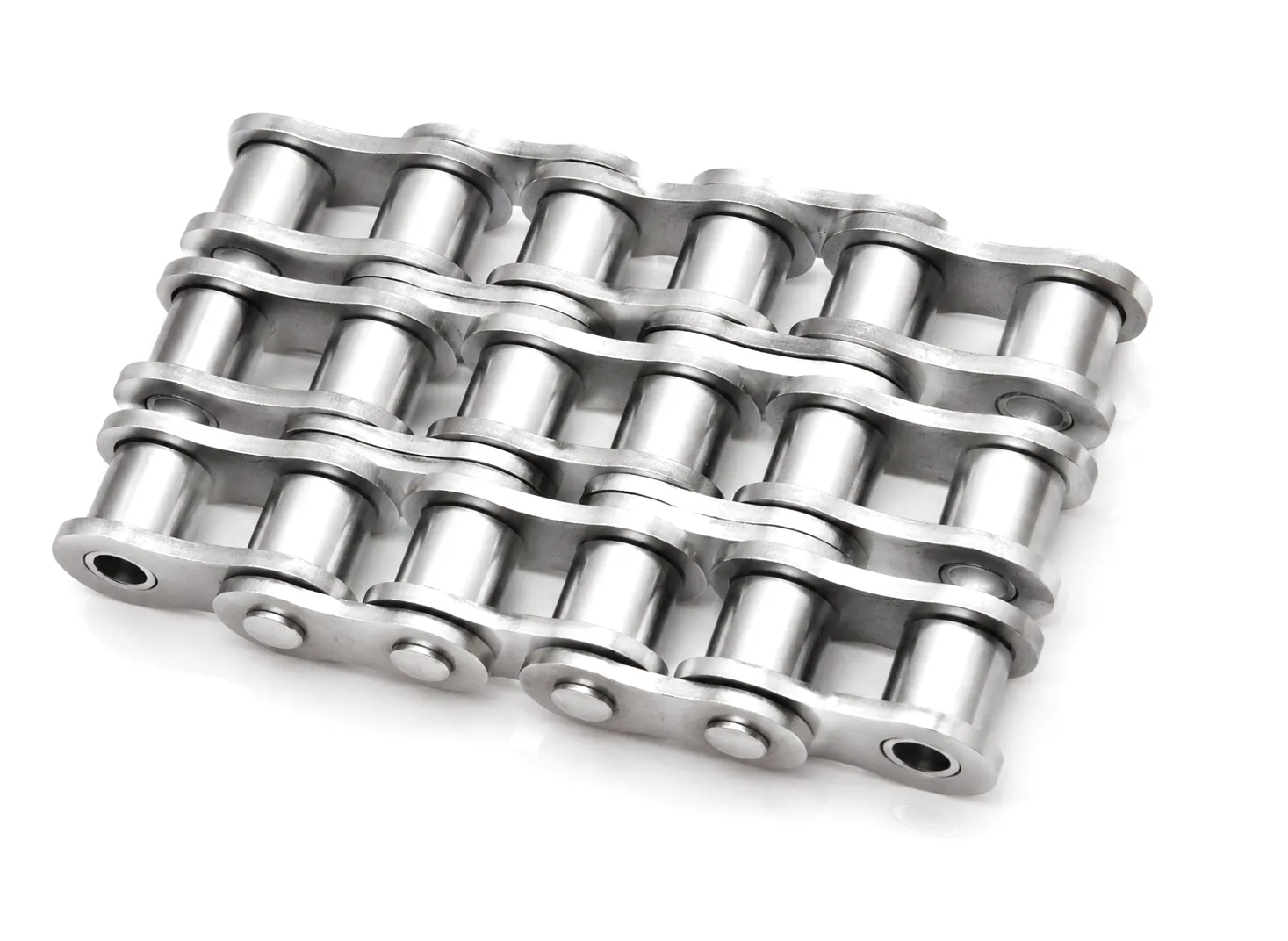
At Ever Power, we do not treat roller chain as a commodity. Every chain we manufacture is engineered to the specific thermal, mechanical, and environmental demands of the application it will serve. Our facility operates CNC-controlled machining centres, precision case-hardening furnaces, and automated assembly lines capable of producing chains to ISO 606, ANSI B29.1, DIN 8187, and customer-specified standards across a wide range of pitches, breaking loads, and material grades.
Our customisation capabilities are among the broadest available to UK industrial buyers. We can engineer chains with modified pitch, extended pins, special attachments, side bow capability, corrosion-resistant coatings, and factory-sealed bushings for maintenance-free operation. For high-temperature applications, we work with our metallurgy team to select and qualify the exact alloy grade, heat treatment cycle, and lubricant system appropriate for the customer’s documented temperature profile — not a generic off-the-shelf recommendation. Every batch is traceable from raw material through finished product.
UK buyers benefit from our fast-turnaround logistics partnerships: standard catalogue chains ship from our distribution hub within 3–5 working days, while custom-engineered specials are delivered against a documented schedule agreed at order placement. Our technical sales team — fluent in the language of mechanical engineering, not just sales — can review your application parameters and recommend the correct specification, reducing the costly trial-and-error cycle that plagues procurement of thermally-rated chain from catalogue-only suppliers. Whether your operation is in Manchester, Glasgow, Bristol, or Norwich, Ever Power’s supply chain infrastructure is set up to serve you reliably.
Customer Success Story — Sheffield Forge & Pressing Ltd
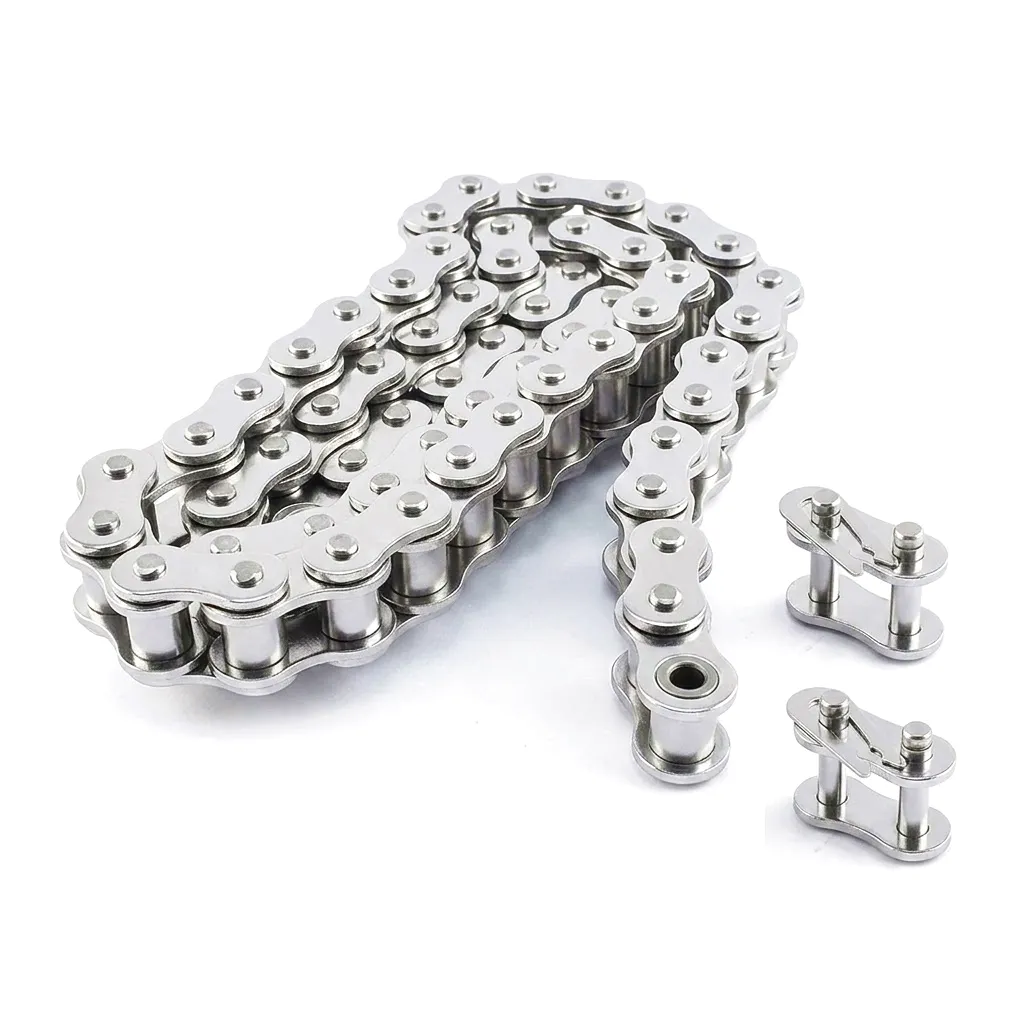
Sheffield Forge & Pressing Ltd — a specialist in open-die and closed-die forgings for the oil & gas and power generation sectors — had been experiencing an unacceptable roller chain replacement rate on the main conveyor of their billet heating and transfer line. The line runs billets through a gas-fired furnace at 1,100°C, and the conveyor chains operate in the radiant heat zone where ambient temperatures immediately outside the furnace reach 280–320°C. The client’s existing standard carbon steel chain was being replaced every eight weeks, causing significant unplanned maintenance costs and lost production time on a line running two ten-hour shifts daily.
After a detailed consultation with Ever Power’s technical team, the client’s chain specification was upgraded to a 42CrMo4 alloy steel chain with a 1.5-inch pitch, modified to accept a high-temperature solid graphite lubricant delivery system. The heat treatment cycle was adjusted to ensure adequate core toughness at the anticipated operating temperature, with surface hardness maintained at the lower end of the recommended range to avoid brittleness in the thermal gradient zone. The new chain was also fitted with extended outer plates to accommodate the billet transfer attachment design the client required.
After six months of operation, Sheffield Forge & Pressing Ltd reported that chain replacement intervals had extended from eight weeks to over nine months — a reduction in annual chain replacement cost of approximately 78%. More significantly, no unplanned chain failures occurred during the six-month evaluation period, eliminating the line stoppages that had previously caused the most expensive production disruptions. The client has since standardised Ever Power alloy steel chain across all four of their heated conveyor lines, with annual supply secured under a framework agreement with guaranteed delivery lead times.
What Our Clients Say
“We had been through four different roller chain suppliers before Ever Power. None of them understood what operating at 300°C actually means for fatigue life and lubricant compatibility. Ever Power’s technical team came back with a fully costed specification, a material data sheet, and a delivery schedule. The chain has been running for seven months without issue — that is unheard of on this line.”
“The customisation capability is what sets Ever Power apart. We needed a chain with non-standard attachments, sealed bushings, and a specific alloy grade — not something you can order from a catalogue. Ever Power delivered a prototype within three weeks and matched our drawing exactly. The production batch arrived on time, with full material certs. For a supply-chain-critical component, this level of service has real commercial value.”
“We operate cold store conveyor chains at -20°C that then enter cooking tunnels at 120°C. The temperature swing was causing failures roughly every twelve weeks — lubricant stiffening at the cold end and accelerated wear at the hot end. Ever Power specified a stainless chain with a hybrid lubricant system designed for the full temperature range. We are now at eighteen months without a single chain replacement on that section. The ROI on switching suppliers has been exceptional.”
Vanliga frågor
Answers to the questions UK engineers and procurement teams actually ask
At temperatures above 150°C, the case hardness of standard carbon steel chain begins to soften through tempering, reducing the surface’s ability to resist wear and increasing contact stress at the pin-bushing interface. This directly shortens the fatigue life by reducing the number of stress cycles the chain can absorb before crack initiation. In Sheffield mill environments, alloy steel chains rated for 300°C or above are required, and fatigue life must be calculated using the derated strength values at the actual operating temperature — not ambient-rated figures from the standard datasheet.
For applications cycling between cold store (-20°C to -25°C) and cooking tunnel temperatures (90–130°C), 316 stainless steel roller chain with a food-grade or PFPE lubricant system is the standard recommended approach. Stainless steel maintains sufficient ductility at sub-zero temperatures where carbon steel risks brittle fracture, while also resisting the corrosive cleaning chemicals common in food production environments. The lubricant selection is equally critical — it must remain pumpable or flowable at cold store temperatures and not degrade or contaminate food products at the hot end.
The price premium for alloy steel or stainless roller chain over standard carbon steel typically ranges from 30% to 200% depending on grade, pitch, and any custom features required. However, the total cost picture is very different once extended service life is factored in — a chain lasting nine months versus eight weeks fundamentally changes the economics. For a specific price or quote for your application, contact Ever Power at [email protected] with your chain pitch, breaking load requirement, operating temperature range, and any attachment or coating requirements.
Ever Power is a specialist roller chain supplier capable of providing fully custom-engineered alloy steel, stainless, and heat-resistant chains with ISO material certification and documentation to EN 10204 3.1 standard. Delivery to Birmingham and the wider West Midlands is typically achievable within 3–5 working days for standard catalogue chains, with custom specifications quoted on a project-by-project basis. Contact the Ever Power technical sales team to discuss your specific requirements before ordering.
The primary indicator of fatigue-driven wear in roller chain is pitch elongation — the gradual increase in chain length caused by wear at the pin-bushing interface. For most industrial applications, a 2% elongation over a nominal gauge length indicates the chain should be replaced; in precision or high-temperature applications, 1.5% or even 1% may be used as the replacement threshold. Physical signs of thermal damage include discolouration (blueing or darkening of steel), surface pitting at pin ends, cracking of link plates, and unusual noise during operation. A scheduled inspection programme based on documented elongation measurements is the industry best practice.
Paint shop conveyor environments combine elevated temperatures (180–200°C stoving ovens), chemical exposure to solvents and cleaning agents, and continuous duty cycles that create demanding fatigue conditions. Ever Power’s technical team has direct experience specifying chain for automotive finishing line applications. We assess lubricant compatibility, coating requirements, and temperature rating in combination — not as separate considerations — to arrive at a specification that performs reliably in the specific chemistry and thermal profile of your paint shop. Contact us for a no-obligation application review.
Send Ever Power your application data — operating temperature range, load, environment, and any attachment requirements — and our engineering team will respond with a specification and price within one business day.