The Working Principle of a Roller Chain Drive
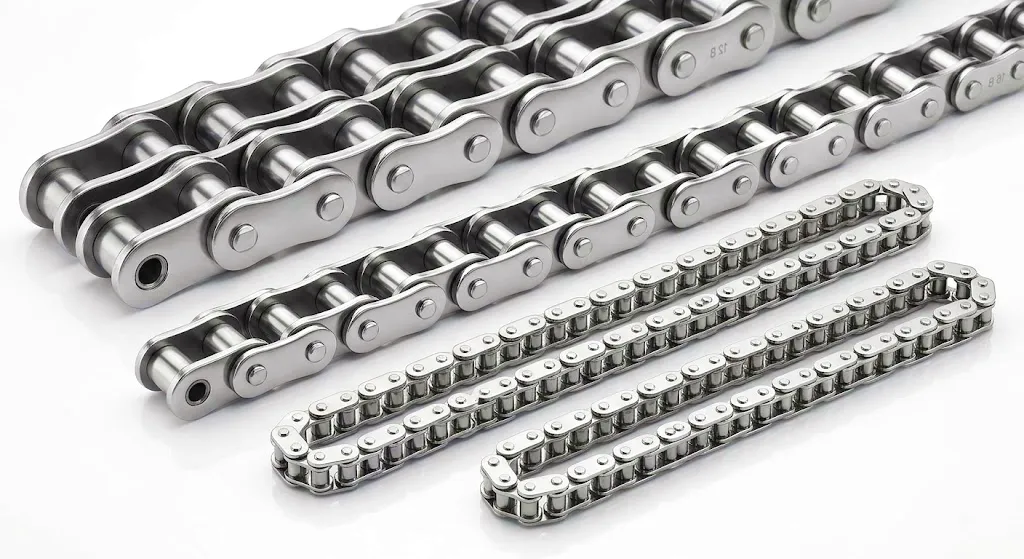
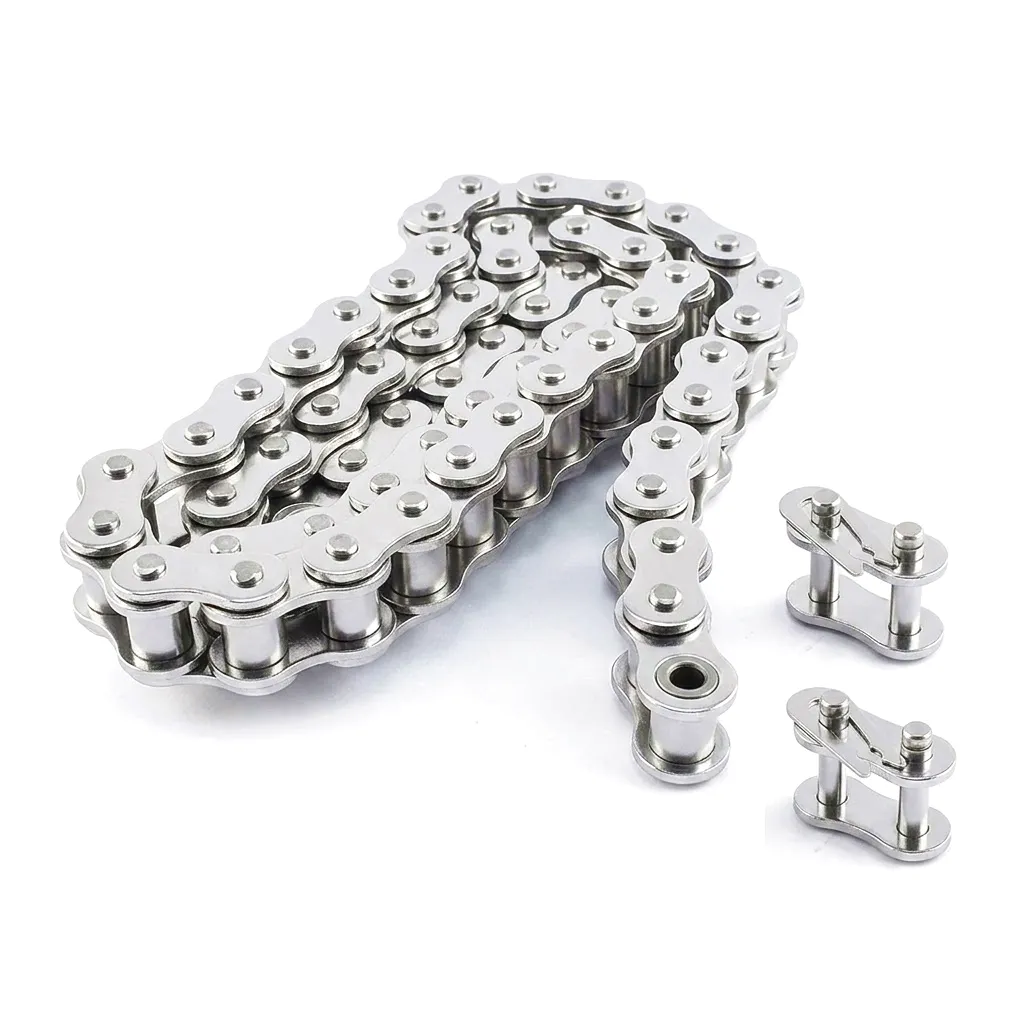
A roller chain transmits power through a repeating sequence of interlocking links, each comprising inner plates, outer plates, cylindrical rollers, bushings, and hardened pins. During operation, the chain wraps around a toothed sprocket and the rollers seat into the tooth gaps. As the driving sprocket turns, each roller enters mesh, transfers torque, and exits in a continuous cycle. At low speeds this is a relatively quiet process, but as rotational velocity increases, the impact energy generated each time a roller strikes a sprocket tooth multiplies rapidly. This impact, known as polygonal or chordal action, is one of the primary challenges engineers must design around when specifying a roller chain for high-speed operation.
The geometry of engagement is governed by the pitch of the chain — the centre-to-centre distance between adjacent pin axes. A smaller pitch means more links per metre and a smoother, more frequent engagement pattern. This is why high-speed applications almost always call for a shorter pitch chain rather than a heavier, longer-pitch alternative. The relationship between pitch, sprocket tooth count, and rotational speed is expressed directly in the chain speed formula: v = (p × z × n) / 1000, where v is velocity in m/s, p is pitch in mm, z is sprocket tooth number, and n is sprocket revolutions per minute. Understanding this formula makes it immediately clear why a chain with 12.7 mm pitch running on a 25-tooth sprocket at 1,500 rpm delivers a chain speed of approximately 7.9 m/s — already entering the zone where lubrication and fatigue life demand engineering attention.
Beyond chordal action, bearing pressure between the pin and bushing is the dominant failure mechanism at speed. As velocity rises, the relative sliding motion at the pin-bushing interface generates heat and accelerates wear. The contact stress at this surface is proportional to load and inversely proportional to the projected bearing area — making pin diameter and bushing length critical design parameters. A correctly specified roller chain will balance these variables so that operating temperature at the bearing surface remains within the lubrication’s effective range, and contact stress stays well below the material’s endurance limit.
Core Materials in High-Speed Roller Chain Manufacturing
The chain plates that carry tensile load in a high-speed roller chain are pressed from low-alloy steel with precise carbon content — typically between 0.35% and 0.55% C — before being heat-treated to achieve a tensile strength in the range of 900–1,200 MPa. Pins are manufactured from case-hardened bearing-grade steel, with a surface hardness of HRC 58–64 achieved by carburising and quenching, retaining a tough core that absorbs shock without fracture. This combination of hard surface and ductile core is non-negotiable in applications where dynamic loads cycle millions of times per shift.
Bushings in a high-speed roller chain act as the primary bearing surface between the roller and the pin. In standard agricultural or slow-speed chains, plain steel bushings are common. For elevated-speed duties, manufacturers like Ever Power specify sintered powder-metallurgy bushings impregnated with oil during the sintering process. This creates a self-lubricating matrix that releases lubricant under the heat and pressure generated at high rotational speeds, significantly extending wear life between service intervals. In applications where external lubrication access is restricted — such as conveyor lines in sealed food-safe zones — this self-lubrication property moves from a performance advantage to an operational necessity.
The roller, which contacts the sprocket tooth directly, experiences Hertzian contact stress each time engagement occurs. At high speed, the frequency of these stress cycles increases dramatically, so roller material quality is critical. Ever Power uses through-hardened bearing-grade steel for rollers, achieving HRC 57–62 throughout, paired with tight dimensional tolerances on outer diameter and roundness. This ensures the roller contacts the tooth flank at a predictable geometry, distributing load evenly across the tooth face and reducing the risk of pitting, spalling, or stress concentration at the root of the sprocket profile.
Featured High-Speed Roller Chain Products
Caterpillar için Yüksek Mukavemetli Makaralı Zincir 120HSP-00
Engineered to exacting Caterpillar specifications, the 120HSP-00 features cold-drawn alloy steel plates with shot-peened surfaces for enhanced fatigue life. The pin is pre-loaded with precision press-fit assembly to eliminate early-cycle elongation. This is a go-to specification for earth-moving and heavy construction drive trains where shock loading and high-speed intermittent duty are the norm.
Caterpillar için Yüksek Mukavemetli Makaralı Zincir C100HSP-00
The C100HSP-00 sits one notch up from standard in Caterpillar’s heavy-duty classification, offering a minimum tensile strength that exceeds industry standard by 25–30%. Plate thickness is increased and the outer link assembly uses an interference-fit rivet for permanent joint security. UK operators running Caterpillar machinery in open-cast mining, quarrying, or large-scale civil engineering projects will find this chain specification reduces replacement frequency and associated downtime significantly.
Core Technical Advantages in High-Speed Roller Chain Design
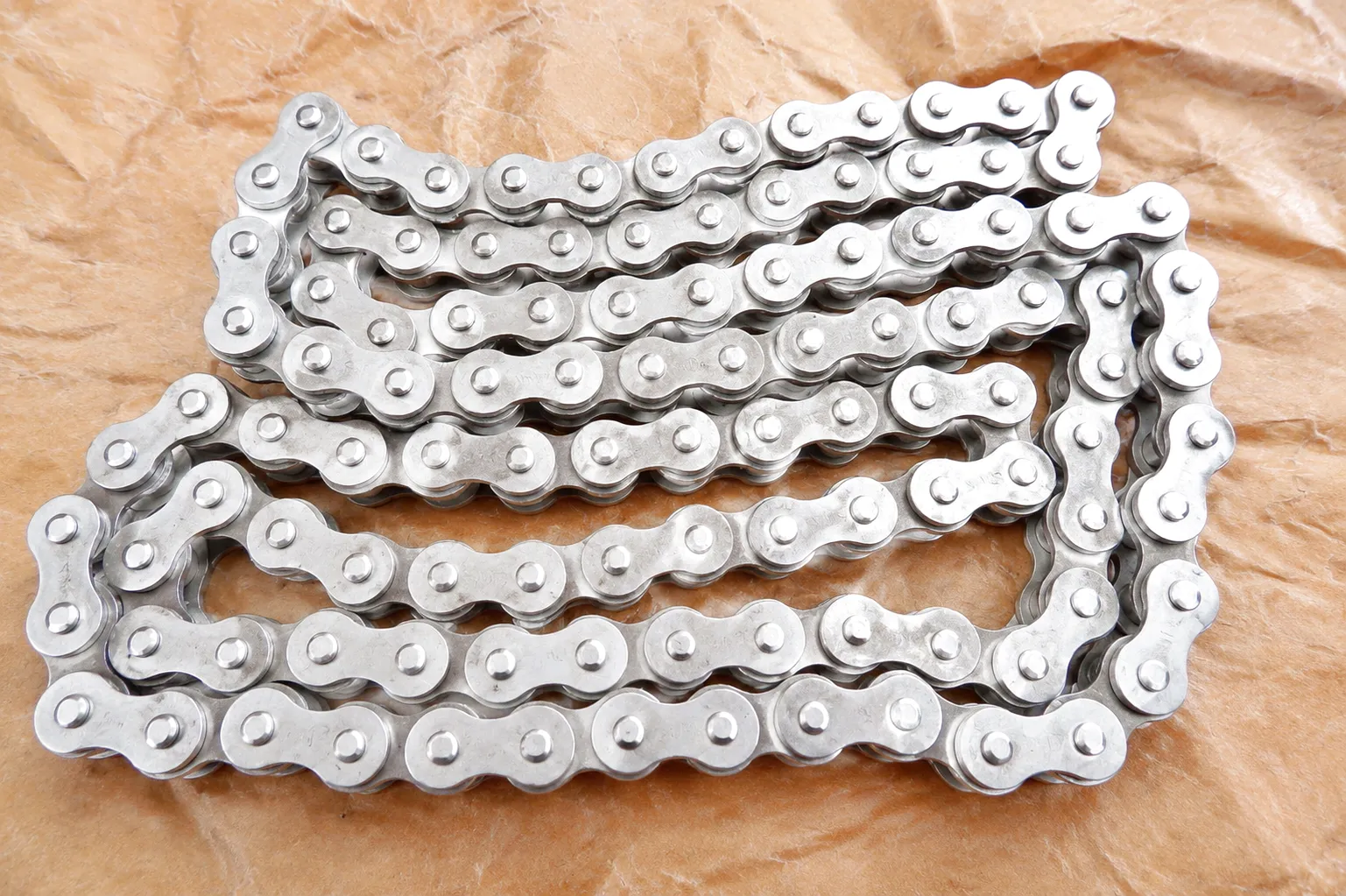
Shot peening the inner and outer plates induces a surface layer of compressive residual stress that significantly retards the initiation of fatigue cracks. In high-speed duty, where the chain flexes through the sprocket pitch thousands of times per hour, this manufacturing step can extend fatigue life by 30–50% compared to an unpeened equivalent. UK engineers specifying chains for continuous production lines should treat shot peening as a standard requirement, not an optional upgrade.
Pins pressed into the outer plates with a controlled interference fit — typically 0.015 to 0.035 mm — create a joint that resists relative movement under cyclic loading. Contrast this with a clearance or transition fit, where fretting corrosion at the pin-plate interface can initiate cracking within a few million stress cycles. For drives running above 5 m/s, interference-fit pin assembly is the only commercially and technically sound approach, and every roller chain in the Ever Power high-speed range is manufactured to this standard.
At high sprocket speeds, even a small variation in pitch accumulates into a measurable elongation-rate differential between links, accelerating uneven wear. Ever Power holds pitch tolerance to ±0.05 mm on standard chains and ±0.02 mm on premium high-speed variants. This level of precision requires lapping operations and 100% dimensional inspection at the end of the assembly line. It is not achievable with commodity-grade tooling, and it is the primary reason that low-cost imported chains consistently underperform against a correctly manufactured specification in high-speed service.
High-speed roller chains supplied by Ever Power are packed with high-viscosity, low-tack grease at the bushing-pin interface during assembly and then subjected to a hot-oil bath immersion process that drives lubricant deep into the sintered bushing matrix. This pre-lubrication strategy means that from the moment of installation, the bearing surfaces are protected during the critical run-in phase when a fresh chain is most vulnerable to abrasive wear. For UK customers operating in remote or difficult-access plant environments, pre-lubricated joints also extend the interval before the first field service is required.
Product Technical & Performance Parameters
| Parametre | Standard (ANSI/BS) | High-Speed Grade | Heavy-Duty HSP |
|---|---|---|---|
| Pitch Range (mm) | 6.35 – 50.8 | 6.35 – 25.4 | 9.525 – 38.1 |
| Minimum Çekme Dayanımı (kN) | 14.0 – 222.0 | 18.0 – 180.0 | 28.0 – 280.0 |
| Pin Hardness (HRC) | 56 – 60 | 58 – 62 | 60 – 64 |
| Plate Material | Carbon steel (0.35%C) | Alloy steel (Cr-Mo) | Low-alloy, shot-peened |
| Max. Operating Speed (m/s) | Up to 4 | Up to 10 | Up to 8 (shock-load) |
| Working Load (% of Tensile) | ≤ 25% | ≤ 20% | ≤ 18% |
| Operating Temperature (°C) | -10 to +120 | -20 to +150 | -10 to +140 |
| Pitch Tolerance (mm) | ±0.08 | ±0.05 | ±0.02 |
| Lubrication Type | Manual / Periodic | Drip / Forced / Pre-lube | Oil bath / Forced / Pre-lube |
| Standartlara Uygunluk | BS/ISO 606 | ANSI B29.1 / DIN 8187 | OEM-specific (CAT, CNH etc.) |
Industrial Application Scenarios for High-Speed Roller Chains
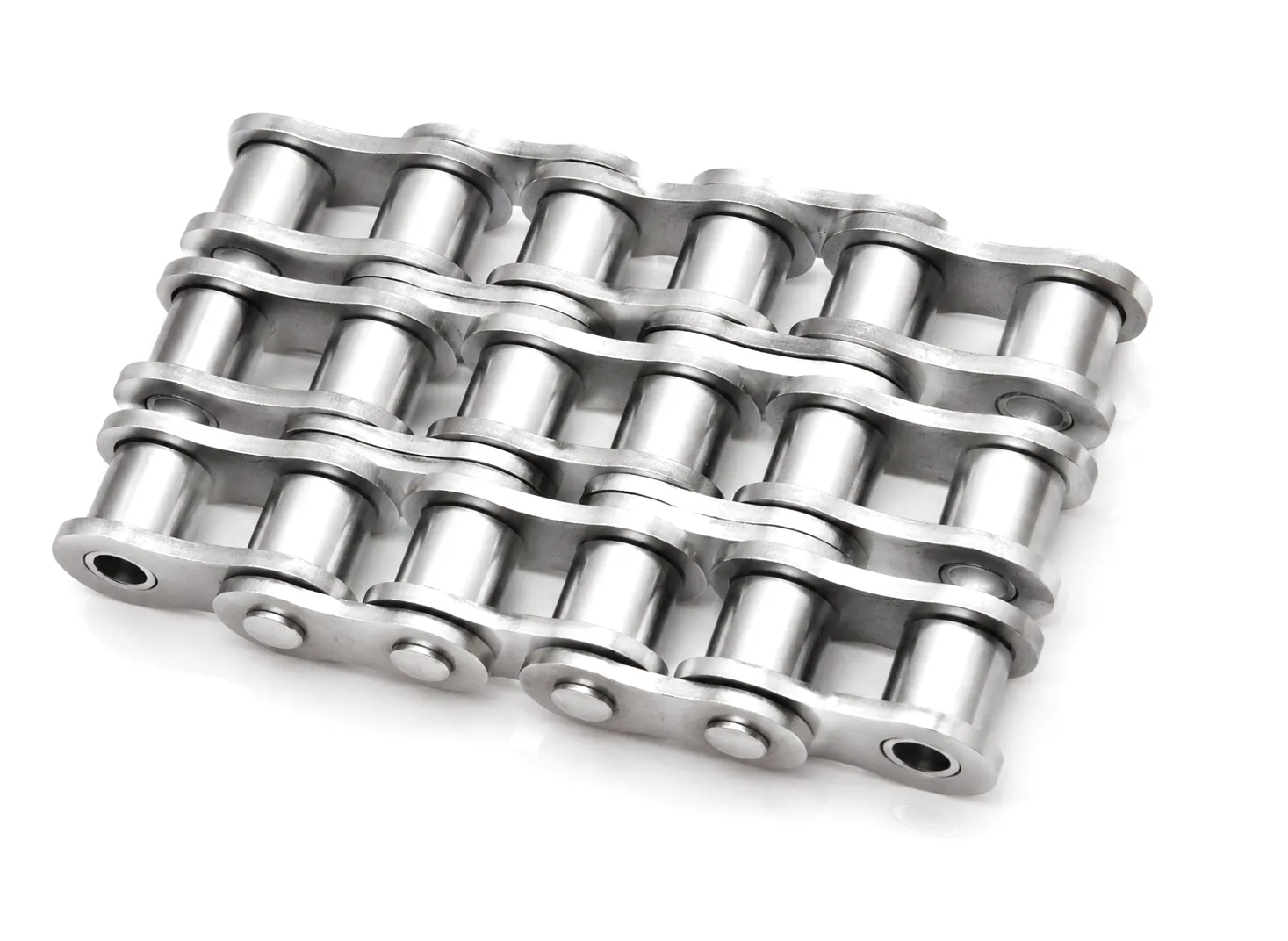
The footprint of high-speed roller chain applications across British industry is considerably broader than most catalogue sections suggest. The engineering principles that govern selection in one sector translate directly into another, yet the operational context — ambient temperature, contamination exposure, lubrication access, duty cycle — varies enough that an off-the-shelf specification rarely achieves the performance a well-engineered custom selection delivers.
The automotive sub-assembly plants concentrated around Coventry, Solihull, and the broader West Midlands corridor rely heavily on overhead conveyor systems, transfer presses, and robotic welding positioners — all of which use roller chains in their drive trains. High-speed roller chains running transfer conveyors at 6–8 m/s are expected to operate across multiple shifts with minimal lubrication intervention. The precision pitch tolerances demanded by these applications ensure that chain elongation remains within the adjustment range of the conveyor tensioning system throughout a full service interval, typically 6–12 months of continuous operation.
Food and beverage operations in Yorkshire — from brewing to confectionery — demand roller chains that can operate in washdown environments while meeting food-safe lubrication requirements. Stainless steel variants or chains with H1-registered food-grade lubricant pre-applied are specified for filling lines, bottle conveyors, and packaging indexers where chain speeds routinely exceed 4 m/s. The corrosion resistance of austenitic stainless steel plates combined with food-grade grease within sintered bushings makes this combination a technically sound answer to the dual challenge of hygiene compliance and high-speed durability.
Sheffield’s continuing steel processing and specialist metals sector places unique demands on drive chains. Elevated ambient temperatures — often 50°C or higher near induction heating equipment — combined with metallic dust contamination and heavy shock loads from slab manipulators and roller tables create a demanding service environment. Heavy-duty high-speed roller chains with heat-resistant seals, enhanced heat-treated plates, and forced-lubrication compatibility are the correct specification for these applications. Ever Power has supplied custom chains for Sheffield-based metal processing operations where standard catalogue products proved inadequate within the first quarter of service.
Combine harvesters, grain dryers, and seed processing machines operating on large arable farms across Norfolk, Suffolk, and Lincolnshire subject roller chains to high-speed duty in environments rich with crop residues and abrasive dust. During the harvest season, drive chains on threshing concaves and straw walkers run continuously at elevated speeds for 16 or more hours per day. Chains specified with sealed roller variants and zinc-nickel surface treatment resist corrosion during the off-season storage period when condensation and agrochemical exposure would otherwise accelerate oxidation of unprotected surfaces.
The Selection Process: What Engineers Need to Determine
Chain selection for a high-speed drive begins with the power rating of the drive — the transmitted power in kilowatts — and the rotational speed of the smaller (driving) sprocket in rpm. These two numbers enter a power rating chart or calculation from the chain manufacturer’s engineering data, which returns a recommended chain pitch and strand count. The critical mistake engineers make at this stage is selecting directly from the chart without applying a service factor. Service factors account for the type of load — smooth, moderate shock, or heavy shock — and can range from 1.0 for a smooth motor drive to 1.7 or above for a heavily loaded drive with reversals or frequent starts.
Once a provisional pitch is selected, the number of teeth on the driving sprocket should be optimised. Running with fewer than 17 teeth on the driving sprocket at high speeds increases chordal action to a point where noise, vibration, and accelerated wear become unavoidable. A 19–25 tooth driving sprocket is often the preferred range for high-speed work, as it delivers smooth engagement geometry and distributes the load over more simultaneous contact points. The driven sprocket tooth count is then set by the required speed ratio, but limiting the maximum to around 90–120 teeth prevents the chain from operating at excessively low velocity around the large sprocket, where gravity and centrifugal effects can cause poor seating.
The centre distance between sprockets deserves careful attention. Too short a centre distance (less than 30× pitch) results in excessive articulation angle at the sprockets and accelerated bush wear. Too long (more than 80× pitch) leads to catenary sag on the slack-side run, which creates a dynamic impact as each link re-engages the driven sprocket. For high-speed applications, a centre distance of 40 to 60 times pitch, combined with an odd total link count, is the textbook starting point. The odd link count prevents the same inner-outer link combination from meeting at the same tooth on every revolution, distributing wear evenly across both the chain and the sprocket.
Lubrication — The Single Biggest Factor in High-Speed Chain Life
It is a common engineering observation that the majority of premature roller chain failures — across all speed ranges but especially at high speed — trace directly back to lubrication failures. Not bearing failures, not material failures, and not overloading: lubrication failure. This encompasses inadequate viscosity grade for the operating temperature, insufficient quantity reaching the pin-bushing interface, contaminated lubricant carrying abrasive particles through the bearing film, and wrong re-lubrication intervals. Understanding why lubrication fails and designing it out of the system is more productive than simply specifying a stronger chain.
Suitable for chain speeds up to approximately 4 m/s. A metered oil drip applied at the inner edge of the chain link plate allows lubricant to migrate to the bearing surfaces by centrifugal action. Oil viscosity of ISO VG 100–150 is typically appropriate at ambient UK temperatures, falling to ISO VG 68 in heated enclosures.
For speeds from 4 to 7 m/s, an enclosed chain case with an oil bath at the sump level delivers continuous lubrication as the chain dips through the bath on the slack-side run. Oil level must be maintained between the pitch line of the lowest chain link tooth and the centreline of the lowest pin. Above 7 m/s, the agitation caused by the chain splashing through an oil bath generates heat and foam that degrade lubrication quality.
Pressure-fed oil delivered through nozzles directed at the inner-link side of the chain as it leaves the driving sprocket is mandatory above 7 m/s and highly recommended from 5 m/s onwards. The pump delivers filtered oil at 0.15–0.35 MPa, ensuring the bearing interface is flooded before the centrifugal effects of high-speed rotation can break the film. A temperature-sensing return circuit and oil cooler are standard components in this type of system.
Birmingham Precision Components: Solving High-Speed Chain Failure on a Transfer Line
A mid-sized precision components manufacturer based in the Tyseley district of Birmingham approached Ever Power after experiencing recurring chain failures on a 12-station rotary transfer machine used for aluminium housing machining. The line ran at a chain speed of approximately 6.2 m/s across a 19-tooth driving sprocket turning at 940 rpm. They had been using a standard BS 16B simplex chain from a commodity supplier, and failures — invariably plate cracking at the inner link — were occurring every 8–10 weeks. With each failure causing around 4 hours of unplanned downtime and over £3,000 in lost production at their hourly throughput rate, the annual cost of the problem exceeded £18,000.
Ever Power’s engineering team analysed the application data and identified two contributing factors: the standard chain plates lacked shot peening, leaving them susceptible to fatigue crack initiation at the link plate aperture edges where stress concentration is highest; and the existing drip lubrication system — configured for a shorter chain pitch from the previous machine generation — was delivering oil to the wrong point on the chain, missing the pin-bushing interface almost entirely. The solution specified was a BS 16B-1 high-speed grade chain with shot-peened plates, interference-fit pins, and a reconfigured drip lubrication bracket repositioned to deliver oil at the correct entry angle.
After installation, the Birmingham facility ran for 14 months before the first scheduled chain inspection, at which point measured elongation was within 60% of the wear limit — meaning a second service interval without replacement was achievable. The total chain cost over 18 months was less than 40% of the cost incurred during the previous 18 months with the commodity product. The factory maintenance manager has since standardised the Ever Power high-speed specification across three additional transfer lines on the same shop floor.
Müşterilerimiz Ne Diyor?
“We had written off high-speed chain reliability as simply unpredictable until we switched to Ever Power’s high-speed specification. The shot-peened plates and forced pre-lubrication made an immediate difference — the first service interval doubled compared to what we’d previously accepted as normal.”
“The Ever Power team actually reviewed our sprocket geometry before recommending a pitch. No supplier had done that before — they just sold us whatever was in stock. The custom-length chain they supplied runs our 8 m/s packaging line without the vibration we’d normalised over years. It’s a noticeably quieter machine.”
“We operate a specialist steel strip processing line near Sheffield where ambient temperatures routinely exceed 60°C close to the annealing section. Ever Power specified a high-temperature variant with enhanced seal material and adjusted oil viscosity recommendation. We are now 16 months into the first service interval with no issues whatsoever — previously we replaced chains every three months.”
Maintenance Practices That Protect High-Speed Chain Investments
A high-specification roller chain delivers its full designed service life only when the maintenance programme around it is equally well designed. The most important maintenance metric for any drive chain is elongation, measured as percentage wear across a known number of pitches. A chain stretched to 2% elongation has, by definition, increased its pitch by 2%, meaning the links no longer seat correctly on the sprocket tooth flanks. At this point, contact moves towards the tooth tips, creating a stress concentration that accelerates tooth wear on the sprocket until the chain begins to climb the teeth and skip under load. Monitoring elongation with a simple chain checker at each scheduled maintenance visit and replacing the chain before the 1.5% threshold in a high-speed application is the single most cost-effective maintenance action available.
Sprocket wear is the companion measurement to chain elongation. When a chain is replaced on a worn sprocket, the new chain seats on hooked tooth flanks and elongates rapidly, offering a fraction of its rated life. UK maintenance best practice — aligned with BS EN 28187 guidance — is to inspect sprocket profiles at each chain replacement and replace sprockets when the flank shows measurable hooking or when the chain has completed two full replacement cycles on the same sprocket. Running a premium high-speed roller chain on a worn sprocket is one of the most common and most costly maintenance errors observed across British manufacturing facilities.
| Maintenance Action | Frequency | Action Threshold |
|---|---|---|
| Chain elongation check | Monthly (high-speed) | Replace at >1.5% elongation |
| Lubrication top-up (drip/bath) | Haftalık | Maintain to specified level |
| Sprocket profile inspection | At each chain change | Replace on measurable hooking |
| Drive alignment check | Üç aylık | Misalignment < 1 mm/m of centre distance |
| Tension / catenary sag | Aylık | Slack-side sag 1–4% of centre distance |
| Oil filter change (forced lube) | Per oil supplier guidance | Differential pressure > 0.1 MPa across filter |
Sıkça Sorulan Sorular
How do I know which roller chain pitch is correct for my high-speed drive application in the UK?
▼
Pitch selection starts with the drive power in kilowatts and the speed of the driving sprocket in rpm. These values enter the power-rating curve for each pitch size from the chain standard you are working to — BS or ANSI. At high speed, the result almost always points toward a shorter pitch (12.7 mm or 15.875 mm) because shorter pitch reduces chordal action and improves smoothness of engagement. Apply a service factor of 1.2–1.7 depending on load type before finalising the pitch. If the result is borderline between two pitches, choose the shorter pitch with a higher strand count rather than the longer pitch as a single strand — this delivers better balance between component wear life and drive geometry.
What is the typical price and lead time for a custom high-speed roller chain order from Ever Power to a UK manufacturer?
▼
Pricing for a custom high-speed roller chain specification depends on pitch, strand count, material grade, surface treatment, and quantity. Standard high-speed grades in catalogue pitches are generally cost-competitive with premium European brands and are available from the European distribution hub within 48–72 hours. Fully custom specifications with bespoke tooling typically carry a 4–6 week lead time for first-article samples, with production deliveries achievable within 2–3 weeks thereafter. To receive an accurate quote, send your drive data — power (kW), speed (rpm), sprocket tooth counts, and any environmental requirements — to [email protected] and the engineering team will respond within one working day.
Which roller chain supplier near Birmingham or Sheffield offers OEM-spec chains with short turnaround for urgent industrial applications?
▼
Ever Power supplies OEM-equivalent and OEM-specified roller chains — including Caterpillar-compatible 120HSP and C100HSP series — to manufacturers across the Midlands, Yorkshire, and the North of England. Orders for stocked high-speed grades placed before midday can typically be dispatched for next-day delivery to UK mainland addresses. For urgent requirements, contact the sales team directly at [email protected] with your chain reference and the quantity needed, and the team will confirm availability and despatch within two hours during business hours.
How often should I replace a roller chain that is running above 6 metres per second in a continuous production environment in the UK?
▼
Replacement intervals for a high-speed roller chain running above 6 m/s are driven by measured elongation rather than calendar time. Inspect elongation monthly in a continuous production environment and replace at 1.5% elongation — not the 3% figure that applies to slow-speed drives. With a correctly specified high-speed chain, well-lubricated and operating within its power rating, you should achieve at least 8,000–12,000 hours of service before reaching this threshold under smooth-running conditions. Shock-loaded or poorly lubricated applications will reach the limit significantly sooner, which is why service factor and lubrication system design are not optional engineering considerations at this speed level.
What makes the high-strength Caterpillar roller chain different from a standard BS chain for high-speed drive use?
▼
The Caterpillar HSP (High Strength Plus) designation covers a range of roller chains whose plate thickness, pin diameter, and minimum breaking load all exceed the BS or ANSI standard for that pitch. The 120HSP-00 and C100HSP-00, for example, use plates that are approximately 10–15% thicker than BS 24B and 20B equivalents, with pins heat-treated to a harder specification and assembled with a higher interference fit. The roller material is also upgraded to through-hardened steel. These choices combine to deliver 25–35% greater resistance to both static overload and fatigue, which is why they appear on earth-moving, quarrying, and heavy-duty handling equipment where shock loads are routine and downtime is extremely costly.
Where can I get a roller chain cost comparison and quote for a packaging line in Leeds or a food processing plant in Yorkshire?
▼
Send your current chain specification — pitch, standard reference (BS or ANSI), strand count, length, and any food-safe or stainless requirements — to [email protected]. Ever Power’s UK-focused sales team provides competitive pricing with a transparent cost breakdown within one working day. For food and beverage applications in Yorkshire and the wider North of England, the team can confirm which H1-lubricant variants are stocked and advise on stainless steel grade selection based on the cleaning agent chemistry used in your facility’s washdown process.
Ready to specify the right roller chain for your high-speed application? Our engineering team works directly with UK manufacturers across Birmingham, Sheffield, Leeds, Coventry, and beyond.
✉ Get a Quote — [email protected]
gzl tarafından düzenlendi