Бетті таңдау

Technical Knowledge Guide · UK Market

How to Measure Roller Chain Pitch
and Why It Matters

A comprehensive engineering guide for UK industry professionals — covering precision measurement methods, pitch standards, material science, and why chain pitch selection determines the reliability of your entire drive system.

ISO 606 Standard
BS 228 Compliant
Ever Power Certified

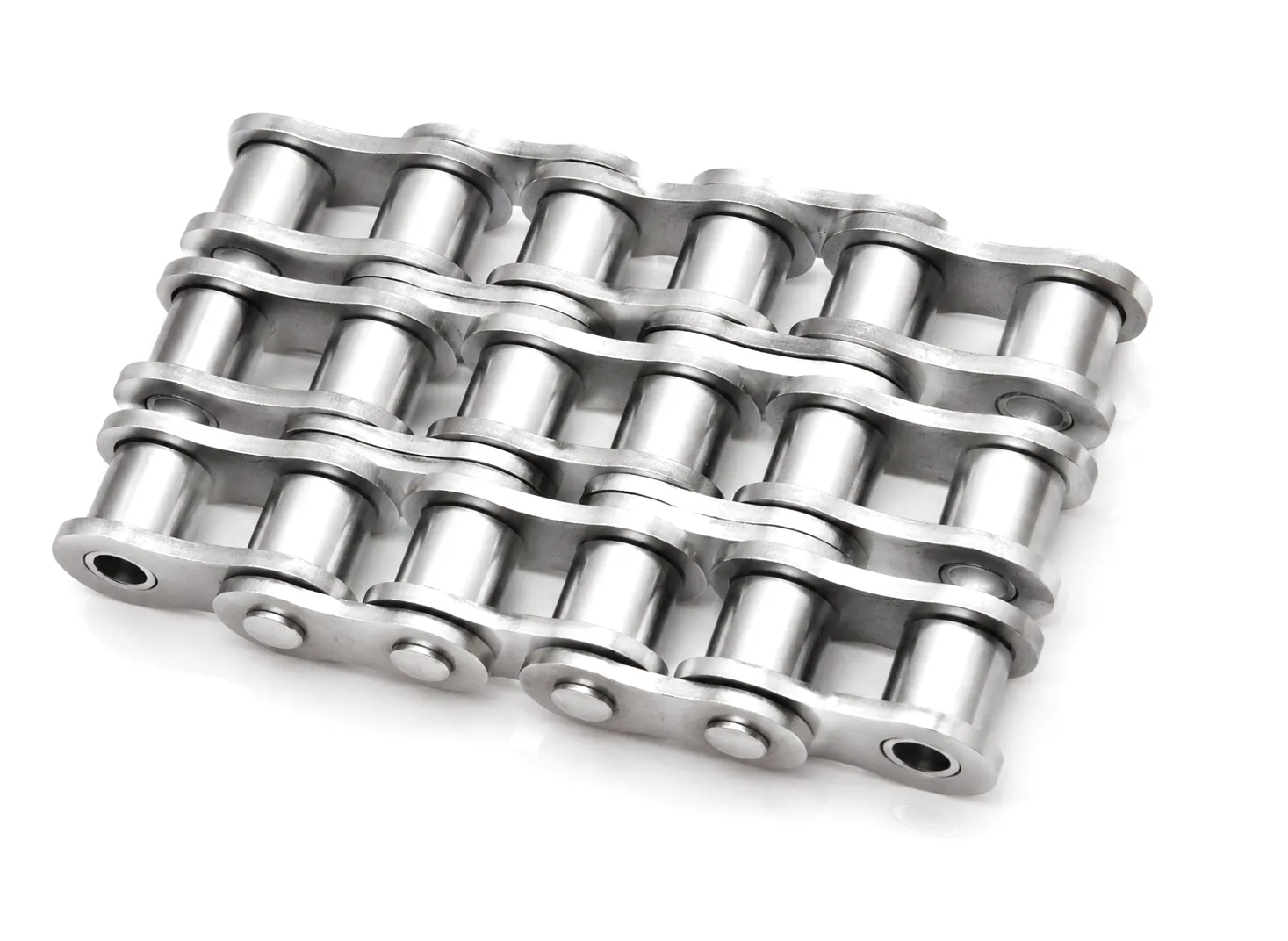
Ever Power Roller Chain precision manufacturing

Roller chain pitch is the single most critical dimension in the entire chain drive system, yet it is frequently misunderstood, eyeballed, or measured with inadequate tools in industrial workshops from Sheffield to Southampton. The pitch of a roller chain is formally defined as the centre-to-centre distance between successive pin centrelines — measured in millimetres or inches depending on the governing standard. When this distance deviates even fractionally from specification, the consequences ripple outward with surprising speed: premature sprocket wear, elevated vibration signatures, fatigue cracking in side plates, and ultimately, catastrophic chain failure at the worst possible moment on the production line. For maintenance engineers, procurement managers, and OEM design teams operating across UK manufacturing sectors, understanding how to measure roller chain pitch correctly, and why that measurement governs so much else, is not optional knowledge. It is foundational.

In the United Kingdom, roller chain applications span an extraordinary range — from food-processing conveyor lines in the Midlands, automotive transfer presses in the West Bromwich corridor, to heavy agricultural machinery rolling across East Anglian fields. Each sector demands precision, and each has its own exposure to the costly downtime that comes from a misspecified chain. This guide takes you through the mechanics of pitch measurement, explains what the standards actually require, details the manufacturing variables that affect pitch accuracy, and makes the case for why sourcing from a precision-controlled manufacturer is the only responsible choice for mission-critical applications.

What Exactly Is Roller Chain Pitch — and How Is It Defined by Standard?

📏

The Core Definition

Pitch is the distance, measured in millimetres, from the centre of one connecting pin to the centre of the next. Under ISO 606 — which the UK aligns with through BS EN ISO 606 — standard pitches are defined at fixed increments: 6.35 mm (1/4″), 9.525 mm (3/8″), 12.7 mm (1/2″), 15.875 mm (5/8″), 19.05 mm (3/4″), 25.4 mm (1″), 31.75 mm (1-1/4″), 38.1 mm (1-1/2″) and beyond. The chain designation number is directly derived from the pitch: a 50-series chain carries a pitch of 5/8 inch, or 15.875 mm. An 80-series operates at 1 inch (25.4 mm). This seemingly simple number controls the geometry of every sprocket the chain must engage with — get it wrong and the chain cannot properly seat into the sprocket tooth form, leading to uneven load distribution and accelerated wear on both components simultaneously.

📄

Why Standards Exist

The British Standards institution played a formative role in formalising roller chain pitch dimensions long before ISO harmonisation. The historical BS 228 standard governed simplex, duplex, and triplex roller chains for decades in UK manufacturing — and its influence is still felt in legacy equipment found in older Birmingham metalworking plants and Sheffield steel-handling facilities. The current harmonised standard BS EN ISO 606 ensures interoperability: a correctly measured and specified chain can be sourced from any ISO-compliant manufacturer worldwide without compromising system geometry. This is commercially vital for UK engineers who must maintain equipment using internationally sourced components, particularly post-Brexit, when supply chain flexibility has become more operationally critical than ever.

Pitch accuracy is not merely a manufacturing courtesy — it is a mechanical necessity. When the pitch of a roller chain deviates from nominal by as little as 0.1 mm over a ten-link span, the accumulated error is 1.0 mm, which is often enough to cause the rollers to miss the sprocket tooth root and ride on the tip instead. This tip-loading mode generates impact forces during each engagement cycle, multiplying stress on the pin–bush junction and dramatically shortening the fatigue life of the entire assembly. In high-speed applications exceeding 300 RPM — common in food-processing and packaging lines in the East Midlands — even minor pitch variation becomes a source of audible noise, measurable vibration, and progressive mechanical degradation. The cost of ignoring this is not simply the replacement chain: it is the scheduled maintenance window, the lost production, and in regulated industries, the potential compliance implications of unplanned downtime.

How to Measure Roller Chain Pitch: Methods, Tools, and Best Practice
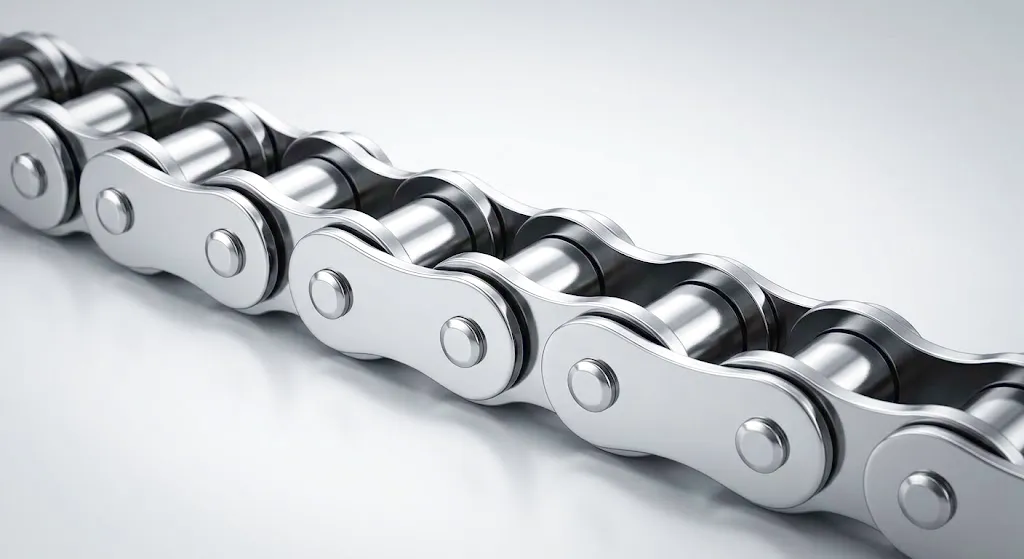
Roller chain measurement tools and methods

The most reliable method for measuring roller chain pitch is the span measurement technique, which averages out individual link errors across a longer sample length. Rather than measuring a single link — where tool placement errors dominate — engineers measure the total length across a known number of links, typically 20 or more, and divide to obtain the mean pitch. Using a calibrated vernier calliper or digital calliper with a resolution of at least 0.02 mm, place one jaw on the leading face of a pin and the other on the corresponding face of the pin that is exactly N pitches away. Dividing the measured distance by N gives the mean pitch. For BS EN ISO 606 compliance, this mean pitch must fall within the allowable plus/minus tolerance stated for the chain’s series — typically within ±0.15 mm for standard chains.

For field measurements where the chain remains installed on the sprocket, the measurement process changes slightly. Engineers often use a flexible tape measure across the sprocket circumference and derive pitch from the sprocket tooth count, or they physically count the tooth spaces engaged over a specified chain length. For precision verification in a workshop environment — as conducted at Ever Power’s manufacturing facility — purpose-built chain gauges and coordinate measuring machines (CMMs) are used to validate each link against a precise datum. This level of verification is particularly important for heavy-duty roller chains destined for mining conveyors in Wales or offshore equipment handling applications on the North Sea shelf.

01

Select Span Length

Always measure across a minimum of 20 pitches. Shorter spans amplify individual pin placement errors. For precision-critical applications, use 50-link spans.

02

Apply Consistent Tension

Slack chain gives false readings. Apply a reference tension load equivalent to roughly 2% of the chain’s minimum breaking load before measuring.

03

Control Temperature

Steel expands at approximately 12 × 10⁻⁶ per °C. Measure at reference temperature (20°C) or apply thermal correction factor for high-temperature installed chains.

04

Record and Calculate

Divide measured span by link count. Compare result against ISO tolerance band. Document findings for preventive maintenance records.

Working Principle: How a Roller Chain Transmits Power Through Engaged Pitch

Engagement Mechanics

Power transmission in a roller chain drive works through a deceptively elegant mechanism. The driving sprocket rotates, and its teeth engage successive rollers in the chain. Each roller, free to rotate on its bush, contacts the sprocket tooth flank and is drawn into the tooth root, where the tooth force acts tangentially to deliver torque. The roller’s ability to rotate during this engagement is what distinguishes a roller chain from a bush chain: it converts sliding friction into rolling friction at the sprocket–chain interface, reducing energy loss and wear rate simultaneously. This geometry means that pitch accuracy directly governs whether each roller seats correctly in the root circle of the sprocket — the precise point where force transfer efficiency is maximised. Incorrect pitch causes the roller to engage on the tooth flank rather than the root, shifting the contact point and introducing bending stresses that the sprocket tooth was not designed to carry.

The Chordal Effect

A fundamental behaviour intrinsic to all roller chain drives is the chordal action — also called the polygonal effect. Because the chain wraps around a sprocket as a polygon rather than a true circle, the linear velocity of the chain fluctuates sinusoidally as each successive roller enters engagement. The amplitude of this velocity fluctuation is inversely proportional to the number of sprocket teeth: a 12-tooth sprocket produces significantly greater velocity ripple than a 19-tooth sprocket running the same pitch. This is why minimum tooth counts are always specified in drive design. For UK machinery designers working on high-speed indexing applications — as common in Bristol aerospace component manufacturing or Coventry automotive assembly — understanding this dynamic behaviour is essential. Selecting a smaller pitch (and therefore a larger tooth-count sprocket for the same shaft geometry) is often the correct engineering trade-off for smoothness.

Core Materials: What Ever Power Roller Chains Are Actually Made From

Pin

Case-hardened alloy steel. Surface hardness 58–62 HRC. Core ductility preserved for fatigue resistance.

🔧

Bush

Cold-drawn carbon steel tube, precision-sized for controlled interference fit. Internal bore tolerance ±0.005 mm.

📈

Ролик

Through-hardened bearing steel. Outer diameter tolerance h5 class. Smooth rollover contact with sprocket tooth.

📷

Inner / Outer Plates

High-carbon steel, punched and coined to h7 hole tolerance. Shot-peened on fatigue-critical models for compressive residual stress.

🕐

Specialty Variants

304 / 316L stainless for food-grade and corrosive environments. Nickel-plated for elevated moisture resistance. Plastic-coated rollers for low-noise applications.

Roller Chain Technical Performance Parameters — ISO 606 Reference Table

The table below provides the standardised technical data for commonly used roller chain series in UK industrial applications, cross-referenced against ISO 606 / BS EN ISO 606 specifications. These parameters are the baseline against which Ever Power’s quality control team measures every batch produced, and they represent the minimum data set any procurement engineer should verify when qualifying a new supplier. Tensile strength values shown are minimums; Ever Power chains routinely test 10–15% above these figures, reflecting the quality margin built into our manufacturing process.

Тізбек нөміріҚадам (мм)Ролик диаметрі (мм)Ішкі ені (мм)Түйреуіш диаметрі (мм)Min. Tensile (kN)Салмағы (кг/м)Әдеттегі қолданылуы
256.353.303.182.313.140.10Light conveyor, instruments
359.5255.084.783.587.830.22Packaging, general machinery
40 (08A)12.707.927.853.9617.800.62Automotive, general industry
50 (10A)15.87510.169.405.0821.800.92Food processing, agriculture
60 (12A)19.0511.9112.575.9431.301.33Conveyors, drives
80 (16A)25.4015.8815.757.9255.602.35Heavy industry, mining
100 (20A)31.7519.0518.909.5387.003.63Caterpillar OEM, heavy conveyors
120 (24A)38.1022.2325.2211.10125.505.40Construction, forestry, large OEM

Featured Products: High-Strength Caterpillar Replacement Chains

CAT REPLACEMENT

Caterpillar үшін жоғары беріктігі бар роликті тізбек 120HSP-00

The 120HSP-00 is an OEM-equivalent replacement roller chain for Caterpillar equipment operating at 38.1 mm pitch. Built to exceed standard ISO 606 minimum tensile values, this chain uses interference-fit press assembly for pin–plate joints and undergoes pre-loading during manufacture to close any initial stretch gap. Ideal for construction, quarrying, and bulk materials handling across UK sites from Yorkshire to Cornwall.

View Product Details →

HIGH PERFORMANCE

Caterpillar үшін жоғары беріктігі бар роликті тізбек C100HSP-00

The C100HSP-00 operates at a 31.75 mm pitch (100-series) and is engineered for Caterpillar machines working in particularly demanding duty cycles — extended shift patterns, high-shock loading, and variable ambient temperatures typical of Scottish Highland construction projects and North Wales quarrying operations. The chain’s proprietary heat treatment profile produces a uniquely tough pin–bush interface, extending service intervals substantially compared to standard replacements.

View Product Details →

Industrial Application Scenarios: Where Roller Chain Pitch Selection Is Mission-Critical
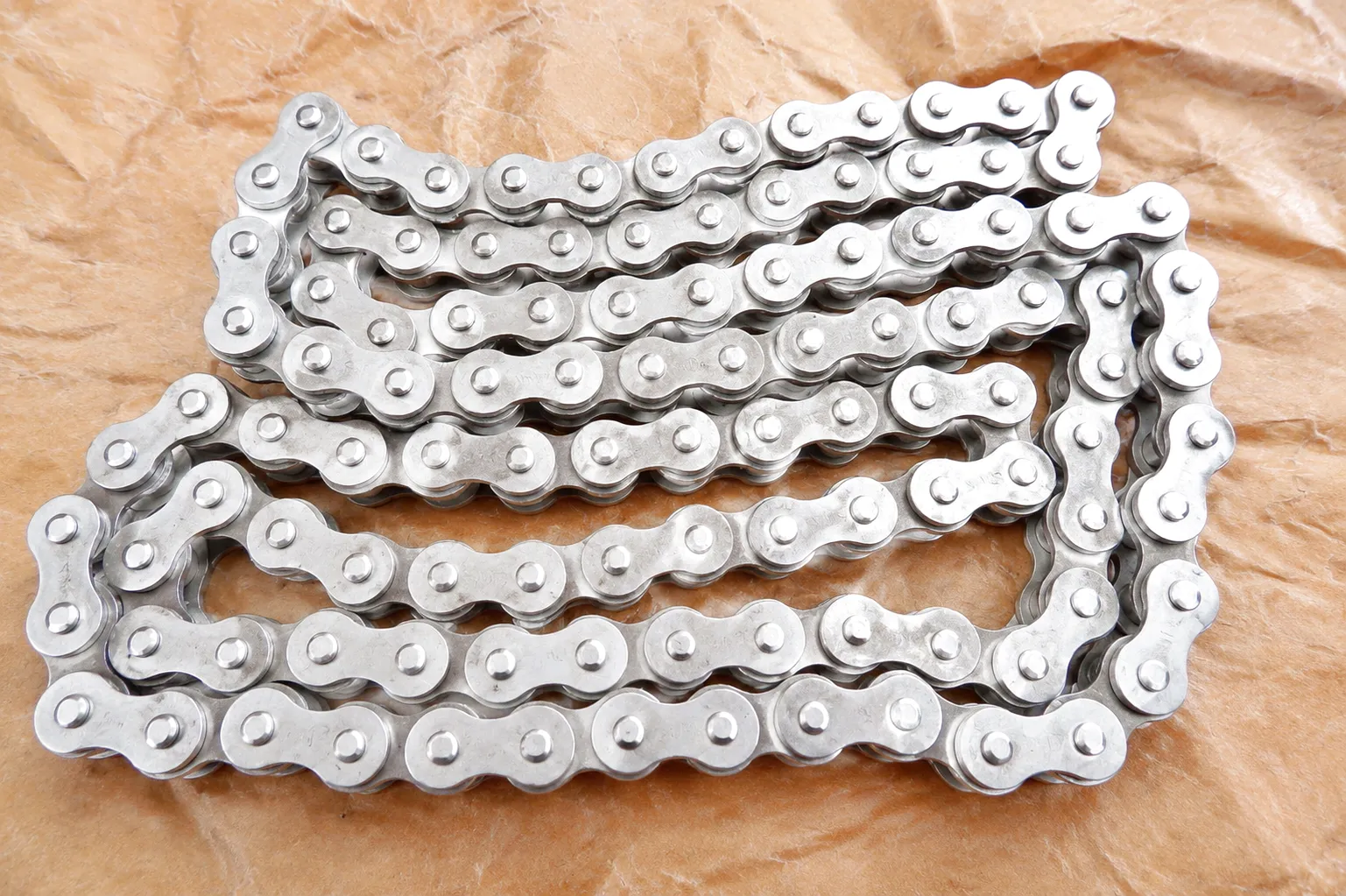
Roller chain industrial application scenarios

Application scenario governs pitch selection as decisively as power rating does. In automotive manufacturing — where Sheffield has historically been central to UK car-body pressing operations — roller chains must cope with rapid acceleration/deceleration cycles, oil-bath lubrication environments, and relatively high speeds with low shock. A 12.7 mm or 15.875 mm pitch chain in a duplex or triplex arrangement typically covers the torque envelope here while keeping the chordal action within acceptable limits for precision indexing. Transfer lines within the Jaguar Land Rover supply chain complex around Coventry illustrate this well: pitch accuracy on the conveyor chains used to move body-in-white components is specified to tighter-than-standard tolerances because even minor pitch variation translates into positional error at the welding fixture — an error that compounds downstream.

🏠
Food Processing & Packaging

Facilities across the M62 corridor — from Hull fish processing plants to the Nestlé operations in York — demand stainless roller chains in 12.7 mm to 19.05 mm pitches with hygienic side-plate profiles. Pitch consistency is critical here not just for mechanical performance but for cleanability: consistent roller geometry ensures wash-down water reaches every joint, preventing bacterial harbourage that would fail food-safety inspection.

🌿
Ауыл шаруашылығы техникасы

Combine harvesters, balers, and potato harvesters operating across the flat arable expanses of Lincolnshire, Norfolk, and Cambridgeshire routinely carry chains in the 15.875 mm to 25.4 mm pitch range. These applications are characterised by high shock loading during crop intake, abrasive contamination, and extended seasonal hours. Pitch wear elongation — chain stretch — is the primary failure mode; choosing a pitch series with adequate roller link plate depth is as important as specifying correct breaking load.


Mining & Quarrying

Surface quarrying in the Peak District and deep mining operations in the few remaining UK collieries demand the largest pitch series — 38.1 mm (120-series) and above — in double or triple strand configurations. The engineering challenge is not merely tensile strength but fatigue resistance under bidirectional loading. Underground, replacement cycles are safety-critical, and pitch-matched chains that can be swapped rapidly during a shift change are operationally significant.


Aerospace & Defence

Precision chain drives in aerospace tooling jigs and ground support equipment built around Bristol, Derby (Rolls-Royce), and the BAE Systems facilities in Samlesbury require traceability records alongside the chain itself. Here, pitch must be verifiable to within ±0.05 mm using certified metrology equipment, and full material certification to relevant aerospace standards is non-negotiable. Ever Power supplies documentation packages for these applications on request.

Ever Power roller chain for construction and heavy duty

Construction and civil engineering present a distinct challenge because the operating environment attacks chain pitch from multiple directions simultaneously. Ground vibration creates oscillating loads that stress link plates in bending. Contamination from silica dust, clay, and grit enters the pin–bush clearance and acts as a lapping compound, accelerating bore wear and effectively increasing pitch as material is removed. On major infrastructure projects — road expansion schemes across the M25 corridor, HS2 groundwork through the Chilterns, or port redevelopment along the Humber estuary — tracked plant equipment from Caterpillar and Komatsu depends on high-pitch chains that must be replaced proactively on planned maintenance intervals rather than reactively after failure. The 120HSP-00 and C100HSP-00 chains from Ever Power’s catalogue are specifically designed for this environment: their elevated plate hardness resists abrasion and their pre-loaded joint assembly minimises the early-life stretch that would otherwise compromise pitch accuracy in the first few hundred hours of operation.

Core Technical Advantages of Ever Power Roller Chains

📈

Pitch Accumulation Control

Ever Power’s assembly fixtures are calibrated to limit accumulated pitch error across any 12-link measuring span to within 50% of the ISO maximum tolerance — a tighter internal standard that ensures our chains will measure within spec even after re-testing with worn gauges in the field.

🔥

Advanced Heat Treatment

Our pins and bushings undergo a proprietary carburising cycle with controlled atmosphere to achieve consistent case depth of 0.4–0.7 mm. This prevents the shallow-case phenomenon that causes early spalling and dramatically shortens chain life in high-load applications like aggregate conveyors.

🔒

Pre-Loading at Assembly

Each chain is tensioned to a defined proof load — typically 15% of minimum breaking load — before despatch. This closes initial joint clearances and stabilises the pitch at its nominal value, so the chain enters service already past the break-in elongation phase.

💬

Lubrication Retention Design

The precision bore–pin clearance maintained at Ever Power controls the oil film thickness within the bushing. Too much clearance and oil drains before reaching the working surfaces; too little and oil cannot enter. Getting this right is what separates a chain that lasts 8,000 hours from one that fails at 2,000.

📊

100% Tensile Testing

Every chain length produced by Ever Power is proof-tested on a calibrated tensile bench before despatch. This is not a sampling-based QC process — every single assembly is tested. Breaking load certificates are available upon request for safety-critical applications and are supplied as standard for mining and construction chain orders above 50 m.

Ever Power Manufacturing Capabilities: Precision, Customisation, and Supply Chain Reliability

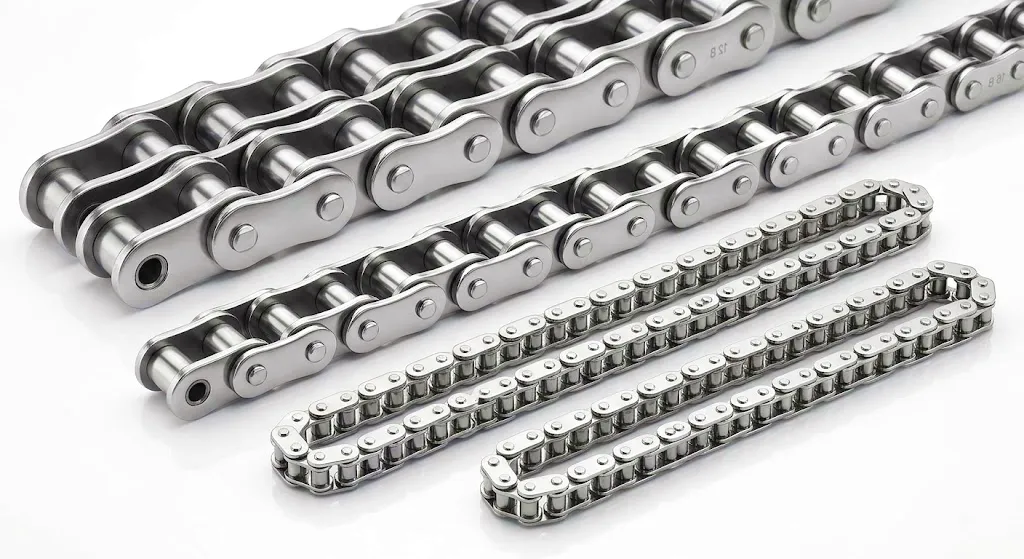
Ever Power precision roller chain manufacturing

Ever Power operates a vertically integrated manufacturing facility where every critical component — pins, bushings, rollers, inner plates, and outer plates — is produced in-house from verified raw material. This vertical integration is not just a commercial choice; it is the fundamental basis for Ever Power’s ability to offer genuine customisation across pitch, plate thickness, surface treatment, and attachment design without depending on sub-suppliers whose own tolerances might introduce variability. When a UK engineering firm in Birmingham specifies a non-standard chain with extended attachment plates for a special conveyor application, Ever Power’s engineering team reviews the design load, selects the appropriate base chain series, and produces a technical drawing for approval before any steel is cut. This collaborative approach is what distinguishes a manufacturing partner from a catalogue supplier.

Ever Power’s quality system operates under ISO 9001 and includes a full metrology laboratory with coordinate measuring machines, hardness testing equipment, and a tensile test rig capable of loading to 200 kN. Every batch is accompanied by a Certificate of Conformance, and material traceability documentation can be provided for safety-critical orders. For UK customers, Ever Power maintains stocked inventory for common pitch series — 12.7, 15.875, 19.05, and 25.4 mm — enabling rapid despatch to UK distributors and directly to plant maintenance teams with urgent requirements. Lead times for standard series are typically 7–14 working days ex-works; custom specifications are quoted individually but routinely delivered in 4–6 weeks.

Need a Custom Specification?

Ever Power’s engineering team responds to technical enquiries within one working day. Send your application data — load, speed, centre distance, environment — and receive a specification recommendation with price indication.

Customer Success Story: Sheffield Aggregate Processing Plant

Sheffield
South Yorkshire, UK
62%
Reduction in chain replacements
£38,400
Annual maintenance savings

A mid-size aggregate processing operation in the Lower Don Valley had been experiencing what their engineering manager described as “chronic chain turnover” on three primary crusher feed conveyors. Each conveyor carried 38.1 mm pitch chain (120-series) in duplex format, driving at approximately 22 metres per minute under variable load as crusher throughput fluctuated. The problem was not simply wear — it was inconsistent pitch-stretch across the three conveyors, causing each to reach the maximum permitted elongation (3% above nominal pitch for the sprocket size in use) at different times in an unpredictable pattern. This ruled out scheduled group replacement, forcing reactive individual replacements with all the associated production interruption costs.

The plant’s maintenance contractor contacted Ever Power to investigate whether supplier variability was contributing to the irregular elongation pattern. Ever Power’s technical team reviewed samples from four different chain batches sourced from the previous supplier and found significant batch-to-batch variation in pin diameter — a discrepancy of 0.12 mm across samples, which translates directly into variable joint clearance and therefore variable lubrication film thickness. Bushes in tighter-clearance joints were running partly dry, accelerating wear. Bushes in looser joints were allowing oil to drain, also accelerating wear — by a different mechanism, but with the same outcome.

Ever Power supplied the three conveyors with matched batches of 120HSP-00 chain produced from a single manufacturing run, ensuring dimensional consistency across all installed lengths. Twelve months post-installation, chain replacement frequency had dropped by 62%, and all three conveyors were now reaching their wear limit within the same monthly window — enabling cost-effective scheduled group replacement. The plant’s maintenance team now orders on a predictable annual basis and has incorporated pitch elongation measurement into the standard monthly maintenance inspection using a gauge supplied by Ever Power at no additional charge.

Ұлыбританиядағы тұтынушыларымыздың пікірлері

★★★★★

“The 120HSP-00 chains have genuinely transformed our maintenance schedule. We went from reactive replacements every 6–8 weeks to a planned 52-week cycle. The pitch consistency from batch to batch is the best we’ve seen from any supplier. When we put the gauge on, it reads correctly — every single time.”

David Haworth
Plant Engineering Manager, South Yorkshire Aggregates Ltd
★★★★★

“We specified a custom duplex chain with extended attachment tabs for our Birmingham automotive conveyor rebuild. Ever Power turned around the drawings within two days, answered every technical question clearly, and delivered the full order in four weeks. The chains were pre-loaded exactly as specified, and we saw zero break-in elongation in the first 500 operating hours.”

Rachel Thornton
Mechanical Design Engineer, Midland Conveyor Systems Ltd, Birmingham
★★★★★

“We operate food-grade stainless conveyors in a wet environment — the pitch accuracy requirement is extremely strict because any position error at the sprocket engagement point translates into product misalignment on the packaging line. Ever Power’s stainless chains with 12.7 mm pitch were supplied with a dimensional report per batch, and they’ve met every measurement we’ve taken over 18 months of continuous operation.”

Mark Ellison
Technical Director, Northern Food Processing Solutions, Leeds

Recognising Pitch Wear: How to Know When Your Roller Chain Needs Replacing
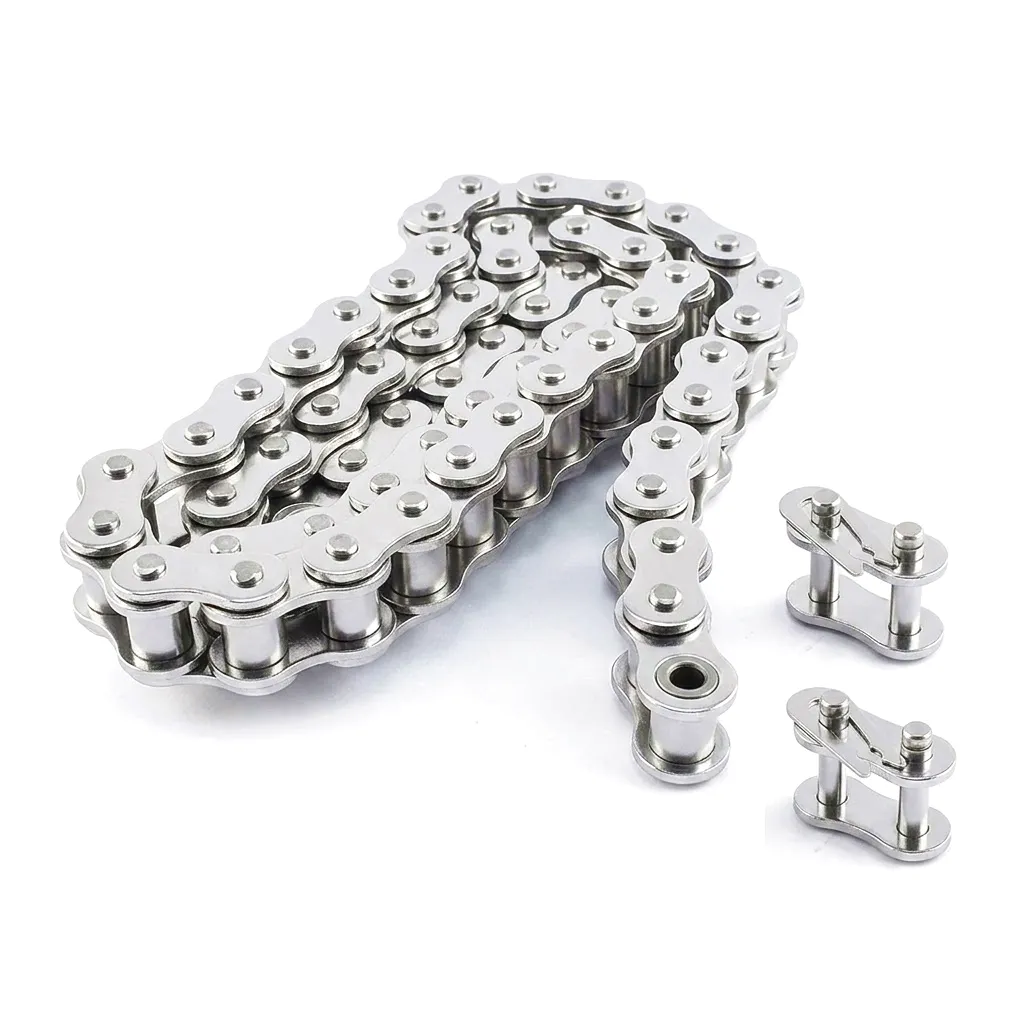
Roller chain wear and pitch elongation measurement

The single most reliable indicator of chain condition is measured pitch elongation relative to nominal. A chain that measures 1% above nominal pitch is approaching the end of its useful life on high-speed applications; at 2% elongation on smaller sprockets (15 teeth or fewer), the chain should be replaced regardless of visual appearance. The 3% threshold is an absolute limit and corresponds to visible riding of the roller on the sprocket tooth tip rather than seating in the root. At this stage, sprocket wear is accelerating rapidly, and running further is a false economy that will increase the cost of the next replacement significantly.

Other indicators include visible stiffness in specific links — a sign of bush-to-pin seizure caused by inadequate lubrication or contamination ingress — and side-plate surface cracking, which indicates fatigue loading beyond the chain’s rated capacity. In agricultural applications across Lincolnshire and Yorkshire, mud packing inside the chain is a particular concern: it prevents proper articulation of links and causes localised pitch shortening as packed links resist elongation while unpacked links wear normally, creating an irregular pitch pattern that accelerates sprocket wear dramatically.

+1%
Monitor closely. Increase inspection frequency. Prepare replacement stock.
+2%
Replace at next planned downtime. Do not defer on high-speed or high-shock applications.
+3%
Replace immediately. Operating further will damage sprockets and increase total replacement cost significantly.

Frequently Asked Questions — Roller Chain Pitch for UK Industry

Q
How do I accurately measure the pitch of a worn roller chain without removing it from the machine?
The most practical in-situ method is to apply a known reference tension — typically by pushing the slack side taut by hand or via the tensioner — and then measure across the longest accessible straight span using a calibrated steel rule or digital calliper, counting the links carefully. Divide the total length by the link count to obtain mean pitch. For a worn chain, you are particularly looking for whether the mean pitch has grown beyond the 3% wear limit — at that point, replacement is warranted regardless of remaining plate strength, because the sprocket-engagement geometry is already compromised. A chain wear gauge, available from industrial suppliers, can give a rapid go/no-go result and is worth keeping in any maintenance kit.
Q
What is the typical cost for a high-strength 120-pitch roller chain from a UK supplier, and how quickly can it be despatched?
Pricing for heavy-duty 120-series roller chain varies considerably with specification, strand count, and surface treatment. Standard simplex 120-series chain ex-stock is generally priced at a per-metre rate that reflects the substantial material weight (over 5 kg/m) and the alloy steel content. High-strength variants with enhanced heat treatment command a premium of 15–30% over catalogue-grade chain. For a quote specific to your application — including tonnage required, delivery address in the UK, and any special material or documentation requirements — contact Ever Power directly at [email protected]. Ex-works despatch for stocked items is typically achievable within 5–7 working days; UK delivery adds 2–3 working days depending on freight mode.
Q
Which roller chain pitch should I choose for a food-processing conveyor in a Sheffield or Leeds facility where hygiene standards are strictly enforced?
For food-grade applications in UK facilities operating under BRC or SALSA accreditation, the pitch choice is largely dictated by the speed and load envelope rather than hygiene in isolation — but the chain specification must then be adapted with appropriate material and surface treatment. Stainless steel (304 or 316L for chlorine-wash environments) is standard for direct-contact zones. Pitches in the 12.7 mm to 19.05 mm range are most common for moderate conveyor speeds. The key hygiene engineering point is chain profile: narrow-waist side plates and open-joint designs allow wash-down water to penetrate and exit cleanly. Ever Power can supply stainless chains with FDA-compliant lubricant pre-applied for immediate installation in food-contact applications.
Q
Where can I find a reliable roller chain supplier in the UK who can provide ISO-certified chains with full material traceability for a mining application?
Ever Power supplies ISO 606-compliant roller chains with full dimensional and material certification for UK mining applications, including those subject to ATEX zoning requirements or UKCA marking obligations. Our chain documentation packages include material test certificates (MTCs) to EN 10204 3.1 standard, dimensional inspection reports per batch, and proof-load test records for every chain assembly. We supply regularly to aggregates, quarrying, and surface mining operations across South Wales, the Peak District, and Northern England. To discuss your specific application — including environment classification, duty cycle, and any third-party inspection requirements — please send your specification details to [email protected] and reference “mining application” in your enquiry.
Q
How does roller chain pitch affect sprocket replacement intervals, and when should I replace both at the same time?
Sprocket and chain wear are interdependent: a sprocket that has been running with an elongated chain will have its tooth flanks worn to a profile that accommodates the larger effective pitch. Installing a new, correctly pitched chain onto a worn sprocket causes the rollers to seat in a geometrically incorrect position relative to the worn tooth form, creating point contact rather than distributed contact — and accelerating wear on both the new chain and the worn sprocket simultaneously. The standard engineering recommendation is to replace chain and sprocket together whenever the sprocket shows visible tooth-flank undercutting or asymmetric wear. If budget forces a phased approach, replace the chain first and monitor sprocket wear closely; if the new chain shows rapid elongation in the first 500 hours, the sprocket is the cause and must be replaced before the next chain installation.
Q
What is the best way to get a price and delivery quote for bulk roller chain orders destined for a UK manufacturing site?
The fastest route to a firm quotation is to send Ever Power a written enquiry at [email protected] with the following information: chain series and pitch (e.g., 120HSP-00, 38.1 mm), total quantity in metres or number of links, strand count (simplex/duplex/triplex), any special requirements (stainless, food-grade lube, attachments, ATEX), and your UK delivery postcode. For repeat orders or regular supply agreements, Ever Power offers framework pricing and guaranteed stock reservation. Most enquiries receive a price indication within one working day, and a full technical and commercial quotation within three working days.

Ready to Specify the Right Roller Chain for Your Application?

Ever Power’s engineering team is ready to review your application data, confirm the correct pitch specification, and provide a competitive quotation for ISO-certified roller chain delivered to any UK address. Send your enquiry now and receive a technical response within one working day.

✉ Request a Quote — [email protected]

gzl арқылы өңдеу