Cara Memilih Rantai Penggelek yang Tepat untuk Aplikasi Anda
A precision roller chain is the backbone of power transmission across Britain’s manufacturing floors — from food processing lines in Yorkshire to steel handling conveyors in Sheffield. Choosing the wrong chain costs you downtime, money, and competitive edge. This guide cuts through the complexity.
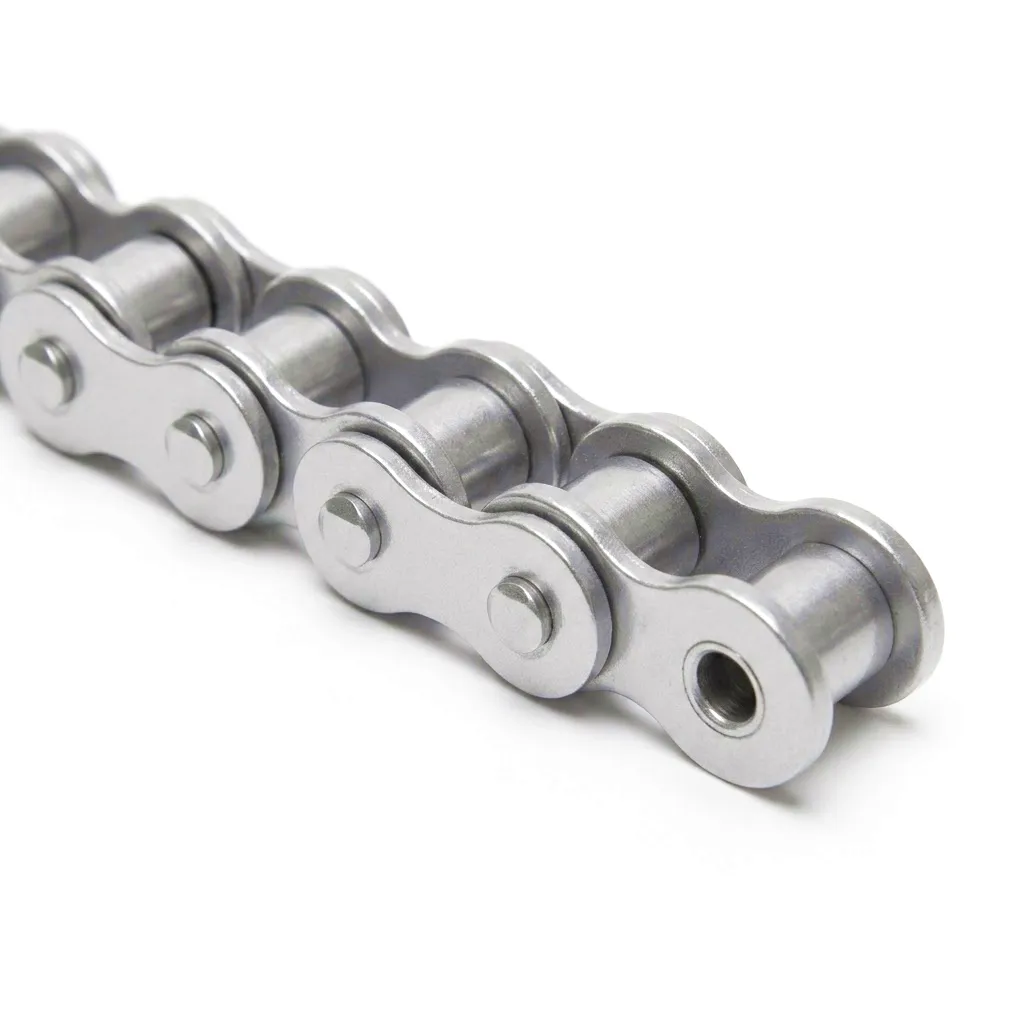
The moment a roller chain fails mid-shift, the knock-on costs ripple through every station downstream. For UK manufacturers — whether running a bottling plant in Birmingham, a paper mill in Manchester, or a heavy engineering workshop in Sheffield — specifying the correct roller chain from the outset is as critical as any other design decision. Pitch, tensile strength, lubrication type, operating temperature, and corrosion environment all interact in ways that can either extend service life to tens of thousands of hours or collapse it in weeks. Yet many procurement decisions still rely on catalogue defaults or habit rather than systematic selection logic.
This guide presents the engineering fundamentals you need to make an informed choice. It covers how roller chains transmit power at the mechanical level, what materials separate commodity chains from precision-grade components, which application environments demand specialist variants, and how Ever Power’s manufacturing capabilities translate into real performance gains for demanding UK industrial projects. Whether you are an OEM design engineer specifying a new conveyor system or a maintenance manager replacing an underperforming drive, the decision framework laid out below will sharpen your selection process considerably.
How a Roller Chain Transmits Power — The Mechanical Truth
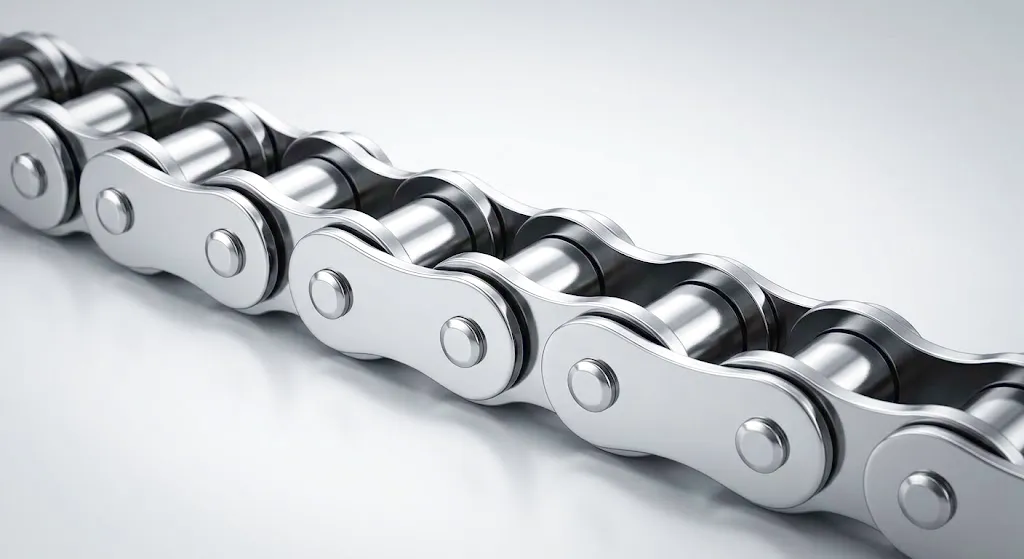
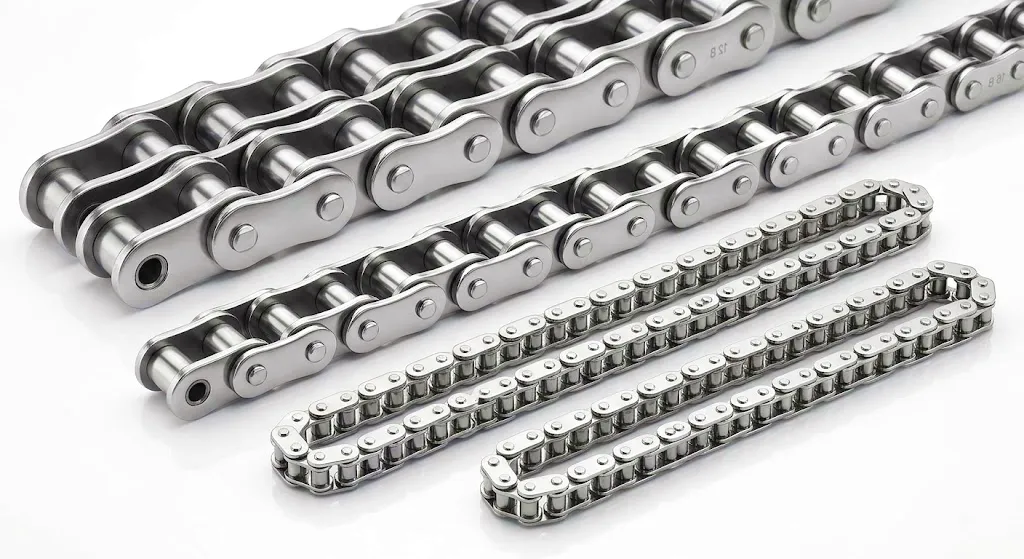
A roller chain works through a beautifully simple principle that has remained essentially unchanged since Hans Renold patented the bush roller design in 1879. Each link consists of two outer plates, two inner plates, a hollow bush pressed into the inner plates, a pin passing through the bush, and a hardened roller rotating freely around the bush. When the sprocket teeth engage, they bear against the roller rather than directly against the bush or pin, distributing the contact stress over a larger area and dramatically reducing wear on both the chain and the sprocket.
The critical dimension is pitch — the centre-to-centre distance between adjacent pins. Standard pitches in the UK market run from 6.35 mm (¼ inch, ISO 04C) through to 101.6 mm (4 inch, ISO 80B) and beyond for specialist heavy-duty drives. Speed, power, and sprocket tooth count all interact with pitch: smaller-pitch chains run faster and quieter, larger-pitch chains handle heavier loads. The polygonal action — the slight speed variation as each link seats onto a sprocket tooth — is minimised by using more teeth on the sprocket and a smaller pitch, a trade-off that every serious drive designer must balance.
Core Materials That Define Roller Chain Performance
Medium-carbon steel (typically 40Cr or equivalent) forms the backbone of the global roller chain market. After forging or stamping, link plates undergo heat treatment — quenching and tempering — to achieve tensile strengths in the range of 800–1,100 MPa depending on grade. Pins are case-hardened to 58–62 HRC to resist the rolling and sliding contact at the bush interface. For UK industrial buyers, carbon steel chains represent the default for dry or lightly lubricated ambient-temperature environments such as agricultural equipment, packaging machinery, and general conveyor drives operating below 80 °C. Their cost-performance ratio is unmatched in these conditions, and BS/ISO interchangeability means spares are always available from UK distribution stock.
Grade 304 and 316 stainless steel chains are the specified solution wherever moisture, acids, alkalis, or regulatory hygiene standards make carbon steel unsuitable. 316 grade, with its molybdenum addition, handles chloride environments more aggressively — critical in coastal Scottish fish processing facilities or chemical handling sites along the Humber estuary. The trade-off is reduced tensile strength compared to heat-treated carbon steel at equivalent pitch, meaning stainless chains are sometimes specified at one pitch size larger to compensate. Operating temperature range for stainless variants typically extends to 300–400 °C, making them viable in food-safe oven conveyor applications as well.
Nickel plating over carbon steel delivers a cost-effective middle ground: improved corrosion resistance, a clean appearance meeting many food-adjacent specifications, and retained carbon steel tensile properties. Self-lubricating chains, achieved by sintering oil-impregnated bushes or incorporating solid lubricant inserts, address applications where drip lubrication would contaminate product — a common requirement in pharmaceutical tablet pressing, tobacco processing in the East Midlands, and electronics assembly lines. These variants accept higher initial unit costs in exchange for elimination of lubrication maintenance intervals, which in high-volume production environments generates a compelling total-cost-of-ownership argument.
Core Technical Advantages of Precision Roller Chain Drives
Unlike V-belts, which rely on friction and are susceptible to slip under shock load or contamination, a roller chain engages positively with sprocket teeth. This means the velocity ratio between driver and driven shaft remains constant and precisely defined by tooth count — critical for timing-sensitive applications such as printing presses in Fleet Street-era buildings now converted to manufacturing spaces, synchronised multi-head bottling lines, and indexing turntable drives where phase accuracy is paramount.
Roller chains deliver exceptional power-to-size ratios. A duplex 16B chain with 25.4 mm pitch can transmit over 70 kW at moderate speeds in a package that fits easily within a 150 mm centre-distance drive. This compact power density is particularly valued in retrofit applications — replacing worn belt drives in older Sheffield forging shop machinery without redesigning the frame structure — and in mobile equipment where weight and space are at a premium. The ability to use multiple-strand (duplex, triplex) chains multiplies capacity without changing sprocket pitch circle diameter.
Standard carbon steel roller chains perform reliably from -10 °C through to 150 °C with conventional lubricants, while specialist variants extend this to cryogenic and high-heat applications. This temperature resilience makes roller chains far more versatile than polymer belts, which soften or embrittle outside narrow bands. In British foundry environments — still active around Dudley and Wolverhampton — where ambient radiant temperatures from furnaces can exceed 80 °C at chain level, properly specified roller chain with high-temperature grease outperforms any belt-based alternative by a substantial service-life margin.
Every pin-bush interface in a roller chain is a controlled articulation point. Under shock or impulse loading — common in stone crushers, skip hoists, shredders, and press transfer systems — these micro-articulations absorb and distribute peak stress, protecting both motor and driven shaft from damaging torque spikes. Rigid couplings or toothed belts transmit shock directly; roller chains cushion it. This inherent compliance is why heavy-duty roller chain specifications call for safety factors of 7:1 or greater at rated load — the chain will outlast the application if sized correctly for shock service.
Produk Rantai Penggelek Pilihan
Yang Rantai Penggelek Atas Getah 24B-G1 is engineered for conveyor systems where the chain surface directly contacts the product being transported. Its vulcanised rubber top plates provide grip and cushioning, protecting fragile or coated items from scratching. Pitch 38.1 mm, breaking load up to 127 kN — a popular specification for wood panel handling in joinery shops across the East Midlands and glass conveying in flat-glass facilities in St Helens.
A compact alternative, the Rantai Penggelek Atas Getah 20B-G1 offers 31.75 mm pitch with a breaking load of approximately 87 kN. It serves lighter conveyor applications in the food and beverage sector where a rubber interface is required but a larger pitch would be disproportionately heavy. Commonly specified for biscuit and confectionery lines in Scotland’s food manufacturing corridor and automotive parts washing systems throughout the West Midlands.
Parameter Teknikal & Prestasi Rantai Penggelek
| ISO Chain No. | Pitch (mm) | Beban Pemecahan (kN) | Kelajuan Maksimum (m/s) | Diameter Penggelek (mm) | Bahan Plat | Kekerasan Pin (HRC) | Julat Suhu (°C) |
|---|---|---|---|---|---|---|---|
| 08B-1 | 12.70 | 17.8 | Sehingga 12 | 8.51 | 40Cr Steel | 58–62 | -10 to 150 |
| 10B-1 | 15.875 | 22.2 | Sehingga 10 | 10.16 | 40Cr Steel | 58–62 | -10 to 150 |
| 12B-1 | 19.05 | 29.0 | Up to 9 | 12.07 | 40Cr Steel | 58–62 | -10 to 150 |
| 16B-1 | 25.40 | 60.0 | Up to 7 | 15.88 | 40Cr Steel / SS 316 | 58–62 | -10 to 200 |
| 20B-1 | 31.75 | 87.0 | Up to 5 | 19.05 | 40Cr Steel / SS 304 | 58–62 | -20 to 250 |
| 24B-1 | 38.10 | 127.0 | Sehingga 4 | 25.40 | 40Cr / Ni-plated | 58–62 | -10 to 150 |
| 24B-G1 Rubber Top | 38.10 | 127.0 | Up to 3 | 25.40 | 40Cr + Rubber | 58–62 | -10 to 80 |
Data based on ISO 606 simplex (single-strand) chains. Multi-strand variants multiply breaking load proportionally. Verify application loads against manufacturer-issued datasheets before final specification.
Senario Aplikasi Perindustrian di Seluruh UK
Where British industry specifies roller chain — and why
The Systematic Selection Framework — Six Parameters That Matter
Calculate the design power by multiplying the transmitted power (kW) by a service factor that reflects operating conditions: smooth drives score 1.0, moderate shock scores 1.4, heavy shock scores 1.7 or more. Once design power is established, use the manufacturer’s selection chart — plotting design power against smaller sprocket RPM — to identify the appropriate pitch. Resist the temptation to jump to a heavy pitch for perceived safety; shorter pitch chains at higher speeds actually run smoother, quieter, and with lower dynamic loads, provided the speed is within that pitch rating.
Map your operating environment before specifying material. Outdoor marine environments (ports along the Thames estuary, coastal wind farm maintenance equipment) require at minimum 304 stainless with sacrificial anodes on the drive housing. Chemical plant applications near Teesside demand 316 or higher. High-temperature ovens need rated lubricants and elevated pin hardness. Dusty or abrasive environments — quarrying in the Peak District, cement works — benefit from chain guards and higher-frequency lubrication cycles rather than sealed chains, since seals trap grit at the roller interface and accelerate internal wear.
Recommended centre distances fall between 30 and 50 times the chain pitch. At very short centres the chain wrap angle on the smaller sprocket drops below 120°, increasing the load per engaged tooth and shortening both chain and sprocket life. At very long centres, catenary sag in the slack strand can become significant — particularly on inclined drives. Chain length must be calculated to an even number of pitches to avoid a cranked (offset) connecting link, which reduces the chain’s breaking load and should be avoided on high-speed or power-critical installations. An adjustable tensioner or idler sprocket accommodates the gradual elongation that occurs as the chain beds in during the first 50–100 hours of operation.
Lubrication is the single most impactful maintenance variable in roller chain life. Manual oiling is only viable for slow, intermittent drives operating below 2 m/s with accessible chain runs. Drip oilers or wick-feed systems handle up to approximately 4 m/s. At higher speeds, bath lubrication (chain running partially submerged in an oil bath housing) or oil-stream lubrication (pump-delivered oil directed at the chain strand) is necessary. ISO VG 68 to 150 mineral oil covers most standard applications; synthetic PAO-based lubricants are specified for food-contact, extreme temperature, or extended-interval applications. In the UK food sector, NSF H1 registered lubricants are the mandatory standard for any incidental food contact risk.
Ever Power — Precision Manufacturing, Global Supply
Ever Power’s engineering team works directly with UK procurement and design departments to develop non-standard configurations unavailable through standard distribution channels. Extended attachment links, modified inner plates for conveyor fixtures, non-standard pitches for legacy machinery, and duplex-to-triplex conversions within existing centre distances are all routinely handled in-house. Our CAD-to-production lead times for custom variants are typically 15–25 working days for initial prototypes and 35–45 days for production quantities — considerably faster than Western European fabricators working to similar tolerances.
Every roller chain leaving the Ever Power facility undergoes dimensional inspection against ISO 606 tolerances, with critical dimensions including pin diameter, bush bore, outer plate thickness, and assembled pitch measured on CMM equipment rather than manual gauges. Heat treatment batches are accompanied by Brinell and Rockwell hardness certificates traceable to calibrated test blocks. Tensile breaking load testing is conducted on statistical samples from each production run, and certificates of conformity are provided as standard — not as a premium add-on — for all UK export shipments.
Ever Power maintains consolidated freight agreements with UK-bound logistics partners operating through Felixstowe and Southampton — the two primary ports for industrial goods entering the British market. Standard stocked items ship within 3–5 business days from our warehouse to a UK port of entry; typical UK delivery lead times from order confirmation for standard catalogue items run 18–25 days door to door. Urgent requirements can be expedited through air freight to London Heathrow or Manchester Airport, with UK delivery achievable within 5–7 working days for most catalogue sizes. Our UK-based sales support team provides responsive assistance across GMT business hours.
Customer Success Story — Sheffield Precision Fabrications Ltd
Sheffield Precision Fabrications Ltd, a mid-sized subcontract steel fabricator employing around 180 people at its Attercliffe Road site, had been running a twelve-station conveyor system for cut and formed steel profiles using roller chains sourced from a standard UK distributor. Despite operating within published load ratings, the chains were stretching beyond the 3% elongation service limit within 11–14 months, requiring two planned replacements per year and generating unplanned downtime on three occasions when a link plate cracked during a production run. Annual chain replacement and associated downtime costs were estimated at £34,000.
After a technical review with Ever Power’s engineering support team, the root cause was identified: the conveyor was experiencing daily shock pulses from a hydraulic lifting table that had been added to the line three years after the original installation, without the chain drive being re-evaluated. The service factor had effectively increased from 1.2 to 1.7, meaning the original 16B simplex specification was now substantially underrated. Ever Power recommended a transition to 16B duplex chain with sealed-bush construction and a verified tensile breaking load of 120 kN, alongside a pre-loaded drive design and an auto-tensioner to manage initial bed-in elongation.
Following installation of the Ever Power duplex chains across all twelve stations in February 2024, Sheffield Precision ran 22 months without a single unplanned chain failure. The planned inspection at 18 months showed elongation of only 1.1% — well within service limit. The estimated annual saving against the previous chain programme was £28,500, and the plant maintenance manager noted that the reduction in maintenance hours freed two technicians for preventive maintenance on other critical assets. The ROI on the specification change was achieved within the first eight weeks of operation.
“The duplex chains Ever Power supplied have completely transformed our conveyor reliability. Twenty-two months in and we’ve had zero failures. I’ve been maintaining drives for twenty-one years and this is genuinely the longest service run I’ve seen on this type of application. The technical support during the selection process was also excellent — they correctly identified our shock loading issue when no one else had.”
“We needed a custom attachment configuration for our second conveyor that three UK suppliers said they couldn’t do within our timeline. Ever Power had samples with us in 18 days and production stock followed in just under five weeks. The dimensional consistency across the batch was spot on — every link measured within tolerance. That level of quality from an overseas supplier genuinely surprised me.”
“From a cost perspective the numbers speak for themselves — we went from spending over £34,000 a year on chain replacement and downtime to spending just under £6,000. The sealed-bush design holds its lubrication far better in our dusty environment, and the certificates of conformity they include with every batch simplified our incoming inspection process significantly. Ever Power is now our preferred supplier for all heavy-pitch chain requirements.”
Soalan Lazim
Real questions from UK procurement managers, maintenance engineers, and OEM design teams
Send your application data to Ever Power’s engineering team. We’ll review your requirements and return a specification recommendation with pricing within 24 hours on UK business days.
suntingan oleh gzl