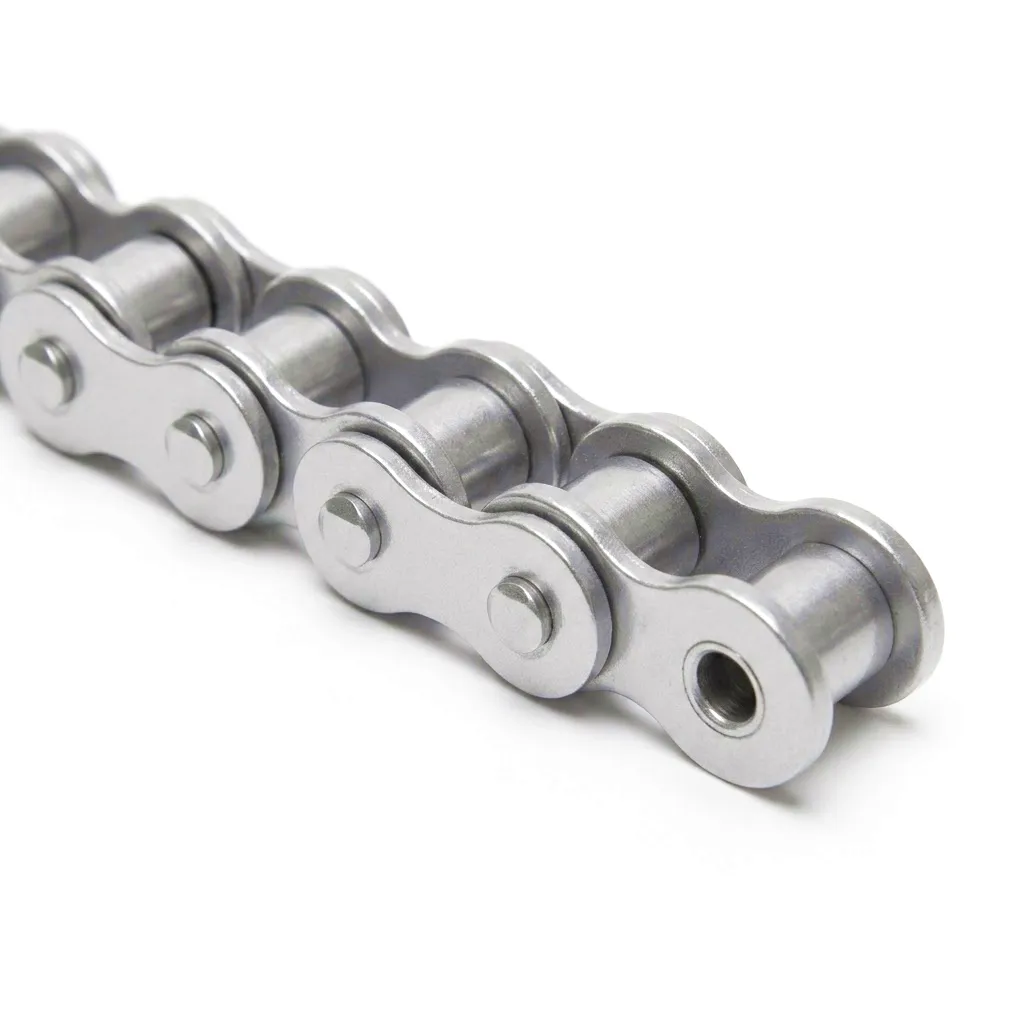
Roller chain remains the backbone of mechanical power transmission in British industry — from food processing lines in the Midlands to heavy agricultural equipment in Yorkshire and automated conveyor systems in the logistics corridors around Birmingham and Sheffield. Yet even the most robust roller chain is subject to one unavoidable enemy: elongation through wear. Understanding how to accurately measure that wear, and knowing precisely when a chain has crossed its service threshold, separates reactive maintenance — the kind that causes unplanned shutdowns — from intelligent, cost-controlled asset management.
In this guide, Ever Power’s engineering team walks through the science behind roller chain wear, the measurement tools and methods used by qualified engineers, the internationally recognised tolerance limits, and the practical decision criteria that help you schedule replacement before catastrophic failure occurs. Whether you operate a single production line or manage a fleet of industrial machines, these principles will help you maximise chain life while protecting your equipment investment.
Why Roller Chain Wear Is Inevitable — and How It Progresses
Pin and Bushing Articulation
Every time a roller chain link engages or disengages a sprocket tooth, the pin rotates within the bushing under load. This micro-movement, repeated millions of times over a chain’s life, gradually removes metal from both the pin surface and the bushing bore. The result is a measurable increase in pitch length — commonly called elongation — which is the primary wear indicator engineers track in scheduled maintenance programmes. Even under optimal lubrication conditions, this wear is progressive and cannot be eliminated, only managed and monitored.
Roller Surface Fatigue
Alongside pin-bushing wear, the outer rollers themselves experience repeated impact loading each time they engage the sprocket tooth. Over time, this contact fatigue leads to surface pitting, spalling, or in severe cases, roller cracking. While roller damage does not contribute significantly to pitch elongation, it dramatically increases vibration levels, load shock on adjacent links, and sprocket wear rates. Monitoring roller condition during routine inspections is therefore a complementary check that provides early warning of an accelerating wear cycle that pitch measurement alone would not catch in time.
Environmental Acceleration Factors
In UK industrial environments — particularly the wet and chemically demanding conditions found in food processing plants in the North West, coastal agricultural machinery in East Anglia, or chemical facilities along the Humber Estuary — environmental factors can accelerate the natural wear rate by two to five times compared with clean, well-lubricated indoor installations. Moisture ingress promotes corrosion on pin surfaces, effectively increasing roughness and abrasive wear. Airborne particulate contamination such as grain dust, coal particles, or cutting fluid mist acts as an abrasive compound between bearing surfaces. Any wear measurement programme must account for these operating environment multipliers when setting inspection intervals.
How to Measure Roller Chain Wear: Tools, Methods and Procedure
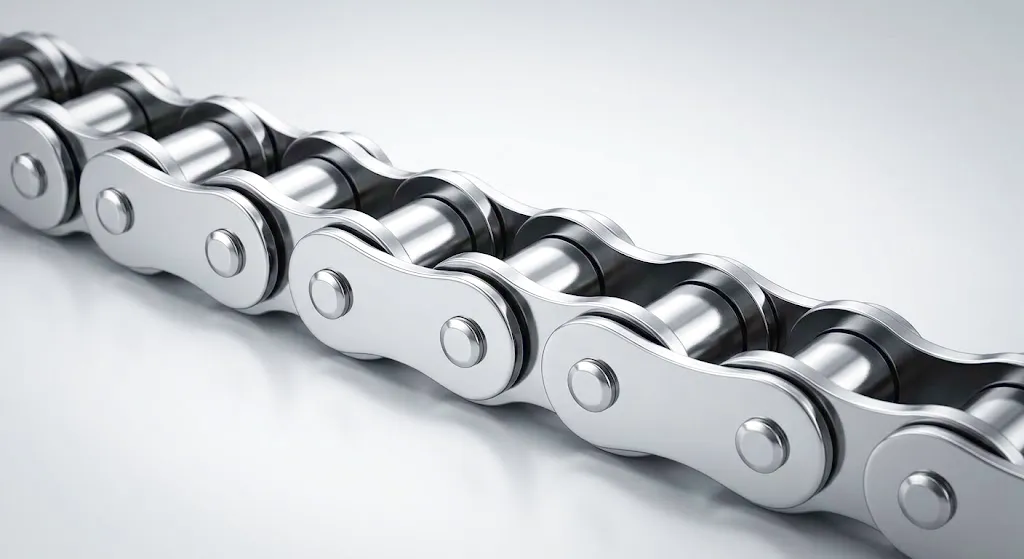
Accurate wear measurement is not guesswork — it follows a defined engineering procedure using calibrated instruments. The single most reliable indicator of roller chain wear is pitch elongation: the increase in total chain length relative to its nominal length. Here is the step-by-step approach used by qualified maintenance engineers in UK industrial facilities.
Step 01 — Preparation
Before any measurement takes place, ensure the chain drive is de-energised and locked out in compliance with UK PSSR 2000 and relevant machinery directive requirements. Clean a representative 600 mm or 1-metre section of the chain using a dry brush or compressed air — do not use solvent that could temporarily swell lubricant residues and mask surface wear patterns. Allow the chain to reach ambient temperature if it has been running, since thermal expansion can add a measurable false elongation to readings taken immediately after shutdown. For drives operating below 10°C, standard measurements apply without correction; above 40°C ambient, allow at least 15 minutes of cooling time.
Step 02 — Applying Tension
Accurate pitch measurement requires the chain to be under a controlled reference tension. A slack chain will give a falsely low elongation reading. For chains fitted to a drive, take the measurement on the tight side of the span, as close to the driving sprocket as safely accessible. For removed chains, apply a reference tension using a spring balance — the recommended pre-load is approximately 2% of the chain’s rated minimum breaking load for measurement purposes. Most roller chain manufacturers, including Ever Power, publish this reference load in their technical data sheets. Without this pre-tension step, readings can vary by up to 0.3% between measurements, making trend tracking unreliable.
Step 03 — Taking the Measurement
Span a known number of pitches — typically 12 to 24 links — using a vernier calliper or, for installed chains, a dedicated roller chain wear gauge. Measure from the centre of one outer pin to the centre of the outer pin at the opposite end of your selected span. Divide the total measured length by the number of pitches to obtain the actual pitch. Compare this against the nominal pitch value from the chain’s BS/ISO designation. Alternatively, use a calibrated roller chain wear indicator tool designed for the specific chain pitch — these devices give a pass/fail reading directly and are widely used by UK maintenance teams for rapid scheduled inspections on high-volume production lines where speed of assessment is critical.
Step 04 — Multiple-Section Sampling
Wear distribution along a roller chain is rarely uniform. High-load sections that engage driving sprocket teeth experience greater wear than sections that travel on the return side. Joints repaired with connecting links, or sections that passed through a contamination zone, may show localised higher elongation. A meaningful inspection therefore requires measurements at a minimum of three evenly spaced sections around the chain circuit. Record all readings individually — the highest single reading governs your replacement decision, not the average. If you observe a spread of more than 0.15% between the lowest and highest section readings, investigate the cause (intermittent contamination, partial lubrication failure, or a misaligned sprocket) before simply fitting a new chain, or you risk repeating the same accelerated wear pattern.
Produto em destaque
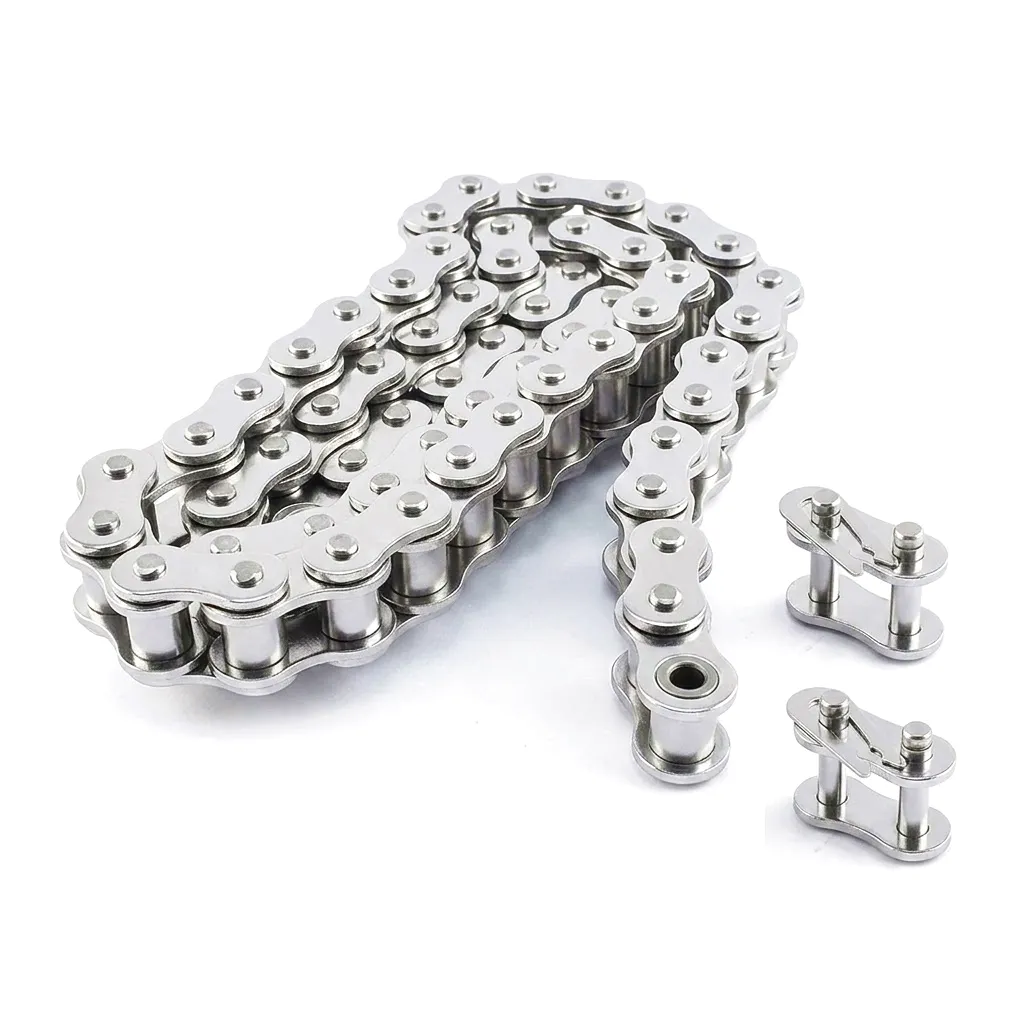
Corrente de rolos com topo de borracha 24B-G1
Engineered for conveyor and food-processing applications where hygienic running surfaces and low-elongation wear characteristics are essential. Ideal for Birmingham and Midlands production facilities requiring BS-compliant chain with superior wear resistance.
Roller Chain Wear Tolerance Limits and Replacement Thresholds — Technical Reference Table
The table below consolidates the recognised wear limits for standard BS/ISO roller chains across the pitch range most commonly used in UK industrial and agricultural machinery. These limits are based on the widely adopted 3% maximum elongation threshold for general drives, with tighter limits applied to precision indexing, high-speed, or safety-critical applications. Use this table as your primary reference when reviewing measurement data from your inspection records.
Reference: BS/ISO 606:2015 — Chain Drives — Short-pitch transmission precision roller and bush chains, sprockets and associated connecting links. Precision/safety values based on OEM and Ever Power engineering recommendations for critical drive applications.
Beyond the Numbers: Visual and Audible Wear Indicators You Cannot Ignore
Pitch elongation measurement gives you a precise numerical answer, but an experienced engineer also uses their eyes and ears during every inspection. Several visual and audible symptoms indicate wear conditions that a single elongation reading might not capture fully — particularly in the early stages of accelerated deterioration that can develop between scheduled measurement intervals.
👁️
Catenary Sag
Excessive sag on the slack strand is one of the most visible early wear indicators. As chain elongation increases beyond the take-up range of the tensioner, the slack side visibly droops. In UK conveyor installations, an unsupported slack span should not sag by more than 2% of its length — anything more suggests the chain has grown beyond the tensioner’s compensation range and requires immediate measurement and likely replacement.
🔊
Polygonal Action Noise
A worn roller chain on a worn sprocket produces a distinctive rhythmic clatter or “chordal” noise caused by the chain riding up the tooth flank rather than seating cleanly. This sound worsens at higher speeds and is a reliable indicator that the chain pitch has grown so far out of register with the sprocket tooth spacing that impact loading is occurring at each engagement point — significantly increasing fatigue stress on both the chain and the sprocket assembly.
🪫
Link Plate Discolouration
Dark brown or blue-black discolouration on the outer link plates indicates localised overheating from inadequate lubrication or excessive friction — both of which are closely correlated with accelerated wear rates. If you observe heat discolouration on any section of a roller chain, treat that as a high-urgency finding and combine it with a full elongation survey and a lubrication system check before returning the drive to service.
🔗
Stiff or Seized Links
Links that do not pivot freely when the chain is lifted off the sprocket indicate corrosion, contamination, or deformation of the pin/bushing interface. Stiff links significantly reduce the chain’s ability to distribute load evenly and cause concentrated stress at the adjacent joints. In corrosive environments typical of food production or coastal agricultural operations in East Anglia, stiff links are often an earlier failure indicator than measurable pitch elongation and should trigger immediate replacement evaluation.
When to Replace Roller Chain: The Decision Framework
Knowing when to replace a roller chain is as important as knowing how to measure it. Replacing too early wastes budget; replacing too late risks catastrophic failure, unplanned downtime, and in the worst cases, sprocket damage that turns a simple chain replacement into an expensive drivetrain rebuild. The following decision framework, applied systematically, helps maintenance teams make confident, cost-justified calls.
Replace Immediately
- Measured elongation at or beyond 3% (general drives)
- Any cracked, bent, or fractured link plate observed
- Pin protrusion beyond side plate face
- Three or more seized links in a single 20-link section
- Visible corrosion pitting through to base metal on pins or bushings
- Safety-critical application exceeding 1.5% elongation
Plan Replacement Within 4 Weeks
- Elongation between 2.0% and 2.9% on general drives
- Increasing frequency of chain derailment or skip events
- Persistent polygonal action noise despite lubrication
- Heat discolouration on more than 5% of link plates
- Tension adjuster at or near full extension
- Visible wear hooking on sprocket tooth tips
Continue — Monitor at Shorter Intervals
- Elongation below 1.5%, no visual defects
- Lubrication condition satisfactory
- Drive running quietly without vibration
- Tension within mid-range of adjustment
- Reduce interval from monthly to bi-weekly if elongation rate exceeds 0.5% per month
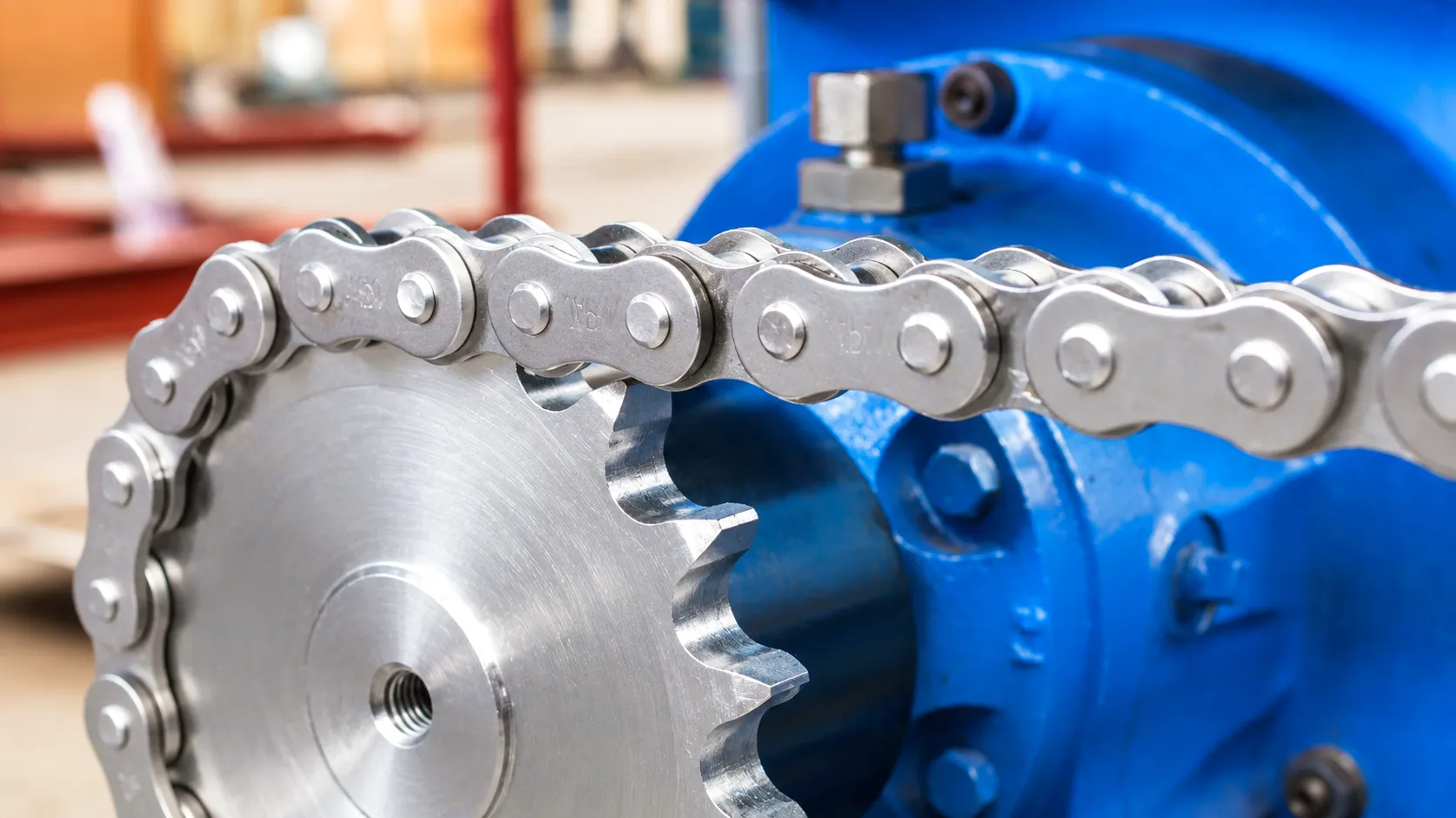 A critical consideration for UK operations: when a roller chain reaches or exceeds its replacement threshold, the mating sprockets should also be evaluated. A badly worn sprocket fitted with a new roller chain will wear the new chain two to three times faster than nominal, because the hooked tooth profiles on the sprocket no longer match the roller contact geometry. The UK Health and Safety Executive (HSE) guidance on machinery maintenance recommends a paired replacement approach for drives where the sprocket has been in service for the full life of two or more chain sets.
Industrial Application Scenarios: Where Wear Measurement Matters Most
The wear measurement principles covered above apply universally, but the inspection intervals, wear limits, and decision thresholds shift significantly depending on the operating environment and the consequences of an unexpected chain failure. These scenarios reflect real conditions encountered across UK industry sectors.
Produto em destaque
Corrente de rolos com topo de borracha 20B-G1
Engineered for food processing, agricultural, and general industrial conveying applications where slip resistance and moisture tolerance are required. Carries the performance characteristics of BS-standard 20B pitch with a rubber top attachment suited to UK food-grade and agricultural facilities.
Excelência em Manufatura
Ever Power: Precision Manufacturing and Custom Roller Chain Solutions for UK Industry
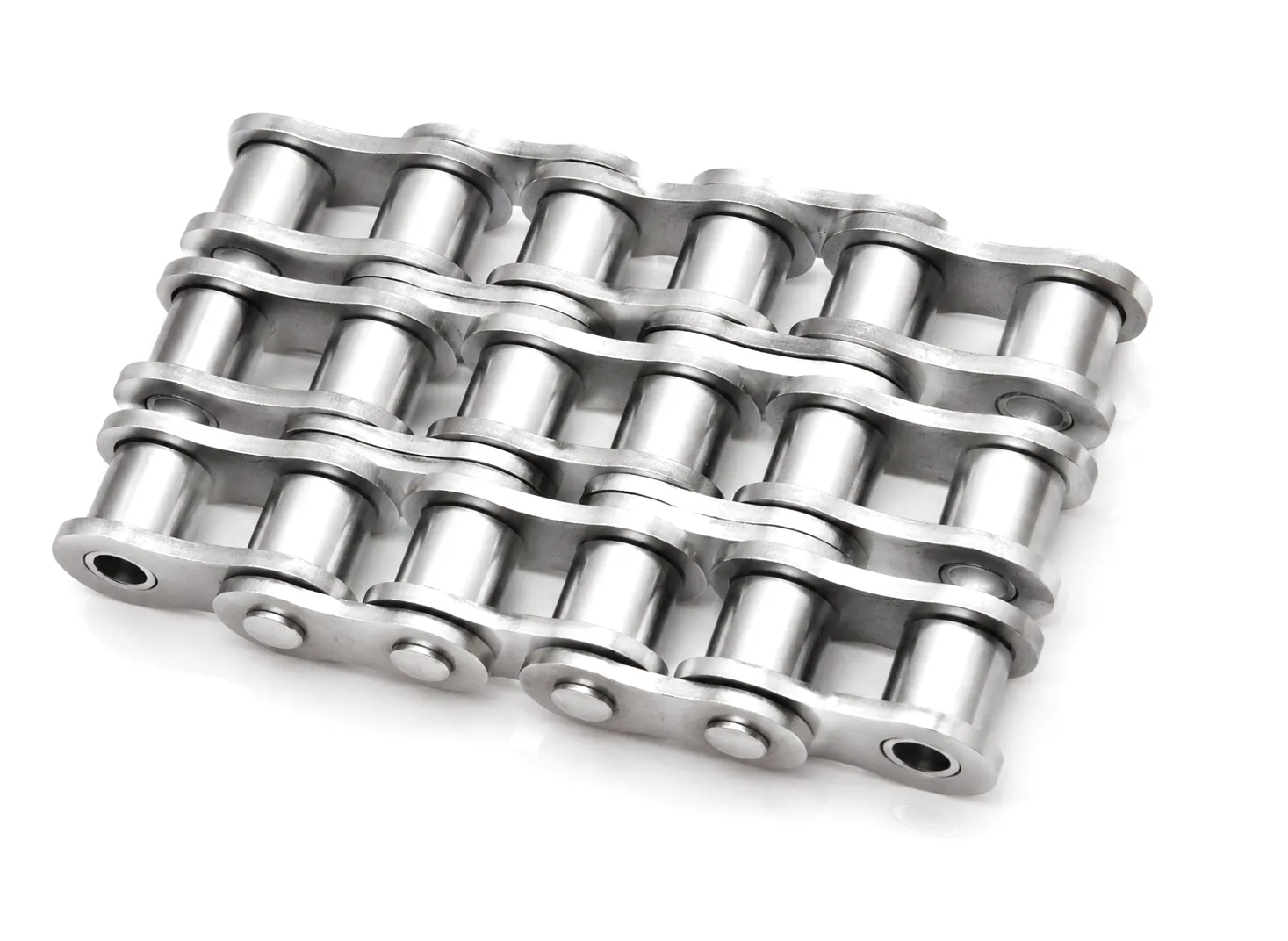
Ever Power operates precision roller chain manufacturing facilities equipped with fully automated pin and bushing grinding centres, high-load fatigue testing rigs, and ISO 9001-certified quality management systems. Our engineering team has worked with procurement managers, OEM design teams, and maintenance contractors across the UK — from automotive Tier 1 suppliers in the West Midlands to packaging machinery builders in the Thames Valley — to specify and supply roller chains that deliver measurably longer service life than generic catalogue alternatives.
Our customisation capabilities extend well beyond pitch and strand count. Ever Power regularly supplies chains with extended pin lengths for attachment fitting, custom corrosion-resistant coatings including zinc, nickel, and black oxide, non-standard inner or outer link plate configurations for guide engagement, and modified roller diameters to suit bespoke sprocket profiles. Every custom batch is subjected to a minimum tensile proof load of 110% of catalogue breaking load and dimensional verification against the customer’s approved drawing before dispatch.
For UK buyers, Ever Power maintains bonded stock of the most common BS-series chains — 06B through 24B in single, duplex, and triplex configurations — with a standard lead time of 3 to 5 working days on stocked items and 15 to 25 working days on custom-specified product. Our export logistics team supports DDP delivery to UK addresses, simplifying customs clearance and duty management for procurement departments across England, Scotland, and Wales.
240+
Export Domain Markets Served
ISO 9001
Sistema de Gestão da Qualidade Certificado
3–5
Day Lead Time (Stocked Items)
BS/ISO
Full Compliance Across All Standard Chains
História de sucesso do cliente
Sheffield Fabrication Facility Cuts Unplanned Downtime by 68% with Structured Wear Monitoring
Location: Sheffield, South Yorkshire
Sector: Heavy Steel Fabrication and Section Rolling
Chain Type: 16B-1 BS Roller Chain, Multiple Drive Points
Challenge: Four unplanned chain failures in 14 months causing average 18-hour per incident shutdowns
A Sheffield-based steel section manufacturer was experiencing repeated unplanned shutdowns on their 80-metre roller conveyor line that transferred hot-rolled billets between the rolling mill and the cooling bank. The facility’s maintenance team had been operating on a time-based replacement schedule — swapping all conveyor chains every 18 months regardless of condition — but was still suffering four chain breaks in a 14-month window. Each incident required the entire conveyor to be shut down, cooled, and safely accessed before a repair crew could fit replacement links, averaging 18 hours of lost production per event.
Working with Ever Power’s technical sales team, the facility transitioned to a condition-based maintenance model. Ever Power supplied a full set of 16B-1 chains manufactured to a tighter tolerance specification — with pin diameter tolerance held to ±0.008 mm rather than the BS standard ±0.015 mm — along with a calibrated wear gauge kit and a documented measurement protocol for the facility’s maintenance team. Elongation readings were recorded at eight points around the conveyor circuit at every planned weekly maintenance window. A rolling trend chart was maintained for each measurement point, and a 2.5% elongation trigger (tighter than the general 3% limit, appropriate for the thermal environment) was set as the mandatory replacement threshold.
Within the first six months, the maintenance team identified that two specific sections of the circuit — the wrap zones on the drive sprockets at the feed end — were wearing at nearly twice the rate of the return sections. This indicated a sprocket alignment issue that had been present before the monitoring programme began but had never been identified under the old time-based system. Correcting the sprocket alignment and replacing the highest-elongation sections reduced the wear rate across those zones by 40%. Over the following twelve-month period, the facility recorded zero unplanned roller chain failures on the billet conveyor — a complete reversal of the previous failure pattern.
What the Team Said
“We went from guessing when chains would fail to knowing exactly where we stood every week. The tight-tolerance 16B chain Ever Power supplied showed noticeably slower elongation rates than the generic stock we’d been using. After twelve months on the new protocol, the conveyor hasn’t stopped once without us planning it.”
— Maintenance Manager, Steel Section Rolling, Sheffield
“The wear gauge kit Ever Power provided was simple enough that our junior technicians could perform the measurements independently within a single training session. The measurement sheets they recommended gave us the trend data we needed to justify the sprocket alignment project to senior management — it paid for itself within the first avoided breakdown.”
— Engineering Supervisor, Billet Conveyor Operations, Sheffield
“We asked Ever Power to quote for a non-standard inner link plate width to clear a new side-guide rail we’d installed. They came back with a technical drawing and a sample batch within 18 days. The customisation quality was exactly to spec, and delivery to our Sheffield site was straightforward. We’ve since standardised on Ever Power for all our critical conveyor chains.”
— Procurement Lead, Heavy Fabrication Facility, South Yorkshire
Perguntas frequentes
Common Questions from UK Engineers and Procurement Teams
Ever Power · Fornecimento Industrial B2B
Precisa de correntes de rolos em conformidade com a norma BS para a sua operação no Reino Unido?
Envie a especificação da sua corrente, a quantidade e o endereço de entrega para receber um preço competitivo com entrega incluída da equipe de exportação da Ever Power — geralmente dentro de um dia útil.
editado por gzl