Descrição
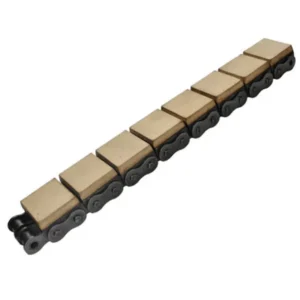
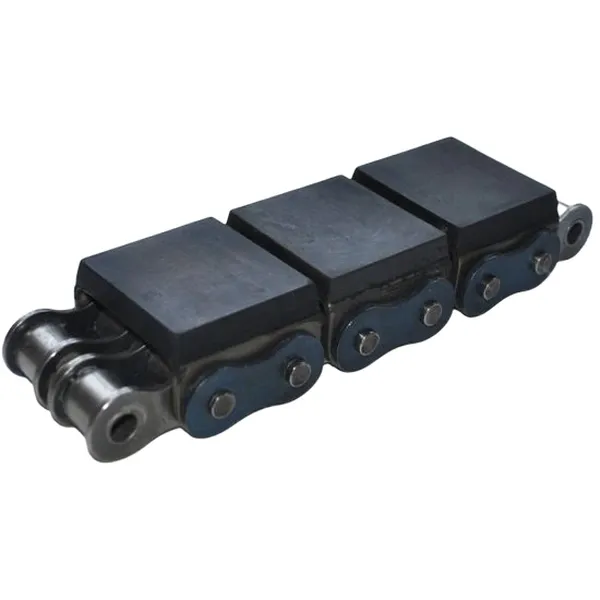
 A corrente de rolos com revestimento de borracha 12B-G2 é uma corrente transportadora de serviço médio com almofadas de borracha vulcanizada aderidas à superfície externa de cada elo. Fabricada em aço liga tratado termicamente, de acordo com as normas dimensionais ISO 606 / DIN 8187, ela combina a confiabilidade de uma corrente de rolos de precisão com a aderência macia e antiderrapante exigida por peças delicadas. É a escolha padrão para transportadores de madeira, linhas de processamento de vidro, fornos de cerâmica, prensas de compensado e produção de painéis compostos — qualquer ambiente onde uma corrente de metal sem revestimento arranharia, marcaria ou vibraria o produto transportado.
Duas opções de composto de borracha — NBR (nitrila, resistente a óleo) e NR (borracha natural) — estão disponíveis nas durezas Shore A 65–75 (manuseio padrão) ou Shore A 75–85 (carga/velocidade mais elevadas). Ambas são vulcanizadas diretamente no elo da corrente durante a fabricação, e não coladas com adesivo, para garantir a retenção permanente da almofada durante toda a vida útil da corrente.
Dimensões da corrente
Dimensões de fixação: A = 39,10 mm · B = 36,00 mm · Espessura da placa T = 1,85 mm · Tolerâncias conforme ISO 606 / DIN 8187
Especificações completas
Principais características e benefícios
|
🔇
Redução de ruído e vibração As almofadas de borracha vulcanizada absorvem o impacto e amortecem a vibração em todos os pontos de contato com o produto. São consideravelmente mais silenciosas do que as almofadas sem revestimento. correntes de metal — essencial para galpões fechados de marcenaria e instalações de processamento de vidro onde se aplicam os limites de ruído da OSHA. |
🛡️
Proteção de Superfícies e Peças As almofadas de borracha evitam o contato metal-produto, eliminando arranhões e marcas de pressão em painéis de madeira, chapas de vidro e azulejos cerâmicos com acabamento. Essenciais em processos onde a qualidade da superfície é um indicador-chave de desempenho (KPI) relevante. |
|
💪
Alta resistência à tração — 57,8 kN A construção robusta dos rolos e os componentes em aço-liga tratado termicamente proporcionam uma carga de ruptura mínima de 57,8 kN (13.136 lbf). Projetado para transporte contínuo sob carga sustentada, e não apenas para desempenho máximo. |
⚙️
Fabricação de Precisão Fabricada segundo as tolerâncias ISO 606, com pinos e placas submetidos a jateamento para maior resistência à fadiga. As folgas dos roletes e pinos são mantidas dentro de limites dimensionais rigorosos para garantir um engate suave e com baixa vibração da roda dentada durante toda a vida útil da corrente. |
|
🧪
Opções de composto de borracha dupla NBR O composto resiste ao contato com óleo, combustível e fluido hidráulico — ideal para ambientes de esteiras transportadoras lubrificadas. NR O composto oferece maior elasticidade e melhor desempenho em baixas temperaturas. Ambos estão disponíveis em dois graus de dureza para atender às suas necessidades de carga e perfil de velocidade. |
🔩
Compatibilidade direta com a roda dentada Projetada para ser usada com pinhões 12B padrão ou similares. Rodas dentadas de borracha 12B (Os dentes com revestimento de borracha reduzem o ruído de engate em mais 3 a 5 dB). Rodas dentadas disponíveis com furo piloto e com furo acabado. |
Onde é usado
Indústrias Primárias e Aplicações
🪟 Fabricação de Vidro
🏺 Processamento de Cerâmica
🪵 Prensas de madeira compensada
📦 Linhas de Embalagem
🍶 Alimentos e Bebidas
🚗 Montagem Automotiva

Guia de Instalação
Limpe as engrenagens e a corrente.
Use um solvente suave para limpar todas as faces da roda dentada e as superfícies dos elos da corrente. Seque completamente antes da instalação — a contaminação por óleo ou graxa compromete a adesão da almofada de borracha e acelera a delaminação com o tempo.
Verificar alinhamento da roda dentada
Use uma régua ou ferramenta de alinhamento a laser para confirmar se ambas as rodas dentadas estão coplanares. O desalinhamento angular e paralelo são as principais causas de rachaduras prematuras nas pastilhas de borracha e desgaste acelerado das placas laterais.
Encaminhar e instalar a corrente
Comece a passar a corrente pela engrenagem menor, seguindo em direção à engrenagem motora. Mantenha a corrente esticada durante todo o processo — não force os elos sobre os dentes. Se sentir resistência, verifique se o passo da corrente corresponde à especificação da engrenagem (12B = 19,050 mm).
Ajuste a tensão correta
Ajuste a folga da corrente Target 2–3% em um vão livre usando um tensionador de corrente. O tensionamento excessivo acelera o desgaste do pino e da bucha; o tensionamento insuficiente causa deslizamento sob carga e aumenta o impacto nas almofadas de borracha.
Lubrifique corretamente.
Aplique um óleo de cadeia leve no interface pino-bucha apenas. Fazer não Lubrifique as superfícies das almofadas de borracha — óleos e graxas degradam os compostos de borracha e reduzem a aderência ao produto transportado.
Recomendação de intervalo de manutenção
Inspecione as almofadas de borracha a cada 500 horas de funcionamento Em caso de rachaduras, lascas ou delaminação, substitua a seção da corrente quando a dureza da borracha cair abaixo de Shore A 55 (envelhecimento por óleo/calor) ou a perda de altura da pastilha exceder 2 mm. Guarde as seções desgastadas para avaliação da garantia do fornecedor.
Engrenagens correspondentes
Fornecemos correspondência Rodas dentadas 12B com revestimento de borracha Projetada para encaixar perfeitamente na corrente 12B-G2. O perfil dos dentes da roda dentada segue a geometria da série B da norma ISO 606; inserções de borracha entre os dentes absorvem o impacto do engate e reduzem o ruído de engrenamento em mais 3 a 5 dB em comparação com rodas dentadas metálicas padrão.
Solicite um orçamento
Solicite preços e amostras da corrente 12B-G2.
Para receber um orçamento preciso, inclua as seguintes informações em sua solicitação:
Composto de borracha (NBR / NR)
Grau de dureza (65–75 / 75–85)
Material (aço liga / SS316)
Tratamento de superfície
Quantidade necessária
fabricantes-de-correntes-de-rolos.com • Certificação ISO 9001:2015 • Todas as dúvidas técnicas serão respondidas em até 1 dia útil

editado por gzl