The Working Principle of Roller Chain — and Why Speed Changes Everything
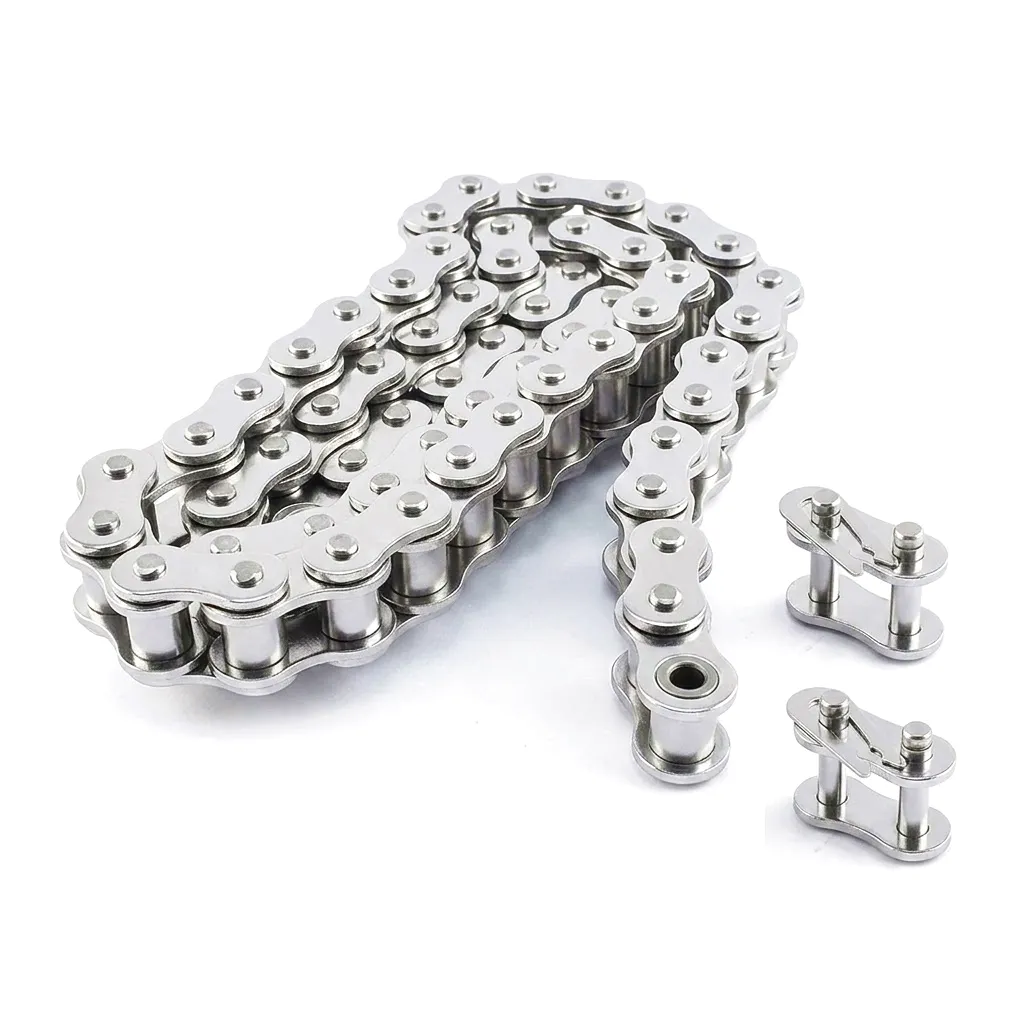
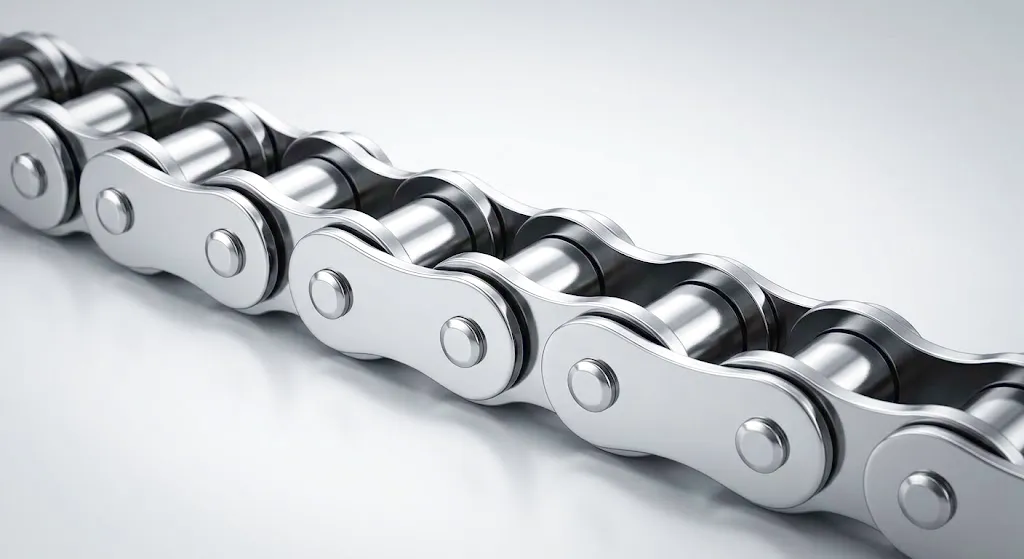
A roller chain transmits power through a series of rigid links articulating around two or more sprockets. Each link assembly comprises inner plates, outer plates, pins, bushings, and rollers — the roller being the element that contacts and rolls along the sprocket tooth flanks, transforming sliding friction into rolling contact. At slow to moderate speeds this mechanism is elegantly simple: the chain enters each sprocket tooth in orderly sequence, the roller seats smoothly in the tooth gullet, force is transferred, and the link exits at the other side. The system is predictable, loads are distributed evenly across multiple teeth simultaneously, and wear rates are low.
Speed disrupts this orderly picture in several ways that compound one another. As chain velocity rises, the centrifugal force acting on each link increases as the square of speed — double the speed, quadruple the centrifugal load. This radial force effectively reduces the tension that would otherwise hold the chain taut against the sprocket. Simultaneously, the chord effect — the geometric reality that a polygon, not a circle, is formed by a chain seated on a sprocket — generates a pulsating velocity even when the sprocket turns at constant angular velocity. This polygonal action is always present but becomes severe at high speeds, generating the primary source of speed-induced vibration in roller chain drives. At critical velocity thresholds, resonance between the chain’s natural frequency and these forced excitations causes amplitude to peak sharply, transforming manageable oscillation into destructive vibration that strips lubricant films, hammers roller seating surfaces, and accelerates fatigue crack initiation.
Key Physics Fact
Centrifugal load on a chain link scales with v². At 3 m/s, centrifugal effects are 9× greater than at 1 m/s.
Polygonal Action
Even with constant sprocket RPM, the chain oscillates in velocity due to the chord-arc difference at each pitch engagement — the root cause of high-speed vibration.
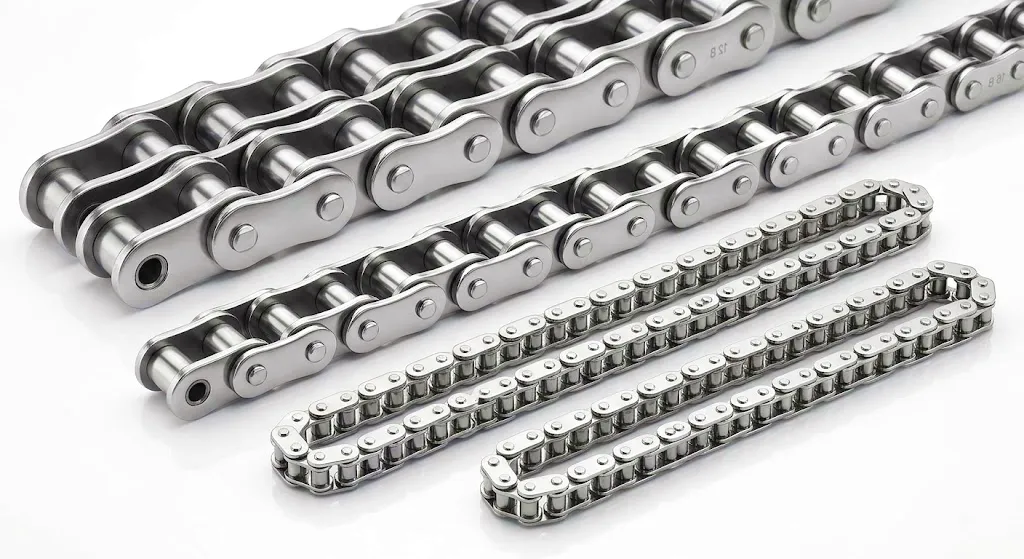
Speed-Induced Vibration: Three Mechanisms That Shorten Service Life
1. Impact Loading at Tooth Engagement
Each time a roller seats in a sprocket tooth gullet, there is a brief but violent impact. At low speeds this is absorbed within the chain’s elastic deformation capacity. At high speeds, the energy of each impact rises sharply — it scales with the square of the engagement velocity — and the roller rebounds slightly before re-seating. This micro-hammering action degrades the hardened surface of both the roller and the sprocket tooth, accelerates pin-bushing wear, and introduces tensile stress pulses into the link plates that are the seeds of fatigue cracks. For a drive running at 1,500 RPM with a 17-tooth sprocket, engagement events occur over 400 times per second. Even if each individual impact is small in absolute energy terms, the cumulative fatigue damage accumulated over millions of cycles is enormous. Engineers specifying drives for high-speed applications in sectors like automated packaging in the East Midlands or fast-cycling conveyor lines in West Yorkshire must account for this carefully by selecting chains with a reduced pitch and greater tooth count, distributing load over more engagement events per revolution.
2. Transverse Vibration and Strand Flutter
The unsupported span of chain between sprockets — the slack strand and the tight strand — behaves mechanically like a tensioned beam. It has natural frequencies determined by its mass per unit length, span length, and tension. As speed increases and centrifugal force reduces effective tension, these natural frequencies shift. When the forced frequency from polygonal action or from tooth engagement coincides with a strand natural frequency, transverse resonance occurs. The chain literally whips sideways, sometimes violently enough to contact guard plates, generate noise, or throw lubricant off the chain surfaces, accelerating wear. Strand flutter is often the first visible symptom that a chain drive is operating outside its safe speed envelope. UK maintenance engineers who are familiar with the high-speed transfer conveyors used in automotive body shops near Coventry or the rapid-cycling bottle lines in Humber-area food processing plants will recognise this pattern. The remediation — typically reducing centre distance, increasing strand pre-tension, or introducing guide rails — is straightforward once the root cause is understood, but misidentifying it as simple chain wear leads to expensive and ineffective part replacement cycles.
3. Lubrication Breakdown Under High-Speed Conditions
Effective lubrication is the difference between a roller chain that lasts years and one that fails in months. At low to moderate speeds, oil applied at intervals can penetrate pin-bushing clearances through capillary action, maintaining a separating film that prevents metal-to-metal contact. At high speeds, centrifugal forces fling oil outward before it can migrate into the narrow clearances where wear is occurring. The thin elastohydrodynamic film that forms between the pin and bushing during articulation becomes intermittent and eventually negligible. Metal surfaces then experience adhesive wear at every articulation, generating abrasive debris that further accelerates deterioration. Temperature in the contact zone rises sharply, softening case-hardened surfaces and reducing fatigue resistance. Any drive where roller chain speed exceeds approximately 5 m/s should be examined critically for lubrication method — drip feed systems that are adequate at 2 m/s become wholly insufficient, and bath or forced-circulation lubrication must be considered. This is a lesson frequently reinforced in the high-speed bottling and canning operations found throughout the Greater Manchester food manufacturing corridor.
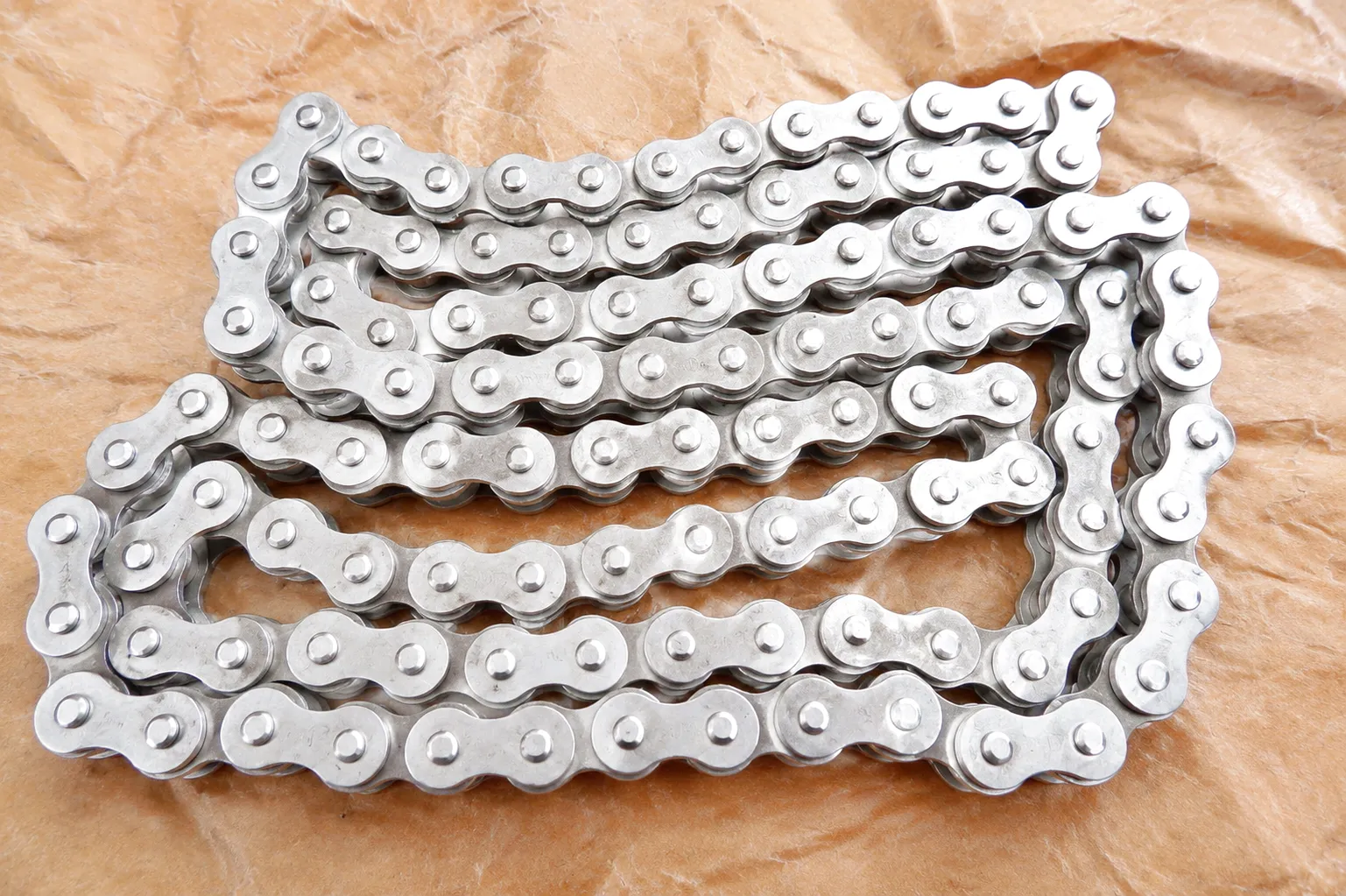
Länkplattor
Medium-carbon & alloy steel (40Cr, 42CrMo). Through-hardened. Tensile strength 800–1,100 MPa.
Nålar
Alloy steel. Case-hardened 58–62 HRC surface. Precision-ground diameter. Fatigue-rated.
Bussningar
Carburised alloy steel. 0.4–0.8 mm case depth. Tight bore tolerances for reliable lubrication film.
Rullar
Case-hardened steel or stainless. Precision-ground OD. Reduces tooth impact and distributes load evenly.
Core Technical Advantages of Ever Power Roller Chain
✓ Extended Fatigue Life
Shot-peening of link plates introduces compressive residual stress at the surface, which directly opposes the tensile stresses imposed by bending loads. This treatment, standard across Ever Power’s medium and heavy series roller chain, has been shown in controlled laboratory testing to extend plate fatigue life by 30–50% compared with unpeened equivalents at the same nominal load.
✓ Pre-Loaded Lubrication
Pin-bushing assemblies are pre-lubricated during manufacture under controlled pressure conditions that force grease or oil into the internal clearance volumes. This provides immediate lubrication from first startup, eliminating the dry-running period that causes disproportionate wear in the first hours of operation — a particularly important feature for replacement chains installed during emergency maintenance shutdowns where run-in procedures cannot be followed.
✓ Tight Pitch Tolerance
Pitch accuracy — the variation in distance between successive pin centres — directly affects how evenly load distributes across sprocket teeth and how smoothly the chain runs at speed. Ever Power holds pitch tolerance to within ISO 606 class A requirements (±0.08% of nominal pitch for most series), reducing the load concentration on individual links that would otherwise initiate fatigue crack propagation well below the chain’s rated tensile capacity.
✓ O-Ring and X-Ring Sealed Variants
For demanding outdoor or high-contamination environments — agricultural machinery operating across the wet fields of the Welsh Borders, or surface mining equipment in Northern England — sealed chain variants retain lubricant within the pin-bushing interface while excluding abrasive particles. This effectively decouples external contamination from internal wear rate, dramatically extending service intervals in applications where frequent re-lubrication is impractical.
✓ Corrosion-Resistant Finishes
Standard carbon-steel chains benefit from zinc-nickel plating or black oxide treatment for general corrosion protection. Marine or coastal industry applications — increasingly relevant for UK offshore wind maintenance supply chains operating out of Hull, Great Yarmouth, and Aberdeen — can be served with full stainless-steel chain builds or zinc-flake coated carbon-steel variants that maintain structural integrity in salt-spray environments without sacrificing the fatigue properties that purely passivated stainless sometimes compromises.
Featured High-Strength Roller Chain Products
Heavy-Duty Series
Höghållfast rullkedja 120HSP-00 för Caterpillar
Engineered specifically to meet the demands of Caterpillar heavy equipment applications. This chain delivers exceptional tensile strength and fatigue resistance under high cyclic loads, making it ideal for construction, mining, and large-scale earthmoving machinery. The HSP designation indicates heavy series construction with precision pin and bushing geometry for extended service life even under high-speed, high-torque operating conditions common in UK quarrying and infrastructure projects.
OEM Replacement Series
Höghållfast rullkedja C100HSP-00 för Caterpillar
The C100HSP-00 is a precision OEM-replacement roller chain designed around Caterpillar’s dimensional and performance specifications. With carbon-content-optimised link plate steel, carburised and case-hardened pins, and a pre-loaded lubrication system, this chain is built for the same load cycles and speed ranges as the original equipment — but with Ever Power’s supply chain flexibility and lead times that suit UK construction fleet managers who need replacement parts without the delays that sometimes affect factory direct OEM channels.
Roller Chain Technical & Performance Parameters
| Parameter | Standard Series | Heavy (HSP) Series | Stainless Series |
|---|---|---|---|
| Tonhöjdsområde | 6.35 – 76.2 mm | 9.525 – 76.2 mm | 6.35 – 50.8 mm |
| Min. Tensile Strength | 14 – 320 kN | 22 – 400 kN | 8 – 160 kN |
| Max. Allowable Speed | Up to 18 m/s (lubricated) | Up to 12 m/s | Up to 10 m/s |
| Pin Surface Hardness | 56–62 HRC | 58–63 HRC | 30–40 HRC (martensitic) |
| Link Plate Material | C45, 40Cr steel | 42CrMo, 20CrMnTi | SS 304 / SS 316 |
| Pitch Tolerance | ISO 606 Class A | ISO 606 Class A | ISO 606 Class A |
| Operating Temp. Range | -10°C to +150°C | -10°C to +150°C | -40°C to +200°C |
| Lubrication Type | Drip / bath / spray | Forced circulation / sealed | Sealed / dry-lube |
| Max Elongation Before Replace | 2% of 30-link span | 2% of 30-link span | 1.5% of 30-link span |
Industrial Application Scenarios: Where Roller Chain Speed Management Matters Most
🏭 Steel and Metals Processing — Sheffield & Rotherham
Rolling mills, bar processing lines, and coil handling systems in the South Yorkshire steel belt operate heavy-duty conveyors where roller chain is exposed to both high loads and significant heat. The challenge here is not typically maximum speed but rather the combination of moderate speed with shock loading as billets or coils enter the line. High-strength roller chain with heavy-series link plates and sealed lubrication is the specification of choice, combined with regular sonic tension monitoring to catch fatigue elongation before it causes sprocket tooth jumping.
🚗 Automotive Assembly — Coventry, Birmingham & Sunderland
Body-in-white transfer lines and overhead power-and-free conveyors in UK automotive plants run at precisely controlled speeds — but those speeds are often at the upper limit of standard roller chain ratings. Vibration is the primary concern because any oscillation in the chain path translates directly into positional error for robotic welding and assembly stations. Chains with reduced pitch, extended tooth count on small-diameter sprockets, and automatic tensioners are standard specifications. Drive cycle data from such plants reveals that misalignment contributes almost as much to vibration as speed does, which is why Ever Power supplies matched-width sprocket and chain sets with alignment tooling.
🌿 Agricultural Machinery — East Midlands & East Anglia
Combine harvesters, round balers, and grain dryers rely on roller chain drives to transfer power from PTO or dedicated engines to threshing drums, elevator chains, and augers. These applications are characterised by highly variable loading — from near-zero at headland turns to full rated torque during crop ingestion — which creates alternating stress cycles at frequencies determined by field speed and crop density. Agricultural roller chain must simultaneously handle shock loads and sustain fatigue resistance over long seasonal cycles. O-ring sealed chains that can survive without re-lubrication throughout a harvest season are frequently specified by machinery OEMs across Lincolnshire and Norfolk.
🧪 Food & Beverage Processing — Greater Manchester & Yorkshire
Bottling lines, pouch-filling systems, and packaging conveyors run continuously at high speed with very tight positional tolerances. Stainless-steel roller chain is the default specification for wet zones, and the challenge of maintaining adequate lubrication at the pin-bushing interface without food-grade lubricant contaminating product streams has driven significant innovation in sealed chain design. Food-processing operators in the North of England routinely specify chain with USDA H1-approved lubricants pre-loaded at the factory, eliminating the need for on-line re-lubrication and reducing the risk of product contamination incidents that can trigger costly recalls.
⛏ Mining & Quarrying — Wales, Scotland & Northern England
Armoured face conveyors, flight conveyors, and crusher drive chains in extractive industry applications experience some of the most severe duty cycles of any roller chain application. Chain speed is typically moderate, but the combination of abrasive dust ingestion, high static loads, and shock loading at crusher feed points creates an environment where standard chain fails rapidly. High-strength carbon-steel chains with thick link plates, large-diameter pins, and offset link construction are standard. Ever Power supplies custom-pitch mining chains with matched sprockets engineered for specific crusher and conveyor OEM platforms used extensively at quarrying operations from Yorkshire limestone quarries to Welsh slate and granite operations.
🛠 Material Handling & Logistics — Midlands Distribution Hubs
Sortation systems, pallet conveyors, and automated storage and retrieval systems in the dense cluster of distribution centres around Coventry, Northampton, and Milton Keynes run roller chain around the clock at moderate to high speeds. The duty cycle here is relentless — 24/7 operation leaves no maintenance window — which makes initial chain selection and fatigue life prediction critically important. Simplex and duplex chains with tight pitch tolerances and pre-lubricated assemblies allow maintenance teams to predict replacement intervals from elongation monitoring alone, avoiding both premature replacement and the risk of run-to-failure failure modes that can disable an entire sortation aisle.
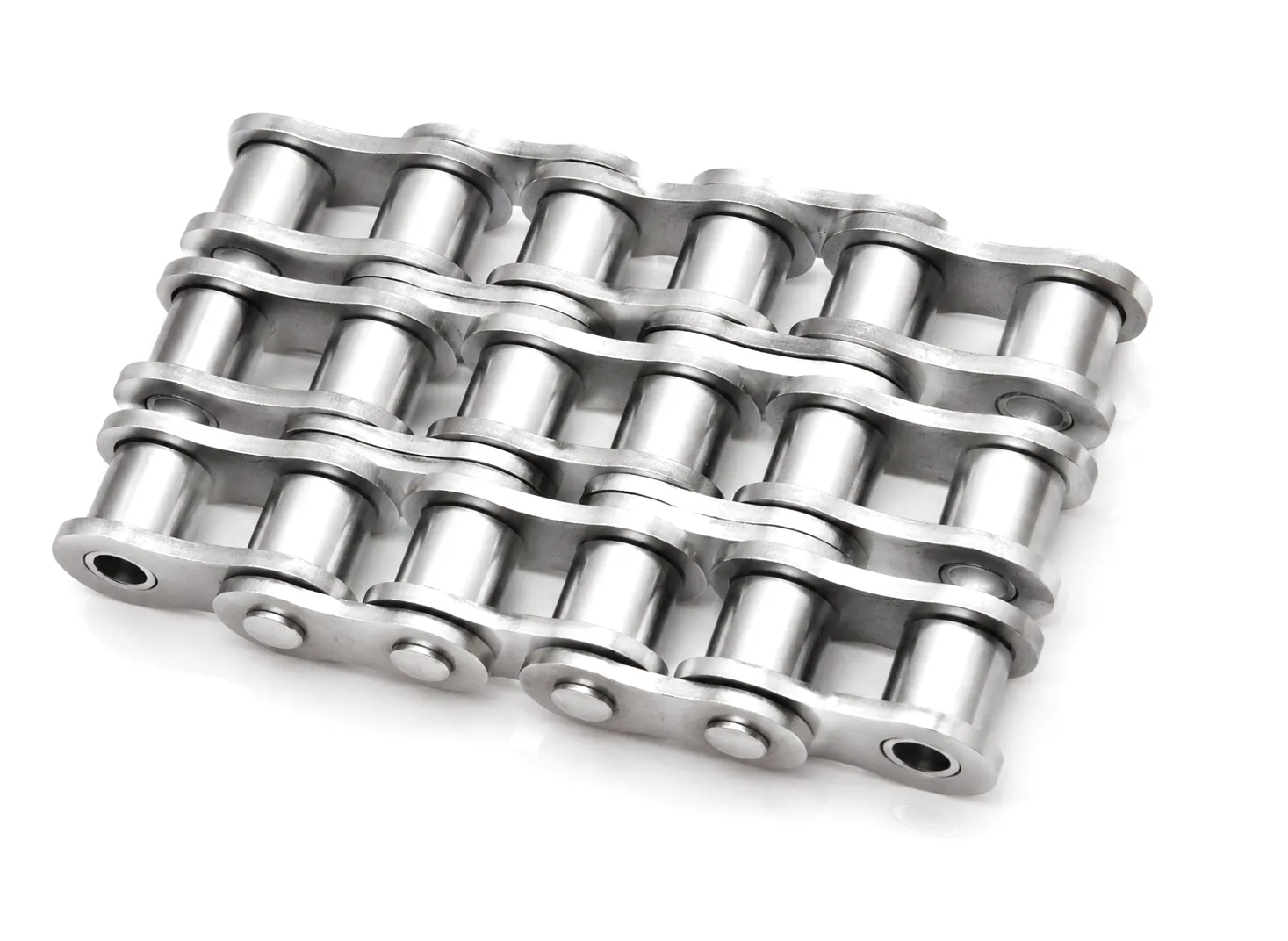
Customer Success Story: Conveyor Drive Overhaul at a Sheffield Plate-Rolling Mill
A medium-capacity plate-rolling mill operating in the Don Valley area of Sheffield — handling structural steel plate for the construction and offshore sectors — was experiencing unacceptable roller chain failure frequency on the run-out table drives serving the mill’s main rolling stands. The drives were running at approximately 4.2 m/s with a 38-tooth drive sprocket and heavy shock loading at each plate entry event. Chain was failing through link plate fracture within eight to twelve weeks of replacement, generating unplanned downtime costs estimated by the mill’s maintenance manager at over £18,000 per incident when production loss and emergency labour costs were combined.
After engagement with Ever Power’s technical sales team, a full drive audit was conducted. The investigation revealed three compounding factors: the existing chain was a standard-series 100-pitch chain operating at approximately 78% of its published fatigue power rating — within specification in isolation but leaving inadequate margin for the entry shock loads; the sprocket centres had drifted out of horizontal alignment by 1.4 mm over their service life, generating lateral load on the link plates; and the lubrication method — manual grease gun application every two weeks — was wholly inadequate for the speed and duty cycle. The re-specification moved to Ever Power heavy-series 100HSP chain with thicker link plates and upgraded pin steel, combined with automatic recirculating oil lubrication at the drive sprocket and a one-time laser alignment correction. Sprocket tooth count was increased from 17 to 21 on the driven sprocket to reduce per-engagement impact energy while maintaining the required output speed through a compensating drive ratio adjustment. Following implementation, the client reported zero chain fatigue failures over a subsequent fourteen-month monitoring period — a transformation from near-monthly failures to full-year reliability.
The economics were straightforward. Chain cost per year increased modestly because heavy-series chain carries a higher unit price. But the elimination of unplanned downtime incidents more than compensated, with the mill’s maintenance manager estimating an annual saving in excess of £90,000 when production time recovery, emergency labour reduction, and reduced secondary damage to sprockets and shaft bearings were all credited. The case is now used internally at Ever Power as a reference example of how proper speed and fatigue analysis, combined with matched lubrication and alignment, can transform roller chain service life beyond what material upgrades alone would achieve.
“We had been through three different suppliers in two years trying to solve the fatigue failures on our run-out table. Ever Power’s heavy-series chain and the lubrication upgrade they recommended together solved it completely. We’ve run fourteen months without a single link plate fracture. The technical support before the sale was as good as any specialist engineering consultant I’ve dealt with.”
— Robert M., Maintenance Manager, Steel Plate Mill, Sheffield
“The custom-pitch chain Ever Power made for our crusher drive was delivered faster than I expected from an overseas manufacturer — just over three weeks from technical approval to delivery in Birmingham. Dimensional accuracy was spot-on and the matched sprockets tracked perfectly from day one. The drive has been quieter and the vibration on the crusher frame is measurably lower than it was with the previous chain. Good quality and a supplier that actually understands the application.”
— David K., Plant Engineering Lead, Quarry Operations, Midlands
“We switched our bottling line conveyors to stainless-steel sealed chain from Ever Power eighteen months ago. The USDA-approved factory-loaded lubricant means we have not had a single food safety incident related to the chain lubrication since. On the engineering side, chain elongation at our twelve-month check was under 0.8% — well within the replacement threshold. These are exactly the numbers we need to justify the specification to our production quality team.”
— Sarah L., Process Equipment Engineer, Beverage Manufacturer, Greater Manchester
Frequently Asked Questions — Roller Chain Speed, Vibration & Fatigue Life
Ever Power · Precision Roller Chain Manufacturing
Ready to Specify the Right Roller Chain?
Send us your drive specification, application details, or replacement chain reference number and our engineering team will respond within 24 hours with a technical recommendation and pricing.
redigerad av gzl