Food Jars & Cans Series
Blow Moulding Machine
Wide-mouth container production for dry fruits, condiments, edible oils and rigid food packaging — engineered for the UK food manufacturing sector with stable output and superior finish quality.
What Makes the Food Jars & Cans Series Different?
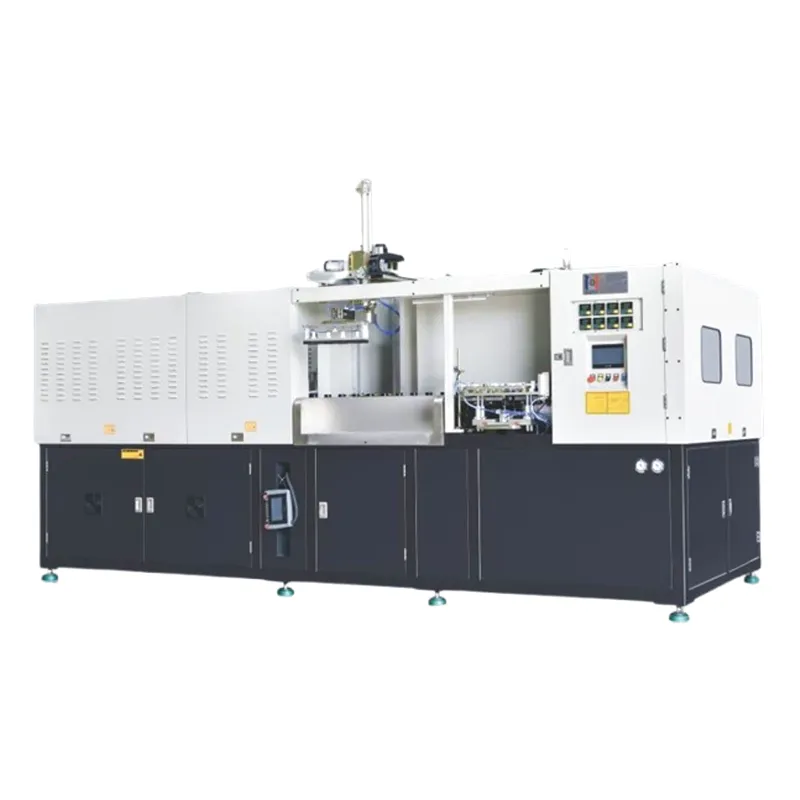
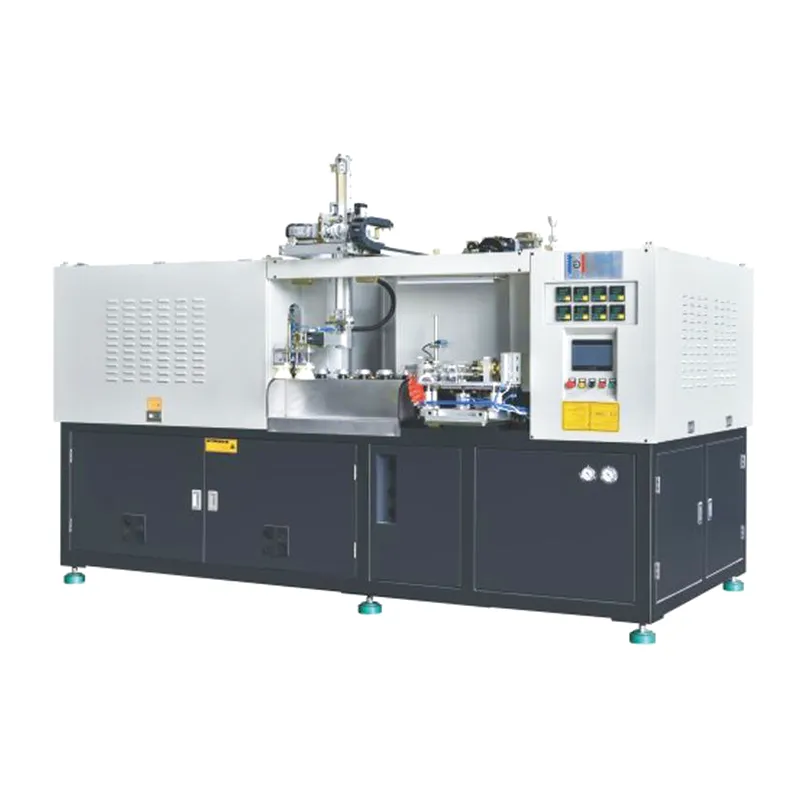
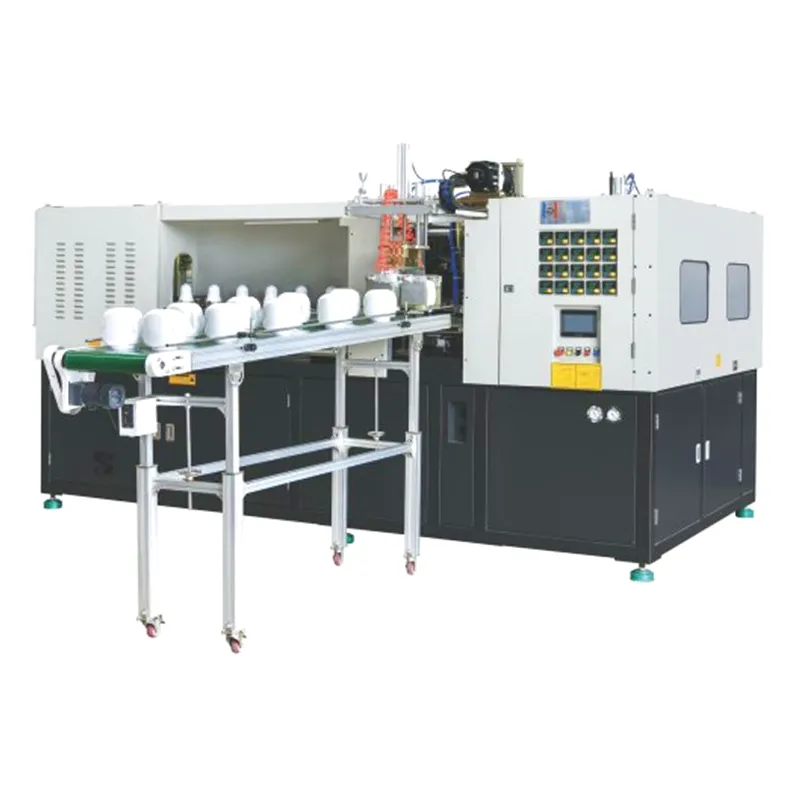
The Food Jars & Cans Series blow moulding machine is a two-step (two-stage) injection stretch blow moulding system purpose-built for wide-mouth rigid containers used in food packaging. Unlike one-step machines that combine preform injection and bottle blowing in a single station, this two-step blow moulding machine separates the preform manufacturing process from the blowing stage entirely. Preforms are produced and cooled independently before being reheated and stretched into the final container shape, giving manufacturers far greater scheduling flexibility, reduced tooling costs per cavity, and the ability to source preforms from multiple suppliers. This architecture is especially valued in the UK food industry, where regulatory compliance for food-contact plastics demands tight process control and full traceability.
The machine series was conceived specifically around wide-mouth bottle and jar geometries. Conventional stretch blow moulding equipment struggles when neck diameters exceed 38mm — sealing rings leak, orientation arms deflect, and output consistency drops. The HGA series resolves this through an enlarged neck-tooling module that accommodates diameters up to 180mm, a figure that was a domestic first when the design was introduced. Dry fruits, condiments, edible oils, honey, peanut butter, spice blends — any product requiring a wide, accessible opening can be packaged at commercially viable speeds without sacrificing wall-thickness uniformity or transparency.
Nine distinct model configurations span the range from compact single-cavity units producing 1,000ml containers at 1,000 bottles per hour, right through to high-capacity four-cavity machines capable of 15,000ml containers and theoretical outputs exceeding 4,600 bottles per hour. Each model shares the same servo-driven clamping mechanism, PLC touchscreen control, and stainless-steel contact-part specification, making the series straightforward to validate under both BRCGS and SQF food safety schemes commonly required by UK retail buyers.
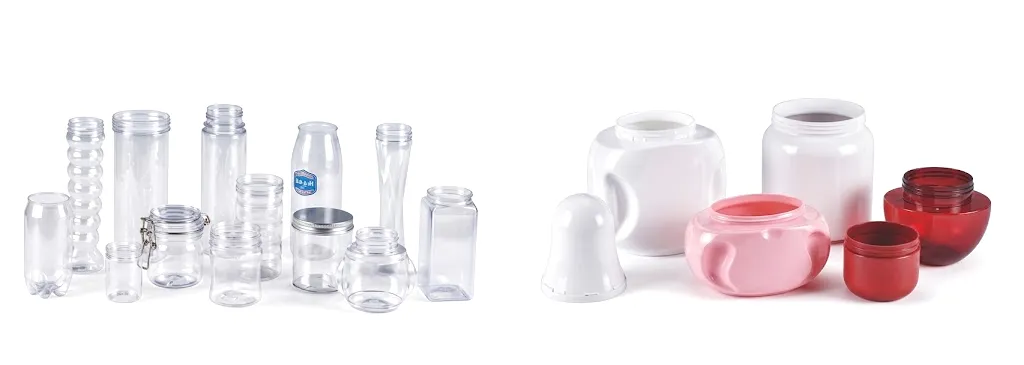
🍷 Sample Container Output
Why UK Packaging Manufacturers Choose the HGA Series
How the Two-Step Blow Moulding Process Works
The term “two-step” describes a production methodology that is fundamentally different from one-step injection blow moulding. Understanding this distinction helps buyers select the right platform for their output volumes and container range.
Material Compatibility and Application Sectors
The HGA Food Jars & Cans Series blow moulding machine processes PET, PP, and HDPE preforms. PET remains the material of choice for transparent jars requiring high visual impact — honey, premium condiments, dried fruits — while PP offers superior chemical resistance and hot-fill compatibility for sauces and edible oils. HDPE is selected where UV protection or opaque branding is a marketing priority. The machine’s oven profile is fully adjustable to suit each resin’s specific reheating characteristics without hardware changeover, making mixed-material production runs achievable within a single site.
Beyond direct food contact, the same wide-mouth blow moulding capabilities prove equally well suited to non-food packaging sectors that share an interest in large-diameter rigid containers: industrial lubricants, agricultural chemicals, household detergents in refill-size formats, and personal care products in trade quantities. UK distributors supplying the catering trade, cash-and-carry retail, and food service industries will find the HGA series capable of addressing their entire container portfolio from a single equipment investment.
Technical Specifications
All data from official product datasheet. Scroll horizontally on mobile.
Customer Success Stories
Midlands-Based Condiment Producer Scales Jar Production by 340%
A family-run condiment manufacturer in the West Midlands supplying regional supermarkets and farm shops had been sourcing wide-mouth glass jars from a Continental European supplier, with lead times of 8–14 weeks and no ability to run custom shapes for seasonal gift ranges. After a site visit to evaluate two-step blow moulding technology, they invested in an HGA.ES-2C200 unit in Q1 2024.
Within six months of commissioning, the line was running at 1,400 jars per hour across three SKUs — a 500ml chutney jar, a 1,200ml bulk pickle container, and a 400ml premium sauce jar with a 110mm neck. Container cost per unit dropped by approximately 38% compared with purchased glass, and the company was able to move seasonal gift jar designs from concept to production in under three weeks instead of four months.
We evaluated four different blow moulding manufacturers before choosing this series. The wide-mouth tooling capacity was the deciding factor — no other machine in this price bracket could handle our 138mm neck diameter at the output rates we needed. Installation was smooth and the technical support team responded within two hours every time we had a question during commissioning.
The two-step process gave us exactly the scheduling flexibility we needed for a co-packing operation. We run preforms from three different suppliers depending on material availability and pricing, and the machine handles all of them without any adjustment beyond oven profile settings. Running costs have come in consistently below the projections we were given before purchase.
Our edible oil brand was growing faster than our bottling supplier could keep up with. We brought the blow moulding in-house using the HGA.ES-4C130 and the ROI was achieved in under 14 months. The container quality is noticeably superior to what we were buying in — the clarity and dimensional consistency have actually generated positive comments from our retail buyers.
Manufacturing Facility and Custom Engineering Capability
The machines in the HGA series are designed and manufactured at a vertically integrated production facility with CNC machining, precision casting, and assembly halls operated under ISO 9001 quality management. Every unit undergoes a 72-hour continuous run test at rated output before despatch, with dimensional reports and electrical certification supplied to the buyer.
Beyond standard catalogue configurations, the engineering team offers a comprehensive bespoke specification service that is particularly valued by UK food manufacturers operating under strict own-label briefs from retail chains. Customisation options include non-standard mould cavity dimensions, modified preform holder counts, specialised neck-finish tooling for tamper-evident closures, integration with downstream labelling and capping lines via PLC communication protocols (Modbus, PROFIBUS, EtherNet/IP), cleanroom-compatible stainless-steel shroud panels, and nitrogen-purge compatibility for oxygen-sensitive food products.
Related Injection Blow Moulding Machines
If your container requirements fall into the narrower-neck personal care or pharmaceutical categories, the following ZQ series machines offer a proven platform for replacing legacy Jomar equipment at lower capital cost.
A high-performance injection blow moulding machine engineered as a direct operational replacement for the Jomar IBM135. Offers improved cycle efficiency and reduced maintenance intervals with full preform and mould tooling compatibility. Suited to pharmaceutical, personal care, and cosmetic container production.
Designed specifically to match the footprint, tooling interface, and operational parameters of the Jomar IBM85S, the ZQ80 allows production teams to upgrade ageing equipment without revalidation of mould tools or container specifications. Delivers substantial energy savings compared with the original platform while maintaining identical neck-finish quality.
Ready to Spec the Right Blow Moulding Machine for Your UK Site?
Send us your container drawings, preform specifications, and target output figures. Our application engineers will recommend the correct HGA model and provide a full technical and commercial proposal.
แก้ไขโดย gzl