Como instalar uma corrente de rolos corretamente: Guia passo a passo
Precision installation techniques from Ever Power — trusted by UK manufacturing engineers across Birmingham, Sheffield, Leeds and beyond.
UK Industrial Focus
B2B Engineering
Understanding the Roller Chain: Construction and Working Principle
Core Structure
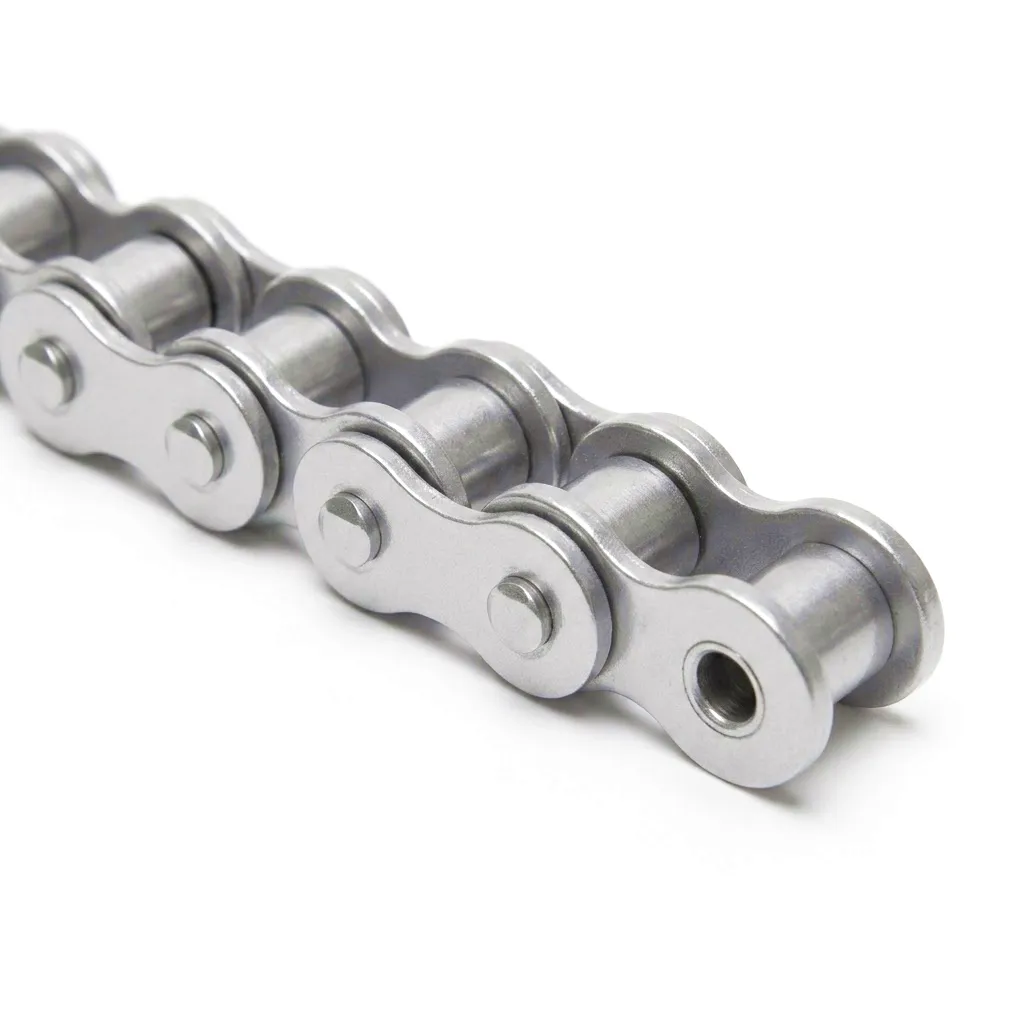
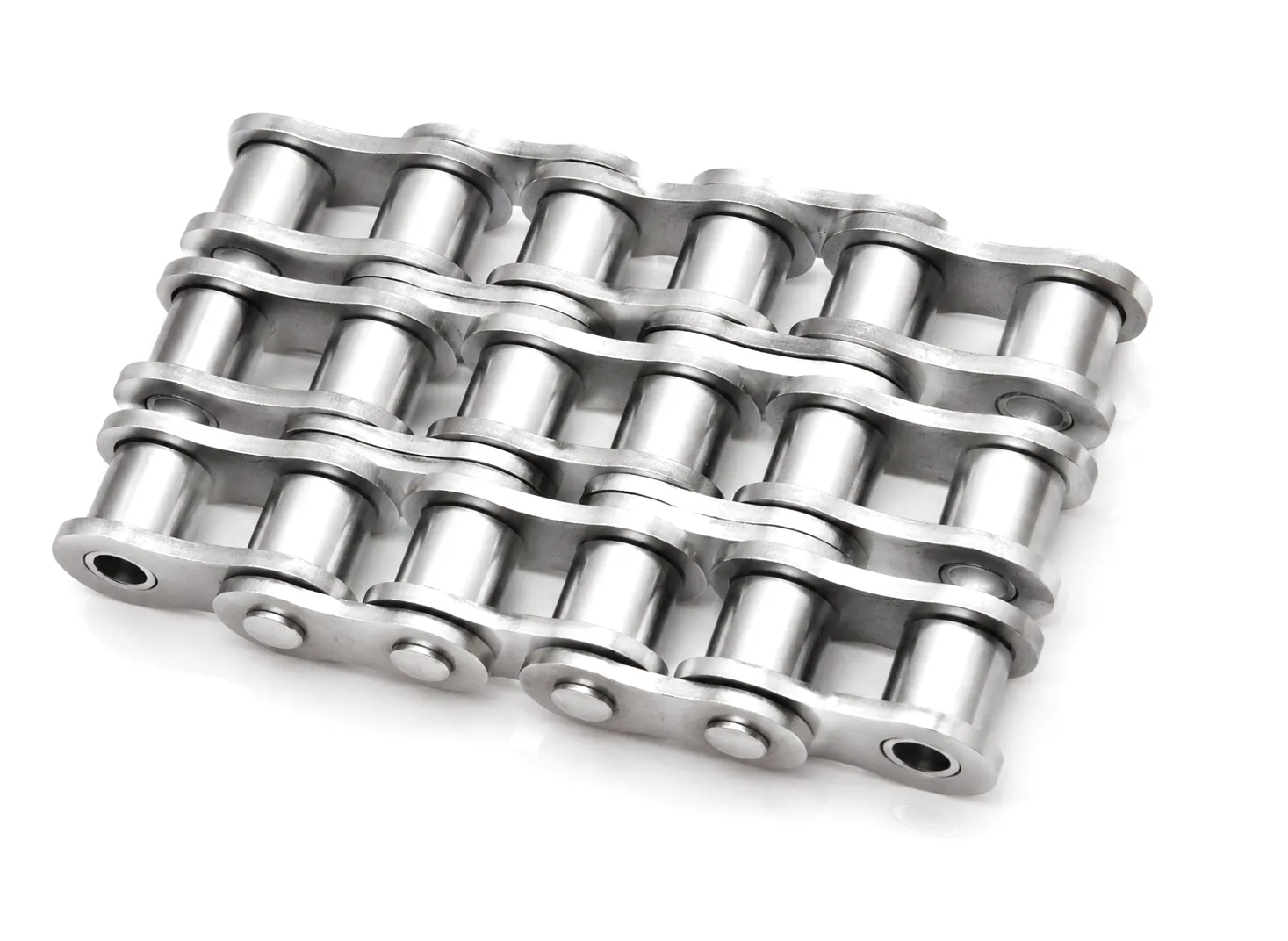
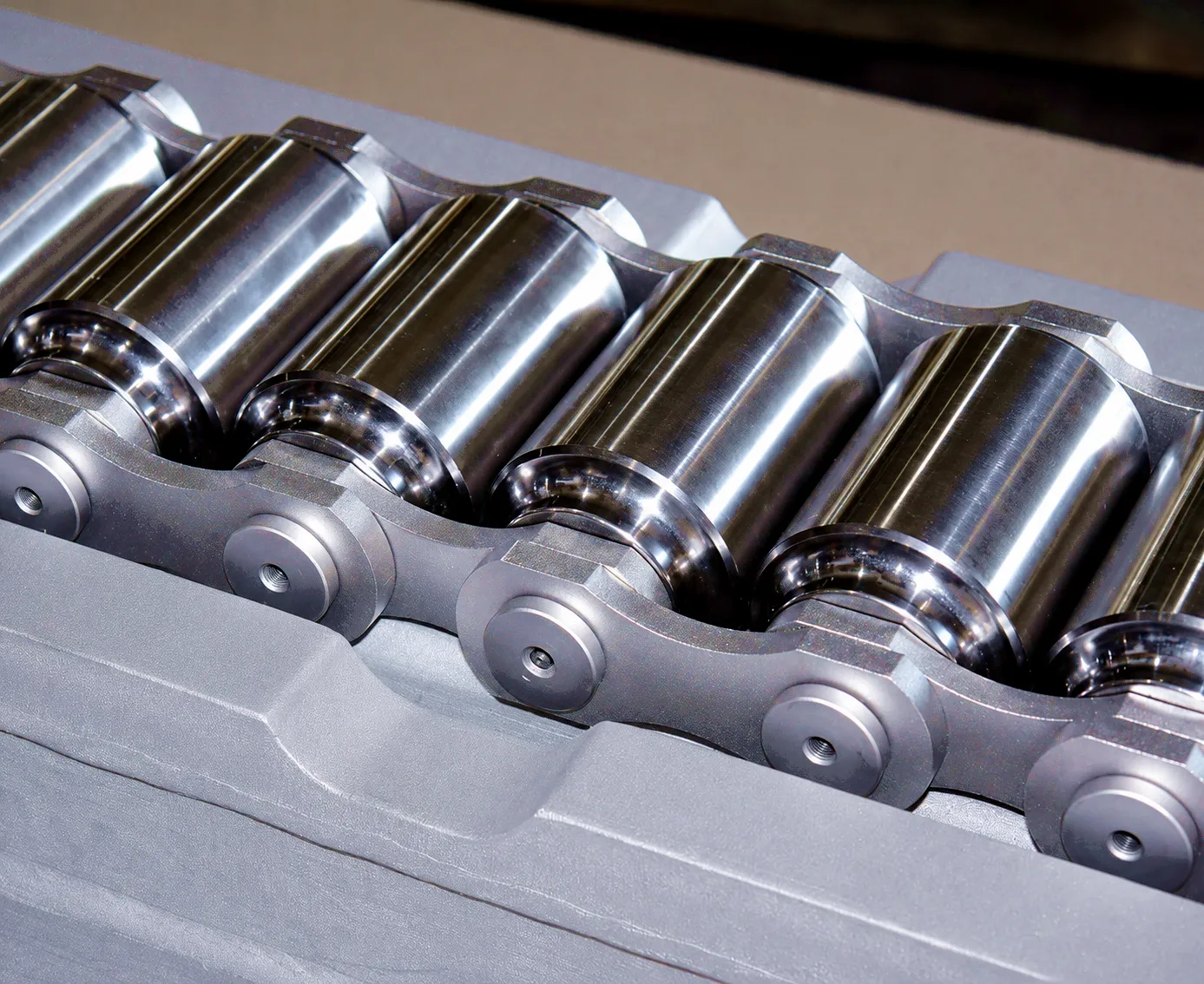
A roller chain consists of inner link plates, outer link plates, pins, bushings, and rollers assembled in alternating pairs. The roller sits on the bushing and contacts the sprocket tooth profile during engagement, dramatically reducing the friction that would otherwise occur with a sliding-contact chain. The pin-and-bushing articulation joint accommodates the polygon effect as the chain wraps around the sprocket, allowing smooth, continuous power transmission without binding. Each component is precision-machined to specific tolerances defined in BS ISO 606 for British Standard chains — a standard that Ever Power’s production lines are fully certified to meet.
Working Principle
Power is transmitted as the sprocket’s teeth positively engage with the rollers of the chain, pulling successive links around the drive wheel. The engagement is a rolling rather than sliding action, which means the coefficient of friction remains low and efficiency is typically above 97% in a well-maintained drive. As the driver sprocket rotates, tension builds in the tight side of the chain — the load-bearing side — while the slack side returns with minimal force. The ratio of driver to driven sprocket tooth counts determines the speed reduction or increase, allowing roller chain drives to transmit precisely controlled torque across a wide range of industrial applications from agricultural equipment to heavy manufacturing lines.
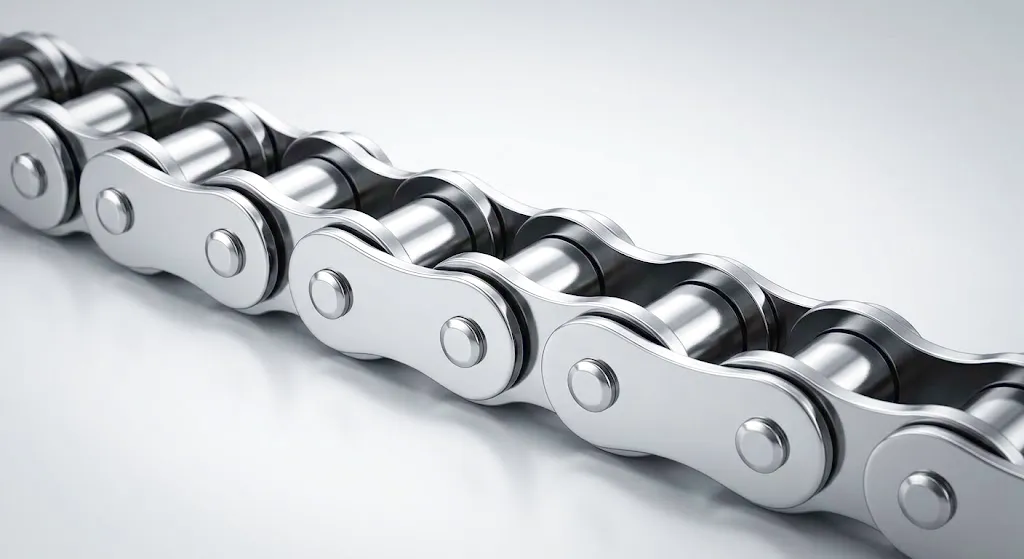 The material selection defines the chain’s operational ceiling. Standard roller chains are manufactured from medium or high-carbon steel, heat-treated to achieve case hardness at the pin, bushing, and roller surfaces while retaining a tough, ductile core. This combination resists the contact fatigue from repeated sprocket engagement and the bending fatigue from thousands of articulation cycles per minute. For applications in food processing, chemical plants, or wet environments common across UK coastal industrial sites, Ever Power supplies stainless steel and nickel-plated variants with corrosion resistance tailored to operating conditions. In high-temperature furnace conveyor applications — such as those found in Sheffield’s specialty metals sector — heat-resistant alloy grades with elevated tempering temperatures are specified.
Knowing this construction intimately is not academic — it directly informs installation decisions. For example, understanding that the pin is the most highly stressed component explains why misalignment damage almost always appears as fretting corrosion on pin ends first. Understanding that the roller-bushing interface is lubricated during assembly explains why contamination during installation can immediately compromise service life.
Pre-Installation Inspection: What to Check Before You Fit a Single Link
The single most common mistake in roller chain installation is rushing directly to fitting without conducting a methodical pre-installation inspection. Experienced maintenance engineers at UK manufacturing facilities consistently report that inspection catches the root causes of premature chain failure before the problem is sealed inside the drive. Spend 15 to 20 minutes on this phase and you avoid spending several hours — and potentially days of production downtime — on a chain failure investigation weeks later.
Sprocket Condition
Inspect each sprocket tooth profile using a tooth wear gauge or by direct visual comparison with a new sprocket template. Hooked teeth — where the tooth tip has bent over in the direction of chain travel — indicate the sprocket is well past its service limit and must be replaced before fitting any new roller chain. Fitting a new chain to a worn sprocket is one of the most reliably effective ways to destroy the chain within a fraction of its designed service life. Also check for cracked teeth, corrosion pitting, and side-face wear that indicates misalignment has been occurring in the previous installation.
Shaft Alignment
Use a precision straight edge or laser alignment tool to confirm that both shafts are parallel and that both sprockets lie in the same plane. Angular misalignment — where one shaft is tilted relative to the other — generates side loads that force the chain off the sprocket face and cause uneven wear across link plate edges. Offset misalignment — where shafts are parallel but not in the same plane — causes the chain to run at an angle across both sprockets, dramatically increasing side thrust. BS ISO 10823 specifies acceptable misalignment limits for roller chain drives, and reputable UK suppliers will confirm the tolerance values applicable to your specific chain pitch.
Chain Length Selection
Count the number of chain pitches required for your centre distance, ensuring you have an even number of links where possible to allow use of a standard connecting link rather than an offset link. Offset links, while not inherently problematic, introduce a small reduction in fatigue strength and should be avoided in high-load reversing drives. Calculate the theoretical centre distance using the chain drive design formula, accounting for the number of teeth on each sprocket. Most professional roller chain engineers use an additional half-pitch of adjustment slack in the initial design to accommodate take-up as the chain seats and experiences initial wear elongation during run-in.
New Chain Inspection
Even brand-new roller chains warrant inspection before installation. Verify that the chain pitch matches the sprocket specification — mixing metric and imperial dimensions is a persistent source of installation errors. Check that all pins are fully seated and flush with the outer link plates, that no rollers are cracked or damaged from transit, and that factory lubrication is present. On Ever Power chains, a light coating of anti-corrosion oil is applied at the factory, which is compatible with most chain lubrication systems. If the chain is being installed into a food-grade or pharmaceutical environment, confirm that any factory oil must be removed and replaced with an appropriate food-safe lubricant.
Step-by-Step Roller Chain Installation Procedure
The following installation sequence reflects best practice as applied in UK industrial environments ranging from agricultural machinery workshops in rural Lincolnshire to automated production lines in the West Midlands. Follow these steps in order — skipping any stage increases installation risk disproportionately.
 Before fitting the roller chain, reduce the centre distance between driver and driven shafts to its minimum adjustment position. This creates enough slack to fit the chain without stretching it over the sprocket teeth — a practice that permanently damages the rollers and deforms the link plates. Secure the sprockets to their respective shafts using the correct key and keyway arrangement, tightening the retaining fasteners to the specified torque values for the shaft diameter. Use thread-locking compound on grub screws where vibration is anticipated. Confirm sprocket face alignment with a straight edge spanning both sprocket faces before proceeding. A tolerance of less than 0.5mm lateral offset per 100mm of sprocket face width is the recommended standard for most general industrial roller chain drives operating at speeds up to 500 rpm.
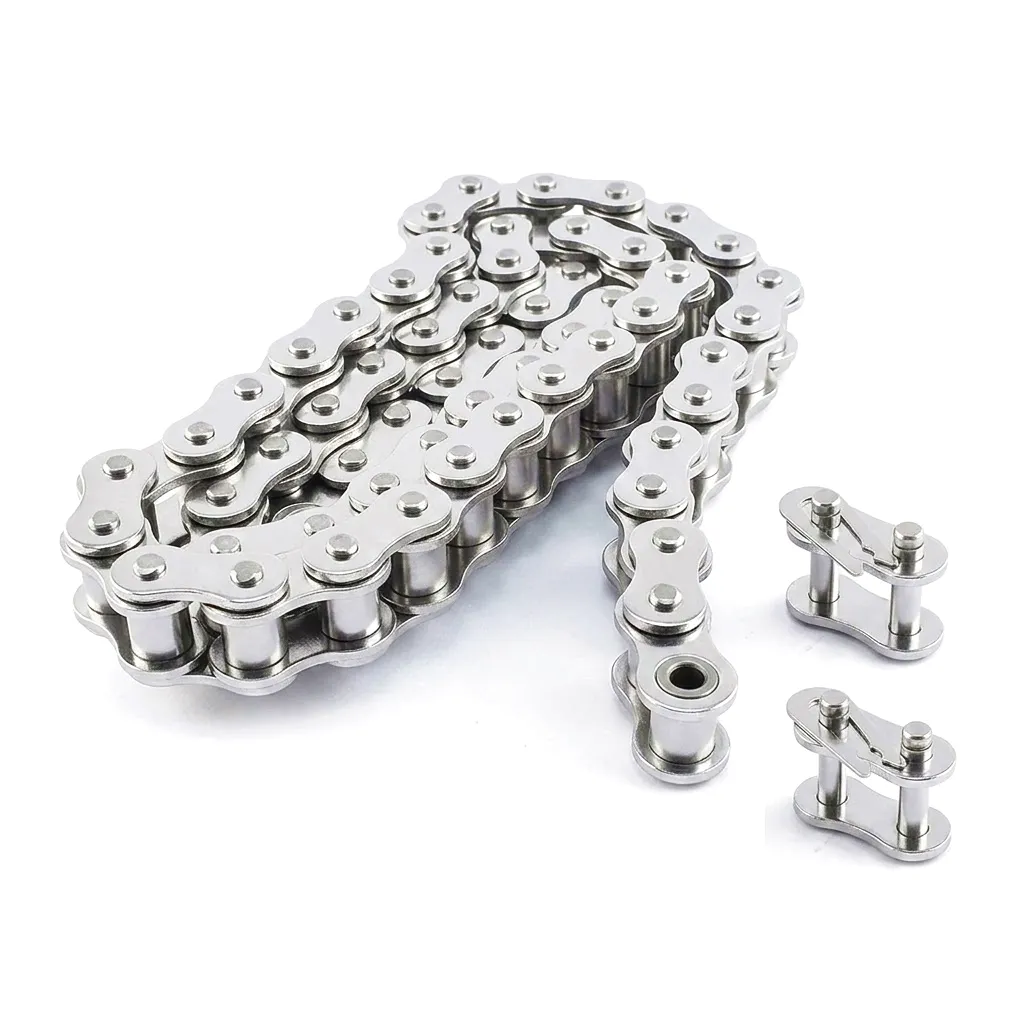
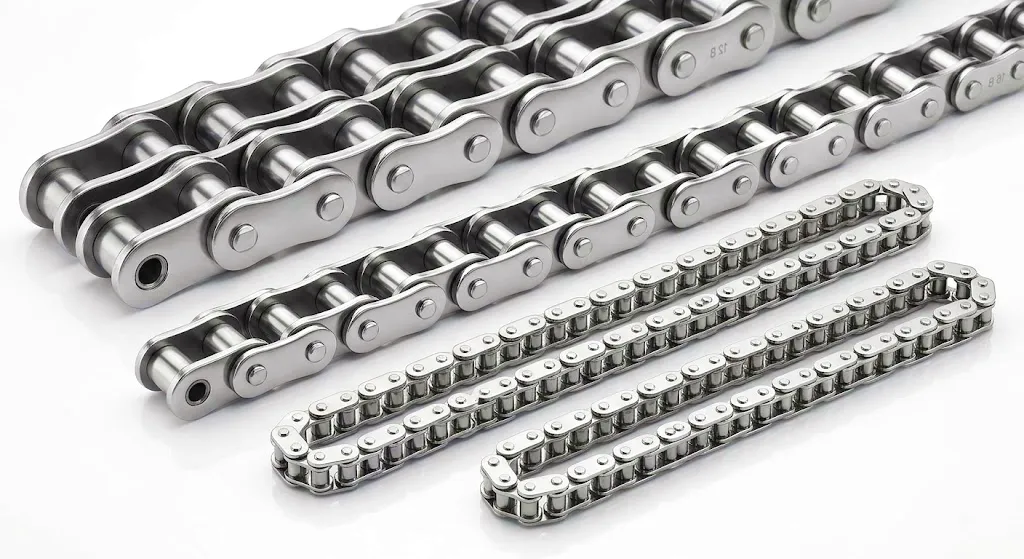 The connecting link — also called a master link or jointing link — is the most installation-sensitive component in the entire roller chain assembly. Three common types exist: the spring clip (cotter pin) type, the press-fit rivet type, and the split pin type. For most standard industrial applications, the spring clip connecting link is used. Insert the connecting pin through the chain ends, ensuring the pins are fully seated. Fit the outer plate over both pins. Apply the spring clip so that the closed end of the clip faces in the direction of chain travel — this critical detail ensures the clip cannot be dislodged by centrifugal force or contact with debris. If the clip is fitted with the open end leading, it will eject from the pin during operation, causing immediate and often destructive chain failure. For high-speed or heavy-duty drives, a rivet-type connecting link should always be used, as the riveted-over pin ends provide a fully mechanical positive retention that no spring clip can match.
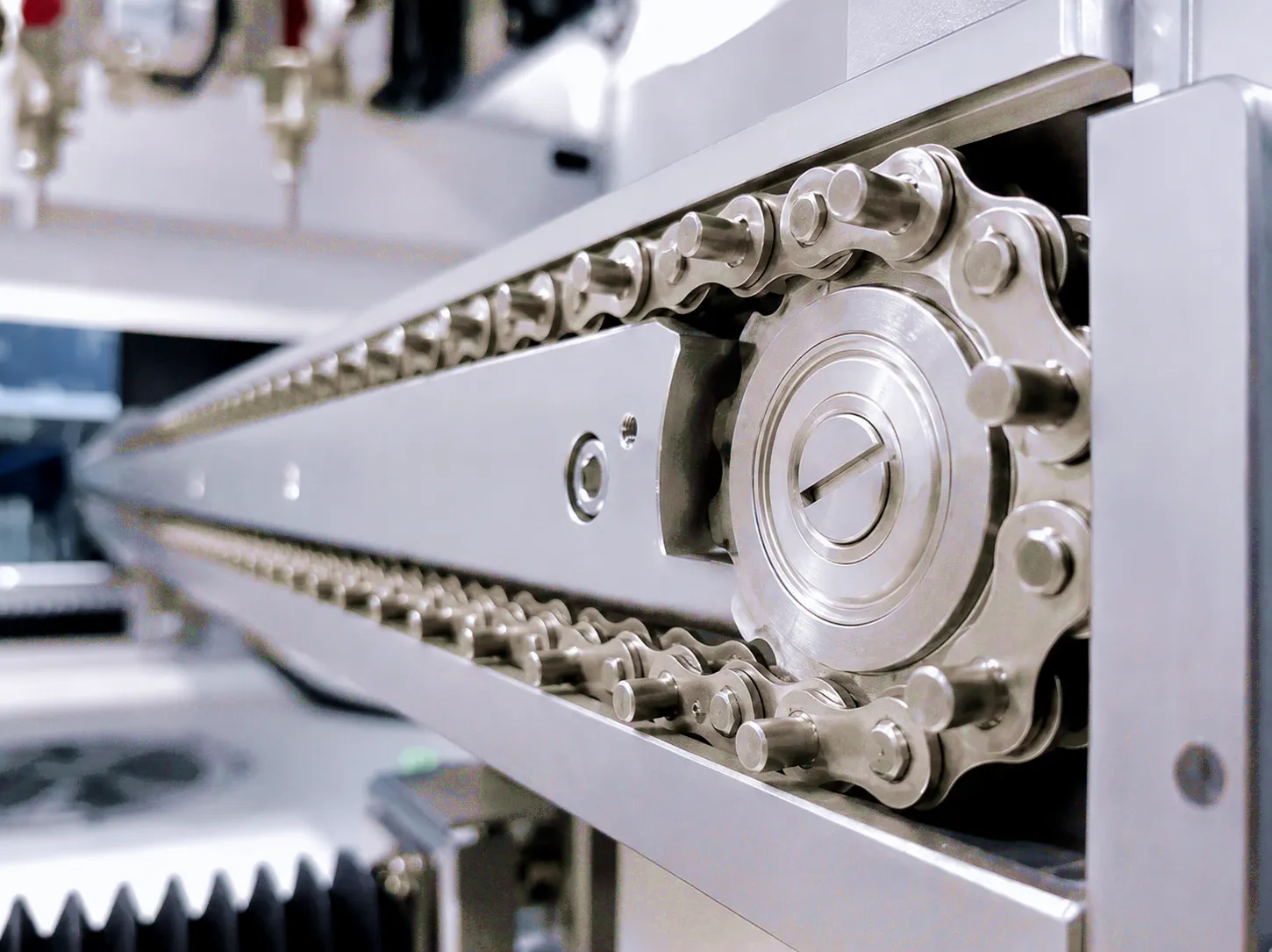 Even if the roller chain arrived from the factory with lubricant applied, apply additional lubrication before the first run. The reason is straightforward: factory oil is primarily an anti-corrosion preservative rather than a full operating lubricant, and the first hours of operation under load — before the oil film is fully established by the lubrication system — are the most vulnerable period in the chain’s working life. Apply a thin, even film of the specified lubricant type along the inner edges of the outer link plates, allowing it to penetrate into the pin-bushing joint by capillary action. For drip lubrication systems, set the drip rate per the manufacturer’s specification for chain speed and pitch. For oil bath lubrication — used extensively in gearbox-integrated chain drives across the engineering sector in Coventry and the East Midlands — confirm the oil level covers the chain to the correct immersion depth before running. Running a new roller chain dry, even for a few minutes, can cause glazing of the pin and bushing contact surfaces that no amount of subsequent lubrication will fully repair.
Parâmetros de desempenho técnico da corrente de rolos
The table below covers the key technical parameters for BS standard roller chains commonly installed across UK industrial drives. All values reference BS ISO 606 and are aligned with the specifications used in Ever Power’s manufacturing process. Pin diameter, plate thickness, and minimum tensile strength figures are critical inputs for installation design calculations.
| Chain Type / BS No. | Passo (mm) | Diâmetro do rolo (mm) | Diâmetro do pino (mm) | Resistência mínima à tração (kN) | Peso (kg/m) | Velocidade máxima (m/s) | Material |
|---|---|---|---|---|---|---|---|
| 08B-1 | 12.70 | 8.51 | 4.45 | 17.8 | 0.65 | 16 | C45 Steel |
| 10B-1 | 15.875 | 10.16 | 5.08 | 22.2 | 0.93 | 14 | C45 Steel |
| 12B-1 | 19.050 | 12.07 | 5.72 | 29.0 | 1.15 | 12 | C45 Steel |
| 16B-1 | 25.400 | 15.88 | 8.28 | 60.0 | 2.71 | 10 | Liga de aço |
| 20B-1 | 31.750 | 19.05 | 10.19 | 95.0 | 3.84 | 9 | Liga de aço |
| 24B-1 | 38.100 | 25.40 | 14.63 | 160.0 | 7.10 | 7 | Liga de aço |
| 20B-G1 (Rubber Top) | 31.750 | 19.05 | 10.19 | 95.0 | 4.20 | 8 | Steel + NBR Rubber |
| 24B-G1 (Rubber Top) | 38.100 | 25.40 | 14.63 | 160.0 | 7.80 | 6 | Steel + NBR Rubber |
All values are reference specifications. Consult Ever Power’s engineering team for precise data applicable to your application conditions.
Cenários de aplicação industrial em diversos setores da indústria manufatureira do Reino Unido
Conveyor Systems in Food and Beverage Production
Food processing plants across Yorkshire and the East Midlands rely on roller chains fitted to conveyor drives to move products through washing, packaging, and dispatch stages. In these environments, the Corrente de rolos com topo de borracha 20B-G1 is particularly well-suited — its rubber-padded outer link plates grip products securely without marking, and the sealed chain construction resists the wash-down regimes typical of hygiene-critical production lines. Correct installation in these applications demands scrupulous cleanliness: any steel swarf or contamination introduced during fitting will degrade the rubber top attachments and introduce potential contamination risk. Chains in these applications are typically installed with stainless steel connecting links to maintain food-grade compliance throughout the assembly.
Heavy Machinery Drive Systems in Steel and Metals
Sheffield’s legacy of specialty steel manufacturing — now transformed into advanced alloy production, precision forging, and materials testing — places demanding requirements on drive chain technology. Heavy-duty roller chains in the 20B to 24B pitch range are used in rolling mill auxiliary drives, ladle handling equipment, and steel coil transport systems. Installation in these applications demands particular care with tension settings, as shock loads from material impacts can instantaneously spike chain tension to multiples of the nominal design load. Ever Power supplies heavy-duty series roller chains with extended sidebar thickness for these environments, and our technical team advises UK steel sector clients on appropriate safety factors during the design and installation planning phase.
Automotive Component Manufacturing, West Midlands
The automotive supply chain cluster around Birmingham and Coventry operates transfer lines, robotic cell drives, and press auxiliaries that depend on precise, reliable roller chain drives operating at high cycle rates. Roller chains in automotive manufacturing are expected to deliver consistent performance at speeds approaching the upper limits of the specification table — typically in the 08B to 12B range for lighter conveyor and handling applications, and 16B to 20B for drive applications on larger press and assembly machinery. Installation precision here is non-negotiable: a misaligned or improperly tensioned chain in an automated assembly line can disrupt production rates within hours of start-up, triggering knock-on delays across the supply chain.
Logistics and Warehouse Automation
Automated sortation and palletising systems at UK distribution centres — particularly in the large logistics parks around Northampton, Milton Keynes, and the M1 corridor — use roller chain drives extensively for powered roller conveyors, pallet elevators, and sortation lane diversions. These applications demand chains that can be installed and tensioned quickly during commissioning while maintaining long-term reliability with minimal maintenance access. The Corrente de rolos com topo de borracha 24B-G1 serves pallet conveyor applications where positive grip on carton or tote bases is required, eliminating the need for separate product guides at transition points and simplifying the installation envelope in tight-access warehouse structures.
Seven Installation Mistakes That Shorten Roller Chain Life
Understanding what goes wrong during installation is as instructive as knowing what to do correctly. These are the errors that recur most frequently in field maintenance reports from UK industrial sites, and each one has a disproportionate impact on service life relative to the time it would have taken to avoid it.
Fitting new chain to worn sprockets
Hook-shaped or asymmetrically worn sprocket teeth will accelerate new chain wear to a fraction of expected service life. Always replace both chain and sprockets together when wear is evident.
Spring clip fitted in the wrong direction
With the open end leading in the direction of travel, the clip will spring off under dynamic load. This is probably the single most common cause of sudden roller chain drive failure in maintenance environments.
Excessive tension on initial setup
Over-tensioning generates destructive bearing loads and dramatically reduces pin, bushing, and bearing life. A chain that feels “drum tight” at rest is almost certainly over-tensioned to a dangerous degree.
No initial lubrication before first start
Factory preservative oil is not operating lubricant. Glazing of internal surfaces during the first dry run cannot be reversed and permanently reduces the chain’s load capacity and fatigue life.
Skipping post-run tension check
Chain sag invariably increases after the first few hours of running as links bed in. Not re-tensioning leads to vibration, skipping, and premature wear — the very problems installation quality was meant to prevent.
Lateral sprocket misalignment
Even 1–2mm of lateral offset between sprocket faces generates side thrust that wears the chain’s inner link plates and sprocket flanges at a rate many times greater than axially aligned drives.
Using a screwdriver to lever the chain onto sprockets
Levering the chain over sprocket teeth with a hand tool deforms rollers, scores sprocket profiles, and introduces immediate stress concentrations. Always reduce centre distance sufficiently so the chain fits without force.
Ever Power: Precision Roller Chain Manufacturing for UK Industry
Ever Power has built its reputation on a straightforward principle: that roller chain quality is determined entirely by the precision and discipline applied during manufacturing — not by marketing claims. Our production facility operates CNC-controlled pin grinding centres, automated heat treatment lines with precise atmosphere control, and coordinate measuring machines that verify dimensional compliance on every production batch. When you fit an Ever Power roller chain, you are installing a component that has been manufactured to BS ISO 606 tolerances and verified by documented quality control data that we make available to OEM customers and maintenance engineers on request.
Our customisation capability is one of the strongest differentiators we offer to UK industrial customers. Beyond the standard pitch and strand configurations, Ever Power engineers work with clients to develop application-specific solutions including extended pin chains for carrier attachment, rubber top attachment chains for product-contact conveyor applications, corrosion-resistant coatings for offshore and coastal industrial use, and modified link plate profiles for integration into proprietary conveyor frame systems. Lead times for custom configurations are typically four to six weeks from approved drawing, with samples available for approval testing before full production.
We supply UK buyers through a combination of direct export shipment and partnership with UK-based industrial distributors, ensuring delivery timescales that are competitive with domestic sources while providing the price advantage of factory-direct procurement. Our technical sales team includes engineers with direct chain drive design experience who can review your installation requirements and confirm product suitability before your purchase order is raised.
Customer Success: Wakefield Food Packaging Plant Resolves Chronic Downtime
Perguntas frequentes
Common questions from UK engineers and procurement teams about roller chain installation, sourcing, and performance.