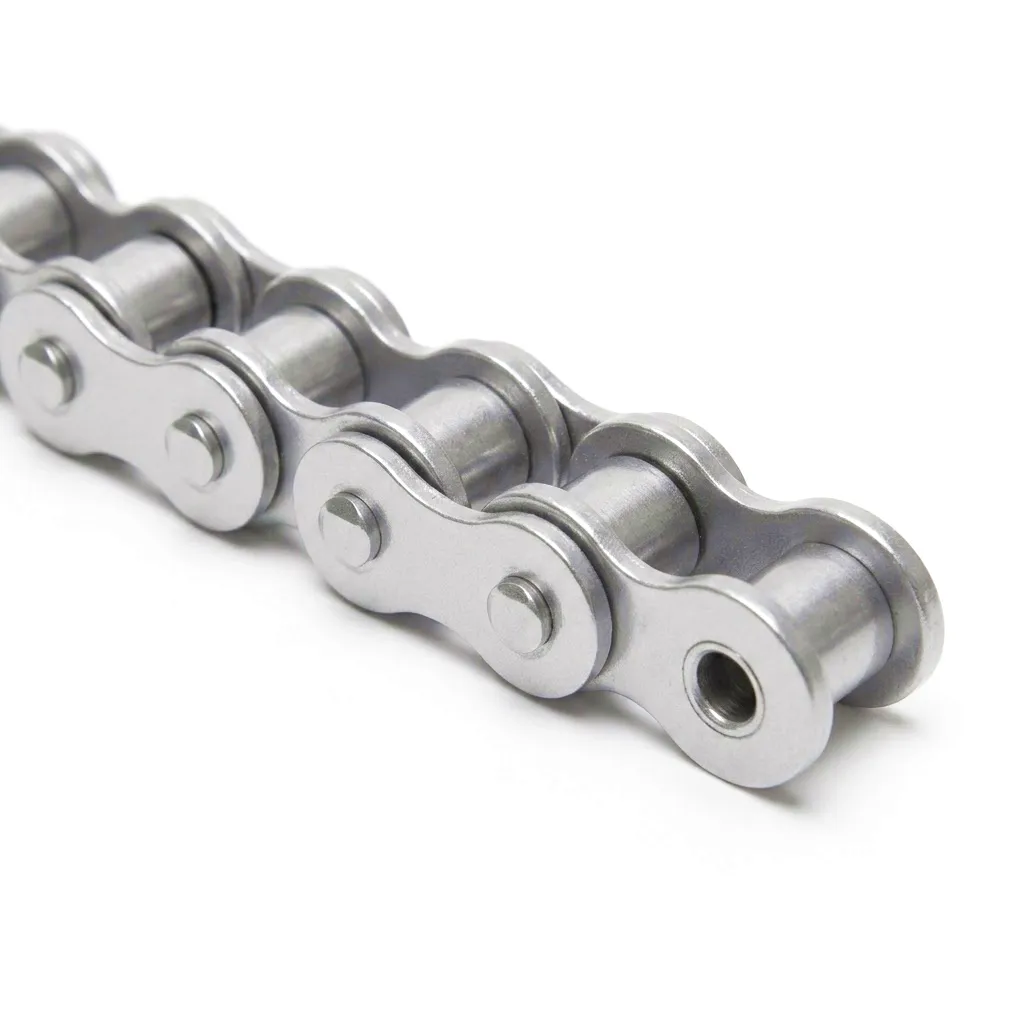
Whether you are working on a conveyor line in a Birmingham packaging plant, maintaining agricultural machinery in the East Midlands, or servicing heavy-duty transmission equipment across a Sheffield steel facility, the ability to adjust a roller chain without pulling the entire drivetrain apart is one of the most valuable field skills a maintenance engineer can carry. Chain length mismatches arise constantly — from new equipment installation with non-standard shaft centre distances, to stretch-induced slack that has passed the sprocket’s adjustment range, to emergency replacement situations where only a slightly different pitch count is available on-site. Understanding exactly how to add or remove links safely, without compromising tensile integrity or accelerating wear, is what separates a competent repair from a liability. This guide addresses the full process in practical, step-by-step engineering terms, covering both standard simplex chains and the multi-strand variants common in UK heavy industry.
Need a custom roller chain quotation for your UK operation?
Ever Power engineers respond within one business day.
Why Chain Length Adjustment Becomes Necessary in Real-World Operation
Elongation Beyond Adjustment Range
Every roller chain elongates under load. When the cumulative pitch elongation — which British Standards set at a 3% maximum for most industrial applications — pushes slack beyond what the tensioner or take-up mechanism can compensate for, the engineer must remove links rather than continue adjusting. Attempting to run a chain past this threshold on a Birmingham automotive subassembly line or a Sheffield forge press drive dramatically increases the risk of tooth-jump and catastrophic snatch failure.
Non-Standard Centre Distances
UK retrofit and upgrade projects frequently encounter shaft centre distances that sit between standard link counts. A logistics sortation system in a Coventry distribution hub, for instance, may have a centre distance that needs 87.5 links — which means the installer must choose between 87 or 88, then adjust the takeup rail accordingly. Knowing which direction to adjust and by how many links — and how the math works — determines whether the drive runs correctly or fights the tensioner constantly.
Emergency On-Site Repair
Breakdowns on live production lines — particularly in food manufacturing facilities in Yorkshire or pharmaceutical sites in Cheshire — demand rapid chain repair without waiting for a bespoke cut-to-length delivery. The on-site engineer must assess whether a slightly longer or shorter spare section can be adjusted, and execute the modification with the correct tooling available in a typical industrial maintenance kit. Speed, accuracy, and an understanding of BS/ISO pitch standards make the difference between a 30-minute fix and an eight-hour shutdown.
Drive System Reconfiguration
When plant engineers in Manchester or Leeds redesign a conveyor layout, relocate drive motors, or change sprocket sizing as part of an efficiency drive, the existing chain is almost never the right length. Rather than scrapping serviceable chain, experienced engineers calculate the new link count requirement, add or remove pitches, and re-join using the correct connecting link or press-fit rivet pin — saving significant material cost, which matters especially given ongoing procurement pressure in UK manufacturing post-2023.
Understanding How a Roller Chain Is Constructed — Before You Adjust It
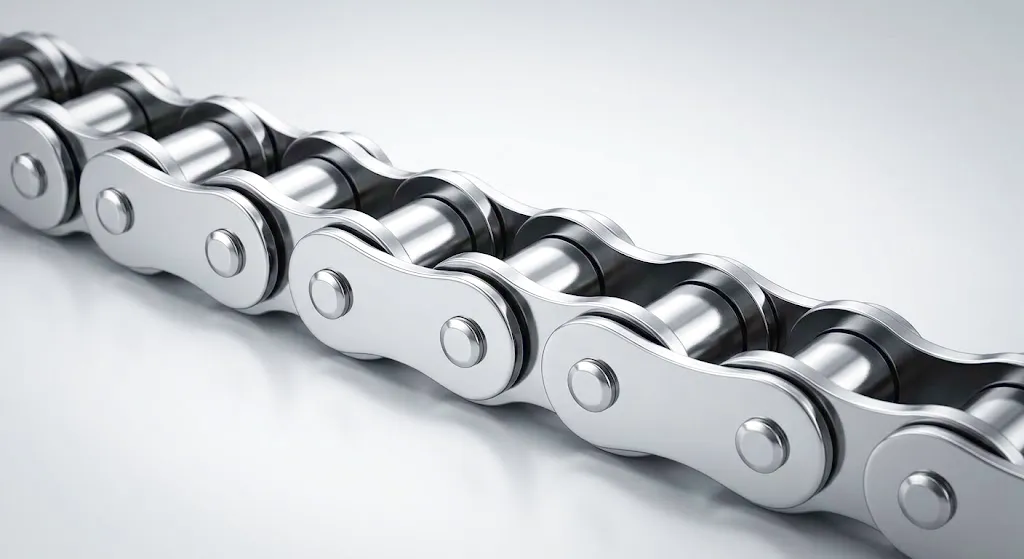
Before any wrench or press tool touches a roller chain, the person doing the work must have a clear mental picture of what is being disassembled. A standard BS/ISO roller chain — whether a 06B simplex used on a light conveyor, an 08B powering a grain drill in Lincolnshire, a 16B on a heavy-duty aggregate screener near Nottingham, or a 24B-3 triple-strand driving a gearbox in a Scottish paper mill — consists of the same fundamental repeating unit: alternating inner and outer link plates, with pressed-in pins and hollow rollers that ride on the sprocket teeth to transmit force. The pitch is the distance between pin centres, and this single dimension defines the entire chain standard.
Links internos
The inner link assembly consists of two inner plates pressed onto a hollow bush, with a free-rotating roller fitted over each bush. This is the element that contacts the sprocket tooth directly. The bush material — typically high-carbon steel, hardened and tempered — determines wear resistance and the chain’s ability to handle abrasive environments like quarry conveyors in Wales or sand casting lines in the West Midlands.
Links externos
Outer link plates carry the connecting pins. The pins pass through the inner link bushes, with the outer plates pressed onto each end. In standard chain, the outer link is the unit you see at every other pitch. In a standard even-numbered chain, the chain closes with an outer link using a slip-type connecting link (also called a master link) secured by a spring clip or cotter pin, making this the natural point for field disassembly and reassembly.
Offset (Half) Links
When the required link count is an odd number, a half-link (offset link) is necessary to close the chain. This is a combined inner-outer link that allows the chain to close on an odd pitch. Half-links are mechanically weaker than standard links — typically rated at 70–80% of the chain’s published breaking load — so their use should be minimised, and the drive should be redesigned to accommodate an even link count wherever centre distance adjustment allows.
Connecting Links and Rivet Pins
The connecting link (master link) is the field-serviceable join point. Slip-fit connecting links allow hand assembly without press tools, secured by a clip on the pin ends. Rivet-type connecting links, used in high-load applications like press drives or heavy conveyor chains, are pressed and then mechanically riveted using a chain tool — they cannot be opened in the field without a dedicated punch/press tool. Knowing which type is installed before starting work prevents a frustrating on-site discovery that the wrong tools were brought.
Tools and Equipment Required for Field Chain Adjustment
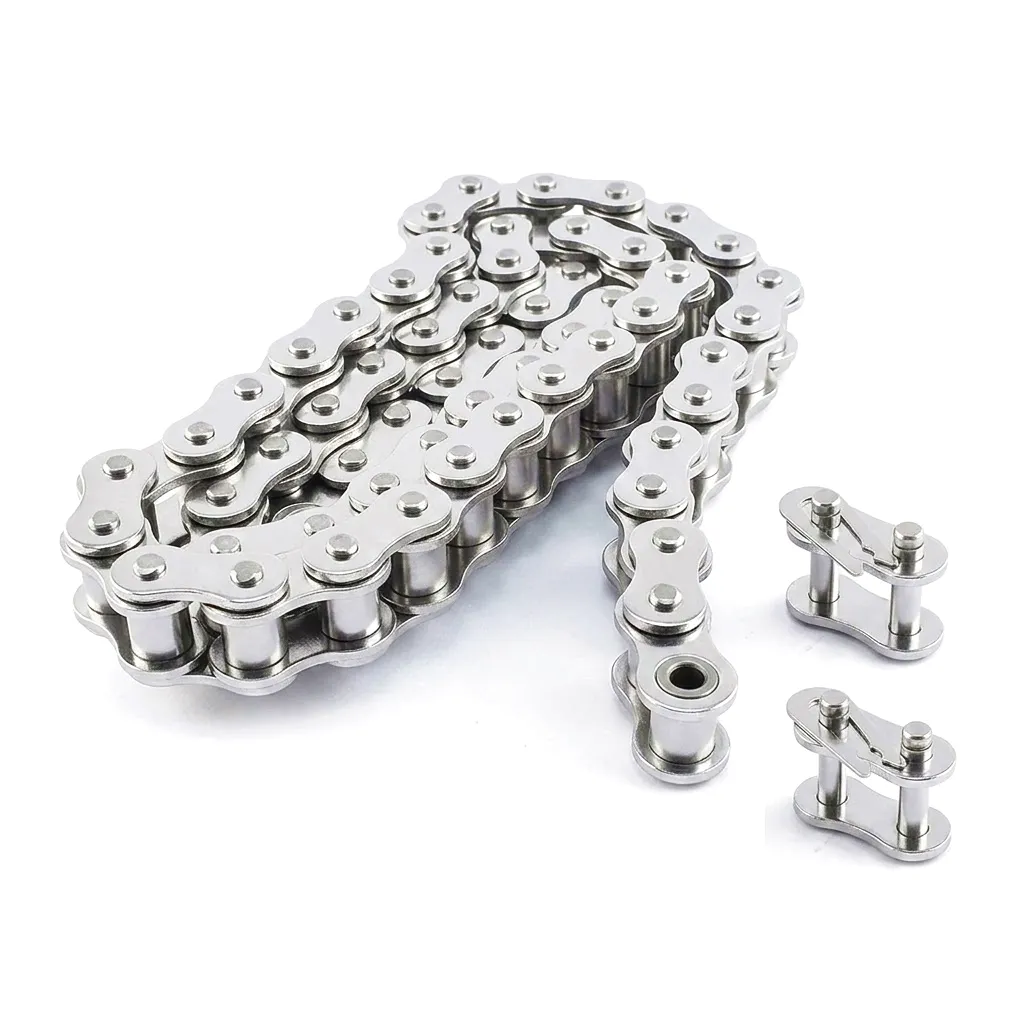
Attempting to shorten or lengthen a roller chain without the correct tooling leads to damaged pins, split outer plates, or improperly seated rollers — any of which will cause the chain to fail under load, sometimes violently. The following equipment represents the complete kit for a competent on-site chain adjustment across BS 228 and ISO 606 series chains up to 1.5 inch pitch. Note that much of this tooling is standard inventory at well-equipped UK industrial maintenance departments, including facilities managed under PAS 55 / ISO 55000 asset management frameworks.
Chain Breaker / Link Punch Tool
The primary tool for pin removal. A quality chain breaker has an anvil that supports the chain plates while a hardened punch drives the pin out without distorting the plates. For BS chain sizes 06B through 20B, a standard multi-size chain breaker handles most industrial requirements. For 24B and above, a bench-mounted press tool with a larger throat provides the force needed without risking operator injury.
Pin Vice and Drift Punches
For field situations without a dedicated chain tool — a reality in many rural agricultural and forestry contexts across Herefordshire and Shropshire — a correctly sized drift punch and a solid-faced hammer can drive out a pin. The drift must match the pin diameter precisely; an oversized punch will peen the outer plate and potentially crack it. A correctly sized punch should push the pin cleanly through without requiring excessive blows.
Rivet Spinner / Peening Tool
When rejoining with a rivet-type connecting link, the exposed pin ends must be staked (peened outward) to lock the outer plate in place. A rivet spinner — either a dedicated chain tool attachment or a ball-peen hammer used with care — creates the mushroom-head profile that prevents the outer plate from walking off under lateral load. Incorrect staking (too little or uneven) is a leading cause of rivet-type connecting link failure in service.
Chain Wear Gauge
Before adding links to a slack chain, it is absolutely essential to check whether the existing chain is worn. Adding new pitches to a worn chain creates a mismatch — the new links have full-diameter rollers sitting against already-worn sprocket tooth faces, which accelerates sprocket wear dramatically and introduces a regular shock pulse into the drivetrain. A go/no-go wear gauge compatible with the chain pitch confirms elongation percentage in under 30 seconds.
Step-by-Step Procedure: Shortening a Roller Chain in the Field
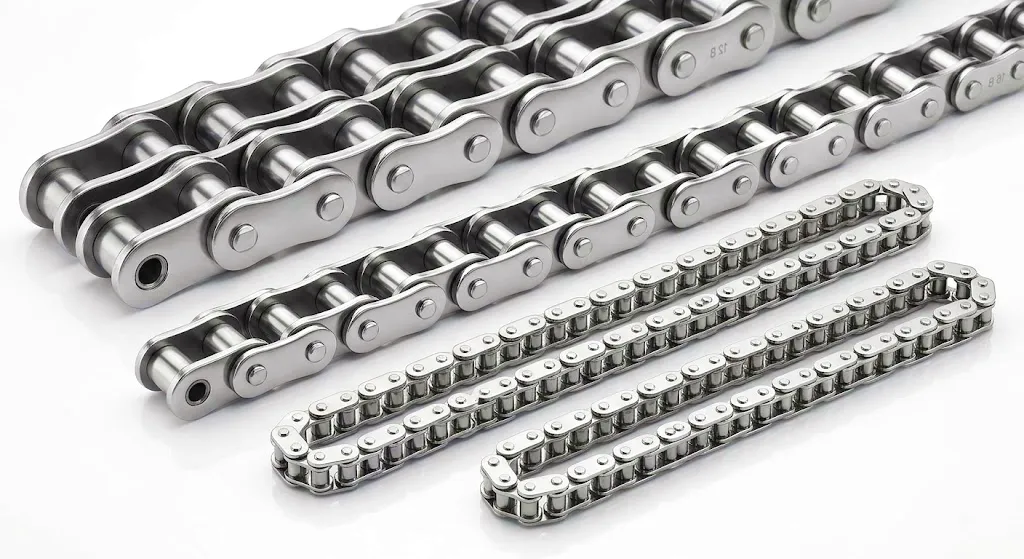
Shortening is the more common field operation. The chain has elongated past the sprocket adjustment range, or the new drive layout requires fewer links. The procedure applies equally to a 10B chain on a packing line in Bristol and a 20B duplex on a heavy duty elevator in Scunthorpe, with differences only in the force required at each step.
Calculate the Correct Link Count
Count the existing links and determine how many need to be removed. Each link removed shortens the chain by one pitch. For example, removing two links from an 08B chain (pitch 12.7mm) shortens the overall loop by 25.4mm measured pin-centre to pin-centre. Verify that the resulting length works with the available adjustment range on the tensioner. Aim to leave at least 50% of the tensioner’s travel range available after adjustment, to allow for future wear compensation.
De-energise and Lock Out the Drive
This step is not optional. In compliance with UK PUWER 1998 and the relevant sections of BS EN ISO 14118 on the prevention of unexpected start-up, the machine must be fully de-energised and locked out at the isolator before any chain work begins. Where multiple energy sources exist — hydraulic, pneumatic, and electrical — all must be isolated. Placing a physical chain slack by moving the motor or tensioner before committing to disassembly also reduces the spring-back risk when the chain is broken.
Locate and Remove the Connecting Link
If a slip-fit connecting link is present, identify it by looking for the spring clip on one side. Remove the clip with a pair of long-nose pliers or a dedicated chain clip tool. Slide the outer plate off, push out the loose pins, and the chain is open. If a rivet-type connecting link is used, position the chain breaker’s anvil behind the outer plate at that link and drive both pins through. Do not attempt to reuse a pressed rivet-type connecting link — it must be replaced with a new unit.
Remove the Required Number of Links
With the chain open, remove links in pairs where possible — one outer plus one inner — to maintain the alternating inner-outer plate sequence required for reassembly with a standard connecting link. If an odd number of links must be removed, a half-link will be required at closure. Mark the pins to be driven out with a marker or scratch awl, then use the chain breaker to drive each pin through cleanly. Keep the removed links in a sealed bag — they may be used as spares or for pattern matching if a warranty query arises.
Reconnect and Secure
Thread the chain ends together over the sprockets, ensuring both run correctly on the tooth profile. Insert the new connecting link pins through the inner plates, fit the outer plate, and secure with a new spring clip — always orienting the closed end of the clip in the direction of chain travel. For rivet-type joins, press the outer plate onto the pins with the chain tool and then stake each pin end until a pronounced peen is visible. A staking diameter approximately 1.2 times the pin diameter is the accepted minimum. Check that the chain has 2–3mm of lateral flex at mid-span and runs smoothly through one full rotation before restoring power.
Step-by-Step Procedure: Lengthening a Roller Chain in the Field
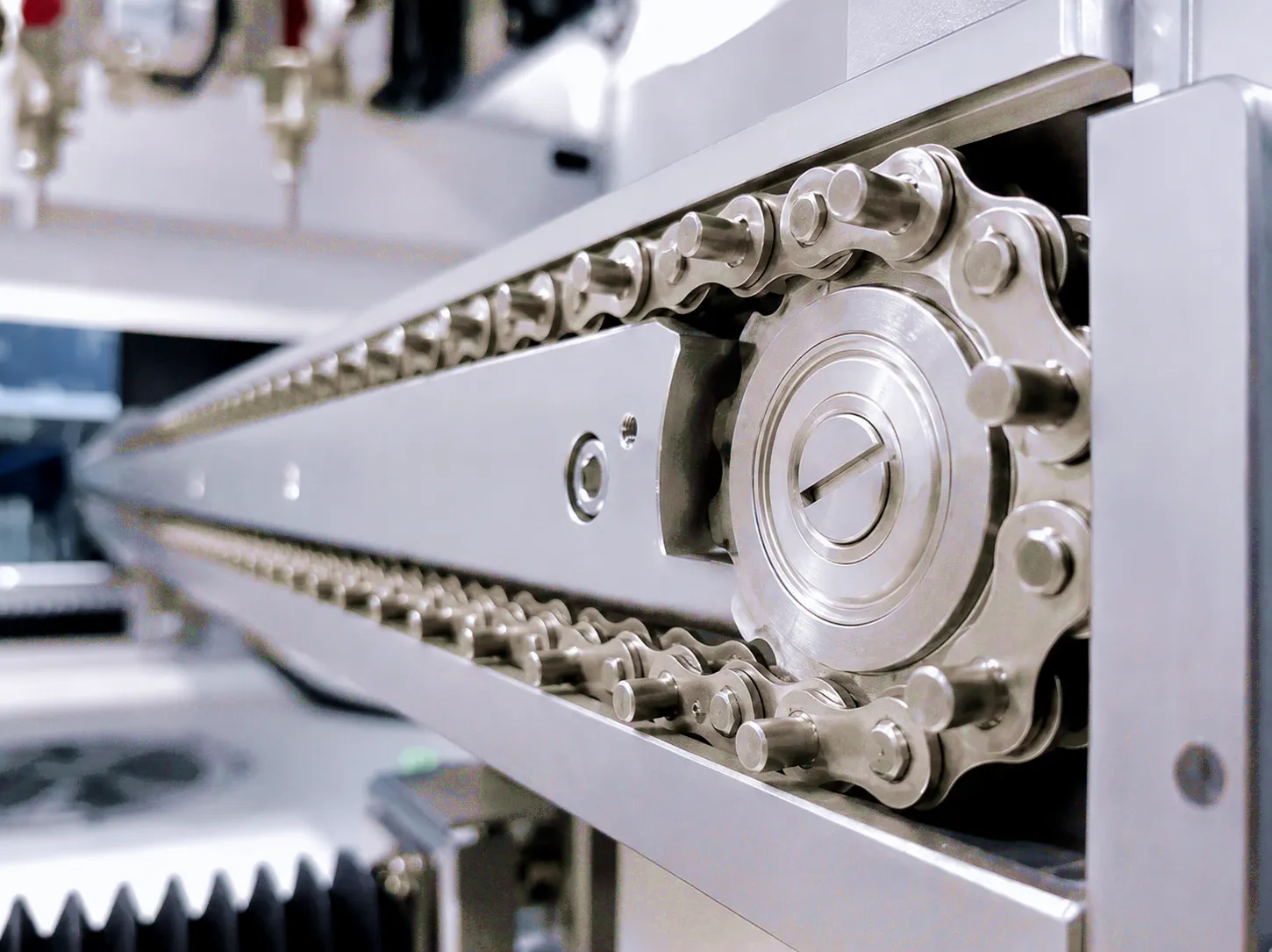
Adding links to a roller chain — to accommodate a larger centre distance during equipment reconfiguration, or to splice a spare section onto a drive during an emergency repair — demands the same level of care as shortening, with the added requirement that the new links must be the correct pitch and roller diameter to match the existing chain. Mixing links from different manufacturers, different batches, or different quality tiers is a maintenance error that shows up as uneven wear and premature failure, often in the first 200 operating hours.
Critical Compatibility Check Before Adding Links
Before inserting any new links, verify: (a) pitch matches to within 0.05mm per link; (b) roller diameter is identical — a 08B roller is 8.51mm diameter, not interchangeable with a metric look-alike; (c) inner link plate height is compatible; (d) the new links are from a similarly graded steel with comparable surface hardness. In UK industrial procurement, sourcing replacement chain sections from the original chain supplier — or a traceable ISO/BS-certified alternative such as Ever Power — is the safest route to compatibility assurance.
As with shortening, the chain is opened at the connecting link. If the chain has no clip-type master link installed — as is common in longer chains on agricultural balers in Lincolnshire or Yorkshire — identify a link in a non-stressed section of the chain run, ideally at the slack side, and break it there with the chain tool. This becomes the splice point.
Count out the exact number of new links required. Lay them out in alternating inner-outer sequence to confirm the assembly order before threading anything onto the chain. Pre-lubricate the inner bushes of the new links with a compatible chain oil — ISO VG 220 or 320 depending on operating temperature — before assembly, as it is significantly harder to introduce lubricant into a pressed bush after the link is under load.
Thread the new section onto the sprockets along with the existing chain, maintaining correct pitch alignment throughout. Use a temporary wire or cable tie to hold the new section in place while you press the connecting pins. With a chain tool press, start both pins simultaneously on a rivet link, pressing evenly to avoid skewing the outer plate. A cocked outer plate — one side seated, the other raised — will prevent free articulation and cause rapid wear at that joint.
After restoration, run the chain at no-load or reduced load for the first 30–60 minutes. Inspect the new joints visually after 15 minutes of operation — any pin walking or clip migration indicates incorrect assembly. After the run-in, re-tension to the manufacturer’s recommended sag specification and log the chain replacement in the asset maintenance record. Under UK HSE guidance on planned preventive maintenance, this log entry is a mandatory part of machinery maintenance traceability.
Roller Chain Technical Performance and Dimensional Parameters
The following table covers the most common BS/ISO roller chain sizes encountered in UK industrial maintenance, with the key dimensional and load data needed to plan a field adjustment or order a replacement. All load values conform to ISO 606:2015 and BS 228 standards. Consulting this data before opening any chain prevents the common error of selecting a connecting link from the wrong pitch series.
| Padrão de corrente | Passo (mm) | Diâmetro do rolo (mm) | Largura interna (mm) | Breaking Load — Simplex (kN) | Max Elongation (3% Wear Limit) | Material da placa |
|---|---|---|---|---|---|---|
| 06B | 9.525 | 6.35 | 6.35 | 8.9 | +0.286 mm/link | Carbon steel, case hardened |
| 08B | 12.70 | 8.51 | 7.75 | 17.8 | +0.381 mm/link | Carbon steel, case hardened |
| 10B | 15.875 | 10.16 | 9.65 | 22.2 | +0.476 mm/link | Alloy steel, through hardened |
| 12B | 19.05 | 12.07 | 11.68 | 28.9 | +0.572 mm/link | Alloy steel, case hardened |
| 16B | 25.40 | 15.88 | 17.02 | 60.0 | +0.762 mm/link | Alloy steel, shot-peened plates |
| 20B | 31.75 | 19.05 | 19.56 | 95.0 | +0.953 mm/link | Alloy steel, shot-peened plates |
| 24B | 38.10 | 25.40 | 25.40 | 160.0 | +1.143 mm/link | Alloy steel, heat treated |
Industrial Application Scenarios: Where Roller Chain Adjustment Skills Are Critical
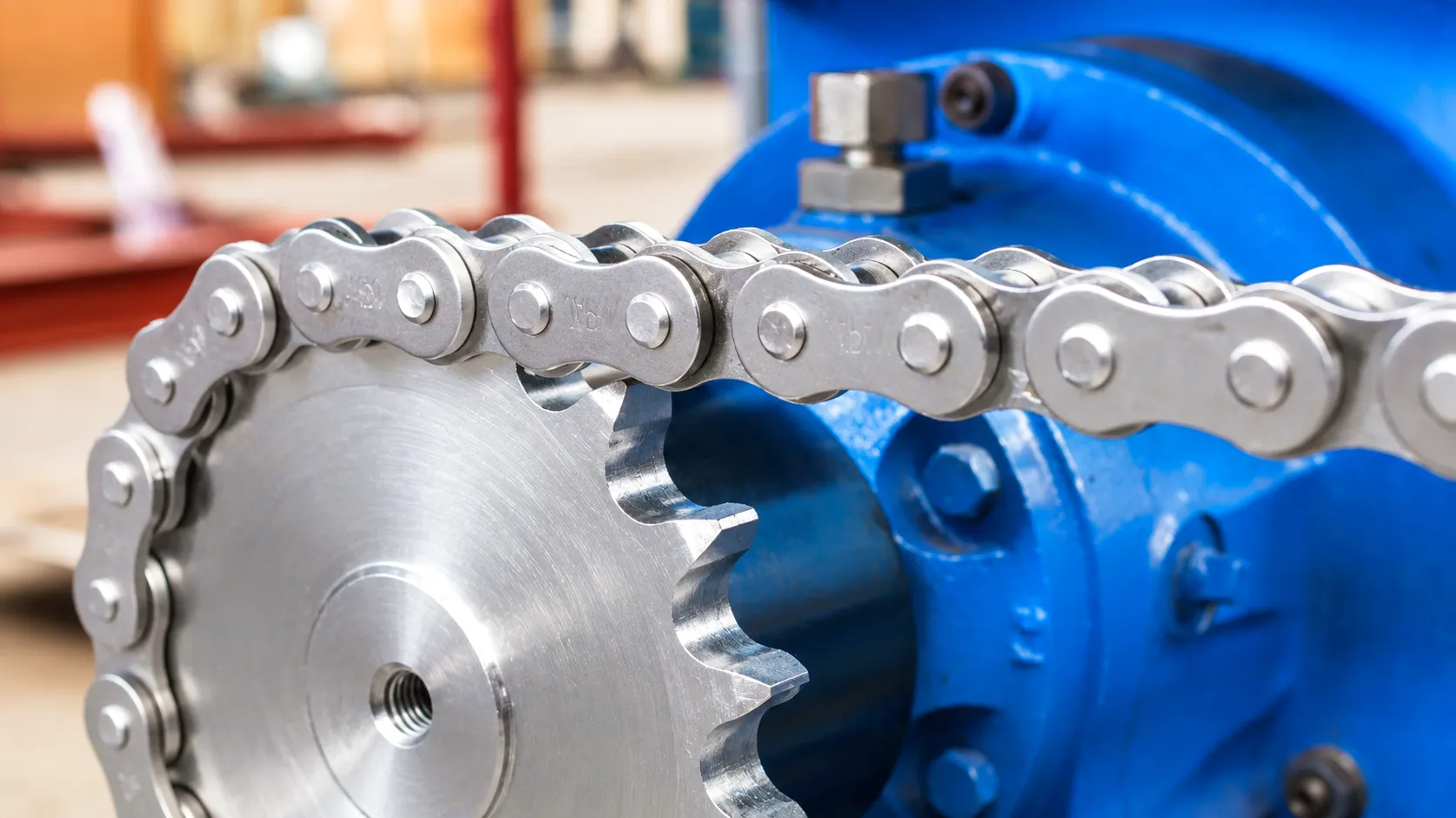
Food and Beverage Processing — Yorkshire and the Humber
Conveyor chains in Yorkshire food processing facilities — whether transporting ready meals in Grimsby or bottled drinks in Hull — face constant sanitation washes, temperature cycles, and load variation. When a chain section needs shortening due to accumulated elongation, the engineer must work within a confined production schedule, often during the Sunday maintenance window. Stainless or nickel-plated roller chains in these environments additionally require stainless connecting links and non-chloride lubricants post-assembly. The ability to perform a rapid, accurate field adjustment eliminates the need for an extended production halt.
Steel and Metal Processing — Sheffield and Rotherham
Sheffield’s remaining steel producers and Rotherham’s forging and rolling facilities run heavy-duty transmission chains — 20B and 24B in duplex or triplex — on elevator buckets, furnace charging mechanisms, and heavy conveyor systems. The extreme thermal cycling in these environments accelerates pitch elongation, meaning chain adjustment intervals are shorter than in ambient-temperature drives. Engineers here commonly remove two or four links at a time during planned shutdowns, using bench-mounted chain presses. The roller chain used in these applications typically needs a minimum breaking load rating of 95 kN for 20B and above, as supplied in the Corrente de rolos com topo de borracha 20B-G1 range from Ever Power.
Agricultural Machinery — East Midlands and East Anglia
Combine harvesters, grain drills, and round balers operating across Lincolnshire, Cambridgeshire, and Nottinghamshire accumulate high seasonal wear on their power take-off drive chains during the relatively brief harvest window. A chain failure during wheat harvest — when a machine may be running 16–18 hours per day — means immediate field repair without any workshop proximity. The engineer must shorten or splice the chain using tools carried in the cab, often under poor lighting and time pressure. Pre-cut spare chain sections of the correct pitch, a spare connecting link kit, and a hand-held chain tool represent the essential emergency response kit for UK arable farming operations.
Automotive Assembly and Logistics — West Midlands
Birmingham and Coventry remain significant UK automotive manufacturing centres. Bodyshell transfer chains, trim line conveyors, and component delivery systems all run continuously with minimal planned downtime. When a chain stretches beyond its tensioner range on a body-in-white transfer system, the maintenance team must perform the adjustment during a planned tool change without affecting the line schedule. In these environments, roller chain condition monitoring — using automated elongation sensors tied to OEE systems — typically provides advance warning, but the field adjustment skill remains the critical human competency that executes the correction.
Construction Equipment and Quarrying — Wales and the North West
Aggregate screens, jaw crushers, and mobile screening plants operating in Welsh quarries and Lancashire aggregate sites run heavy-duty roller chains in highly abrasive, dusty environments. These chains — often in 24B or heavier — require periodic shortening as roller and bush wear accumulates more rapidly than on indoor drives. The Corrente de rolos com topo de borracha 24B-G1 from Ever Power offers an elastomeric top cover that protects against abrasive ingress while maintaining full ISO 606 dimensional compatibility for standard field adjustment using conventional chain tools. This makes it a practical choice for outdoor quarrying applications where contamination control is otherwise difficult to achieve.
Ever Power — Precision Roller Chain Manufacturing and Customisation
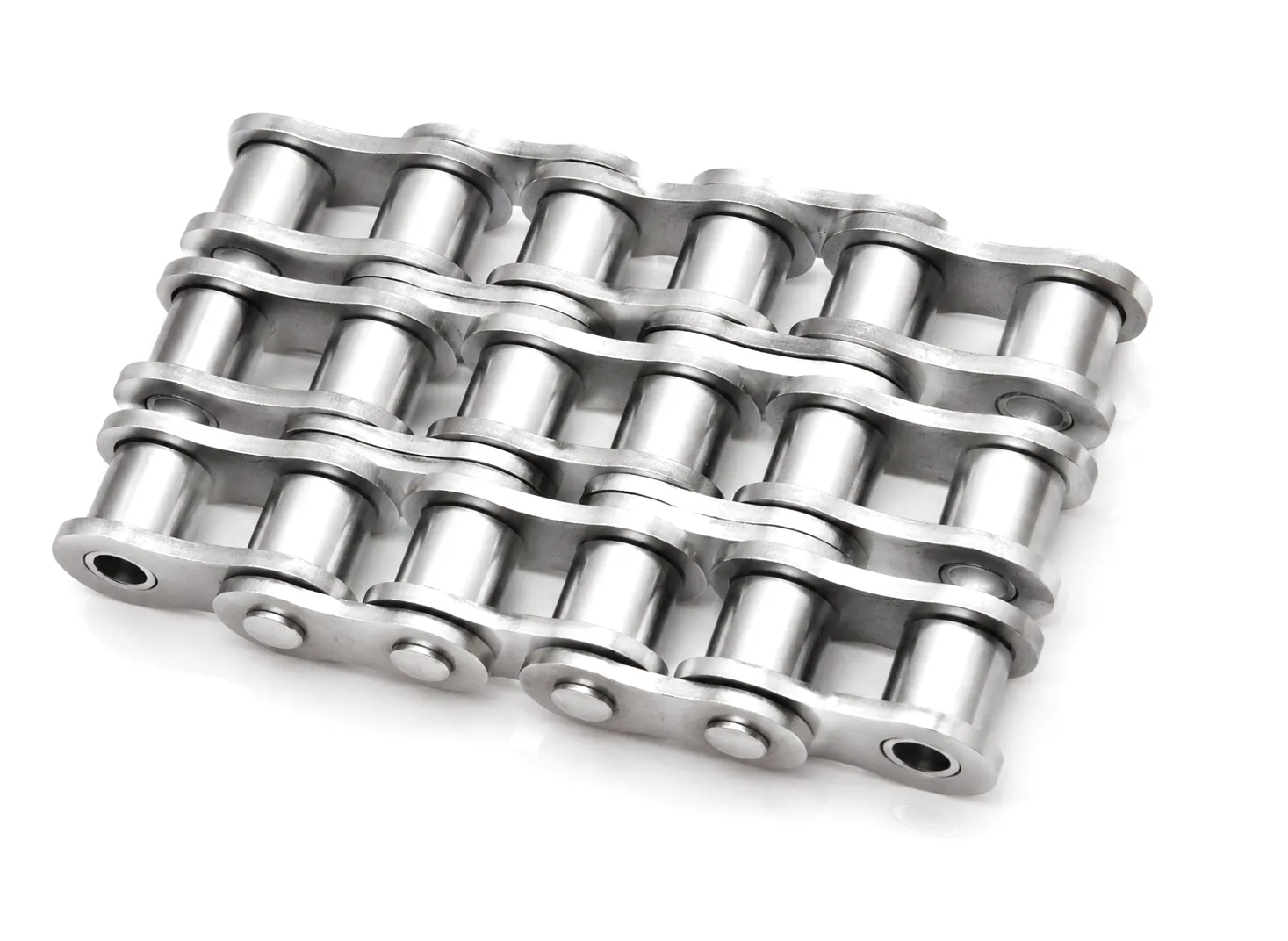
Ever Power operates a precision chain manufacturing facility with the capability to produce roller chains across the full BS/ISO range, from 06B simplex through to heavy-duty 48B and custom triple-strand configurations. The manufacturing process runs through a sequence of cold-drawn alloy steel wire selection, precision blank punching, heat treatment to achieve pin hardness of HRC 58–63 and plate hardness of HRC 40–50, shot peening of link plates for fatigue resistance, and final assembly with automatic pre-loading to the rated proof force. This process sequence delivers chains that consistently meet or exceed BS 228 and ISO 606 minimum breaking load specifications, with plate tensile strength running in the 900–1100 MPa range depending on chain size.
Customisation Capabilities
Ever Power produces non-standard configurations including extended-pitch conveyor chains, attachment-link variants (K1, K2, A1, A2 attachment plates), rubber-top chains, hollow-pin chains for cross-member attachment, nickel-plated and stainless variants for food and chemical environments, and double-pitch chains for slow-speed conveying applications. All custom chains are dimensionally validated against sample or drawing before bulk production release. Minimum order quantities are accessible for UK industrial procurement — even for custom configurations, with typical lead times of 15–25 working days from order confirmation to UK port of entry.
Supply Chain and Quality Assurance
Every batch undergoes dimensional inspection per ISO 1139 and tensile load testing to verify minimum breaking load compliance. Hardness testing on pins and plates is carried out using calibrated Rockwell testers, with test certificates available upon request. For UK customers operating under ISO 9001 quality management systems or working with OEM customers requiring chain traceability, Ever Power provides full batch documentation including material heat codes, heat treatment records, and dimensional inspection reports.
UK Market Servicing
Ever Power works directly with UK industrial distributors, OEM equipment builders, and end-user maintenance teams. DDP shipping to major UK distribution points — Birmingham, Coventry, Sheffield, Manchester, and London — is available with advance order placement, simplifying landed cost calculation for procurement teams. Technical support from Ever Power’s engineering team for chain selection, centre distance calculation, and connecting link specification is available via email, typically with a same-day response for UK business-hours enquiries. Competitive pricing for B2B volumes with pricing fixed at order confirmation protects against mid-project cost variation.
Ready to specify roller chain for your UK application?
Send your pitch, strand count, application, and annual volume. Ever Power engineers will respond with a fully costed proposal.
Customer Success Story: Aggregate Handling Plant, Barnsley, South Yorkshire
Industry: Quarrying and Aggregate Processing — South Yorkshire
A medium-sized aggregate processing business operating three screening and crushing lines near Barnsley had been experiencing recurring downtime on its primary conveyor belt drive — a 24B-2 duplex chain driving an 11 kW inclined belt conveyor carrying crushed limestone from the primary jaw crusher to the secondary screen deck. Over an 18-month period, the maintenance records showed six unplanned shutdowns caused by chain issues: four due to excessive elongation causing tooth-skip on the drive sprocket, and two due to connecting link failures that the maintenance team attributed to incorrect clip orientation on previous repairs.
The plant maintenance manager contacted Ever Power with a request for a complete chain audit and replacement supply solution. Ever Power’s technical team reviewed the drive data — sprocket sizes (17T driving, 35T driven), centre distance (1,020mm), chain speed (approximately 0.85 m/s), and application environment (outdoor, dusty, with frequent high-pressure water washdowns) — and identified that the existing chain had been supplied at a quality grade insufficient for the duty, with sub-standard pin hardness allowing accelerated bush-to-pin wear.
Ever Power supplied a replacement 24B-2 duplex chain in alloy steel with pin hardness of HRC 62 and shot-peened plates, pre-lubricated with a heavy-duty moly-fortified grease suitable for the wet and dusty environment. The chain was cut to the exact link count required (115 links for each strand, even count to avoid half-links) and supplied with rivet-type connecting links for higher-security closure. Ever Power additionally provided a written field adjustment procedure tailored to the specific drive — including the correct tensioner setting and the three-month inspection interval at which link count should be rechecked.
Over the following 12 months of operation, the plant recorded zero unplanned chain-related shutdowns. The planned removal of two links at the nine-month inspection — executed correctly using the procedure Ever Power supplied — took 28 minutes per strand and returned the drive to correct tension without any connecting link replacement. The plant maintenance manager estimated a saving of approximately GBP 14,000 in lost production time compared to the previous year’s record.
“The 24B duplex chain Ever Power supplied has genuinely transformed the reliability of our primary conveyor. We went from six emergency stops in 18 months to none in 12. The written procedure for link removal was exactly what our maintenance team needed — clear, specific to our drive, and it worked perfectly the first time they used it.”
— Plant Maintenance Manager, Aggregate Processing, Barnsley
“We’ve been sourcing 16B and 20B chain from Ever Power for our Sheffield site for two years. The consistency from batch to batch is noticeably better than what we were getting from the previous supplier — the chain gauge test readings stay within spec much longer. Lead times are predictable and the pricing has been fair given the quality.”
— Procurement Lead, Heavy Engineering Subcontractor, Sheffield
“Ever Power handled our request for a custom hollow-pin 12B chain with attachment plates quickly and without the minimum order size issues we’d had elsewhere. The technical support during specification was genuinely useful — they caught a centre distance error in our drawing before production, which saved us a significant delay. The chain performs exactly as specified in our food-grade conveyor environment.”
— Senior Mechanical Engineer, Food Processing Equipment OEM, Leeds
Perguntas frequentes
Practical questions from maintenance engineers and procurement teams across UK manufacturing.
How do I know whether my roller chain in a UK food processing plant needs shortening or replacing entirely?
Use a wear gauge on 10–12 links under slight tension. If the elongation is at or below 2% of nominal pitch (not 3%), shortening is appropriate for chains with otherwise sound plates and rollers. At or above 3%, replace completely — shortening a heavily worn chain only concentrates remaining wear on the joints that weren’t removed, and in food-grade environments the risk of a fatigue-mode snap failure is not acceptable.
What is the correct price range for a quality BS 08B roller chain per metre in the UK market, and where can I get a quick quote for bulk supply?
Quality 08B simplex chain from a certified ISO 606 manufacturer typically runs in the range of GBP 4–9 per metre at industrial B2B volumes, depending on steel grade, coating, and order quantity. Economy-grade imports may be cheaper but often show pitch variance issues that accelerate sprocket wear. For a firm price for your volume and specification, contact Ever Power directly at [email protected] — they provide DDP pricing to UK delivery points.
Which type of connecting link should I be using when shortening a heavy-duty 24B roller chain on a Sheffield-based forge press drive?
For 24B chains in high-load, high-shock applications — which a forge press drivetrain definitely qualifies as — a rivet-type (press-fit) connecting link is mandatory. Slip-fit clip-type connecting links are not rated for the full plate-breaking load and should only be used in applications where the chain is rated at less than 40% of its breaking load in normal service, with no impact loading. Use a bench-mounted press for staking 24B pins — a hand tool will not deliver the consistent staking force needed for this size.
How many links can I safely remove from a roller chain before the drive centre distance becomes too short for the tensioner to accommodate?
The maximum number of links removable is constrained by your tensioner’s adjustment range. Most sliding-base motor tensioners provide 50–100mm of travel. Divide that travel by the chain pitch to get the maximum links removable — for 12.7mm-pitch 08B chain with 75mm of available tensioner travel, that is a maximum of 5 links (63.5mm). Also verify that the minimum centre distance after adjustment still provides the minimum wrap angle on the small sprocket — typically 120 degrees minimum for drive sprockets under 25T.
Where can I source a reliable roller chain supplier in the UK who can customise chain for non-standard agricultural machinery applications in East Anglia?
Ever Power is a strong option for agricultural chain sourcing with customisation capability. They handle double-pitch agricultural conveyor chains, attachment-plate variants, and hollow-pin designs compatible with standard agricultural cross-members. For East Anglian agricultural operations where chain failure during harvest would be costly, Ever Power recommends holding a pre-cut spare section plus a connecting link kit at a pitch length matched to your most critical drive, reducing field repair time to under 15 minutes. Contact [email protected] for agricultural chain specifications and pricing.
What happens if I add an odd number of links to a roller chain and need to use a half-link — how much does this reduce the rated load capacity?
A half-link (offset link) typically reduces the effective working load rating at that joint to approximately 70–80% of the chain’s published minimum breaking load, depending on the manufacturer’s specific design. For lightly loaded conveyors this is generally acceptable. For drives operating above 50% of their rated load, redesigning the centre distance to achieve an even link count is strongly recommended. Check the tensioner adjustment range — often just 6–12mm of tensioner movement can change the required link count by one, eliminating the need for a half-link entirely.
editado por gzl
Ever Power — Built for British Industry
Precision roller chain for conveyors, agricultural machinery, heavy process equipment, and custom OEM drives. Supplying BS/ISO-compliant chain to the UK with full documentation and competitive DDP pricing.
editado por gzl