How Stainless Steel Roller Chain Actually Works
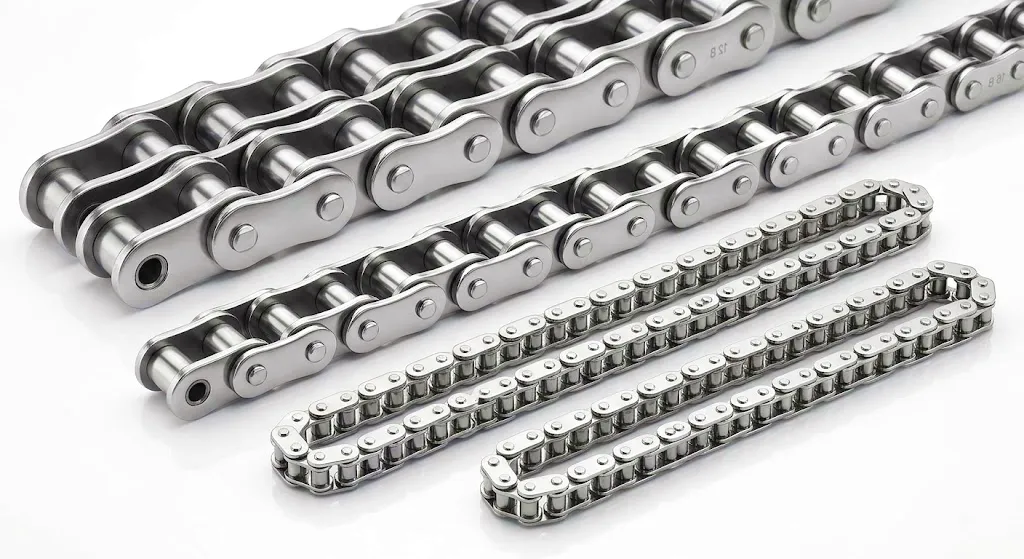
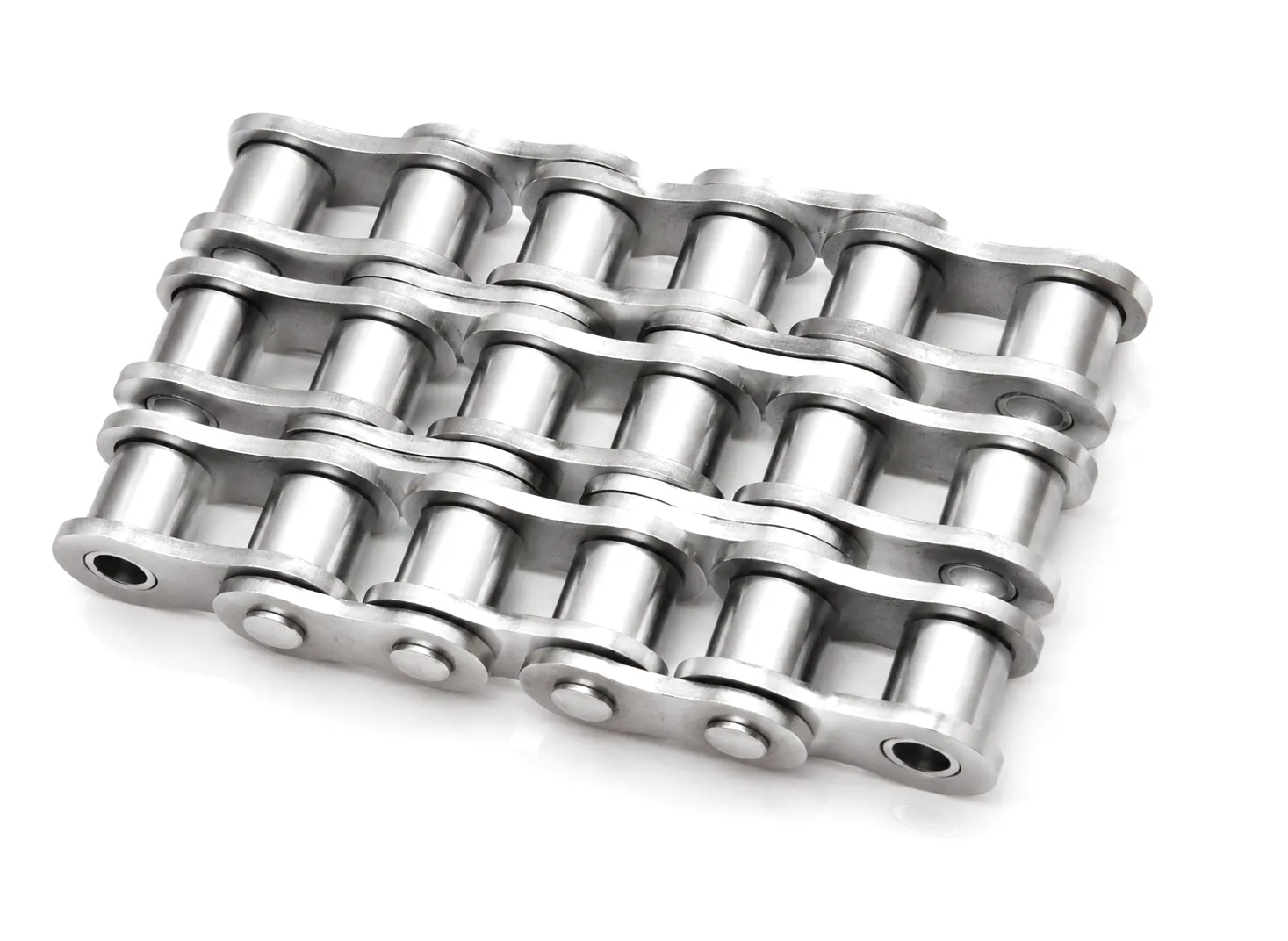
The stainless steel roller chain transmits rotational power between sprockets through a precisely sequenced engagement cycle. As the drive sprocket turns, each roller — a hardened, hollow cylinder riding on a stainless bushing — seats into a sprocket tooth cavity. The geometry of that seating defines how load is transferred: the roller contacts the tooth flank tangentially, spreading the force across the tooth face rather than concentrating it at a single point. This distributed contact reduces peak stress at any one location, which is why well-maintained roller chain can sustain surprisingly high cyclic loads without fatigue failure. When the chain wraps the driven sprocket, the process reverses, and kinetic energy is transferred to the output shaft. The critical insight here is that every link in the chain plays a role in that transfer: link plates carry tensile load, pins resist shear and bending, bushings control rotational freedom, and rollers mediate the sprocket interface. In stainless steel roller chain, every one of those components is manufactured from corrosion-resistant alloy, so the chain’s mechanical integrity is not compromised when moisture, acids, or cleaning chemicals contact any part of the assembly.
Pitch — the centre-to-centre distance between adjacent pins — is the defining dimension of roller chain geometry, standardised under BS/ISO 606 across the range from 6.35 mm (1/4 inch) to 76.2 mm (3 inches) for most industrial applications. As a stainless steel roller chain wears, pitch elongation occurs because the pin-bushing interface gradually loses material. Engineers track this elongation as a percentage of nominal pitch: industry practice recommends chain replacement when elongation reaches 1.5% to 2% for precision drives, or up to 3% for lower-speed conveyors. The articulation of each link joint under load — that micro-rotation of pin within bushing at every engagement and disengagement event — is where stainless steel’s mechanical properties become especially relevant. Austenitic stainless grades have a face-centred cubic crystal structure that resists brittle fracture under shock loading far better than many carbon steels at equivalent hardness levels. This means a stainless roller chain that encounters an unexpected jam or momentary overload is less likely to shatter than a hardened carbon-steel chain, though the trade-off is lower maximum tensile strength for a given cross-section.
 Lubrication sits at the heart of roller chain longevity. In standard carbon-steel chains, petroleum-based oils are typical; in stainless steel applications the picture is more nuanced. Food-grade NSF H1 lubricants are mandatory on chains that may contact consumable products, while in high-temperature oven conveyors dry or graphite-based lubricants replace oils that would carbonise. Some modern stainless roller chains incorporate sintered bushings pre-impregnated with lubricant, reducing maintenance intervals substantially and making them attractive for remote or inaccessible drive positions. The interplay between material selection, surface finish, and lubrication regime determines the practical service life in any given installation — which is why specifying stainless roller chain is not simply a matter of ordering the right pitch and width, but requires a considered view of the entire operating environment.
Materials Behind the Corrosion Resistance
The workhorse stainless grade for roller chain. 18% chromium and 8% nickel form a self-healing passive oxide layer that resists atmospheric corrosion, freshwater, and mild organic acids with remarkable effectiveness. SS304 is the standard specification for food processing conveyors, general-purpose wet environments, and cleanroom applications where periodic washdown with water or dilute cleaning agents is routine. Its tensile strength typically sits in the 515–620 MPa range, lower than high-carbon chain steel but entirely adequate for most conveyor and light-duty drive applications. The grade’s wide availability and relatively modest premium over carbon steel make it the pragmatic choice when corrosion resistance is needed but the chemical environment is not severe.
The addition of 2–3% molybdenum to the SS316 composition dramatically improves resistance to chloride-induced pitting and crevice corrosion — the failure mode that destroys SS304 in coastal environments, salt-spray washdown applications, and chemical plants handling chlorinated solvents or bleaching agents. Facilities in coastal industrial zones like Portsmouth’s marine-sector workshops or chemical processors along the Mersey estuary specify SS316 stainless roller chain as standard. The molybdenum also improves performance at elevated temperatures up to approximately 870°C in intermittent service, giving SS316 chain an edge in oven conveyor applications. The cost premium over SS304 is meaningful but typically justified when the alternative is frequent chain replacement or unplanned production stops from corrosion-related failures.
For applications that demand both high tensile strength and good corrosion resistance — offshore lifting equipment, high-speed precision drives in chemical plants — precipitation-hardened grades such as 17-4PH or duplex stainless alloys like 2205 are used for chain pins and plates. These grades achieve tensile strengths of 900–1300 MPa while retaining usable corrosion resistance, narrowing the gap between stainless and carbon-steel roller chain performance. They remain niche choices due to cost and longer lead times, but for critical drive applications in corrosive environments they provide performance that no standard carbon-steel chain with a corrosion-protective coating can match over the long term.
Manufacturing process matters as much as alloy selection. High-quality stainless roller chain uses precision cold-forming for link plates to achieve consistent thickness without micro-cracks, centreless grinding on pins to tight diameter tolerances (typically ±0.005 mm), and controlled sintering or through-hardening of bushings depending on application requirements. Shot-peening of link plates is applied in premium ranges to introduce compressive surface stresses that resist fatigue crack initiation under cyclic loading — a particularly valuable treatment for chains operating in food-processing washdown environments where moisture cycling promotes corrosion-fatigue interactions.
Stainless Steel Roller Chain — Technical & Performance Parameters
ผลิตภัณฑ์โซ่ลูกกลิ้งความแข็งแรงสูงที่โดดเด่น
For heavy-duty drive applications where standard stainless grades must be supplemented with extreme tensile performance, our high-strength roller chain range delivers proven results in the most demanding UK and global industrial environments.
Core Technical Advantages of Stainless Steel Roller Chain
The chromium content in stainless steel instantly forms a nanometre-thin chromium oxide layer when exposed to oxygen. This passive film is self-repairing: if the surface is scratched, the film re-forms spontaneously in the presence of air or moisture. For conveyor systems in food processing, pharmaceutical manufacturing, or coastal installations across the UK, this self-healing corrosion protection removes the requirement for protective coatings, oil barriers, or corrosion-inhibiting sprays that would be mandatory on carbon-steel chains. The result is lower ongoing maintenance cost and a dramatically cleaner operating environment.
Austenitic stainless grades retain meaningful ductility and toughness at cryogenic temperatures where carbon steel becomes brittle and prone to sudden fracture. At the upper end, SS316 maintains structural integrity to temperatures that would cause carbon-steel chains to scale and lose strength. This thermal range — from sub-zero cold-store conveyors to bakery oven exit conveyors — is rarely matched by any single carbon-steel chain product. UK food manufacturers who run mixed ambient and high-temperature process lines often standardise on SS316 stainless roller chain to simplify their inventory and maintenance training programmes across both zones.
Stainless roller chain withstands a broad spectrum of industrial chemicals that would rapidly destroy plated or coated carbon-steel alternatives: dilute acids (acetic, citric, phosphoric), alkali cleaning solutions, and many organic solvents. This chemical compatibility makes it the default specification for pharmaceutical tablet-press conveyor systems, laboratory automation, and cleaning-in-place (CIP) compatible food-grade lines. The chain’s resistance extends to the detergents and sanitisers routinely used in UK dairy and ready-meal production facilities operating under FSA hygiene standards.
The smooth surface finish achievable on stainless steel components — particularly with electropolished pin and roller surfaces — resists bacterial adhesion and biofilm formation in ways that rough-textured plated surfaces simply cannot. For UK meat-processing facilities in Lincolnshire and poultry operations in Norfolk, this hygiene advantage directly reduces the risk of cross-contamination events and simplifies compliance with HACCP monitoring requirements. The non-porous stainless surface can be cleaned to food-contact standards with alkaline CIP cycles without degrading the chain’s structural or surface integrity over repeated wash cycles.
The initial purchase price of stainless roller chain is typically two to four times that of an equivalent carbon-steel chain, a fact that can mislead procurement departments who focus solely on unit cost rather than total cost over the chain’s service life. When the full picture is drawn — reduced lubricant consumption, elimination of corrosion-inhibiting surface treatments, extended replacement intervals, and avoided production downtime from premature corrosion failures — stainless steel roller chain consistently delivers lower cost per operating hour in corrosive environments. UK manufacturers operating under continuous production schedules, where unplanned stoppages for chain replacement carry significant financial penalties, find this total-cost argument compelling.
Austenitic stainless steel is essentially non-magnetic in the annealed state. This property is of direct value in MRI-compatible medical device assembly lines, electromagnetic test equipment conveyor systems, and any application where magnetic fields from the chain itself would interfere with sensors, measuring instruments, or the products being conveyed. Several UK electronics and defence-sector manufacturers specify non-magnetic stainless roller chain as standard in their precision assembly areas, where even a small magnetic signature from a drive component could affect calibration or testing procedures.
Knowing the Limitations: Where Stainless Roller Chain Falls Short
Stainless roller chain is also more susceptible to stress-corrosion cracking (SCC) in specific environments: concentrated chloride solutions at elevated temperatures, strong caustic cleaners above 50°C, and oxidising acid concentrations that might arise during chemical plant upsets. SCC can cause sudden fracture without visible prior elongation, making it a particularly serious failure mode. Engineers must verify that the specific chemical exposure in their application falls within safe limits for the stainless grade specified. Cost is the third real limitation — in applications where corrosion resistance is genuinely unnecessary, such as dry indoor drives with good housekeeping, the premium cost of stainless roller chain brings no operational benefit and the capital would be better spent on quality carbon-steel chain with a planned maintenance programme.
Industrial Application Scenarios Across the UK
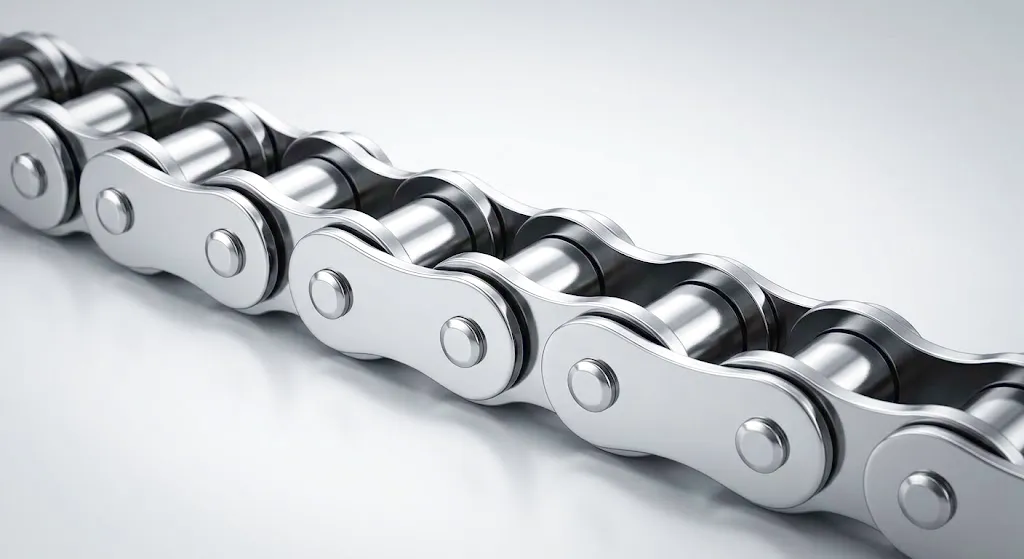
Ever Power: Precision Manufacturing and Customisation
Ever Power operates dedicated stainless steel roller chain production lines, physically segregated from carbon-steel manufacturing to prevent cross-contamination of materials. Every batch of stainless chain is produced from certified SS304 or SS316 coil stock with full material traceability certificates, essential for pharmaceutical and food-grade customers who need documented supply chain assurance. Our CNC pin-grinding cells hold diameter tolerances to ±0.003 mm, and our automated riveting stations apply controlled cold-heading force to ensure consistent pin head geometry across every link in every chain length we produce.
Beyond standard pitch and strand configurations, Ever Power’s engineering team designs and manufactures custom stainless roller chain solutions: extended-pin attachments for flight bars and pusher dogs, bent-plate attachments for product guides, hollow-pin variants for cross-rod systems, and specialised roller profiles for curved track conveyor systems. We work directly with UK OEM customers’ engineering teams to develop chain assemblies that integrate seamlessly with proprietary machinery designs. Electropolishing of finished chains is offered as a premium option for pharmaceutical and medical device customers who require the lowest possible surface roughness (Ra < 0.4 µm) for validated hygiene performance.
Ever Power maintains bonded stock in standard pitches (08B, 10B, 12B, 16B, 20B per BS/ISO 606) for rapid despatch to UK customers. Our logistics partnership with established freight forwarding services ensures named-day delivery to major UK distribution hubs including Birmingham, Manchester, and Northampton. For high-volume contract customers, we offer consignment stock arrangements managed on a min-max replenishment basis, eliminating the procurement lead times that can create vulnerable gaps in MRO supply for production-critical applications.
Customer Success: Sheffield Food Processing Plant
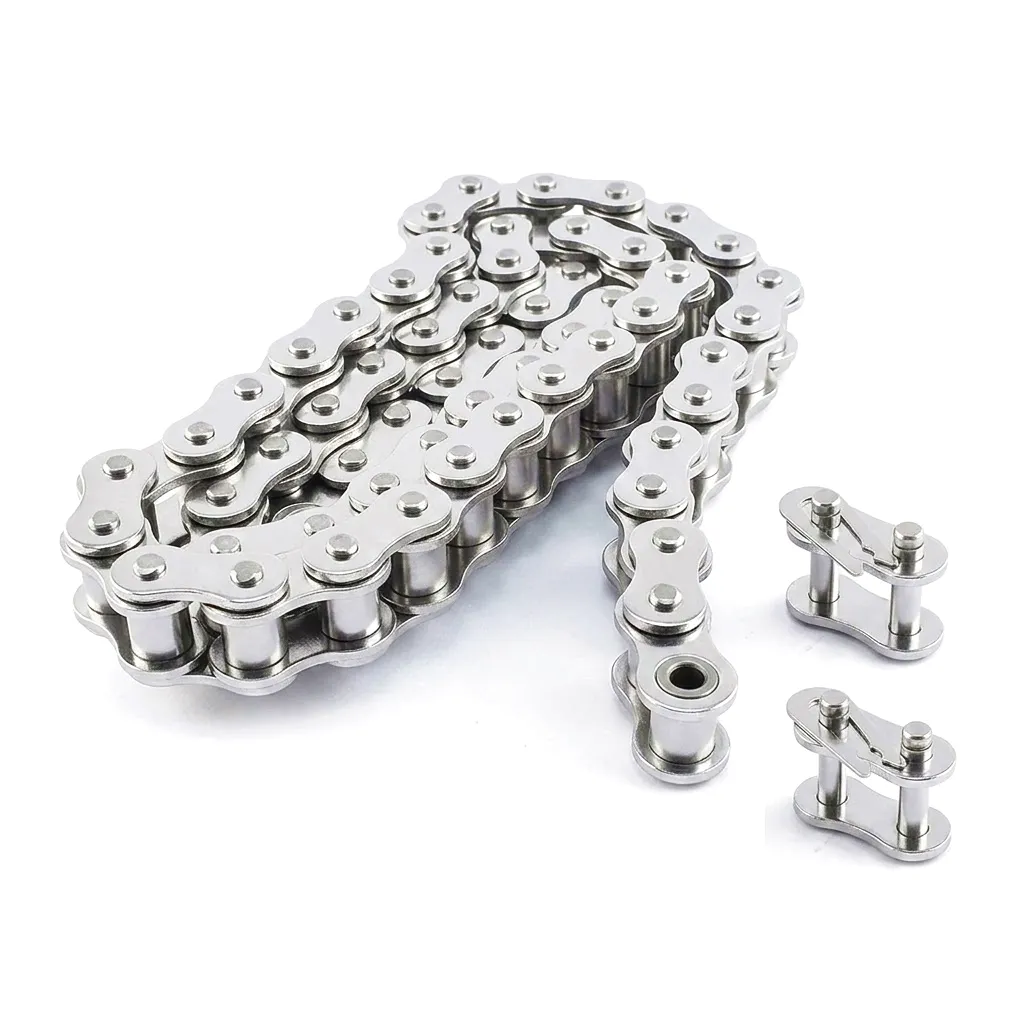 A Sheffield-based ready-meal manufacturer operating three high-throughput production lines contacted Ever Power in early 2024 facing a recurring maintenance problem. Their existing carbon-steel conveyor chains on two washdown lines were requiring replacement every eight weeks, contributing to over forty hours of unplanned production downtime annually and consuming a disproportionate share of the site maintenance team’s capacity. The chains were in constant contact with the dilute citric acid-based marinades used in the marinated chicken product range, combined with twice-daily hot-water washdown with alkaline cleaning agents at 65°C.
Ever Power’s technical team conducted a site assessment and specified SS316 stainless roller chain with electropolished pin and roller surfaces, matched to the existing sprocket geometry to allow a straightforward drop-in replacement without machine modification. Because the application involved direct food-contact risk from chain lubricant, Ever Power also recommended a transition to NSF H1-compliant food-grade grease applied at six-week intervals, replacing the mineral oil that had been used previously. Two custom chain lengths with flight-bar attachments were manufactured to accommodate the product pusher system on line three.
At the twelve-month review, pitch elongation on all five conveyor drives remained below 0.8%, well within the 2% replacement threshold. The previously problematic washdown lines had operated continuously for eleven months without chain replacement. The maintenance team estimated a net saving of approximately £18,500 in chain replacement parts and avoided downtime costs over the first year, against an initial investment premium of around £4,200 for the stainless upgrade — a payback period of under three months. The site’s HACCP audit score for conveyor system hygiene also improved materially, removing the chain lubrication audit non-conformance that had appeared in two successive third-party assessments under the previous carbon-steel specification.
ลูกค้าชาวอังกฤษของเราพูดว่าอย่างไรบ้าง
“Ever Power’s SS316 chain has been on our washdown conveyors for over fourteen months without a single replacement. The elongation readings at our last inspection were barely measurable. The electropolished surface passes our hygiene audits without any comment from the inspector. For our Sheffield site, this is the chain we will specify going forward.”
“We switched our entire Birmingham pharmaceutical tablet-press conveyor fleet to Ever Power SS304 stainless chain eighteen months ago. The material traceability documentation they provided was exactly what our QA team needed for the supplier approval process — certificates at batch level, not just at product family. Lead times have been consistently met, even on the custom hollow-pin variant we needed for line four.”
“Our Portsmouth marine slipway winch drives have been running Ever Power SS316 chain for two full seasons in salt spray conditions that destroyed two previous suppliers’ products inside a year. Ever Power’s technical team also advised on the right lubrication interval for an outdoor marine environment, which made a real difference. Competitive pricing on repeat orders has also been a genuine help to our MRO budget.”
คำถามที่พบบ่อย
The decision hinges primarily on the chemicals your chain will contact. SS304 handles most food-grade environments — water, organic acids, standard alkaline cleaning agents — reliably and at lower cost. SS316 is the correct choice whenever your process involves chloride-containing substances, bleach-based sanitisers, or salt brines, because its molybdenum content resists the pitting corrosion that would attack SS304 in those conditions. Coastal locations like Portsmouth or Aberdeen, where salt air is a background constant, also favour SS316 even in otherwise benign process environments.
Standard austenitic stainless roller chain typically costs between two and four times the price of an equivalent carbon-steel chain in the same pitch and strand specification. The exact multiple depends on the current stainless flat-rolled steel market, the pitch size, and the strand count. For a typical 12B-1 conveyor chain, you might pay £28–£38 per metre for SS304 stainless versus £9–£14 for carbon steel. SS316 adds a further 15–20% over SS304. However, when total cost of ownership is modelled over a typical two to three year planning horizon in a corrosive environment, stainless almost always delivers a better financial outcome. Contact our team for a quote tailored to your specific application and volume.
Ever Power maintains bonded stock of standard BS/ISO pitch stainless roller chain with rapid despatch capability to UK destinations. For custom specifications — non-standard pitches, attachment variants, electropolished finishes, or dual-strand configurations — lead times depend on complexity but are communicated clearly at the enquiry stage. The most efficient route to a firm quote and lead-time commitment is to email your application details directly to [email protected], including the chain pitch, strand count, required length, operating environment, and any attachment requirements.
Lubrication interval depends heavily on operating speed, load, temperature, and how aggressively the chain is washed down. For a typical food-processing washdown conveyor running at moderate speed with twice-daily cleaning, NSF H1-approved food-grade grease applied every four to six weeks is a reasonable starting point. After lubrication, always allow the chain to run through a full cycle before a washdown event, so the grease seats properly into the pin-bushing interfaces before being exposed to cleaning water. Chains with pre-lubricated sintered bushings can extend this interval further — consult with our technical team when specifying if extended lubrication intervals are a priority for your maintenance schedule.
The heaviest users of stainless roller chain across the UK are food and beverage processing (especially meat, dairy, and ready-meal sectors in the East Midlands and Yorkshire), pharmaceutical manufacturing (Cheshire, Oxfordshire), marine engineering (Hampshire, Aberdeen), water and wastewater utilities, and chemical processing (Teesside, Humber). Each of these sectors operates environments where carbon-steel chains corrode rapidly, coating systems fail under chemical attack or abrasion, and the contamination risk from chain degradation products is genuinely unacceptable. Stainless roller chain resolves all three concerns simultaneously, which is why it commands a premium and retains a loyal specification following in these industries.
Yes — Ever Power’s customisation capability covers non-standard pitches, special strands, attachment variants, and bespoke lengths. For the fastest possible response, email [email protected] with the following: pitch and standard reference if known (e.g., 12B-2 per BS/ISO 606), total length required, number of inner and outer links if applicable, any attachment details (pin extensions, bent plates, clevis attachments), stainless grade required (SS304, SS316, or other), and your target operating environment. A member of our technical sales team will respond with a formal quotation within one working day for standard configurations, and within two to three days for custom designs requiring engineering review.
Ever Power’s technical team is available to review your application and recommend the optimal stainless roller chain specification, complete with material certifications and rapid UK delivery.