Kelelahan Rantai vs Keausan Rantai: Memahami Dua Mode Kegagalan
A precision engineering guide for UK industrial operations — from Birmingham fabrication lines to Sheffield steel plants
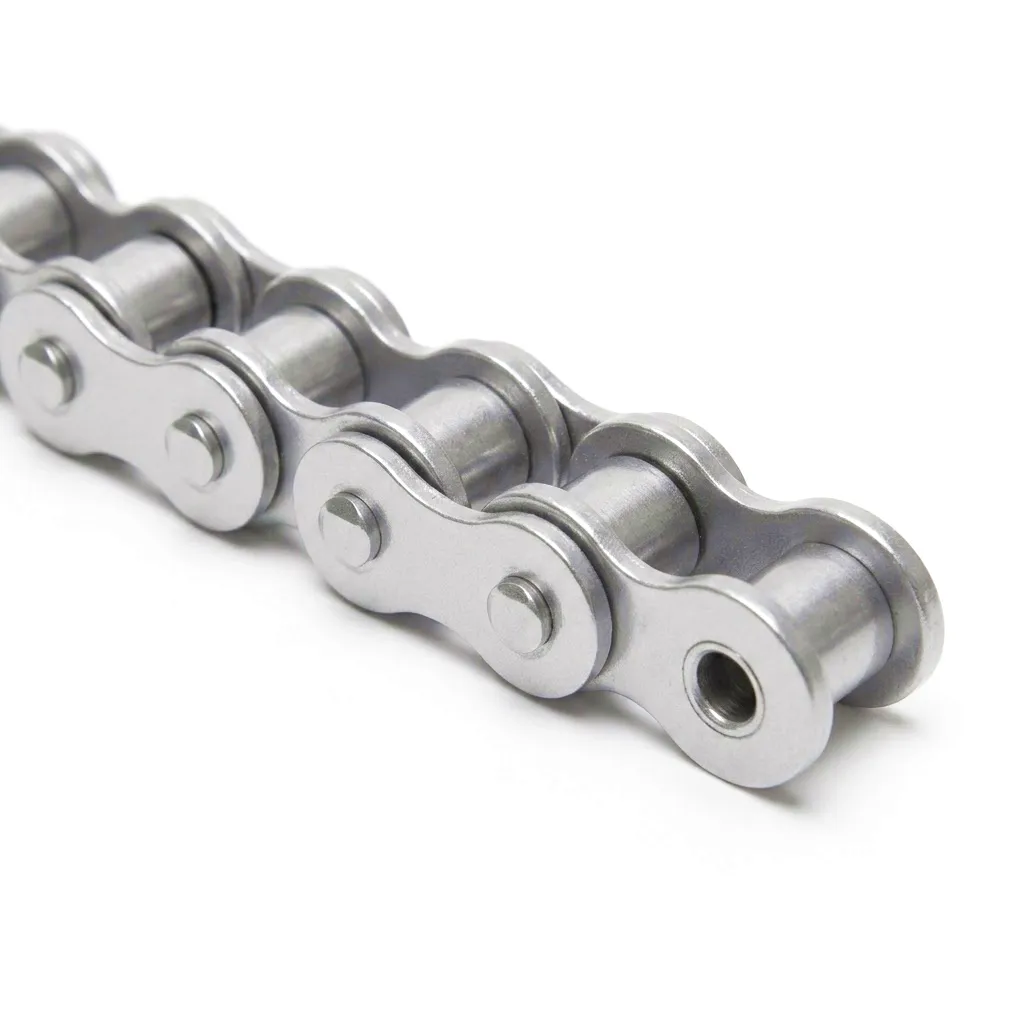 Roller chain is the backbone of mechanical power transmission across the UK’s manufacturing sector — from conveyor systems in West Midlands automotive plants to agricultural equipment working the farmlands of Lincolnshire. Yet despite its apparent robustness, roller chain is susceptible to two fundamentally different failure mechanisms that demand equally different engineering responses. Chain fatigue and chain wear are frequently confused, misdiagnosed, and — critically — mismanaged, leading to unplanned downtime, accelerated component replacement costs, and in worst cases, catastrophic equipment failure on the production floor.
What Chain Fatigue Actually Is — and Why It Catches Engineers Off Guard
Chain fatigue is a structural failure mode triggered by cyclic loading — the repeated application and removal of tension forces on the link plates and pins as the chain articulates around sprocket teeth. Every revolution of the drive sprocket subjects each link to a stress cycle. Over millions of cycles, microscopic cracks nucleate at stress concentration points — most commonly at the pin hole edges on the inner and outer plates — and propagate under continued loading until a sudden fracture occurs. The insidious quality of fatigue failure is that it strikes at loads well below the chain’s rated breaking strength. A chain that could withstand a single pull of 80 kN may fracture after extended service at a cyclic load of only 25 kN. This is the core paradox of fatigue: the chain appears sound right up until the moment it doesn’t. In UK manufacturing environments operating continuous three-shift patterns — common in automotive supply chains around Coventry and Derby — this failure mode is particularly dangerous precisely because it gives so little visible warning before separation.
The crack propagation sequence in chain fatigue is well-documented in tribological literature. Stage one involves the formation of a persistent slip band at the stress concentration — typically the punched pin hole, where the cold-work boundary creates a metallurgical notch effect. Stage two sees the crack grow stably at a rate proportional to the stress intensity factor range (ΔK). Stage three is catastrophic fast fracture when the remaining cross-section can no longer carry the applied load. The fracture surface of a fatigue-failed plate is characteristically smooth and beach-mark patterned in the stable-growth zone, transitioning to a rough, granular texture at the final overload region. Any maintenance team that has the opportunity to examine a failed chain plate should look for this signature — it is the definitive forensic confirmation of fatigue as the failure mode, distinguishing it conclusively from overload fracture or impact damage.
The primary drivers of chain fatigue severity are the magnitude of the cyclic stress range, the mean stress level (pre-tension), and the presence of stress concentrations from manufacturing imperfections or installation misalignment. In practical terms for a UK-based heavy fabrication operation, this means that tight centre distances causing excessive chain tension dramatically accelerate fatigue progression. A drive that operates with 15% over-tensioning — something easily introduced during a rushed post-maintenance reinstallation — may reduce the chain’s fatigue life by 40 to 60%, according to engineering fatigue S-N data for standard carbon steel link plates. This is why Ever Power engineers not only specify material grades and tensile strengths but provide detailed installation guidance covering correct tension measurement procedures and allowable sag values for every chain series we manufacture.
Chain Wear Elongation: The Slow, Predictable Failure You Can Manage
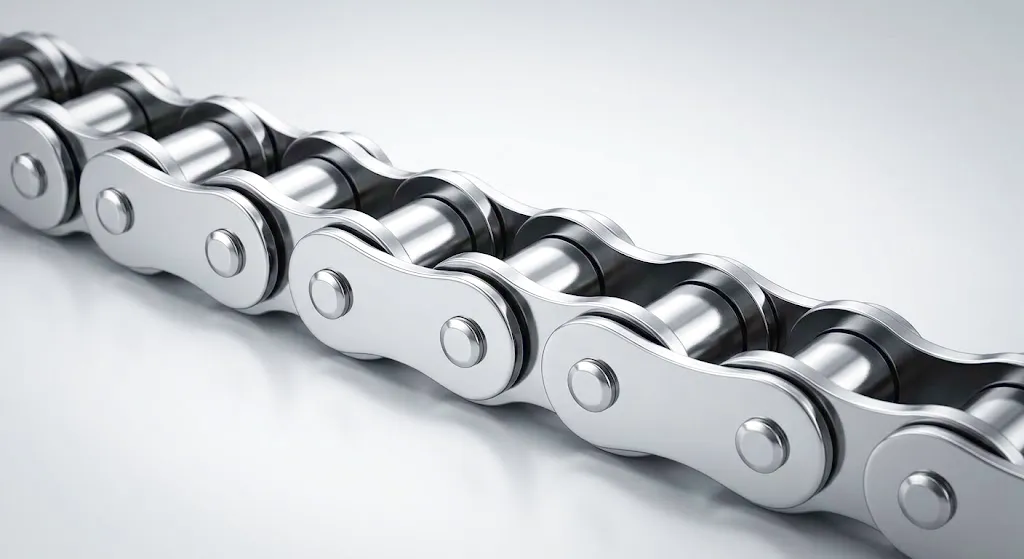
Chain wear — more precisely described as pin-bush articulation wear — is an entirely different physical phenomenon. As the chain articulates around the drive and driven sprockets, the hardened steel pin rotates within the bush, and the contacting surfaces experience sliding contact under load. This removes material from both the pin outer surface and the bush inner bore through adhesive and abrasive wear mechanisms. The cumulative material loss manifests as increased pin-to-bush clearance, which when distributed across all links in a chain drive, produces the measurable elongation that maintenance engineers refer to as chain stretch. It is worth stating clearly: the chain links themselves do not stretch in a metallurgical sense. The plates do not plastically deform under normal service loads. What elongates is the effective pitch — the distance between pin centres — as wear clearance accumulates at each articulation joint.
For roller chain operating in the agricultural machinery sector — harvesting equipment working the cereal-growing belts of East Anglia and Yorkshire — contamination-accelerated wear is the dominant challenge. Dust, chaff, and mineral particles ingested from field conditions create a three-body abrasive condition between pin and bush surfaces. Properly lubricated and sealed chain can achieve service lives of 2,000 to 3,000 hours in clean industrial environments. The same chain specification running unlubricated in abrasive contamination may fail by elongation within 400 to 600 hours. This fourfold to fivefold reduction in service life is the quantified cost of inadequate lubrication and sealing — numbers that every UK agricultural machinery operator should have in their maintenance planning framework.
Sliding Velocity
Lubrication Film
Contamination Level
Pin/Bush Hardness
Surface Finish
ISO and ANSI standards specify a maximum allowable elongation of 2% before chain replacement is mandated for most applications. Some high-precision indexing drives specify 1.5%. Beyond this threshold, the elongated pitch no longer matches the sprocket tooth geometry correctly, causing the chain to ride high on the teeth — a condition called “chordal rise” — accelerating sprocket tooth wear and increasing the risk of roller damage and tooth jumping under shock load.
Specialist Roller Chain Products for Demanding Applications
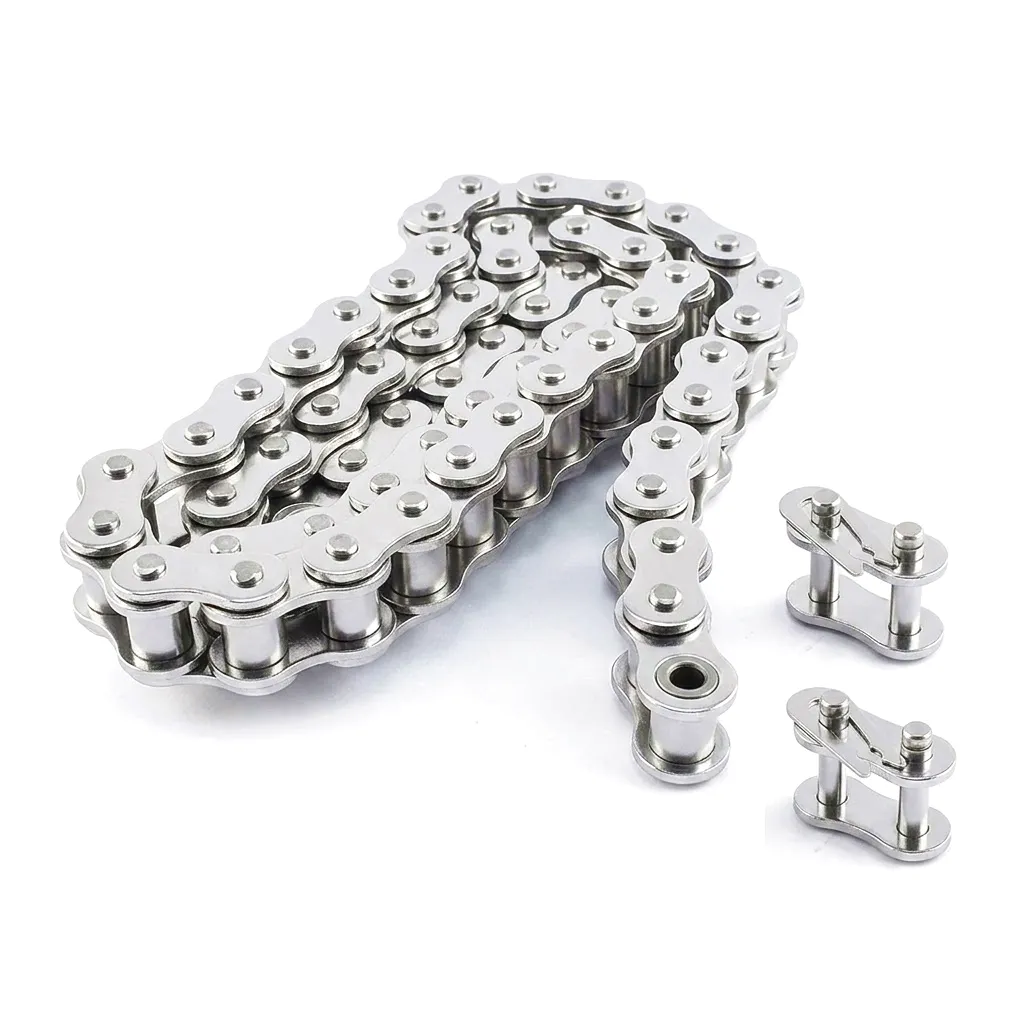
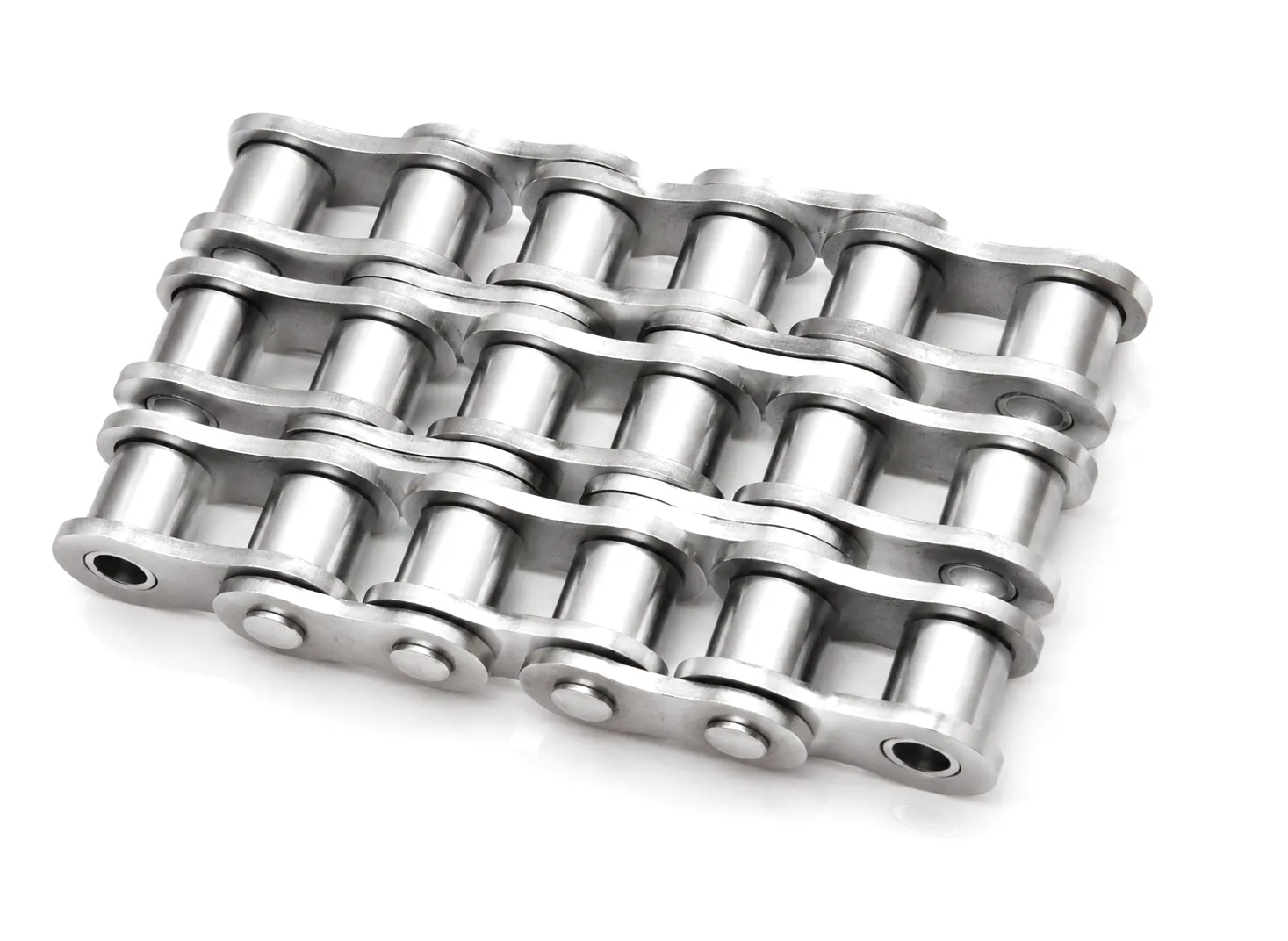
Designed for conveying applications where product surface protection is critical, the 24B-G1 features a vulcanised rubber top attachment that resists both fatigue cracking and accelerated wear in contaminated environments. The reinforced pin-bush geometry provides superior resistance to the cyclic loading conditions that typically initiate fatigue failure in standard chains — making it an excellent choice for food processing and packaging lines across the UK.
The 20B-G1 delivers the same rubber-top protection profile in a lighter pitch series suited to medium-duty conveying and processing equipment. Its case-hardened pins and precisely sintered bushes minimise the wear progression that leads to pitch elongation, while the rubber attachment layer resists impact loads that would initiate fatigue cracking in bare plate designs. Widely specified by UK machinery builders for both primary and secondary processing lines.
Technical Comparison: Fatigue vs Wear Failure Parameters
The table below summarises the distinguishing technical characteristics of both failure modes across all critical diagnostic and design dimensions. Maintenance engineers should use this as a reference framework when conducting post-failure analysis or designing preventive maintenance schedules.
| Parameter | Chain Fatigue | Chain Wear |
|---|---|---|
| Primary Mechanism | Cyclic stress crack propagation in link plates / pins | Adhesive / abrasive material removal at pin-bush interface |
| Primary Failure Component | Inner / outer link plates; occasionally pins | Pins and bushes (internal articulation surfaces) |
| Kondisi Beban | High cyclic stress range; often at < 50% breaking load | Moderate sustained load + sliding velocity + contamination |
| Typical Onset | 10^6 to 10^8 stress cycles; earlier with stress raisers | Progressive from service start; accelerates after 1,000–2,000 h |
| Visual Indicators | Crack at pin hole edge; beach-mark fracture face; sudden separation | Pitch elongation > 2%; sagging; riding high on sprocket teeth |
| Measurement Method | Dye penetrant inspection; magnetic particle testing; SEM fracture analysis | Chain pitch gauge; ruler measurement over 20+ pitches; wear gauge pins |
| Key Preventive Action | Reduce cyclic stress range; correct tension; improve sprocket alignment | Consistent lubrication; contamination sealing; correct chain grade |
| Failure Predictability | Low — sudden without visible warning before fracture | High — measurable, progressive, schedulable replacement |
| Material Solution | Higher-grade alloy plates; shot-peened surfaces; precision punching | Case-hardened pins; sintered bush; pre-lubricated O-ring seals |
| Max Allowable Elongation | N/A — plate fracture, not elongation failure mode | 2.0% (standard); 1.5% (precision indexing drives) |
Roller Chain Working Principle and Core Material Science
A roller chain transmits power through the engagement of hardened rollers with sprocket teeth. As the drive sprocket rotates, each tooth enters the chain from the loose side, engages a roller, and draws the chain taut on the tight side. The roller — free to rotate on the bush — reduces the frictional energy at tooth engagement from the sliding contact that would occur in a plain bush chain to a rolling contact condition. This rolling action is central to the chain’s mechanical efficiency (typically 98 to 99% on a well-maintained drive) but it also creates the cyclic Hertzian contact stress between roller outer surface and tooth flank that, under heavy load conditions, contributes to roller fatigue spalling. The articulation of inner plates relative to outer plates at each sprocket wrap — the true hinge action of the drive — is where wear originates, and where the pin-bush contact pressure determines wear rate.
The material science behind roller chain is precisely what separates commodity chain from premium industrial chain. Link plates are manufactured from medium-carbon steel — typically SAE 1045 or equivalent — heat-treated to a tensile strength of 700 to 900 MPa for standard grades, with alloy-steel grades (Cr-Mo steels, SAE 4140/4340 equivalents) used in heavy-duty and high-fatigue applications reaching tensile strengths of 1,000 to 1,200 MPa. Plate hole edges are deburred and in premium grades shot-peened to introduce compressive residual stresses that directly counteract the tensile fatigue crack-opening forces at the pin hole.
Pins are manufactured from case-hardening steels — SAE 8620 or equivalent — carburised and hardened to a surface hardness of 58 to 62 HRC with a tough core. Bushes are sintered from iron-copper powder, impregnated with lubricant, achieving a micro-porous structure that provides sustained lubrication at the pin-bush interface between external re-lubrication events. This combination of precision heat treatment, surface engineering, and materials science is what enables roller chains from Ever Power to deliver consistent performance across the temperature ranges and load spectra encountered in UK industrial operations.
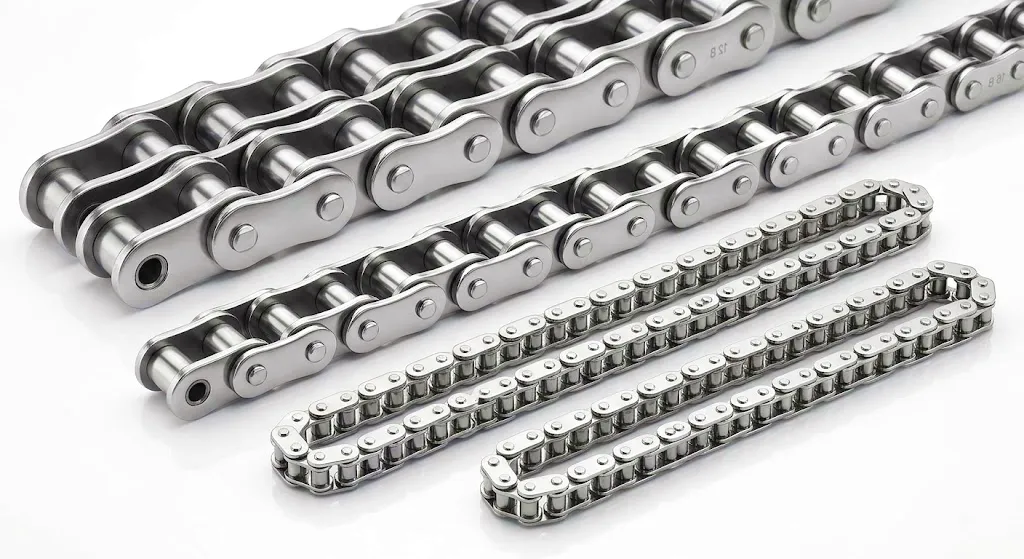
Product Technical and Performance Parameter Reference
| Chain Series | Jarak antar titik (mm) | Beban Putus (kN) | Pin Dia (mm) | Plate Thickness (mm) | Kecepatan Maksimum (m/s) | Fatigue Rating | Ketahanan Aus |
|---|---|---|---|---|---|---|---|
| 08B-1 (Standard) | 12.70 | 18.0 | 4.45 | 1.50 | Up to 7.0 | Standar | Standar |
| 12B-1 (Standard) | 19.05 | 29.0 | 5.72 | 1.78 | Up to 6.0 | Standar | Standar |
| 16B-1 (Standard) | 25.40 | 60.0 | 8.28 | 4.00 | Up to 5.0 | Enhanced | Enhanced |
| 20B-1 (Heavy Duty) | 31.75 | 95.0 | 10.19 | 4.50 | Up to 4.0 | Superior | Superior |
| 24B-1 (Heavy Duty) | 38.10 | 127.0 | 14.63 | 5.00 | Up to 3.5 | Superior | Superior |
| 28B-1 (Ultra HD) | 44.45 | 160.0 | 17.02 | 5.50 | Up to 2.8 | Premium | Premium |
Skenario Aplikasi Industri di Seluruh Sektor Manufaktur Inggris
Roller chain drives in automotive body-press lines, transfer machines, and powertrain assembly conveyors operate under high-cycle fatigue conditions due to the continuous stop-start indexing motion. Plants in the Coventry and Birmingham corridor rely on heavy-duty series chain with shot-peened plates and precision press-fit pins to withstand the shock loading that would rapidly initiate fatigue cracks in standard-grade chain. The ability to audit and specify fatigue-rated chain precisely matched to the duty cycle is where engineering procurement in this sector adds the most value.
Sheffield’s remaining steel and specialty metals sector subjects roller chain to both elevated temperature and heavy tensile loads on furnace conveyor systems and rolling mill drives. In these environments, wear is dramatically accelerated by thermal cycling, which breaks down lubricant films and introduces thermal fatigue effects on the pin surface. Heat-resistant chain with stainless steel or high-alloy pin and plate construction — combined with a high-temperature lubricant programme — addresses both failure modes simultaneously. Ever Power supplies customised heat-rated chain to UK metals customers with specific hardness profiles for operating environments up to 400 °C.
Combine harvesters, balers, and grain handling conveyors operating in the arable farming counties of East Anglia and Yorkshire present a classic wear-dominated failure regime. Abrasive crop material — particularly dust from dry cereal harvesting — creates three-body abrasive conditions at the pin-bush interface that can reduce chain life to a fraction of clean-environment values. O-ring sealed and X-ring sealed agricultural chain variants trap pre-applied lubricant within the articulation joint and physically exclude abrasive particles, extending replacement intervals and reducing the total cost of ownership across a harvest season where chain replacement during peak operations is operationally disruptive and expensive.
With the UK’s logistics sector expanding rapidly across new distribution centre developments in the East Midlands and South East, conveyor chain drives running 24/7 in sortation and palletisation systems experience fatigue-dominant failure patterns driven by the continuous stop-and-start indexing motion of pallet handling systems. Proper drive design — with adequate slack-side sag to prevent over-tensioning, correctly rated sprocket tooth count, and regular pitch measurement checks — keeps these chains within safe fatigue operating limits. Ever Power chain for this sector is available in both standard simplex and duplex configurations, with optional stainless attachments for hygienic applications in chilled warehouse environments.
In food processing environments from Yorkshire dairy facilities to Scottish whisky distillery bottling lines, roller chain must combine wear resistance with hygienic compliance. Stainless steel construction (SS304 or SS316) addresses both the corrosive cleaning chemical exposure and the requirement for smooth, easily cleanable surfaces. The fatigue properties of stainless chain differ from carbon steel counterparts — typically lower fatigue limits due to the austenitic microstructure — making correct load ratings and frequent inspection schedules particularly important. Nickel-plated and plastic-bush variants are also specified for applications where metal contamination of food product must be eliminated by design, providing an additional layer of HACCP compliance beyond procedural controls alone.
The UK’s wind energy sector, centred around offshore installations from the North Sea to the Irish Sea coast, presents some of the most demanding roller chain operating environments imaginable. Pitch adjustment drives and nacelle positioning mechanisms must deliver reliable service for years between planned maintenance access windows. Marine-grade stainless or corrosion-protected chain with sealed articulation joints is specified, with fatigue life calculations based on measured wind loading spectra rather than simply nominal power ratings. The consequence of a fatigue failure in an offshore nacelle is not just a production loss but a multi-week access planning exercise, making correct chain selection and fatigue-life validation at the design stage an economic imperative rather than a theoretical engineering nicety.
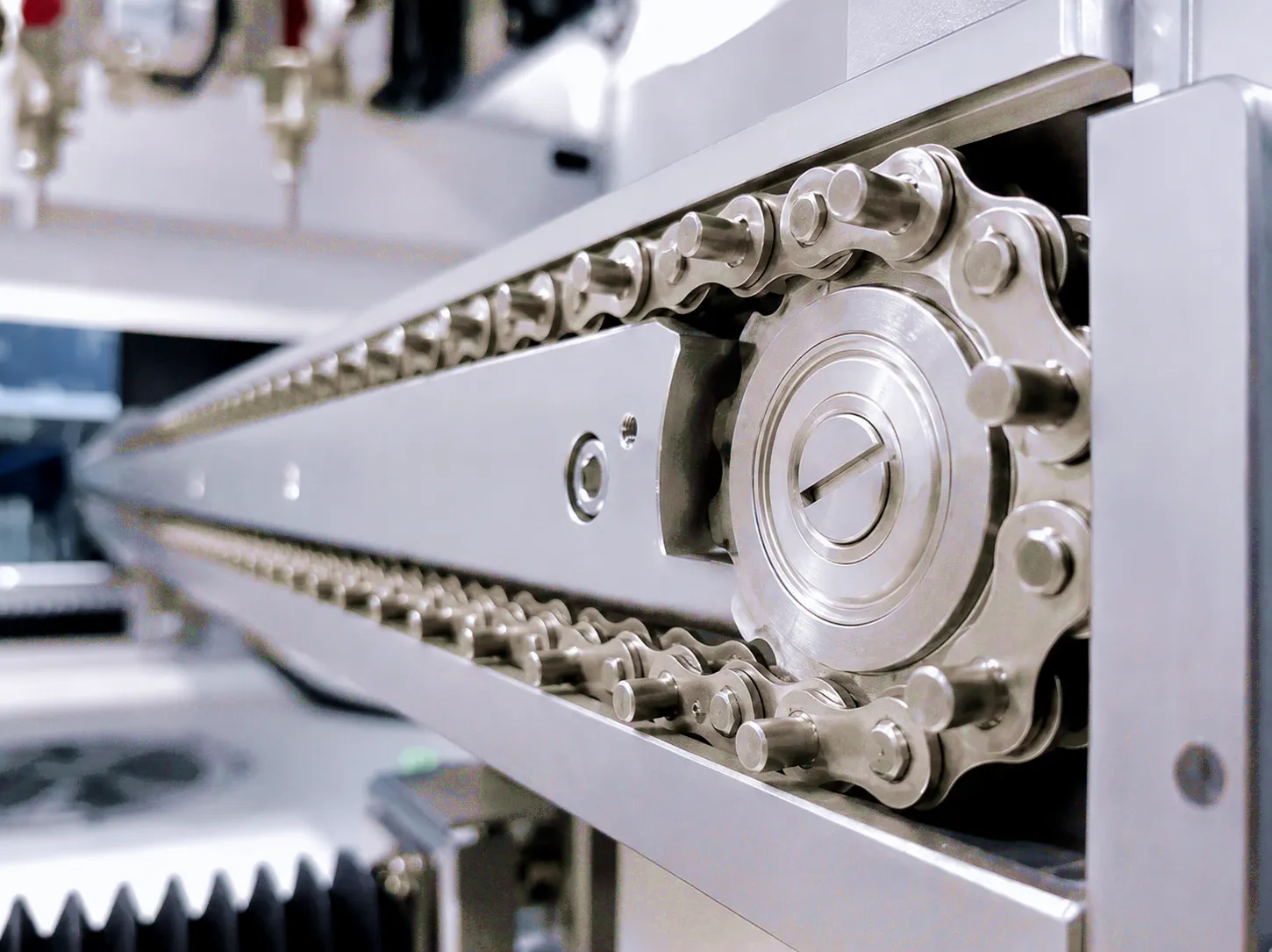
Core Technical Advantages of Properly Specified Roller Chain
Rolling contact between hardened roller and sprocket tooth minimises frictional losses compared to sliding contact alternatives, delivering near-lossless power transmission that belt or friction drives cannot match at equivalent load ratings in compact drive envelopes.
Unlike belt drives subject to slip, positive engagement chain drives maintain an exact speed ratio between driver and driven sprockets throughout service life, making them the mandatory choice in indexing, timing, and synchronisation applications where ratio drift would cause process errors.
Roller chain transmits very high loads through a remarkably compact cross-section compared to V-belt or flat belt alternatives of equivalent power rating. This compact power density allows machine designers to reduce gearbox centres, shorten shaft lengths, and reduce overall machine weight without sacrificing drive reliability or service life.
Unlike fatigue failure — which is statistically distributed and sudden — wear elongation progresses at a predictable rate that can be tracked with simple chain pitch gauges. This measurability transforms chain maintenance from a reactive breakdown response into a planned replacement activity with predictable cost and scheduling, supporting the kind of maintenance budgeting and OEE optimisation that UK manufacturers increasingly require.
The roller chain principle scales from standard carbon steel in clean industrial environments through stainless steel for food and marine applications, to nickel-plated, self-lubricating, and high-temperature alloy variants — all sharing the same fundamental working principle while addressing the specific wear and fatigue challenges of each operating environment.
Unlike V-belt drives that lose tension over time as the belt’s elastomer creeps under load, a properly installed roller chain drive requires only periodic adjustment for wear elongation. There is no tension decay mechanism equivalent to belt creep, meaning a correctly installed roller chain drive maintains its designed operating condition for the full service interval without mid-interval re-tensioning that would interrupt production.
Ever Power: Precision Manufacturing and Global Supply
Ever Power brings decades of precision roller chain manufacturing experience to the UK and global B2B market, combining advanced production technology with the application engineering knowledge necessary to specify chain correctly against both fatigue and wear failure modes from the outset. Our manufacturing capability spans the full range of standard BS and ANSI series chains through to engineered customised solutions involving bespoke plate geometry, attachment configurations, material specifications, and surface treatment requirements that no catalogue product can address.
Customisation at Ever Power is not a special-order exception — it is a core manufacturing competence. We operate precision punch presses, continuous heat-treatment furnaces, and automated assembly lines that allow us to modify plate thickness, link plate height, pin diameter, attachment geometry, or material specification without the long lead times and minimum order quantities that constrain many chain suppliers. For UK customers managing tight project schedules and plant maintenance windows, this flexibility in supply chain delivery is as important as the technical specification itself.
Our quality management system subjects every production batch to hardness verification, breaking load testing, pitch measurement, and dimensional inspection before despatch. We supply chain to operators in Birmingham’s manufacturing corridor, Sheffield’s metals sector, East Anglia’s agricultural market, and emerging renewable energy installations around the UK coast — delivering in quantities from sample orders for engineering evaluation through to full-container volumes for OEM customers and MRO distributors. Speak with our engineering sales team to discuss your specific application and receive a technical and commercial proposal tailored to your requirements.
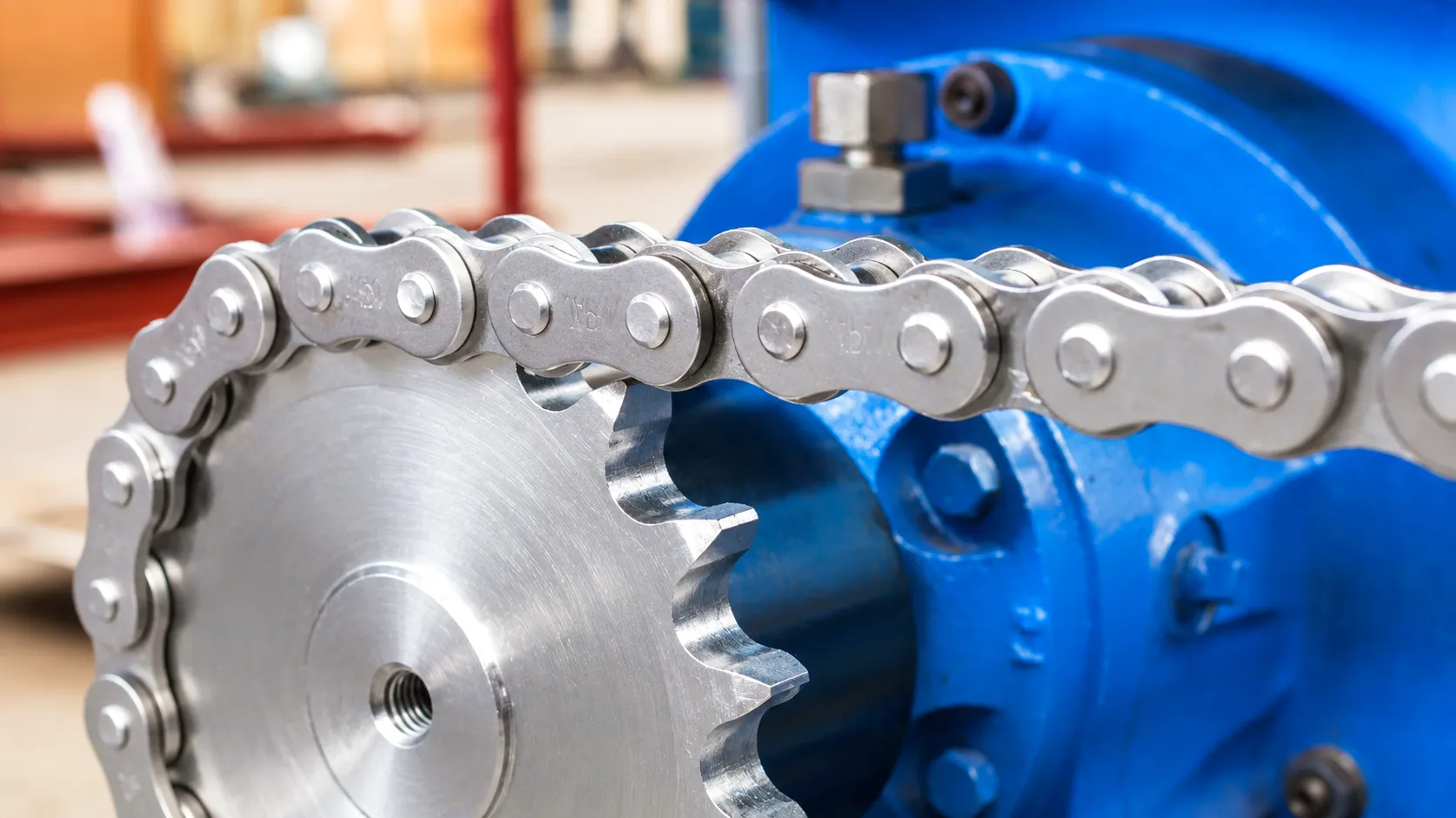
Customer Success: Birmingham Automotive Tier-1 Supplier
A Birmingham-based Tier-1 automotive stamping supplier operating a ten-press transfer line was experiencing recurrent roller chain failures on the transfer bar drive system — an average of two unplanned chain fractures per quarter, each causing between six and twelve hours of unplanned downtime during production. The maintenance team had been replacing the failed chains with equivalent standard-grade carbon steel BS 20B-1 simplex chain from a UK distributor, but found the failure interval remained consistent regardless of supplier. Initial visual inspection of failed components showed the beach-mark fracture pattern characteristic of plate fatigue — not overload failure — meaning the chain specification itself was wrong for the application, not the installation or lubrication practice.
After contacting Ever Power’s technical sales team, a detailed application review was conducted. The transfer bar drive was operating at a cyclic frequency of 42 strokes per minute with a measured tight-side tension of 28 kN — within the catalogue breaking load of standard 20B-1 chain, but generating a cyclic stress range at the pin holes that exceeded the material’s fatigue endurance limit by approximately 15%. The recommendation was a change to Ever Power’s heavy-duty 20B-1H series with alloy-steel link plates, shot-peened hole edges, and a matched set of precision-bored sprockets to correct the minor misalignment identified during the site survey. The total changeover cost — including chain, sprockets, and engineering time — was recouped in under three months through elimination of unplanned downtime losses alone.
Eighteen months after the changeover, the customer reported zero chain fatigue failures on the press transfer line. The wear elongation data from their quarterly pitch measurement programme indicated that the heavy-duty chain was wearing at a rate consistent with the expected three-year planned replacement interval, giving the maintenance team a predictable, schedulable replacement date during planned shutdown periods rather than the unpredictable fracture events that had previously disrupted production at commercially critical moments in the model year build programme.
“The heavy-duty chain specification Ever Power recommended has been running for over a year without a single unplanned failure. The difference between standard and fatigue-rated chain in this application is not marginal — it’s transformative for production reliability.”
“Ever Power’s technical team understood immediately that we had a fatigue problem, not a wear problem. That diagnosis alone saved us from continuing to replace the wrong chain. The application review process was thorough, professional, and directly actionable.”
“We’ve switched all our critical drive chains to Ever Power’s heavy-duty range across three plants. The customisation options — particularly the shot-peened fatigue-rated plates — are simply not available from standard distributor stock. Lead times are competitive and the documentation package meets our supplier quality requirements without issue.”
Pertanyaan yang Sering Diajukan
Whether you’re dealing with a recurring fatigue failure, optimising a wear-limited drive, or specifying chain for a new machine build, Ever Power’s engineering sales team is ready to help. Send your application data for a technical review and commercial proposal.