Roller Chain Fatigue Failure vs. Impact Failure:
How to Tell the Difference
Panduan diagnostik presisi untuk para insinyur, manajer pemeliharaan, dan tim pengadaan di seluruh sektor manufaktur, pertanian, dan industri berat di Inggris Raya.
Analisis Kegagalan
Industri Inggris
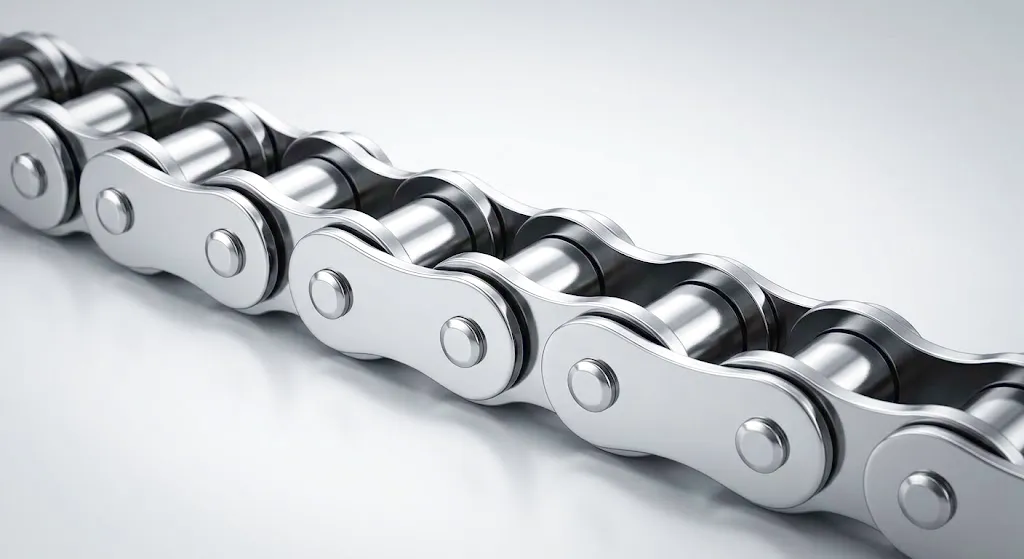 A roller chain that fails before its expected service life almost always falls into one of two categories: fatigue failure or impact failure. These two failure modes look superficially similar to the untrained eye — both result in broken links, cracked plates, or fractured pins — but they stem from completely different mechanical causes, and they demand completely different corrective actions. Misdiagnosing one for the other is one of the most expensive mistakes a maintenance team can make. A plant that replaces a roller chain after impact damage but does not address the underlying shock load source will see the same component fail again, sometimes within days. Conversely, a team that attributes a fatigue crack to a single overload event may miss an insidious, systemic under-specification problem that is quietly undermining every chain in the facility. Understanding how to distinguish these two failure modes — through visual inspection, measurement, and operational history — is a foundational skill for anyone responsible for mechanical drive systems in the UK’s manufacturing, agriculture, food processing, mining, and logistics sectors.
What Roller Chain Fatigue Failure Actually Looks Like
Fatigue failure is the result of repeated cyclic loading — the chain links, pins, and plates are subjected to tensile and bending stresses thousands or millions of times over the course of normal operation. No single load cycle is sufficient to cause fracture; rather, microscopic cracks initiate at stress concentration points, propagate slowly through the material, and eventually reach a critical size at which catastrophic fracture occurs. In roller chain assemblies, these cracks typically begin at the pin hole edges on the inner link plates, at the surface of hardened pins where they make contact with the bushing bore, or at manufacturing discontinuities such as minor surface scratches or tooling marks.
The defining visual signature of fatigue fracture is a distinctive two-zone fracture surface. The first zone — the fatigue propagation zone — is relatively smooth and may show fine concentric lines radiating outward from the crack initiation site, sometimes called “beach marks” or “clamshell marks.” These striations represent successive crack-front positions as the crack advanced incrementally under cyclic loading. The second zone — the final overload fracture zone — is rough, granular, and often appears bright or fibrous. The proportion of the cross-section occupied by each zone tells an experienced analyst much about the loading conditions: a large smooth zone relative to a small rough zone indicates relatively low peak stresses with a high number of cycles; a small smooth zone with a dominant rough zone suggests higher peak stresses that caused rapid crack propagation.
- Smooth “beach mark” striations on fracture face
- Crack origin at pin hole or plate edge
- No gross deformation of surrounding components
- Consistent failure location across multiple links
- Long service history before failure
- Under-specified chain for actual load
- Worn sprocket teeth increasing dynamic loading
- Lubrication breakdown raising contact stress
- Misalignment introducing bending cycles
Recognising Roller Chain Impact Failure: The Sudden-Overload Profile
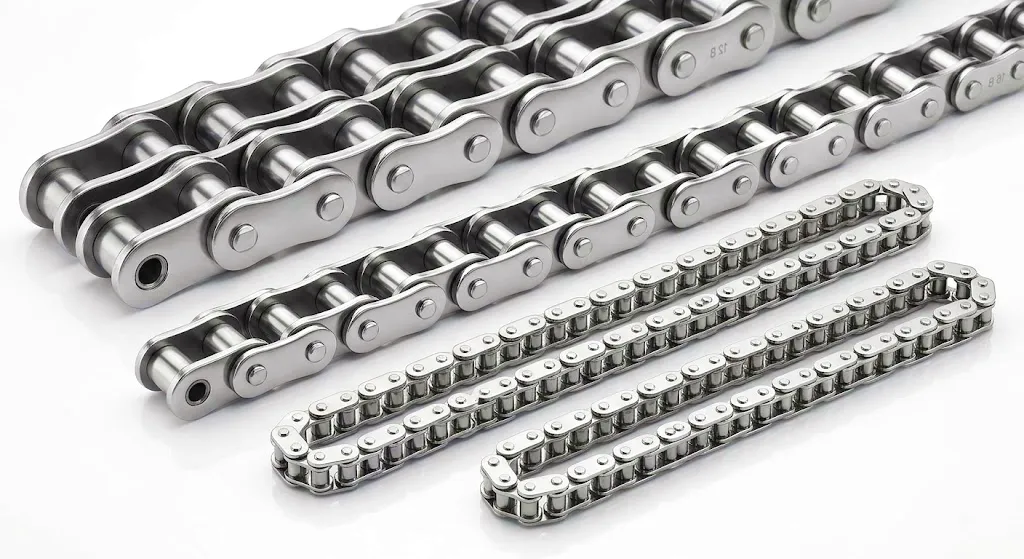 Impact failure, by contrast, results from a single load event — or a small number of high-magnitude load events — that exceeds the ultimate tensile strength or the transverse shear strength of one or more chain components. Unlike fatigue, where the chain may have operated for thousands of hours before breaking, an impact failure can occur on a brand-new chain within minutes of start-up if the operational conditions generate sufficient shock loading. In drive systems where loads are applied suddenly — through clutch engagement under full load, jam or seizure of the driven machine, dropped loads striking a conveyor, or machine start-up against a stationary mass — the instantaneous chain tension can be many times the nominal rated load.
The fracture surface produced by impact overload is entirely different from a fatigue surface. It is predominantly or entirely rough, fibrous, and three-dimensional, with significant plastic deformation visible in the metal adjacent to the fracture plane. Shear lips — angled surfaces at approximately 45 degrees — are common at the edges of plates that have experienced sudden tensile overload. The fracture typically propagates through the full cross-section in a single load cycle, leaving no smooth propagation zone. In pin failures, the fracture plane is often nearly perpendicular to the pin axis, and the ends of the broken pin may show a characteristic “cup and cone” morphology indicative of ductile overload fracture. Peripheral damage is also an important indicator: impact-failed chains frequently exhibit bent link plates, displaced rollers, and damaged sprocket teeth — physical evidence of a sudden energy transfer event that extends well beyond the primary fracture site.
Diagnostic Comparison Table: Fatigue vs. Impact Failure
| Diagnostic Criterion | Fatigue Failure | Impact Failure |
|---|---|---|
| Fracture surface appearance | Smooth zone with beach marks + rough overload zone | Entirely rough, fibrous, heavily deformed |
| Plastic deformation of plates | Minimal or absent | Significant bending, twisting, or stretching |
| Crack initiation site | Pin holes, stress risers, surface defects | Weakest cross-section; often mid-plate or pin shear |
| Service life before failure | Typically months to years of operation | Can occur within hours or on initial start-up |
| Sprocket damage present | Possible hooked or worn teeth; gradual wear | Often acute tooth damage, gouging, or cracking |
| Number of links affected | Usually one link, occasionally two adjacent | Often multiple links damaged in same event |
| Root cause category | Chronic system problem (spec, lube, wear) | Acute overload event or dynamic shock load |
| Key corrective action | Uprate chain, improve lubrication, replace sprockets | Identify and eliminate shock load source |
| Re-occurrence without fix | Gradual (weeks to months) | Rapid (days or even hours) |
How a Roller Chain Works — and Why the Working Principle Determines Failure Mode
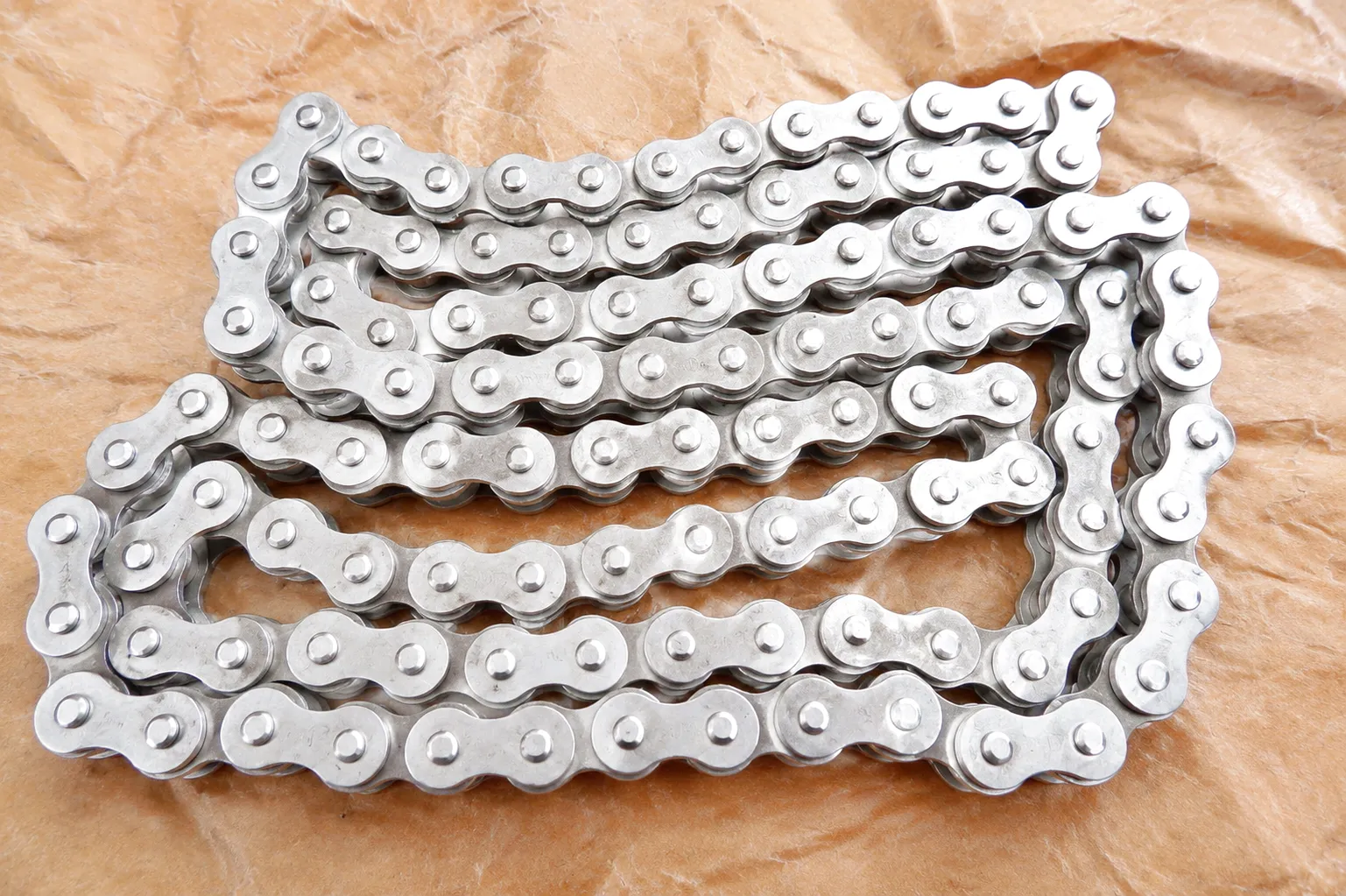 The fundamental working principle of a roller chain involves a series of articulating links — inner plates, outer plates, pins, bushings, and rollers — that engage positively with the sprocket teeth. As the sprocket rotates, the teeth lift the rollers out of engagement at the departure point and pull them into engagement at the arrival point, generating a polygonal action that introduces a characteristic periodic variation in chain velocity. This polygon effect, combined with the dynamic forces of roller impact during engagement, represents one of the primary sources of cyclic stress that ultimately drives fatigue. The rollers serve a dual function: they reduce friction during engagement by rolling rather than sliding against the sprocket teeth, and they distribute contact stress more uniformly across the tooth face.
The materials from which a roller chain is constructed directly determine its resistance to both fatigue and impact failure. Standard roller chains use through-hardened carbon steel (typically 40Cr or 40MnB alloy grades) for link plates, achieving hardness levels of approximately HRC 30–42 in the body of the plate while maintaining toughness sufficient to resist brittle fracture. Pins are manufactured from high-carbon chromium steel or case-hardened alloy steel, with surface hardness in the range HRC 58–64 and a tough core beneath the hard case — a gradient specifically engineered to resist the rolling contact fatigue that develops at the pin-bushing interface. Bushings are typically produced from sintered metal or low-alloy steel and are often oil-impregnated or copper-plated to enhance lubrication retention. Rollers use case-hardened steel for surface durability while the inner structure remains ductile. Premium-grade roller chains for demanding UK industrial applications, such as those encountered in Sheffield steel rolling mills, Birmingham automotive press lines, and Scottish offshore support facilities, incorporate additional alloying elements such as molybdenum and nickel to enhance both fatigue strength and impact resistance simultaneously.
HRC 30–42 body hardness
HRC 58–64 surface
Oil-impregnated or Cu-plated
Ductile core, hard surface
The Role of Lubrication in Both Failure Modes
Lubrication occupies a particularly interesting diagnostic position because it affects both failure modes — but in very different ways. In the context of fatigue failure, inadequate lubrication accelerates the process by allowing metal-to-metal contact between the pin and bushing surfaces, raising the contact stress at the pin-bore interface far above design assumptions. Without a functional lubricant film, the Hertzian contact pressure at these surfaces can exceed the material’s endurance limit even at loads that would normally be well within the safe operating zone. The result is accelerated surface fatigue — micropitting and spalling — that weakens the pin progressively and reduces the number of cycles to failure by an order of magnitude compared to a properly lubricated chain. For roller chain systems operating in environments typical of UK food-processing facilities in Yorkshire or paper mills in Scotland, where hygiene requirements or steam cleaning protocols regularly strip lubrication, the practical service life reduction from inadequate lubrication can be dramatic.
Interestingly, lubrication has a much less direct relationship to impact failure. A chain that fails by impact overload does so because the instantaneous load exceeds the ultimate tensile or shear strength of the material — an event that occurs too rapidly for the lubricant film to play any protective role. However, poor lubrication can indirectly increase the risk of impact failure by causing chain stiffening (due to corroded or seized articulation) that concentrates shock loads at specific links rather than distributing them across the full chain length. A stiffened, corroded roller chain on a farm machinery PTO drive in East Anglia — perhaps neglected during winter storage — is far more vulnerable to a start-up impact failure than a well-maintained, flexible chain that can absorb energy through articulation and elongation before the stress reaches critical levels. In both cases, the diagnostic conclusion points to lubrication management as a critical maintenance parameter, even though the failure mechanisms and fracture morphologies are completely different.
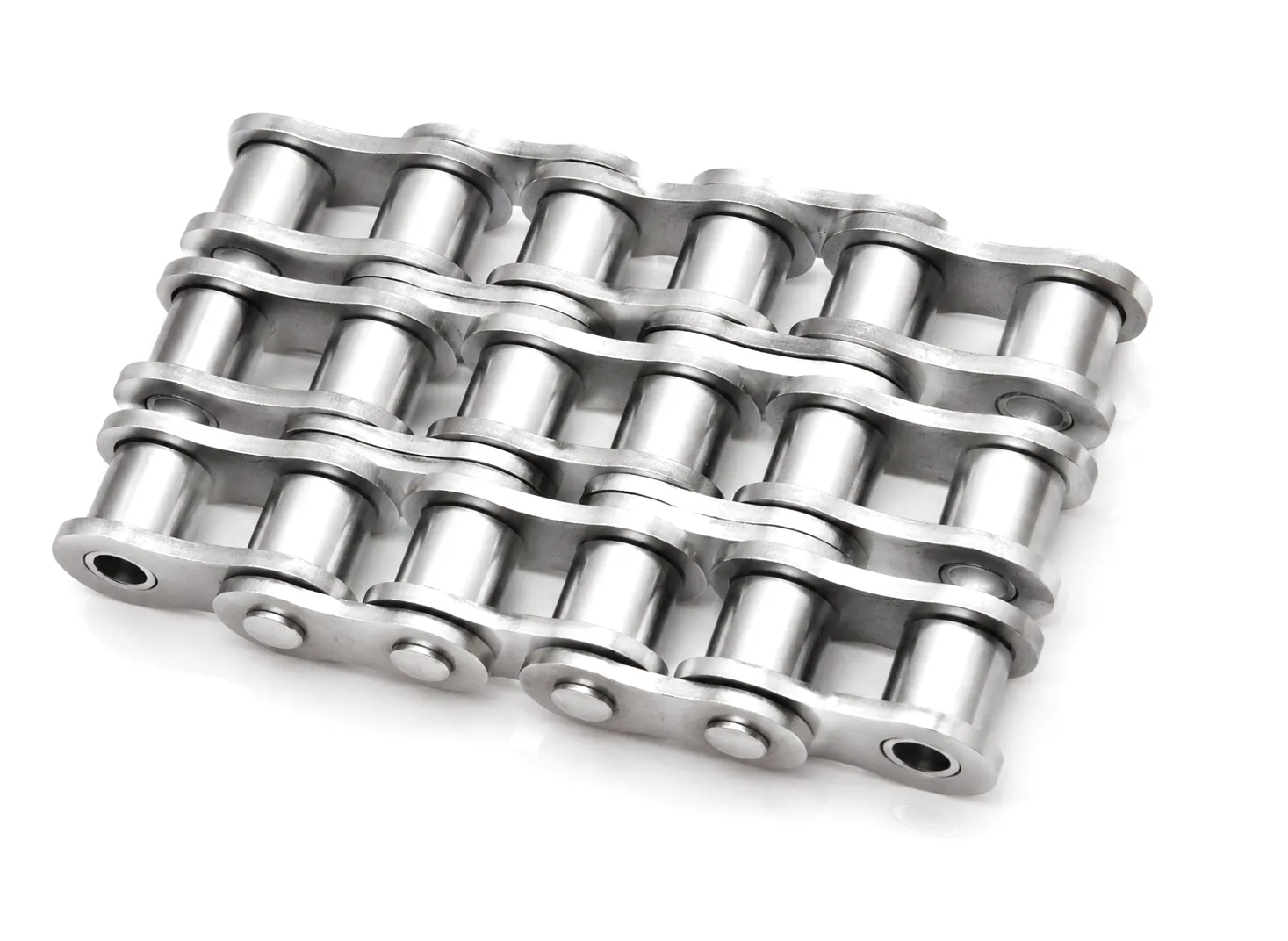
High-Strength Roller Chains Engineered for Demanding UK Applications
When operational analysis identifies either chronic fatigue risk or elevated impact exposure, the correct engineering response is to specify a roller chain with the structural reserve capacity to match the actual loading profile. Ever Power manufactures a range of premium-grade roller chains specifically engineered for high-demand applications, including two products with proven performance in heavy-duty UK industrial and agricultural contexts:
Parameter Teknis dan Kinerja Produk
| Parameter | Standard ISO Chain | 120HSP-00 | C100HSP-00 |
|---|---|---|---|
| Jarak antar titik (mm) | 38.10 (ISO #120) | 38.10 | 31.75 (ISO #100) |
| Minimum breaking load (kN) | ~250 | ≥ 355 | ≥ 222 |
| Pin diameter (mm) | 11.1 | 11.1 (hardened alloy) | 9.5 (hardened alloy) |
| Plate material | Baja karbon | 40Cr alloy, shot-peened | 40Cr alloy, shot-peened |
| Plate hardness (HRC) | 30–38 | 38–44 | 38–44 |
| Pin surface hardness (HRC) | 58–62 | 60–65 | 60–65 |
| Operating temperature range (°C) | -10 hingga +150 | -20 hingga +180 | -20 hingga +180 |
| Assembly method | Standard press-fit | Interference-fit, pre-loaded | Interference-fit, pre-loaded |
| Perawatan permukaan | Oil blackening | Shot-peened + oil-treated | Shot-peened + oil-treated |
| Fatigue life vs. standard (approx.) | Baseline (1x) | 2.8–3.5x longer | 2.5–3.2x longer |
Industrial Application Scenarios: Where Each Failure Mode Dominates
High-speed assembly conveyors running continuous shifts generate the precise conditions for fatigue failure: consistent loads, high cycle frequency, minimal shock but relentless repetition. Roller chains on body-in-white transfer lines must be specified with fatigue life margins well above nominal to survive multi-year maintenance intervals. Impact failure is rare on properly guarded lines but becomes a risk during emergency stops and abrupt restarts after jam clearances.
Combine harvesters, balers, and grain augers subject roller chains to highly variable and often unpredictable loading. Stone ingestion events, slug feeding of crop into a stationary machine, or jam clearing under load are classic impact failure scenarios. Seasonal start-up after winter storage frequently reveals corrosion-induced stiffening, transforming what should be a controlled start into a shock event. A well-specified, pre-lubricated roller chain with a generous safety factor above the rated breaking load is the first line of defence on UK arable operations.
Underground and surface mining operations subject roller chains to the combined extremes of both failure modes. Scraper conveyors, feeder breakers, and armoured face conveyors operate at high load ratios continuously (fatigue risk) while also experiencing sudden load spikes from oversized rock or roof fall material (impact risk). The HSP-grade roller chain series is the preferred specification in this sector, providing sufficient safety factor against both failure mechanisms and reducing unscheduled downtime — which carries a particularly high operational cost in continuous mining operations.
Crawler excavators, track-type dozers, and compact track loaders operating in rocky Highland terrain or on Southern English infrastructure projects place extraordinary demands on undercarriage chains. The ground-engaging conditions generate impact loads every time a track roller encounters a protruding rock or the machine pivots on hard ground. These are exactly the conditions for which Caterpillar-specification HSP chains are engineered, with interference-fit pin assemblies that resist the loosening and subsequent fretting fatigue that standard chains experience under similar duty cycles.
Food production environments introduce unique complications for roller chain specification and failure analysis. Regular washdowns with hot water and cleaning agents strip lubrication and can cause accelerated corrosion that both shortens fatigue life and increases impact failure risk through link stiffening. Stainless steel roller chains or food-grade nickel-plated versions are the appropriate solution, and in either case the failure analysis methodology remains the same: fracture surface morphology, operational history, and lubrication records are all required to reach a reliable diagnosis.
Sheffield remains the heart of UK specialty steel production, and the roller chains used in rolling mill auxiliary drives and coil handling equipment face genuinely severe conditions. Radiant heat from product and furnaces accelerates lubrication degradation. Scale accumulation creates abrasive wear that simultaneously reduces link plate cross-section and introduces stress concentration sites, making fatigue initiation faster. Emergency stops to clear cobbles — tangled or misrolled bar — generate the kind of massive instantaneous tension that defines textbook impact overload failure. Maintenance records from Sheffield rolling mills have consistently demonstrated that a mixed failure pattern (fatigue acting as a precursor that reduces the chain’s effective strength to below its impact capacity) is the most common chain failure narrative in this environment.
Core Technical Advantages of HSP-Grade Roller Chains
Ever Power: Manufaktur Presisi dan Solusi Rantai Kustom
Ever Power mengoperasikan fasilitas manufaktur terintegrasi vertikal dengan kendali penuh di setiap tahap produksi rantai rol — mulai dari pengadaan baja mentah dan perlakuan panas hingga pencetakan presisi, penggerindaan pin, verifikasi kekerasan, dan perakitan akhir. Integrasi ini bukan sekadar detail manufaktur; ini adalah fondasi kemampuan perusahaan untuk memberikan kinerja mekanis yang konsisten dan mendukung kustomisasi sejati tanpa kompromi kualitas yang biasanya menyertai penggunaan pemasok komponen subkontrak. Bagi klien yang mendiagnosis masalah kelelahan atau kegagalan benturan yang memerlukan spesifikasi rantai di luar rentang ISO standar, tim teknik Ever Power menyediakan layanan konsultasi teknis langsung, meninjau bukti kegagalan, data operasional, dan geometri sistem penggerak untuk menentukan solusi yang paling tepat.
Kemampuan kustomisasi di Ever Power mencakup setiap parameter penting. Ketebalan dan lebar pelat dapat dimodifikasi untuk meningkatkan luas penampang, sehingga meningkatkan ambang batas kelelahan dan beban putus maksimum. Pitch non-standar, pin yang diperpanjang untuk pemasangan atau pemasangan pada pesawat terbang, pin berongga untuk pelumasan terintegrasi, dan lapisan termasuk pelapisan seng-nikel, Dacromet, atau perawatan permukaan berbasis PTFE semuanya tersedia sebagai opsi pabrik. Untuk klien di Inggris yang berada di lingkungan laut korosif — pangkalan pendukung lepas pantai di Aberdeen, lokasi pengolahan makanan di pesisir East Anglia — rantai rol baja tahan karat dengan dokumentasi lengkap yang dapat dilacak ke sertifikat material tersedia dengan waktu tunggu yang kompetitif dan opsi pengiriman DHL Express untuk kebutuhan penggantian mendesak. Rantai pasokan Ever Power juga menyimpan stok penyangga dari jenis HSP yang paling umum untuk mendukung pengiriman keesokan harinya ke alamat di daratan Inggris, mengurangi biaya waktu henti akibat kegagalan rantai yang tidak terduga hingga seminimal mungkin secara teknis.
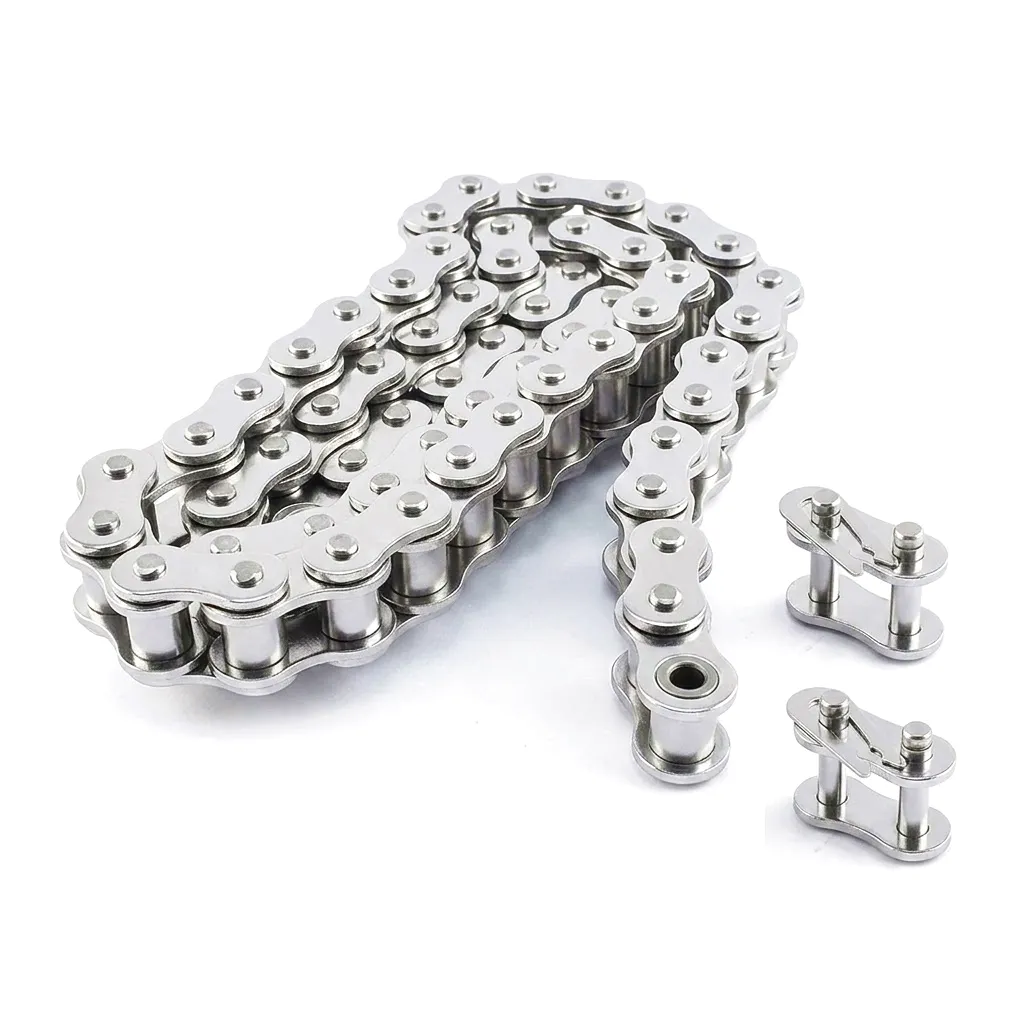
- Seri standar ISO, ANSI, DIN
- Replikasi spesifikasi OEM Caterpillar
- Jarak antar gigi, lebar, dan pemasangan yang dapat disesuaikan
- Baja tahan karat, berlapis nikel, dan berbahan PTFE.
- MTC (sertifikat uji material)
- Pengujian pihak ketiga tersedia.
Pabrik Penggilingan Dingin Sheffield: Memecahkan Masalah Kegagalan Rantai yang Berulang
Sebuah perusahaan spesialis produsen baja tahan karat lembaran datar yang berbasis di Lower Don Valley, Sheffield, mengalami masalah kronis dengan rantai rol pada konveyor persiapan gulungan sisi masuk pabrik penggilingan dingin 18 inci mereka. Selama periode 14 bulan, rangkaian rantai yang sama telah rusak tiga kali, setiap kali mengakibatkan antara 11 dan 19 jam waktu henti yang tidak direncanakan dan gangguan jadwal produksi yang signifikan. Tim pemeliharaan di lokasi tersebut mengaitkan dua kegagalan pertama dengan "beban benturan berlebih" dari mesin pembuka gulungan bermotor, dan hanya mengganti rantai yang rusak dengan produk kelas komersial yang sama setiap kali.
Ketika tim dukungan teknis Ever Power dilibatkan untuk melakukan analisis kegagalan formal pada sampel patahan yang diawetkan dari kegagalan ketiga, diagnosisnya sangat berbeda dari asumsi beban berlebih akibat benturan. Pemeriksaan permukaan patahan pada pelat penghubung utama mengungkapkan morfologi dua zona yang jelas: zona perambatan kelelahan yang halus dan bergaris-garis yang menempati sekitar 60% dari penampang pelat, dimulai pada bekas perkakas di tepi dalam lubang pin, dan zona beban berlebih yang relatif kecil dan kasar. Ini adalah kegagalan kelelahan yang sesuai dengan buku teks. Sifat patahan yang "mendadak" telah menciptakan kesan benturan, tetapi rantai tersebut sebenarnya telah mengalami kegagalan secara perlahan selama ratusan jam operasi sebelum peristiwa patahan terakhir.
Analisis akar penyebab mengidentifikasi dua faktor penyebab: rantai tersebut memiliki spesifikasi yang kurang memadai untuk faktor beban dinamis aktual dari uncoiler (yang menghasilkan torsi awal sekitar 2,4 kali torsi operasi nominal), dan interval pelumasan telah diperpanjang untuk mengurangi waktu perawatan, sehingga tekanan kontak pin-bushing meningkat di atas ambang batas kelelahan material. Ever Power menetapkan rantai 120HSP-00 untuk penggerak utama dan merekomendasikan sistem pelumasan tetes khusus dengan interval otomatis 6 jam. Setelah pemasangan pada bulan September tahun itu, pabrik Sheffield beroperasi selama 22 bulan tanpa kegagalan rantai — peningkatan kinerja yang digambarkan oleh manajer perawatan sebagai hal yang transformatif untuk kepercayaan perencanaan produksi. Total biaya dari tiga kegagalan sebelumnya — termasuk kehilangan produksi, lembur, dan penggantian rantai — melebihi biaya rantai dan sistem pelumasan kelas HSP sekitar delapan kali lipat.
Apa Kata Pelanggan Kami
“Layanan analisis kegagalan Ever Power mengidentifikasi masalah kelelahan yang telah kami tangani secara tidak tepat selama lebih dari setahun. Spesifikasi 120HSP-00 yang mereka rekomendasikan, dikombinasikan dengan jadwal pelumasan yang direvisi, membawa kami dari tiga kegagalan dalam 14 bulan menjadi nol kegagalan dalam 22 bulan. Peningkatan kepercayaan produksi saja sudah jauh lebih berharga daripada biaya peningkatan tersebut.”
“Kami menentukan C100HSP-00 untuk armada loader beroda rantai kompak kami yang beroperasi pada kontrak infrastruktur di Dataran Tinggi Skotlandia. Perbedaan masa pakai rantai dibandingkan dengan produk standar sebelumnya sangat signifikan — sekarang kami dapat melewati satu musim operasi tanpa penggantian rantai sama sekali, padahal sebelumnya kami mengganti rantai di tengah musim pada mesin yang paling menuntut. Waktu tunggu dan dukungan teknis Ever Power sangat baik.”
“Setelah dua kali kerusakan akibat benturan pada penggerak elevator biji-bijian mesin pemanen gabungan kami dalam dua musim berturut-turut, kami melakukan peningkatan ke rantai rol berkekuatan tinggi Ever Power dengan opsi pemasangan pin panjang khusus agar sesuai dengan bilah pengumpan kami. Kualitas pembuatannya jauh lebih unggul daripada yang kami miliki sebelumnya — pin berjalan dengan lancar, sambungan dilumasi dengan benar dari pabrik, dan kami tidak mengalami masalah selama panen jelai dan gandum tahun ini. Harga bagus dan pengiriman cepat ke pertanian kami di Lincolnshire.”
Pertanyaan yang Sering Diajukan
Pertanyaan umum dari para insinyur, manajer pengadaan, dan tim pemeliharaan di Inggris tentang analisis dan spesifikasi kegagalan rantai rol.
Diagnosis di tempat yang paling andal adalah permukaan patahan. Patahan akibat kelelahan memiliki zona halus dan rata dengan garis-garis konsentris halus (beach marks) yang terlihat dengan mata telanjang atau di bawah kaca pembesar, ditambah zona kasar yang lebih kecil tempat patahan akhir terjadi. Patahan akibat benturan sepenuhnya kasar, sering menunjukkan pembengkokan atau puntiran yang signifikan pada pelat penghubung yang berdekatan, dan mungkin memiliki bibir geser — tepi miring 45 derajat pada pelat. Jika tautan di sekitarnya terlihat bengkok atau bergeser, benturan jauh lebih mungkin terjadi. Jika rantai di sekitarnya tampak tidak rusak dan hanya satu atau dua tautan yang patah, kelelahan adalah penyebab yang lebih mungkin.
Rantai rol kelas HSP biasanya memiliki harga premium 40–80% dibandingkan rantai kelas komersial standar dengan jarak ulir yang sama. Untuk sebagian besar operasi manufaktur di Inggris Raya di mana biaya waktu henti berkisar antara £1.500 hingga £15.000 per jam, premi tersebut akan tertutupi pada kejadian kegagalan pertama yang berhasil dihindari. Kami merekomendasikan untuk meminta penawaran resmi dari tim penjualan kami di [email protected] untuk mendapatkan harga pasti di Inggris Raya, karena harga tersebut bergantung pada seri spesifik, kuantitas, dan kustomisasi yang dibutuhkan.
Ever Power menyimpan stok rantai kelas HSP dengan sertifikat uji material (MTC) yang dapat dilacak ke nomor batch dan kelas material, tersedia untuk pengiriman DHL Express ke Birmingham, Sheffield, dan semua kode pos daratan Inggris, biasanya dalam waktu 2–3 hari kerja setelah konfirmasi pesanan. Hubungi [email protected] dengan kebutuhan pitch, seri, dan panjang Anda untuk mendapatkan penawaran harga dan konfirmasi stok di hari yang sama.
Protokol pencucian dalam pengolahan makanan menghilangkan minyak mineral konvensional dari rantai, meninggalkan permukaan pin dan bushing dalam kontak logam-ke-logam yang kering. Hal ini meningkatkan tegangan kontak jauh di atas asumsi desain, memicu kelelahan permukaan (mikropitting) pada permukaan pin. Solusinya adalah pelumas bersertifikasi H1 kelas makanan dengan sifat adhesi tinggi yang diaplikasikan dengan interval lebih sering, atau beralih ke rantai rol sambungan tertutup atau O-ring yang menahan pelumas di dalamnya. Untuk lokasi produksi makanan di Yorkshire dan Lincolnshire tempat kami secara teratur memasok rantai, kami sarankan untuk mendiskusikan rezim pencucian spesifik Anda saat meminta penawaran.
Peningkatan diperlukan jika salah satu dari kondisi berikut berlaku: mesin telah mengalami satu atau lebih kegagalan akibat benturan dalam dua musim sebelumnya; mesin beroperasi di tanah yang rawan batu (umum di beberapa bagian Lincolnshire, Yorkshire, dan Kent); rantai digunakan pada mesin berkapasitas tinggi yang beroperasi mendekati kapasitas produksi nominalnya; atau konsekuensi dari kegagalan selama panen (kehilangan kondisi tanaman, komitmen kontraktor) secara finansial signifikan. Rantai HSP pada mesin pertanian merupakan jaminan yang sangat baik terhadap kombinasi kejadian benturan dan profil operasi musiman yang agresif.
Kirim email ke [email protected] dengan seri atau jarak antar mata rantai Anda, perkiraan jumlah tahunan, dan detail aplikasi apa pun (daya penggerak, kecepatan, lingkungan operasi). Jika Anda memiliki sampel kerusakan yang ingin dianalisis, tim teknik kami dapat meninjau foto dan memberikan penilaian awal tanpa biaya. Kami bertujuan untuk menanggapi semua pertanyaan dari Inggris dalam satu hari kerja.
Baik Anda memerlukan dukungan analisis kegagalan, spesifikasi rantai khusus, atau penawaran harga kompetitif untuk rantai rol berkekuatan tinggi untuk pengiriman ke lokasi mana pun di Inggris, tim Ever Power siap membantu.
📩 Hubungi Ever Power — Dapatkan Penawaran Gratis Hari Ini