What Makes Bent Plate Roller Chain Different?
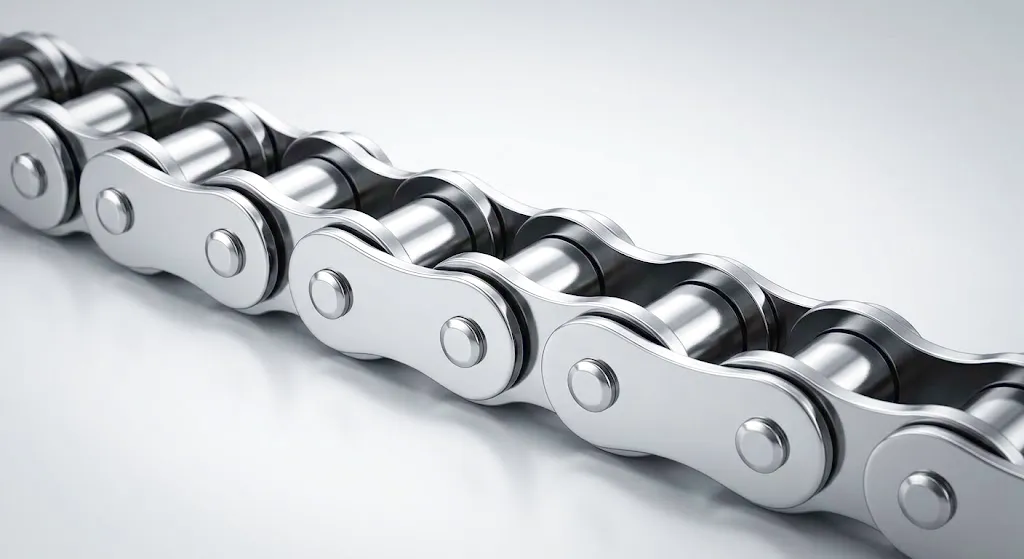
When engineers at heavy manufacturing plants across Birmingham and Sheffield talk about conveyor reliability, the conversation almost always comes back to one component that quietly determines whether production runs or halts: the roller chain. Among the many configurations available in the market, bent plate roller chain occupies a distinct technical niche. Unlike standard flat-link chain, the side plates in a bent plate design are pressed into an offset or angled profile, which serves a purpose far beyond aesthetics. That curved geometry allows the chain to accommodate lateral misalignment, absorb dynamic shock loads, and distribute stress across a wider surface area — all without a meaningful increase in installed weight. For industries where conveyors must navigate irregular terrain, variable load profiles, or tight curve radii, this design difference is not minor. It is often the factor that separates a chain lasting six months from one lasting three years.
The bent plate roller chain category has grown considerably in UK industrial procurement catalogues over the past decade, driven by expanding automation in sectors like automotive, aggregate processing, and food production. Facilities operating continuous-duty conveyors — where stopping the line for unplanned maintenance costs tens of thousands of pounds per hour — have moved decisively toward components engineered for resilience rather than minimum upfront cost. Bent plate roller chain, with its superior fatigue resistance and inherent ability to handle side loading, fits precisely into that engineering philosophy. This article unpacks the technical architecture of these chains, the materials behind their durability, where they perform best, and why procurement teams across the UK are specifying them with increasing frequency.
Working Principle: How Bent Plate Roller Chain Transmits Force
⚙
Pin & Bushing Assembly
The hardened steel pin passes through an interference-fitted bushing, forming the articulation joint. As the chain engages and exits the sprocket, this joint bears the primary tensile and bending loads. The bushing rotates on the pin under load, distributing wear across a cylindrical contact surface rather than concentrating it at a single point.
🔄
Roller & Sprocket Contact
The free-running roller sits between the bent side plates and seats into the sprocket tooth profile. Rolling contact — rather than sliding contact — between chain and sprocket tooth is fundamental to the roller chain’s mechanical efficiency advantage. This rolling action reduces friction coefficients dramatically compared to slat or flat-link conveyor chain, allowing drive systems to operate with smaller motor ratings.
📈
Bent Plate Deflection Geometry
The defining mechanical feature: the side plates are press-formed into a bent profile, typically angled at 30° to 40° relative to the chain’s pitch line. This creates a vertical offset between inner and outer link plates that increases the chain’s structural depth without requiring a taller link height. Under transverse or lateral loading, the bent geometry allows controlled plate deflection before yielding, acting as an integrated mechanical compliance mechanism that flat-plate chain simply cannot match.
Understanding the kinematic behaviour of bent plate roller chain under load also requires attention to the polygon effect — the speed variation that arises as a polygonal chain wraps around a circular sprocket. In standard roller chain, this effect increases with smaller sprocket tooth counts. Bent plate configurations, when paired with appropriately sized sprockets, can achieve smoother engagement characteristics because the lateral compliance of the bent plates marginally dampens the impact load as each link seats. For high-speed conveyor applications at facilities such as those operating parcel sorting lines at major logistics hubs across the East Midlands, this vibration attenuation is not a secondary consideration but a direct contributor to both chain life and noise level compliance within UK factory environments governed by the Control of Noise at Work Regulations 2005.
Core Materials: The Metallurgical Foundation of Long Service Life
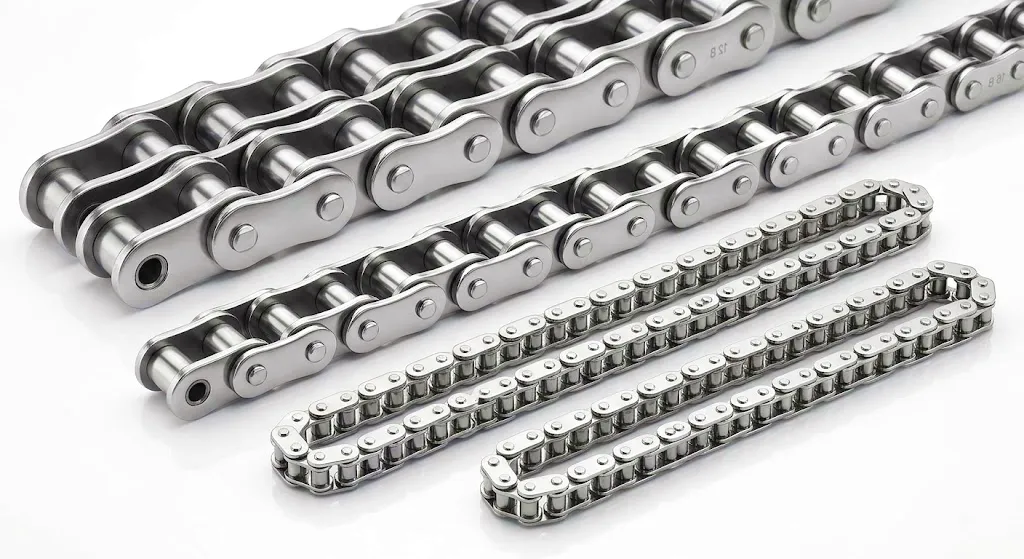
Material selection in roller chain manufacture is where engineering intent either becomes a physical reality or falls apart after a few months of heavy service. For bent plate roller chain designed to operate on demanding conveyor lines, the metallurgical specification of each component must be treated as a system — no single part can be optimised in isolation. The pin, bushing, roller, and side plates each face different stress states and wear mechanisms, and the material choice for each component reflects that specific challenge.
Side plates are most commonly produced from medium-carbon alloy steels — typically 40Cr or 42CrMo grades — that respond well to controlled heat treatment processes. After forming, plates are case-hardened or through-hardened to surface hardness values in the range of 38–45 HRC, providing excellent fatigue resistance while retaining enough core ductility to absorb impact loads without brittle fracture. For corrosive environments, such as the wet processing areas found in food manufacturing plants across Lincolnshire and the Humber estuary region, stainless steel grades including 304 and 316L are specified, accepting some reduction in ultimate tensile strength in exchange for far superior corrosion immunity.
Pins and bushings — the articulation pair — are produced from case-hardening steel such as 20CrMnTi, carburised to a case depth of 0.8–1.5 mm and quenched to achieve surface hardness of 58–64 HRC. The hard case provides wear resistance at the contact surface, while the unhardened core remains tough enough to withstand the bending stresses imposed each time the chain wraps over a sprocket. Rollers are similarly heat-treated, with some premium manufacturers introducing shot peening as a final surface treatment step that induces compressive residual stress, extending fatigue life by a measurable margin in cyclic loading applications.
Side Plates
40Cr / 42CrMo alloy steel, 38–45 HRC
Pins & Bushings
20CrMnTi case-hardened, 58–64 HRC surface
rulli
Case-hardened steel; optional shot peening
Ambienti corrosivi
304 / 316L stainless steel specification
Featured Products: High Strength Roller Chain for Caterpillar Applications
120HSP-00
Catena a rulli ad alta resistenza 120HSP-00 per Caterpillar
Engineered specifically for Caterpillar heavy equipment, the 120HSP-00 chain delivers outstanding tensile strength in demanding excavator and track-type tractor applications. Its premium steel construction and precision heat treatment ensure consistent performance under the severe impact and abrasive conditions typical of UK construction and quarrying sites.
Visualizza il prodotto →
C100HSP-00
Catena a rulli ad alta resistenza C100HSP-00 per Caterpillar
The C100HSP-00 series extends the high-strength Caterpillar chain range with optimised pitch geometry for enhanced wrap angle and quieter operation at elevated chain speeds. Particularly suited to forestry machinery, large wheel loaders, and aggregate screening plants — a common specification across Scottish and Welsh quarrying operations requiring extended replacement intervals.
Visualizza il prodotto →
Product Technical & Performance Parameter Table
Standard bent plate roller chain specifications — values are indicative; custom configurations available on request.
| Parametro |
Light Duty |
Medium Duty |
Resistente |
Super Heavy |
| Chain Pitch (mm) |
12.7 – 19.05 |
25.4 – 38.1 |
50.8 – 76.2 |
101.6 – 152.4 |
| Resistenza minima alla trazione (kN) |
14 – 31 |
55 – 110 |
160 – 320 |
450 – 900+ |
| Side Plate Material |
Carbon steel / SS304 |
40Cr alloy steel |
42CrMo alloy steel |
42CrMo + surface treat. |
| Pin Hardness (HRC) |
52 – 56 |
56 – 60 |
58 – 62 |
60 – 64 |
| Plate Bend Angle (deg) |
28 – 32 |
30 – 36 |
32 – 40 |
35 – 42 |
| Carico massimo ammissibile (kN) |
3.5 – 8 |
14 – 28 |
40 – 80 |
112 – 225 |
| Operating Temp. Range (°C) |
-10 to +150 |
-20 to +200 |
-30 to +300 |
-40 to +400 |
| Corrosion Protection |
Zinc plating |
Nickel plating / SS |
SS316L / Dacromet |
Custom coating systems |
| Lubrication Type |
Manual / drip |
Bath / disc lube |
Forced oil / sealed |
Self-lube / oil-injection |
Core Technical Advantages of Bent Plate Roller Chain
Why engineers across the UK’s most demanding sectors are specifying this design.
🔥
Superior Fatigue Resistance
The bent plate geometry redistributes peak bending stress away from the pin holes — historically the initiation sites for fatigue cracking in flat-plate chain. Finite element analysis of bent plate designs consistently shows a reduction of 25–35% in maximum stress concentrations at the pin hole edge under equivalent loads, translating directly into longer operational intervals before chain replacement is required.
⚡
Lateral Misalignment Tolerance
Conveyor systems operating across long spans or over uneven structural frames frequently develop shaft misalignment over time. Standard roller chain tolerates this poorly — side loads cause accelerated plate wear and premature pin failure. Bent plate chain accommodates lateral deviations of up to 2% of chain length without exceeding design stress limits, allowing it to function reliably in installations where periodic realignment is impractical.
💪
High Shock Load Capacity
In aggregate processing, demolition recycling, and bulk material handling, loads are rarely constant — individual large stones, rebar fragments, or compacted material blocks can create instantaneous chain loads several times the nominal design working load. The bent plate geometry acts as a structural spring element, providing a degree of elastic compliance that absorbs peak shock loads before they can cause link failure or sprocket tooth damage.
🆕
Reduced Drive System Strain
Because bent plate roller chain partially isolates the drive sprocket from transient load spikes, motor current draw profiles are smoother and gearbox torque reversals are less severe. Over a year of continuous operation, this translates into measurably lower energy consumption, reduced motor replacement frequency, and lower maintenance costs — a factor increasingly valued by UK manufacturers under pressure from rising energy tariffs since 2022.
🔧
Extended Lubrication Intervals
Many bent plate roller chain designs incorporate pre-lubricated sintered bushings or sealed O-ring joints that retain grease throughout their service life. This eliminates or dramatically extends the lubrication maintenance schedule — a practical benefit in food-safe production environments in Wales and Northern England where incidental contact with lubricants requires documentation, approved lubricant specifications, and can trigger costly hygiene compliance audits.
📌
Design Flexibility & Customisability
Bent plate roller chains are readily adapted with attachments — extended pins, K-attachments, flight bars, sidewall extensions, and special hole patterns — all of which can be manufactured into the chain during production rather than retrofitted. This modular adaptability makes bent plate chain the preferred choice for conveyor OEMs designing custom material handling solutions for UK clients across sectors from pharmaceutical to port logistics.
Scenari di applicazione industriale
Where bent plate roller chain delivers measurable performance advantages across UK industry.
Quarrying & Aggregate Processing — Yorkshire and Peak District Operations
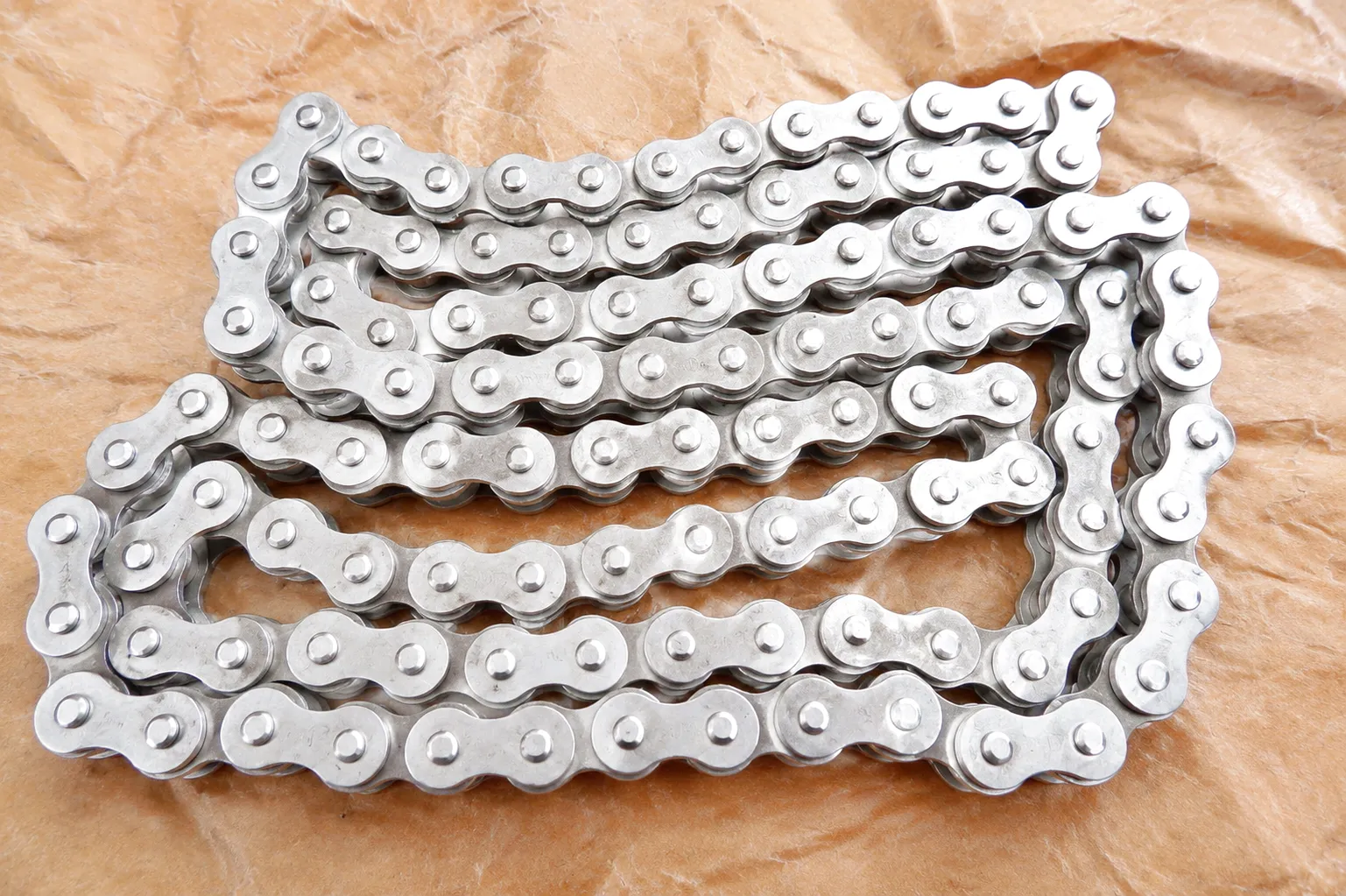
Quarry conveyors face some of the most punishing operating conditions any chain encounters — abrasive stone dust, unpredictable load profiles as crushers cycle, and exposure to weather at outdoor sites. Bent plate roller chain fitted to jaw crusher discharge conveyors and screening plant cross-conveyors handles these conditions systematically. The combination of heat-treated alloy plates and sealed joints prevents abrasive ingress that would otherwise accelerate wear exponentially in open-bushing designs.
Automotive Manufacturing — Coventry, Derby & Sunderland Assembly Plants
Vehicle body assembly lines require conveyor chains that maintain precise pitch accuracy over millions of cycles, as body shell positioning tolerances are typically within ±1 mm. Bent plate roller chain specified for automotive overhead conveyors and floor-level assembly carriers must combine dimensional stability with sufficient compliance to handle the asymmetric loading created by cantilevered body shells. Precision-ground pins and tight pitch tolerances in premium bent plate chains meet these requirements without compromise.
Steel & Metal Processing — Sheffield and Rotherham Industrial Estates
Sheffield’s legacy as Britain’s steel city means many facilities there still operate high-temperature chain conveyors for moving billets, coils, and finished sections through quench tanks and annealing furnaces. At temperatures above 200°C, standard mineral lubricants break down rapidly. Bent plate roller chains specified for these environments are produced from heat-resistant alloy steels and charged with high-temperature synthetic lubricants — or designed as self-lubricating sintered bushing chains that do not rely on external lubrication at all.
Food & Beverage Processing — County Lincolnshire, East Anglia
The UK’s food processing sector represents one of the highest-value application areas for hygienic roller chain. Bent plate chains produced in stainless steel 316L with FDA-compliant lubricants operate on vegetable washing lines, blanching conveyors, chilling tunnels, and packaging carriage systems across Lincolnshire’s large agricultural processing complex. The bent plate geometry accommodates the slight frame flex that occurs in food plant buildings subjected to wash-down pressure and temperature cycling, which would otherwise cause premature chain wear.
Port & Logistics Operations — Southampton, Felixstowe, Liverpool
Container terminals and bulk cargo handling facilities at the UK’s major ports operate conveyor and lifting systems under continuous duty cycles with loads measured in tonnes per link. Bent plate roller chain used in hoisting applications — crane hoists, ship unloaders, and apron feeders — must meet stringent fatigue standards and carry appropriate third-party certification. Chain specified for port operations typically undergoes proof-load testing to 150–200% of working load and batch certification documentation compatible with Lloyd’s Register or equivalent UK classification body requirements.
Manufacturing Partner
Ever Power: Precision Manufacturing for Demanding Conveyor Chains
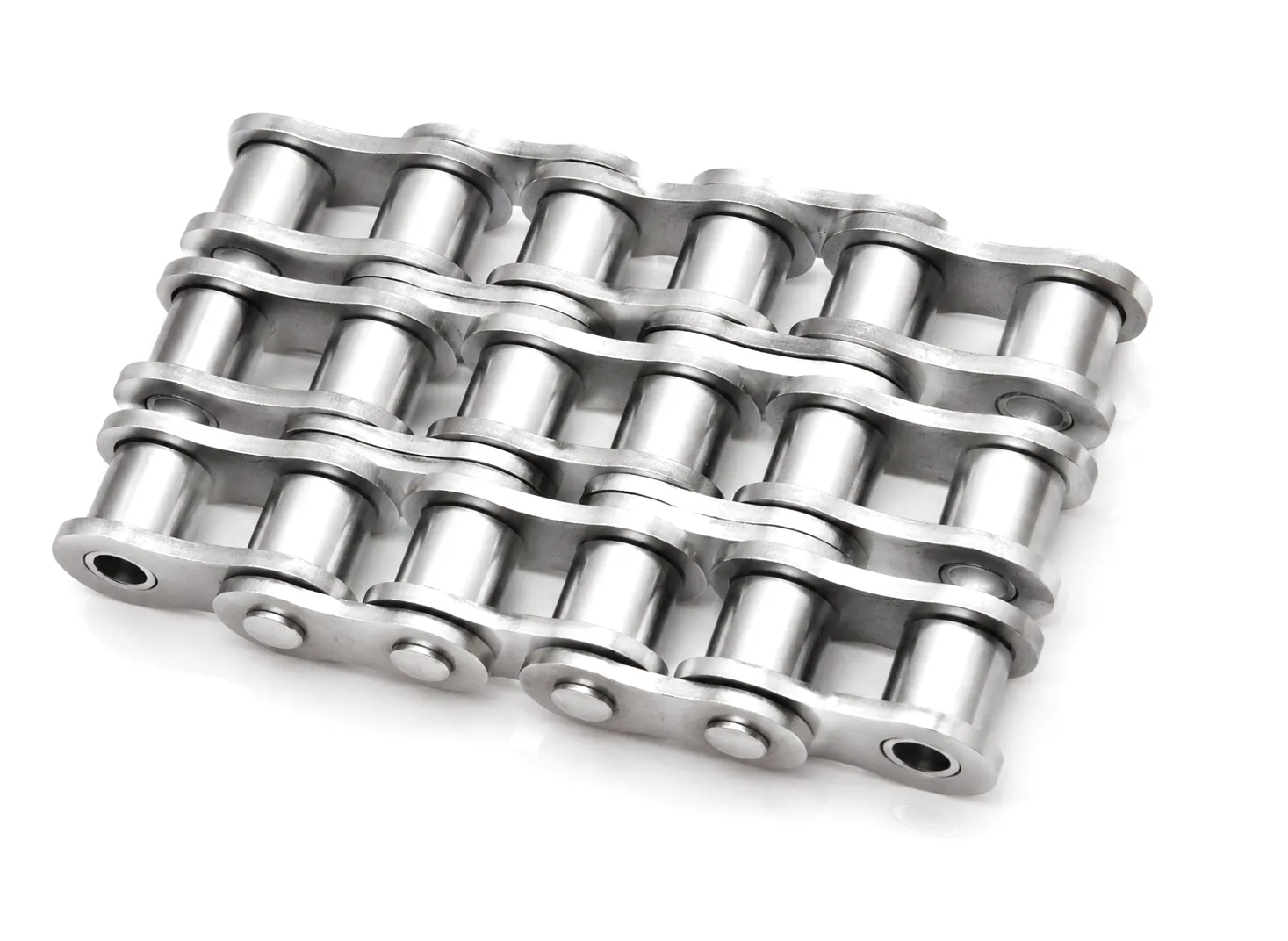
Ever Power operates a vertically integrated manufacturing facility producing bent plate roller chain and precision conveyor chain components for global export markets, with a strong and growing supply footprint across the United Kingdom. Unlike distributors sourcing from multiple subcontractors, Ever Power controls the entire value chain — from raw steel specification and bar stock procurement through machining, heat treatment, assembly, and final inspection. This integration eliminates the quality variability that plagues multi-tier supply chains and allows our engineering team to respond to custom specifications with lead times that standard import channels simply cannot match.
Our customisation capabilities extend far beyond changing pitch or link count. Ever Power’s design engineers work directly with UK procurement and maintenance teams to develop application-specific chain configurations — including non-standard plate bend angles, bespoke attachment spacings, proprietary surface treatments, and paired sprocket design support. For clients in Birmingham’s component manufacturing corridor or Manchester’s logistics infrastructure who require chain to an existing drawing or interchangeable with a legacy installation, we offer reverse-engineering and certification documentation to UK and ISO standards. We also offer direct shipment from our warehouse via established freight partnerships, with typical door-to-door transit times of 12–18 working days for standard stock items.
🏭
Vertically Integrated Production
Steel sourcing through to final QC under one roof — full traceability on every production lot.
📌
Bespoke Design & Reverse Engineering
Non-standard pitch, plate geometry, attachment configuration and matched sprocket design — all in-house.
✅
ISO & UK Standards Compliance
Documentation packages for ATEX, food-safe, and lifting-rated chain available on request.
🚚
UK Direct Freight
12–18 working days standard; expedited options available for maintenance shutdown scenarios.
Selection Guide: Matching Chain Grade to Application Severity
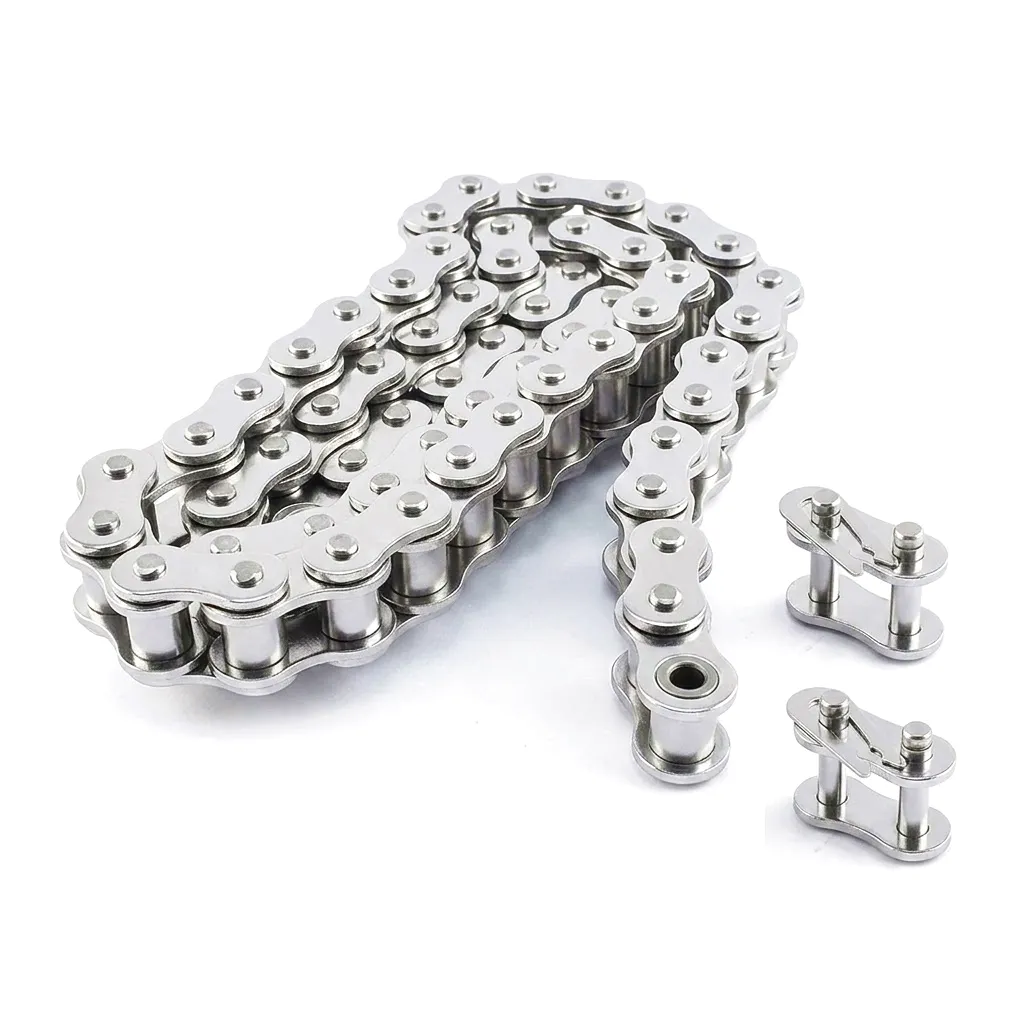
Selecting the correct bent plate roller chain specification begins with a clear understanding of the application’s severity class. British Standard BS ISO 10823:2004 provides a framework for assessing chain drive design, but for conveyor applications — particularly those involving shock loads, inclined runs, or corrosive exposure — engineers should apply a service factor that reflects the real operating environment rather than textbook conditions. A chain drive assessed as “moderate duty” in a clean, indoor, horizontal conveyor becomes a “heavy duty” application the moment it is relocated to an outdoor aggregate plant subject to winter temperatures and abrasive dust.
The most common selection errors observed in UK maintenance records involve under-specifying chain grade for the actual shock load severity, and over-specifying pitch to compensate for insufficient strength — when in fact a smaller-pitch chain of higher grade would deliver superior fatigue life and smoother operation. For applications at the heavy or super-heavy end of the severity spectrum, bent plate construction becomes the default engineering choice precisely because its structural geometry provides the additional fatigue margin that flat-plate chain at the same nominal tensile strength cannot offer.
When specifying roller chain for new installations, the working load should be kept below 1/6 of the chain’s minimum tensile strength as a starting point — applying a further 1.5–2.5x service factor for shock or inclined running conditions. Side plate thickness and link plate height should also be verified against the sprocket’s hub width to prevent edge loading. Ever Power’s technical team can assist with this calculation process for any UK customer working through a drive system design or replacement project, providing application-specific chain selection recommendations backed by our factory’s technical data and field experience across comparable installations.
Customer Success Story
Sheffield Steel Recycling: From Monthly Breakdowns to Quarterly Maintenance
Meridian Metals Recycling, operating a large-scale ferrous and non-ferrous sorting facility on the outskirts of Sheffield, had been grappling with chronic chain failures on their primary shredder infeed conveyor for over eighteen months. The facility processes between 800 and 1,200 tonnes of mixed scrap metal per day — a throughput that generates extreme variability in chain loading as individual heavy castings, engine blocks, and bundled structural steel move through the infeed at irregular intervals.
The original chain specification — a standard heavy-duty flat-plate roller chain sourced through a UK distributor — required replacement every four to six weeks on average. Each replacement event involved a minimum six-hour conveyor shutdown, with total annual downtime from chain failures alone exceeding 90 hours and direct replacement costs approaching £28,000 per year. The maintenance team had attempted various remedial measures including increased lubrication frequency, additional idler support, and drive speed reduction, none of which produced a lasting improvement.
Following a detailed application review with Ever Power’s technical team, the infeed conveyor was re-specified with a super-heavy-duty bent plate roller chain in 42CrMo alloy steel with sealed O-ring joints and Dacromet surface treatment for corrosion resistance in the wet-processing zone. The chain was custom-manufactured to match the existing sprocket pitch without requiring drive system modifications. Post-installation monitoring over a 14-month period showed zero unplanned chain failures. Scheduled inspection intervals were extended from monthly to quarterly, and the maintenance team reported a measurable reduction in drive motor current draw — consistent with the reduced friction characteristic of the new chain specification.
⭐
“We went from budget meetings every month about chain costs to barely thinking about that conveyor at all. The Ever Power chain has genuinely transformed our maintenance planning — the bent plate design handles the shock loading from heavy castings without missing a beat.”
— Plant Maintenance Manager, Meridian Metals Recycling, Sheffield
⭐
“The customisation process was straightforward — Ever Power matched our existing sprocket dimensions exactly and delivered full material certification. For a facility under ISO 45001, having proper documentation on a critical chain component is not optional, and they made it painless.”
— Procurement Director, Meridian Metals Recycling, Sheffield
⭐
“We’ve since extended the Ever Power bent plate chain to our secondary sorting conveyor as well. The consistency of their manufacturing quality across two separate orders — different batch numbers, same tight tolerances — tells you this is not a one-off. We’re looking at a long-term supply arrangement.”
— Operations Director, Meridian Metals Recycling, Sheffield
Domande frequenti
Real questions from UK engineers and procurement teams — answered directly.
What is the difference between a bent plate roller chain and a standard roller chain, and how does that affect conveyor performance?
In a standard roller chain, side plates are flat and perpendicular to the chain’s travel direction, providing no lateral compliance. A bent plate design offsets the plates into a curved profile that allows the chain to flex slightly under side loading and absorbs shock loads before they transmit fully into the sprocket and drive shaft. On a conveyor, this translates into reduced vibration, quieter operation, longer chain life, and less wear on sprocket teeth — particularly noticeable on long-span or inclined conveyors where side forces naturally develop.
How much does heavy-duty bent plate roller chain cost per metre in the UK, and what factors affect the price I should expect to receive in a quote?
Pricing varies considerably depending on pitch, steel grade, surface treatment, and quantity. Light-duty bent plate chain in standard carbon steel typically starts from £12–£22 per metre for catalogue stock quantities. Super-heavy-duty alloy steel chain with sealed joints and corrosion treatment can range from £65 to over £200 per metre depending on specification. Custom configurations — non-standard pitch, special attachments, stainless construction — carry additional tooling costs that are generally quoted per-order. Ever Power welcomes enquiries for any quantity and provides transparent, itemised quotations.
Which type of bent plate roller chain is best suited for a food processing conveyor operating in a wet wash-down environment in the UK?
For food-safe wash-down environments, the preferred specification is stainless steel 316L bent plate chain with FDA-compliant H1 food-grade lubricant applied to sintered bushings. The 316L grade provides superior chloride resistance compared to 304 — important because many food plant cleaning chemicals are chlorine-based. If the application involves elevated temperatures such as blanching or baking conveyors, heat-resistant variants with PTFE-coated pins may be appropriate. Always confirm lubrication compatibility with your HACCP plan and food safety coordinator.
Where can I find a reliable UK supplier of roller chain who can also supply matched sprockets and provide technical support for our Birmingham plant?
For UK industrial buyers, Ever Power offers direct-from-manufacturer supply of bent plate roller chain with matched sprocket design support, full material certification, and a technical enquiry service staffed by qualified engineers. Orders destined for the Midlands — including Birmingham, Coventry, and the surrounding manufacturing corridor — are dispatched with documented lead times and can be coordinated around planned maintenance shutdown windows. Contact
[email protected] with your application details for a same-day technical response.
When should I replace a bent plate roller chain on a heavy-duty conveyor, and what are the key signs of wear I should be checking for?
The standard replacement criterion is chain elongation: when the chain has stretched beyond 2% of its nominal pitch length over a measured section of ten or more links, replacement is recommended before sprocket tooth wear accelerates. Physical indicators of replacement need include visible pin corrosion or fretting, cracked or deformed side plates, roller flat-spotting, and unusual noise during operation. In high-shock applications, a quarterly check using a chain wear gauge is a sound preventive maintenance practice that pays for itself many times over in avoided breakdowns.
How long does it take to receive a custom-manufactured bent plate roller chain order from Ever Power, and what information do I need to get an accurate quote?
Standard catalogue specifications with no special attachments are typically dispatched within 7–10 production days from order confirmation, with UK delivery adding 12–18 working days by established freight route. Custom specifications — non-standard pitch, special plate geometry, bespoke attachments — require a 2–3 week design-and-prototype lead time in addition to production time. To receive an accurate quote, please provide: chain pitch, required tensile strength or load rating, operating environment (temperature, corrosion exposure), attachment type if any, total chain length required, and any existing drawing or part number you are working from.
What is the best way to lubricate a heavy-duty bent plate roller chain installed on an outdoor aggregate conveyor in the North of England?
Outdoor aggregate conveyors in the North of England face a particularly challenging lubrication environment: fine abrasive dust contaminates any exposed grease or oil, and low winter temperatures reduce lubricant viscosity significantly. The most effective strategy combines a sealed O-ring or X-ring joint chain — which encapsulates lubrication within the pin-bushing interface for life — with a periodic wipe-down and visual inspection routine. Where sealed chain is not specified, a high-tack spray lubricant applied with a drip oiler timed to apply fresh lubricant just as the chain exits the return run is preferable to manual greasing, as it ensures more consistent coverage with less contamination pickup.
Ready to Upgrade Your Conveyor Chain?
Get a Free Engineering Consultation from Ever Power
Whether you’re specifying a new conveyor system, tackling a recurring chain failure problem, or sourcing a direct replacement for an existing installation anywhere in the UK, our technical team will respond within one working day with a clear recommendation and competitive quote.
📧 Send Your Enquiry Now
modifica a cura di gzl