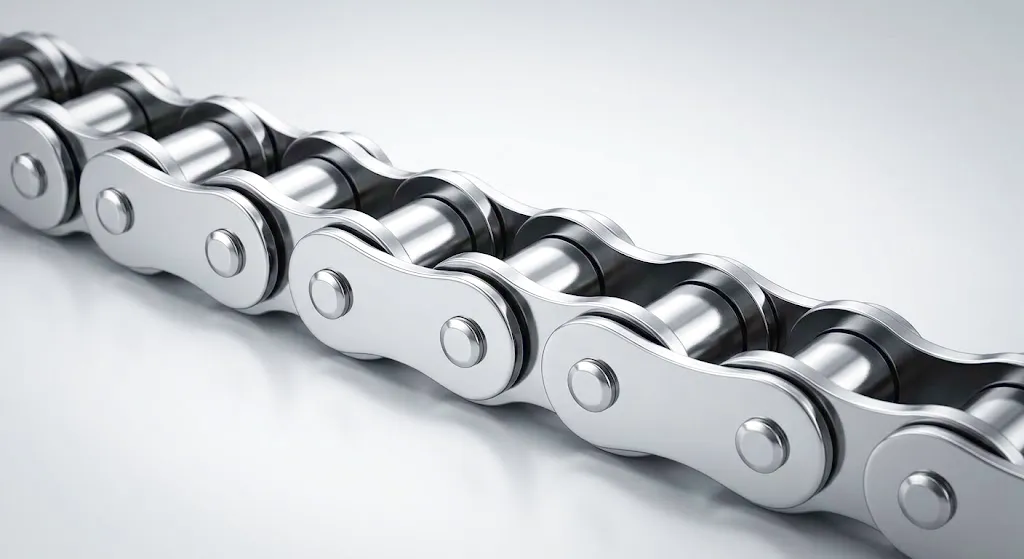
When engineers in Birmingham’s automotive supply chain or Sheffield’s precision forging sector specify a roller chain system, they rarely begin with the chain itself. They begin with the sprocket. The tooth profile — that carefully machined geometry on every sprocket wheel — is the invisible architect of the entire drive system’s character. It governs how smoothly the chain engages, how load transfers between link and tooth, how quickly wear accumulates, and ultimately how long the whole assembly performs before service is needed. Yet for all its influence, the sprocket tooth profile remains one of the least discussed variables in chain drive specification, overshadowed by tensile strength ratings, pitch measurements, and chain grade classifications.
This article examines the relationship between sprocket tooth geometry and roller chain performance in concrete, engineering terms. From the principles of polygonal action to the metallurgical interaction at each tooth flank, understanding this relationship is essential for any maintenance engineer, procurement specialist, or mechanical designer who wants to extract maximum service life from a roller chain installation. We cover the core mechanical principles, material considerations, measurable performance advantages of well-profiled sprockets, and the industrial scenarios across the UK where getting this specification right makes a quantifiable difference to uptime and total cost of ownership.
How Sprocket Tooth Profile Shapes Chain Engagement
Polygonal Action and Chordal Rise
A roller chain wraps around a sprocket in a polygon rather than a true circle. Each time the chain engages the sprocket, the chain pitch point moves through a cyclic vertical displacement known as chordal rise. This creates a rhythmic velocity fluctuation that, at higher speeds, generates vibration, noise, and accelerated fatigue. The tooth profile directly controls the magnitude of this chordal action: a carefully calculated flank curvature can absorb the roller’s seating shock, cushion the impact, and reduce the peak force transferred into the chain link plate at the moment of engagement. British standard BS/ISO 606 specifies the permissible range of tooth flank geometry, but the best-performing sprocket manufacturers push the geometry toward the tighter end of this tolerance band to minimise the energy lost in each engagement cycle.
Tooth Flank Geometry and Load Distribution
A well-designed tooth flank follows a curve that mirrors the roller’s circular cross-section, creating Hertzian contact rather than edge contact. When the contact stress is distributed over a larger surface area, the peak pressure per unit area falls dramatically, reducing the rate of surface fatigue — pitting, spalling, and micro-cracking on the tooth face. For heavy-duty applications in Sheffield’s steel processing facilities or the aggregate quarries of South Wales, this contact geometry difference translates directly into thousands of additional operating hours before tooth wear causes chain pitch elongation beyond serviceable limits. The bottom land geometry — the seating curve — is equally critical, as it determines whether the roller seats fully and symmetrically under load or contacts asymmetrically, inducing lateral bending stresses into the chain sideplates.
The Engagement Sequence: How Each Tooth Receives the Chain
The engagement sequence begins as the approaching chain link’s roller makes first contact with the tooth flank, not the seating curve. During this approach phase, the tooth profile must guide the roller progressively inward, converting the roller’s linear inertia into rotational seating motion without a sudden impact spike. A flank that is too steep — or machined with insufficient relief at the approach angle — creates a hard stop: the roller slams to its seated position rather than rolling in, and this impact force reverberates through the entire chain span. Conversely, a profile with excessive relief allows the roller to bounce briefly before seating, introducing micro-slip and fretting corrosion at the pin-bushing interface. The ideal tooth profile for a standard roller chain under UK industrial conditions balances these two failure modes, providing a guided, progressive seating action across the full range of operating loads. This is why sourcing roller chain sprockets from manufacturers with in-house CNC gear hobbing capability — rather than relying on blanket-tolerance castings — matters so much to operational reliability.
High Strength Roller Chain for Caterpillar Applications
Высокопрочная роликовая цепь 120HSP-00 для Caterpillar
Engineered to exceed Caterpillar OEM specifications, the 120HSP-00 features a heat-treated alloy pin, precision-ground rollers, and a carbide-enhanced bushing surface that maintains sprocket tooth contact geometry even under the severe shock loading of earthmoving and quarry operations. Its closed-die forged sideplates provide uniform thickness tolerance to ±0.02 mm, ensuring consistent load sharing across all chain links.
Высокопрочная роликовая цепь C100HSP-00 для Caterpillar
The C100HSP-00 is purpose-designed for Caterpillar crawler and tracked machinery operating in the UK’s coastal aggregate sites and upland quarry environments. Its corrosion-resistant surface treatment — a specialised zinc-phosphate base with polymer topcoat — works synergistically with the sprocket tooth contact zone to prevent the fretting corrosion that accelerates pitch elongation when wet grit infiltrates the engagement point. Tensile breaking load exceeds 222 kN across the full production batch.
Core Materials in Roller Chain and Sprocket Manufacturing
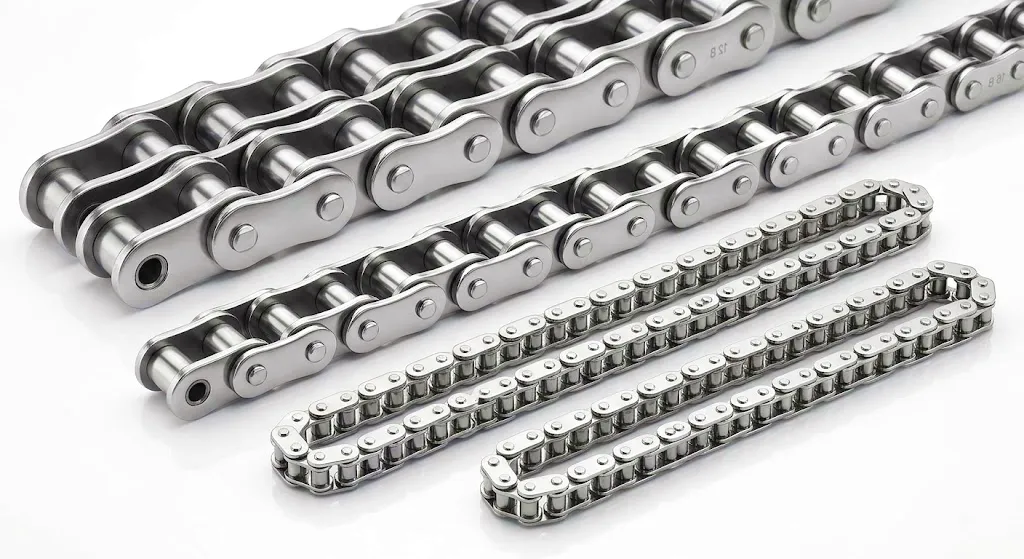
The material relationship between sprocket and chain is symbiotic. A roller chain precision-ground from high-carbon steel — typically 50Mn or 40Cr alloy compositions — has specific surface hardness characteristics at the roller’s outer diameter. A sprocket machined from medium-carbon steel (C45 equivalent) with case hardening to 50–60 HRC on the tooth flanks creates the optimal pairing: the slightly softer tooth surface preferentially wears before the chain component, which is the design intent. This controlled wear hierarchy means that when a sprocket eventually needs replacement, the chain may still be within service tolerance, protecting the higher-cost investment in multi-strand chain assemblies.
For corrosive environments — common in the food processing facilities of Lincolnshire’s agricultural processing belt or the marine-adjacent industrial estates along the Thames Estuary — stainless steel variants using 316L or 304 alloys are specified for both the roller chain components and the sprocket. The challenge here is that stainless steel’s lower yield strength compared to carbon steel requires tooth profile compensation: broader tooth flanks, shallower approach angles, and increased seating curve radius all help distribute the lower material strength across a larger contact area. A specialist roller chain manufacturer with in-house metallurgical testing capability can tune these parameters precisely rather than applying a one-size-fits-all stainless profile.
Roller Chain & Sprocket Performance Parameters
| Параметр | Standard Grade | Heavy Duty Grade | Unit / Notes |
|---|---|---|---|
| Chain Pitch Range | 9.525 – 38.1 | 25.4 – 101.6 | мм |
| Tensile Strength (Breaking Load) | 14.8 – 155 | 55 – 400+ | кН |
| Sprocket Tooth Hardness | 45 – 52 HRC | 52 – 62 HRC | Case depth: 0.8–2.0 mm |
| Operating Speed (max) | Up to 25 | Up to 15 | m/s (lubricated) |
| Tooth Profile Standard | BS/ISO 606 | BS/ISO 606 + custom CNC | Modified flanks available |
| Roller Outer Diameter Tolerance | ±0.05 | ±0.02 | мм |
| Operating Temperature Range | -20 to +120 | -40 to +200 | °C |
| Elongation at Wear Limit | ≤ 2% | ≤ 1.5% | % of nominal pitch length |
| Sprocket Number of Teeth (typical) | 11 – 45 | 11 – 120+ | Custom tooth counts available |
| Strand Configuration | Simplex, Duplex | Simplex to Quintuplex | Up to 5-strand parallel |
Core Technical Advantages of Precision Tooth Profile Engineering
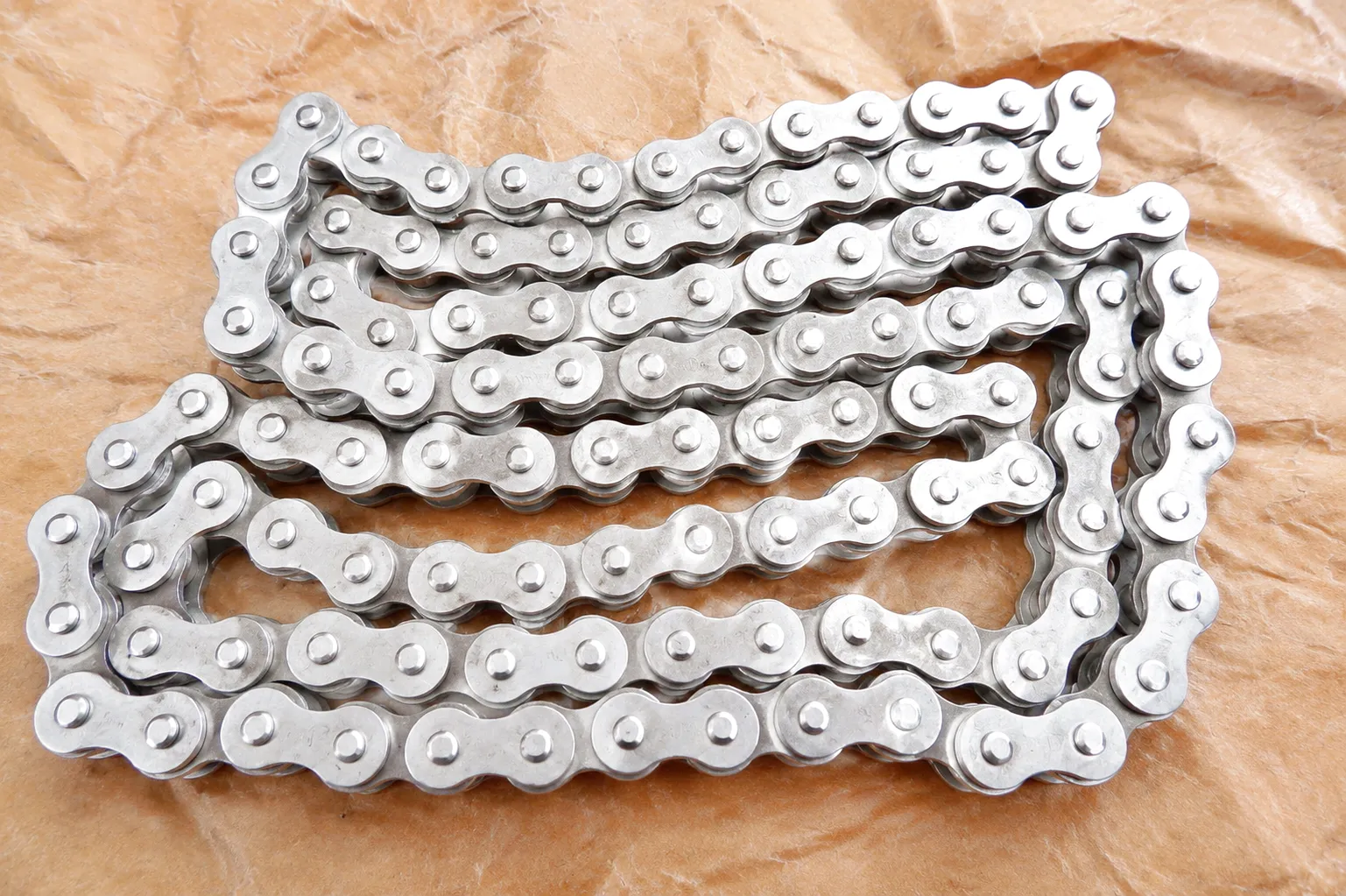
The engineering benefits of precision-profiled sprocket teeth are not theoretical — they manifest in measurable differences in machine uptime, maintenance frequency, and replacement cost cycles. Maintenance managers at automotive assembly operations in the West Midlands and at paper mill installations across Scotland consistently report that the shift from commodity-grade to precision-profiled roller chain and sprocket systems reduces unplanned chain-related stoppages by a factor of two to three, and extends mean time between planned maintenance intervals from three months to over twelve months in comparable load conditions.
Extended Service Life
Properly profiled tooth flanks distribute Hertzian contact stress over a larger area, reducing peak surface pressure by up to 35% compared to incorrectly profiled teeth. This reduction in surface stress directly extends both chain and sprocket service life, with precision-drive systems in industrial conveying applications typically achieving 8,000 to 15,000 operating hours before the first planned inspection interval.
Reduced Vibration and Noise Emission
The progressive seating action enabled by correctly computed flank profiles suppresses the impulsive forces that generate audible noise and structural vibration. In UK manufacturing facilities subject to Noise at Work Regulations, this can mean the difference between compliant background noise levels and the need for costly acoustic enclosures around the drive system. Chain drive noise reduction of 4 to 8 dB is routinely measured when switching from un-profiled to precision-profiled sprockets at equivalent operating speeds.
Higher Mechanical Efficiency
Roller chain drives can achieve mechanical transmission efficiencies of 98–99% when the tooth profile is correctly matched to the roller diameter and the chain pitch. Poor tooth geometry increases internal friction at each engagement point, reducing efficiency and generating heat. In high-cycle applications — such as continuous production lines in the food and beverage sector around Yorkshire — even a 1% efficiency gain translates to meaningful energy cost savings across a 24-hour production shift, an increasingly important consideration given UK industrial energy costs.
Compatibility with O-Ring and X-Ring Sealed Chains
Sealed-chain variants use elastomeric rings at the pin-bushing interface to retain grease throughout the chain’s service life. The sprocket tooth profile must accommodate the slightly larger effective roller diameter these seals create at the engagement point. A sprocket machined to standard tolerance without accounting for seal geometry will produce edge loading on the seal ring at each engagement, degrading the seal and defeating the chain’s lubrication advantage. Precision-profiled sprockets designed for sealed roller chain include seal clearance geometry that protects the ring without compromising load transfer.
Industrial Application Scenarios Across UK Industry
Where sprocket tooth geometry makes a measurable operational difference.
Agricultural Machinery — East Anglia Arable Operations
Combine harvesters, grain augers, and straw choppers operating in the dust-heavy harvest conditions of Cambridgeshire and Lincolnshire present a severe roller chain environment. Abrasive grain dust infiltrates every lubrication film, accelerating tooth and chain wear. In these conditions, the sprocket tooth seating curve geometry is critical: a deeper, more enveloping seating radius reduces the amount of abrasive material that can wedge between roller and tooth, extending service intervals even when lubrication access between fieldwork sessions is limited.
Steel Processing — Sheffield Forgemasters and Rolling Mills
Heavy-duty roller chain systems in Sheffield’s steel rolling and forging operations experience extreme shock loading during billet feeding and runout table operations. The sprocket tooth flank must absorb repeated impact loads without plastic deformation — a failure mode that rapidly creates a scalloped tooth surface, which in turn induces severe vibration and rapid chain pitch elongation. Specifying heavy-duty grade roller chain with appropriately hardened, profiled sprockets that include extended flank relief for shock absorption is standard practice in these high-value continuous-process environments.
Food and Beverage Processing — Yorkshire Production Lines
Food processing conveyor systems in and around Leeds and Hull operate under wash-down conditions, with daily high-pressure cleaning cycles that strip conventional lubricants. The tooth profile interaction with self-lubricating or dry-run roller chain variants must be carefully matched: too tight a tooth-to-roller clearance in wet conditions creates hydraulic locking during engagement, generating shock loads. Precision-engineered profiles with specific clearance allowances for wet operation prevent this phenomenon and allow food-grade operations to meet both throughput and hygiene compliance targets simultaneously.
Automotive Assembly — West Midlands Transfer Lines
Precision conveyor systems in Birmingham and Coventry automotive assembly plants require roller chain that maintains dimensional stability across long service intervals, since chain elongation directly affects component positioning accuracy at each assembly station. The sprocket tooth profile controls how evenly wear is distributed across all teeth as the chain elongates: a mathematically optimised tooth form ensures that each roller seats at the same radial position regardless of modest pitch elongation, effectively extending the usable service life of the chain beyond what simpler tooth geometries permit, reducing the frequency of production line shutdowns for chain replacement.
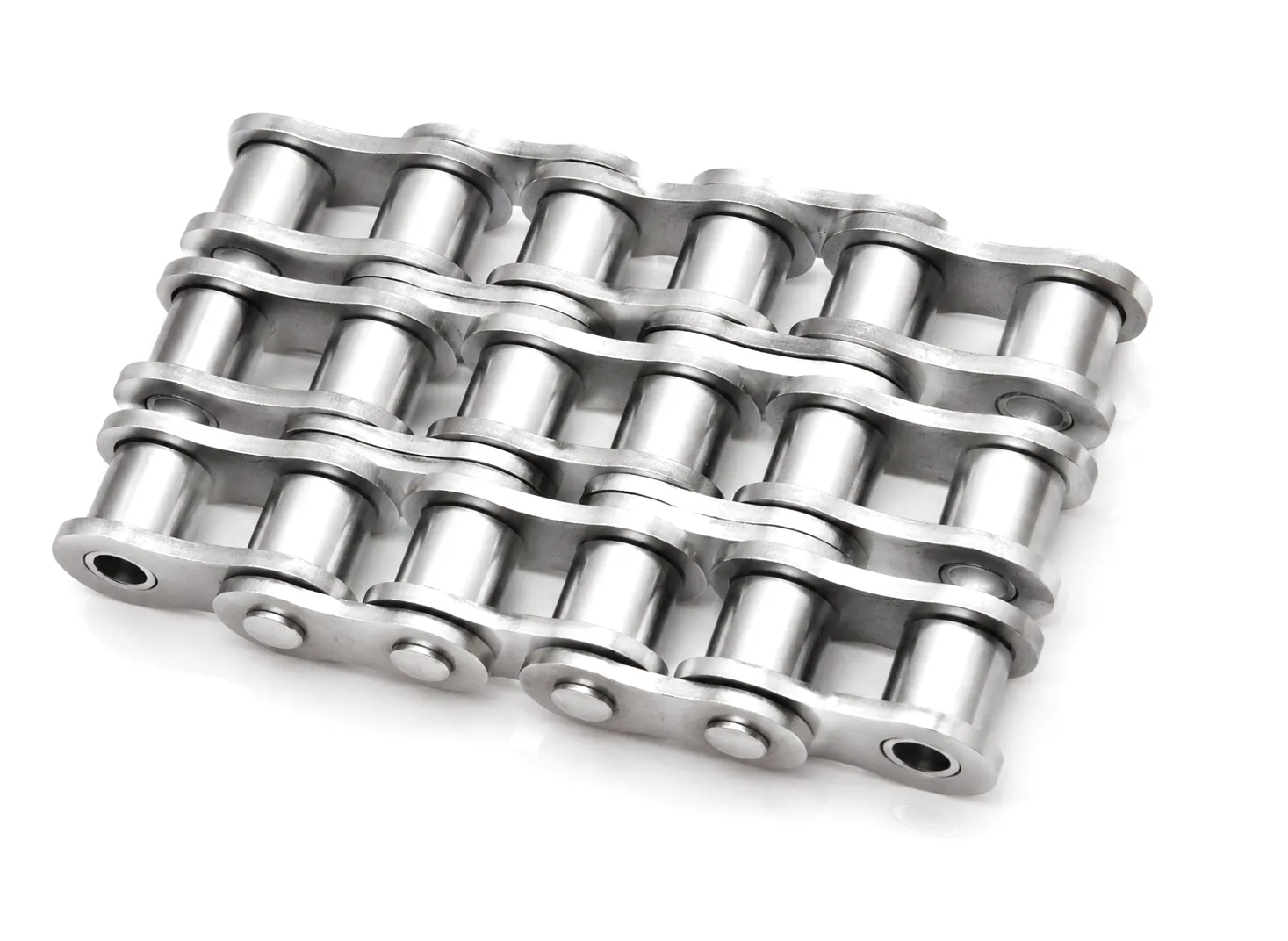
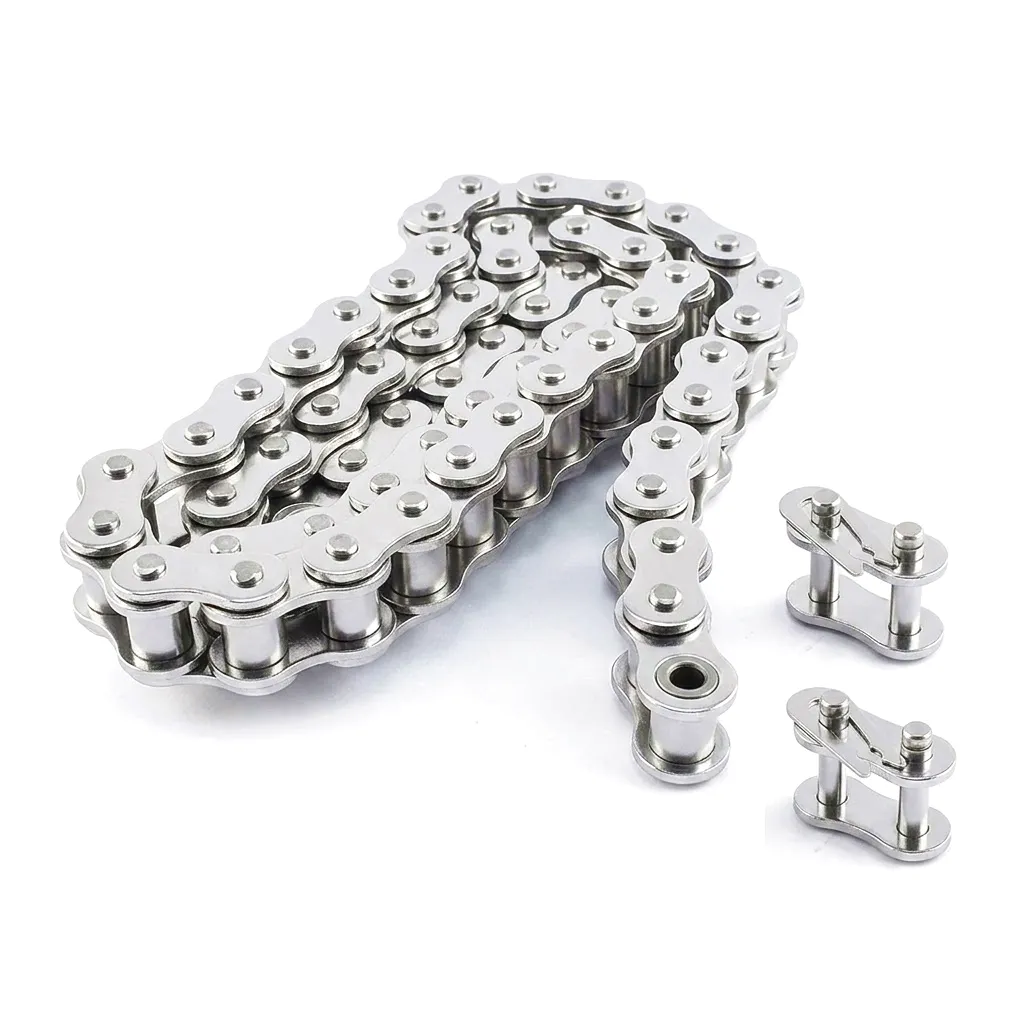
Ever Power: Custom Roller Chain Solutions for UK Industrial Requirements
Ever Power has established itself as a specialist manufacturer of high-performance roller chain systems precisely because the company has invested in the manufacturing infrastructure that precision tooth profile engineering requires. The CNC gear hobbing and profile grinding lines at Ever Power’s production facility are capable of holding sprocket tooth form tolerances within ISO Grade 6 — a capability that distinguishes precision manufacturers from commodity producers. Every sprocket profile begins with a mathematically derived tooth form computed to match the specific roller diameter, pitch, and application load profile of the customer’s drive system, rather than applying a catalogue standard form and hoping for the best fit.
For UK customers specifying roller chain for the first time or re-engineering an existing drive system, Ever Power’s technical sales team provides full application engineering support: load calculations, speed ratio analysis, sprocket tooth wear projection, and replacement interval planning. This service is particularly valuable for OEM manufacturers in the UK’s agricultural equipment sector — a market segment where West Midlands and East Anglian machinery builders consistently require custom roller chain pitches and non-standard sprocket bore configurations that no catalogue item can satisfy without compromise.
Sheffield Precision Forgings: Eliminating Unplanned Drive Failures on a Continuous Billet Line
A structural steel components manufacturer operating a continuous billet rolling and forging line in Sheffield’s Lower Don Valley was experiencing a recurring pattern of unplanned stoppages: three to five roller chain failures per year on the billet feed conveyor drive, each causing between four and seven hours of production downtime. The failing chains showed consistent diagnostic evidence — irregular pitch elongation concentrated over specific sections of the chain, combined with tooth flank scalloping on the drive sprockets — indicating that the engagement geometry was generating impact loading far in excess of the chain’s rated working load.
Following a joint technical review with Ever Power’s application engineering team, the root cause was identified: the existing sprockets were hobbed to the minimum of the BS/ISO 606 tooth profile tolerance, creating an approach angle that was marginally too steep for the chain pitch in use at the application’s operating speed. At 8.5 m/s chain speed, this borderline geometry generated measurable impact spikes at each engagement point. Ever Power supplied replacement sprockets profiled to a tighter internal standard — with approach angle relief increased by 2.3° and seating curve radius optimised for the specific roller chain’s 25.4 mm pitch rollers. The replacement roller chain specified was Ever Power’s heavy-duty H-series with closed-die forged sideplates and a minimum breaking load of 280 kN.
In the 22 months following the system upgrade, the Sheffield facility recorded zero unplanned chain-related stoppages on the billet feed line. Planned maintenance intervals were extended from three months to nine months. The facility’s maintenance manager calculated a total saving — including avoided downtime costs, reduced spare parts inventory, and lower maintenance labour — of approximately £38,000 over the first 18 months of operation with the Ever Power-specified system.
What UK Engineers Say About Ever Power Roller Chain
“The precision sprocket profile matched to the new roller chain has completely transformed our billet line reliability. We went from constant firefighting on that drive to genuinely forgetting it was there for months at a time. The technical depth from Ever Power’s team during the specification phase was what convinced us — they understood our exact tooth wear failure mode before we’d even finished describing it.”
“We specified custom non-standard pitch roller chain for a legacy combine header drive — a part no catalogue supplier would touch without major lead times. Ever Power turned around a 3.1-certified sample batch inside three weeks, with tooth profiles that genuinely matched our worn sprocket geometry data. The harvest season performance was exceptional. Zero chain issues across 340 acres of winter wheat.”
“Noise compliance was becoming a real issue on our West Midlands transfer line — the chain drive noise was pushing us toward the boundary of the Noise at Work Regulations threshold. Ever Power’s profiled sprocket solution dropped the measured drive noise by 6 dB at operating speed, which removed the acoustic enclosure from the project scope entirely. The ROI on the chain and sprocket upgrade was under four months.”
Frequently Asked Questions About Roller Chain and Sprocket Tooth Profiles in UK Industry
In a food processing environment where wet wash-down cycles are daily practice, the sprocket tooth profile determines how cleanly the roller seats and unseats with each revolution. A profile that creates tight hydraulic pockets between roller and tooth during wet engagement generates pressure spikes that accelerate bushing wear. Precision-profiled teeth with correctly sized clearances for wet operation allow clean disengagement and prevent the moisture-related fretting corrosion that shortens roller chain life in these conditions significantly.
Heavy-duty precision roller chain typically carries a price premium of 30–60% over catalogue-standard chain for the same pitch and width. However, the total cost of ownership calculation almost always favours the precision grade: a standard chain replaced every three months costs considerably more annually than a heavy-duty chain replaced every twelve months, before accounting for the downtime cost of each replacement interval. For a detailed quote specific to your application in Birmingham or Sheffield, contact Ever Power at [email protected].
Custom sprocket tooth profile manufacturing requires CNC gear hobbing capability and in-house metrology — capabilities that commodity distributors rarely hold. Ever Power provides full custom sprocket and roller chain specification services for UK agricultural OEMs and independent machinery builders, with delivery via established freight routes to England, Scotland, and Wales. Requesting a quotation can be done directly by emailing [email protected] with your pitch, roller diameter, tooth count, and bore requirements.
The diagnostic signs of sprocket-induced chain wear include: chain elongation concentrated in short sections rather than distributed evenly across the full chain length; scalloped or hooked tooth flank surfaces on the sprocket; audible clicking or rattling at engagement that begins at a specific point in the sprocket’s rotation (indicating one or more damaged teeth); and visible lateral movement of the chain on the sprocket during operation. If you observe two or more of these symptoms simultaneously, the sprocket tooth profile is likely contributing to accelerated chain wear, and both components should be replaced together.
For Caterpillar earthmoving equipment operating in UK aggregate quarries — environments characterised by abrasive dust, shock loading, and variable ambient moisture — the recommended specification is a high-strength, case-hardened alloy roller chain with sealed lubrication retention. Ever Power’s 120HSP-00 and C100HSP-00 Caterpillar-specification roller chains are designed precisely for this application: their enhanced flank hardness and surface treatment are engineered to resist the specific wear mechanisms present in quarry earthmoving duty cycles. For current pricing and stock availability, contact Ever Power directly at [email protected].
The standard industry guidance — supported by both BS EN ISO 606 and field data from UK conveyor system maintenance programmes — is that sprocket and roller chain should be replaced simultaneously whenever either component has reached wear limits. A new roller chain running on a worn sprocket will experience accelerated pitch elongation because the worn tooth profile no longer positions each roller consistently at the correct seating radius. Conversely, a new sprocket paired with an elongated chain will experience rapid tooth wear as the mismatched pitch causes each roller to impact at the tooth tip rather than seating correctly in the seating curve. The cost of replacing both components simultaneously is almost always less than the cost of replacing one, waiting for it to accelerate the wear of the other, and then replacing the second component at a separate maintenance intervention.
Specify the Right Roller Chain System for Your UK Application
Ever Power’s engineering team is available to provide tooth profile analysis, custom sprocket specification, and chain selection support for your specific drive requirements.
📧 Get a Quote — [email protected]