What Exactly Is a Roller Chain — and Why Does It Matter?
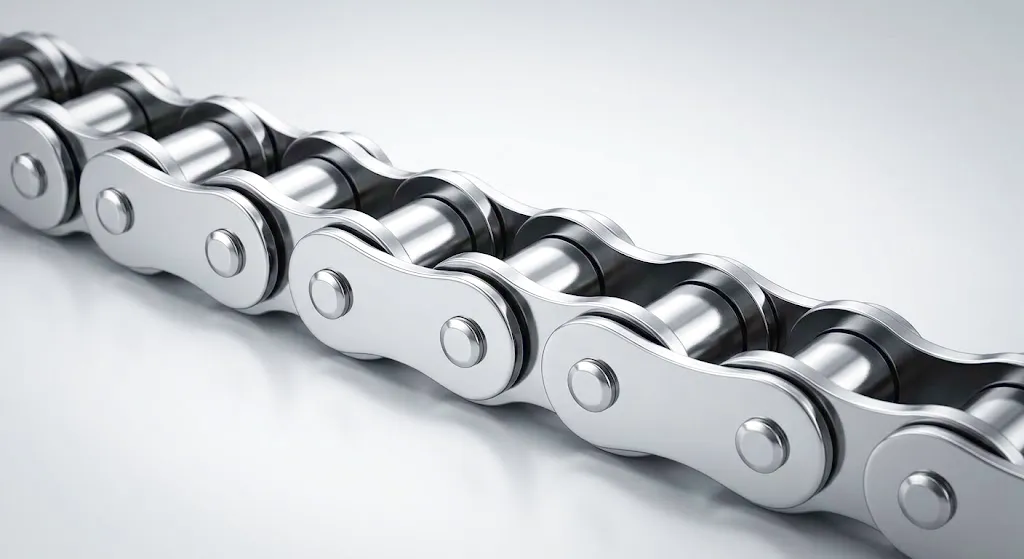
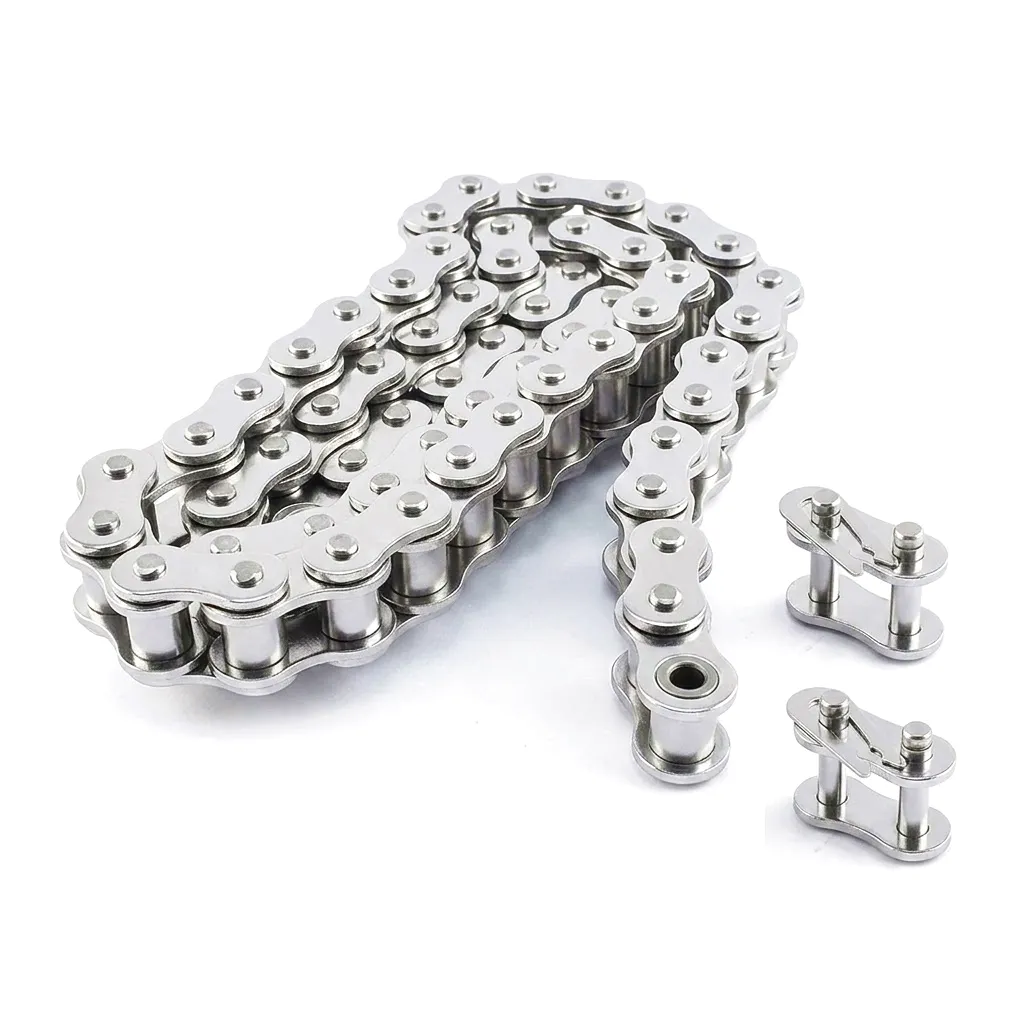
A roller chain is a type of chain drive used for the mechanical transmission of power from one rotating shaft to another. It consists of a series of short cylindrical rollers held together by side links, where each roller engages precisely with the teeth of a sprocket — a toothed wheel designed to mesh with the chain’s geometry. The result is a positive, slip-free drive that transmits torque with an efficiency typically exceeding 97% under well-lubricated conditions. Unlike friction-based belt drives, roller chain does not creep or slip under load, meaning the drive ratio between input and output shafts remains constant and predictable regardless of loading variations.
The concept of the roller chain traces back to Hans Renold’s landmark 1879 patent, and the fundamental design has proven so effective that it remains largely unchanged in modern industry. What has evolved is the precision of manufacturing tolerances, the quality of materials, and the engineering of specialty variants for extreme environments. Today, roller chains are classified under international standards including ISO 606 (European standard) and ANSI B29.1 (American National Standard), ensuring dimensional interchangeability across global supply chains. For UK manufacturers and engineering buyers, ISO compliance is typically the governing specification for procurement, though ANSI-compatible chains are also widely stocked and supplied across British industry.
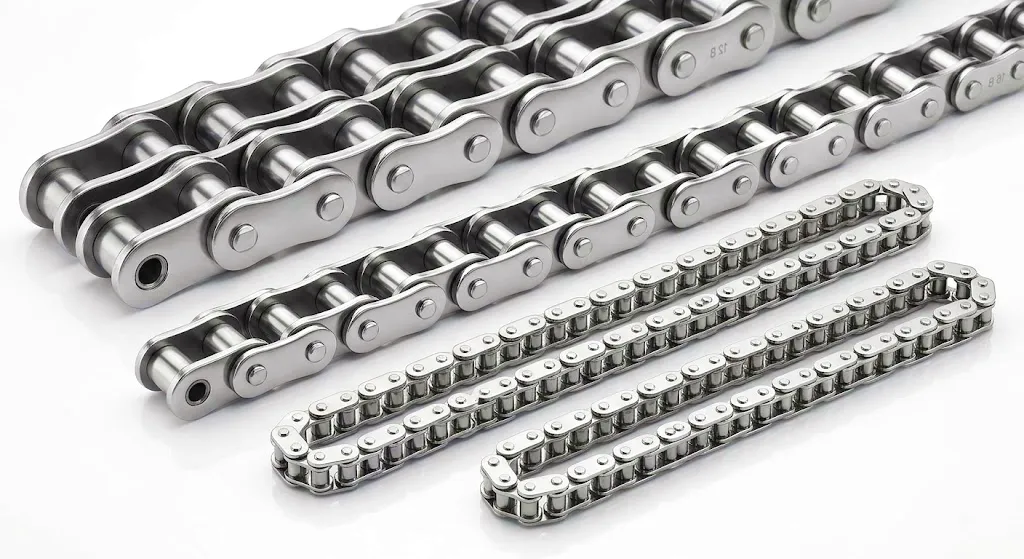
Materials That Define Performance: What Roller Chains Are Made From
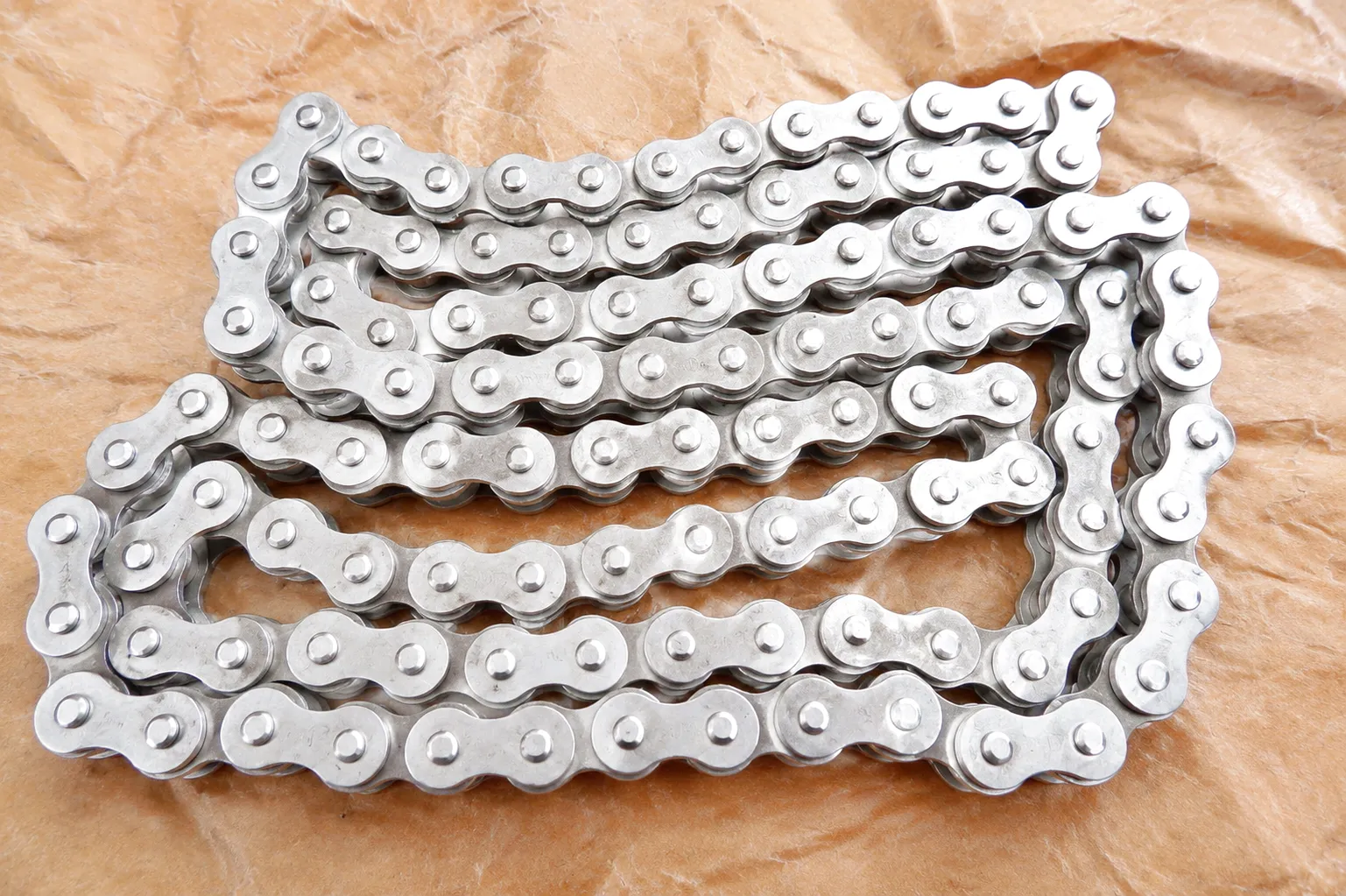
High Strength Roller Chains for Demanding Caterpillar Applications
Why Engineers Choose Roller Chain: Core Technical Advantages
Roller chains transmit remarkably high levels of power relative to their physical size and weight. A single standard simplex roller chain can reliably transmit tens of kilowatts, while duplex and triplex configurations multiply this capacity further. For space-constrained machine designs in Sheffield’s precision engineering workshops, this power density advantage is a consistent specification driver.
Unlike V-belt or flat-belt drives, roller chain delivers an absolutely constant speed ratio between input and output shafts. There is no creep, no slip, and no ratio variation under load. This makes roller chain the preferred choice wherever precise timing, synchronisation, or indexing is required — such as multi-axis transfer lines in automotive assembly plants or bottling plant conveyors in the North West of England.
Roller chain drives function effectively across a wide range of centre distances between sprockets — from very close-coupled drives to widely separated arrangements spanning metres. The drive can easily accommodate multiple sprockets (enabling branched power distribution to several output shafts) and can navigate around obstacles using idler sprockets, offering machine designers a level of routing flexibility unavailable with direct gear trains.
Roller chain drives are inherently simple to inspect, maintain, and replace. Chain elongation (wear-related pitch increase) is easily measured with a chain wear indicator tool, allowing condition-based replacement planning. When a chain does reach end of life, the replacement process is straightforward and can typically be completed without specialist tooling. This maintainability is especially valued in 24/7 production environments where downtime directly impacts output and profitability.
Standard carbon steel roller chains operate reliably across a temperature range of approximately -10°C to +300°C with appropriate lubricant selection. High-temperature variants with special alloy link plates and heat-stable lubricants extend the operating range significantly. This compares favourably with rubber or polyurethane belt drives, which have narrower temperature tolerances — a practical consideration for drives adjacent to heat-generating process equipment in foundries and glass manufacturing plants.
When total cost of ownership is calculated across a drive’s full service life — including acquisition cost, maintenance intervals, energy consumption, and replacement frequency — roller chain consistently delivers competitive lifecycle economics. The initial hardware cost is generally lower than equivalent gearbox configurations, and the sprocket-based speed ratio can be adjusted simply and inexpensively by fitting different sprocket combinations without replacing the entire drive system.
Product Technical & Performance Parameters
The table below presents representative technical parameters for standard roller chain series commonly used in UK industrial applications. Chain designation follows the ISO 606 / DIN 8187 numbering system. Actual values vary by chain series, manufacturer specifications, and application conditions — always consult the full technical datasheet and apply appropriate service factors when sizing a drive.
| Chain Designation ISO 606 |
Sân bóng đá (mm) |
Roller Dia. (mm) |
Tải trọng phá vỡ (kN) min. |
Cân nặng (kg/m) |
Pin Dia. (mm) |
Vật liệu | Ứng dụng điển hình |
|---|---|---|---|---|---|---|---|
| 06B-1 | 9.525 | 6.35 | 8.9 | 0.41 | 3.28 | Thép cacbon | Light machinery, instruments |
| 08B-1 | 12.70 | 8.51 | 17.8 | 0.69 | 4.45 | Thép cacbon | General industry, conveyors |
| 10B-1 | 15.875 | 10.16 | 22.2 | 0.93 | 5.08 | Thép cacbon | Agricultural, packaging |
| 12B-1 | 19.05 | 12.07 | 28.9 | 1.15 | 5.72 | Thép cacbon | Construction equipment |
| 16B-1 | 25.40 | 15.88 | 60.0 | 2.71 | 8.28 | Thép cacbon | Heavy conveying, drives |
| 20B-1 | 31.75 | 19.05 | 95.0 | 3.55 | 10.19 | Carbon / Alloy Steel | Mining, steel works |
| 120HSP-00 (High Strength) |
38.10 | 22.23 | 155+ (Enhanced) | 6.80 | 14.29 | Alloy Steel, Case-Hardened | Caterpillar heavy equipment |
* Breaking load values shown are minimum values per ISO 606. High-strength series values reflect enhanced plate geometry and alloy materials. Consult full datasheet for all dimensional parameters.
Industrial Application Scenarios Across the UK and Beyond
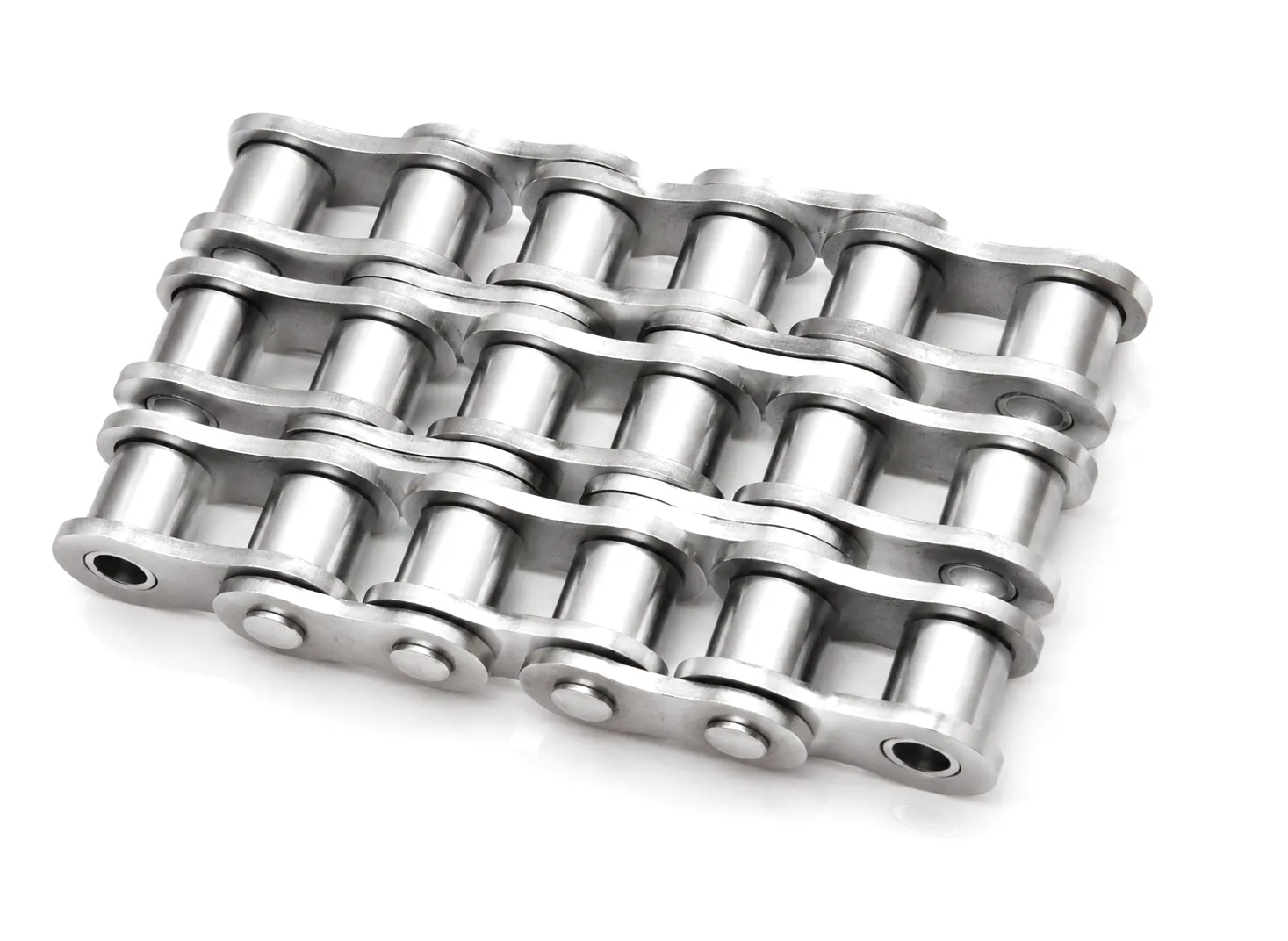
Automotive assembly plants around Birmingham, Coventry, and Wolverhampton rely heavily on roller chain drives in conveyor systems, transfer lines, and index drives. The chain’s precise timing capability is critical for synchronising assembly operations across multi-station production lines. High-strength chains handle the demanding loads of vehicle body and drivetrain conveying, while specialty variants operate in paint shop ovens at elevated temperatures.
Heavy-duty roller chain is the drive medium of choice for crawler tracks and final-drive systems on construction machinery — from excavators working on infrastructure projects across the UK’s major road and rail expansion programmes to crawler dozers in the quarrying industry. The shock-load tolerance and high tensile strength of high-series and heavy-series roller chains make them indispensable in this sector, where sudden overloads and abrasive environments are routine operating conditions.
From combine harvesters traversing the flat grain fields of Lincolnshire to potato harvesters operating through the heavy soils of Norfolk, roller chain is the workhorse of agricultural drive systems. Crop processing machinery, baler drives, header conveyors, and grain auger drives all rely on chains to transmit power reliably through harvest seasons that demand continuous, high-load operation with minimal downtime. Agricultural chains are typically manufactured to heavy-duty specifications to cope with crop debris contamination and intermittent shock loading.
Food processing is one of the UK’s largest manufacturing sectors, and roller chain drives are embedded throughout its infrastructure. Conveyor drives for product transport, slat conveyors in pasteurisation tunnels, can-filling line drives, and freezer tunnel conveyors all rely on food-grade roller chains. For these applications, stainless steel or nickel-plated chains are required to meet hygiene standards, while self-lubricating variants eliminate the contamination risk associated with conventional petroleum-based lubricants. Chains certified to NSF H1 food-grade lubricant standards are mandatory in direct-contact zones.
Steel mills and rolling mills operate some of the most extreme drive environments that roller chain encounters. Mill table drives, coiler drives, and roller-way conveyors must handle massive loads, elevated temperatures from adjacent processes, scale and debris contamination, and the inherent shock loading of heavy steel sections being processed. Heavy-series roller chains with alloy-steel components, high-temperature lubricants, and sealed or stainless variants for specific zones are standard practice in Sheffield’s world-renowned special steel production facilities.
The rapid growth of e-commerce and just-in-time logistics across the UK has driven massive investment in automated sortation and conveying systems in distribution centres across the Midlands logistics corridor and the M62 belt. Roller chain drives power the backbone conveying infrastructure of these facilities — from gravity roller conveyors with powered zones to high-speed sortation diverters and pallet handling systems. The combination of reliability, ease of replacement, and compatibility with standard sprocket geometries makes roller chain the primary mechanical drive element in these environments.
Selecting and Maintaining Roller Chain: Practical Engineering Guidance
Correct chain selection begins with an accurate assessment of the design power requirement — not merely the rated motor power, but the effective transmitted power incorporating service factors for start-stop frequency, shock loading character, and hours of operation per day. ISO 10823 provides a structured methodology for roller chain drive design that most UK machinery designers follow as the basis for specification. The design load, once established with appropriate service factors applied, is matched against the rated power capacity tables published for each chain series at the relevant operating speed.
Lubrication is the single most important maintenance variable affecting roller chain service life. Under-lubricated chains wear far faster at the pin-bushing interface, progressing through increased pitch (elongation) and ultimately towards fatigue fracture. The correct lubricant viscosity and application method depend on chain speed: manual or drip lubrication for low-speed applications, bath or disc lubrication for medium speeds, and forced oil jet systems for high-speed drives. Selecting a lubricant incompatible with operating temperature or environmental conditions is a common and avoidable error.
Frequently Asked Questions About Roller Chain
Get a Custom Roller Chain Quote from Ever Power Today
Whether you need standard ISO simplex chain, stainless steel food-grade variants, or custom-engineered high-strength chain for OEM equipment, our team delivers technical expertise and competitive pricing with reliable UK export logistics.