Roller chain is the backbone of power transmission in hundreds of industries — from automotive assembly lines in Birmingham and steel rolling mills in Sheffield to agricultural processing facilities in Yorkshire and textile machinery in Manchester. But even the most precisely manufactured roller chain will fail prematurely if it runs without adequate lubrication. The relationship between a chain and its lubricant is not a minor maintenance detail; it is an engineering variable that directly determines service life, load capacity, operating temperature, and ultimately the total cost of ownership for a piece of equipment.
Understanding the four principal lubrication methods — manual, drip, bath, and forced — and knowing when to apply each one is one of the most practical pieces of engineering knowledge a maintenance engineer or procurement manager can carry. This guide explains the physics behind each method, the speed and load thresholds that govern selection, the appropriate lubricant viscosities for different operating environments, and the real-world consequences of under-lubrication or over-lubrication. Whether you are specifying a new conveyor system for a food processing plant in Leeds or troubleshooting accelerated wear on a packaging line in Bristol, the information here will give you the technical foundation to make the right call.
Why Roller Chain Lubrication Is an Engineering Decision, Not Just a Maintenance Task
Inside every link of a roller chain, the pin rotates within the bushing every time the chain engages a sprocket tooth. At moderate speeds this contact surface experiences thousands of micro-rotation cycles per hour. Without a continuous oil film between pin and bushing, the metal surfaces are in direct contact, generating friction, heat, and progressive wear. Once the internal clearance grows beyond the manufacturer’s tolerance — typically 3% elongation is the ISO standard for replacement — the chain’s pitch no longer matches the sprocket, and tooth impact loading increases dramatically, accelerating failure exponentially rather than linearly.
Friction at pin-bushing and roller-sprocket interfaces converts mechanical energy into heat. In a poorly lubricated roller chain operating at 600 RPM, surface temperatures at the contact zone can climb to temperatures that degrade the chain’s structural temper. This thermal degradation reduces hardness and tensile strength in the link plates and pins — components that were precision heat-treated during manufacture to achieve specific mechanical properties. A correct lubrication method dissipates this frictional heat, maintaining the metallurgical integrity of the chain throughout its design life.
In UK outdoor or food-adjacent environments where moisture and cleaning agents are prevalent, the oil film serves a secondary function as a corrosion barrier. Oxidative rust on chain components acts as an abrasive, accelerating internal wear far beyond what friction alone would cause. An appropriate lubricant — whether petroleum-based, synthetic, or food-grade — protects internal surfaces from moisture ingress between scheduled maintenance intervals, which is especially valuable on seasonal agricultural equipment or marine conveying systems operating in coastal facilities.
Method 1: Manual Lubrication — Practical Application for Low-Speed and Intermittent-Duty Roller Chains
Manual lubrication is the oldest and most straightforward method: oil is applied to the chain by hand using a brush, oil can, or dauber, typically at each scheduled maintenance interval or whenever operating conditions suggest the chain is running dry. Despite its simplicity, manual application is an entirely valid engineering solution for a specific segment of applications, and using a more complex system where manual application is sufficient simply adds cost and complexity without improving chain life.
The governing parameter for manual lubrication suitability is peripheral chain speed. As a general guideline derived from ISO 10823 and equivalent BS standards, manual lubrication is appropriate for roller chains operating at peripheral speeds below 4 m/s (approximately 800 ft/min), provided that the applied load does not place the chain near its fatigue limit at that speed. At speeds below this threshold, the time between successive pin-bushing contact cycles is long enough that manually applied oil — which by its nature is not continuously replenished — can sustain a film that prevents metal-to-metal contact throughout the operating period.
The correct application technique matters considerably. Oil should be applied to the inside face of the chain — the side that contacts the sprocket — and specifically targeted at the link plate clearances through which oil can migrate to the pin-bushing interface by capillary action. Flood application from the outside face is wasteful and largely ineffective since centrifugal force at even modest speeds throws externally applied oil away from the critical internal surfaces. SAE 30 or SAE 40 mineral oil is appropriate for most ambient-temperature UK industrial environments; in colder conditions typical of northern Scotland or exposed warehouse settings, an SAE 20W-40 multi-grade or a synthetic ISO VG 100 lubricant maintains adequate viscosity at low temperatures while protecting at operating temperature.
- Agricultural conveyors and seed drills
- Intermittent-use workshop equipment
- Low-speed packaging machinery
- Maintenance-accessible drive systems
- Backup chain spares in storage
- Dependent on maintenance schedule adherence
- Unsuitable for enclosed or guarded drives
- Not viable above 4 m/s peripheral speed
- Operator exposure to moving machinery risk
- Inconsistent application quality between technicians
Method 2: Drip Lubrication — Continuous Delivery for Mid-Range Speed Applications
Drip lubrication solves the fundamental limitation of manual application — its discontinuous nature — by delivering a metered, continuous flow of oil to the chain throughout its operation. A reservoir mounted above or beside the chain drive feeds oil through a wick, needle valve, or gravity-fed orifice, releasing a controlled drip rate measured in drops per minute. The oil falls onto the inner surface of the chain, between the link plates, where it can access the pin-bushing interface directly before being distributed further by centrifugal action as the chain moves.
The appropriate operating range for drip lubrication is typically 4–8 m/s peripheral speed, though this depends on chain pitch, load, and ambient temperature. This makes drip systems suitable for a wide range of UK manufacturing environments — conveyor systems in food processing facilities in East Anglia, bottling lines in Scottish distilleries, printing press drives, and general-purpose factory conveyors. Because the system operates continuously without requiring the machine to be stopped, it represents a meaningful improvement in both lubrication consistency and equipment availability compared to manual methods.
Setting the correct drip rate is a practical engineering task that balances two opposing costs: too little oil produces wear; too much oil creates messy conditions, increases lubricant consumption, and can create contamination problems in clean-room or food-safe environments. A useful starting point is to observe the chain and adjust the rate until a thin, even oil film is visible on the chain’s inner surfaces after a period of operation, with no significant oil throw-off from the outer faces. For food industry applications, only NSF H1-approved food-grade oils — typically white mineral oils or specific synthetic esters — should be used regardless of lubrication method.
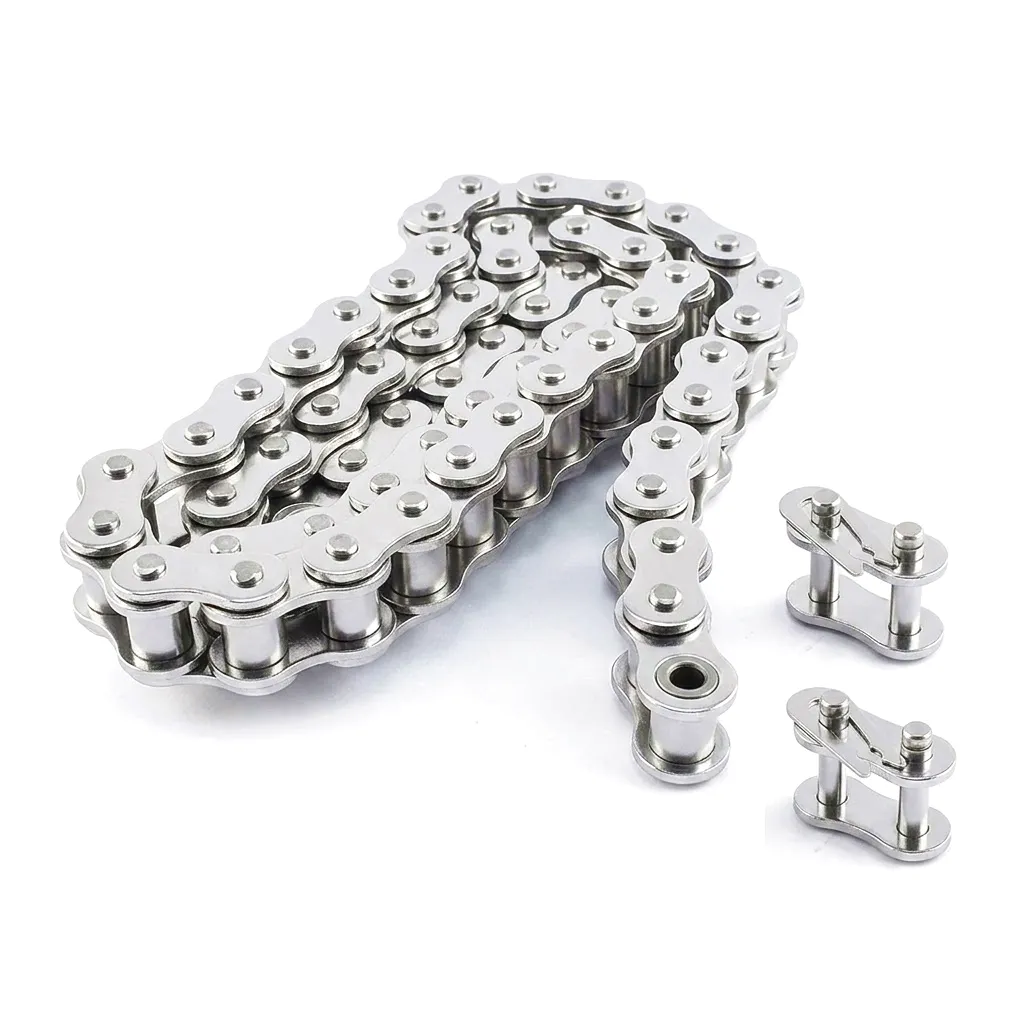
Recommended Roller Chain Products for Lubricated Drive Systems
Designed for medium-to-heavy load conveying applications where a rubber grip surface is required alongside robust internal lubrication retention. Ideal for drip or bath lubrication configurations on UK food processing and material handling lines.
A lighter-duty rubber-top variant well suited for packaging machinery, light conveyor drives, and assembly lines where both grip and smooth internal operation under continuous drip lubrication are required. Popular with UK automotive component manufacturers.
Method 3: Bath Lubrication — Immersion-Based Cooling and Film Formation for High-Load Drives
Bath lubrication — sometimes described as oil-bath or sump lubrication — represents a significant step up in lubrication intensity. In a bath system, the lower run of the roller chain passes through an enclosed oil reservoir, submerging the chain links in oil as they travel around the drive. This immersion ensures that every pin, bushing, and roller receives direct oil contact on each pass through the bath, providing the most consistent film formation achievable without a pressurised pump system.
The oil level in a bath system must be maintained precisely. ISO 10823 and most chain manufacturer specifications call for the chain to run partially submerged — the recommended depth is approximately to the pitch line of the chain on the slack side. Too shallow and the film is insufficient; too deep and churning losses generate excess heat while also entrapping air in the oil, which reduces film strength. Most industrial bath systems include a sight glass or level indicator for maintenance staff to check during scheduled inspections.
Bath lubrication is generally appropriate for peripheral speeds of 8–12 m/s. Beyond this range, churning and foaming become problematic, and forced circulation becomes necessary. Oil viscosity selection follows a simpler logic in bath systems: the oil must remain fluid enough to drain from chain surfaces and return to the sump between passes, while being viscous enough to form a durable film at operating temperature. ISO VG 100 to ISO VG 220 are typical selections for most UK operating temperatures, with higher viscosity grades for heavy-duty mining or quarrying applications.
Bath lubrication is common in enclosed gearbox-driven conveyor systems in the heavy manufacturing sector — steel processing facilities in the Midlands, paper mills in the North West, and aggregate processing plants in Wales and Yorkshire all employ oil-bath chain drives. The enclosed nature of a bath system also provides inherent contamination protection, which is valuable in environments where airborne dust or metal particles would otherwise accelerate abrasive wear on manually or drip-lubricated chains.
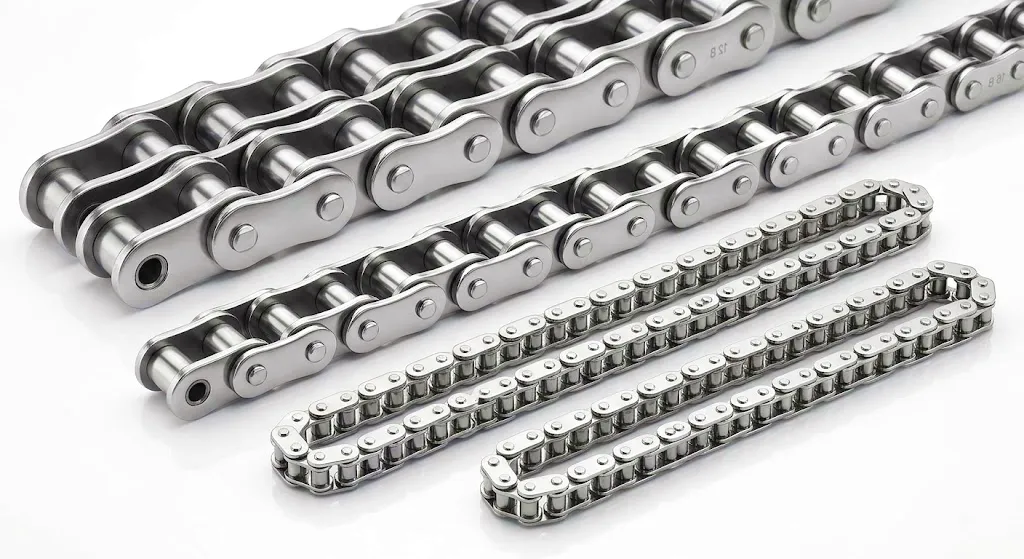
Method 4: Forced Circulation Lubrication — Precision Oil Delivery for High-Speed and Heavy-Duty Roller Chain Systems
Forced circulation lubrication — also referred to as pressure or spray lubrication — is the highest-performance lubrication method in the roller chain engineer’s toolkit. A dedicated gear pump circulates oil from a central reservoir, delivering it through a nozzle or spray bar directly onto the chain at a controlled flow rate and pressure. The oil is typically directed at the inner face of the lower chain run, upstream of the drive sprocket, ensuring that fresh, filtered oil reaches the pin-bushing interfaces precisely where they are about to bear load.
This method becomes not just preferable but necessary above peripheral speeds of 12 m/s, and is often specified for heavily loaded systems — including large-pitch industrial roller chains handling loads measured in tonnes — even at more modest speeds. High-volume transfer lines in automotive manufacturing plants, heavy-duty quarrying and mining conveyors, power station ash handling systems, and large-format printing machinery all typically rely on forced circulation systems to maintain chain reliability and achieve design service lives that justify their capital cost.
The engineering sophistication of a well-designed forced lubrication system extends beyond simple delivery. Most installations include a filter element — typically 25 to 100 microns nominal — to remove wear particles from the returning oil before it re-enters the pump. This filtration loop prevents a self-reinforcing wear cycle in which metal debris from early chain wear becomes an abrasive in the lubricant, accelerating subsequent wear. A pressure relief valve protects the system from blockage damage, and a temperature gauge or thermostat allows monitoring of oil temperature, which is an indirect indicator of chain loading and bearing condition.
In critical industrial applications — including continuous-operation chains in cement plants, steel mills, and large logistics sorting facilities common across the UK’s industrial Midlands — forced lubrication systems may incorporate condition monitoring sensors that track oil pressure, temperature, and particle count, feeding data into a predictive maintenance platform. This represents the integration of traditional mechanical lubrication engineering with modern Industry 4.0 capability, and it is the direction in which the most demanding UK manufacturers are moving their maintenance strategies.
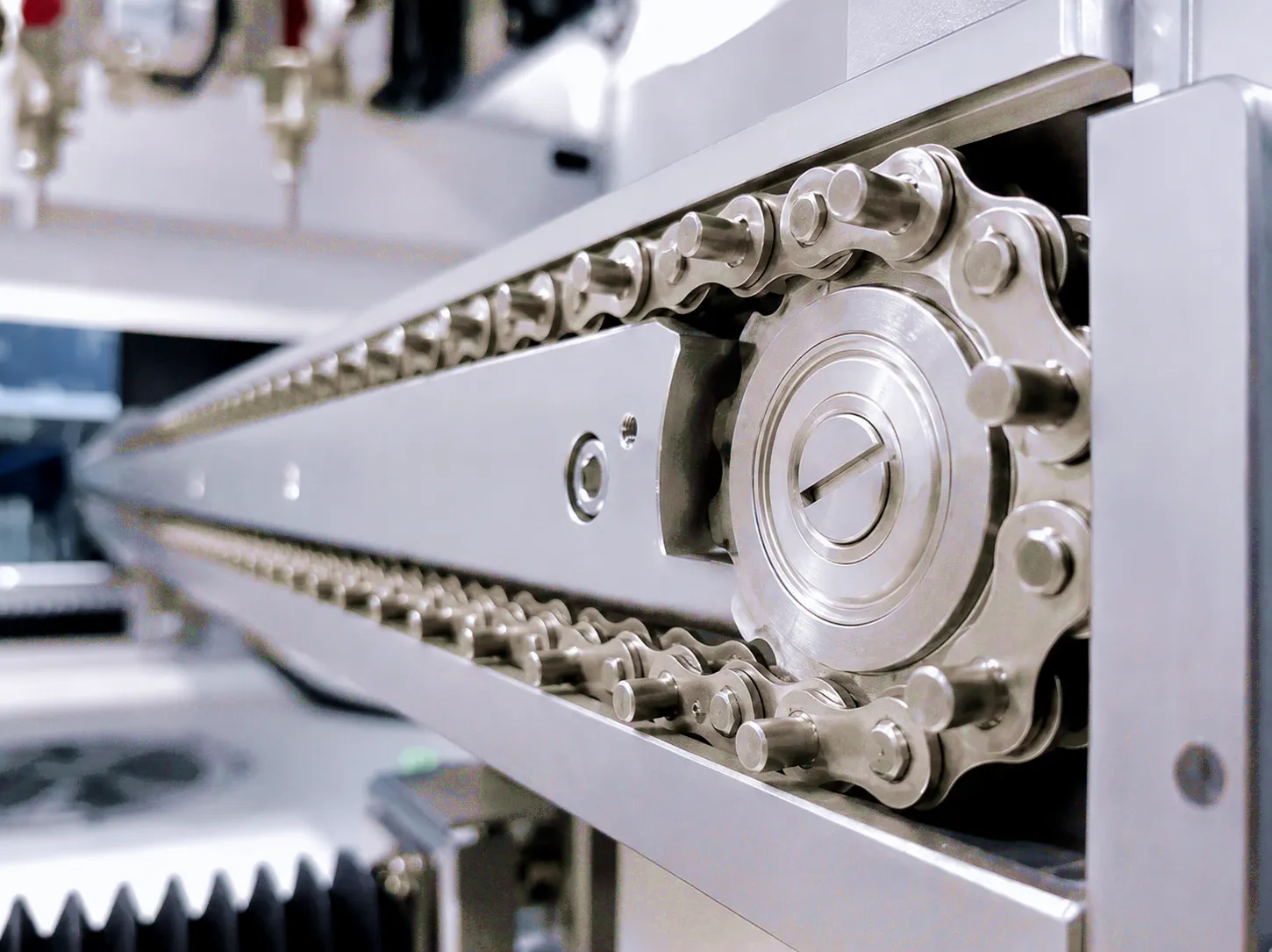
Roller Chain Lubrication Method — Technical Performance Parameters
Industrial Application Scenarios — Matching Lubrication Method to UK Manufacturing Context
In Sheffield’s surviving steel processing and special alloys sector, heavy-duty roller chains handling coiled stock and slab transfer operate under continuous load at significant peripheral speeds. Forced circulation systems with high-pressure nozzles and 40-micron filtration are standard specification here. The lubricant must withstand elevated ambient temperatures from nearby furnace and rolling equipment, driving the use of synthetic PAO-based ISO VG 150 oils that retain viscosity above 120 degrees C.
Combine harvesters, round balers, and seed drill drives across Yorkshire and Lincolnshire present a distinct maintenance environment: the equipment operates intensively for a relatively short seasonal window, then sits in storage. Manual lubrication applied before the season and at mid-season service intervals, combined with a light corrosion-inhibiting coat before storage, is a well-established and cost-effective approach. The key lubricant selection consideration is adhesiveness — a tacky open-gear lubricant is often preferred over a thin mineral oil to maximise retention on exposed drives.
Bottling and canning lines in Scotland’s whisky and soft drinks sectors require lubrication systems that can never contaminate the product. Drip lubrication using NSF H1-registered white mineral oil or synthetic ester lubricants is the dominant approach at conveyor speeds typically in the 5–7 m/s range. Drip systems are also favoured here because they can be installed and adjusted without enclosed guard removal, reducing the access and isolation requirements that would otherwise interrupt production flow.
Quarrying operations in Wales and the Peak District run heavy-duty roller chains in environments with significant airborne limestone and silica dust. An open drip or manual system would see the lubricant become heavily contaminated within hours, creating an abrasive oil-grit paste that dramatically accelerates pin and bushing wear. Enclosed oil-bath systems, with the chain running in a sealed housing, are the correct solution — the bath oil itself can be periodically drained, settled, filtered, and refilled, removing accumulated particulate before it causes damage.
High-volume automotive component manufacturing and vehicle assembly operations in and around Birmingham rely on transfer chains that run continuously at speeds above 12 m/s with precisely controlled tension. Forced circulation systems in these facilities are integrated with the plant SCADA system, monitoring oil temperature and pressure in real time. Any deviation from target parameters triggers an alert before chain lubrication failure can cause a production stoppage — a single unplanned line halt on a high-output vehicle assembly plant can cost tens of thousands of pounds in lost production.
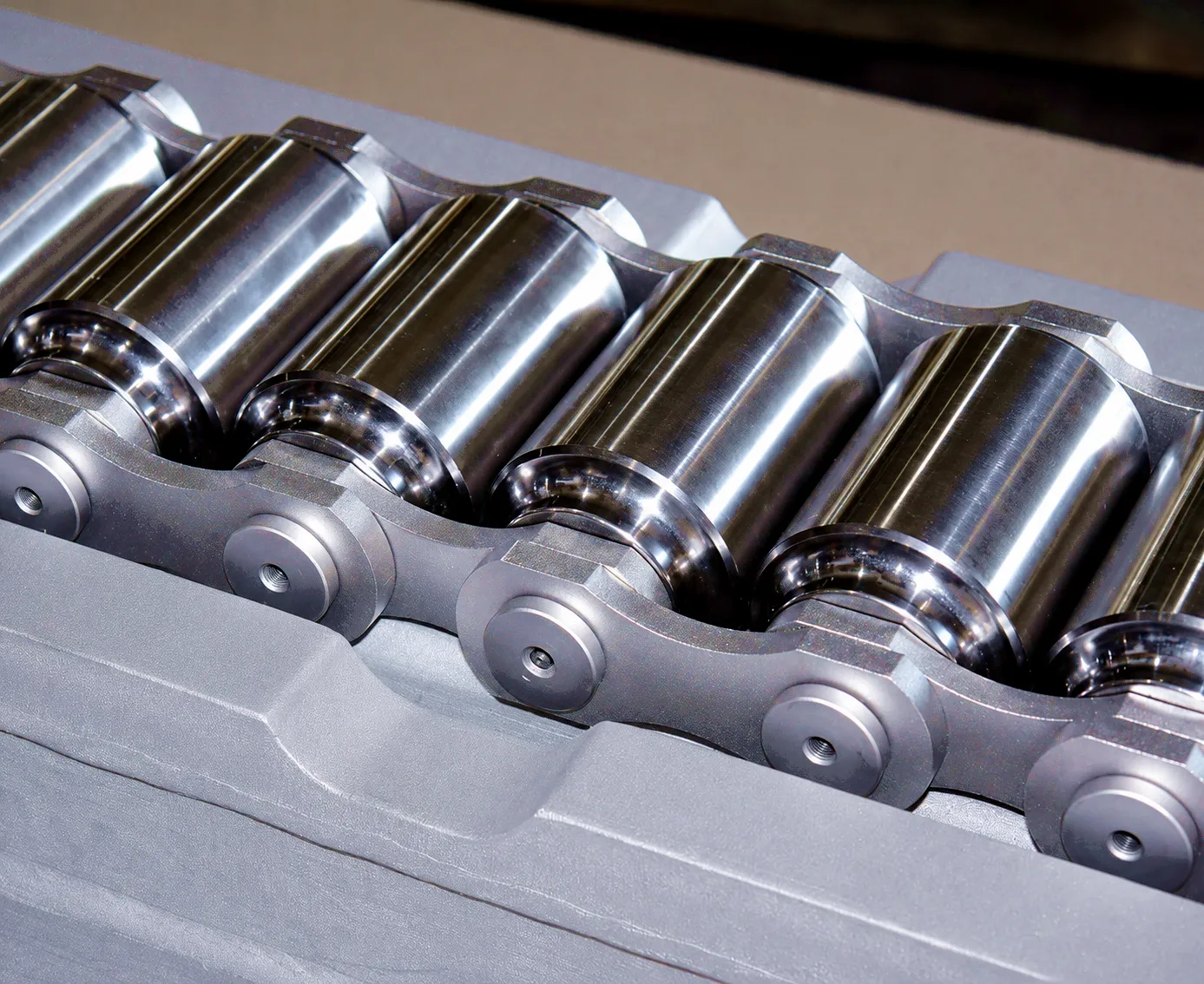
Ever Power Manufacturing — Precision Roller Chain Production and Custom Lubrication Solutions
Ever Power operates advanced roller chain manufacturing facilities where every component in the chain — from link plates and pins through to bushings and rollers — is produced to tight dimensional tolerances verified by coordinate measuring equipment. This precision manufacturing foundation is what makes lubrication performance predictable: when internal clearances between pin and bushing are held within design specification, the oil film geometry behaves as engineering models predict, and the lubrication method selection tables based on speed and load are reliable.
For UK customers specifying roller chains for lubrication-critical applications, Ever Power provides comprehensive customisation services. Standard chain pitch and configuration can be combined with pre-lubricated assembly — where chains are assembled with a specific lubricant packed into the pin-bushing clearance before despatch, extending the initial service interval and ensuring adequate lubrication from first operation. This pre-lubrication is particularly valuable for chains installed in difficult-access locations where initial manual lubrication may be inadequate or inconsistent.
Special materials are also available through Ever Power’s customisation programme for applications where standard alloy steel chains cannot operate without lubrication. Sintered bushing chains — where the bushing is manufactured from a porous sintered bronze material impregnated with lubricant — can extend re-lubrication intervals significantly and are well suited to food processing, pharmaceutical packaging, and light textile applications where lubricant availability is restricted. Ever Power’s supply chain infrastructure supports short lead times on UK orders, with standard chains typically available ex-stock and custom configurations quoted within 24 hours.
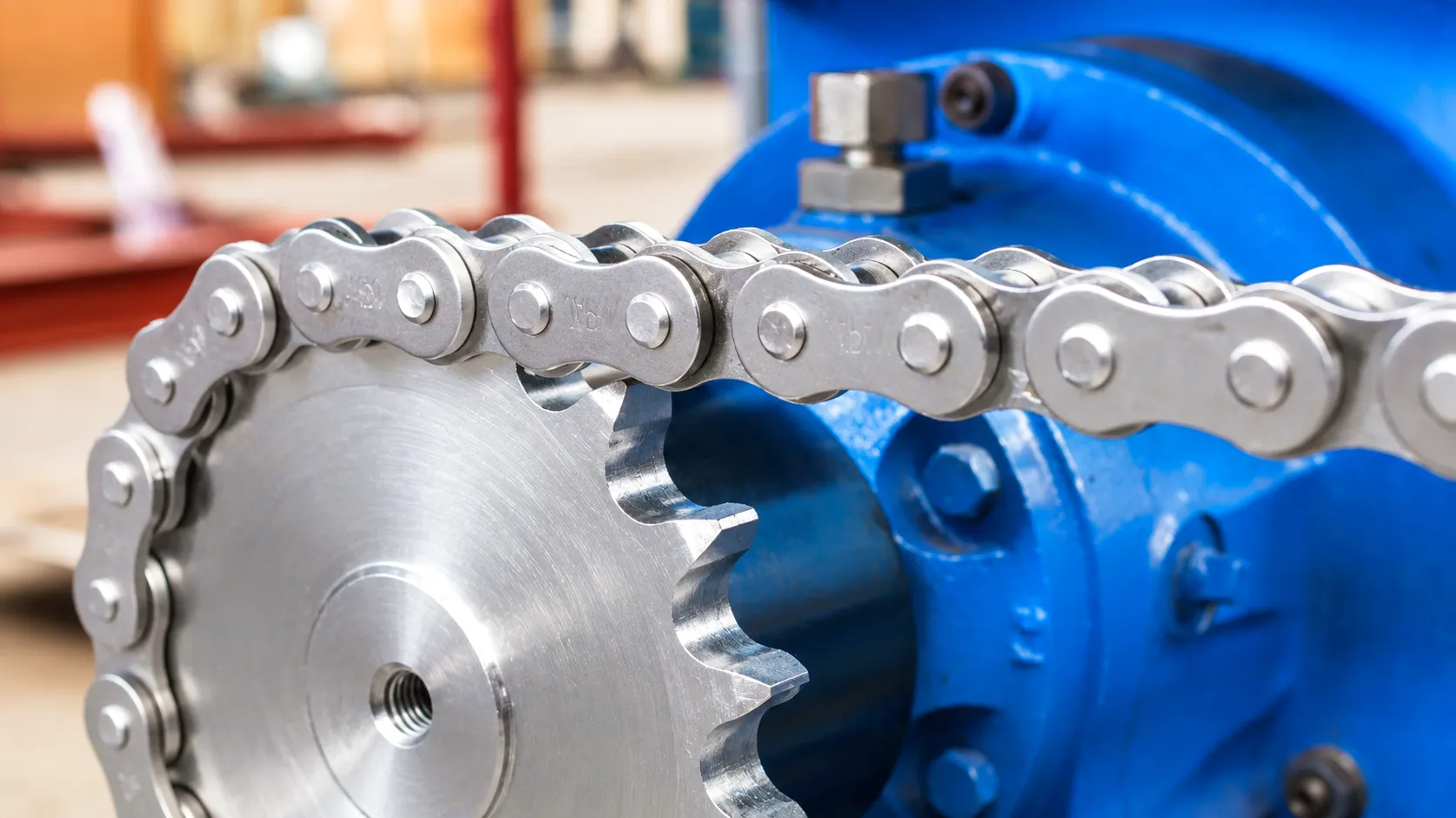
Customer Success Story: Midlands Automotive Components — Leicester Production Facility
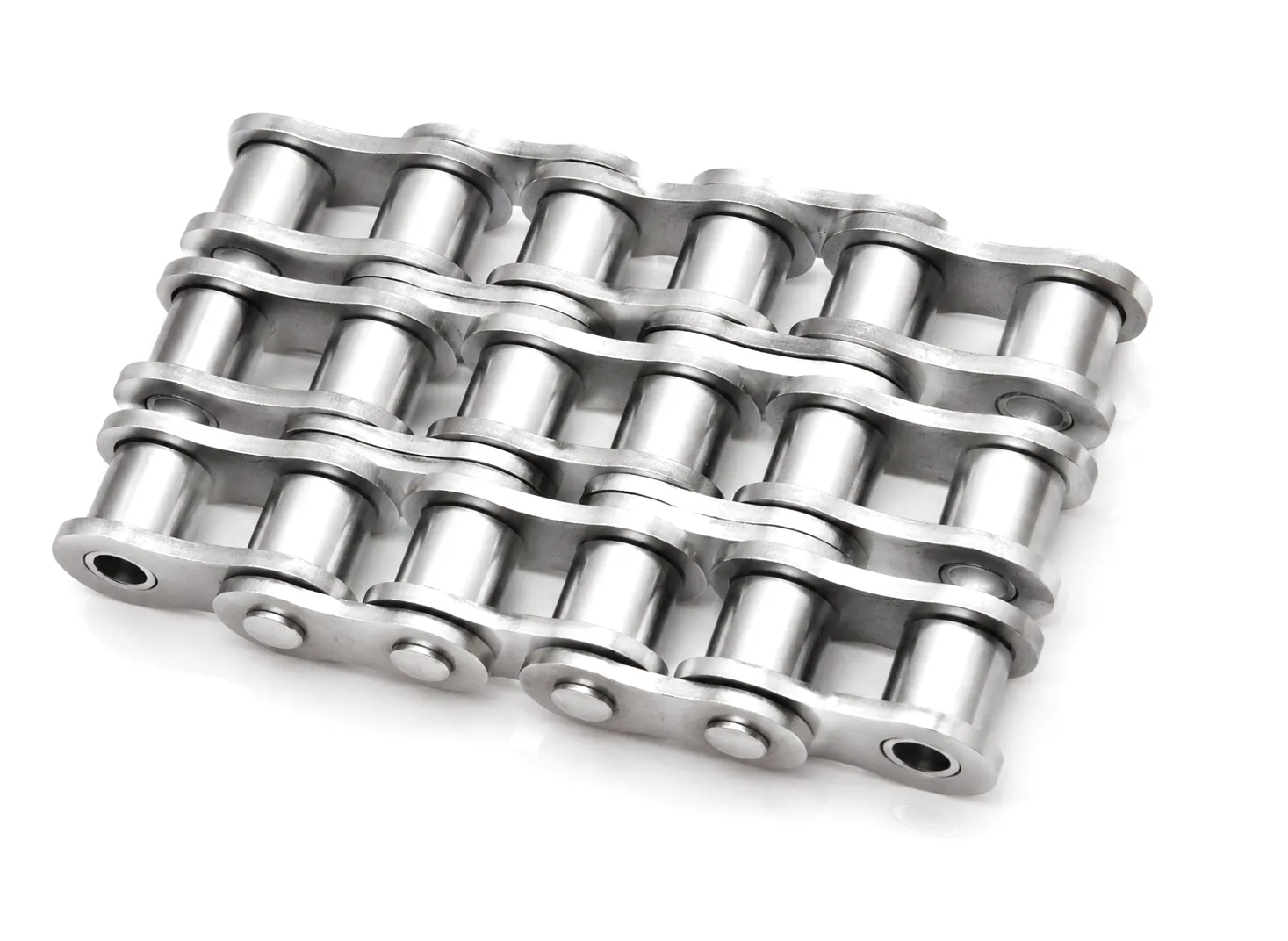 A precision automotive components manufacturer operating a multi-line production facility in Leicester was experiencing unacceptable roller chain replacement frequency on four high-speed transfer conveyor drives used to move machined crankshaft blanks between machining centres. The chains were specified at 12B-1 double-pitch standard configuration and had been maintained using a drip lubrication system with a generic ISO VG 68 mineral oil — a specification inherited from the original equipment installation fifteen years prior and never reviewed against actual operating conditions.
Operating data collected as part of a maintenance review showed that the chains were reaching 3% elongation at intervals of just four to five months, against an expected design life of twelve months. The root cause analysis identified two contributing factors: the peripheral speed of the drives had increased by approximately 25% following a production throughput upgrade two years prior — pushing the operation beyond the appropriate range for the installed drip system — and the ambient temperature in the machining hall, elevated by coolant misting and machinery heat load, was reducing the effective viscosity of the ISO VG 68 oil below the film-forming threshold at operating temperature.
L'équipe d'ingénierie a contacté Ever Power pour définir une solution de remplacement. Ever Power a fourni des chaînes à rouleaux 12B-1 pré-assemblées avec un lubrifiant synthétique PAO ISO VG 150, conditionné en usine dans les jeux entre les axes et les bagues. Ce système comprenait une transition vers une lubrification par circulation forcée, avec des buses positionnées pour acheminer de l'huile synthétique ISO VG 100 neuve sur la face interne de la chaîne à un débit contrôlé. Des éléments filtrants de 50 microns ont été installés dans le circuit de retour.
Dix-huit mois après la mise en place du nouveau système, aucune chaîne n'a nécessité de remplacement pour cause d'usure par allongement. Les coûts annuels de maintenance des consommables de chaînes ont diminué de plus de 60 %, et la disponibilité de la ligne de production s'est sensiblement améliorée grâce à la réduction des interventions de maintenance non planifiées. Cette amélioration de la fiabilité a eu un avantage secondaire : la réduction des vibrations, grâce à des chaînes bien lubrifiées et correctement tendues, a prolongé la durée de vie des pignons sur trois des quatre transmissions, repoussant ainsi le programme de remplacement des pignons d'environ deux ans.
Ce que les ingénieurs britanniques disent des chaînes à rouleaux Ever Power
« Depuis deux ans, nous changions les chaînes de nos lignes de transfert de Leicester tous les trimestres. Les chaînes prélubrifiées d'Ever Power, associées au système de circulation forcée qu'ils nous ont recommandé, fonctionnent depuis dix-huit mois sans aucun remplacement. L'assistance technique de leur équipe lors de la définition du cahier des charges a été exceptionnelle : ils ont immédiatement compris le problème de viscosité et de vitesse et nous ont proposé une solution complète, au lieu de simplement nous vendre des pièces détachées. »
« Nous travaillons dans une carrière du sud du Pays de Galles où l'usure des chaînes due à la contamination par la poussière a toujours été un problème majeur. Le passage aux chaînes lubrifiées par bain d'huile fermé d'Ever Power, avec le carter de bain d'huile qu'ils nous ont aidés à concevoir, a considérablement réduit l'usure de nos chaînes. Le fait qu'ils proposent des configurations de fixation personnalisées en plus de la gamme de chaînes BS standard nous a permis de tout gérer avec un seul fournisseur. »
« Notre ligne d'embouteillage dans les Highlands exigeait impérativement des chaînes et une lubrification conformes à la norme NSF H1 ; tout risque de contamination était inacceptable. Ever Power a fourni des chaînes à bagues autolubrifiantes frittées pour nos sections à basse vitesse et a configuré le système d'égouttage de notre convoyeur principal à haute vitesse avec une huile ester de qualité alimentaire approuvée. Le délai de livraison, de la demande à la livraison, était inférieur à trois semaines pour une configuration sur mesure. Nous les recommandons sans hésiter à d'autres acteurs du secteur agroalimentaire. »